← The Indicator from Planet Money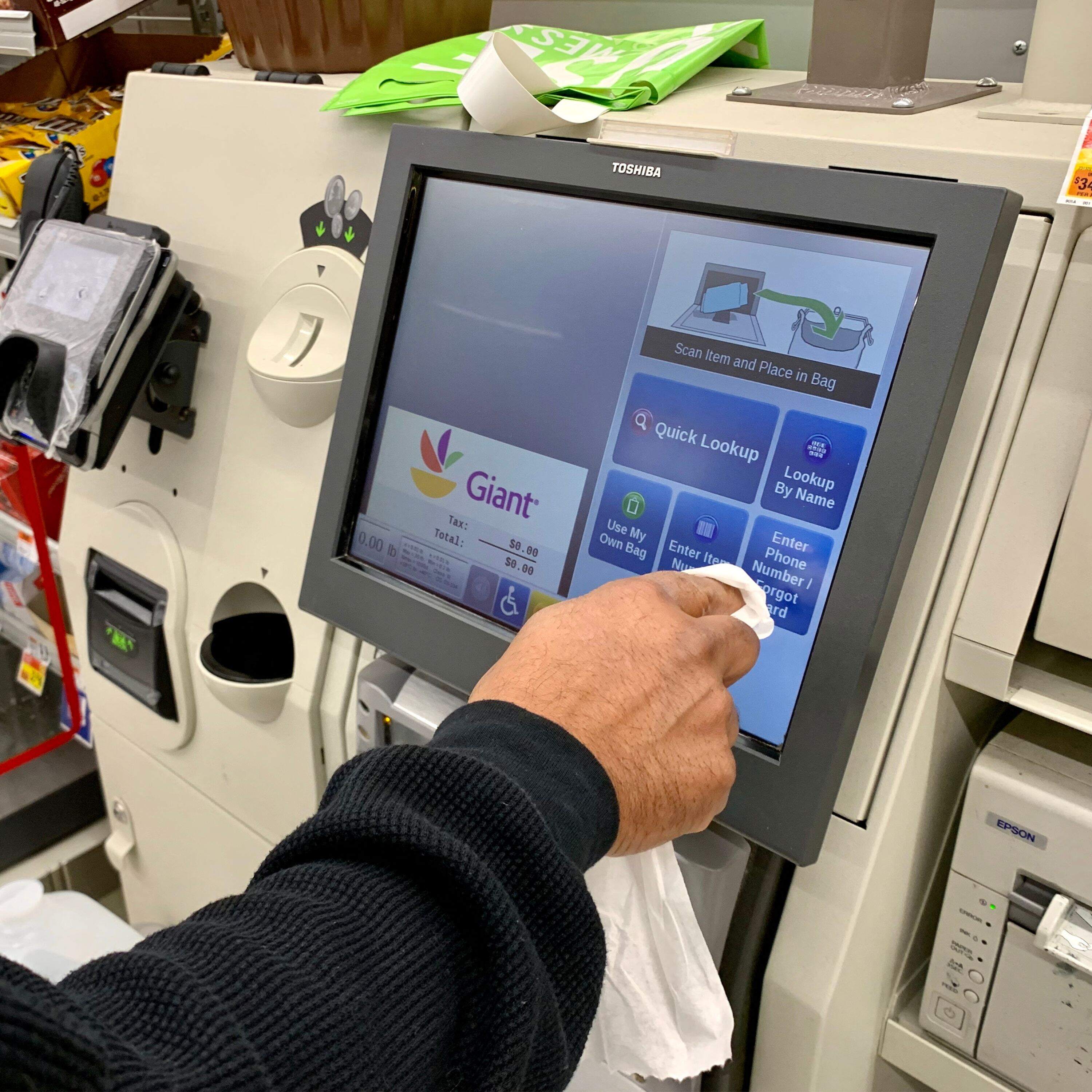
The Indicator from Planet Money
Nvidia chips for China, frozen Russian funds, and a lot of self-checkout stealing
00:09:06
Loading summary
Transcript77 lines
- [00:01]
A
Npr.
- [00:12]
B
This is the indicator from Planet Money. I'm Darren Woods.
- [00:15]
C
I'm Waylon Wong.
- [00:16]
B
And blessing us with his presence today, Steven Bazaha.
- [00:19]
D
Hey, happy to be here.
- [00:21]
E
Woo.
- [00:23]
D
I thought. Was that presence or presence? Because I brought both.
- [00:27]
B
It is the holiday season. Thank you.
- [00:29]
C
Is it Secret Santa in the office today? And I didn't get the memo.
- [00:32]
D
I am here with a bag full of indicators because it's indicators of the week.
- [00:42]
C
On today's show, we have Nvidia chips being sent to China, cash for Ukraine.
- [00:47]
D
Maybe, and sticky fingers at the checkout aisle.
- [00:51]
B
That's all after the break.
- [00:59]
A
Support for NPR and the following message come from Warby Parker, the One Stop Shop for all your vision needs. They offer expertly crafted prescription eyewear plus contacts, eye exams and more for everything you need to see. Visit your nearest Warby Parker store or.
- [01:15]
E
Head to warbyparker.com this message comes from Vanguard. Capturing value in the bond market is not easy. That's why Vanguard offers a suite of over 80 institutional quality bond funds actively managed by a 200 person global team of sector specialists, analysts and traders. They're designed for financial advisors looking to give their clients consistent results year in and year out. See the record@vanguard.com audio that's vanguard.com audio audience all investing is subject to risk. Vanguard Marketing Corporation distributor. This message comes from Capital One. With the Capital One Saver card, earn unlimited 3% cash back on dining and entertainment. Capital One. What's in your wallet terms? Apply details@Capital1.com.
- [02:06]
C
It is indicators of the week. Darian, you're up first. What is your indicator?
- [02:10]
B
My indicator is 25%. That's the cut the US government will get when Nvidia sells its H200 chips to China. The Trump administration announced this week that it would allow Nvidia to sell these advanced semiconductor chips that are really useful in training AI.
- [02:27]
C
Okay, so advanced, like how good are these things?
- [02:30]
B
Kind of the best of the B list. I don't know if you guys have a favorite B list celebrity. Hmm.
- [02:36]
D
I think I gotta go Bruce Campbell on that one, right?
- [02:38]
B
I didn't even know who that is.
- [02:39]
C
Oh, interesting.
- [02:40]
D
Spider Man.
- [02:40]
C
I like that.
- [02:41]
A
Stephen.
- [02:41]
C
I'll go with Bruce Campbell as well.
- [02:43]
B
The Spider man actor. Okay, well, imagine these chips are the Bruce Campbell of AI chips.
- [02:49]
D
So very big chin.
- [02:51]
B
So the real A list lineup, you know, like the Cape planchettes. Those are the Blackwell chips. These H2 hundreds that are being allowed to be exported to China. These are in the older Hopper series, named after Grace Hopper. A US Navy rear admiral who, fun fact, helped develop the programming language Cobol.
- [03:11]
C
She's a programming A lister.
- [03:13]
B
Exactly.
- [03:14]
D
So these H2 hundreds, the chips China can get now, these aren't the most cutting edge, but, you know, I've still seen China hawks here in the US they are quite against this decision. They don't think China should be getting any AI chips from the U.S. yeah.
- [03:27]
B
I've seen this likened to selling Soviet Russia space equipment during the space race. One counter argument, led by Nvidia's CEO Jensen Huang, is that by selling American chips to Chinese companies, China will become dependent on American AI chips.
- [03:43]
C
Okay, so what's the counterargument to that counterargument?
- [03:46]
B
Well, the counterargument to that counterargument is that the Chinese government is already spending immense amounts of money to make sure they don't end up reliant on the U.S. and in fact, even when the U.S. did allow Nvidia to sell chips to China with fewer restrictions, China was still pulling out all the stops to develop its own advanced AI chips. And who knows? We don't even know if Beijing will will allow these H2 hundreds to come in.
- [04:13]
C
And if they don't allow them in, then the U.S. government misses out on that 25% cut.
- [04:18]
B
Yeah, it is a bizarre situation all around.
- [04:21]
C
Well, you guys want to hear about another bizarre situation?
- [04:23]
B
Tell me.
- [04:24]
C
Okay, My indicator is $192 billion. This is how much money the European Union is considering lending to Ukraine for its war effort against Russia. EU leaders are scheduled to decide on this next week. And we've been hearing about some very deep division recently. This is a long, simmering, kind of arcane financial story that we've talked about on the show before.
- [04:48]
B
Yeah, this involves frozen Russian assets in Europe.
- [04:51]
C
Yes. And it is quite the sticky situation because you might remember that in 2022, when Russia invaded Ukraine, it got hit with sanctions from Western countries. So as a result, there was some estimated $300 billion in Russian assets that got frozen. And this includes investments like foreign government bonds. And these investments have been sitting there, generating, and then the financial institutions holding that cash have been investing it and generating even more cash.
- [05:19]
D
Yeah, but Russia can't get its hands on any of that cash, right?
- [05:22]
C
No. And the EU has been puzzling over how to get this money to Ukraine without, you know, violating international law, because it could be considered illegal confiscation just to take the cash and give it to Ukraine. So the EU is now proposing something called a reparations loan. And here's how it would work, the EU would borrow money from the financial institutions holding this cash. It would then lend that money to Ukraine. And at some point in the future, if Russia pays war reparations to Ukraine, then the money gets paid back.
- [05:54]
B
So Ukraine takes the reparations money and repays the eu and EU repays the financial institutions.
- [06:00]
C
Yes. And then the EU is using reparations as a condition of lifting the sanctions. So when that happens, if that happens, the financial institutions can actually release this money back to Russia.
- [06:11]
D
Okay, so then what's the disagreement about?
- [06:13]
C
The big sticking point, or one of the big sticking points is a financial institution called Euroclear in Belgium. It holds most of the frozen assets. And the government of Belgium is super worried about Russian retaliation or that the country is going to end up being on the hook all by itself to pay Russia back. And then there's also this issue of Hungary, which doesn't want to give any more aid to Ukraine. Full stop.
- [06:36]
B
Okay, sounds like we'll know a lot more next week. Thanks for the preparation, Waylon.
- [06:41]
E
Thank you.
- [06:41]
B
And speaking of security, this time in the checkout aisle. Stephen.
- [06:46]
D
Yes. My indicator is 27%. That is the number of shoppers that.
- [06:52]
C
Heard this welcome to self checkout.
- [06:54]
D
And did not hear this.
- [06:57]
C
Is it because of an error on the self checkout machine? Cause that happens to me every time I use the self checkout.
- [07:02]
D
Oh, innocent, innocent. Waylon Wong. No, this new survey that says 27% of shoppers admit they intentionally did not scan an item also known as shoplifting.
- [07:13]
C
27%. Okay.
- [07:15]
D
Yeah, it's a pretty big number. This is based on this new survey from LendingTree of about 2,000 U.S. consumers this year. And that 27% number is up from two years ago. Like 12 percentage points up.
- [07:28]
C
Okay, so do we think this is financial hardship? You're like, oh man, you know, groceries are bananas. I'm just going to take this one banana.
- [07:36]
D
Yeah, you are actually kind of right on board for the most part. So, yeah, big motivation for people. Here it is sticker price. Almost half of the shoppers who stole said they did it because they feel like essentials are unaffordable. And about the same number blame price increases on tariffs. Though there's also this roughly third of the stealing shoppers who said they did it because self checkout felt like unpaid work and taking something small felt like their rightful compensation.
- [08:02]
B
The endless ability to rationalize.
- [08:05]
C
Wow, that is some economic logic right there. That's really right.
- [08:10]
D
They're justifying taking some more eggs because they did the manual labor of like pushing the cart around the store. They didn't have an employee do that.
- [08:17]
B
Life. It's really hard sometimes.
- [08:20]
D
It's so tough. Of course, you know, all this stealing is causing some big retailers to sour on this tech. I mean, last year Dollar General removed self checkout for more than 9,000 stores and blamed shoplifting for that. Some Walmart locations also cut back last year and, and Target put some restrictions like keeping it to 10 items or less in the self checkout aisle.
- [08:42]
C
They put in the self checkout machines to save money. Right on labor, presumably.
- [08:47]
D
And they're losing it on.
- [08:48]
C
They have to go back to paying employees more or hiring more employees to staff up because they don't. I don't know. I don't know. I guess their bean counters are doing what they need to do.
- [08:57]
D
I don't know. Maybe you might get a few starting to come back. I mean, all that said, though, self checkout is still pretty popular. 55% of the shoppers in that LendingTree survey, they said they like it because it is fast and convenient and it.
- [09:10]
B
Allows you to steal more easily.
- [09:12]
C
Clearly now we're going to be in a situation where you have to call an employee over to get one stick of deodorant out of the case and then you're going to have to stand in line and have a person beep it because they took away the self checkout or they have to check your ID if you're buying alcohol or, you know, sometimes some machines, if you put your bag down, that'll be okay. Other times, if you try to put your bag down before you start scanning, the machine freaks out and thinks that you're doing something weird. I could stand here all day and talk about all my misadventures at the self checkout, but that's extremely dull. So I will stop.
- [09:46]
B
All right. Thank you for checking yourself out, Waylon, and we will check you out. Stephen, thank you for joining the Indicator.
- [09:54]
D
Thank you very much.
- [09:56]
C
Oh my gosh. Beep, beep, beep, beep, beep, beep.
- [10:03]
B
This episode was produced by Angel Carreras with engineering by Sina Lorfredo. It was fact checked by Corey Bridges and Cierra Juarez. Cake and Cannon edits the show and the Indicator is a production of npr.
- [10:13]
E
This message comes from NPR sponsor Charles Schwab with its original podcast on Investing. Each week you'll get thoughtful in depth analysis of both the stock and the bond markets. Listen today and subscribe@schwab.com on investing or wherever you get your podcasts. This message comes from solidigm. Yesterday's approach to storage can't meet the demands of today's AI ambitions. Bigger, faster and more energy efficient solidigm solid state storage solutions are optimized for AI. Learn more at storage4ai.com support for NPR.
- [10:52]
A
And the following message come from Rosetta Stone the perfect app to achieve your language learning goals. No matter how busy your schedule gets, it's designed to maximize study time with immersive 10 minute lessons and audio practice for your commute. Plus tailor your learning plan for specific objectives like travel. Get Rosetta Stone's lifetime membership for 50% off and unlimited access to 25 language courses. Learn more at RosettaStone.com NPR.