Loading summary
Transcript34 lines
- [00:01]
NPR Announcer
Npr.
- [00:12]
Waylon Wong
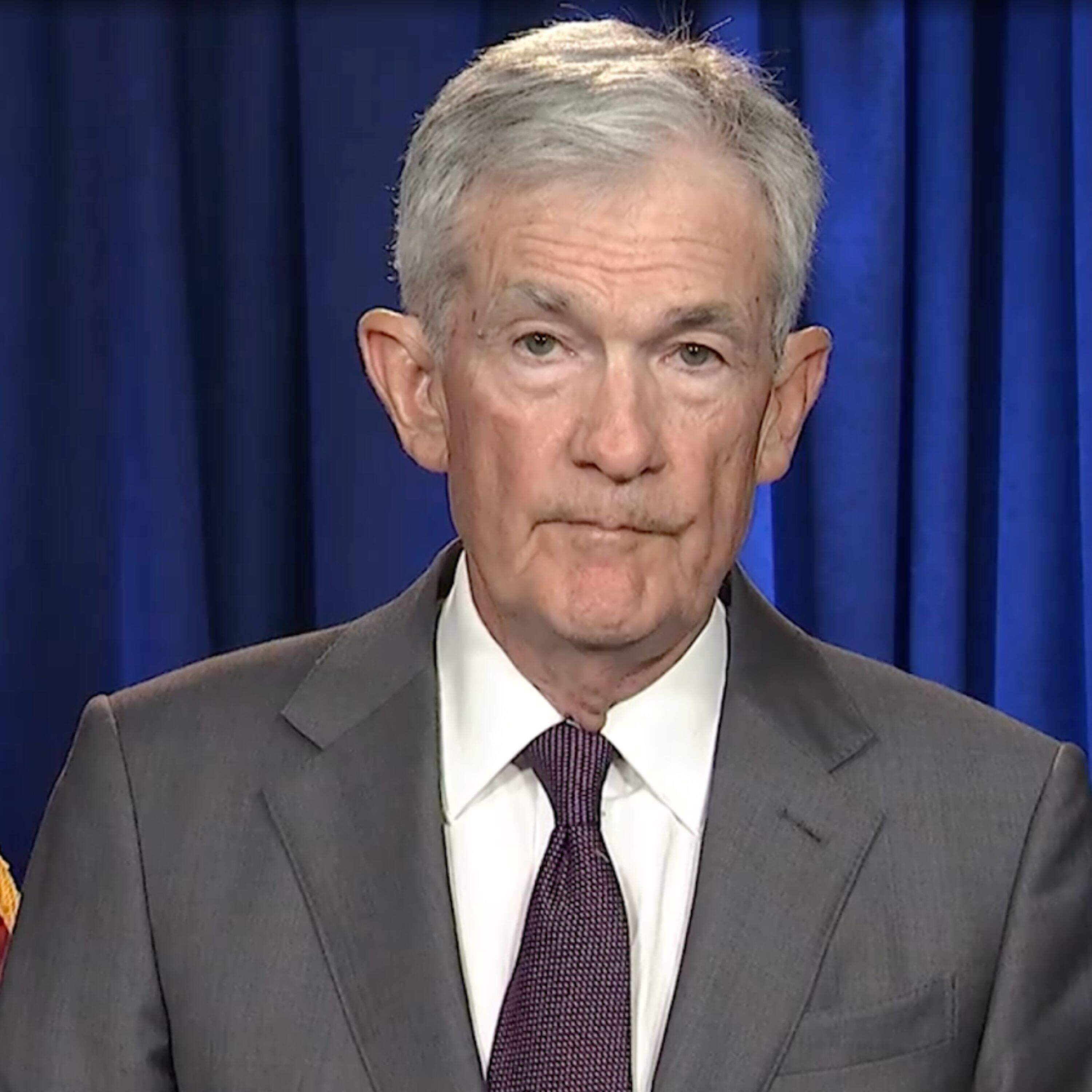
As loyal indicator listeners almost certainly saw this weekend, Federal Reserve Chair Jerome Powell posted arguably the most viral front to camera video ever in central bank history. Powell revealed that the Fed had been threatened with criminal charges. These charges are ostensibly about renovations to Fed buildings, but. But Powell was crystal clear with what he believes this investigation is really about.
- [00:37]
Jerome Powell
The threat of criminal charges is a consequence of the Federal Reserve setting interest rates based on our best assessment of what will serve the public, rather than following the preferences of the President.
- [00:48]
Darian Woods
This is the strongest we've ever heard Jerome Powell speak about President Trump's patterns of attacks on the Fed. He's paid to be boring and not spook the markets. And so over the last year, Powell has been relatively restrained in public. You know, maybe he's a little annoyed, but he sticks to the matters at hand. I'd say terse.
- [01:07]
Waylon Wong
So to drop a weekend video calling out the administration's threats on Fed independence. This is huge and we're going to get into it. This is the indicator from Planet Money. I'm Waylon Wong.
- [01:20]
Darian Woods
And I'm Darian Woods. Today on the show, what led to the administration's criminal investigation into Fed Chair Jerome Powell? How strong is it and what could come next?
- [01:33]
NPR Announcer
Support for NPR and the following message come from Edward Jones. What does it mean to live a rich life? Maybe it's full of brave first leaps, tearful goodbyes, and everything in between. And with over a hundred years of experience, your Edward Jones financial advisor can help. Edward Jones Member, SIPC this message comes from NPR sponsor Capella University. Learning doesn't have to get in the way of life. With Capella's game changing Flexpath learning format, you can set your own deadlines and learn on your own schedule. That means you don't have to put your life on hold to earn your degree. Instead, enjoy learning your way and pursue your educational and career goals without missing a beat. A different future is closer than you think with Capella University. Learn more at Capella.
- [02:25]
Darian Woods
Eduardo it's always worth reminding everybody that The Fed has two goals. Full employment and keeping inflation at 2%. And the main way the Fed does this is through interest rates.
- [02:37]
Waylon Wong
Yeah, and high interest rates sting. This is the crux of President Trump's grievance with the Fed and Jerome Powell. Trump wants lower interest rates because he believes the economy would get a boost from cheaper borrowing.
- [02:49]
Darian Woods
The Fed has lowered interest rates a little, but. But that might not continue. As we found out this morning, inflation is 2.7%. That's above the Fed's goal of 2%.
- [03:00]
Waylon Wong
Trump has repeatedly criticized Powell for being too late on rate cuts. The President claimed on NBC News on Sunday night that he didn't know about the subpoenas that the Fed received. But that Powell quote, is not very good at the Fed and he's not very good at building buildings. By the way. This is not a metaphor. We are talking about literal buildings. Yeah.
- [03:19]
Darian Woods
Powell implies that the subpoena is focused on some renovations. So let's go over some history. In 2017, the Fed board approved the renovations of two Fed buildings. These are along the National Mall. And the project was always going to be an expensive proposition for a few reasons.
- [03:38]
Waylon Wong
These buildings haven't had comprehensive renovations since they were first built in the 1930s. They have asbestos and lead, old plumbing, heating and ventilation systems. And of course you've got historical consideration. So it's a huge job to modernize them.
- [03:53]
Darian Woods
Costs have risen since. In 2021, the cost was estimated at $1.9 billion. Now the costs are estimated at around 2.5 billion, a 32% increase. The Fed attributed these to general inflation, more asbestos being discovered, and design changes after consulting with others. Regardless, these cost increases, plus some of the language used to describe the renovations, caught the eye of some Republican lawmakers.
- [04:22]
Waylon Wong
Rooftop garden terraces, like Republican Senator Tim Scott at Powell's regular update to the Senate Banking Committee mid last year.
- [04:30]
NPR Announcer
The ornate water features and final plans. The new elevators that dropped board members off at the VIP dining suite was page 37 of the final plans. The white marble was pages 40, 41, 65 of the final plans.
- [04:45]
Waylon Wong
Powell hit back.
- [04:46]
Jerome Powell
Can I just quickly say some of those are just flatly misleading the idea of elevators. You know, it's the same elevator. It's been there since the building was built. So that's, that's a mischaracterization. And some of those are no longer in the plans. They, you know, that's, that's several weeks later.
- [05:00]
Darian Woods
Trump seemed to cool down on the whole debacle after visiting the construction site with Jerome Powell.
- [05:06]
Waylon Wong
Ah, yes, I remember that interaction well. They had a little hard hat photo op and then I got kind of derailed with this back and forth over the price tag.
- [05:14]
Darian Woods
So the 2.7 is now 3.1.
- [05:17]
Jerome Powell
I'm not aware of that. Yeah, it just came out. Yeah, I haven't heard that from anybody at the Fed.
- [05:24]
Darian Woods
Straight out of the office.
- [05:28]
Waylon Wong
Yeah. So as Powell implies, like with the elevators, the details are not as scandalous when you dig into them. That so called rooftop garden terrace is actually at ground level. It's Just a garden on top of an underground parking lot. The new water features have been removed from the plan, and the marble is restoring the original marble.
- [05:48]
Darian Woods
Now, nobody loves cost overruns, and project managers can do better at preventing them. But spending more than you originally planned on large projects is incredibly common. For a past episode, I spoke to Danish researcher Bent Flubajer. He looked at 16,000 large projects worldwide, and he found that 92% of them went over budget, over schedule, or both.
- [06:14]
Waylon Wong
So garden variety cost overruns are not criminal. But was Powell's testimony last year, did he knowingly make a false statement to Congress? We don't have the exact subpoena from the Department of Justice, but based on what Powell has said seems to be implying that Powell lied to the Senate Banking Committee last year about the renovations. So you could squint and find discrepancies. Like when Powell said there's no roof garden terraces, was that true? If they're on top of an underground parking lot, yeah.
- [06:42]
Darian Woods
But all of this is just really splitting hairs. The reality is that the Fed's website backs up the substance of what Powell said in testimony. One of the key parts of perjury is what's called materiality. If Powell knowingly misled Congress, would that have had a material impact on how lawmakers made their decisions? Like, would Congress have done anything differently if they had better information about the greenery on top of the underground parking lot?
- [07:10]
Waylon Wong
Powell says we need to look at the bigger picture here. Trump has made it clear that he wants the Fed chair to do his bidding on interest rates. He started his attacks on Powell during his first term, and things have escalated during this administration. Remember, Trump tried to fire Fed official Lisa Cook. She sued the administration, and the Supreme Court is expected to hear that case soon.
- [07:30]
Darian Woods
Now, the Fed seems to have been defending itself. In December, it reappointed a slate of regional Fed presidents, extending their terms. This has the effect of reducing the impact impact Trump or Trump appointees can have on who leads the different Fed banks. This is important because these Fed presidents take turns on voting on interest rates. University of Michigan economist Justin Wolfers wrote on social media. If I'm reading this properly, they just Trump proofed the Fed and this math.
- [08:00]
Waylon Wong
Around who votes when gives us a clue as to why these attacks on Jerome Powell are happening. Now, like Powell is very close to ending his term as Fed chair in May. But the thing is, he can go back to his old voting role as a regular Fed governor, sticking around, voting how he likes until 2028. That's not something Trump would be happy about.
- [08:22]
Darian Woods
Yeah, and if I were the new Fed chair coming in, this would certainly make me a little bit nervous about defying the president.
- [08:29]
Waylon Wong
We've talked a lot on the show about how important central bank independence is. It's a pretty clear correlation internationally that the more politicians meddle, the higher inflation goes. This could explain why various Republican lawmakers have opposed opposed the subpoenas targeting Powell. Some, like Senators Tillis and Murkowski, have even issued statements criticizing the move.
- [08:50]
Darian Woods
So far, the market reaction has been fairly muted. This is a notable, but not necessarily unsurprising chapter in what's been simmering the last year the politicization of the Fed. In years past, no one's been particularly interested in what party appointed which Fed governor. Now the Trump administration seems to be doing everything it can to make a body filled with loyalists, including what appears to be fairly weak legal action against the board's chair.
- [09:23]
Waylon Wong
This episode was produced by Corey Bridges with engineering by Kwesi Lee. It was fact checked by Sarah Juarez. Kate Concannon edits the show, and the indicator is a production of npr.