← The Indicator from Planet Money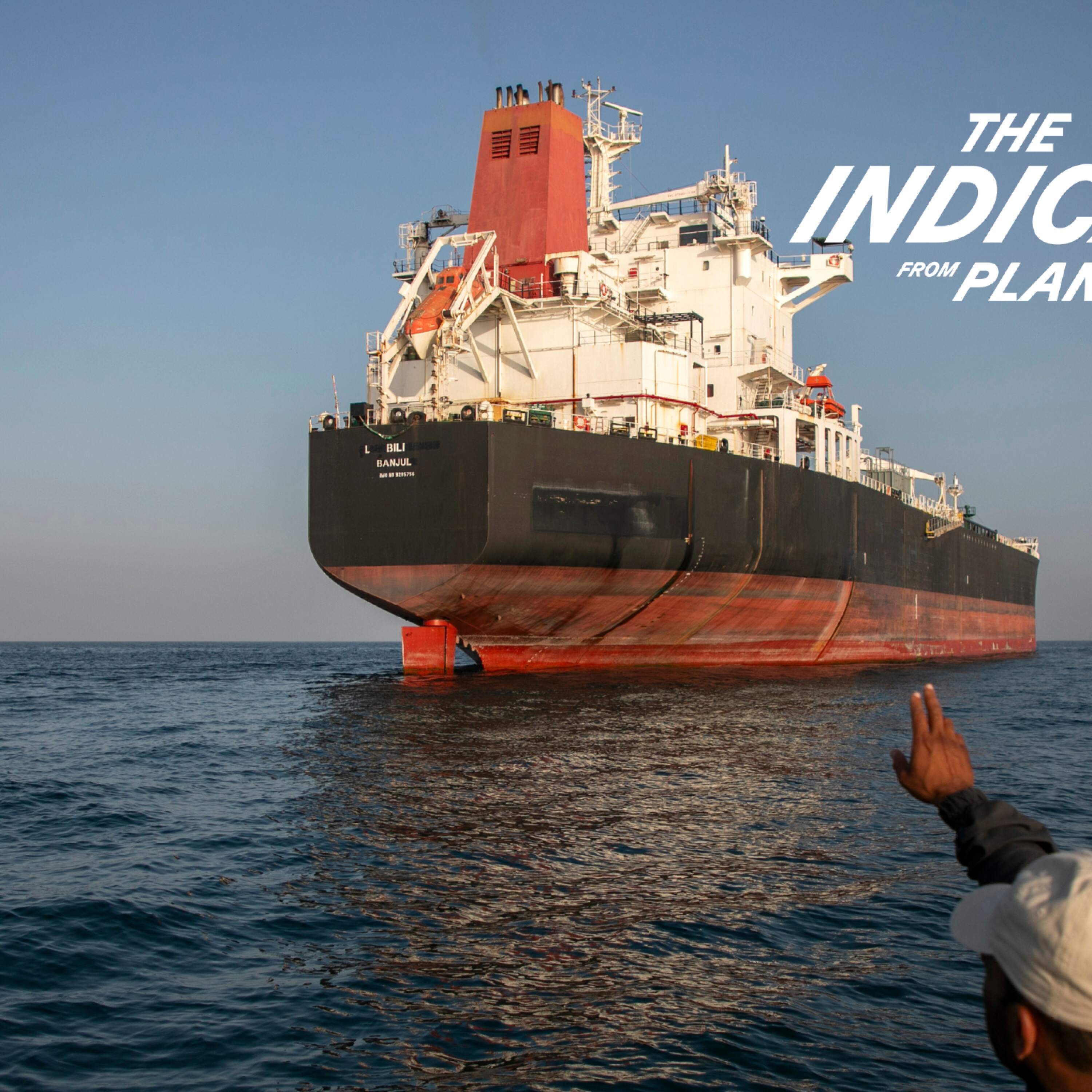
Loading summary
Transcript40 lines
- [00:01]
A
Npr. A couple of months ago, some oil analysts had a big flashing red warning sign. They said if the Middle east war continued through spring, the price of oil could potentially reach $200 a barrel. But right now it's actually closer to $100 a barrel.
- [00:32]
B
And even without getting out my calculator, I can tell you that $100 is way less than 200. So why is this happening? The US Israel war in Iran is almost three months in. Why isn't the price of oil even higher? This is an indicator from Planet Money. I'm Waylon Wong.
- [00:51]
A
And I'm Darian Woods. Today on the show the oil price mystery, which we learn about how the world is adapting to the blocked Strait
- [00:59]
B
of Hormuz and we ask how long until we might really hit stratospheric oil costs?
- [01:10]
C
This message comes from Capella University. You know that feeling when there's a spark building inside you that you were meant for more? That's your own drive pushing you towards what's next. Capella University gets that with their flexpath learning format, you can set the pace and earn your degree without putting life on pause. You've built experience and know what you're capable of. Now this is your time to turn that momentum into more. The only real question is what can't you do? Learn more at Capella. Edu. This message comes from Dell Technologies. Work interruptions happen, but with built in intelligence and optimized battery, the Dell Pro laptop powered by Intel Core Ultra with vpro is built for those who stay in the flow. Built for you Dell.com Dell Pro this message comes from Fisher Investments. Senior Vice President Michael Hosmar reflects on one of their core values.
- [02:10]
D
We want to empower our clients with knowledge. In fact, Fisher is built on that idea. It comes straight from our founder Ken Fisher, who believes the more our clients understand about the plan we've built for them, the more comfortable they will be with their personal financial financial situation.
- [02:26]
C
Learn more@fisherinvestments.com Investing in securities involves the risk of loss.
- [02:34]
A
Carl Larry works for Invaris. That's a company that provides information and advice to the energy industry.
- [02:41]
D
The bps, the shells, the Exxons. Anything you see there, you're stopping to get gas. They're proactively hedging or making sure that their risk is not too high when they pass along to the consumer.
- [02:53]
B
Carl charges oil companies a lot of money for his insights. That is prime advice as the Iran war stretches on. But we got to hear him for free.
- [03:02]
A
Yes. And Carl says the first big reason why the oil crisis now isn't as bad as ones in the past is because of fracking.
- [03:11]
D
The difference now is that America is actually exporting oil.
- [03:15]
B
The fracking revolution in the US completely changed the global oil market from the mid 2000s. So now the world isn't totally held hostage by the Strait of Hormuz.
- [03:24]
A
There's an interesting caveat here, which is that American producers have actually been kind of slow to increase production since the war in the Middle east started.
- [03:33]
D
Here in America, it's a tricky thing to start increasing your production because we don't know if those prices are going to drop again.
- [03:40]
B
Frackers and their investors got burned when the price of oil collapsed in the COVID pandemic. They've been reluctant to invest in expanding again. Any new wells means hiring people, getting the equipment and setting it up for the long run. But most of those wells won't be profitable once the price of oil goes back to what it was before the Middle east war.
- [03:59]
D
But I do think that people are starting to realize here in the US that there are producing that are fracking, saying, hey, this might be higher for longer. So with that in mind, they can start incrementally increasing that production, knowing that there is going to be a buffer somewhere down the road.
- [04:14]
A
With U.S. production not going up by much, you'd expect U.S. exports to be flat. But the U.S. along with many others, has started drawing down its strategic order oil reserve. And that's reason number two, why oil is hovering around $100 a barrel. Karl has a third explanation for why there seems to be a kind of lid on even higher oil prices than we might otherwise see. It's that we have seen increased production from other parts of the world.
- [04:41]
D
We're starting to see a lot of Canadian crude production moving out to other countries too, especially Asia. Last week we saw 550,000 barrels a day of oil crude crude come in from Venezuela. We have not seen that level that high since January 2019.
- [04:58]
B
Edo, Nigeria, Saudi Arabia trying to increase exports via a pipeline, plus easing of Russian oil sanctions. And you're starting to see real efforts to increase supply.
- [05:08]
A
Yeah, it's always worth remembering this point in economics that, you know, the higher a price for something goes, the greater incentive there is for the market to provide more of it. And that has taken an edge off the Strait of Hormuz blockades.
- [05:22]
B
Another Econ 101 lesson. Higher prices also mean less demand. That's the fourth explanation. Oil consumption has dropped all over the world. Some of that is from oil refiners buying less. Some is from people deciding to drive gas cars less, and some is from outright rationing in countries like Sri Lanka, Myanmar, and Slovenia.
- [05:43]
A
A significant drop in oil imports, though, is from China. China's ramp up of solar panels and electric vehicles might explain a little bit of this drop, but it's been so huge that analysts are scratching their heads.
- [05:57]
B
One way the Chinese government could be curbing demand might be through massive drawdowns of their strategic oil supplies, like the US Is doing. But satellite imagery doesn't show big drawdowns. So far.
- [06:08]
D
The Chinese government is very strict on, you know, releasing information that they would think sensitive to, to outsiders. So it remains a mystery. I agree.
- [06:18]
A
One theory that some oil analysts have is that China might have underground strategic oil reserves that they're drawing from.
- [06:25]
B
So this leads to an uncomfortable conclusion. If the world has been spared even higher gasoline prices, partly because of countries like the US and China drawing down their strategic oil reserves, then that can't last forever.
- [06:39]
D
Another large strategic reserve release would be very, very unnerving because you're getting to a point where there are going to be a limited amount of reserves left, and then that place I don't think anybody wants to be.
- [06:53]
A
So is there an X date you're
- [06:54]
D
thinking about by the end of the year? If we're in the same situation, it would be catastrophic financially. That would be just really, really not, not good for the rest of the world.
- [07:06]
A
Wow. I hope that doesn't happen.
- [07:09]
D
We all do. We all hope it doesn't happen, that's for sure.
- [07:12]
B
Other oil insiders are concerned we're going to reach that breaking point sooner. The head of the International Energy Agency said this week that we only have several weeks of commercial inventories left. He told the G7 finance ministers that the financial markets weren't taking into account just how fast oil reserves were dwindling.
- [07:30]
A
It's an active debate, and it really comes down to how much you think supply and demand can adjust. It's also worth noting that we've dealt with higher oil prices before.
- [07:41]
D
Oil prices were at $147 back in 2007, 2008, but this time they're not.
- [07:48]
A
There was high demand from China at that time, and the US hadn't yet scaled up its fracking.
- [07:52]
B
Yeah, it sometimes feels like gas prices are unprecedentedly high, but no, they actually have been higher even in recent memory. Maybe just not in my memory, because I do not remember it being at 147. I will say, though, that I didn't own a car, then I think that's why it didn't, like, really cross my radar.
- [08:10]
A
No, the price of oil spikes a lot. This one seems particularly worrying, maybe because we don't know how it's going to end. But yeah, we have been here before. This episode was produced by Angel Carreras with engineering by Jimmy Keeley. It was fact checked by Sierra Juarez. Cake and Cannon edits the show and the indicator is a production of NPR
- [08:35]
C
Foreign. This message comes from Insperity providing HR services and technology from payroll benefits and HR compliance to talent development. Learn more@insperity.com hrmatters this message comes from
- [08:55]
B
Edward Jones where they believe rich means opening yourself to new possibilities. That's why your dedicated financial advisor meets you where you are, helping you move forward with confidence. Let's find your rich Edward Jones Member SIPC.