← The Indicator from Planet Money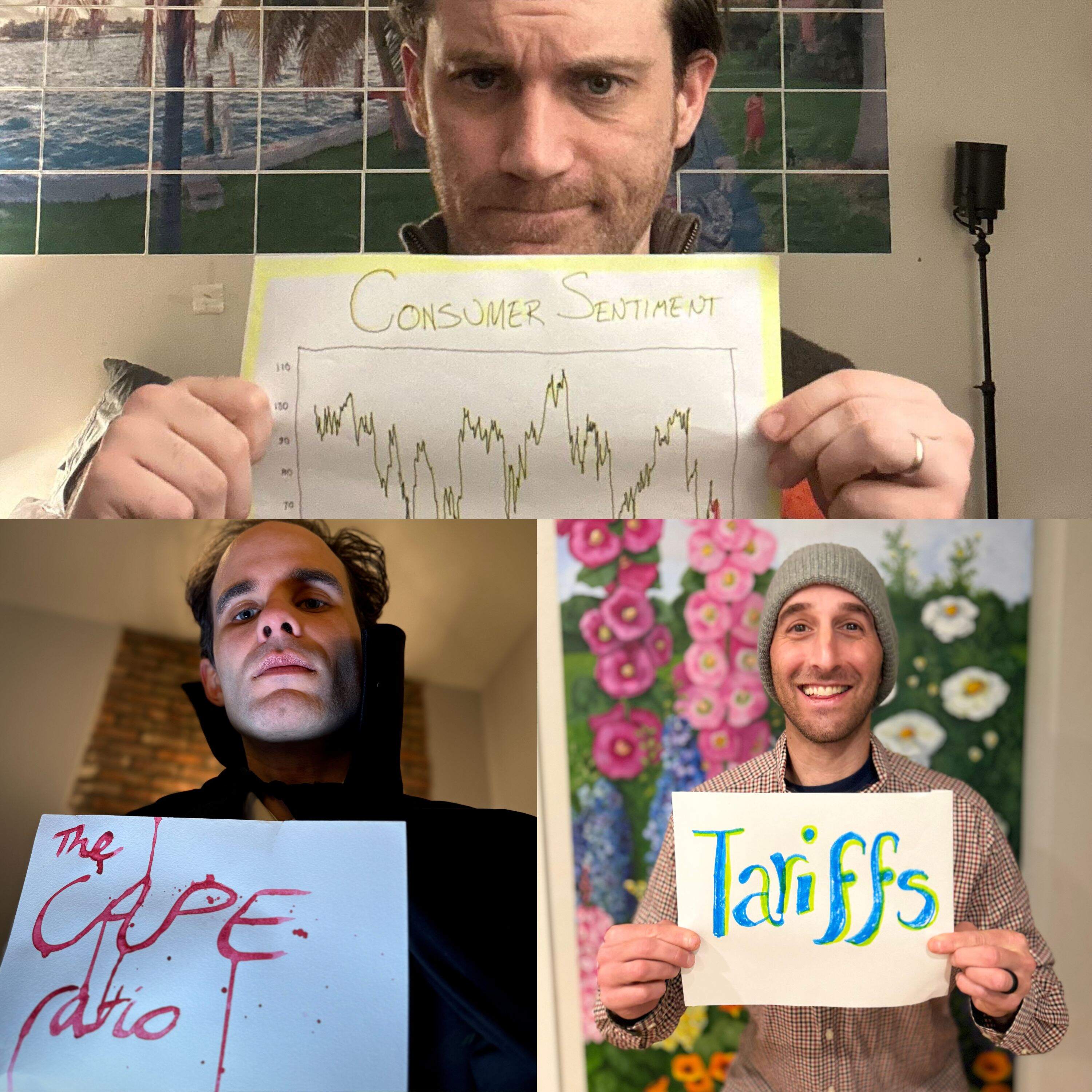
The Indicator from Planet Money
Tariffs. Consumer sentiment. Cape Ratio. Pick The Indicator of The Year!
00:09:03
Loading summary
Transcript68 lines
- [00:01]
A
Npr.
- [00:12]
B
This is the indicator from Planet Money. I'm Jarrian Woods. It's the end of the year. We've given thanks, stockings have been stuffed and we're spending meaningful time with loved ones. In fact, today, today I sit down with my Planet Money family and do what families do best around the holiday season. Engage in brutal soul breaking arguments in a fashion most public. That's right. It's time for another family feud. Today, I'm competing head to head with my Planet Money colleagues. Kenny Malone, bring it ya egg.
- [00:47]
C
Is that what they say in New Zealand? Something like that.
- [00:49]
B
That's right. And Gregorzowski, Ken, can't we all just get along? No, not for the next nine minutes. And in case you aren't up to speed, here are the rules. Each of us has a spiel for our indicator of the year. We will each have 60 seconds or less to make our case or else. And in the end, you, dear listener, will vote on who had the indicator of 2025. Coming up on the show, we have.
- [01:18]
C
Kenny Malone rightfully explaining why consumer sentiment for the third straight year is obviously the indicator of the year.
- [01:26]
D
And I'm Greg Rosalski. I'm championing the idea that tariffs were the story of 2025.
- [01:33]
B
And we'll have me, Darian woods, seeing terrifying signs in the stock market. That's after the break.
- [01:42]
A
This message comes from Warby Parker. Prescription eyewear that's expertly crafted and unexpectedly affordable. Glasses designed in house from premium materials starting at just $95, including prescription lenses. Stop by a Warby Parker store near you.
- [01:57]
E
Support for NPR and the following message come from Edward Jones. A rich life isn't always a straight line. Unexpected turns can bring new possibilities. With a hundred years of experience navigating ups and downs, Edward Jones can help guide you. Let's find your rich together. EDWARD Jones, Member, SIPC this message comes from NPR sponsor Charles Schwab with its original podcast on investing. Each week you'll get thoughtful in depth analysis of both the stock and the bond markets. Listen today and subscribe@schwab.com on investing or wherever you get your podcasts.
- [02:39]
B
All right, Family Feud, Katie Malone, you are up first.
- [02:44]
C
All right, got my script here.
- [02:44]
B
Okay, Tyber starts now.
- [02:46]
C
It's the economy, stupid. That's the famous formula for why people vote the way they do. I am here to say no. It's what people feel about the economy. You know what? I'm accidentally reading off of my script from two years ago when I also did consumer sentiment and it won. Indicator of the year, because you may remember back then, we're all freaking out.
- [03:07]
D
Because we played out.
- [03:08]
C
We were so, so scared. Okay, anyway, this is the right script. Is this the same script right here? Now, in pre pandemic times, the University of Michigan's consumer sentiment index was hovering around 100, meaning people felt okay about the economy, but for the past year, it's been down around the 70. No, you know what? This is Adrian Ma's script from last year when he also won for consumer sentiment. It's 50s. It's been in the 50s this year. Historic lows. Here, here it is. Here's the right script. 2025 was the year we began to fly full on, drown in bad feelings about the economy. We're sick to our economic stomachs about the future of prices and inflation and jobs and housing. Consumer sentiment is the canary in the coal mine. And it's been chirping louder and louder over the last three years. Or I guess chirping less and less is how canaries work in the coal mine. Anyway, consumer sentiment, for your consideration, you.
- [04:01]
B
Might have made a good argument behind all that buzzing, but it took you a while to get there.
- [04:06]
D
Yeah, I know. There was a big wine.
- [04:07]
C
Well, I kept getting interrupted by my colleagues, so I figured, I figured I.
- [04:10]
D
Might just go through feeling my individual consumer sentiment was tepid after. After that display of played out material.
- [04:20]
B
And good head fakes in a row.
- [04:22]
C
I'm just saying consider consumer sentiment.
- [04:24]
B
I love the head fakes. Now let's go to Greg. What is the indicator of the year?
- [04:29]
D
So my economic story of the year, it centers on the most beautiful word in the English language. That is, at least according to President Donald Trump, tariffs. You guys ready?
- [04:41]
C
Wait, is this part of your argument? This isn't fair. You got extra time?
- [04:44]
D
No, no, this is not extra time. This is the wind up. This is like, you know, okay, this is putting the ball on the tee. I don't call it.
- [04:52]
B
It's not the time.
- [04:53]
C
I don't know.
- [04:54]
B
All right, go.
- [04:55]
D
Okay, so the tariff story was huge this year. Remember Liberation Day and Trump imposing like super high tariffs on countries around the world. He including, like a territory whose population was largely penguins. You guys remember that? Then like the stock market freaked out and then like President Trump paused tariffs and there were like negotiations in the back and forth and the up and down and the drama. Costco just filed a freaking lawsuit against the Trump administration over them. This is the economic story that keeps on giving. And this story, it's historic. We're talking like a paradigm shift for the economy. In 2024, the average effective tariff rate that U.S. consumers faced was 2.5%. That number is now 16.8%. That's the highest tariffs have been since 1935. And this story, it's not over. There are still big questions over what these tariffs are going to do to the economy and whether Trump imposing tariffs without congressional approval was even constitutional. The Supreme Court is expected to rule on this issue soon. Talk about a year end cliffhanger.
- [05:57]
B
This was more drama than white voting.
- [06:01]
C
That's a good kicker. Now, one thing I have been thinking about the Costco lawsuit is do you think that they take the lawsuit and package it into like a box that was like previously used for oversized olive oil containers and that's how they deliver it?
- [06:16]
D
I don't care how they deliver it, as long as hot dogs are still $1.50.
- [06:19]
C
Okay, Darian, our final contender for indicator of the year. Darian's putting on a coat. A cape. What? What is a cape? Tyrion's dressed as Dracula.
- [06:30]
D
What is this? Are you a count?
- [06:32]
B
Yes, I am Count Dracula. I've got my cape on. It's keeping my shoulders warm. And this relates to my indicator.
- [06:42]
C
Okay, again, everyone's getting a little pre clock time, so I want a little generosity on my postcard.
- [06:47]
B
I haven't said anything.
- [06:48]
C
Well, you have to wind up. I did. No wind ups.
- [06:51]
B
I'm talking about my outfit.
- [06:52]
C
All right, here we go. All right, here we go. In 3, 3, 2, 1.
- [06:57]
B
My indicator of the year is the Cape ratio. This is the cyclically adjusted price to earnings ratio. It measures how expensive share prices are relative to how much money they actually earn. The higher the Cape ratio, the more expensive stocks are. And this indicator is the highest it's ever been apart from just before the dot com crash. And that is as frightening as any horror story because when stocks are this expensive, they tend to underperform over time. And this indicator touches so many economic stories of 2025, the AI boom, the fears of a bubble. It's data center construction sucking the blood out of investment in industries like manufacturing. Also the K shaped economy where the rich, who tend to own a lot of stocks, are getting richer and the poor are struggling. For an indicator that captures a blood curdling year, the Cape ratio has no peer.
- [07:53]
D
I just love that like your mind goes to Dracula when you go to cape. Why not Like Superman, Batman.
- [07:58]
C
It's true. Is the Cape draining the economy of something? Is that the implication the optimists would see Superman?
- [08:04]
B
These AI tech companies Saving the world. The pessimist might see Dracula sucking the blood out of the rest of the economy.
- [08:11]
C
I will say I do understand how Cape ratio shows the rich getting richer, but you also mentioned that it shows low, low income people doing poorly. How does that work?
- [08:20]
B
This is a bit of a stretch, I admit. Ultimately, everyday people are the ones who have to buy things so that companies can get earnings. And at the moment, earnings are not growing fast enough to keep stocks looking cheap.
- [08:33]
D
So we're not like buying enough ChatGPT subscriptions or something?
- [08:37]
B
Exactly. Don't make Sam Altman cry.
- [08:39]
C
How many do I need to buy? Yes.
- [08:41]
B
You gotta prop up the AI economy with multiple subscriptions, Darian.
- [08:46]
C
You can't put on that cape and not give us a little. Not give us a little Dracula. Can you give us a little.
- [08:50]
D
Yeah. Where's the impression?
- [08:52]
C
Just a little impression. You can do what we do. In the shadows. The Kiwi. The Kiwi Dracula movie.
- [08:57]
B
Yeah, no, that's. That's a. That's a great. That's a great movie.
- [09:02]
D
All right, you're going to nail this. Come on.
- [09:04]
B
My indicator of the year is the cave ratio.
- [09:07]
E
Yes.
- [09:10]
D
Yes.
- [09:11]
B
I'm making my pitch for the indicator of the year.
- [09:13]
C
It's pretty good.
- [09:14]
B
The cape, Fraser.
- [09:15]
C
Okay, you know what? You may have just won my vote. Honestly, that's really fantastic. All right, so listen, those are your three options, listeners. We have consumer sentiment, we have tariffs, and we have. Say it again, Darian.
- [09:28]
B
The Cape Fray show.
- [09:30]
C
Yeah. So good. You could email your votes to indicatorpr.org or leave us a comment on our planet. Money, Instagram. I mean, Darian, I feel like you should take the credits.
- [09:41]
D
Yeah.
- [09:42]
B
This episode was produced by Angel Ferraris with engineering by Chrysie Lee, who is fact checked by Sierra Juarez with editing by Julio Ricci. Cake and Cannon is the show's editor and the indicator is a production of npr.
- [09:59]
A
This message comes from BetterHelp. The holidays bring traditions and joy, but they can be tough too. Therapy helps you care for yourself so you can truly show up for what matters most. Visit betterhelp.com NPR for 10% off.
- [10:14]
E
This message comes from Solidigm. Yesterday's approach to storage can't meet the demands of today's AI ambitions. Bigger, faster and more energy efficient Solidigm Solid state storage solutions are optimized for AI. Learn more at storage4ai.com this message comes from NPR sponsor Rosetta Stone, an expert in language learning for 30 years. Right now, NPR listeners can get Rosetta Stone's lifetime membership to 25 different languages for 50% off. Learn more at rosettastone. Com npr.