Loading summary
Transcript66 lines
- [00:01]
NPR Announcer
Npr.
- [00:06]
Waylon Wong
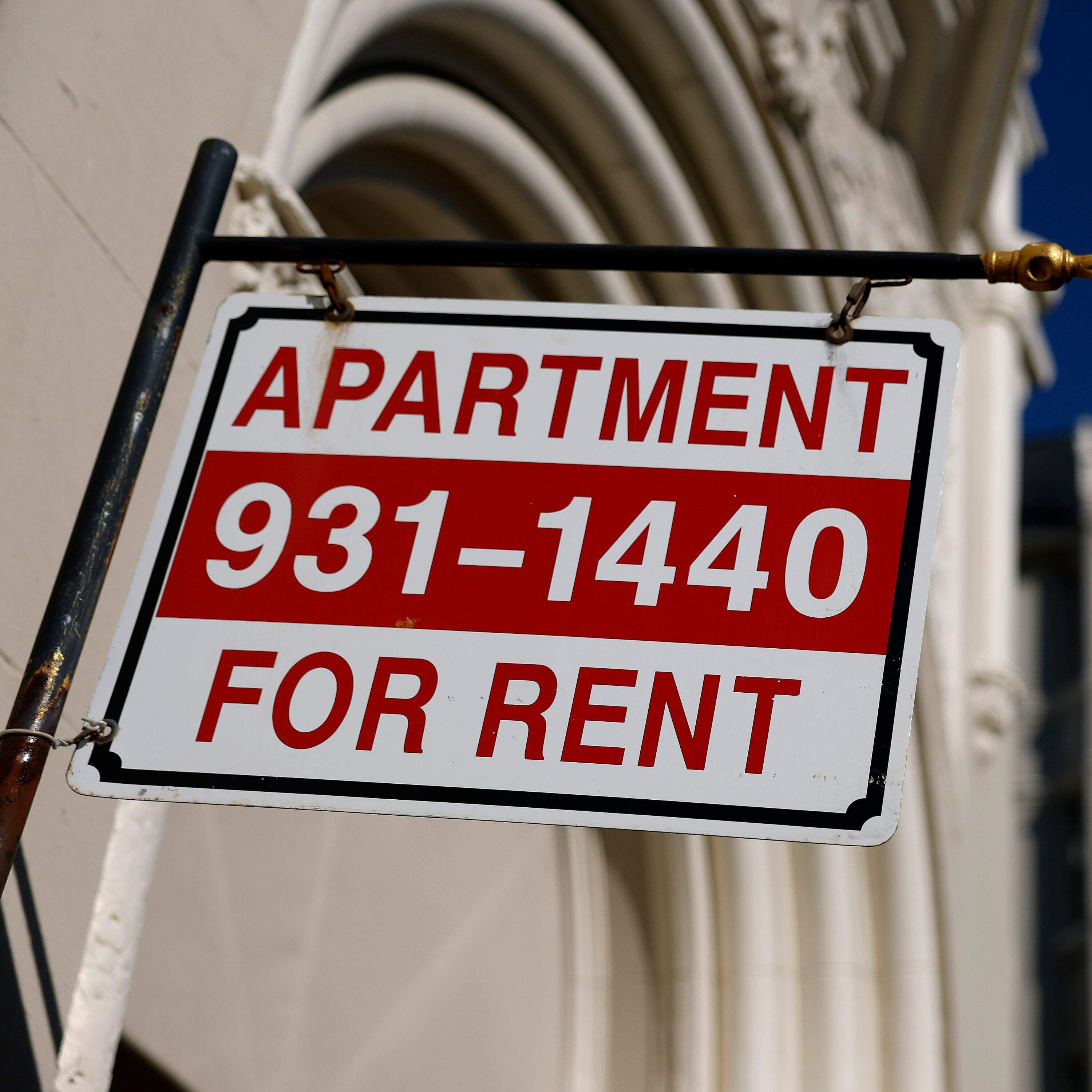
If you are a longtime renter, you've had a rough go of it for a while. The typical asking rent has gone up about 37% since before the pandemic, according to Zillow. Which is why it surprised us when we were talking with Zillow senior economist Kara Ng and she said this.
- [00:23]
Kara Ng
Yeah, so it's 2026 and renters, this is your year. It's a renter's market right now.
- [00:29]
Waylon Wong
Now renters, before you grab your sharp knives and your leases and say that that can't possibly be true, whether or not you live in a renter's market depends on where you live. This is the indicator from Planet Money. I'm Waylon Wong and I'm here with NPR's personal finance reporter Steven Besaha.
- [00:50]
Steven Besaha
Thank you for having me back on the pod, Waylon.
- [00:52]
Waylon Wong
It is so fun to have you back. Stephen, we missed you.
- [00:55]
Steven Besaha
Miss being here too. And on today's show we get to vastly different renters experiences from Nashville to Chicago and learn what makes the difference between a renter's market and a renter's nightmare.
- [01:08]
Waylon Wong
You guessed it, location, location, location.
- [01:14]
NPR Announcer
This message comes from Schwab. With the new Schwab Teen Investor account, teens can gain hands on investing experience and build positive money habits. It's an account co owned by you and your teen so you can monitor and engage with the account while your teen learns how to invest and manage money. Learn more@schwab.com this message comes from NPR sponsor Carvana. Carvana makes car buying easy 100% online prices down to the penny, delivered to your door. Why make car buying hard when it could be easy? Visit Carvana.com today. Terms may apply Support for this podcast and the following message come from Vanguard. Every day, shareholders meet to discuss important matters about the companies you invest in. Now you can make your voice heard too. Vanguard Investor Choice makes it easy to set your proxy voting preference for your eligible Vanguard index funds. Visit vanguard.com investorchoice to learn more. Vanguard investors own shares of their index funds and those funds own shares of the companies they invest in. Vanguard Marketing Corporation Distributor before we zoom
- [02:20]
Steven Besaha
in on specific cities, if we look at the US As a whole, it doesn't does look like a renter's market.
- [02:26]
Waylon Wong
Yeah, if you look at rent in May, it was up about 2% from a year earlier, according to Zillow. That's slower than the rate of inflation. And at the same time, wages grew
- [02:35]
Steven Besaha
faster than rent A win win and realtor.com even shows rent falling nationally and
- [02:41]
Waylon Wong
the reason for that comes down to economics 101, supply and demand. The US has recently gone through an apartment construction boom. In 2024, the US built more than 600,000 units. That's the most in Dec. That huge
- [02:57]
Steven Besaha
increase in supply has outpaced demand, at least nationally. Zillow economist Kara Eng says apartments are sitting empty.
- [03:05]
Kara Ng
There's a lot of apartment buildings hitting the market all at once, and property managers are trying to fill it, and they're doing it with freebies.
- [03:12]
Steven Besaha
Freebies. Landlords aren't just lowering rent, they're offering deals. Out of all the rentals listed on Zillow in April, almost half were offering some financial incentive to move in.
- [03:23]
Waylon Wong
A Zillow record, the incentive could be anything from a waived pet fee to a month or two of free rent. Free rent.
- [03:31]
Kara Ng
Renters tend to like the free month of rent. And it doesn't hurt to ask because right now you guys have the power.
- [03:39]
Steven Besaha
So what does all this renter power look like?
- [03:43]
Mason Comins
All sorts of apartments. Just text me, well, how about this? Or how about this?
- [03:46]
Steven Besaha
Mason Comins was recently apartment shopping around Nashville and apartments were texting him with deals. So he used that renter power to negotiate.
- [03:55]
Mason Comins
Well, this place is doing two months free and you're only doing one month free. And they're like, okay, well we might be doing two months free. I even saw some places doing three months, three and a half months free.
- [04:05]
Waylon Wong
I'm sorry, three and a half months. That's a whole financial quarter of free
- [04:10]
Steven Besaha
rent, a whole quarter off of your rent. So these perks, they are especially common in sunbelt cities like Nashville, Phoenix and Austin, where there's a lot of land to build on and fewer regulations to stop it. So more apartments getting built and more deals.
- [04:27]
Waylon Wong
Mason ended up going with the place that was offering two plus months of free rent. It's a brand new apartment complex complete with a pool, a gym, and a market.
- [04:36]
Mason Comins
There's a little kiosk like you would have in an airport, and you go over, you scan your items and then you check out.
- [04:41]
Waylon Wong
Not counting those free months off, the rent is $1,800 a month.
- [04:45]
Steven Besaha
What do you say to someone who's like, you're saying it's renter's market, but man, that sounds like a lot of money to me.
- [04:50]
Mason Comins
I mean, it is a lot of money. It's not cheap at all. But when I'm looking at eighteen hundred dollars for a one bedroom versus, okay, I can drain all the money that I have for a down payment on a house and then still come out with a, you know, $3,000 mortgage. That's significantly a lot more of my paycheck going to a housing payment. Yeah.
- [05:10]
Steven Besaha
LendingTree found that US homeowners generally pay each month about 37% more than renters. And while homeownership is one of the main ways Americans build wealth, renters can use those savings to make investments and in some cases even be financially better off than homeowners.
- [05:28]
Waylon Wong
Of course, if you really do want to be a homeowner, then those same supply and demand forces that are making rent more affordable could do the same for the housing market.
- [05:36]
Steven Besaha
Yep. Congress, in fact, just passed a housing bill with overwhelming bipartisan support. One of the main ideas in it is to encourage more home building, to boost supply and lower home prices, in part by reducing regulation around construction and offering financial carrots to local communities that build more.
- [05:56]
Waylon Wong
So far, President Trump has refused to sign it. He's called it a yawn compared to his election security bill, the Save America act, and he wants that passed first. But so long as he doesn't veto the housing bill, it should become law without his signature within the next week.
- [06:11]
Steven Besaha
Now, when it comes to renter power, there are limits. For one, these financial perks are meant for new residents. They often are not offered. If you want to renew your lease.
- [06:22]
Mason Comins
If every year I kind of want to get a couple months off free rent, then I would have to move to do that.
- [06:27]
Steven Besaha
And he has moved over five years in Nashville. He has moved four times in large part to get those perks.
- [06:34]
Waylon Wong
Oh, no, that's too much moving for me.
- [06:37]
Steven Besaha
Well, that's the idea. Is that like, if you. Why offer these incentives when, you know people don't want to move?
- [06:42]
Waylon Wong
How much pizza has he offered? Free pizza. Has he offered to France to help him move?
- [06:47]
Steven Besaha
Probably covered by a few months of free rent.
- [06:49]
Waylon Wong
If you're listening to this and you're not in Nashville, you're probably a little miffed.
- [06:54]
Steven Besaha
So when you hear someone from Zillow say, right now it is a renter's market in the U.S. what is your first reaction to that?
- [07:02]
Waylon Wong
Hell, no. Sorry, I don't know if I can say that.
- [07:06]
Steven Besaha
The voice of indignant renters everywhere is Chloe Traub. She rents a one bedroom apartment in Chicago with her boyfriend, Carson McDonald, for $1,600 a month.
- [07:17]
Waylon Wong
And that is a deal.
- [07:20]
Steven Besaha
It's like a screaming.
- [07:21]
Waylon Wong
That's like a steal. In Chicago, what neighborhood does Chloe live in?
- [07:26]
Steven Besaha
She said Lincoln Park.
- [07:27]
Waylon Wong
Okay, that is a steal. Good job, Chloe.
- [07:31]
Steven Besaha
Well, Chicago does have some of the fastest growing rent in the country, like five and a half percent year over year.
- [07:38]
Waylon Wong
So this is a big caveat regarding the renter's market. It depends on where you live. Sure. Places like Nashville went on apartment construction sprees offering all these renter freebies. Carson and Chloe visited Nashville recently and saw all that extra supply.
- [07:53]
Steven Besaha
All these big new constructions with these banners that say two months free rent.
- [07:58]
Waylon Wong
We just drove through and installed that. Yeah, lots of building.
- [08:01]
Steven Besaha
If you frequent Nashville or if you have over the past 10 years, the skyline looks drastically different.
- [08:07]
Waylon Wong
But cities like Chicago, Los Angeles, and Philadelphia did not get that construction boom. The Midwest and Northeast in general just saw way fewer new units compared to the South. It depends on where. But that can be because of lack of land or regulation getting in the way.
- [08:24]
Steven Besaha
Only about 20% of Chicago rentals on Zillow are offering those financial move in perks. There are just too many renters chasing not enough apartments. Supply and demand are reversed there.
- [08:35]
Waylon Wong
Like take when Chloe was checking out an apartment and told the guy showing the place that the rent was too much for her. He goes, it's okay, like, I'll fill it. I have 12 showings after you. Like 12, 12 fricking showings. This guy's like subletting it. Like, he goes, it's a rat race out there. And I go, exactly what I've been saying. Like, you know,
- [08:56]
Steven Besaha
and even if you have gotten a good deal on an apartment in the past few years, rent is still way up from where it was before the pandemic.
- [09:04]
Waylon Wong
We brought this point up with our renters. Market economist Kara Ng with Zillow.
- [09:08]
Kara Ng
Yeah, no, that's very valid. You're exactly right. Rents went up, what, 37% since before the pand. I mean, that was a big shock. Remember what happened? The pandemic is prices. If everything went up.
- [09:21]
Steven Besaha
But at least right now, the cost of rent has not gone up as fast as other expenses over this past year, like the cost of electricity, the cost to fill up your car.
- [09:30]
Waylon Wong
Kara says yes, in March, rents were still rising, but wages were rising even faster. And that translated into an additional $2,300 a year in people's pockets. That's not counting those free months of rent some renters are getting.
- [09:45]
Steven Besaha
And again, that's an average. It all depends on where you live. And if you got that raise.
- [09:50]
Kara Ng
Now, I know with gas prices right now, like, I don't know how far that will go. But it does mean that rent is the place giving you that breathing room
- [10:00]
Steven Besaha
as for renters who do not want to move and still want those incentives. Kara says, talk with your landlord. Negotiation power is in your favor, at least in some parts of the U.S.
- [10:11]
Waylon Wong
yeah, not what that guy Chloe was talking to who was like, it's a rat race out there. It's like, good luck. May the odds be ever in your favor. This episode was produced by Corey Bridges with engineering by Travis Hagan. It was fact checked by Sierra Juarez. Cake and Cannon is our editor and the indicator is a production of NPR. This message comes from Midi Health co founders Dr. Kathleen Jordan and CEO Joanna Strober discuss why they started a virtual platform for women in perimenopause and menopause. The symptoms and experiences that women have in midlife I think were underappreciated or possibly even trivialized. The changes of perimenopause and menopause create a broad spectrum of symptoms and can actually lead to long term health issues, but too few clinicians are trained in it. I also want to add often the type of care that women are needing is very iterative. It requires trying different medications, learning about their body and learning how to take care of themselves. And so what we've tried to do at Midi Health is create a new type of care system that is responsive to women's needs and helps them take care of themselves and stay healthy instead of just treating disease. Midi Health committed to helping women in midlife with perimenopause and menopause care. Accessible via telehealth visits@joinmidi.com.