Loading summary
Transcript44 lines
- [00:01]
A
Npr.
- [00:06]
B
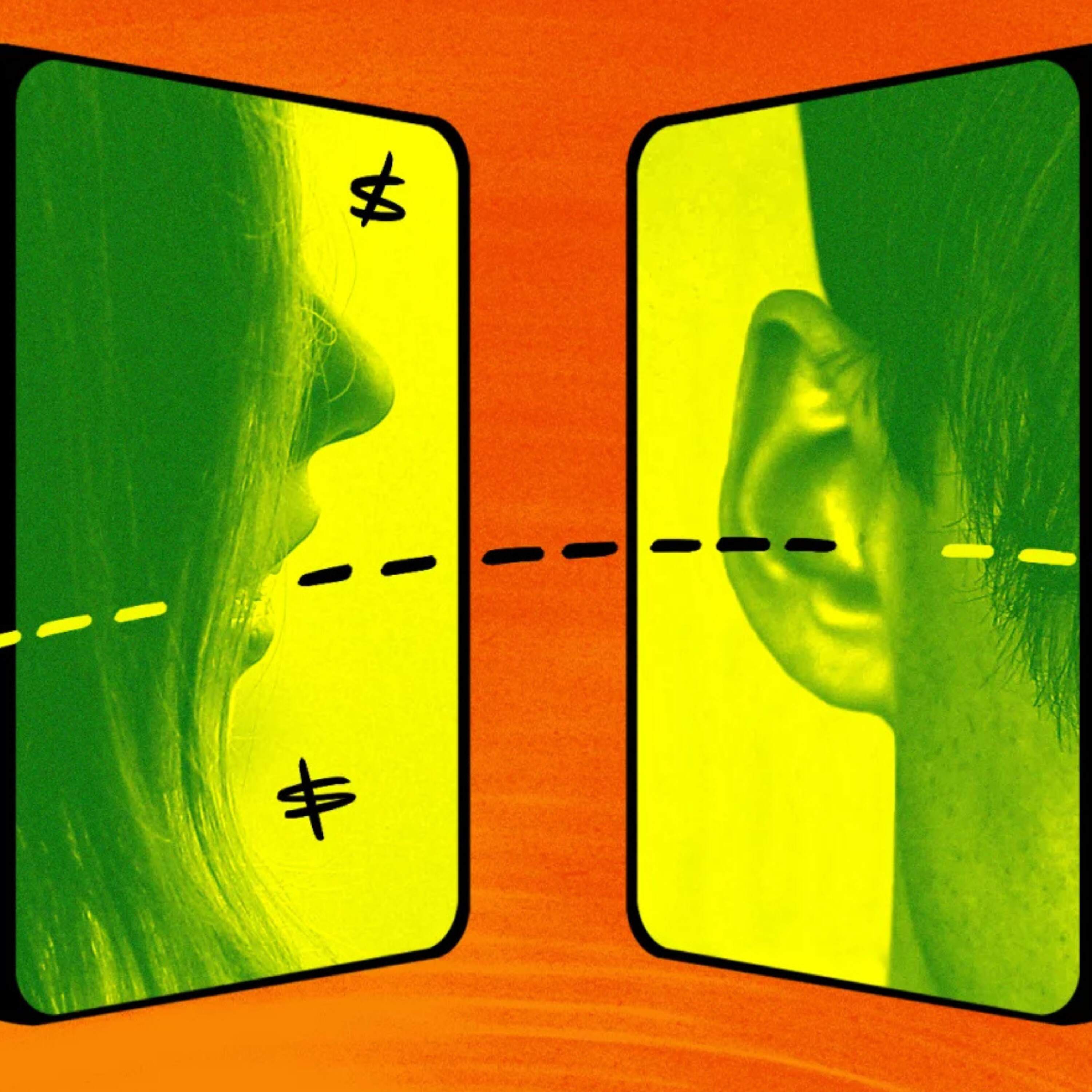
This is the Indicator from Planet Money. I'm Darren Woods. Musicians from veteran rockers the Rolling Stones through to the up and coming pop star Bella K have one thing in common. Influencers told us they were offered money by these artists labels to recommend their songs. So that music revealer you trust on Instagram or TikTok. So some of those songs might be paid for and much of this is going undisclosed. Isabela Gomez Sarmiento is a music reporter at npr and she's just done an investigation into how music influences work and how that shapes our taste. Welcome to the show.
- [00:48]
C
Thank you for having me. I'm so excited to be here.
- [00:50]
B
It sounds like you've been to a shadowy underworld of music and you've lived to tell the tale.
- [00:54]
C
Yeah, I've survived. And what I've learned is this is way more widespread than we realize.
- [00:59]
B
Yeah, I was struck to learn just how common this is. So today on the show, who is an industry plant and why does it matter? We delve into the slippery business of music business.
- [01:14]
D
This message comes from Schwab. Self directed investing, trading, full service wealth management, Automated investing, Financial planning, Thematic investing, Retirement planning. And to think that's just a small taste of what Schwab offers. Because Schwab knows that when it comes to your finances, choice matters. No matter your goals, investing style, life, stage or experience, Schwab has everything you need all in one place so you can invest your way. Visit schwab.com to learn more.
- [01:45]
E
This message comes from Insperity, providing HR services and technology, from payroll benefits and HR compliance to talent development. Learn more@insperity.com hrmatters
- [02:02]
B
so Isabella, it's not a new thing that recording companies try to pay someone to create buzz. Like, there's a whole sordid history here.
- [02:10]
C
Yeah, totally. This is most commonly known as payola, or like plugging music for play. Going back to the 19th century when people would get paid to plug sheet music, it obviously picked up a lot of steam once broadcast radio became the dominant form of entertainment. You have a lot of labels and artists paying radio DJs to play their song. In 1960, the Federal Communications Commission really cracked down. They effectively outlawed it. So payola is illegal.
- [02:36]
B
Right. Radio listeners expected their DJs to be selecting from their or their audience's music tastes. So payola labels paying those DJs was outlawed.
- [02:47]
C
Correct. But that doesn't mean it's stopped. We know that there were investigations and settlements into the practice well into the 21st century. And there are other ways to get around Those laws, if people are engaging in it in any kind of way, they're trying to hide it as best as they can. But the Federal Communications Commission does not regulate social media. So we have this kind of gray area for where all of these marketing tactics, they're not new, but they've kind of mutated to new platforms and to new audiences.
- [03:13]
B
And there are looser requirements when it comes to social media. Let's Fast forward to 2020, when TikTok and short form videos really took off. How did labels use influencers to promote their music?
- [03:27]
C
Well, the biggest thing you have to know first is that TikTok is an app that is driven by music. You know, simultaneously you have, like, the decline of mtv, the decline of print journalism, and essentially you start to see the rise of these, like, music influencers. They're basically telling you, like, hey, here's a great new album that you should listen to, or if you like these three artists, here's another artist for you to check out. And essentially what we're seeing is that at least some of these influencers are saying that those posts are secretly being bankrolled by labels and agencies.
- [03:56]
B
Interesting. And you spoke to some influencers who are doing this?
- [04:01]
C
That's correct. So I talked to five influencers. Some of them requested anonymity from NPR so they could speak freely about the relationships between labels and creators. But basically, all five of them told me they started out either recommending songs or curating playlists or reacting to songs for the love of the game, like they were just music fans. And what they told me is that as they built followings and as their accounts started getting big, they started getting approached by these record labels and marketing agencies to post on behalf of labels. So I talked to someone named Carly Bogey, and she told me that as her account was getting big, the offers started pouring in.
- [04:38]
A
Artists or labels or, I don't know, random people in the industry being like, hey, can we, like, pay you X amount of dollars? Like, post about this?
- [04:46]
B
And so how much are they getting paid to recommend a song?
- [04:49]
C
It's a wide range. Some people said it would be $150 for a post, some up to $600 a post. Everyone said it kind of depends on how big the artist is and how big the campaign. Carly told me that one of the campaigns she participated in was for the artist Bella Kay. She's a rising pop star. She signed to Atlantic, and essentially they asked her to do some promos elongating the success of her first viral song, which is called I Love it. I love it. I love it, baby.
- [05:16]
B
I love it. I love it.
- [05:19]
C
And, you know, Carly and other influencers I talked to said they felt some hesitance around this, or like, they all feel a little bit ambivalent about the practice, even though they say they do it and that they don't disclose. It's paid advertising.
- [05:31]
B
Right. So it becomes a little bit like deception almost.
- [05:36]
C
Right. Carly told me she didn't feel fully comfortable accepting those payments until she started working with a manager.
- [05:42]
A
He was very helpful to be like this, like, is your worth, like, what you're doing, like, is a very, like, influential part, like, of, like, the music industry right now. Like, you deserve to, like, be paid for, like, some of the things that you're doing.
- [05:53]
B
Okay. All very well to get paid for what you're doing. But I don't know. I feel like people should disclose when something's a sponsored post. What about the law? Is this legal?
- [06:04]
C
So it's kind of a gray area. You know, the FCC does not regulate social media, but the Federal Trade Commission does, and they have guidelines that influencers are supposed to follow. So for any endorsements that are part of videos, the FTC says influencers should disclose in the caption. When something is an endorsement, they should disclose it as superimposed text on the video itself, and they're supposed to also disclose it in the audio. So it should be really, really clear when something is part of a paid campaign. That being said, not everybody is following those guidelines. And to be honest, most of the influencers I spoke to didn't seem to be aware of these regulations in the first place. You know, some of these people I talked to said they feel like there's a bit of a gray area between promoting a song versus, say, a pair of Bose headphones. This is Bryson Keith. He has over 1 million followers on TikTok.
- [06:52]
A
I guess it's a little bit different
- [06:53]
C
with music because no one's really buying anything.
- [06:57]
E
You're just listening to a free song.
- [07:00]
C
But to be clear, songs are not free.
- [07:01]
B
Yeah, I pay a monthly fee to Spotify.
- [07:03]
C
Exactly. It's still a product. My sense from talking to these influencers is everyone's kind of figuring it out for themselves.
- [07:10]
B
I'm thinking about some economic concepts like free rider problem, in the sense that when one influencer does this and doesn't disclose their recommendations, it kind of makes everybody lose trust in all music influencers. And what benefits that one individual influencer may not be good for that industry as a whole.
- [07:29]
C
It throws the whole profession under Question. And that has ramifications across so many things, not just music. There's people that are influencers across a wide spectrum of fields. And it's fascinating because it's a career that's, like, developing in real time. And I think we're grappling with what kind of authority we should give these people in real time and how much we should trust them. And it's a new page in this sort of idea of us getting so much of our information online, getting some of our entertainment online, and really relying on these platforms to, like, shape our daily lives.
- [07:59]
B
It gets to this idea of social proof as well. Sometimes we like something because other people like it. And so how are you thinking about how our preferences are formed?
- [08:11]
C
We all should probably be a little bit more skeptic about some of the things that we encounter online. I think it's really easy when something is, like, playing around you all the time. Those TikTok earworms to all of a sudden sort of believe the hype. And I don't think believing the hype is a bad thing all the time. I think we're all sort of seeking these communal experiences, especially as we're all online more. And like, everyone liking a song or liking a band or being really excited about something is one of those unifying moments. But I agree, I think it really makes me question, like, do I really like things because I like them or do I like them because they're trendy? And where is the recommendation coming from?
- [08:49]
B
So what's your take? If an album is just genuinely really good, but they've got this kind of deceptive, you know, high budget marketing campaign behind it, do we separate that from the music? What's your take?
- [09:04]
C
I mean, I think good music is good music. And even some of the people we were talking about earlier who were part of these campaigns, I think they make great music. But to me, what's most concerning is that we're ending up with this system being the norm. And any influencer wanting to make their living off of this is really tempted to follow the pack. Any artist trying to cut through seems to be at a disadvantage if they don't play the game. And then there's this risk of backlash for both the artist and the content creators if these campaigns are found out.
- [09:30]
B
And by the way, you reached out to many, many record labels and didn't get a response, right?
- [09:35]
C
That's correct.
- [09:36]
B
Well, Isabela Gomez Sarmiento, thanks so much for joining the Indicator.
- [09:40]
C
Thanks so much for having me.
- [09:42]
B
This episode was produced by Angel Carreras. With engineering by Robert Rodriguez. It was fact checked by Tyler Jones. Kat Concannon edits the show and the indicators are production of npr.
- [09:53]
E
This message comes from Insperity providing HR services and technology from payroll benefits and HR compliance to talent. Learn more@insperity.com hrmatters this message comes from Capella University. You know that feeling when there's a spark building inside you that you were meant for more? That's your own drive pushing you towards what's next. Capella University gets that with their flexpath learning format. You can set the pace and earn your degree without putting life on pause. You've built experience and know what you're capable of. Now this is your time to turn that momentum into more. The only real question is what can't you do? Learn more at Capella. Eduardo.