Loading summary
Transcript45 lines
- [00:01]
Richard Cox
Npr.
- [00:12]
Waylon Wong
When Richard Cox retired back in 2024, his broker pitched him on this hot new place to invest some of his savings.
- [00:19]
Richard Cox
He made us sound very, very attractive.
- [00:23]
Vito Emanuel
That new place was something called private credit. It's basically what it sounds like. Richard would be investing in a big pool of tons of money that gets loaned out to businesses, kind of like alternatives to bank loans.
- [00:34]
Waylon Wong
The catch is that you often have no idea what you're invested in. Still, Richard went for it. He parked $30,000 of his retirement money into private credit. Later on, he mentioned this to another broker.
- [00:47]
Richard Cox
There was this long silence on the phone and like an audible gasp, that
- [00:52]
Vito Emanuel
investment was, in that broker's view, too risky for a guy like him to get into and potentially too difficult to get out of.
- [01:00]
Waylon Wong
When Richard did eventually ask to pull his money out, he was not alone. So not alone that some private credit funds have limited saying yes to everyone who asks. This is the indicator From Planet Money. I'm Waylon Wong, and I'm joined today by indicator intern Vito Emanuel. Hello.
- [01:17]
Vito Emanuel
Hi, Waylon. There is a $3 trillion black box in our economy. It's called private credit. On Monday, the Trump administration proposed a new rule in that world. That rule would make it easier for employers to offer private credit investments in their employee 401k funds. This proposal comes as some investors are scrambling to get out of the private credit black box. So today on the show, why is this exodus happening? And could this industry spark the next financial crisis?
- [01:50]
Liz Ann Saunders
This message comes from NPR sponsor Charles Schwab with its original podcast on Investing. It's hosted by Liz Ann Saunders, Schwab's chief investment strategist, and Colin Martin, head of fixed income research and strategy for the Schwab center for Financial Research. Each week, Liz, Ann, Colin, and their guests analyze economic developments and bring context to conversations around stocks, fixed income, the economy and more. Download the latest episode and subscribe@schwab.com oninvesting or wherever you get your podcasts.
- [02:21]
Narrator/Announcer
This message comes from Global Post how can you keep pace with the rapidly changing world? Global Post delivers independent, unbiased world news from every corner of the globe in 15 minutes every weekday morning. Sign up today@globalpost.com podcast. This message comes from Penguin Random House with Everything Is Tuberculosis, the number one New York Times and Washington Post bestseller. In Everything Is Tuberculosis, author John Green, a passionate advocate for global health care reform, tells a deeply human story illuminating the fight against the world's deadliest infectious disease. On sale now wherever books and audiobooks are sold.
- [03:05]
Vito Emanuel
Natasha Sarin Is an economist and the president of the budget lab at Yale. When Lehman Brothers went under in 2008, she was sitting in a college economics class. She still remembers the moment they all learned the bank had collapsed.
- [03:18]
Natasha Sarin
Total shock on our professor's face. As we were watching the headlines come in, he turned on cnbc. That was the class that day. He said, you don't know it yet, but this day and this moment is gonna fundamentally change the way that the American economy works.
- [03:35]
Waylon Wong
And it did. Natasha recalls seeing people on TV lined up outside their banks to withdraw their money.
- [03:42]
Vito Emanuel
Remember, 2008 happened because banks had filled their portfolios with risky subprime mortgages, Loans to people with bad credit. When housing prices fell and homeowners stopped making payments, those loans unraveled. And then so did everything else. People lost their homes, their life savings.
- [03:58]
Waylon Wong
Congress wanted to make it more expensive and therefore less attractive for banks to engage in risky activity. That led us there. So. So it enacted tighter regulations like Dodd Frank.
- [04:10]
Vito Emanuel
That's the massive 2010 law aimed at clamping down on Wall street so another crisis couldn't happen again.
- [04:16]
Natasha Sarin
And at the time, people were already nervous that doing that would have the effect of pushing a lot of financial activity out of the traditional banks and into shadow banking.
- [04:29]
Waylon Wong
That's what ended up happening. Private credit is a type of shadow banking. Big financial firms, including Blackstone and Apollo, pool money from investors with individuals, insurance companies, and retail investors like Richard. Then they lend out this money to other companies. Natasha says these private credit firms are not technically banks, but they function much like banks.
- [04:51]
Vito Emanuel
And private credit is attractive to borrowers for precisely that reason. Much of Dodd Frank and many other banking regulations don't apply to these firms. Loans are easier to make, and their terms could be more flexible or better tailored to borrowers. So when it comes to riskier corporate
- [05:06]
Natasha Sarin
loans, over 50% of loans that were traditionally originated by banks is now being done by these private credit firms like Apollo, like Blackstone.
- [05:17]
Waylon Wong
Private credit is also attractive to investors who are looking for returns. They wanted an alternative to vanilla stocks and bonds. And the universe of investors in private credit has expanded so that it's not just billionaires and hedge funds.
- [05:31]
Natasha Sarin
In order to be able to grow that dramatically, private credit firms need dollars to invest. They're doing things like taking pension funds or taking dollars from invest insurance policyholders and then making loans and investing those dollars. Stuff that does touch regular people in a pretty concrete way.
- [05:51]
Waylon Wong
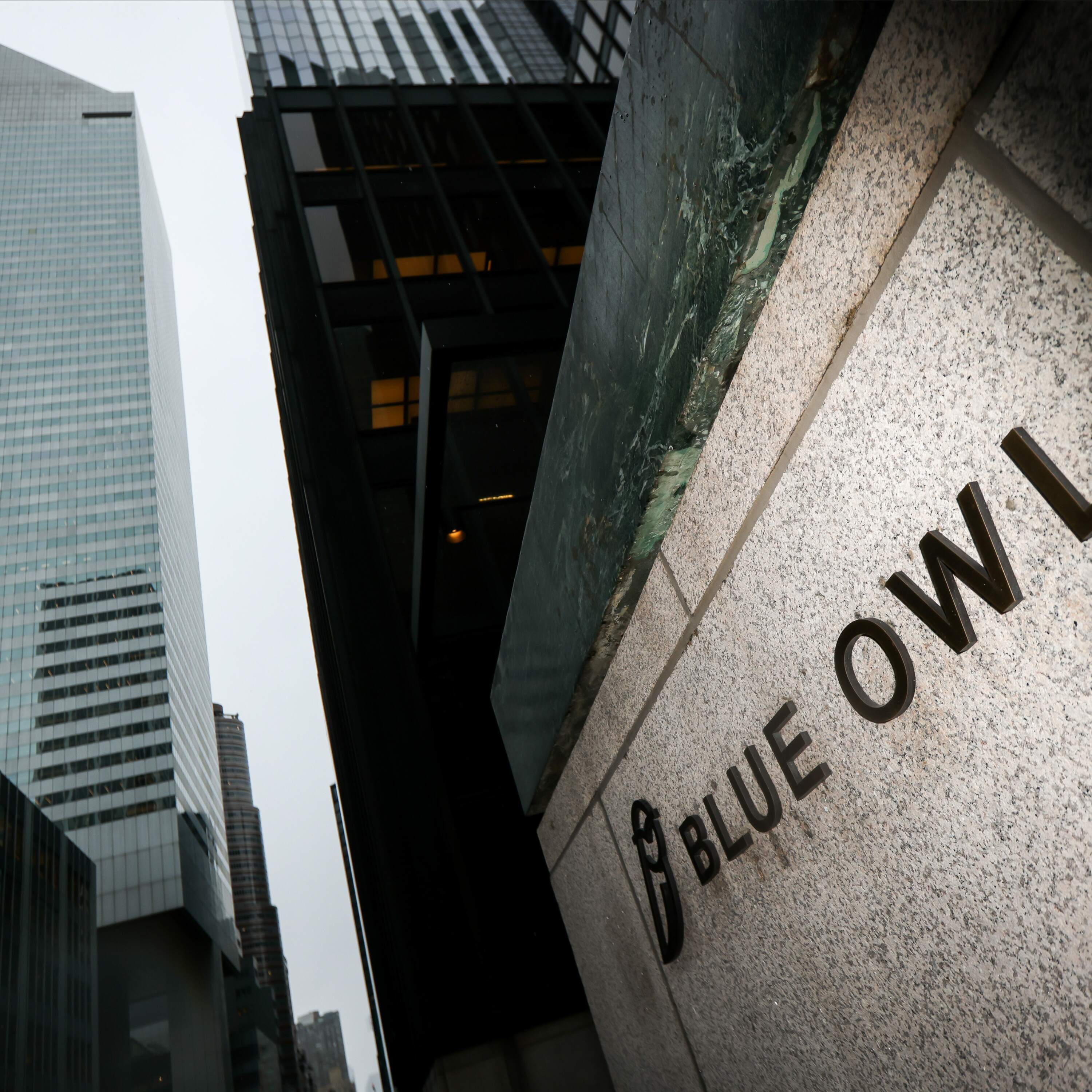
Regular people like retiree Richard Cox. He invested in Blue Owl, another private credit firm. It manages different pots of Money.
- [05:59]
Vito Emanuel
On the advice of his broker, Richard had invested some of his retirement savings into one of Blue Owl's pots. And last summer, Blue Owl sent Richard a mailing offering him a share redemption. These companies do this routinely and asking for a share redemption is investment speak for I want my money back.
- [06:16]
Richard Cox
And I recall having received one of those once before and not done anything with it. And this time I saw it and immediately decided I want to do this.
- [06:25]
Vito Emanuel
And remember, Richard had talked to another broker who thought private credit was too risky. He wanted to cash out.
- [06:31]
Waylon Wong
But these private credit funds are designed so that cashing out isn't always easy. These firms make mostly long term loans. So investors that put money into private credit typically do it with the understanding that they don't need the money back anytime soon.
- [06:44]
Vito Emanuel
Plus, these funds typically only let investors redeem around 5% of the total fund per quarter. Investors also agree to this fine print. That's the trade off for the high returns that private credit offers.
- [06:57]
Waylon Wong
Still, firms do offer exit ramps for investors like that mailing that Richard got. So he submitted the paperwork to line up for his money back. And while he was waiting in line,
- [07:08]
Richard Cox
I started hearing more and more stories in the news about private credit was, was looking more shaky and people were concerned about it being stable.
- [07:18]
Waylon Wong
Way more investors had started asking for their money back than usual. And private credit firms started having to turn people down.
- [07:25]
Vito Emanuel
For example, investors wanted 9% back from one of BlackRock's private credit funds. The firm said it would only give back what it was obligated to 5. And private credit investors at Aries and Apollo collectively ask for over a billion dollars more this quarter than they'll get back during this period. Investors are spooked for a few reasons. The first is good old fashioned bank run dynamics. People clamoring for their money back tends to lead to more people wanting their money back.
- [07:52]
Waylon Wong
Another reason is that many private credit firms like Blue Owl invested heavily into AI related companies. We covered on the show how Blue Owl is funding a meta data center in Louisiana. Natasha says some investors are nervous about how much of the AI boom is financed with private credit. Especially now that we're seeing some big tech companies scale back their plans.
- [08:14]
Vito Emanuel
A third reason for private credit jitters is that these firms are interconnected with other players in the financial system. Big investment banks are in private credit. So are insurers.
- [08:24]
Natasha Sarin
If they make bad investments. Those insurance policyholders are on the hook when they look to, you know, get their life insurance paid out or get their home insurance paid out.
- [08:35]
Vito Emanuel
And the last reason investors often have no idea what they've invested in. Private credit funds don't have to disclose as much information about their investments as banks do, and what is disclosed is usually a labyrinth of LLCs and holding companies. That was a big reason Richard wanted out.
- [08:52]
Richard Cox
I really didn't know how much risk Blue Owl was taking on, so therefore I was not aware of how much risk I was taking on by having my money tied up in that fund.
- [09:02]
Vito Emanuel
Richard got his money back. He said. He did lose a little bit compared to his original investment though. Natasha says these headlines we're seeing could just be the downswing of a normal credit cycle. After all, redemptions are a built in way for investors to get their money back if they've changed their minds about how much risk they want to take on.
- [09:21]
Natasha Sarin
After a period of loose credit and low underwriting standards, there is a correction in the market.
- [09:28]
Vito Emanuel
Still, riskier lending, less oversight, A big financial merry go round of packaged and repackaged loans, People racing for their money back. Isn't this all sounding a bit like 2008?
- [09:41]
Waylon Wong
Natasha says she's on the lookout for more big blowups, bad loans coming to light, evidence of systemic fraud. She hasn't seen much of that yet, but she says, remember it's private credit
- [09:53]
Natasha Sarin
and so there isn't much transparency about what types of loans are being made. All of that is something that only with time we're really going to appreciate.
- [10:02]
Vito Emanuel
Still, some top banking figures like Lloyd Blankfein from Goldman Sachs and Jamie Dimon from JP Morgan have been ringing alarm bells. Ultimately, though, we just don't know. And we might not unless something else breaks. By the way, we reached out to Blue Owl multiple times to comment on the uptick in redemptions and the stability concerns. They declined to comment. BlackRock also declined to comment. Apollo and Ares didn't respond and the Department of Labor didn't meet our deadline. This episode was produced by Julia Richie and engineered by Sina Lofredo. It was fact checked by Sierra Juarez. Kate Concannon edits the show. The Indicator is a production of npr.
- [10:44]
Liz Ann Saunders
This message comes from NPR sponsor Charles Schwab with its original podcast on Investing. It's hosted by Liz Ann Saunders, Schwab's chief investment strategist, and Colin Martin, head of fixed income research and strategy for the Schwab center for Financial Research. Each week, Liz Ann, Colin and their guests analyze economic developments and bring context to conversations around stocks, fixed income, the economy and more. Download the latest episode and subscribe at schwab. Com oninvesting or wherever you get your podcasts.