Loading summary
Transcript60 lines
- [00:01]
A
Npr.
- [00:12]
B
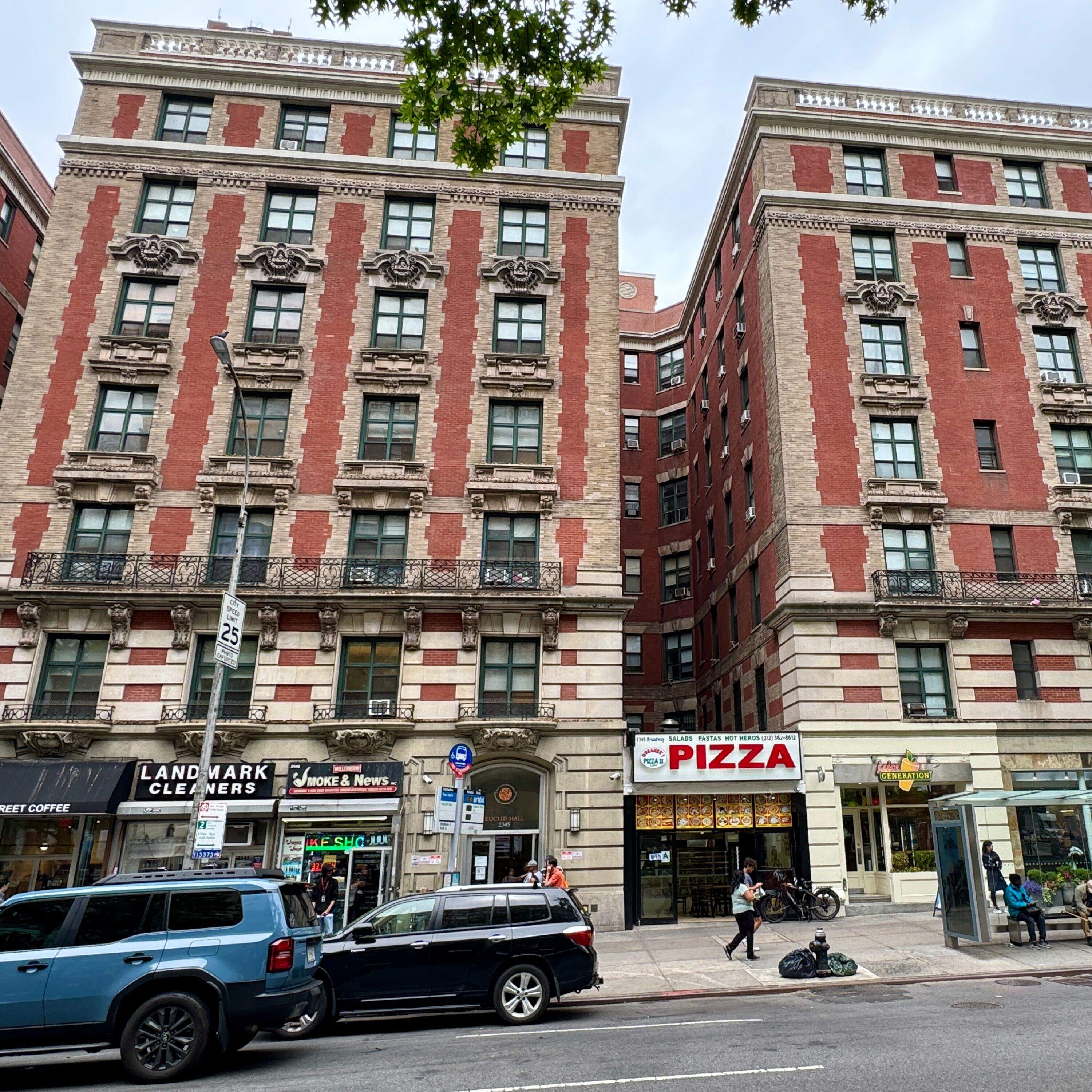
On the Upper west side of Manhattan, there is a big brick building that offers clues about how to bring down homelessness. This building is seven stories tall and really wide. It takes up the whole block length. Hello.
- [00:26]
C
Hi, Connor.
- [00:27]
B
My name's Darian. On one of the floors lives a resident of 15 years.
- [00:32]
C
My name is Vera Hill.
- [00:33]
B
I'm not going to ask you how old you are.
- [00:35]
C
I don't mind telling how old I am. I'm 77.
- [00:39]
D
In Vera's room, there's a sofa, a recliner, a widescreen TV and lots of photos on the walls.
- [00:45]
C
My brother, my sisters. That's my mom over the clock.
- [00:51]
B
There's also an artwork that says in all capital letters fierce.
- [00:55]
C
Oh, that was given to me by one of the kids. I'm fierce.
- [01:01]
D
Her space doesn't have it all though.
- [01:03]
C
I would love to have an apartment with a kitchen.
- [01:06]
B
You have to share a bathroom.
- [01:07]
C
Yes. Oh, that's yes.
- [01:11]
B
Vera Hill lives in what's called a single room occupancy building or an sro. It's like a dorm or a long term hotel room or a boarding house. And today we're going to use those terms interchangeably.
- [01:24]
D
These boarding houses used to be really common, but in many places they were effectively banned. This is the indicator from Planet Money. I'm Waylon Wong.
- [01:32]
B
And I'm Darian Woods. Today on the show, the missing rung at the start of the housing ladder. We tell the history of boarding houses, learn about the backlash, and ask whether bringing them back could save people from living on the streets.
- [01:47]
E
This message comes from Capella University. You know that feeling when there's a spark building inside you that you were meant for more. That's your own drive pushing you towards what's next. Capella University gets that with their flexpath learning format, you can set the pace and earn your degree without putting life on pause. You've built experience and know what you're capable of. Now this is your time to turn that momentum into more. The only real question is what? What can't you do? Learn more at capella. Edu. This message comes from LinkedIn. As a small business owner, you wear many hats. You're the owner, the marketer, the seller, the hirer. With LinkedIn, you have the tools to help you boost your visibility, find prospective customers, and find the best team for your small business all in one place. So while LinkedIn can't hang up all of your hats, it makes it easier to wear them all. Learn more@LinkedIn.com indicatorshow this message comes from WISE the app for international people. Using money around the globe, you can send, spend and receive in up to 40 currencies with only a few simple taps. Be smart, get Wise. Download the Wise app today or visit wise.com Ts and Cs apply.
- [03:05]
B
Vera Hill started her career at the Mount Sinai Health System in the admitting office. She was promoted to supervisor and then manager before becoming a nurse. Aiden. But in her 60s, she struggled to pay New York rent.
- [03:19]
C
Things got a little, you know, expensive, so I had to come out and go into the shelter. It was really sad.
- [03:27]
D
Eventually the shelter found her a room at this building, Euclid Hall.
- [03:32]
C
It was amazing because there was a lot of people that was really friendly and the staff here is amazing.
- [03:39]
B
Euclid hall is run by a nonprofit called the Westside Federation for Senior and Supportive Housing, and it operates 22 properties across New York and provides social support. Not all the buildings are dorm style. Most have studios, you know, self contained units of kitchens and bathrooms. But Euclid hall is divided up into single rooms because New York still has these remnants from what used to be a common form of housing.
- [04:05]
D
Rebecca Baird Remba reported on New York housing for more than a decade and has written about single room occupancy housing, or SROs.
- [04:12]
F
In the 1950s, the city had more than 200,000 SRO units, accounting for more than 10% of the city's rental housing stock.
- [04:20]
B
Yeah, one in 10 people were staying in one. And they were common in cities like Chicago and San Francisco too. Rebecca traces their boom to the end of the Civil War in the late 19th century. As more rural Americans flocked to cities and immigration rose, landlords started to think,
- [04:38]
F
well, why don't I convert my warehouse, my commercial building, even an apartment building with larger apartments, into what were then called boarding houses.
- [04:49]
D
SROs covered the spectrum from long term stays in high end hotels to basically a bed in a cubicle with chicken wire on top to stop neighbors from stealing your belongings. And these bare bones boarding rooms were incredibly cheap.
- [05:02]
F
Everything from 5 to 10 cents a night to, you know, maybe at the high end, $50 a night.
- [05:09]
B
Okay. And obviously we've had inflation since then, so roughly how much? Even once you account for inflation, you know, what are we talking, you know,
- [05:17]
F
at the low end, maybe 100 bucks a month.
- [05:20]
B
100 bucks a month? Even accounting for inflation.
- [05:23]
F
Yeah.
- [05:24]
B
Now, to be clear, paying $100 a month in today's dollars did not get you a cozy, clean place like Euclid Hall. This is more a chicken wire cubicle situation.
- [05:34]
F
By the 50s. Many of these SRO units, SRO buildings were getting pretty run down. They were not well maintained. The which was one reason cities really started to think that these were not acceptable forms of housing for people.
- [05:50]
D
There was a sense among some that the buildings themselves were causing outcomes like disease, theft and violence. And so, under the guise of urban renewal, lawmakers acted.
- [06:00]
B
Cities gave incentives to landlords to convert their buildings. They wrote increasingly stringent housing regulations for sunlight, heating, fire safety and minimum unit sizes. Some of this was motivated by charitable intentions, some was not. In my backyard pressure. Some, as critics of urban renewal have emphasized, was classism and racism.
- [06:22]
D
Whatever the cause, this contributed to a wave of boarding house destruction. A lot of landlords decided it was more profitable to convert their buildings into something different.
- [06:32]
F
San Francisco had one hotel in particular, the International Hotel, where there was a bit of a standoff.
- [06:38]
D
In 1977, at 3 o' clock in the morning, the sheriff and hundreds of riot police approached the International Hotel to evict over 100. It housed mostly elderly Filipino and Chinese people. More than 2,000 protesters tried to stop the evictions.
- [06:55]
B
This period was the height of boarding house destruction. The 1970s saw a million rooms eliminated or converted to other uses. But the evictions at the International Hotel led to a congressional report released months later. The report talked about how SRO closures had contributed to a rise in homelessness. Still, there were other forces brewing around the same time. You had the deinstitutionalization of psychiatric facilities, the federal government delegating responsibility for mental health care to state and city level. But Rebecca Baird Rember thinks that the loss of SROs was a big driver of America's growing homelessness.
- [07:35]
D
About half of men entering homeless shelters in New York city in the 1980s said they had previously lived in Sros. Around that time, there was a rethinking about what urban renewal really meant.
- [07:46]
F
Policymakers started to think, well, what did we do wrong? And one thing that was very clear is that they had encouraged the destruction of this extremely cheap form of housing that people had previously been able to live in and live independently and safely in a way that they were not able to do in the shelter system.
- [08:09]
B
Rebecca says that recent efforts by local policymakers to bring back single room occupancy accommodation have been fairly piecemeal. And in effect, she points to zoning changes in Washington State and Oregon that have been among the strongest moves to legalise building new SROs. The mayor of New York, Zoran Mandani, just released a housing plan in May that promised to pass legislation to bring back more shared housing.
- [08:34]
D
Rebecca's research shows that if SRO construction had grown at the same pace as other housing in the US and those million SROs had not been eliminated, there would be 2.5 million more rooms today, far above the homeless population.
- [08:48]
B
Paul Freitag runs the Westside Federation for Senior and Supportive Housing. That's the organization that operates the building that Vera Hill lives in. Paul is supportive of allowing more boarding houses, especially for middle aged and younger people.
- [09:02]
A
You know, it can be built inexpensively. I think for a lot of them they would look to live in an SRO for a shorter period of time. It really would be something where they might live for a few years as they're getting established.
- [09:12]
D
That said, he doesn't want to gloss over their drawbacks.
- [09:15]
A
It is a challenging environment in which to age, that as you age you now need different medical equipment. You might need a special bed, you need walkers. You might have a home health care attendant that comes in and helps you. You might be wrestling with incontinence. These are all things that are challenging to do in a dense environment that you have in an sro. Furthermore, our residents are very prone to communicable diseases, diseases. And we really saw that in Covid, but we see it every year with the flu. And so it's not really necessarily the best setting in which to age in.
- [09:48]
B
Even so, vera Hill, the 77 year old former health worker, is happy in hers.
- [09:53]
C
I don't have bad things about living
- [09:55]
D
here because it's more than a boarding house today. SROs still run the gamut from cubicle beds with negligent landlords to luxury hotels. Vera lives in supported living that happens to have single rooms. Help is always available to Vera, even if she wants to return the favor a lot.
- [10:13]
C
I'm a helper. I go downstairs sometime and I go to the offices and ask if they need my help. They always tell me, vera, go sit down.
- [10:24]
B
Now's your time to be helped.
- [10:26]
C
Yes, I am a helper. I like helping people.
- [10:30]
B
This episode was produced by Julia Ritchie with engineering by Travis Hagan. It was fact checked by Vito Emanuel. Kate Concannon edits the show and the indicator is a production of npr.
- [10:41]
E
This message comes from Schwab. With the new Schwab Teen Investor account, teens can gain hands on investing experience and build positive money habits. It's an account co owned by you and your teen so you can monitor and engage with the account while your teen learns how to invest and manage money.
- [10:57]
F
Learn more@schwab.com this message comes from Mint Mobile.
- [11:03]
D
If you're tired of spending hundreds on big wireless bills, bogus fees and free perks, Mint Mobile is for you. Shop plans@mintmobile.com Switch taxes and fees extra. See Mint Mobile for details.