Loading summary
Transcript43 lines
- [00:01]
NPR Announcer
Npr.
- [00:12]
Darian Woods
This is the indicator from Planet Money. I'm Darian woods and Today we have NPR's international correspondent Emily Fang on with us.
- [00:20]
Emily Fang
Hey, Emily, always a pleasure. Glad to be with you, Darian.
- [00:23]
Darian Woods
And what do we have today?
- [00:25]
Emily Fang
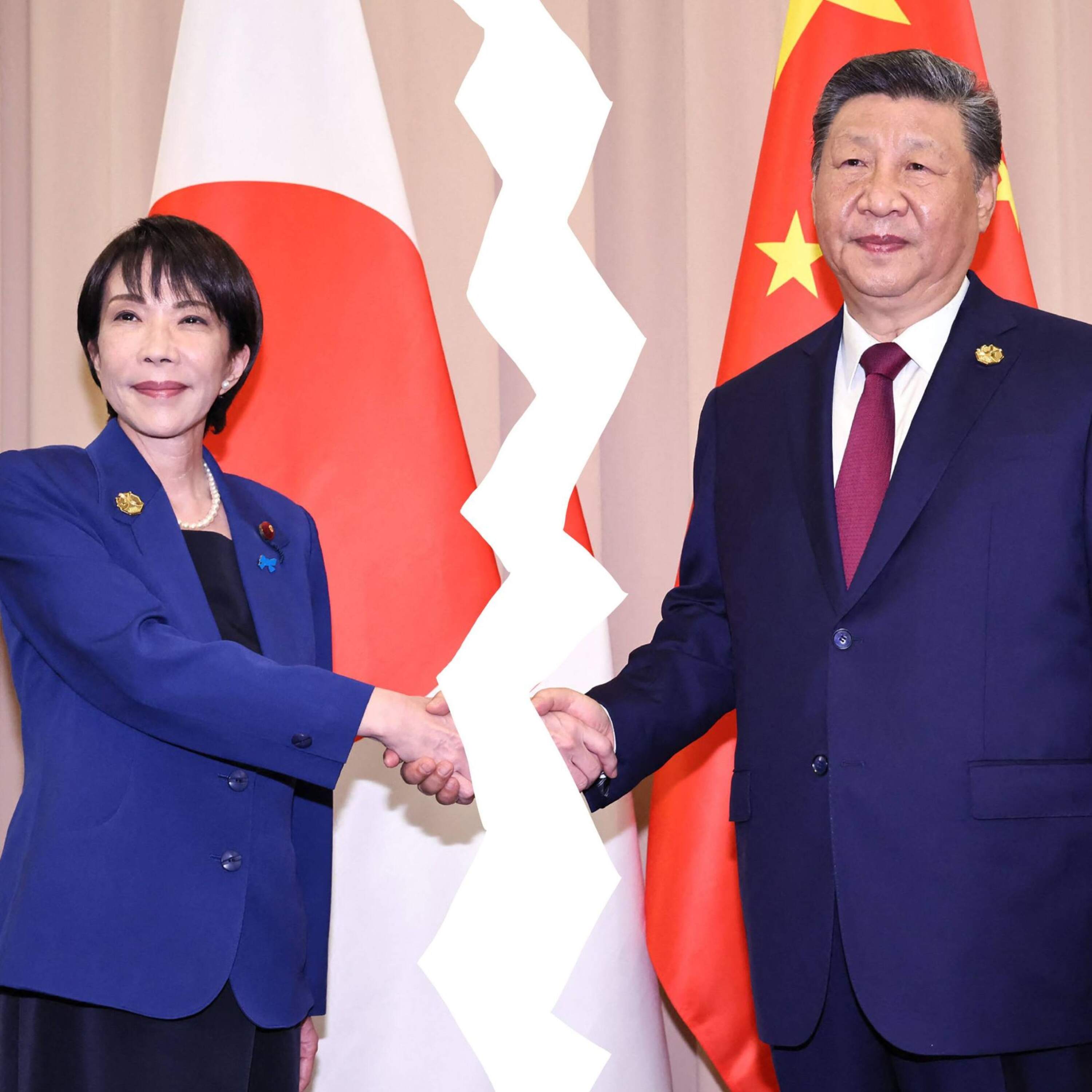
I have a story for you about boycotts, and this particular one started with China being very mad at Japan. These two countries have been in a bit of a diplomatic chill and the Chinese state as a result has been shaping what people can and cannot buy from Japan.
- [00:42]
Darian Woods
We usually think about boycotts as these bottom up groundswells of public anger.
- [00:48]
Emily Fang
But for today's episode, I want to look at how a state can organize a boycott, whether they work and what the purpose of a boycot.
- [01:00]
NPR Announcer
Support for NPR and the following message come from Edward Jones, what does it mean to live a rich life? Maybe it's full of brave first leaps, tearful goodbyes and everything in between. And with over a hundred years of experience, your Edward Jones financial advisor can help. EDWARD jones, Member, SIPC this message comes from NPR sponsor Capella University. Learning doesn't have to get in the way of life. With Capella's game changing flexpath learning format, you can set your own deadlines and learn on your own schedule. That means you don't have to put your life on hold to earn your degree. Instead, enjoy learning your way and pursue your educational and career goals without missing a beat. A different future is closer than you think with Capella University. Learn more@capella.edu this bat between China and.
- [01:55]
Emily Fang
Japan all started with these remarks from Japan's new prime minister, Sanae Takagichi. In early November, she's addressing Japan's parliament and she says if China deploys warships with the use of military force against Taiwan, that that could lead to a survival threatening situation for Japan, which Darian, to me that sounds pretty mundane, but technically, her comments implied if China invaded Taiwan, this democratic island that China wants to control one day, that if that happened, Japan would get involved militarily.
- [02:31]
Darian Woods
Beijing freaks out over these sentences. It orders officials to pressure her to retract her statement, threatening consequences. And those consequences hit hard pretty quickly.
- [02:42]
Emily Fang
To understand what those consequences were, I called Christian Petersen Clausen in Shanghai. He's a filmmaker and he also organizes concerts all across China.
- [02:52]
Christian Petersen Clausen
The audiences here are quite sophisticated.
- [02:54]
Emily Fang
This fall he had some great Japanese artists coming through Shanghai, but but they get canceled due to this fallout with Japan. One of the concerts was with this Japanese bassist who has kind of a cult following in China. Now I love those bass notes. As Christian tells it, he and the musician Yoshio Suzuki were doing last minute sound checks this past November at 3:30 in the afternoon.
- [03:22]
Christian Petersen Clausen
And I was standing in the lighthouse talking with the owner. And suddenly the owner looks to the entrance and there's a man in civilian clothes coming in and he says, oh, I have to go talk to him. They talk for one minute. The owner comes back and says to me the police has canceled all concerts with Japanese musicians. And they said no discussion. And so I had to go on stage where they were doing their sound check and break the 80 year old man's heart, which I don't say lightly. I mean, he legitimately cried.
- [03:55]
Emily Fang
And then the same thing happens to another Japanese jazz musician, Toshio Osumi, who Christian has also invited, plays this really mellow jazz music. But right before his concert, Christian gets a text from someone saying that their ticket was suddenly refunded.
- [04:12]
Christian Petersen Clausen
Yeah, that's how we found out. They didn't even tell us to our face.
- [04:15]
Emily Fang
And around the same time there's another Japanese singer, Maki Otsuki, and there's this video of her singing her heart out. And the lights just suddenly go out and a technician runs onto the stage and tells her her show is being canceled right there and then. And she just has this look of shock on her face, Darius. And as she's bundled off stage.
- [04:36]
Darian Woods
And then on top of all these cancellations, Chinese authorities were warning people not to travel to Japan and were actually canceling group tours there. Chinese tourism into Japan plummeted in November. They've also effectively banned Japanese seafood imports and even delayed Japanese films from being shown in China. But Emily, do you have a sense of whether Chinese people agree with these state boycott measures?
- [05:02]
Emily Fang
Well, Japan once invaded parts of China during World War II, committed horrible atrocities. And so there is genuine latent anger that the state is definitely tapping into. But at the same time, if you're an ordinary person in China, you're getting pretty strong signals from your own government that Japan equals bad right now.
- [05:22]
Darian Woods
And so the line between boycotts and state sanctions is pretty fuzzy here. You've got BEI trying to make these bans look as ground up as possible, whether that's like a community boycott or a city authority banning Japanese musicians.
- [05:38]
Emily Fang
And one of the possible reasons for this is Beijing gets plausible deniability when it shapes boycotts behind the scenes like this. It gets to claim that there is true outrage over Japan's comments and that Tokyo has really hurt the feelings of the Chinese people, as it likes to say.
- [05:54]
Jeremy Wallace
I think it is mostly a political signaling mechanism.
- [05:57]
Darian Woods
This is Jeremy Wallace, he's a professor at the School of Advanced International Studies at Johns Hopkins University and he wrote.
- [06:03]
Emily Fang
A paper on a prior Chinese state organized boycott plus street protests against Japan, which all kicked off in 2012 when the two countries were arguing over who owned a cluster of islands.
- [06:16]
Jeremy Wallace
People on the street kind of going after symbols of Japan inside of the country. So Japanese restaurants, Japanese auto dealerships, what have you. And some of those were even violent, mostly against property, not against people, but still like real, kind of like quite dramatic scenes.
- [06:35]
Emily Fang
So Jeremy describes boycotts as a kind of censorship mechanism. You're trying to get people or a company, in this case a country to behave in a way that's more beneficial to you by leveraging economic access.
- [06:48]
Jeremy Wallace
I think that Chinese state knows that it has a huge consumer market and revels and takes advantage of that for its, in its economic statecraft.
- [07:02]
Darian Woods
Somebody could argue that that sounds a bit like bullying.
- [07:05]
Emily Fang
You could argue that. But perhaps there's a different way, Darian, of looking at boycotts. Perhaps they can actually defuse a tense.
- [07:13]
Jeremy Wallace
Diplomatic situation and has domestic purposes that is much less drastic than sending kind of warships or something towards some other country as a, as a symbol of frustration.
- [07:26]
Emily Fang
As in through a state boycott you can vent your unhappiness without escalating the situation. But this costs China as well. Christian the concert organizer explains he's had prospective investors pull out of potential projects in China because they don't know when an event could just be called off. And this is repeating across China among the to agencies which have had to cancel their trips to Japan or Chinese run restaurants that just happen to serve Japanese food, which is really popular in China and they're seeing their foot traffic drop.
- [07:56]
Darian Woods
And China frequently does this. You know, it encourages boycotts regionally over geopolitics. Filmmaker Christian Peterson Clausen recalls another country that attracted China's ire.
- [08:08]
Christian Petersen Clausen
China does seem to see good business relations as a privilege for other countries. I mean, if you look back to the Korean Thaad crisis.
- [08:21]
Emily Fang
So the thaad crisis trip down memory lane. This started in 2016 when South Korea allowed the US to set up an anti missile system and China protested.
- [08:32]
Christian Petersen Clausen
South Korean musicians are still unable to perform in China. They just don't get performance visa.
- [08:38]
Darian Woods
Except it didn't work the way Beijing imagined. In South Korea's case, they chose to endure that economic pain for a year. They gave kept the missile defence system and Beijing was not willing to escalate beyond economic pressure. But in Japan's case, China has continued to pile on right.
- [08:56]
Emily Fang
Chinese officials continue to say they're not satisfied with Japan's later clarifications on its prime minister statements on Taiwan. And then in mid December, China decided to take back the last two pandas it had loaned to Japan.
- [09:11]
Darian Woods
Panda Diplomacy strikes again.
- [09:13]
Emily Fang
This is getting serious. So in general, this is a low cost way to send a message to Japan to try to shape another country's behavior without using military pressure. And if Beijing can really squeeze an apology out of Tokyo, then maybe this boycott is actually a pretty efficient way to raise a big political fuss, especially.
- [09:32]
Darian Woods
For a country of China's.
- [09:34]
NPR Announcer
S.
- [09:37]
Emily Fang
This episode was produced by Cooper Katz McKim and engineered by Jimmy Keeley. It was fact checked by Corey Bridges. The entire episode was edited by Julia Ritchie. Kate Concannon is our editor. The indicator is a production of npr.
- [09:54]
NPR Announcer
This message comes from NPR sponsor Capella University. With Capella's flexpath Learning format, you can set your own deadlines and learn on your schedule. A different future is closer than you think with Capella University. Learn more@capella.edu. this message comes from Cachava. It feels good to connect to your simpler side, simplifying your wellness with Cachava's all in One Nutrition Shake. Feels good too, with 25 grams of protein, 6 grams of fiber, greens and more. No fillers, just the highest quality ingredients. Simplify your nutrition@cachava.com and use code NPR. New customers get $20 off an order of two bags or more now through January 31st. That's K A C H A V A.com code NPR.