Loading summary
Transcript66 lines
- [00:01]
Narrator
Once upon a time, there was a listener who just couldn't get enough of the Indicator from Planet Money.
- [00:05]
Waylon Wong
Who was it? Rumpelstiltskin?
- [00:08]
Narrator
This listener tuned in all the time but thought, what if there was more?
- [00:12]
Waylon Wong
But Rumpelstiltskin would be in luck because the Indicator has a brand new newsletter.
- [00:18]
Narrator
That's right. We talk about what we think matters in the news that week. We answer your listener questions and talk about all the crazy gags we get up to.
- [00:26]
Waylon Wong
It comes out Friday mornings. Sign up now@NPR.org Indicator Newsletter
- [00:35]
Julie Wernow
NPR.
- [00:47]
Waylon Wong
This is the Indicator from Planet Money. I'm Waylon Wong here today with my good chum Julie Wernow. She's a reporter for the health policy podcast Trade Offs. And we used to work together at the Chicago Tribune.
- [01:00]
Julie Wernow
We sure did, Waylon, back in the age of flip phones.
- [01:04]
Waylon Wong
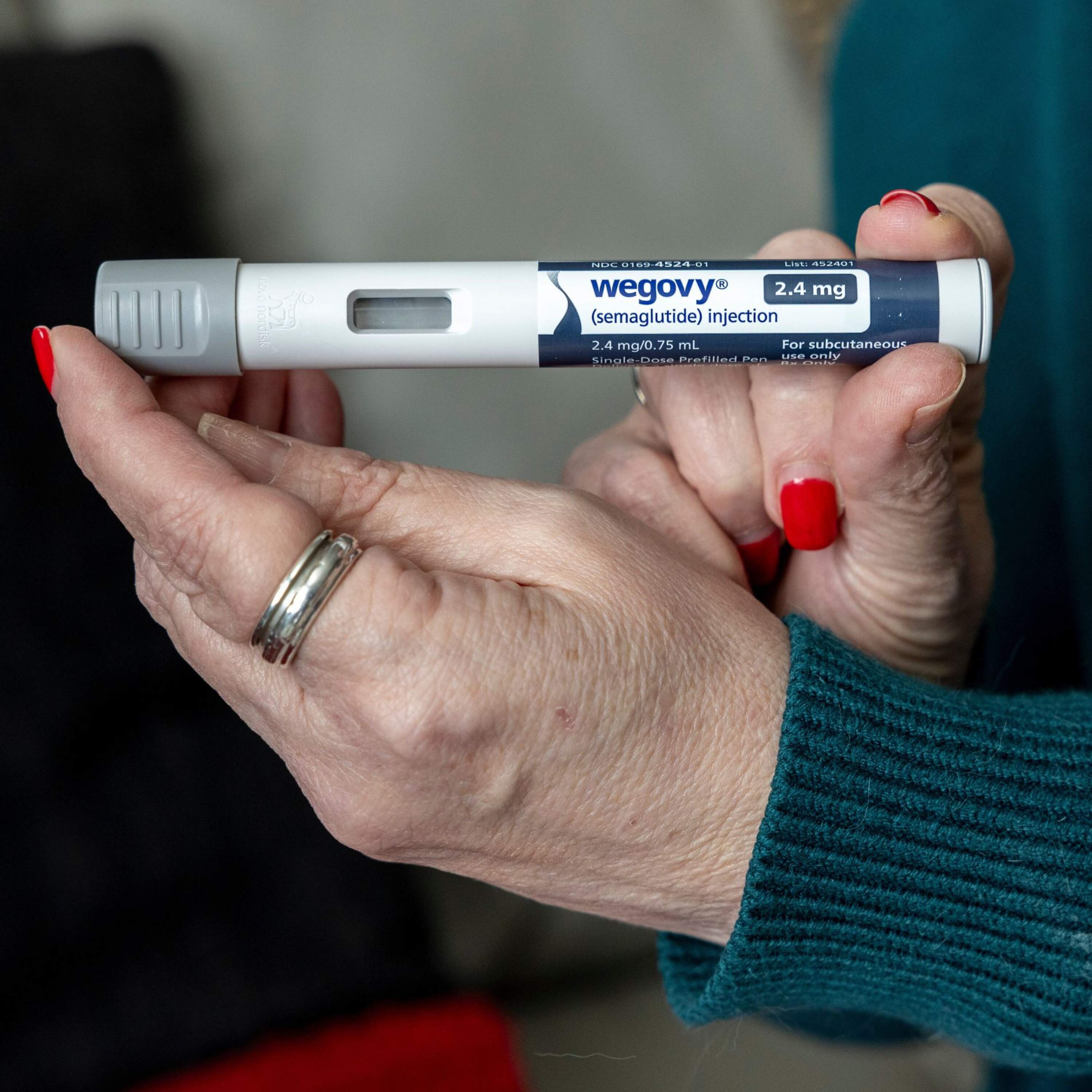
Julie, you've been reporting recently on all these weight loss medications, Ozempic, Wegovy, Zepbound.
- [01:11]
Julie Wernow
Right. The number to remember here, one in eight. That's how many adults are on these drugs in the US Alone. Nick Miller is the perfect example. By the time Nick was in his 40s, he weighed more than 400 pounds. He was constantly thinking about food. Should I eat? Do I deserve to eat something he calls food noise.
- [01:32]
Nick Miller
That first dose of Ozempic on a Tuesday in April, and within three hours that noise was gone. And all of a sudden my brain had room. Like there was silence.
- [01:45]
Waylon Wong
Nick was lucky to afford the drug. His employee health benefits covered the medication. Like the majority of working age people, he gets his healthcare coverage through his employer. But here's the the vast majority of employer health plans don't cover GLP1s for weight loss. Only 20% do that.
- [02:03]
Julie Wernow
20% believe it will be good for their bottom line, that the investment will ultimately pay off with fewer medical claims tied to health issues from obesity. Today on the show, will Nick's employer covering his GLP1 save money in the long run? The answer might surprise you
- [02:26]
Narrator
on consider this, NPR's afternoon news podcast. We cover everything from politics to the economy to the world. But every story starts with a question. At npr, we stand for your right to be curious, to make sense of the biggest story of the day and what it means for you. Follow Consider this wherever you get your podcasts.
- [02:48]
Waylon Wong
Julie, tell us about your old friend Nick.
- [02:50]
Julie Wernow
Nick and I grew up together in Connecticut. I hadn't seen him in more than 20 years. We were drama club geeks in high school.
- [02:59]
Waylon Wong
Oh, what'd you do, guys and dolls? Did you wear fedoras?
- [03:02]
Julie Wernow
Please Waylon, we were more serious drama kids than that. We were in the pajama game.
- [03:09]
Waylon Wong
Okay, Thespians, that is. That is serious.
- [03:13]
Julie Wernow
For high school, Nick still lives in my hometown, Waterford, Connecticut. He and his husband have five kids. Eight, seven, seven, seven, and six. I dropped by before school. It was full on kid chaos. Somehow Nick got everyone out the door.
- [03:33]
Nick Miller
We're gonna behave, right? Good days. Love you.
- [03:38]
Julie Wernow
After everyone left, we sat down to talk. Nick said when he got on his GLP1s, his clinician explained obesity as biology.
- [03:47]
Nick Miller
She was so warm and so welcoming, and she, you know, was able to break down for me what was happening in my body. She also gave me permission, saying, like, and, Nick, this might be a lifelong choice for you. You know, like, you might continue this for the rest of your life, and that's okay.
- [04:03]
Julie Wernow
And I was like, oh, that was huge for him. Before this, Nick thought taking a weekly shot was cheating somehow.
- [04:11]
Nick Miller
From where I was to where I am now. To think of that as cheating, I think is really a disservice to the science and a disservice to my clinicians and a disservice to me.
- [04:21]
Waylon Wong
And this is where Nick's luck comes in. His employer agrees. He works for the state of Connecticut as a supervisor for its Department of Developmental Services. Sean Scanlon is the guy in charge of Nick's employee health plan.
- [04:35]
Chris Whaley
I believe that these drugs can be effective for not just people losing weight and managing their diabetes, but. But for treating the conditions that then turn to worse problems that then cost plans like the one I run. More money in the long run.
- [04:53]
Julie Wernow
Sean said they spent about $80 million on GLP1s last year for employees like Nick.
- [04:59]
Waylon Wong
It's certainly saving money for Nick. With this coverage, nick pays just $12.50 a month. His employer covers the rest. And they do it in an interesting way. They want to target people who are committed to losing weight. Those people. Nick's employer hired an outside company to set some rules.
- [05:18]
Julie Wernow
He had to weigh himself, track his food and exercise, get labs, and meet with clinicians. The idea here is to get the drugs to the people most likely to benefit and then limit everyone else. It's medical care, but it's also a gate.
- [05:34]
Waylon Wong
Nick's fellow workers, who are also getting their GLP1s covered, are losing, on average, up to 40% of their body weight. They're also seeing major reductions in indicators that can lead to strokes, heart attacks, and diabetes.
- [05:47]
Julie Wernow
It's the employer dream. You cover these medications, people get healthier, and then eventually, maybe the health Plan saves money because people avoid expensive medical problems and claims go down.
- [05:58]
Waylon Wong
I mean, this is a very appealing story.
- [06:01]
Julie Wernow
It is intuitive, right? You prevent the heart attack, avoid the bill.
- [06:05]
Waylon Wong
But this is where your reporting took a turn.
- [06:08]
Julie Wernow
Ever run into an economist at a party?
- [06:11]
Waylon Wong
Yes, actually.
- [06:14]
Julie Wernow
Okay. Well, I never see them at parties because they're no fun at parties, Waylon. Oh, that's how I felt when I invited Chris Whaley to this little GLP1 party we're throwing here. He is a health economist at Brown University. He worked on this big report about these employer GLP1 strategies, and he's got some bad news on health savings.
- [06:37]
Chris Whaley
Every study that's looked at that has shown that's absolutely not the case.
- [06:40]
Julie Wernow
Chris says employers have this kind of magical thinking that better health will automatically translate into lower health costs down the road.
- [06:49]
Chris Whaley
There's among employers, you know, this kind of magic ideal that we can improve patient health. And that's just going to be this magic wand that cuts employer healthcare spending,
- [07:02]
Waylon Wong
at least for now. The magic wand doesn't work for a few reasons, right?
- [07:07]
Julie Wernow
Reason one, the drugs themselves are expensive. Cash prices can be up to 1700 bucks a month, according to Goodrx. Employers who cover the bulk of this have to take it out of somewhere, either wages or higher premiums.
- [07:21]
Waylon Wong
Reason two, these management programs that Nick had to sign onto to qualify for coverage cost money, too. About a third of employers are paying outside firms like Nick's employer has. And that adds to a business's overall health coverage costs.
- [07:35]
Julie Wernow
Reason three, the biggest health benefits generally show up years later, when an employee may not even be on that same employer's health plan. In fact, by then, they're more likely to be on Medicare.
- [07:46]
Waylon Wong
And finally, reason four, healthier people still use healthcare. One large study of more than half a million patients found no overall spending drop, even years after people started GLP1s.
- [08:00]
Chris Whaley
If somebody, you know is out being healthy and active and twists their knee playing pickleball, I think that's actually, you know, debt positive.
- [08:08]
Waylon Wong
You know, I've always been pickleball curious, but now I'm scared because I don't want to twist my knee.
- [08:14]
Julie Wernow
I don't blame you, Waylon. I actually know some people have gotten hurt playing pickleball.
- [08:18]
Waylon Wong
Oh, no.
- [08:18]
Julie Wernow
Yeah, and it's still a claim for the health plan.
- [08:21]
Waylon Wong
We should note that Nick's employer has seen some benefit. Spending is still going up, but at roughly half the rate it was before they signed on with an obesity management company. Most of those savings come from limiting the number of people on the medications.
- [08:36]
Julie Wernow
In other words, the savings come from the gate, not from the promise of better health.
- [08:41]
Waylon Wong
And that makes for a pretty uncomfortable takeaway. It's clear that Nick's story makes a strong case that these GLP1s can lead to a lot of health benefits. Even economist Chris Whaley agrees.
- [08:53]
Chris Whaley
Treating obesity and getting people to live happier, healthier lives is a goal in of itself.
- [08:58]
Waylon Wong
But at least for now, the honest argument is not. This will pay for itself, right?
- [09:04]
Julie Wernow
Although it's worth mentioning, that might change at some point in the long term, GLP1 prices will go down and that could change the cost benefit analysis. Like take cholesterol medications. They began as a high cost drug too, right?
- [09:18]
Waylon Wong
Today, around a third of US adults take these medications. But most are cheap now and the vast majority of health plans cover them.
- [09:25]
Julie Wernow
Either way, for Nick, getting the drugs covered has been a life changer. He now weighs just 243 pounds. He says he's less isolated, more center stage in his life with his kids.
- [09:37]
Nick Miller
I deserve to go after what I want and to have that chance, you know, I deserve to not live in fear or shame and to experience life in the way that everybody can.
- [09:55]
Waylon Wong
That may not save his employer money
- [09:57]
Julie Wernow
right now, no, but it might still be worth paying for.
- [10:04]
Waylon Wong
Julie Warnow, thank you so much for bringing us this story.
- [10:06]
Julie Wernow
Thank you for having me.
- [10:08]
Waylon Wong
You can catch Julie on the Trade Offs podcast, available where you get this podcast or on the pickleball court. This episode was produced by Cooper Katz McKimmon, engineered by Sina Lofredo. It was fact checked by Sierra Juarez. Caitlin Cannon is our editor and the indicator is a production of npr.