Loading summary
Transcript56 lines
- [00:01]
Unknown Expert
Npr.
- [00:06]
Adrienne Ma
This is the Indicator from Planet Money. I'm Adrienne Ma.
- [00:09]
Ricky Mulvey
I'm Ricky Mulvey.
- [00:10]
Waylon Wong
And I'm Waylon Wong. Shortages are in the news again and today we're not going to talk about oil or computer chips.
- [00:17]
Adrienne Ma
That's right. There's a lot of other resources to freak out about.
- [00:21]
Waylon Wong
Oh no.
- [00:21]
Adrienne Ma
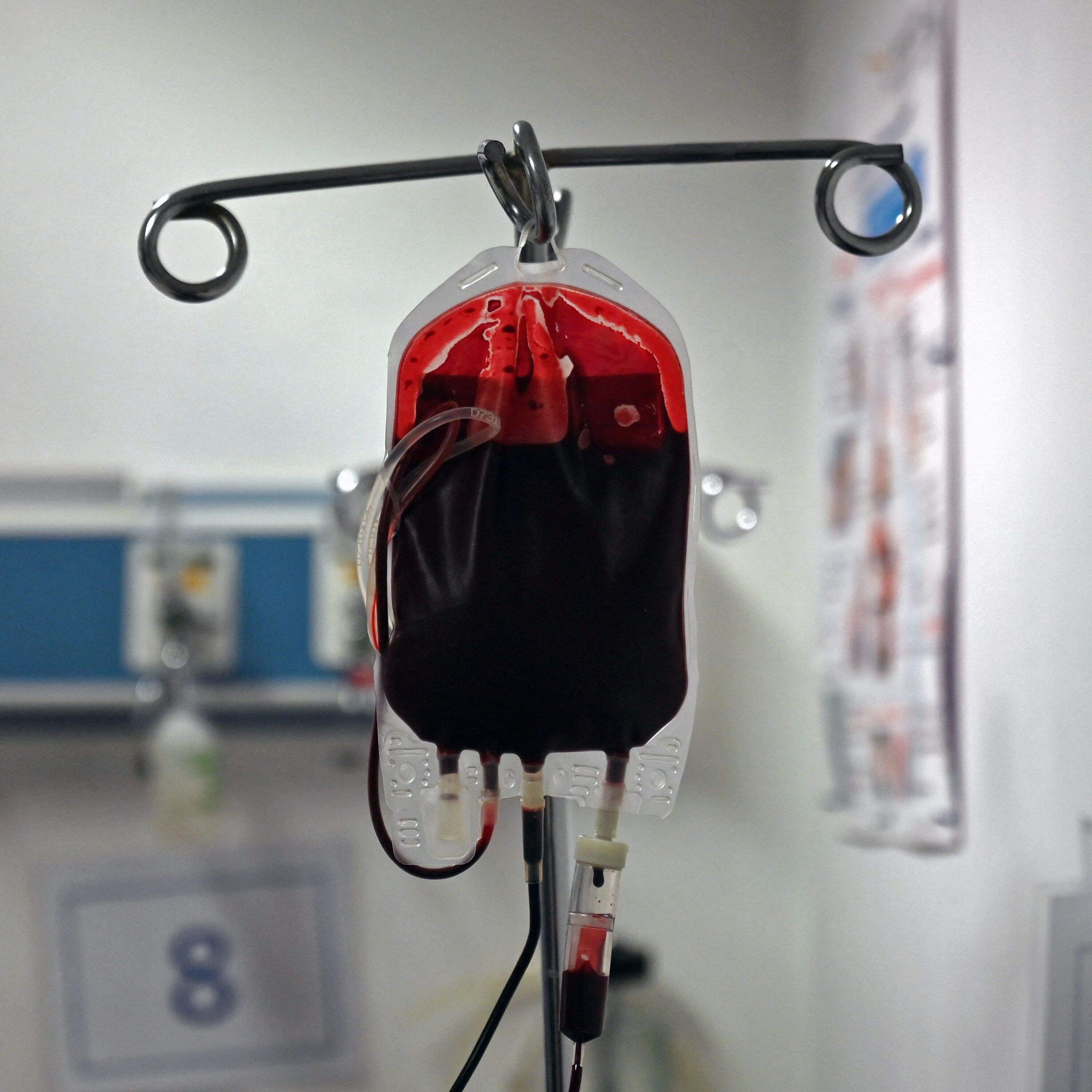
Today we are talking about shortages for helium, water and even blood. All these supplies are running concerningly low right now. And today on the show we're going to run down why and what, if anything, can be done about it.
- [00:36]
Ricky Mulvey
All that after the break.
- [00:45]
Sponsor Voice
This message comes from BetterHelp. One of the hardest parts about starting therapy, not knowing what to expect. Instead of listening to an ad, hear from the people who've actually been there. Visit betterhelp.com reviews to explore real client reviews that are updated every day with an average live therapy session rating of 4.9 out of 5 based on more than 1.7 million client session reviews. The feedback speaks for itself.
- [01:10]
Visit betterhelp.com reviews this message comes from NPR sponsor Carvana. Carvana believes selling your car should be easy. Get a real offer down to the penny picked up from your driveway. You may keep waiting for a catch. There isn't one. Sell today@carvana.com Pickup fees may apply.
- [01:31]
This message comes from Edward Jones where they believe rich means opening yourself to new possibilities. That's why your dedicated financial advisor meets you where you are, helping you move forward with confidence. Lets find your rich Edward Jones member,
- [01:47]
Adrienne Ma
SIPC okay, so the shortage that I'm going to talk about is for blood. The American Red Cross has declared a national blood supply crisis and they say this is only the second time ever that they have done this. The first time was during the pandemic.
- [02:02]
Ricky Mulvey
Is this less supply, more demand?
- [02:04]
Adrienne Ma
It's kind of both, right? The summer season turns out to be a time where a lot of people are getting hurt because they're out and about and that is putting a strain on demand. But it is also a supply problem. There aren't as many people donating and that's partly because also during the summer, younger people are not in school, which is where they typically give blood. And this year around this time, there are also environmental factors playing a role, like extreme heat, poor air quality, even foodborne illness, which we talked about. These are all kind of keeping people
- [02:39]
Waylon Wong
at home, honestly, like thinking about extreme heat and poor air quality, that's climate related. And now you think about the knock on effects from climate change and it's affecting the blood supply and I think that's pretty scary sounding.
- [02:52]
Adrienne Ma
So we called up the Red Cross and spoke with their communications director, Jessica Merrill. And she says in response to this, they've been restricting their distributions of the most commonly transfused type of blood, which is O positive. But this is obviously not a sustainable solution. And she says there's just no good substitute for blood.
- [03:12]
Unknown Expert
I think one of the most important things for folks to realize is that one in seven patients entering a hospital will need a blood transfus.
- [03:19]
Adrienne Ma
It might be for a trauma patient or someone getting a heart surgery or a mom experiencing birth complications.
- [03:26]
Unknown Expert
So blood is really what we would say is a quiet backbone to modern medicine. And without it, a lot of the care that we take for granted at a hospital is just not possible. So if more folks don't come out and give in the days and weeks ahead, doctors will really face very difficult choices about who receives blood and who has to wait.
- [03:48]
Adrienne Ma
The good news is that this is actually one of those shortages that you and I can do something about any kind of blood, whether it's type A, B or O, it all helps strengthen the blood supply.
- [04:00]
Waylon Wong
When I heard about this story, I was like, oh, I should go and give blood. And then I remembered that I have, like, no hemoglobin. I have this, like, condition that's like, related to anemia.
- [04:10]
Adrienne Ma
Oh, you gotta hold onto that hemoglobin for yourself.
- [04:12]
Waylon Wong
And so, and I remember that, like, I myself needed a blood transfusion when I was pregnant because they're like, gosh, you have no hemoglobin. And so I'm like, okay, someone else will have to give blood because no one wants my blood.
- [04:26]
Adrienne Ma
Do you want to seize the conch shell?
- [04:29]
Waylon Wong
Yes, I would. I'm going to talk about helium. This is an element that the world has actually been running short of for many years now. And helium, I learned, has many unique characteristics. It can stay liquid at ultra cold temperatures, which is kind of cool. And it cannot be manufactured. We get helium by extracting it from natural G. And it's very, very important in the medical and scientific fields.
- [04:56]
Adrienne Ma
So it's not just for party balloons and making your voice sound funny.
- [05:00]
Waylon Wong
No. And that probably is a lot of people's first association with helium is party balloons. But helium is actually needed to operate MRI machines and cool nuclear reactors. And it's also needed to manufacture semiconductors.
- [05:14]
Ricky Mulvey
Hmm. So given the AI boom, I'm guessing demand for helium is pretty high right now.
- [05:20]
Waylon Wong
It is very high. And that is putting the squeeze on supply. And then there's another big Reason? We're running short of helium. Qatar is one of only a handful of countries that even supply helium.
- [05:32]
Adrienne Ma
Okay, so you're basically saying it's the usual suspects for dwindling supply. We got AI on the demand side and the war with Iran on the supply side.
- [05:43]
Waylon Wong
Right. So the U.S. geological Survey says Qatar accounted for 35% of global helium production in 2024. And Iranian drone missile strikes have knocked out that supply.
- [05:54]
Adrienne Ma
They've knocked out like a third of the helium supply.
- [05:57]
Waylon Wong
Uh huh. And even if Qatar's facilities were up and running, it would still have to ship helium through the Strait of Hormuz. And we know that barely anything is getting through the strait these days.
- [06:07]
Ricky Mulvey
So can the US make up the shortfall?
- [06:10]
Waylon Wong
Certainly not all of it. The US actually used to have an underground helium reserve, which is kind of cool. But the government decided to privatize the stockpile back in the 90s under President Bill Clinton. So the supplies were sold off to industrial gas. Gas companies. And given how little helium there is to go around right now, suppliers are giving priority for medical needs and semiconductor manufacturers. And that's why it might be harder to get your party balloons filled. I know I've seen signs at my local dollar store that say that can't sell balloons right now.
- [06:41]
Adrienne Ma
I mean, I guess knowing that helium is needed for like MRIs and nuclear reactors kind of makes the party balloons seem like a. Like a lower priority.
- [06:52]
Waylon Wong
Yeah, I think we can do without. We just have to remember how to sacrifice.
- [06:57]
Adrienne Ma
Okay. For the final stop on our parade of scarcity, Ricky Mulvey.
- [07:02]
Ricky Mulvey
Yes. For this joy filled episode, my resource that we're running out of is water.
- [07:08]
Adrienne Ma
I feel like we need that.
- [07:10]
Ricky Mulvey
Something that is pretty necessary. As we've talked about before, many parts of the Western US are essentially desert, or at least semi arid. They survive because of a Colorado river agreement from over a century ago.
- [07:24]
Waylon Wong
Right. We've covered this on the show. This agreement, like divvied up water between seven states that go from Colorado to California.
- [07:32]
Ricky Mulvey
Yeah. And there wasn't a crisis for a time. Sure, Western states started using more water than was coming in naturally. But two main reservoirs, Lake Powell and Lake Mead, they had plenty to share. Jack Schmidt is the director of the center for Colorado River Studies at Utah State.
- [07:50]
Jack Schmidt
It's as if we had a bank account, and our bank account was flush with money.
- [07:56]
Ricky Mulvey
Today, though, many parts of the region are facing a serious drought. The western states get a lot of their water from melting snowpack. And for decades, that snowpack has been on the decline. And yet growth and overconsumption continued.
- [08:10]
Jack Schmidt
We said to ourselves, oh, we've had low income, but I'm not going to reduce my spending because my bank account is flush.
- [08:21]
Ricky Mulvey
Now Lake Powell and Lake Mead are at historically low levels. This is a big deal. Water from these reservoirs is used for drinking agriculture and electricity. Now the federal government is stepping in and asked California, Arizona and Nevada to make big cuts to their water use.
- [08:38]
Waylon Wong
I guess we know from history states love being told what to do by the federal government, especially when it comes to resources like this.
- [08:44]
Ricky Mulvey
Yeah, the states would like the other states to make those cuts. California, though, sees these cuts as a milestone, but says negotiations are ongoing. Meanwhile, Arizona and Nevada are saying the cuts will be devastating for their states. One bright side though, is that people in urban and suburban areas have gotten better at water conservation. Large cities like la, Denver and Las Vegas have reduced total water use despite growing populations.
- [09:10]
Adrienne Ma
Oh, that's interesting. Okay, so like, what are they doing?
- [09:13]
Ricky Mulvey
Some small steps. In Denver, for example, you have to request a glass of water at restaurants. But think watering your lawn less often or getting rid of a lawn altogether. But in order to get the system into balance, you have to address the cow in the room. Jack says that 70% of the water used in the basin is for agriculture.
- [09:35]
Jack Schmidt
In fact, 55% of all the water used in the entire basin is just used to grow alfalfa and grass a as livestock feed.
- [09:49]
Ricky Mulvey
Warmer temperatures, less water, and a debate about equity versus equality. Those are the elements of my running out economic problem Water.
- [10:00]
Waylon Wong
All right, these are three crucial shortages that we are keeping an eye on. If you spot something where you are that you see we should be keeping an eye on, Please email us indicatorpr.org
- [10:12]
Adrienne Ma
this episode was produced by Corey Bridges with engineering by Jimmy Keeley. It was fact checked by Sara Juarez. Kagan Cannon is our editor and the Indicators of production of NPR.
- [10:23]
Sponsor Voice
This message comes from Workday, the enterprise AI platform for HR, finance and IT. Since 1949, Medical Technology Company Medtronic has set out to provide life saving equipment for patients. Now their workforce has the ultimate tool more time to focus on those life saving products. Before Medtronic, recruiters found their days were consumed with managing around 12,000 hires a year. With Workday's AI agents for HR, teams can automate interview scheduling and reduce processes from days to just minutes. With 80% of their HR processes safely automated, recruiters at Medtronic spend less time on routine tasks and more time making strategic decisions like hiring the next innovators in healthcare. They do it all through Workday's AI platform, built with a deep understanding of their organization's unique rules and guardrails, ensuring every AI action has the permissions to get work done and get it done right. Learn more@workday.com.