Loading summary
Transcript73 lines
- [00:01]
A
Npr.
- [00:06]
B
This is the Indicator from Planet Money. I'm Darian Woods.
- [00:09]
C
I'm Waylon Wong.
- [00:10]
D
And I'm Adrienne Ma.
- [00:11]
B
What do you guys do when you have a question?
- [00:13]
C
I stand at the edge of a cliff and I just shout it into the void.
- [00:17]
D
I meditate cross legged and search for the answer inside.
- [00:20]
B
So we've got Cliff, GPT and GP Me. Well, our listeners send us emails with their economic question questions and we answer them both here and in our Friday morning newsletter which you should subscribe to if you haven't already. Link is in our show notes. It's npr.org indicator newsletter. Let's get on with today's show.
- [00:39]
C
Oh yeah, we've got a good crop of questions today and that's a pun that will be relevant very soon.
- [00:47]
B
So for today's listener questions, I dig into why there is a soybean bonanza in the U.S. despite last year's trade war with China.
- [00:55]
C
I help find the best economic figure to measure economic diversification in the Gulf states.
- [01:00]
D
And I explain why your neighbor might be paying less for their car.
- [01:08]
E
This message comes from Schwab. With the new Schwab Teen Investor account, teens can gain hands on investing experience and build positive money habits. It's an account co owned by you and your teen so you can monitor and engage with the account while your teen learns how to invest and manage money learning. Learn more@schwab.com support for this NPR podcast and the following message come from Carvana. Selling your car Carvana has offers so good they're almost inexplicable. Sell your car 100% online in minutes. Visit Carvana.com today. This message comes from Betterment. Their automated investing and saving tools give you the quiet confidence of someone who knows where to put their money with tax smart tools that help grow your after tax returns year round. Get started today@better betterment.com that's B E T T E R M E N T.com investing involves risk performance not guaranteed. Betterment is not a tax advisor nor should any information herein be considered tax advice. Please consult a qualified tax professional.
- [02:11]
B
It's Listen to questions first up, Weylon Wong.
- [02:14]
C
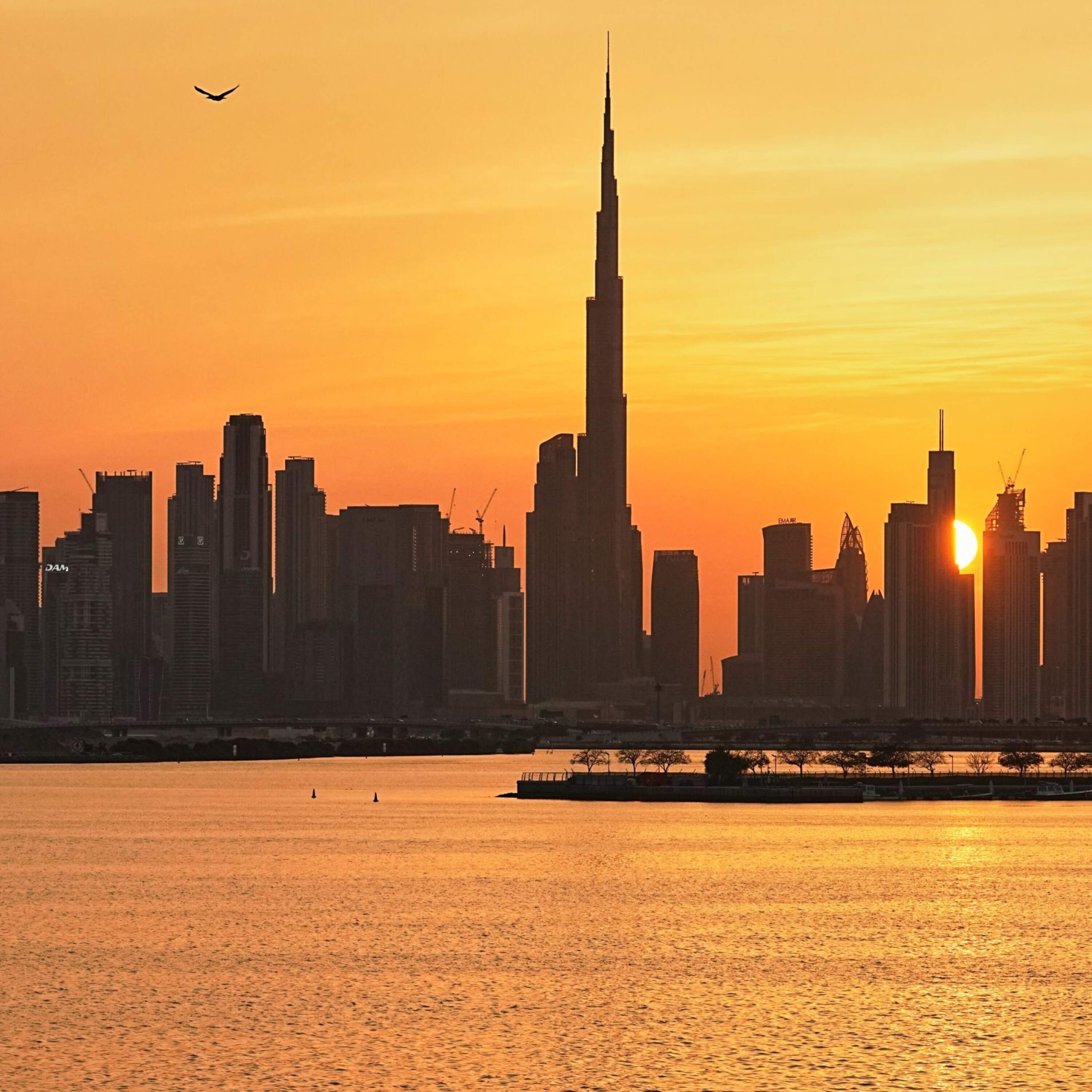
All right, my question comes from Mohamed Almarzouki. He writes, I'm 16 in Abu Dhabi, United Arab Emirates and I listen on the school run. An indicator idea from my corner of the world. The speed at which Gulf economies are diversifying away from oil. You can almost watch it in the skyline. What number would economists track to measure a country changing its entire business model thank you for proving economics fits. In 10 minutes, you have a loyal listener in the UAE.
- [02:44]
B
How nice.
- [02:44]
D
Wow.
- [02:45]
C
We reached out to someone to help answer Mohamed's question. Karen Young is a senior research scholar at Columbia University.
- [02:52]
F
The UAE is a really, really good example. It's probably the most diversified among the six Gulf Cooperation Council states.
- [03:00]
C
Karen says there are basically three ways to measure economic diversification in this situation,
- [03:05]
F
and none of them are really perfect. So we can kind of triangulate around them.
- [03:08]
C
So the first measure is non oil gdp. That basically just separates oil from all the other. Economic growth should be clean. Right.
- [03:18]
F
The problem is with that one is that some oil producing countries include some oil derived products in non oil GDP growth.
- [03:27]
B
Right. So a country might have petrochemicals used to make plastic or whatever, and that's put in their non oil gdp.
- [03:34]
C
Yeah. And it's actually a standard thing that these petrochemicals just qualify as non oil products. So that is the issue with non oil gdp. And now we've got our next way to measure it is tracking a country's ability to trade in non oil oil
- [03:50]
D
products, as in diversifying what a country manufactures and maybe ships out more clothing or agricultural products.
- [04:00]
C
Yeah. And what works about this measure is that exports are a little cleaner to review than gdp. It comes from UN trade data that goes more granular.
- [04:09]
D
Okay.
- [04:10]
B
That avoids the petrochemicals issue.
- [04:11]
C
It does. But then we have another problem. You.
- [04:15]
F
Yes.
- [04:15]
C
Which is that it only tracks goods.
- [04:17]
F
So things like tourism or the financial services industry. More of the service sector side. So that's, you know, it's not just about what you export.
- [04:27]
C
And then last but not least, a third way to measure economic diversification in the Gulf is tracking sources of government revenue.
- [04:34]
B
Ah. So places like Saudi Arabia famously doesn't even have an income tax. They get so much oil revenue. So if they're really reliant on oil revenue, that's indicative that they're still using oil as a big part of their economy.
- [04:49]
C
Exactly. And the caveat for this metric is that a country might actually have strong non oil gdp, but still rely on oil to fund its government.
- [04:58]
D
So there's no great single way to measure this? Apparently.
- [05:03]
C
No. So if you're an economist and you want to study this, it's a very rich field, I think. But you know, you can look at all these three measures together and hopefully have a pretty good picture.
- [05:13]
D
Okay, thank you, Waylon. Darian, after you.
- [05:16]
B
My question comes from listener Rudy Moser.
- [05:18]
G
Hi, I'm Rudy calling in from Omaha. I can see Soybeans sprouting in the field across my house. What did farmers actually plant this year after the tariff scares of last year? How much corn and soybeans actually got delivered after last year's talks with China?
- [05:33]
B
Now, before we answer your question, Rudy, we've got to do some context.
- [05:37]
C
Ooh, flashback time.
- [05:39]
B
Yeah, flashback to April of last year. The US China trade war was escalating. China basically stopped buying soybeans entirely from the US and it imposed retaliatory tariffs on agricultural goods coming from America, which took a huge bite out of soybean exports. For six months last year, soybean acreage fell by 6 million acres in the U.S. china, after all, is America's largest buyer of soybeans.
- [06:06]
D
Did they plant anything in its place? Like something. I don't know. It's summer. Strawberries sound nice. Six million acres of new strawberries.
- [06:14]
B
Well, you had corn increased by 8 million acres.
- [06:17]
C
Okay, well, that's not as exciting as, you know, strawberry fields forever, as the Beatles famously sung.
- [06:23]
D
Are you saying that song is about.
- [06:27]
C
It's about agricultural trade.
- [06:30]
B
But what's interesting is that the US Department of Agriculture predicts that this summer the tables will turn and soybean production will actually reach record levels. And that's because China is making huge soybean purchases again after the uneasy trade truce towards the end of last year. Now, China's tariffs are still technically in place, but it's committed to buying at least 25 million tonnes of soybeans each year through 2028. Now, another factor is that soybeans don't require fertiliser in the same way that corn does. You know, nitrogen fertiliser prices spiked when the war in Iran started, and that made soybeans comparatively more attractive.
- [07:13]
C
Wow. So I'm just imagining farmers just stuffing soybeans into a cannon and then just blasting them eastward. Is that how shipping works?
- [07:21]
B
I think so. You've nailed it.
- [07:23]
F
Yeah.
- [07:23]
C
That's how a grain elevator works. All right, thank you, Darian and Adrian, bring us home.
- [07:29]
D
All right, my question comes from. From Bridget.
- [07:33]
A
Hi, this is Bridget, and I'm calling from Pompani Beach, Florida. Why do I feel, and I am like I'm getting charged with sometimes thousands of dollars of charges and fees when I buy a car, but my neighbor didn't get the charges when he went to a dealer in the neighboring county.
- [07:52]
D
Well, Bridget, it turns out that car buying fees aren't standardized in this country. Every state has varying extra costs. And so this is a complicated question. What helps us answer this Question is that Bridget is calling from Florida. So whenever you buy a car in Florida, there are approximately one zillion potential fees. You counted on our indicator there might be a prep fee to get the car ready, a market adjustment fee if the car is super high in demand, and then there's something called a dock fee.
- [08:26]
B
A dock fee sounds like something you'd
- [08:28]
D
have for a boat.
- [08:30]
C
Yeah, I drive a car. I've never heard of that before.
- [08:32]
D
It's short for documentation fee and it's supposed to cover the cost of processing the paperwork.
- [08:37]
C
Oh, paperwork for all of these fees.
- [08:41]
E
Exactly.
- [08:41]
D
It's just a self reinforcing cycle.
- [08:44]
C
We're in an uroboro. Some fees and paperwork.
- [08:48]
D
And these fees, by the way, they can vary a lot. They can go from like $50 to more than $1,500. A few states have a cap on how much a dealer can charge, but most do not.
- [08:59]
B
And I'm guessing Florida does not.
- [09:01]
D
Florida does not. The average dock fee in Florida is $913. According to the website Car Edge, that is the highest average dock fee in the country.
- [09:11]
B
The king of junk fees.
- [09:13]
D
The Car Edge also lists dealerships who charge the highest dock fees, and a lot of them are in Florida. So Bridget, as you can see, there is a whole buffet of fees that dealers can charge. And dock fees could be one reason why you might be paying a different price than what your neighbor is.
- [09:35]
C
Thank you to Rudy, Mohammad and Ridgit and this has been listener questions. If you have any of your own, send them over@indicatorpr.org we will answer them here and likely on our Friday newsletter as well.
- [09:50]
B
This episode was produced by Cooper Katz McKim with engineering by Sophie McArthur. It was fact act by Sarah Juarez and Emma Ferrara. Kate Concannon is our editor and the indicator is a production of npr.
- [10:01]
H
This message comes from Capella University. That spark you feel, that's your drive. For more Capella University's flexpath learning format lets you earn your degree at your pace without putting life on pause. Learn more at Capella. Eduardo this message comes from Mint Mobile. If you're tired of spending hundreds on big wireless bills, bogus fees and free perks, Mint Mobile is for you. Shop plans@mintmobile.com Switch taxes and fees extra. See Mint Mobile for details.