← The Interface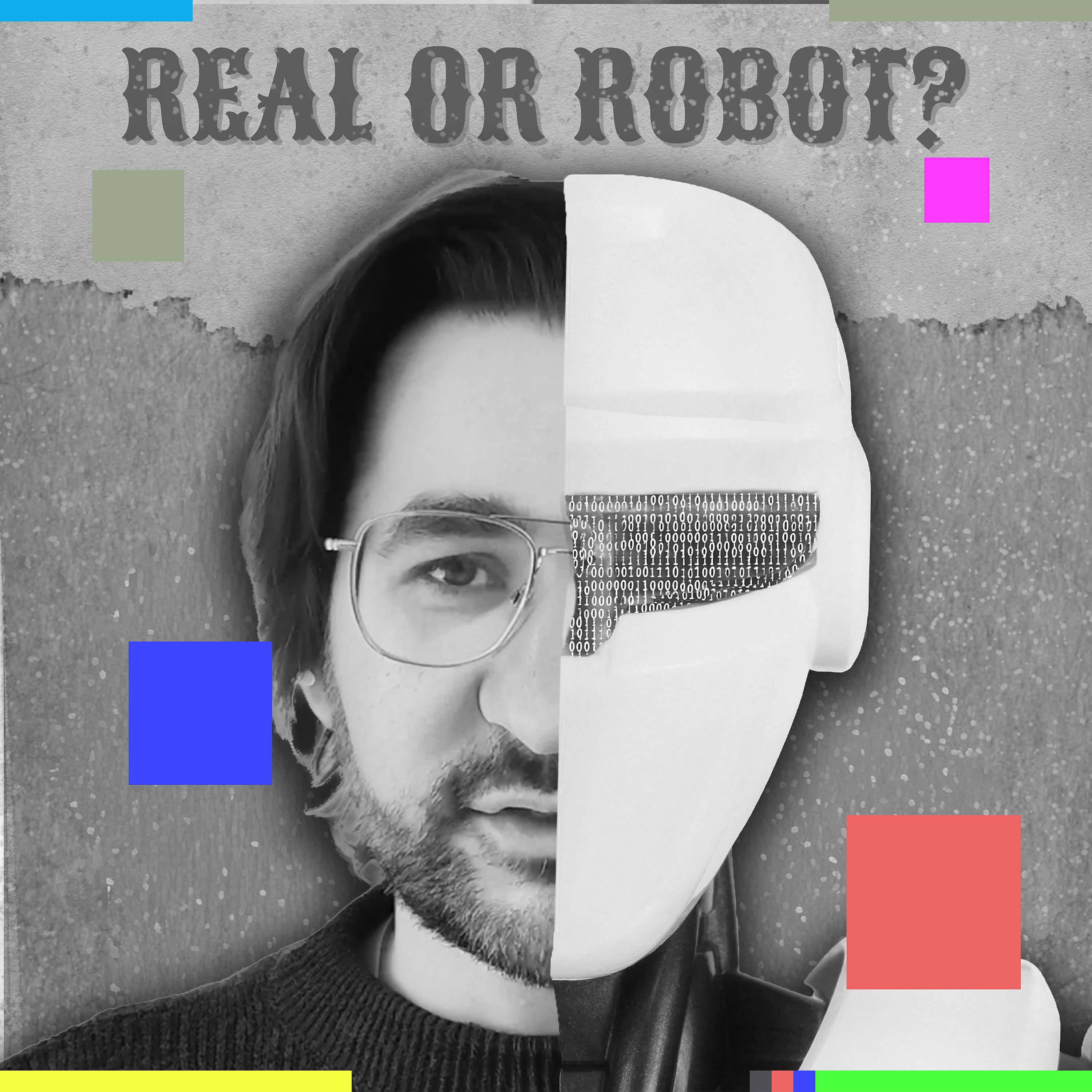
The Interface
Can we prove we’re real online?
00:39:53
Can we prove we’re real online? Brain implants are here. War threatens AI's supply lines.
Loading summary
Transcript122 lines
- [00:00]
BBC Podcast Announcer
This BBC podcast is supported by ads outside the UK.
- [00:06]
ServiceNow Advertiser
You don't need AI agents. Which may sound weird coming from ServiceNow, the leader in AI agents. The truth is, AI agents need you. Sure, they'll process, predict, even get work done autonomously, but they don't dream, read a room, rally a team. And they certainly don't have shower thoughts, pivotal hallway chats, or big ideas.
- [00:25]
Tom Germain
People do.
- [00:26]
ServiceNow Advertiser
And people, when given the best AI platform, they're freed up to do the fulfilling work they want to do. To see how ServiceNow puts AI to work for people, visit ServiceNow.com we face
- [00:37]
Nikki Wolfe
the greatest challenges of our time. Challenges that test our limits. There is a place where we can find answers, where journeys break new ground and connections unlock opportunities. Where innovation can spark real change and our actions can push our world forward. Singapore, where business events can create lasting impact.
- [01:08]
Tom Germain
Guys, I gotta jump in here before we get started because there is a podcast emergency that we need to deal with. This week, a jury in California found that Meta and Google deliberately made their platforms addictive and are now responsible for some mental health crises that their users experience. This could ultimately lead to billions of dollars in damages. It could change the history of social media. They're call this social media's big tobacco moment. Like those lawsuits in the 90s. But the problem is we record our show on Tuesdays, so we didn't get the chance to address this in the episode you're about to hear. But it's a huge story. We're going to be following it, so stay tuned. There is literally nothing that you could do that would prove to me for certain that you were not an AI.
- [01:57]
Nikki Wolfe
I don't want my brain to be enslaved after I died. No, thank you.
- [02:03]
Karen Howe
Even if the strait of horror moves like reopened, the effects of the war are already going to be felt for a very long time.
- [02:14]
Nikki Wolfe
Hello and welcome to the Interface, the show that explores how tech is rewiring your week and your world. I'm Nikki Wolfe.
- [02:21]
Karen Howe
I'm Karen Howe.
- [02:22]
Tom Germain
And I'm Thomas Germain. Or am I? Today on the Interface, we're gonna talk about how I tried to prove I'm not an AI and it didn't go well.
- [02:32]
Nikki Wolfe
Also, can you control a computer with your brain?
- [02:35]
Karen Howe
And how the war in Iran could crash the world of AI.
- [02:45]
Nikki Wolfe
Okay, guys, we've got a massive update before we get started, which is that a judge in Nevada has ordered Kalshi, which is one of these online prediction markets, one of the two big ones, Kalshi and Polymarket, to stop trading. It's the first time one of these markets has faced any kind of order to stop. And there's also legislation being introduced in the US which would regulate some of these markets.
- [03:11]
Tom Germain
And on the same day that we got news the Senate had introduced this law to regulate Kalchin polymarket. Both of the companies announced that they have new insider trading policies. So you can't bet on stuff. I mean, it's different for different platforms. If you have influence over the outcome of an event, they're saying, like, well, you're not going to be able to bet anymore. It seems like things are really hitting the fan for these companies. They got so big so fast in a way that's like, kind of new for the tech industry. And already we're actually seeing some kind of regulatory action, which is not how
- [03:43]
Nikki Wolfe
things used to be.
- [03:44]
Tom Germain
It used to take like 10 years before Congress would wake up and be like, hey, maybe somebody should do something about this biggest company in the world. So progress? I don't know.
- [03:53]
Karen Howe
On a different note, we asked last week for our listeners and our viewers whether or not you choose the voice for your voice assistants, and if so, what criteria you use. And we got a pretty interesting comment from one of our longtime listeners, John Bartol. He was a former director at Microsoft and mentioned that when he was at the company, they did in fact have lots of conversations internally about this idea that voice assistants were generally defaulted to female voices and that this could potentially have structural biases or change user behaviors. And so he and his friends within the company actually did an experiment where they changed some of their voices to different accents. He specifically chose a male voice for his Siri. This was not an initiative by the company. It was just something that they were kind of chatting amongst each other about as employees. And he said that it sparked some really interesting conversations because it did indeed shift their behaviors when they used a different voice than the default. And it caused people to pause when they heard his mail Siri, and it would then lead to conversations about the bias. So thanks so much for writing in, John.
- [05:14]
Nikki Wolfe
That's really cool.
- [05:15]
Tom Germain
We love hearing from listeners, especially if they're executives at gigantic tech companies. Yeah. Any secrets in particular? Those are our favorite kinds of kinds of comments.
- [05:25]
Karen Howe
Yeah. And if you would like to send us those secrets, you can email us@the interfacebc.com or you can WhatsApp us at +443332072472.
- [05:38]
Tom Germain
We also like it if you just say hi. We love that.
- [05:41]
Nikki Wolfe
Okay. So, Tom, are you real? Because I'm hearing. I'M hearing very mixed things about this at the moment.
- [05:49]
Tom Germain
I'm not really sure anymore after a couple experiments that I've done over the last week, which is unsettling, I gotta say. But there's been a ton of news in the last week or two that all centers around this idea that we've been hearing about for years, this idea that we were careening towards, this turning point where things have become so unclear with the world of AI that it's impossible to detect what actually is going on and sort through the noise. So I want to talk about some of the. The news, but before we do, I want to tell you about this experiment that I did. So you hear about deep fakes all the time, Right. And the concern is always that, like, someone is going to call you impersonating a family member, or there's going to be, you know, some people are going to, you know, impersonate the president and put out this AI video and Swain election or something like that. The idea is always that you're going
- [06:45]
Nikki Wolfe
to be the victim.
- [06:47]
Tom Germain
But I was thinking, what if it's the other way around? What if instead of you getting fooled by a deep fake, the accusation comes in that you're AI? Which is something that I think in the near future is a question that's going to be coming up more and more often. Right. You hear about this on job interviews that, like, people who are interviewing over zoom, like, have to do things to prove that they're not, like, some kind of AI avatar that's doing the interview for them.
- [07:13]
Nikki Wolfe
You see this a lot in news as well, where a real story will come out and people will go, that's fake. That's AI.
- [07:19]
Karen Howe
Yeah. It's been happening with the Iran war.
- [07:22]
Tom Germain
Yeah. Right. So I wanted to find out, if it came down to it, could I prove in a moment when I'm talking to someone that I am not a robot? So I called up my Aunt Eleanor and I told her I was working on an article. I just published a story about this in my column, and I told her I was doing an experiment and I wanted her to figure out whether or not she could tell if it was the real Tom Germain or if I was fooling her with an AI.
- [07:51]
Karen Howe
Did you create an AI version of yourself to play side by side with you?
- [07:56]
Tom Germain
I did not, no. I just wanted to raise the suspicion. Right.
- [08:01]
Karen Howe
You're poor, Eleanor.
- [08:03]
Tom Germain
Who'd think it would be like, well, of course you're not AI. I can tell. Like, it looks real, like you're talking normally Right, Yeah. But once you had that doubt, things kind of started to fall apart. So at first she was like, oh, well, it sounds like you. And, you know, I don't think an AI would have the same inflection as a human being. Like, it sounds really realistic. And I said, well, that's true, but they're getting pretty advanced. Right. And all of a sudden, I could just feel this doubt come over her, and she's like, well, you know, I. I think it's you, but I. I can't be a hundred percent sure. Right. And, like, I could tell this was actually very upsetting for her. Like, I had to. But I am not the first person to go through something like this. It actually just happened to Israeli Prime Minister Benjamin Netanyahu. Maybe you guys heard about this.
- [08:54]
Nikki Wolfe
Oh, this is when people thought he was dead.
- [08:56]
Tom Germain
People still do. Yeah. A couple of weeks ago, Netanyahu posted this video on his Twitter account of, like, him giving a speech. And at one point, like, he kind of goes like this, and there's like a reflection on his palm. And if you freeze frame at just the right second, it kind of looks like a glitchy sixth finger maybe, which is, like, used to be the hallmark of AI, right? That it would, like, an AI image or video generator would add extra fingers. And immediately the Internet exploded with rumors that Netanyahu had been killed in a missile strike and Israel was putting up AI deep fakes of him to hide the truth that the Prime Minister was dead. A couple days later, he posted another video of, like, himself in a coffee shop where he was, like, holding up his hands, being, like, see? Right number of fingers, guys.
- [09:43]
Nikki Wolfe
So he was. He was having to specifically address these rumors.
- [09:47]
Tom Germain
This is according to all the experts I talked to. The first time that the leader of a major world power has, like, openly and explicitly come out and tried to prove saying, like, I'm not AI. I'm a real person. I think that's a serious turning point. We've seen this with, like, smaller countries. We've seen times when, like, leaders were maybe doing this without saying it to address some rumor. But we've reached the point where the head of one of the most powerful countries in the world has to actually say out loud, I am not dead. I am not an AI. I am a real person. And it did not work. That's the thing about conspiracy theories. It's kind of beautiful in a way. Right? Like, everything you hear once you believe a conspiracy theory is either just more evidence for the conspiracy or, like, evidence of a cover up or something like that.
- [10:34]
Nikki Wolfe
It's. Almost everything is proof of the conspiracy once you're. Once you're within that world.
- [10:38]
Tom Germain
Exactly right. There's this idea that I'm sure you guys have heard about called the liar's dividend.
- [10:45]
Karen Howe
Yeah, the liar's dividend is such a fascinating concept because it's this idea that in order to prove that something is real, it actually is very costly. But to point at something real and say it's fake is free. And so there's this incentive for, you know, for authoritarian governments to just undermine the evidence of different things by calling out real things as, as fake for, you know, conspiracy theorists to, to do this. Basically, anyone that wants to throw a little bit of chaos into the information ecosystem to say, yeah, like, are we really sure that this is legitimate?
- [11:25]
Tom Germain
Exactly right. And this is. We've been seeing this for years and years and years. Kind of before this whole AI conversation started in the, in the public eye, really before it took off, at least, like, you know, attacks on the media. Right. Like decrying anything inconvenient is fake news. But now this is coming back to bite the very people who are in a position of power to abuse this new ability to, like, make everything suspect. And Netanyahu, like, actively went out and maybe not the best strategy, you know, to add fuel to the fire, be like, I'm not dead. What are you talking. Probably it's going to make people more suspicious, but people were not assuaged by this. Netanyahu is not dead. I can tell you that. And I can also tell you that there's probably people listening right now who are going like, oh, see, there we go. These, these guys are part of the conspiracy to the BBC is like doing, you know, like, how can you be so sure, Tom? I actually, that that would be good, like the psyop would be if I didn't even know that I was part of it. Right.
- [12:29]
Nikki Wolfe
The problem, as you say, Karen, is how can you be sure? And if we're getting to a point where you can never be 100% sure, that's. That's a disaster.
- [12:39]
Karen Howe
I've always felt with the topic of defects that people, people used to say, like, this is going to be the end of truth. But I always felt that that was not quite right. It was, to me, the end of certainty, which is a slightly different thing. But it, it's exactly what you're saying, Nikki, that, like, the doubt that people have and this is the exact effect that you saw on your Aunt Eleanor, Tom. Like, this, this like insidious doubt that kind of creeps in where you don't trust your senses anymore. You don't trust the things that you feel you should intimately know. And that kind of erodes away people's solid ground that they stand on.
- [13:25]
Tom Germain
Yeah, well, you know, I, I was talking to my Aunt Eleanor. Not exactly, you know, like she's not, she's not a leading authority on AI, right. So I called some of the leading experts on AI deepfakes. I talked to this professor named Hani Farid at the University of California, Berkeley, often called the father of digital forensics. We got on a video call and I asked him, is there anything that I could do right now to prove to you, as we are on this call, that I'm not an AI? And he said, like, well, you know, there's things I could do to like, make myself a little more certain, but there is literally nothing that you could do in this moment unless we get off the call and take some additional steps that would prove to me for certain that you were not an AI. There's, there's no way. It's over. We're past that point.
- [14:07]
Karen Howe
What were those additional steps?
- [14:10]
Tom Germain
Well, he said, you know, he's, he's got a whole company called Get Real Security where they're working on this stuff now. And he's like, I've got a platform that I could put you on that has like software built in that, you know, does facial analysis and other things and like, has all these different systems built in that would check, that would work. He said I could do additional steps to make sure that like, like contact the BBC and things like that and make sure I'm actually speaking to you, like get a third party to verify it. But in the context of this phone call, he's like, you know, you could wave your hand in front of your face, right? That usually if it's an AI deep fake, that'll make a glitch, but even that I couldn't be certain. And that's like world class expert, right? We're in big trouble here.
- [14:53]
Nikki Wolfe
And generally the only thing you can do is to pay attention to context to say, wait, does this news pass the smell test? Let me check a few more sources. Really difficult to spot unless you really. But everyone now kind of has to do their own digital forensics to a certain extent. And that's just by context.
- [15:11]
Tom Germain
And this isn't just about individual people, like, you know, you and me having to prove that we're real and not AI, which is a thing that's going to start happening more and more often. You're going to be in some emergency, you're going to be talking to someone. They're going to be like, wait, like, are you a scammer? Is something happening? But on a much larger scale, what we're already seeing is this playing out with public figures on the Internet. And in particular, there was this story from the Washington Post about this fake MAGA girl.
- [15:37]
Nikki Wolfe
It's the opposite problem, which is there's people online who are fake that people en masse are believing is a real person. And in particular, there's this woman called Jessica Foster.
- [15:49]
Tom Germain
This woman.
- [15:50]
Nikki Wolfe
There's an AI influencer called Jessica Foster who people have just fallen in love with all across the. People, including Tom, have fallen in love with all across the Internet.
- [15:58]
Tom Germain
This friend of mine, Drew Harwell, did an investigation into this in the Washington Post. Turns out, I mean, you could tell from looking at it, if you know what to look for, that this is obviously not a real person, but millions of people had fallen for it. It's, you know, she's like this army girl. He asked the. The US army to look into it. They don't have a record of a Jessica Foster. You can tell it's AI from looking at her. But millions of followers, millions of people are following her. She had an OnlyFans account. After Drew contacted them, they took it down. Because you have to be a real person to have an OnlyFans account. Like, you can post AI stuff of yourself on OnlyFans, but if there is no real person, then that platform doesn't allow it. But people were just completely duped by this. Even though it's like, so how is
- [16:43]
Nikki Wolfe
this, you know, a hot woman taking all these selfies with all these world leaders and then leading you to an Only Fans?
- [16:50]
Tom Germain
Yeah, exactly. There was a picture of her in the Strait of Hormuz, right? Like, Or I think there was one where she was arresting Nicholas Maduro in Venezuela, right? It's like, wow, this woman really gets around. And she's on Only Fans. Like, what. What a dream, you know, but people are not trained to be thinking about this in that way. Right? Even though, like, it's like, it seemed we're past the Rubicon, but our brains are still catching up. Society is still catching up, and it's happened so fast.
- [17:21]
Nikki Wolfe
And it goes back to the liar's dividend as well, which is the. Especially for people in positions of power who don't mind using this. People not knowing what's real, people not knowing what's True is hugely an advantage of people who want to abuse that power, want to be not caught doing bad things when they can just say, oh, that's AI. Want to pretend that something has happened when it hasn't happened.
- [17:44]
Tom Germain
Right.
- [17:45]
Nikki Wolfe
This has much more bad outcomes than good outcomes.
- [17:48]
Tom Germain
So back on the phone with my Aunt Eleanor, you know, she had prepared, like, a couple of tests for me. She was like, reading me some jokes she found on Facebook to see if my reaction felt real. And it was like, you know, they
- [18:00]
Nikki Wolfe
were kind of funny.
- [18:01]
Tom Germain
I was laughing. I was playing along. She's like, okay, I think this is. This seems like you. And then we'd switch and we started talking about, she's going to knit me a sweater. And years ago, she made me. That's adorable. It's. It's very sweet. She, like, made me this really nice gold sweater, and she's gonna make me another one. And I was like, you know, like, I was thinking maybe, like, like, maybe we should just do something boring like black or navy that, like, you know, I know, looks good. I'll wear more often. All of a sudden, she was like, I thought you were like, that sounds like a robot. I thought you were gonna ask for another gold one. Like, sincerely, like, that was the thing of the whole conversation. That was what really threw her off, is that I didn't want another like, this can't be the real you. Do you.
- [18:41]
Nikki Wolfe
Do you tend to lean towards colorful sweaters? Is that typically you would come with a sweater color.
- [18:46]
Tom Germain
I don't know why I went for the gold. I mean, I'm wearing like a nice dark blue sweater right now. I was stepping out. So really the gold sweater, I think, is what the robot version of me would ask for.
- [18:56]
Nikki Wolfe
In reality, can you rather gold sweater for the next recording?
- [18:59]
Tom Germain
Yeah, I'll pull it out for sure.
- [19:04]
BBC Podcast Announcer
The best B2B marketing gets wasted on the wrong people. So when you want to reach the right professionals, use LinkedIn ads. LinkedIn has grown to a network of over 1 billion professionals, including 130 million decision makers. And that's where it stands apart from other ad buys. You can target your buyers by job title, industry, company role, seniority skills, company revenue. So you can stop wasting budget on the wrong audience. It's why LinkedIn Ads generates the highest B2B return on ad spend of major ad networks. Spend $250 on your first campaign on LinkedIn Ads and get $250 credit for the next one. Just go to LinkedIn.com Broadcast. That's LinkedIn.com Broadcast Terms and Conditions apply. Investing with Schwab is like spending a Saturday at a great farmer's market. You can fill your reusable tote with a bit of everything. Maybe you go for some free range, self directed investing or perhaps you pick up a few farm fresh trades while you peruse. You can even get help from a dedicated advisor. That's full service wealth management. Mix, match and change your mind whenever you want. Because at Schwab you can invest your way. No matter your goals or appetite for investing, Schwab has everything you need all in one place. Visit schwab.com to learn more.
- [20:17]
Nikki Wolfe
All right, my story this week is I think something really, really exciting and something I've been kind of obsessed with for a little while. Basically, China has just approved for sale which will now be the first commercially available neural implant. And what it is, it's about the size of a coin. It gets surgically implanted into the part of the brain that operates movement. And in people with spinal paralysis, other kinds of paralysis. What they demonstrated is that with this link, they can move a robot hand. So it's picking up the signals in the brain with movement. And for someone with paralysis, they can move this robotic hand and get movement back. Now this is quite dear to my heart because my, my dad is paralyzed. He had a stroke, his right side paralyzed. So this might be something that if he was to get, it would bring back right hand movement. And this is, this is huge for people who are paralyzed across the world. This is massive, massive news. So this is a technology that's widely, that's generally known as a bci, a brain computer interface. These have been around for a long while. This idea that you could put a node into the brain and it would transfer information via electronic signals. This concept's been around for a while, but what is new is the ability to make these into consumer products that actually work. And this area of science has really exploded in the last few years to the point now companies are coming to market with this sort of stuff.
- [21:47]
Tom Germain
And we say consumer product. Like it's a medical device. Like you can't like just go buy one, but you know, at your local seas. What does the future for this sort of thing. Not yet. Yeah, it's here. That's right. You go to the brain department.
- [21:59]
Nikki Wolfe
There's lots of different various ways that this technology or technologies like it can go right, you've got movement version of the technology, which is what this Chinese chip does, which is controlling a robot using the movement signals that come from the brain stuff that Elon Musk with Neuralink has been talking about is much more content and actual thought. There's some kind of computer interfaces where you'd be able to use a mouse cursor using just brain motions. But the idea that you could beam content in and beam content out is much further away and much more kind of problematic in terms of what that technology could be.
- [22:44]
Tom Germain
But they did this. Isn't there like a guy who has a neuralink chip implanted in his brain and he can like use a computer with it? Like that's a thing that's happening already, Right?
- [22:52]
Nikki Wolfe
That's a very early pilot study. They also piloted some of the, I think the later versions of the neuralink in a study with monkeys where 16 out of the 23 monkeys tested died in pretty horrible way. But there's another story that I investigated a little while back, which was about a company called Second Sight. So that was for a condition called retinitis pigmentosa, which is a degenerative disease of the eye. And it makes you go blind, essentially. And it's not a brain implant, it's a corneal implant. So it's. It is connecting with the brain, but it is an implant into the eye that connects with the nerves that go from the eye to the brain, and that connects with a set of glasses that have a little camera in the middle of them. And that is sending signals directly from the camera into the cornea, into the nerves of the eye, into the brain. Oh, it's pretty low res there. You know, this is not immediate high definition sight. It's more in the realm of senses, of shapes. And this guy who had been blind from childhood, he'd been fully blind for 30 years, could suddenly see again. And there was this really moving moment where he said, and I looked to the left and I saw my wife for the first time. And he just died. But here's the problem with that, is that this was made by a Silicon Valley startup that then after about a year of operating, went bankrupt. And suddenly there was no more support for all these people who had this implant. And did he go blind again? When we spoke to him, he was like, as soon as I run out of spare parts, my eyesight goes again. There was no company that was picking up the ongoing tech support for these things. And that's just horrifying that it is based on the whims of the free market.
- [24:57]
Karen Howe
So that was an eye ship that was like a different project, but now we're talking about brain chips. What is it exactly? Do we know what this Chinese company has done differently to be able to get to a point where they're commercializing. Given that there have, like, as you said, like there have been these experiments that Neuralink has done where like all the monkeys or most of the monkeys died. Like is do we understand how they're implanting these chips in a way that is more safe?
- [25:28]
Nikki Wolfe
So the difference here between Neuralink and this company, neo, which is the Chinese company, is that Neuralink is proposing a chip that we implanted insight into the brain within gray matter tissue, which would allow it, in theory. Their idea is that it can do so many more things. It can translate thoughts into words. Whereas this neochip is just movement. It's placed on the surface of the brain with nodes that go a little way inside of it. Motion is a part of the brain that's known quite a lot about. Whereas the, yeah, the verbal thought into computer interface is, is much more complicated and that technology is a fairly longer way away. So that might explain why this one's been able to come to market faster
- [26:19]
Karen Howe
than newer and also safer.
- [26:20]
Nikki Wolfe
And also be safer.
- [26:22]
Tom Germain
What amazes me about all this stuff, it's like, I mean, you think about this guy seeing like getting his eyesight back for the first time in 30 years. It's this like landing on the moon level stuff, right? And when we think about like exploration, it's always about like, oh, we're going to climb this mountain, we're going to go to the bottom of the ocean, we're going to go into space. But we know so little about the inner workings of our own minds. Right? I mean, like, when we think about AI, there's a whole field of AI and neurology where neurologists and AI researchers are like, studying both like trying to learn more about how thought and consciousness works in the brain with the idea that if we can understand more about how the brain thinks, that'll help us unlock, you know, new ways to make a better AI and vice versa. Like really like the very like razor's edge frontiers of science.
- [27:16]
Nikki Wolfe
It's the last undiscovered country, really. We know more about both space and the bottom of the oceans than we do about the inner workings of the human mind.
- [27:24]
Karen Howe
So wild.
- [27:26]
Nikki Wolfe
I mean, the other area that people talk about it being used for a lot is gam. I could see it totally becoming widespread. I mean, certainly loads and loads of people would probably already volunteer for if there was something that could fulfill that promise of total gaming immersion the way VR promised to do, but sort of never did. VR has obviously got all these problems where you're flailing around in your living room, you're smacking yourself on the door, and you got the television over.
- [27:50]
Tom Germain
I wanted to feel like I'm actually getting punched in the face.
- [27:53]
Karen Howe
You know, I truly cannot relate to someone who would choose to get a hole drilled through their skull just for the purpose of immersing in a video game.
- [28:03]
Tom Germain
You're clearly not a gamer. Yeah, have you seen Candy Crush? But Nikki, I mean, there's some really like, truly phenomenal or I don't know, phenomenal is the word, but mind blowing stuff happening in this world of like digital neurology. Can you tell us about the. The AI fly that they built? I've been hearing about this over the past couple weeks.
- [28:26]
Nikki Wolfe
So the thing with the fly is that they. A scan of all of the neurons within a fly's. A fly's brain. They made a perfect digital replica of the brain structures of the fly. They put it in a virtual environment. And this fly started flying around completely within this virtual environment.
- [28:47]
Karen Howe
Like, what do you mean? Like it just started flying around in a virtual environment.
- [28:50]
Tom Germain
What they say is it responds the same exact way that a real fly would if in the real world it received the same stimulus. So what they say is like, they built like a working, functioning digital fly. But it also reminds me, have you guys heard about Organoids? Do you know about this? Like, this sounds like the most sci fi, unreal stuff in the world, but they figured out like, how to grow like, you know, a couple of human cells, like in a dish and like make them do things. And there have been these experiments where they have like human brain cells. Oh yeah. That they like cultivate that are now a computer individually. And they made it. They're making it play video games, which is Karen's dream. Like after you die, Karen, we can take your brain and we can build a computer and you can play your favorite video games forever. Doesn't that sound nice?
- [29:41]
Nikki Wolfe
Here's, I guess the question for the three of us. Personally, I would much rather interface with a implant with mechanistic or computer devices than have my brain scanned and uploaded into a totally virtual environment in a way that it could be replicated. You know, we have no idea what they would take that scan and do. There might be infinite copies of me in bleak, you know, virtual worlds trapped in this. I mean, this is. This is truly horrifying to me. I think you know what happens to that flight when the experiment ends.
- [30:17]
Tom Germain
I mean. Yeah. And like. Well, it's not Alive, it's just a computer pro. But then we get into some pretty philosophical questions.
- [30:24]
Nikki Wolfe
I don't want to be my brain to be enslaved after I die. That's no, thank you.
- [30:30]
Tom Germain
You know, but I, I get the thinking, like, it's like it's not your brain, it's these individuals. But we don't know, like, does it, like what is happening within a brain cell? Like, is it thinking, like, what it. Like.
- [30:44]
Nikki Wolfe
Well, this is what it all ultimately comes down to. And it's the problem with both AI and the human brain is that we don't know what consciousness is. And that's why when all of these AI companies come out and say we have created like our AI has become conscious, we don't know what consciousness is, we don't know what it means.
- [31:03]
Tom Germain
Yeah.
- [31:04]
Nikki Wolfe
So I'm watching this very closely. It will need to go through regulations in the EU and the UK and the US obviously. But I think as this technology grows, I think this, I think this is personally really exciting, amazing stuff.
- [31:18]
Karen Howe
Well, the thing that I wanted to talk to you both about this week is the Iran war once again. But a very interesting dimension of the war that, I don't know, a lot of people are paying attention to, which is the way that it is putting enormous strain on the AI supply chain, which is relevant to everyone in the world because the fortunes of the AI industry is basically tied to the fortunes of the economy, the global economy right now. And of course, there's a lot of, been a lot of talk even prior to the Iran war about whether or not we're in an AI bubble. And if we are, the Iran war is now putting that bubble under sea, serious strain. And some people are saying that it could pop.
- [32:14]
Nikki Wolfe
And so we, what we're talking about here is supply chains, right? We've got Straits of Hormuz is closed. It's one of the world's most important shipping choke points. And there's just container ships, cargo ships backed up all the way, waiting to transit the Straits of Hormuz. And everyone is talking about oil. What oil not being able to get through is doing to the economy, is doing to the price of oil. But there's all kinds of other ships that are also backed up that are getting in the way of supply chains for everything, but also all of these ingredients that build this super fragile supply chain ecosystem for AI.
- [32:55]
Tom Germain
Yeah, can you walk us through the steps? How do we get from Iran war to AI bubble pops, Entire global economy collapses. Like, how's it going to play out?
- [33:05]
Karen Howe
Yeah, well, here's the crazy thing. So a lot of people don't really think about AI having a physical infrastructure, but we have talked on several episodes about the fact that it is actually a very physical piece of technology. There's data centers being built. Those data centers are filled with computer chips. Those computer chips need rare earth minerals to be mined and so on and so forth. When you map out the tentacles of all of the different countries and companies and inputs that are involved in actually constructing these facilities, this is, this is really crazy. A single semiconductor chip crosses more than 70 international borders before it gets to its final destination.
- [33:52]
Tom Germain
Yeah, that's wild.
- [33:54]
Karen Howe
A very delicate supply chain because it's not just about how many borders it crosses, but there are all of these components that go into making this chip that are actually monopolized by individual companies or countries. Yeah, the like manufacturing of the semiconductor chips, the most advanced semiconductors are almost exclusively made in Taiwan, for example, by the company tsmc.
- [34:23]
Nikki Wolfe
And what people say is that that is one of the things that keeps Taiwan to a certain extent safe from invasion by China because they have this monopoly.
- [34:33]
Karen Howe
It's right. It's called the silicon shield. There's got. There's two things that are happening with the supply chain because of the Iran war. The first one is a more direct situation, which is that, yeah, the Strait of Hormuz is blocked up and there are all of these chemicals that are involved in the etching of the semiconductor chips and the cooling of the chips and other things like that that are not able to get there anymore. Also, a lot of Asian countries, including Taiwan, heavily rely on liquefied natural gas that comes from the Middle east as well as passes through the Strait of Hormuz. So Taiwan's grid is run on 42% natural gas and almost 30% of that natural gas comes from the Middle East. And during the process of the war, not only has the gas been blocked, it's not able to actually get there shipping wise, but also there's been a lot of damage to the natural gas production facilities themselves.
- [35:41]
Nikki Wolfe
One in particular is the largest single natural gas processing facility is in Qatar that was hit quite early on by an Iranian missile. We don't know what, what the status of the war in Iran is going to be by the time this show comes out. But whatever happens, they've said it's going to take three to five years to rebuild that facility and get back to
- [36:04]
Karen Howe
the company already declared force majeure. Yeah. And is, is, is screwed, basically. So even if the Strait of Hormuz like reopened. The problem is that the effects of the war are already going to be felt for a very long time because the production facilities themselves are going to take years to reconstruct.
- [36:25]
Tom Germain
Yeah, I mean, Donald Trump has been saying that. Oh, well, like, I'm not worried about this. Like, the United States produces enough oil and natural gas. Like, we're fine, we don't need Iran. But, like, when you think about the global economy, right, If Taiwan falls apart and they're not able to produce the materials that we need to build the data centers to run AI, like there can be this downstream effect where all these things start to fall apart.
- [36:48]
Karen Howe
Yes.
- [36:49]
Tom Germain
Even if there's just a break, even if there's an interruption in, like the economic machine, it could all come crumbling down. Right. Like it's held together with matchsticks and, and glue.
- [37:00]
Karen Howe
It's always moments like these, like, crisis moments when you begin to realize how fragile some of these global supply chains are. But there's another impact that the Iran war is having that's more indirect and I also think more interesting. So oil prices are up. That means inflation's going to rise. That means interest rates are going to rise. And this is where it gets really bad, which is the AI industry is currently using an enormous amount of money debt to try to sustain its expansion in building out these data center facilities. And when inflation goes up and interest rates rise, that borrowing gets a lot riskier.
- [37:50]
Nikki Wolfe
It's worth unpacking that more specifically what we mean. Right. So these AI companies and these chip companies will take out a huge loan and use them to buy what remained completely at that point, fictional chips. And so it ends up with all of this kind of pyramid of theoretical money on which the values of all these companies are based. If interest rates go up, those loans suddenly stop being worth the same exact value. The debt on one side increases. It's already, even before there was a global supply chain crisis, unclear entirely whether any of these loans could be really fulfilled, given how small, in comparison, the actual revenues by these companies are. If it gets to a point where some of these lending companies can no longer, at the new rate of interest, sustain that lending, the whole thing could collapse completely in and itself.
- [38:59]
Tom Germain
And it's not. I mean, forget the mathematics. If there's even just a doubt, right? If there's a drop in the level of confidence in this system that is built entirely on handshakes and debt and loans, the slightest little kink in that chain, it all falls apart.
- [39:15]
Karen Howe
Well, I wanted to go back for a second to also the balance sheet of these companies. So the borrowing is getting riskier. But also, like when oil prices rise, as I mentioned, all components and products, like, the prices increase. And so the construction of the data centers actually become more costly. So, in fact, the tech companies have to borrow even more. And then the running and operating of the facilities also gets more costly because the price of energy goes up. And these companies now would essentially need to borrow more money for a longer period of time in order to try and get to the point where they are able to make back the money by training more models, deploying more models on these data centers, getting consumers to pay for it, getting enough revenue in the coffers to then pay back the debt.
- [40:11]
Tom Germain
And Karen, can you, can you bring this down to the living room for us here? I think probably there are some people out here listening. Like, people are dying in this war. Right? Like, it's. It's a major global conflict. The prices of gas are through the roof. Like, this is hitting consumers right now. I think there are probably some people being like, well, I don't care about what's happening with these, you know, these big tech companies. Like, oh, well, they're going to lose some money big. What, like, why does this matter to the people listening right now?
- [40:41]
Karen Howe
I mean, this is what some analysts are saying is that if the AI bubble pops, the global economy completely goes to crap. The money that's being invested into AI and like, the money that the companies are borrowing, they're borrowing directly from people's retirement funds and university endowments. It's coming from average people, regular folks and their money. So when all of this collapses, you, like, the investors are going to be fine, the companies are going to be fine. It's actually the regular people that are not going to be.
- [41:20]
Tom Germain
Right. Like, your ass is on the line.
- [41:22]
Karen Howe
Yeah.
- [41:22]
Tom Germain
If the economy falls apart.
- [41:24]
Nikki Wolfe
Right.
- [41:25]
Tom Germain
Sam Altman, he's still going to eat pretty good, but you might lose your job.
- [41:30]
Nikki Wolfe
Yeah, well, I mean, this is why all of these tech billionaires are building their apocalypse bunkers. They're going to be all right under there.
- [41:37]
Tom Germain
Where's the interface bunker? We got to get started on that.
- [41:39]
Karen Howe
Did we not tell you, Tom?
- [41:40]
Tom Germain
Right, yeah, exactly. And that does it for this week. Join us on our next episode. If you're in the uk, you can listen on BBC Sounds, or if you're outside the uk, you can listen wherever you get your podcasts or just search for the Interface podcast on YouTube. If you want to get in touch with us, you can email us@theinterfacebc.com or get us on WhatsApp on 443-332072472 or find us on social media. All of our handles are right down there in the show. Notes.
- [42:18]
ServiceNow Advertiser
You don't need AI agents. Which may sound weird coming from ServiceNow, the leader in AI agents. The truth is, AI agents need you. Sure, they'll process, predict, even get work done autonomously, but they don't dream, read a room, rally a team. And they certainly don't have shower thoughts, pivotal hallway chats, or big ideas.
- [42:37]
Tom Germain
People do.
- [42:38]
ServiceNow Advertiser
And people, when given the best AI platform, they're freed up to do the fulfilling work they want to do. To see how ServiceNow puts AI to work for people, visit ServiceNow.com.