← The Interface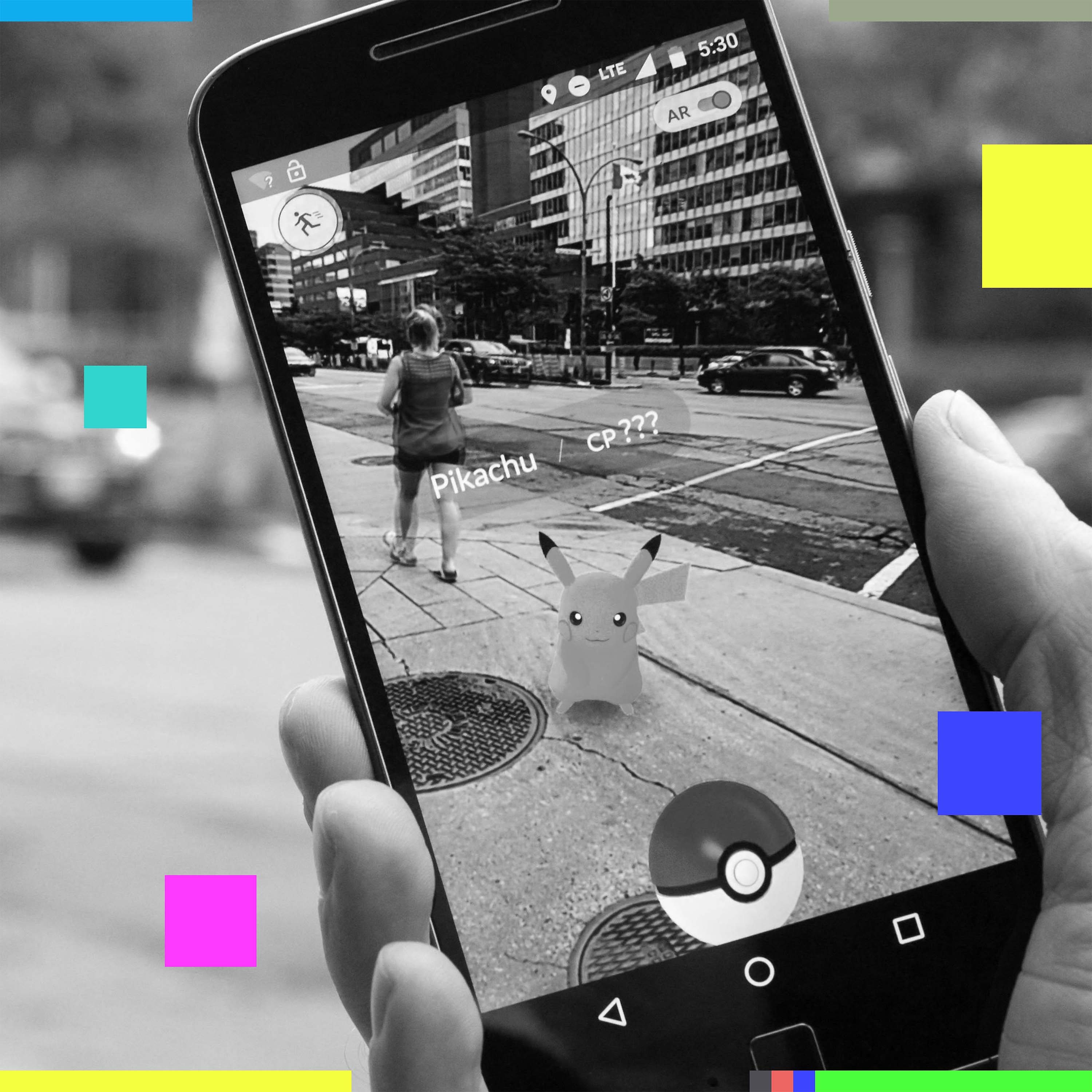
The Interface
What Was Pokemon Go really up to?
00:35:41
How your online games trained robots without you knowing; and AI assistants get personal.
Loading summary
Transcript159 lines
- [00:00]
BBC Podcast Announcer
This BBC podcast is supported by ads outside the UK.
- [00:06]
ServiceNow Advertiser
You don't need AI agents. Which may sound weird coming from ServiceNow, the leader in AI agents. The truth is, AI agents need you. Sure, they'll process, predict, even get work done autonomously, but they don't dream, read a room, rally a team. And they certainly don't have shower thoughts, pivotal hallway chats or big ideas.
- [00:25]
Thomas Germain
People do.
- [00:26]
ServiceNow Advertiser
And people, when given the best AI platform, they're freed up to do the fulfilling work they want to do. To see how ServiceNow puts AI to work for people, visit ServiceNow.com we face
- [00:37]
Event Promoter
the greatest challenges of our time, challenges that test our limits. There is a place where we can find answers, where journeys break new ground and connections unlock opportunities, where innovation can spark real change and our actions can push our world forward. Singapore, where business events can create lasting impact.
- [01:11]
Karen Howe
It turns out you were actually training robots.
- [01:16]
Nicky Wolfe
These memes are being posted from official White House accounts.
- [01:21]
Thomas Germain
Interacting with this thing, like a person that's not having no effects on you.
- [01:29]
Karen Howe
Welcome to the Interface, the show that decodes how tech is rewiring your week and your world. I'm Karen Howe.
- [01:37]
Thomas Germain
I'm Thomas Germain.
- [01:38]
Nicky Wolfe
And I'm Nicky Wolfe.
- [01:39]
Karen Howe
Today on the Interface, we will be
- [01:41]
Nicky Wolfe
discussing how the White House is using memes to sell the war in Iran,
- [01:46]
Thomas Germain
why Alexa's new voice is sassy but
- [01:48]
Karen Howe
not sexy, and how you unwittingly trained robots while playing Pokemon Go. Did you ever play Pokemon Go?
- [02:01]
Nicky Wolfe
Hell, yeah.
- [02:03]
Thomas Germain
I think I tried it for, like a day or two. It just didn't. It didn't stick with me. I don't know why.
- [02:09]
Nicky Wolfe
I was obsessed with it for weeks.
- [02:11]
Karen Howe
Nikki, like, how do you even play Pokemon Go on your phone?
- [02:15]
Nicky Wolfe
So people who don't know Pokemon Go. Oh, you mean on my phone.
- [02:18]
Karen Howe
Yes, on your phone.
- [02:20]
Thomas Germain
And we should explain what Pokemon Go is.
- [02:22]
Nicky Wolfe
Pokemon in general is a game about catching these small creatures and then making them fight. Right. Pokemon Go is geolocated, so you go out into the real world. It's like kind of augmented reality. You have your phone and it picks through the camera and then it shows as if there's, like, Pokemon out on the street. And then you can, like, capture them with, you know, pokeballs to the things you capture Pokemon with.
- [02:51]
Thomas Germain
So you're, like, waving your phone around with the camera and it looks like. Or whoever it is is like, on the subway with you.
- [02:58]
Nicky Wolfe
Just on the subway. And there was a huge craze for a while. It was massive in 2015. 16, 17. Somewhere around there.
- [03:07]
Karen Howe
Yeah, 2016. Was, I think, peak Pokemon Go.
- [03:11]
Nicky Wolfe
Yeah. And there was a moment where a rare Pokemon appeared in Central park and there was almost a riot. Like, people rushed towards this thing. I think a couple of people were injured in that. People were taking risk. People go Pokemon wars, right? And it's still been going on. People still play this game.
- [03:27]
Karen Howe
It turns out, Nikki, and a little bit for you, Tom, that you are actually training food delivery robots. So what's happened is,
- [03:41]
Nicky Wolfe
why must you ruin everything?
- [03:44]
Karen Howe
That's my job. I thought that's what I was doing on this show.
- [03:47]
Nicky Wolfe
This is why we can't have nice things, guys.
- [03:50]
Karen Howe
Yes. This was a story that was broken by MIT technology ruse. So apparently Niantic, which is a company that owned Pokemon Go, last year, they spun out into a new AI focused company called Niantic Spatial. And they are using the 30 billion images that hundreds of millions of users generated while walking around the street with their phones pointed at different buildings to look for the Pokemon to create a visual positioning system, which is basically an AI model that can tell robots where they are based on what they're looking at. And this is now what they are using to collaborate with another company called Coco Robotics, which is trying to build food delivery bots to bring people up to eight extra large pizzas direct to your home. So this is a Pikachu to Pizza Pipeline. This is Pikachu to Pizza Pipeline.
- [04:47]
Nicky Wolfe
The up to 8 is really fascinating to me. That's. That's a really specific number of pizzas.
- [04:52]
Karen Howe
I know, that's what I thought. It was so funny.
- [04:54]
Nicky Wolfe
I'm fine with that. As long as it's not being used to deliver nine pizzas.
- [04:58]
Thomas Germain
That would be the right. That would be. That's gluttonous.
- [05:01]
Nicky Wolfe
I think that's just too many.
- [05:03]
Thomas Germain
We got to draw the line somewhere.
- [05:04]
Karen Howe
This story is so representative of so many things that are happening right now. I mean, this is part of a growing trend in which because AI companies just need so much data, they are trying to find it in every possible corner. And any company that has lots of data is now offering it up for sale effectively. And so, like, I don't think Niantic, in the beginning when they developed Pokemon Go, they were like, oh, my God, this is going to be perfect for creating data sets for training food delivery robots. But now that there's this AI craze happening, they're like, wait a minute, we can cash out further on this rich data that we had. And this is especially happening when it comes to robotics, because when it. When you're Training robots to navigate the world, you need a whole lot of data. And that's where companies get really creative about where to actually look for that data.
- [06:05]
Thomas Germain
And the thing that's so amazing about this is like most of the maps of the world that we have, like Google Maps and stuff like that, it's taken from cars. But because they could send little people, little workers who think they're playing this game out into places the cars can't go, they have this incredible, you know, map of the world that wasn't available before. So right around the time they spun out this AI company, the company was purchased by the Saudi Royal Wealth Fund. And, and immediately people started talking about like, okay, they're not doing anything nefarious with the data now, but this sure would be useful for weapons, targeting systems and things like that.
- [06:45]
Nicky Wolfe
And the other thing that this data is good for, so the data has the spatial data that people are recording on their phones, but also the data of exactly where people are when they are playing the game. And only just taken down there was, it turns out, a pokey spot on Epstein's Island. So, for example, something that might be in this data set is who was connecting to Pokemon Go on Epstein's Island. That is now something that I guess the Saudi sovereign wealth fund has in its dataset.
- [07:21]
Thomas Germain
Interesting.
- [07:22]
Nicky Wolfe
That's a thing to think about there.
- [07:24]
Karen Howe
And what's so interesting is the fact that this data was collected mostly in 2016. So it's 10 years out of date. And the physical world changes a lot on a year to year basis, especially over a decade. And so like Coco Robotics has just deployed so far around 1000 food delivery robots in a few different cities to try and test out essentially whether or not this model is working. And 30 billion images to just a thousand robots seems like disproportionate, you know what I mean? Like you would think that they would be able to get more out of that data, but I think it speaks to the fact that you need an extraordinary amount of data in order to get this stuff to work. And also that the quality of the data is maybe not as high as we would believe because it's 10 years out of date.
- [08:17]
Nicky Wolfe
Right.
- [08:17]
Thomas Germain
Well, the robots are delivering food, but they're hungry too. They need lots and lots of beautiful data. We're talking about Pokemon Go. Maybe you've never played this game, maybe your data wasn't involved. But all over our digital lives now, we are being put to work training AI systems in ways that we don't realize. My favorite example is Captchas you know when they, like, ask you to prove that you're a human being before you go to a website and, you know,
- [08:43]
Nicky Wolfe
they give you that, like, image motorcycles in the image.
- [08:46]
Thomas Germain
Yeah. Click every part of this that has a tree in it or whatever it is. They're not checking whether you clicked the right boxes necessarily in order to prove you're human. They're like, watching the way you move your mouse and stuff. But when you're clicking on the image and identifying different parts of, like, you know, this picture, saying, this is a tree, that's a motorcycle, you are helping train AI systems. Like, they've put all of us, billions of us at a time, at work, trained, like, teaching robots how to see, because they're using our ability to pick out stuff in these pictures. And this, it's not just captures everywhere. I mean, Karen, you've done a lot of reporting on this, right? Yeah.
- [09:25]
Karen Howe
I mean, the thing that's funny about captchas is it's like more explicit, like they intended from the beginning, and they designed it in this way to capture this data set. But also regularly, researchers will just repurpose data that was collected for a totally different reason. So my favorite example is in 2019, there was a research paper out of Google talking about how they used YouTube videos of people doing the Mannequin Challenge. Do you remember the Mannequin Challenge? This was also back in 2016. It was when you would play music and then everyone would freeze at a beat and then someone.
- [10:02]
Thomas Germain
Oh, right, yeah, with a camera would pan.
- [10:05]
Karen Howe
Things were so cool with this, like, frozen. I know, but things were so cool in 2016. Yeah.
- [10:10]
Nicky Wolfe
Pokemon.
- [10:11]
Karen Howe
We were still happy back then.
- [10:13]
Nicky Wolfe
It was a more innocent time.
- [10:15]
Thomas Germain
It was a more innocent time except for our data.
- [10:18]
Karen Howe
Exactly. And they exploited the crap out of our naivete with that innocence. So, yeah, like, the Google researchers literally downloaded all those YouTube videos of people doing the Mannequin challenge, which was not something Google designed to collect that data. Right. They just found this data set and they were like, oh, you know, it would be really useful using this to train depth perception for robots as well. Like, robots, they see the world in 2D, but they need to understand it in 3D. So what's more useful than something that looks like a 2D image because it's frozen people. But then you get to explore the two dimensions in 3D, and any trace that you leave online or through your apps or through your gaming or whatever, you don't really know how it's going to get repurposed, especially in The US Because Americans don't have any federal data privacy law.
- [11:20]
Nicky Wolfe
And the problem is that there's AI and robotics kind of industries have a near bottomless need for more and more data. Like there is never going to be enough data to train these robots and these data sets. Right.
- [11:33]
Karen Howe
One of the things that I started noticing that companies are now doing because they realize that games in the past were such a good generator of data is they're now gamifying the data collection process. So OpenAI had those viral trends where they allowed people to turn their photos into Miyazaki style images or into action figure packs. And I was talking with a former OpenAI employee at the time and he was like, oh yeah, that's basically just growth hacking. Like they're just trying to get more data and more users. They're just like using this enticing facade
- [12:11]
Thomas Germain
to get more people dance, you know, dance form.
- [12:13]
Karen Howe
Yeah.
- [12:13]
Thomas Germain
And we'll turn it into data. So should people be mad at Pikachu?
- [12:19]
Nicky Wolfe
You still gotta catch em all, man. That hasn't changed.
- [12:22]
Thomas Germain
That's true.
- [12:23]
Nicky Wolfe
I loved Pokemon Go. It was around 2016, 2017. I spent ages on this. I was living in San Francisco at the time and I would just wander around downtown looking for rare Pokemon and you would see other people across the street and you'd sort of look up from the phone and look at someone and be like, there's a Blastoise there. Yeah, yeah. Like it was great. You were meeting people, you were getting out there.
- [12:45]
Thomas Germain
I mean, yeah, 2016. I'm sure everyone remembers there's this very famous Hillary Clinton quote where Pokemon Go had gotten so big that she was giving a speech and she said everyone's. I think the quote was, everyone's talking about Pokemon Go. I'm trying to figure out how to get people to Pokemon Go to the polls.
- [13:03]
Nicky Wolfe
Yeah, I was in.
- [13:04]
Thomas Germain
Which I think is probably the most famous thing she'll ever say.
- [13:07]
Nicky Wolfe
I was in the room when she said that. I was covering the room. I was in the room. And I remember so vividly thinking, oh, she's going to lose. Like that. That was the moment.
- [13:19]
Thomas Germain
What was the reaction in the room when she said that?
- [13:22]
Nicky Wolfe
I have never seen a room full of people cringe that hard simultaneously. It was just right.
- [13:29]
Thomas Germain
It's like looking into a crystal ball.
- [13:31]
Event Promoter
Yeah.
- [13:32]
Nicky Wolfe
I had such a clear vision of the future in that moment and now we're living it.
- [13:36]
Karen Howe
This kind of speaks to politicians. Rise and fall now based on their ability to understand pop culture and especially Internet culture and then be able to tap into the meme culture. And this was an instance where Hillary Clinton tried to do that and it totally fell flat.
- [13:54]
Thomas Germain
That goes back to the beginning, right? Like, you know, Nixon saying sock it to me, right?
- [13:58]
Nicky Wolfe
Well, yeah, politicians trying to dip into pop culture is as old as politics itself, right? Except the difference is that now the pop culture that's being referenced is the Internet and the culture that has developed organically on the Internet and that has led to something completely new that we're seeing take place very vividly in the Iran war.
- [14:22]
BBC Podcast Announcer
The best B2B marketing gets wasted on the wrong people. So when you want to reach the right professionals, use LinkedIn ads. LinkedIn has grown to a network of over 1 billion professionals, including 130 million decision makers. And that's where it stands apart from other ad buys. You can target your buyers by job title, industry, company role, seniority skills, company revenue. So you can stop wasting budget on the wrong audience. It's why LinkedIn Ads generates the highest B2B return on ad spend of major ad networks. Spend $250 on your first campaign on LinkedIn Ads and get $250 credit for the next one. Just go to LinkedIn.com broadcast that's LinkedIn.com broadcast. Terms and conditions apply. Investing with Schwab is like spending a Saturday at a great farmer's market. You can fill your reusable tote with a bit of everything. Maybe you go for some free range self directed investing or perhaps you pick up a few farm fresh trades while you peruse. You can even get help from a dedicated advisor. That's full service wealth management. Mix, match and change your mind whenever you want. Because at Schwab you can invest your way. No matter your goals or appetite for investing. Schwab has everything you need all in one place. Visit schwab.com to learn more.
- [15:35]
Nicky Wolfe
So the Pokemon company, the company that owns the intellectual property and makes Pokemon games, has joined a bunch of other voices in condemning the White House for using the images of Pokemon in memes to do with the Iran war. This is something entirely new what's going on during this war, which is if you look at the TikTok accounts and the social media accounts of the White House and the Pentagon, they are using meme culture to sell this war in a way that is if you look at some of the content that's being put out, it's kind of nutty stuff. You've got actual clips of footage of strikes in Iran spliced in together with Trump speaking, spliced in with clips from Top Gun, clips from Pokemon, clips from American football games. So there's a bunch of American football players who've also joined in, speaking out because they'll. I mean, it's really sick stuff. There'll be a picture of a bomb strike hitting a target, and then it'll, like, splice in with a touchdown. Like, it's really bombastic. Now, this happened about four days into this war. There was a kind of change in how the White House was putting out this information. Before then, they'd been quite straightforward clips and statements. And then suddenly they started memeifying all of this. The views of the White House's content jumped more than 60% after they started doing this kind of thing. So we're talking 5, 6 million views on their TikTok videos. People are really getting this stuff in front of their faces. It's very much putting forward a bombastic and uncaring face on what is truly a horrible conflict. And it's the White House defining the tone of what it's doing and speaking to its base and making a kind of campaigning viewpoint out of it. And it's pretty brand new in terms of how war is approached. I mean, if anything, something it reminded me of is the kind of stuff you would see in World War I and World War II, where you would get these posters or postcards. That would be the monstrous German asteroid Europe kind of thing. That is an example of memeifying war.
- [18:00]
Karen Howe
Right.
- [18:01]
Thomas Germain
It takes it to a different extreme. Right?
- [18:04]
Karen Howe
Yeah.
- [18:05]
Thomas Germain
But also it's this new form of communication that's available because everything is so, like, bifurcated. Right. That they can. Like you wouldn't. The White House isn't going to put this together in an ad that plays on cbs, but they can appeal to a particular kind of, like, very online young person. There's this quote that a spokesperson from the White House gave on this stuff, which I'm going to read this through engaging posts and banger memes, we are successfully communicating the President's extremely popular agenda.
- [18:36]
Karen Howe
Oh, my God.
- [18:38]
Nicky Wolfe
So that statement was actually about meme videos on ice recruitment about Minneapolis rather than about the war. But the White House has been using exactly the same strategy for both of these things. And there are two separate things that the White House is trying to do with this. One is to build up support among its terminally online base for what is a historically unpopular war. But it's also to troll the libs. It's to make people upset with it. They want to be either exciting people and upsetting people. At the same time?
- [19:15]
Karen Howe
Yeah. I mean, the rage bait is definitely working. But is the first part of their goals actually working? Like, is it, in fact, exciting the base?
- [19:24]
Nicky Wolfe
It's hard to measure. Certainly it's not changing the polling support for the war that remains absolutely in the basement. But all of this meme stuff is what Trump has done. I mean, remember when there were protests in New York? The White House released an AI generated video of Trump flying over them in a bomber, dropping liquid feces on the
- [19:44]
Thomas Germain
protesters and on specific people. Right. Like, specific people who are leading the movement. Yeah.
- [19:49]
Nicky Wolfe
These memes are being posted from official White House and Pentagon accounts. And it is an astonishing sign of how far we've come to take a step back and look at this posting of this video game meme about an actual war that the government has started.
- [20:08]
Thomas Germain
Well, it's this discussion that's been happening for a long time about the Trump administration's communication strategy and the way that Trump talks, that a lot of it is like lessons learned from what works on the Internet that, like, you don't have to have this, like, reasoned, analytical, finicky debate. You can just make jokes, you can just declare that you're correct, you can charge forward. It's been very effective. And now it's becoming a little more literal, where it's not just the kind of thing that works on the Internet now. It's just like, actual memes. And isn't just the war in Iran. Right. Like, they were using videos like this to recruit for ice. Right. This has just now become like, the mainstream way that the government is communicating specifically to young people. And I think a sign of, like, a real serious, like, changing of the guard, where the Republican Party is shifting younger and younger and it seems to be working really well.
- [21:02]
Nicky Wolfe
Yeah, it's a different kind of style, ultimately. And it's a style that has a whole lot of nihilism to it. The kind of idea that everything is funny and it's not just the US Government doing it, for example. And this goes back a little bit to what we were talking earlier about. Captchas. The foreign minister of Lithuania a little while ago, when Finland joined NATO, posted a captcha meme that was split into a grid of nine picture of just a snowy forest. And the capture is asking select all images with Finnish snipers. That's, you know, international politicians are posting stuff.
- [21:45]
Thomas Germain
Right. It's this bigger trend. Like, I've heard a lot of people complaining about this recently, just with, like, the, you know, the horrific images of war that we've been seeing coming out of the Middle East. You're on TikTok, you're on Instagram, you're like flooded with like one of the most upsetting things you've ever seen. And then you scroll and it's like, you know, some guy streaming a video game and then it's like a really stupid, vulgar joke. And just it's the whole all of human existence is being flattened because it's all happening on the same level with no context. There's no like opportunity to process stuff. We're all kind of like scrolling. You're flooded with all of this information and content and it all starts to become meaningless. But I think in the long term, this also weakens the government's authority. Right. Because we're bring. It used to be that like the government spoke and it was like, you know, it was austere and this is like serious important stuff. And now it's like memes and jokes which like, you know, depending on your feelings about the government, you could maybe, you could say that's a good thing. But it definitely is like, it's a short term power move. But ultimately what will the effect be? That everything in our world is happening on the exact same level, on the exact same, you know, amount and magnitude of seriousness.
- [22:59]
Karen Howe
Yeah.
- [23:01]
Thomas Germain
So we started with Pokemon, then we got a little more serious. Let's round it out on a gentler note here. So last week Amazon announced that if you pay for Alexa, which is like smarter Alexa, you have some exciting new options. So there's four different tones that you can choose from for how Alexa is going to speak with you. And one of them stands out to me in particular, it's the new Alexa Sassy mode, which is for adults only. So in order to get this new Sassy Alexa, you have to go through security checks, you have to prove that you're an adult. If you're on an iPhone, then you have to do like a facial recognition scan that shows that you're not a kid. Because Sassy mode uses explicit language and Amazon warns that it might get a little adult, but it won't be sexy. They said it's not going to have sex with you. It's not going to talk, be too explicit. It won't do hate speech, which like, I guess. Thank you. I wasn't expecting Alexa.
- [24:05]
Nicky Wolfe
Yeah, I'm glad they specified that. It's not, it's not going to do hate speech.
- [24:09]
Thomas Germain
Reassuring. Right? But it's part of this very weird thing that's happening with computers and our phones now, which Is now every app wants to talk to you, so raises interesting questions. What will it be like when it speaks? What kind of voice is it going to use? So this isn't new, right? Like, Siri has been around forever, and for years and years and years, you've been able to choose what voice you want Siri to use when it talks to you. And I think there's more, like, interesting stuff here going on than you might think at first. Right. There's actually some very weird social questions built into this.
- [24:52]
Karen Howe
I was an early adopter of Alexa until I got rid of it, which
- [24:57]
Thomas Germain
feels so contrary to your whole career.
- [25:02]
Nicky Wolfe
Voice. Did you have.
- [25:03]
Karen Howe
I just had the generic voice. Yeah. Like, and I just. I called it Alexa because, you know, you can also switch the wake word for different things. But I never. I never touched.
- [25:14]
Nicky Wolfe
That's the thing you say in order to, you know, hey, Siri. Hey, Alexa.
- [25:17]
Karen Howe
Yeah, exactly.
- [25:18]
Thomas Germain
And of course, now that we're all three saying it in our different voices, for sure, by now, if you have one, we've triggered it, right? Yeah, we've.
- [25:24]
Nicky Wolfe
Somewhere.
- [25:25]
Thomas Germain
Yeah.
- [25:25]
Karen Howe
One time I was talking with my friends, we were having dinner in my apartment, and I was like, oh, yeah. And, you know, like, the Alexa can be creepy sometimes, and sometimes it's listening. And it literally goes. You could look at our Amazon privacy policy at da, da, da, da, da. And I was like, that's it. That's it. Unplugging this device.
- [25:45]
Thomas Germain
Like, have fun. Let's look at some of the voices that you can choose for Siri. For example, we don't have an Alexa here in the room because, you know, privacy. Right. But hold on, let me turn this on. All right, so I'm going to cycle through the different voices that you can pick. This is voice one for Siri. The colors of the sky fade with the setting sun.
- [26:03]
Event Promoter
The colors of the sky fade with the setting sun.
- [26:06]
Karen Howe
The colors of the sky fade with the setting sun. The colors of the sky.
- [26:09]
Thomas Germain
And then, of course, we can change its accent.
- [26:11]
Karen Howe
Colors of the sky fade.
- [26:12]
Thomas Germain
This one's Indian.
- [26:14]
Karen Howe
The colors of the sky fade with the setting sun.
- [26:17]
Thomas Germain
It's interesting, right? So you can choose the accents. Is American, Australian, British, Indian, Irish, and South African. The only accents in the whole world. But when these voices were released, Right. When Apple started giving you more options, a lot of people noticed that in one of these updates, the voices that they're using sound like they are coming from a black person. This is a thing that people have picked up on. It's not something that Apple or Any of these companies say explicitly. Some people celebrated this. They were like, this is fantastic, right? We're like, for the longest time, computers always have one particular voice. It's a white woman, Right. For, like, the whole history of artificial intelligence, even in sci fi. And some people saw this as, like, a win for inclusivity. But then others are like, this is kind of strange that these tech companies are, like, choosing to speak with us and in, like, a particularly, like, racialized voice.
- [27:11]
Karen Howe
There was a column earlier last year that was talking about this from Karen Attia at. She was a columnist at the Washington Post before the Washington Post fell apart. And she talked about how Meta had also tried to do this with their AI avatars, where they were coding their avatars with very specific types of personalities, Personas, whatever, a backstory, and also specific races. And she felt that the. The character that Meta chose to make black was a kind of digital blackface. It's like you are saying that you're trying to be inclusive to your users, but what you're really doing is just creating all of these different races to capture more users. And it's not like, real inclusion because, you know, Meta barely has any black people working at the company. And many of these tech companies across the industry, that is true as well.
- [28:06]
Thomas Germain
Yeah. And it's like the whole point of this, right? Like, why are they doing is, well, they want you to build a personal relationship with the company. It's not Meta, the corporation. It's not OpenAI, you know, a thing that's run by Sam Altman. It's this, like, friend you have that you talk to every day and it speaks to you. And you can make it sassy or I guess with. With Amazon, you can also make it sweet or chill. There's all these different options, so you can, like, tune it to fit just right with your personality, and I think ideally make you more drawn in and locked into these ecosystems.
- [28:40]
Karen Howe
This isn't just a conversation about, like, the racial identities of these voices. There's been an ongoing, very long debate as well about the gender identity of these voices, because the default voice across every single voice assistant ever has always been a woman. And years ago, I was working at Quartz, which was this digital publication based in New York. And one of my calls, colleagues, she did this story, Leah Fessler, where she actually was testing not just the fact that all these bots speak as women, but she was also testing to what degree they would be subservient versus actually push back if a user would harass the voice assistant. And she Found that when you said to Siri, you're a bitch, which by the way, a lot of users would do because it speaks like a woman, Siri would then say, I would blush if I could.
- [29:35]
Nicky Wolfe
What?
- [29:36]
Karen Howe
Yeah, exactly. Not only is it about the way that these companies choose to embody a certain Persona to attract and develop trust with users, it also then affects the way that users learn to speak with these chatbots and then potentially leaks into the way that they interact with real people in their day to day lives. And so after Leah Fessler did this story, the UN actually recreated her report and talked about how this was like a gender equity issue because it was projecting this, this, this idea that like women are subservient and should be, you know, the voice of these assistants that are meant to serve you and that if you abuse them, that's totally fine and they should just, you know, be demure about it and laugh it off and whatever. And the recommendation was like, maybe we should stop doing this. Like maybe we should stop making every single voice assistant female.
- [30:37]
Thomas Germain
Well, I can hear the like complaining counter argument to this was like, well, who cares? It's just a computer. Like what does this matter? You're making too big of a deal out of this. But like you have to remember you're interacting with this thing like a person that's not having no effect on you. It's not like this totally inert thing in our society, but the way, like the tone of our interactions, the way that we talk to, whether it's people or computers or whatever it is, it, it, it, you carry that in to the rest of your life and the rest of our world. So these things have a huge impact, especially when you think about like how many billion people have an iPhone. Like these are huge cultural forces in our society.
- [31:15]
Nicky Wolfe
And is that though what this new sassy mode is going to be different? Will that tell you to go to hell if you're mean to it?
- [31:22]
Karen Howe
So in the press release it does say that the reason why it's an adult mode. I mean it uses explicit language, but yes, it also is meant to push back on you. So I, I just need to read this because it's so funny. So this is what the press release says. The sassy style is built on one premise. Help first judge always expect reality checks delivered with charm compliments that somehow see sting and warmth you didn't see coming.
- [31:52]
Thomas Germain
Which is in a way this weird competitive thing like happening in the background. Because this is a criticism that Open AI constantly gets for ChatGPT, that it's like, too effusive, that it always agrees with you. It always tells you your ideas are great. So here they're like, well, this one
- [32:07]
Nicky Wolfe
will argue, given what we said about the extremely demure, extremely passive ones leading to people to think that that is the way to treat women, that this seems like a promising step from that.
- [32:22]
Karen Howe
You know, I. I honestly feel like Amazon probably. There was probably some motivation to respond to that criticism with this, because at the time when that report came out from the U.N. i mean, it was. Amazon was like the main player in the game. I mean, there was Siri as well. But, you know, like, no one was really using Siri at the time. I mean, no one. Still. No one uses Sir.
- [32:48]
Thomas Germain
I use it every day. I don't like touching my phone, actually. Yeah, I don't. I don't use it for a lot, but, like, if I'm going to send a text or, I mean, setting a timer is the obvious one, but anything I can where it actually works.
- [32:59]
Nicky Wolfe
What voice does your Siri use?
- [33:01]
Thomas Germain
Well, I think this is a really interesting question. Like, how do you decide which voice you want your digital assistants to use? Like, I would love to hear from listeners here. Like, there's all. There's all a million different ways you can contact us. You put it in the comments, send us an email. How did you choose?
- [33:17]
Karen Howe
What.
- [33:18]
Thomas Germain
Which voice your AI uses?
- [33:20]
Karen Howe
Or did you even choose?
- [33:22]
Thomas Germain
Because are you just using the default. Like, do you care?
- [33:24]
Karen Howe
Exactly.
- [33:25]
Nicky Wolfe
Okay, so knowing the. Knowing the Internet, this is going to lead very quickly to sexy stuff, right? This is a slippery slope.
- [33:33]
Thomas Germain
It already has.
- [33:33]
Karen Howe
It already has. Yes. Do you know the story of OpenAI modeling Chatgpt off of her?
- [33:42]
Thomas Germain
The movie. The sci fi movie her.
- [33:44]
Karen Howe
With. Yes, With Scarlett Johansson, Spike Jones. Yeah, yeah, yeah.
- [33:48]
Thomas Germain
Like a guy, Joaquin Phoenix falls in love with his phone. Like the female voice. AI.
- [33:52]
Karen Howe
Exactly. I think most people know the controversy that happened where Scara Johansson was, like, really angry at the fact that it appeared that OpenAI had used her voice, but it turned out it was just another voice actress that sounded remarkably like Scarlett Johansson. Yeah. And was like, intonating in the voice of ChatGPT almost exactly the way that the movie her does.
- [34:17]
Thomas Germain
Is it a coincidence? You know, the OpenAI said it was, but then they pulled. They removed the voice. Right. They're like, we're sorry. And they, like, got rid of that particular one.
- [34:24]
Karen Howe
They did. And they acted. They were like, we don't know what you're talking about. Like, there's no way that we act. But in Reporting my book, what I found was that Sam Altman and all the OpenAI executives for years, years, talked about the movie her as their north star of what they were trying to achieve. They were like, we want it to feel like this ever present AI model that's just so seamless and has this amazing sexy voice. And we, we want it to feel like that where it's just like perfectly assisting people. And I, there's this quote that I, when I was doing interviews on this that I thought was particularly funny where a former employee, I was asking him, I was like, well, you know, like that movie's also just like, it goes badly, right?
- [35:13]
Nicky Wolfe
Yeah, It's a cautionary tale.
- [35:15]
Thomas Germain
Right.
- [35:15]
Karen Howe
And, and he said to me, this was like one of my favorite quotes. He was like, I would think it's because it was an assistant that was wonderfully integrated into a life. And the positive arc of that story before it unravels is a really great story of AI's evolution in society. And of course, in that movie, their Joaquin Phoenix falls in love and then they try to have sexual relations where the voice assistant sends like a physical woman to his apartment.
- [35:48]
Thomas Germain
Right.
- [35:49]
Karen Howe
To try and embody complicated thing. Yeah.
- [35:52]
Thomas Germain
And this is like not science fiction.
- [35:55]
Karen Howe
Right. This is, this is the product roadmap of OpenAI.
- [35:58]
Thomas Germain
So XAI, which is Elon Musk's AI company, has a, like, I forget what it's called, but there's like an adult mode where it like will immediately start flirting with you and try it at like sexed and it'll like send you AI generated, you know, nudes and things like that.
- [36:15]
Nicky Wolfe
There's companies like Replica AI which are explicitly AI girlfriends or boyfriends. But you know, the gender balance of the users is very much skewed male that are, that are designed to make people fall in love with the, with the AI in exactly that.
- [36:32]
Thomas Germain
Right. If you fall in love with your computer, it is going to be a huge business windfall. Yeah.
- [36:39]
Nicky Wolfe
You're an absolute cash cow as soon as you're in love with the computer.
- [36:42]
Karen Howe
Yeah.
- [36:43]
Thomas Germain
I mean, it's a topic for a whole other show. But like the relationships that people are building with these AI tools, I think a lot of the time, like in the media and like the popular discourse, it gets framed as like these sad men alone in their basements. But it's not a mistake. Right. These tools are designed for this sort of thing to happen. And like, as always, like, what will the social consequences be? Well, we're going to find out.
- [37:08]
Karen Howe
Yeah, I really feel like that is the logical conclusion of of why these companies are ultimately creating these voice Personas is they want to develop trust. But but like the maximum version of trust that makes it really addictive and sticky to be using products so much so it becomes love thanks so much for listening. If you liked what you heard, you can join us next week and if you're in the uk, listen on BBC Sounds. If you're outside the uk, you can listen wherever you get your podcasts or search for the Interface podcast on YouTube.
- [37:42]
Nicky Wolfe
If you want to get in touch with us, you can email us@the interfacebc.com you can also WhatsApp us on 3332072472 or you can find us on social media links in the show Notes.
- [38:06]
ServiceNow Advertiser
You don't need AI agents which may sound weird coming from ServiceNow, the leader in AI agents. The truth is, AI agents need you. Sure, they'll process, predict, even get work done autonomously, but they don't dream, read a room, rally a team. And they certainly don't have shower thoughts, pivotal hallway chats, or big ideas.
- [38:25]
Thomas Germain
People do.
- [38:25]
ServiceNow Advertiser
And people, when given the best AI platform, they're freed up to do the fulfilling work they want to do. To see how ServiceNow puts AI to work for people, visit ServiceNow.com.