← The Interview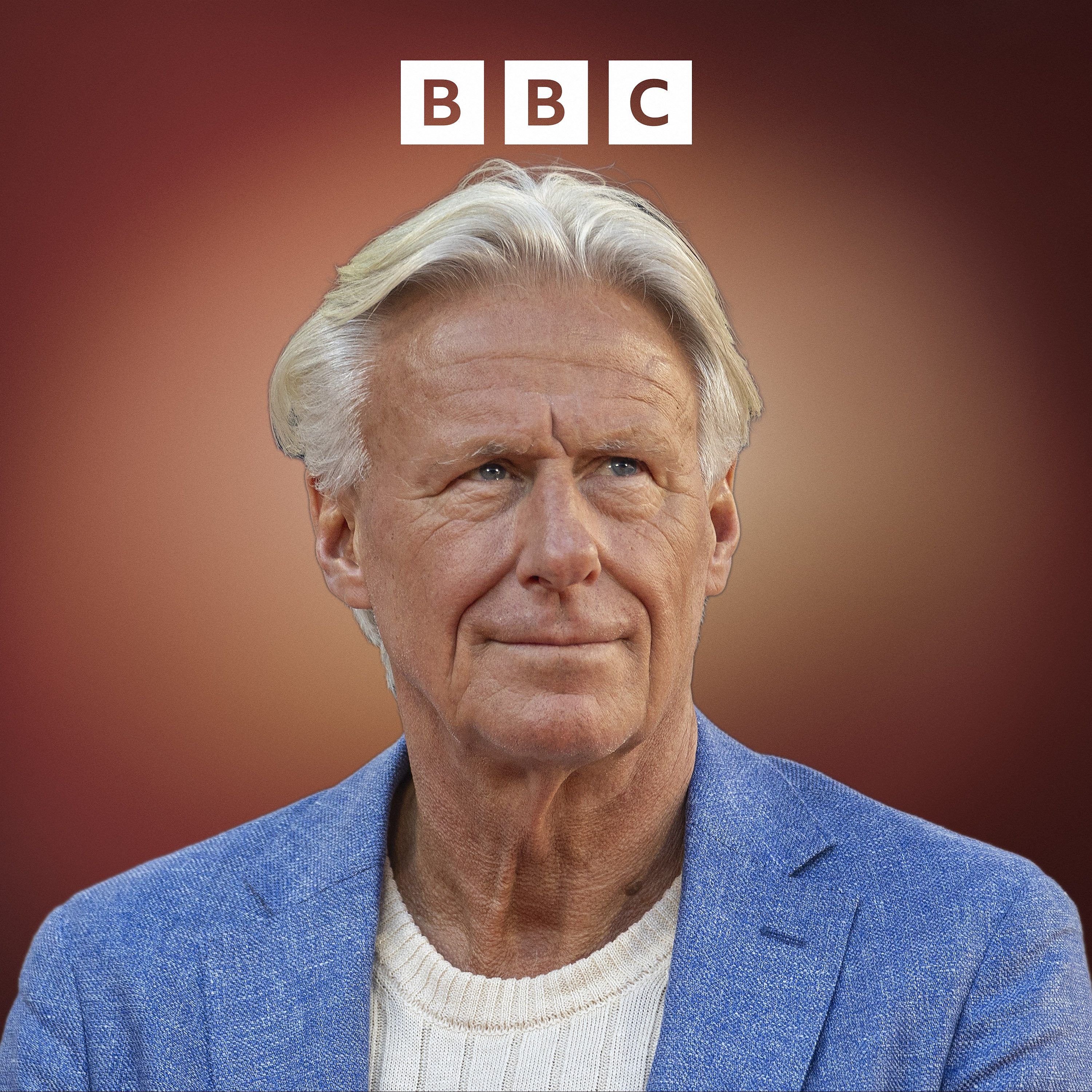
The Interview
Bjorn Borg: I’ve always been a private person
00:22:59
Tim Muffett speaks to tennis icon Bjorn Borg about life at the top of the sport
Loading summary
Transcript55 lines
- [00:00]
Tim Muffett
This BBC podcast is supported by ads outside the uk.
- [00:06]
Asma Khalid
America is changing and so is the world.
- [00:10]
Tristan Redman
But what's happening in America isn't just the cause of global upheaval. It's also a symptom of disruption that's happening everywhere.
- [00:18]
Asma Khalid
I'm Asma Khalid in Washington D.C. i'm.
- [00:21]
Tristan Redman
Tristan Redman in London and this is the Global story.
- [00:25]
Asma Khalid
Every weekday we'll bring you a story from this intersection where the world and America meet.
- [00:30]
Tristan Redman
Listen on BBC.com or wherever you get your podcasts.
- [00:39]
Tim Muffett
Hello, I'm BBC correspondent Tim Muffett and this is the interview from the BBC World Service. The best conversations coming out of the BBC. People shaping our world from all over the world.
- [00:52]
Bjorn Borg
There have been so many disagreements between me and my family. Putting on a show that is what it means to be Lady Gaga. Only the things that you can't solve with government and private sector is where you bring philanthropy in. There's no place in the world where women are equal. Every generation, every generation has to fight to maintain democracy.
- [01:16]
Tim Muffett
For this interview, I met one of the all time greats of tennis, Bjorn Borg in Stockholm. Born in 1956 in the Swedish capital, Borg's lifelong association with tennis began when his father won a full size racket at a local table tennis tournament, which he gave to the young Borg. By the age of 14, he had joined the professional tennis circuit and just a few years later had won the Italian Open at 17 and the French Open at just 18. Having risen to international prominence in 1975 when he helped Sweden win its first Davis Cup, Borg became a household name in the years that followed for his distinctive playing style that helped him win Wimbledon five times in a row at the peak of his playing career. His on court rivalry with The American John McEnroe became the stuff of legend with the pair's 1980 Wimbledon final, considered by many to be one of the greatest matches ever played. This was later immortalised in a 2017 movie. After unexpectedly retiring in 1983, Borg struggled with life after tennis, battling alcohol and drug abuse. He subsequently returned to the sport in the early 1990s for a couple of years before hanging up his professional tennis racket for good. In this interview, he reveals his journey to the very top of the sport, the challenges of stepping away and how he dealt with the attention. As a well known private person.
- [02:43]
Bjorn Borg
I had dreams to play to the center court at Wimmerlon and to play Davis Cup. When I'm playing against my garage door in my hometown, those two dreams came through. It's very Difficult to be private when you trying to be the best player in the world. I mean, you want to be the best, you want to win tournaments, grand slams or whatever. But deep inside I still had the same feeling. Maybe people didn't know that I want to be private.
- [03:16]
Tim Muffett
Welcome to the interview from the BBC World Service with Beyond Borg.
- [03:21]
Catherine
Five times Wimbledon champion, tennis legend, and yet someone I think many people would consider to be essentially a private person. And yet here you are with this memoir which reveals a lot of personal stuff. In the book you reveal that you've been diagnosed with prostate cancer. So if you don't mind me asking, how are you at the moment?
- [03:41]
Bjorn Borg
No, I'm fine. I'm really good. If we start with the beginning. So 2023, in the beginning of September, the doctor said this doesn't look too good. Okay, what's the problem? We have to check yourself. So you have to stay in Sweden. We want to do some more tests with you. But I'm captain of Lever Cap for Team Europe and we're going to play in Vancouver in Canada in the end of September. So what do I do? I go to the Vancouver. Anyway, that was important for me too. So I flew back to Stockholm the next morning I was in the hospital like 7 o' clock in the morning. They went inside and checked my prostate. They said we have to make an operation. Okay. Is that necessary? I told them yes. Well, they said like this. How long you want to live? I mean, it's your decision. I said, I want to live to maybe not hundred years old, but for a long time. I want to live. So I had the operation few days later or a week later. I spoke to the doctor and he said, it's really, really bad, but it's done. And he said, but you have these sleeping cancer cells in your body. It doesn't mean that you're going to have problems. They might sleep for many, many years, but as long as you know that it could be a problem. So every six months I go and test myself. And right now I'm okay, I'm fine. I feel very good. But I have to do that in the future to see what's happened.
- [05:12]
Catherine
I mean, in the book you describe it as extremely aggressive and at its most advanced stage. And you also say that you're going to fight every day like it's a Wimbledon final.
- [05:22]
Bjorn Borg
Yes, it's the thing you have to live with and, you know, take care of myself. But it's going to be a fight in the future and I hope I'm going to Be okay. I might be okay, I might not be okay, but it's going to be a fight with myself. But as long as you know about it what to do and not to do, I think that's important. I mean, the mental aspect, it's very important that you know what's all about and I know what it's all about. And I mean, right now I feel good and I take day by day, year by year, hopefully, and it's going to be okay.
- [05:56]
Catherine
Let's talk to you about the early days of your career. I believe you started playing tennis because you won a racket in a table tennis competition.
- [06:03]
Bjorn Borg
Like, my father was a table tennis player, so he played a kind of championship in our hometown and he won that championship. It was a lot of different prizes on the table and I saw this tennis racket there. And during that time I started to watch tennis on television. They didn't show so much tennis on television during that time, but I got very interested in tennis. So I told my father, if you win, can you take this tennis racket? He won the tournament and he got a lot of different prizes, but he picked a tennis racket. And the next day I was up on the tennis court and tried for the first time to play tennis. And I loved it for the first time. And I was late, was eight, I was eight, nine years old. But from that point on, this is the sport I'm going to do. But in the same time, I was playing a lot of ice sock at that time too. And my first racket, first, first racket I hold in my, in my hand was a table tennis racket because of. My father played table tennis. But then that changed to a tennis racket. But tennis and ice hockey, I played a lot and. But tennis was something special in my life. And I, I like to hit that tennis ball. And the thing was, the racket he won was really heavy for me. So that's why I have to play with two hands on my backhand and even two hands on my forehand because it was heavy. But in, in the end I changed the racket to a little bit lighter. But still I wanted, it was very natural for me to play with two handed backhand, but on the forearm I played only with one hand. What are you supposed to do?
- [07:42]
Catherine
You were credited as having quite an unconventional tennis style, and maybe that was why that was.
- [07:47]
Bjorn Borg
I think in the beginning, not too many players. During that time you had some players in the 50s or 60s, but not too many players play with two hands. And during that time When I started to play with two hands, people said you shouldn't play with two hands. I mean look at the classic tennis. It's one handed backhand, you have to play, so you have to change. And the coaches in my hometown, they really told me and said you have to do like this. And I said, yes, I'm going to try that. But it went in here and out there. I didn't listen to them. I continued to play my two handed back. That was more comfortable for me.
- [08:30]
Catherine
Well done for not listening, made the right decision. So as a teenager then you're starting to break through, you're becoming more and more successful and I mean you were seen as a heartthrob, a teen idol. You were being followed around by all these cheering crowds. There was an interview you gave to the BBC in 1974 and someone asks you if you could be anyone else, who would you like to be? And you say a private person. So were you already aware that the attention you were drawing was going to have an impact on your life?
- [09:01]
Bjorn Borg
I think in that when we came back to 73, when I played, I played few matches on the center court and the interest was, was enormous. I mean you had all these girls. That was the first time all the girls were interesting in me as maybe I came sweet come with a blonde hair. I have no idea what happened. Something happened in tennis during that time and they were running out from the stands over the center court. I was sitting with the umpire chair, they were running over the center court. It's not going to happen today. So that something happened. But still it was a fun thing. I mean I had my tennis, I was focused. I had dreams to play to the center court at Wimmerlon and to play Davis Cup. And those two things when I was playing against my garage door in my hometown, those two dreams I had Wimbledon and Davis Club. 1972 I played Davis cup for the first time from Sweden. 73, I'm here on this famous Centre Court in Wimbledon. So those two dreams came through. And then I set up some other dreams in my life regarding tennis. That was a great life. But it's very difficult to be private when you trying to be the best player in the world. I mean you want to be the best, you want to win tournaments, grand slams or whatever. That's very difficult to be private. But deep inside I still had the same feeling. Maybe people didn't know that I want to be private.
- [10:32]
Tim Muffett
You're listening to the interview from the BBC World people shaping our world from all over the world.
- [10:41]
Asma Khalid
America is changing and so is the world.
- [10:45]
Tristan Redman
But what's happening in America isn't just the cause of global upheaval. It's also a symptom of disruption that's happening everywhere.
- [10:53]
Asma Khalid
I'm Asma Khalid in Washington D.C. i'm.
- [10:56]
Tristan Redman
Tristan Redman in London and this is the Global story.
- [11:00]
Asma Khalid
Every weekday we'll bring you a story from this intersection where the world and America meet.
- [11:05]
Tristan Redman
Listen on BBC.com or wherever you get your podcasts.
- [11:15]
Tim Muffett
For this episode of the interview, I'm speaking to Bjorn Borg, widely regarded as one of the all time greats of tennis. It felt really special to meet someone I remember watching win Wimbledon as a young child. That 1980 final against John McEnroe was extraordinary. A five set thriller that had my whole family screaming at the telly. Millions of others would have been doing the same. When we met, Bjorn Borg was calm and polite. Of course he was. This is Bjorn Borg we're talking about. But he was also really warm, chatty, engaging, seemingly as interested in me as I was in him. Certainly nothing like the ice cool, emotionless automaton he sometimes seemed to be on court. Okay, let's return to my conversation with Bjorn Borg now.
- [12:00]
Catherine
Catherine. The U.S. open, one year, I think in 1972, you were playing and one of the ball boys was very annoying. And who was this ball boy?
- [12:10]
Bjorn Borg
No, I played. That actually was my first Grand Slam tournament, US Open, Forest Hills. And because I won junior Wimbledon, so they got canoe wildcard getting into the US Open. And I was very happy to play my first Grand Slam tournament. And then one of the wall boys, I didn't know that during that time was John McEnroe. And he told me afterwards, many years later, if he wouldn't tell me, I wouldn't have no idea that John was one of the ball boys. So he told me that. So we're joking about that. And I was joking regarding with John in the book, like he could not throw the ball to me. He was hopeless and all this thing. But that was kind of more like a Jo joke.
- [12:57]
Catherine
But one of the ball boys who annoyed you was John McEnroe. You cannot be serious.
- [13:01]
Bjorn Borg
Exactly. He didn't say that during that time. You cannot be serious.
- [13:07]
Catherine
I mean, 1976, you win your first Wimbledon against Eden Stasi. I mean, I guess, I mean, this is the pinnacle of any tennis player's career, isn't it? What did you believe it was going.
- [13:17]
Bjorn Borg
To happen playing seventh or sixth, my first Wimbledon championship? No, I didn't believe myself. I could, could really go all the way to win the championship either. 75. When Arthur Ashe beat Jimmy Connors in the final, I lost to Ashe in the quarter final. Play a good match, but I felt I was not ready to win the whole championship. But I played good tennis. That was the first tennis I played really well on grass. Now I feel really comfortable on the grass. That was the first time. Even if I lost in the qualifier. The year after I came back 76. I felt comfortable, but I didn't really believe myself. Telling myself, you can go all the way to win the championship, to win Wimbledon, that's a huge thing. But I played really good tennis. I didn't lose a set and I played unbelievable tennis. But I didn't really believe that I could do it. Stalling the tournament.
- [14:14]
Catherine
And then after many of your victories, you would collapse onto your knees in what became this iconic move. Was that just a spontaneous thing or were you going onto your knees deliberately.
- [14:25]
Bjorn Borg
If you win that last point in Wimbledon? For me, that's the most beautiful thing for a tennis player. You do a lot of sacrifice in your life. You practice hard, you set up your goals. Every last point when you win matches or tournaments is satisfaction for you. To win that last point in the Wimbledon, it's, wow, that is something special. Spontaneous. You don't know what to do. You just feel what could be anything. I don't know. But that was my thing to do. But I never thought about it. I just went on to my knees or I did this kind of things or whatever. Spontaneous, yes. But to win that lost point, Wimbledon has to be for me, in a way, the most beautiful thing and the best things happen in my tennis career.
- [15:17]
Catherine
1981, after the US Open, you famously left the stadium and decided subsequently to retire from tennis. And that was announced in. In 1983.
- [15:27]
Bjorn Borg
Do you regret that, stepping away from tennis? 81. I remember after the US Open final, I lost to John in the final. I had a house in. In Long Island Sands Point. Had the house for almost six years. I like New York. I like Long Island. I like the US Open. Fortunately, I never won. Maybe was in the final four times. I could maybe have won twice, two times had a good chance. But I would never change any Wimbledon to US Open. Titus, if we put it that way. After that, I went back to Europe. During that year, I made some good results. I won Masters, I won French Open. I won Stuttgart and Geneva. And I was in the final in Wimbledon. US Opens. I had a great year. I was ranked number two in the world after John But I still play very good tennis. But then I made up my mind. You could say November 81, I finished with Tenet. I had enough. I lost the interest in that way, the motivation. I have no regrets. I think if you put it this way, after 82, when I had no schedule, I could wake up in the morning, I could do anything. No schedule. I'm a person, black and white, no gray, soon. So when I take a decision, I take a decision. I don't think about it more. All my sponsors, I did a lot of good sponsors, lot of money involved. They said to me, maybe you should take three or four months off and then you come back, maybe you feel better, maybe you will enjoy tennis again. No, I said I took the decision. No regrets. I did the right thing. Did I? I can sit here. Did I or did I not? I have no idea. But during that time when I took the decision, I was happy with the decision. If you put it that way.
- [17:25]
Catherine
And you talk about your life post tennis. I mean you. In the book, you describe how at times your life was a dangerous mix of drugs, pills and alcohol.
- [17:33]
Bjorn Borg
Yes.
- [17:34]
Catherine
How bad did things get?
- [17:36]
Bjorn Borg
I think the first year, 82, 83. The years I was happy, I did the things I could do, anything. I was very happy. No schedule. The thing was, I had no plan. This was a huge problem. And tennis was one thing. I had joy, I had happiness. I was so happy. The years went by. It came to a point, what should I do now? I need to do something. I need to be very, very happy as I was when I was playing tennis. I can do a lot of things, but am I happy? I don't know. I don't think so. And I did this by myself. I mean, no help. I have to fix everything by myself. And that's a difficult task to do that. The most beautiful thing, except 80, 81 when I played tennis, was 85 when my first son was born. Robin. That was the best thing happening in the 80s. But then the years went by. What should I do? I mean, it got worse and worse in that kind of way. What should I do? Yeah, it was more drugs, it was pills, it was alcohol. To escape. I think I escaped myself from reality in life because I didn't have to think about it. I mean, you gone, it's relief. Of course, it's not good. It's destroy you as a person. It's disaster. Everything. It was terrible. And I think that's why. 1989, I was still married to the Italian singer Laura Donna and we were in Milan, I still could think clearly what I need to do something. Otherwise you and me will not sit here today. I mean, I was in. I was in bad shape. Then I decided that I'm going to start to play tennis again. But I think that was an escape. I was lost in the world and I didn't think about that. I mean, that stupidity on my own from my side, that I didn't think like, you need a plan, you need to. You cannot just leave everything and say, oh, no, I feel good. Yeah, I feel very good. But what's going to happen in a few years from now? So that was. That was a problem.
- [20:05]
Catherine
And you say about your comeback, your decision to return, 1991, did that go as well as you'd hoped? Or did you regret making that decision?
- [20:13]
Bjorn Borg
No, it was the best decision I took. I'm sitting in Milan, autumn, winter, thinking, what should I do? I need to do something. Should I open a restaurant? Should I do that? Doesn't make me happy. Restaurant. Or I could do a lot of different things. I need a schedule. I need to wake up in the morning and I need to do something, whatever it is in life, but I need a schedule. And I was thinking and thinking, and then I said to myself, the best, you know, it's tennis. I mean, I know you have a schedule. That's when I decided, I'm going to start to play tennis again. I made up my mind. When I made up my mind, I didn't play tennis for or I didn't hold a tennis racket for five years in my hands. So 1990, beginning of the year, I started to practice. The first hour I played, I told myself, did I play these sports before or what? I feel like the beginner. I was hopeless. It was a disaster. But the thing was, I'm not there for winning matches or be the best player winning tournaments. I am there for a different reason. I want to survive. I want to come back to life. I want to enjoy life. That was the main reason I entered Monte Carlo. And people said, yeah, big comeback in tennis. I'm going to come back in tennis. That's true. I came back to tennis and people, they said to me, why you don't play smaller tournaments before such a big tournament in Monte Carlo, you get match practice and you get matches. You can play points. I think you should do that. They had no idea. I said, no, I play Monte Carlo. Milk. It doesn't matter for me, because no one knows. They only knew the reason why I came back was myself and my parents. No one else in the world why I came back to town. My parents was living in Cap Ferrar. That's a place between Monte Carlo and Nice. So we take the car back home to my parents. They sitting in the front and I'm in the back seat. They say to me, my parents, that's the first time they saw me happy in my face. And they asked me, are you happy? Yes, I am happy. And that was the best moment for me. I felt I'm back in life finally. I'm back.
- [22:47]
Catherine
You've lived a very extraordinary life. You've had a remarkable career. What has it been like being beyond Borg?
- [22:56]
Bjorn Borg
I'm proud of myself as a person. No one is perfect, but I did things with my tennis. I did things very professional. I'm very proud of it. I fixed my life afterwards, even. I went through so many difficult times, so many difficult years, but I did it myself. I'm proud of that because no one helped me. I had to do it myself. I'm very proud of that. I think in life, I'm a nice person, too. And I hope people, they see me who I am. And I think people in the world, they see who I am as a person, they understand me. I think that I hope they understand me. And I'm very happy with myself.
- [23:42]
Tim Muffett
Thank you for listening to the interview from the BBC World Service. You'll find more in depth conversations on the interview wherever you get your BBC podcasts, including episodes with fellow tennis icon Martina Navratilova, global music star Stevie Wonder and German Chancellor Friedrich Merz. Until the next time. Bye for now.
- [24:13]
Asma Khalid
America is changing and so is the world.
- [24:18]
Tristan Redman
But what's happening in America isn't just a cause of global upheaval. It's also a symptom of disruption that's happening everywhere.
- [24:26]
Asma Khalid
I'm Asma Khalid in Washington, dc.
- [24:28]
Tristan Redman
I'm Tristan Redman in London, and this is the Global Story.
- [24:32]
Asma Khalid
Every weekday, we'll bring you a story from this intersection where the world and America meet.
- [24:38]
Tristan Redman
Listen on BBC.com or wherever you get your podcasts.