← The Interview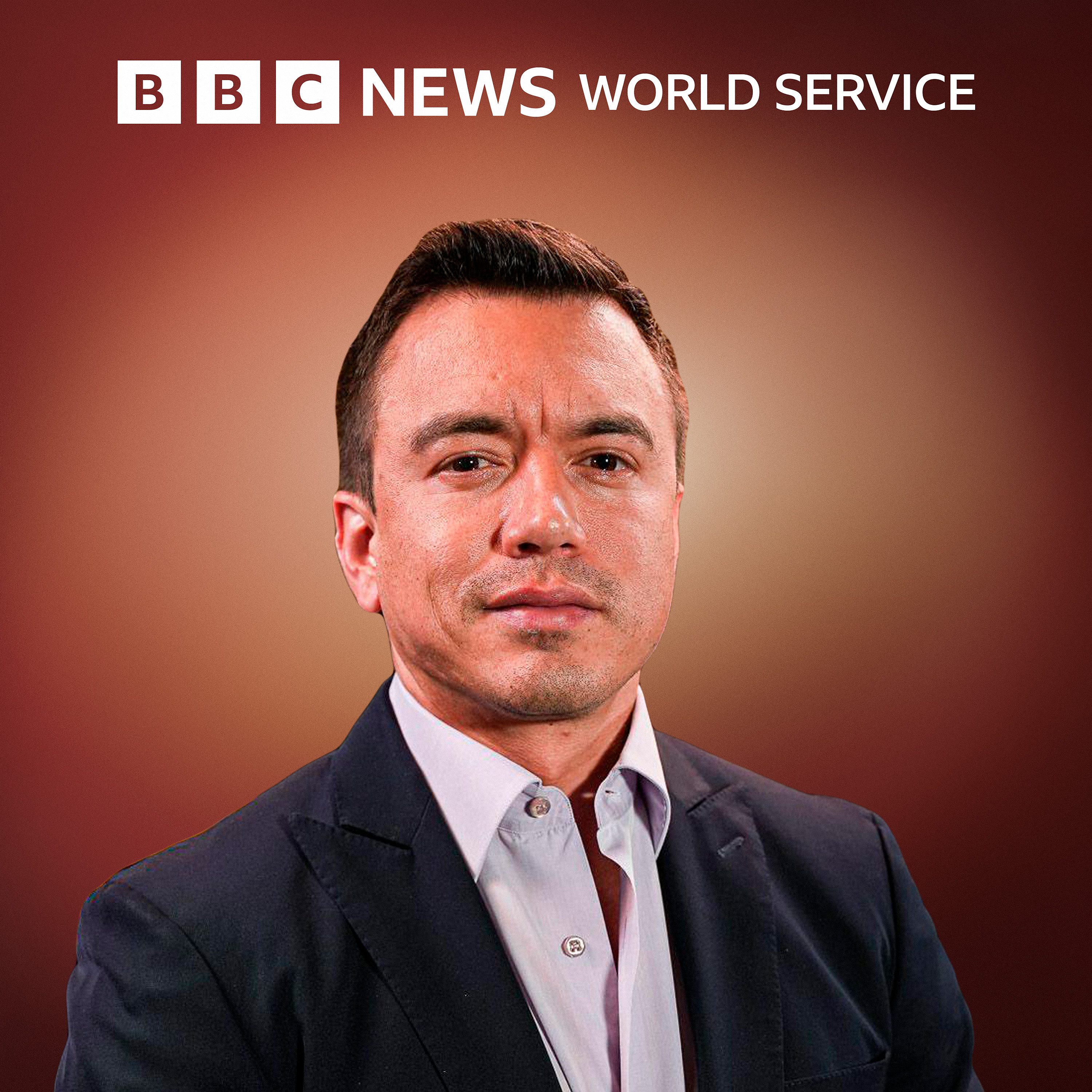
The Interview
Daniel Noboa (President of Ecuador): Can Ecuador find peace?
00:22:57
Ione Wells speaks to Daniel Noboa, President of Ecuador, ahead of the country's elections
Loading summary
Transcript60 lines
- [00:00]
Daniel Noboa
This BBC podcast is supported by ads outside the uk.
- [00:06]
BBC Interviewer
Vanity Fair calls Britbox a delicious streamer. Collider says everyone should be watching. Catch Britain's next best series with Britbox. Streamer claim new originals like Code of Silence. You Read Lips right? And Lynley, based on the best selling mystery series Take it From here. And don't miss the new season of Karen Pirie coming this October.
- [00:27]
Daniel Noboa
You don't look like.
- [00:28]
BBC Interviewer
Please.
- [00:28]
I'll take that as a compliment. See it differently when you stream the best of British TV with BritBox. Watch with a free trial today. Most travellers stick to the highlights, but in Turkey, if you go off the beaten path, you'll experience a whole lot of adventure. Like the St. Paul Trail where cyclists chase the thrill. Or Urla, where you can kite surf to your heart's content. For exploring on your feet, hike up to Mount Nemrud or walk in Patara through ancient civilizations that might reveal the history of humanity itself. Plan your detour@goturkieria.com for a gripping adventure. Hello, I'm Ione Wells, the BBC's South America correspondent, and this is the interview from the BBC World. The best conversations coming out of the BBC people shaping our world from all over the world.
- [01:20]
Daniel Noboa
I will come back to Russia. I will participate in the elections. There's an increase in violence according to the coca crop. There's no place in the world where women are equal. I will give away the vast majority of my money. It's my full time focus for the rest of my life.
- [01:39]
BBC Interviewer
For this interview, I met Daniel Noboa, the president of Ecuador, at the Presidential palace in Quito. You're going to hear about violence, about drug gangs and about immigration and the close run race for the presidency of Ecuador. Daniel Noboa came to power in 2023 in a presidential campaign steeped in violence that saw one candidate assassinated. Since then, he's been defined by his tough military crackdown on the violent gangs locked in a battle to control lucrative drug routes. Now Ecuador's president wants US and European armies to back him in his war on crime and drugs.
- [02:12]
Daniel Noboa
It's a transnational crime and we need international help to fight it. Here. Here's the port where the drug exits. 70% of the world's cocaine exits via Ecuador. And we need the help of international forces.
- [02:27]
BBC Interviewer
Ecuadorians now number among the top nationalities crossing into North America, with migrants citing violence and chronic unemployment as reasons for leaving. But Mr. Noboa is promising to revitalise the economy in a second term, bringing inflation down and increasing opportunities but voters are divided. The first round presidential contest failed to produce an outright winner between him and his rival, left wing challenger Luisa Gonzalez. How he fares in the upcoming election will show whether the people of Ecuador believe he can deliver and also whether they agree with his support for US President Donald Trump. Welcome to the interview on the BBC World Service with Daniel Noboa, President of Ecuador.
- [03:06]
Daniel Noboa
I think his policies are much more straightforward, much more clear on what we would expect and what we wouldn't expect. And I think that that clarity is necessary for countries like Ecuador that has an export based foreign policy.
- [03:26]
BBC Interviewer
What specific policies though, for example, do you think his tariffs on other countries, Mexico, Canada, might actually be a good thing for Ecuador?
- [03:34]
Daniel Noboa
Each country has its own right to put tariffs to any other nation and there are other complex elements, like the security element that has pushed him to put these type of tariffs. Ecuador, being a dollarized economy, has become much more competitive in the last few years and it's used to having tariffs with Europe, with the US So I don't think that that will affect Ecuador more than other nations.
- [04:03]
BBC Interviewer
But do you think, for example, that him imposing tariffs on other nations might actually help Ecuador's economy as trade might be diverted?
- [04:11]
Daniel Noboa
We can see it in the numbers. 2025 has started as a great export year for Ecuador and we're seeing positive results in general. The US Is our main trade partner, so the numbers say that it's been positive.
- [04:25]
BBC Interviewer
So what specifically though do you think Donald Trump will do for Ecuador in terms of policy decisions?
- [04:31]
Daniel Noboa
I think on the security side, his policies are very straightforward. He's been very clear. Something that we share is that we consider some of these groups that started as small gangs now that are narco terrorist groups have to be put to justice.
- [04:48]
BBC Interviewer
I wanted to ask you about that because Donald Trump has recognized some cartels in Mexico, in Venezuela, as terrorist organizations. Do you want him to do the same to criminal gangs in Ecuador?
- [04:59]
Daniel Noboa
Yes, because I don't consider they are criminal gangs. They started as criminal gangs, but now they aren't. There are groups that have 14 to 15,000 armed men and women. They extort, they transport drugs, human trafficking, organ trafficking, illegal mining. So it's much more complex groups. It's not just a normal gang. These are international narco terrorist groups that operate in several countries. I would be glad if he considers Los Lobos, Los Choneros, Tiguerones as terrorist groups because that's what they really are.
- [05:35]
BBC Interviewer
In the last couple of years, Ecuadorians have become one of the top nationalities crossing the Darien Gap. Into North America. What are you as president, going to do to stop people making that dangerous journey?
- [05:47]
Daniel Noboa
We've seen the numbers and they have reduced. We need to offer opportunities here. So we need to develop as an export based economy jobs in Ecuador for these people. Most of them are young people. So we need options also in terms of education. Not only universities, but also technical schools, trade schools for young people. Those are the ones that leave in higher numbers. We've reduced that number and we're offering technical school scholarships for young people between the ages of 18 and 25. I think that's going to be essential. Education is going to be essential. Services is going to be essential. And also financing for small entrepreneurs, people that are just starting with their own business.
- [06:37]
BBC Interviewer
I've spoken to some people here in Ecuador who as a result of criminal gang violence, have had to witness relatives of theirs being mutilated by criminal gangs. Do you empathize with people who, who just want to flee the country? They feel it's too violent for them here?
- [06:52]
Daniel Noboa
Of course, 100%. But this is something that has been created in the last 10 years. It's not that it occurred in the last year. This is the product of a lack of strong security policy in the last years. The previous president, I would say, and the previous government. What they did was give them more territory, if you want to use a word, to reduce the violence. But that was never the answer. The prisons, for example, to give them the control of the prisons. That was never a good move. We can see it today. We have a lot less violence in prisons and we've affected their command centers, which were the prisons in the past.
- [07:43]
BBC Interviewer
But would you say, for example, to Ecuadorians wanting to flee the country, don't leave, stay, or do you accept that people actually might be seeking a better life in the US or other places right now?
- [07:56]
Daniel Noboa
We started with a year of reform, which was 2024 and 2025. It's a year of growth. Stay and you'll see positive results. We're seeing them in the first two months. We've controlled inflation. We've actually grown about 15% in sales in January. Companies are hiring, so the economy is recovering from its worst point. And now it's the moment to grow. It's a moment also to invest in the public sector and also to give the possibility to companies to hire more people.
- [08:35]
BBC Interviewer
Would you be prepared, like Donald Trump has agreed with some other Latin American countries to take back large numbers of Ecuadorians who had migrated to the U.S.
- [08:43]
Daniel Noboa
We'Re doing it right now. We're doing it right now and we have a plan for them. We Give them for 3 months Technical education and also salary, a minimum wage for three months so that they can readapt back here in Ecuador we started that policy has been very successful and people that have returned that some of them are in debt actually have this help to recover.
- [09:11]
BBC Interviewer
What do you think of Donald Trump sending more than 200 Venezuelans to El Salvador despite a judge in the US saying that he shouldn't do that?
- [09:21]
Daniel Noboa
I mean, I wouldn't accept it here. That's what I can say. I think that if Venezuela, if El Salvador decided to do so, it's because probably they have excess capacity in their prisons, probably they have excess capacity in their services. Right now. I don't think that Ecuador should do it, but we have helped here over 380,000 Venezuelans that live in Ecuador that we've helped them, you know, get their papers and their status here so they can have services and have health, education. There's over 50,000 Venezuelan children that are receiving public education in Ecuador that cost $130 million to Ecuador a year. But we're doing so because we need to have that empathy and be, you know, in humanity.
- [10:18]
BBC Interviewer
I want to talk about security now as well. This January, Ecuador saw a record Number of homicides.750 in just one month. Is your iron fist approach to tackling this militarizing the streets and prisons not working?
- [10:34]
Daniel Noboa
There's cycles. There's always additional violence and it's not a coincidence right before an election. It happened in October 2023 also with 750, 760 homicides. It's a cycle. Also what happens in Ecuador, the cycles of violence. There's an increase in violence according to the coca crop previously 10, 15, 20 years ago. Once a year you had a crop. There was additional violence in those three months or that quarter. Now we have two crops in Colombia and in Peru. So we see that violence. Nine out of 10 of the deaths of the homicides is people with criminal records. They're killing each other. And like I said, the numbers show it. We've seen it. What we're giving is to the normal citizen peace. And we will finish this cycle in the next few weeks. We've implemented a few additional programs that are working, especially in the coast and also to increase tourism. The tourist areas have been protected and we see an increase in sales and tourism.
- [11:56]
BBC Interviewer
Why though do you think progress is slow? It is so hard to tackle this issue. Violence is getting worse. Is it because consumption is still so high. Is it the economy? Is it the. The presence of European gangs here? What do you blame for this?
- [12:10]
Daniel Noboa
There's transnational crime without a transnational security policy. So I think that's the main issue. They are united Albanians, the Albanian gangs or the Albanian organizations, Mexican cartels, Colombian invisible cartels, and ex farc. So they all work together. But we don't have a joint security policy in the countries that are affected by these transnational criminals. And I think that that unity is what's lacking and what we need to change. Ecuador's economy is small in relation to European countries that are the receivers of the drugs or the U.S. and here in Ecuador, there's over $30 billion moved in drug money, illegal mining money per year. That's about 28, 27% of our GDP in one single year. So you can see the proportion is affecting us. And we need international cooperation. We need help from other nations. And also we need judicial reforms. I think that judicial reforms are important and are key for the Ecuadorian program to succeed.
- [13:40]
BBC Interviewer
Even drug gang members themselves say that without corruption in the states, among police, among officials, among members of the government, even what they do wouldn't be possible. How are you going to tackle that?
- [13:52]
Daniel Noboa
Well, we've reduced corruption significantly. We signed with Google, for example. With Google government, there's only three nations that have done it. El Salvador, Kuwait, and Ecuador. They do their own compliance check on corruption, and we've reduced corruption significantly. And that was the condition why they were able to sign the deal with the Ecuadorian government. We're working on it. But if it's something that has been infested for 25, 30 years, to change it in a single year, it's difficult. It's going to take some time.
- [14:30]
BBC Interviewer
You're listening to the interview on the BBC World. People shaping our world from all over the world. For this episode, I'm speaking to Daniel Noboa, president of Ecuador. Mr. Noboa is informal for a president in his dress, a casual shirt, jacket and jeans. But also, in the absence of the complicated setup that often goes into interviews like these, I found him to be direct and straight talking. Okay, let's return to my conversation with Ecuador's Daniel Noboa.
- [14:56]
What would you say to people in countries like the UK, where I'm from, in Europe, who use cocaine for fun?
- [15:04]
Daniel Noboa
I think it's difficult to stop using cocaine for fun if you've been consuming it for years. I think there should be programs in each country to tackle this issue, to reduce consumption because the whole chain that Ends up in, you know, in UK fund is a lot of violence, involves a lot of violence. So what's fun for a single person is probably, you know, 20 homicides on the way and a lot of violence on the way.
- [15:36]
BBC Interviewer
You mentioned wanting help from other nations. Do you think, for example, European governments should be doing more to try and tackle consumption in those countries where it is so high, which, as you say, is fuelling some of the violence here?
- [15:48]
Daniel Noboa
Of course. And we've received help. We've received help from Italy, from Spain, but like I said, it's an election year. We have an election in four weeks. So like every good politician, the answer that we receive is the day after the election, we'll help you 100%. So right now it's a time of uncertainty for many nations, and here there's two options that are completely different and are completely opposite. So it's difficult to establish that international cooperation a month before an election.
- [16:31]
BBC Interviewer
I appreciate your being diplomatic, but there are people, for example, in the UK where consumption is, I think, the second highest in the world now of this drug per capita.
- [16:39]
Daniel Noboa
Yeah.
- [16:40]
BBC Interviewer
What would you want people using it to know about the impact that it's causing here? Because many of them are probably unaware.
- [16:47]
Daniel Noboa
We need to communicate that through BBC and inform that, like I said, you know, a night out or to go to a party or a rave or something can the product that they're consuming has a chain of violence and a chain of misery that's been created. And I think that that has to be communicated better just to return to.
- [17:14]
BBC Interviewer
How you're tackling this problem. Last year there was a lot of scrutiny here in Ecuador because four boys were arrested by soldiers over an alleged theft. They were later found mutilated and burned. The father of two of them told me that the government has done nothing. What would you say to him?
- [17:32]
Daniel Noboa
Well, we can show what we've done. All the military personnel that was involved in that patrol are in jail at this moment. And it's an ongoing investigation. It's a trial. We received information about the cameras on what happened before and what happened after. And it's still an ongoing investigation, but we're going to fight till the end to find the person was responsible for the deaths of the four boys.
- [18:00]
BBC Interviewer
Do you think that your armed forces are acting proportionately at all times?
- [18:05]
Daniel Noboa
Yes, I do think they are acting proportionally. What's completely disproportionate is the fact that some of them are completely unprotected right now. How they fight. In some cases, they capture people that have committed homicides, people that had committed, you know, violent crimes, and then these criminals end up in the street two or three weeks later, and they go after the families of the military personnel or the police personnel involved in it. I think that's also completely unfair. For the military in Ecuador is around 35,000, and all these narco terrorist groups together are 40,000. Like I said, I think that we need to fight this war with complete legality, but also in fairness with our armed forces and with our police.
- [19:06]
BBC Interviewer
Recently announced a partnership with the military contractor Eric Prince to help your war on crime. What is this partnership for? Is he going to be bringing mercenaries to Ecuador to help fight violent gangs? Are these the special forces from abroad that you've said are coming soon?
- [19:23]
Daniel Noboa
He's advising us. He has experience in this. And we're fighting an unconventional war, unconventional urban guerrilla war. He's advising our armed forces, he's advising our police, and at the end of the day, people that will lead the operations, any operations, are going to be our local forces.
- [19:45]
BBC Interviewer
But you say leading. Can I just clarify, yes or no, are you planning to bring in forces from abroad to fight against gangs here in Ecuador?
- [19:52]
Daniel Noboa
With our partners and with allies. We're talking about armies. U.S. european Special Forces, Brazilian special forces, which are exceptionally good in guerrilla warfare in urban settings. This could be a great help for us because our forces initially are low. We need to have more soldiers to fight this war. They are a lot of people, 40,000 armed men and women that go to the heart of society and affect the peace in every neighborhood.
- [20:32]
BBC Interviewer
So your message to the rest of the world, in a way is effectively, you would like soldiers from other countries to join this fight.
- [20:38]
Daniel Noboa
Yes, to help. Like I said, it's a transnational issue. It's transnational crime, and we need international help to fight it. Here. Here's the port of. Where the drug exits. 70% of the world's cocaine exits via Ecuador. So I think it's an important checkpoint in these criminal chains, and we need the help of international forces.
- [21:11]
BBC Interviewer
Erik Prince's operations in the past have had a track record of human rights abuses at times. For example, his former firm Blackwater's killing of 17 Iraqi citizens at the Nissel Square massacre. What guarantees do you have that working with him, his advice, his operations wouldn't lead to similar consequences here?
- [21:32]
Daniel Noboa
Look, we protect the state of law and justice in Ecuador. We're not going to forget about our law system or our justice system or our constitution. So I think that's. We need to protect that. We need to protect the legality of it. And we need to fight against, like I said, 40,000 armed men and women that they have violated every single human right possible for the last five years. They've mutilated people, they've raped thousands of women, they've trafficked human organs, they traded illegal gold and moved over a thousand tons of cocaine a year.
- [22:14]
BBC Interviewer
I want to turn now to the election as well. Why do you think that you didn't perform as well in the first round of the election as the polls suggested that you would?
- [22:23]
Daniel Noboa
I think there were some mistakes made in the control, in the electoral control, number one. Number two, I think I did pretty well. I won the first round compared to the first round two years before, where I got 23.6%. Now, with our allies that have signed to join us, we're also the largest bloc in Parliament. And for a political movement or political party that is 10 months old, I think that's an incredible success. Some people and some political parties takes 20, 30 years to achieve something like that, and most people never do.
- [23:04]
BBC Interviewer
You've claimed to local media here that there were irregularities in the vote. What evidence do you have for that? Because election observers have said that there were no irregularities.
- [23:14]
Daniel Noboa
We have evidence. We have evidence in the tables also in the system. But right now, what we need to focus is on the second round. We won already the first round. We have 69 members of parliament out of 151. And we need to focus on not making any of those mistakes of control in the second round. I think that's the best way to see it. Not complain about the past, but actually make the corrections for the future.
- [23:46]
BBC Interviewer
Thank you for listening to the interview on the BBC World Service. If you enjoyed today's program, you can listen to the interview wherever you get your BBC podcasts. Until the next time, bye for now.