← The Interview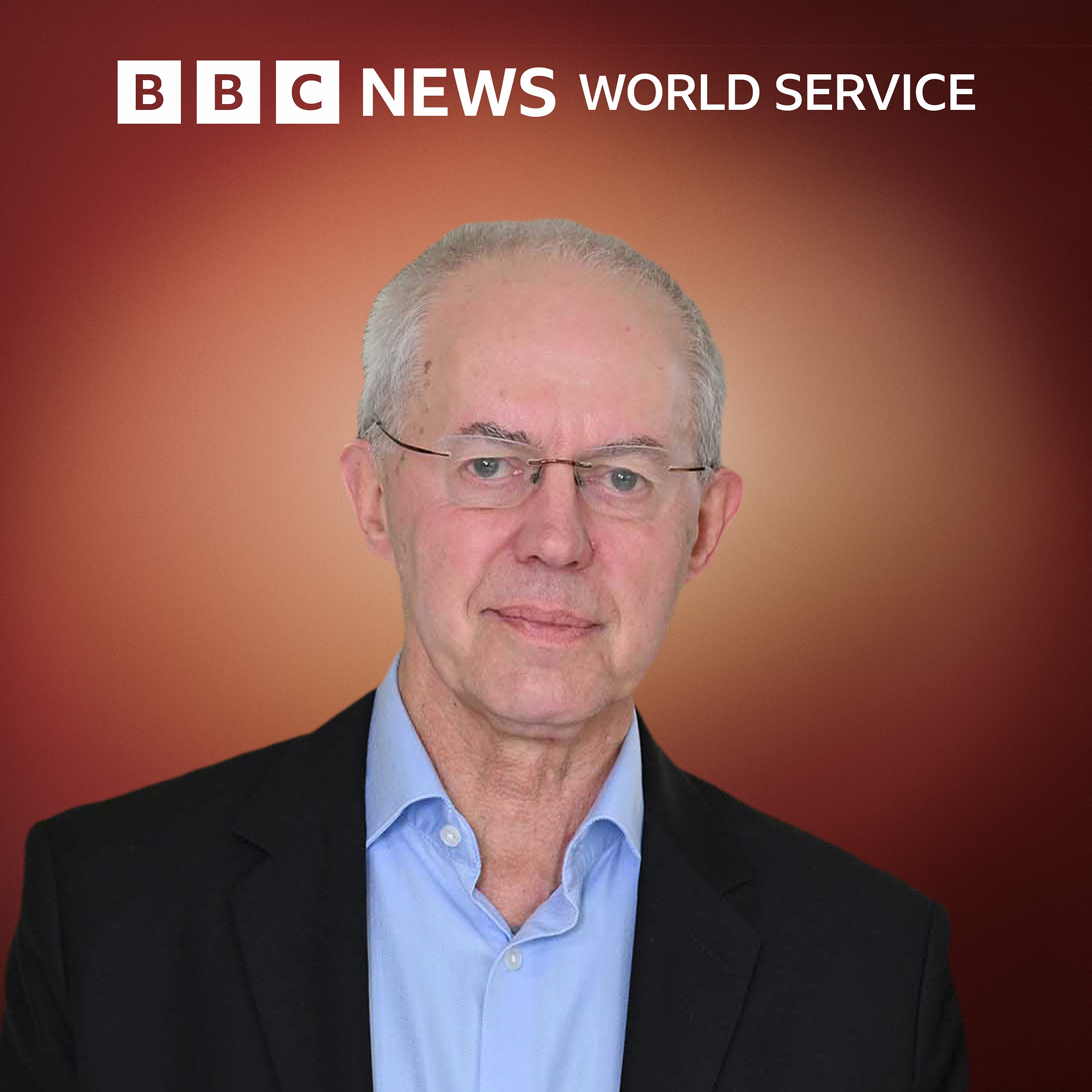
The Interview
Justin Welby (former Archbishop of Canterbury): I forgive serial abuser John Smyth
00:22:57
Laura Kuenssberg talks to Justin Welby, the former Archbishop of Canterbury
Loading summary
Transcript92 lines
- [00:00]
Justin Welby
This BBC podcast is supported by ads outside the uk.
- [00:06]
BritBox Advertiser
Vanity Fair calls Britbox a delicious streamer. Collider says everyone should be watching. Catch Britain's next best series with Britbox. Streamer claim new originals like Code of Silence.
- [00:17]
Interviewer (BBC Journalist)
You Read Lips Right?
- [00:18]
BritBox Advertiser
And Lynley, based on the best selling mystery series Take It From Here. And don't miss the new season of Karen Pirie coming this October.
- [00:27]
Interviewer (BBC Journalist)
You don't look like.
- [00:28]
Justin Welby
Please. I'll take that as a compliment.
- [00:30]
BritBox Advertiser
See it differently when you stream the best of British TV with BritBox. Watch with a free trial today.
- [00:36]
Travel Advertiser
Most travellers stick to the highlights, but in Turkey, if you go off the beaten path, you'll experience a whole lot of adventure. Like the St. Paul Trail where cyclists chase the thrill. Or Urla, where you can kite surf to your heart's content. For exploring on your feet, hike up to Mount Nemrud or walk in Patara through ancient civilizations that might reveal the history of humanity itself. Plan your detour@goturkier.com for a gripping adventure.
- [01:09]
Laura Kunzberg
Hello, I'm Laura Kunstberg, BBC presenter and journalist. This is the interview from the BBC World Service. The best conversations coming out of the BBC, the people who shape our world from all over the world.
- [01:25]
Interviewer (BBC Journalist)
I will come back to Russia. I will participate in the elections.
- [01:30]
Justin Welby
There's an increase in violence according to the coca crop. There is no place in the world.
- [01:36]
Interviewer (BBC Journalist)
Where women are equal.
- [01:37]
Justin Welby
I will give away the vast majority of my money. It's my full time focus for the rest of my life.
- [01:46]
Laura Kunzberg
In this episode, I speak to the former Archbishop of Canterbury, the leader of the Church of England and symbolic head of the Anglican community, a worldwide body with more than 85 million worshippers. Justin Welby presided not just over the Church, but over some of the biggest events in the Commonwealth of the last decade, including the funeral of Her Late Majesty Queen Elizabeth ii.
- [02:12]
Justin Welby
It was a beautiful sunny day. I was standing at the door of Westminster hall waiting for the coffin, and you heard from the distance the cheers and then as it got closer, the sighs, the groans almost.
- [02:26]
Laura Kunzberg
But his tenure was clouded and eventually brought to an end by an abuse scandal that shook the Church. Barrister John Smyth, who died in South Africa in 2018, abused more than 100 children and young men in the UK and Africa in the 1970s and 1980s. He met many of the young men he abused at Christian summer camps. By 2013, the Church of England knew at the highest level about Smythe's abuse, including Mr. Welby, who'd become archbishop that year. An independent report suggested if the Church had pursued Smyth more vigorously early on, he could have been brought to justice years before. Days after the damning report was published in November 2024, Justin Welby quit. So welcome to the interview from the BBC World Service with Justin Welby, the former Archbishop of Canterbury who made history for all the wrong reasons.
- [03:28]
Interviewer (BBC Journalist)
It's the first time that you've spoken like this since you made the decision to resign. Why did you go?
- [03:34]
Justin Welby
I went, as I said at the time, out of a sense of both personal responsibility for shortcomings during my time and my own shortcomings, and out of a sense of institutional responsibility for the long term revelations of COVID up and failure over a long period.
- [04:00]
Interviewer (BBC Journalist)
But when an official report said that you could and should have done more to take action against the abuser in the Church, John Smyth, who abused more than 100 young people, at first you tried to stay on and it was later that you resigned. So what changed your mind?
- [04:18]
Justin Welby
What changed my mind was having been caught by the report being leaked and not really thought it through enough to be honest. Over that weekend, as I re read it and re read it and as I reflected on the horrible suffering of the survivors which had been, as many of them said, more than doubled by the institutional church's failure to respond adequately, it increasingly became clear to me that I needed to resign.
- [05:03]
Interviewer (BBC Journalist)
What exactly do you think you did wrong?
- [05:09]
Justin Welby
I think I was not sufficiently pushy in a way that I would have been a few years later. I have first heard about Smythe's offences in August of 2013. I'd been in post 11 weeks and safeguarding had been the crisis I hadn't foreseen. I didn't realize how bad it was and we didn't see all the details till 2017. I should have pushed harder because I knew enough to know that people very rarely, almost never abuse. Once I should have said, are we absolutely sure there's no one else involved?
- [05:58]
Interviewer (BBC Journalist)
But why didn't you? I mean this was 2 3rd 2013, the police had got involved. That previously been high profile prosecutions even of clergy in the 2000s. We're not talking about the 1950s, the 1960s, the kind of era in this country when people just didn't talk about this kind of thing. Why didn't you care enough?
- [06:24]
Justin Welby
I cared. I wasn't curious enough.
- [06:27]
Interviewer (BBC Journalist)
Well, you said previously I didn't care sufficiently. You didn't care sufficiently about young people.
- [06:35]
Justin Welby
Being that on that first report, that's a very fair comeback on that report, you're right. One thing was the rules of the time said that cases are investigated by the diocese where they're reported. The second thing was the police said, don't interfere. A few years later, I would have pushed harder. That's the technical reason. The other reason was actually I was finding that every day more cases were coming across the desk that had been in the past, hadn't been dealt with adequately. And this was just. It was another case. And, yes, I knew Smyth, but you can't. It was an absolutely overwhelming few weeks. Now, that's not an excuse, it's a reason. It's not an excuse.
- [07:40]
Interviewer (BBC Journalist)
But the police had been called. Their allegations of abuse being carried out by someone you knew.
- [07:48]
Justin Welby
Exactly.
- [07:48]
Interviewer (BBC Journalist)
You'd been warned years before in a different context that he wasn't a nice man.
- [07:53]
Justin Welby
It was overwhelming. One was trying to prioritize. And we knew with Peter Ball that there were numerous victims and survivors, one of whom, one of the victims had committed suicide. That was so horrific and it seemed so much bigger. But I think it's easy to sound defensive over this. The reality is I got it wrong. I did not do. As Archbishop, there are no excuses. Being overwhelmed is a reason. It isn't an excuse.
- [08:28]
Interviewer (BBC Journalist)
Some of the victims of John Smyth think that you were tone deaf. You took years to meet them. You didn't follow up that allegation, even though you knew the police were involved.
- [08:40]
Justin Welby
I certainly, since then, with the victims of Smyth that I'd met and I'd met them before, back in 2020 or 2021, on an online thing, because it was Covid. I said sorry. And certainly as I've met the ones who wanted to meet me, I have said sorry very much. And just for the avoidance of doubt, I am utterly sorry and feel a deep sense of personal failure, both for the victims of Smythe not being picked up sufficiently after 2017, when we knew the extent of it, and for my own personal failures.
- [09:34]
Interviewer (BBC Journalist)
The victims of Smyth and indeed other abusers in the Church, feel that the culture was significantly to blame for the fact that they weren't taken seriously. And the fact that when you made your speech in Parliament, you cracked some jokes, you talked about being technically in charge. When you were in charge, you talked about a head having to roll. That caused profound upset.
- [10:05]
Justin Welby
It did cause profound upset and I am profoundly ashamed of that. And I apologized within 24 hours and I remain deeply ashamed. It's one of those moments where when I think of it, I just wince. It was entirely wrong and entirely inexcusable.
- [10:26]
Interviewer (BBC Journalist)
What were you thinking?
- [10:28]
Justin Welby
I wasn't in a Good space at the time. I shouldn't have done a valedictory speech.
- [10:33]
Interviewer (BBC Journalist)
At all, because some victims believe, actually the fact that for whatever reason you saw fit to joke about what had happened in public is revealing of the problem all along, is that senior people in the church for many years just haven't got it. And the church tactic is deny, delay, sometimes even denounce the victims.
- [11:00]
Justin Welby
I can absolutely understand why they should think that it's not the case. A lot has changed. I mean, just my. When I first heard about Smythe, what I did do and the other cases was to say we must have a system that puts a stop to this.
- [11:23]
Interviewer (BBC Journalist)
There's still no mandatory reporting in the church. There's still not a fully independent safeguarding system, which, you know, many people believe. The only way to put this in order is to say the church can't handle this. You need to get an outside organisation.
- [11:39]
Justin Welby
You would know from looking back over what I've said, that I am entirely in favour of independent safeguarding.
- [11:46]
Interviewer (BBC Journalist)
And you were the boss for more than 10 years and it didn't happen.
- [11:50]
Justin Welby
It didn't happen because you have to get it through the General Synod.
- [11:54]
Interviewer (BBC Journalist)
So why don't they want it, why they're resistant. And I think a lot of people will be wondering, not just about what happened in your time in church, but what is it more generally about religious organizations that find problems of abuse when they emerge so hard to deal with?
- [12:15]
Justin Welby
It's a very fair question, I think. First of all, the Archbishop of Canterbury is not the chief executive of Church of England plc. You can't make things change by saying this will now happen, otherwise we'd have had independent safeguarding. When I first raised it in 2016, most vicars are doing a wonderful job. The overwhelming majority, 35,000 social projects, which the vicar will be involved in, working every hour that there is that in a growing church. The church has grown over the last few years and it is very, very hard. And you'd know this from within organizations where you've worked, including your own, that you hear something, you think that him. It's always a him, almost. That can't be true.
- [13:10]
Interviewer (BBC Journalist)
And is that what you thought when you heard about John Smythe?
- [13:13]
Justin Welby
Oh, absolutely not. No. I totally believed that this was. I mean, I, as is quite well known, I had a fairly difficult upbringing. I'm well experienced personally on the issues of abuse. And I always start that when someone declares abuse, divulges abuse. My rule is you always take it seriously.
- [13:44]
Interviewer (BBC Journalist)
And yet you've just said you believed it and you knew the police were involved and then, yet you still didn't follow it up. That's what makes this so extraordinary.
- [13:55]
Justin Welby
If you have a message from the police saying under no circumstances are you to get involved because you will contaminate our inquiry.
- [14:04]
Interviewer (BBC Journalist)
Checking up on what happened next.
- [14:06]
Justin Welby
And as I said, I should have done that. I should have pestered them, to be honest. And I see that now. I mean, you're quite right. To raise the point.
- [14:21]
Laura Kunzberg
You'Re listening to the interview from the BBC World People shaping our world from all over the world with me, Laura Kunzberg.
- [14:33]
Rakuten Advertiser
If you're shopping while working, eating or even listening to this podcast, then you know and love the thrill of a deal. But are you getting the deal and cash back? Rakuten shoppers, do they get the brands they love? Savings and cash back. And you can get it too. Start getting cash back at your favorite stores like Levi's, Plow and Hearth, Adidas, Sephora and Neiman Marcus. Back sales on top of cash back and feel what it's like to know you're maximizing the savings and it's easy to use and you get your cash back sent to you through PayPal or check. The idea is simple. Stores pay Rakuten for sending them shoppers and Rakuten shares the money with you as cash back. Download the free Rakuten app or go to rakuten.com to start saving today. It's the most rewarding way to shop. That's R A K u t e n rakuten.com.
- [15:32]
Travel Advertiser
In Turkey, if you're willing to take a detour, you'll discover the food even social media hasn't got to yet. From Michelin stars and wine in Ola to traditional recipes and the home of baklava in the East. Discover the culinary capital of Gaziantep and talk to the locals. Every dish has its own story, flavours, experimentation and tradition. Turkiye has it all. Plan your detour@goturkier.com.
- [16:04]
Laura Kunzberg
In this episode, I'm speaking to Justin Welby, the former Archbishop of Canterbury and leader of the Anglican Church. Let's return to our conversation.
- [16:15]
Interviewer (BBC Journalist)
You presided over the Church of England for more than 10 years and there were huge changes during that time and a lot of turmoil in this country.
- [16:25]
Laura Kunzberg
And you presided over royal weddings, of.
- [16:27]
Interviewer (BBC Journalist)
Course, Her Late Majesty's funeral, and of course the coronation. I just wonder what was your most meaningful moment?
- [16:39]
Justin Welby
I think the late Queen's funeral, the experience of that week, an extraordinary moment of being aware of the turn of history. Let us commend to the mercy of God, our Maker and Redeemer, the soul of Elizabeth, our late Queen. And particularly the service and the service at St. George's and the arrival of the coffin for the lying in state and hearing the crowd sighing as the coffin went past them. It was a beautiful sunny day. I was standing at the door of Westminster hall waiting for the coffin and you heard from the distance the cheers and then as it got closer, the sighs, the groans, almost coronation. I mean, the greatest privilege one could ever ask for was to be involved in that. God save the King.
- [17:46]
Interviewer (BBC Journalist)
God save the King.
- [17:49]
Justin Welby
The most significant moment of that service for me was the anointing, which of course was behind the screen.
- [18:02]
Interviewer (BBC Journalist)
And what went through your mind at that moment.
- [18:06]
Justin Welby
In an overwhelming sense of the presence of God, by the Holy Spirit, and of the weight that we were laying as a nation on the King's shoulders, the weight of responsibility and the need for God to anoint him, to hold him, to strengthen him.
- [18:32]
Interviewer (BBC Journalist)
You were in charge of the Church for more than 10 years. There were vigorous conversations during that time about six same sex relationships and about women as we talk today. Women can still be refused by some parishes and gay people still can't have the same kind of celebration in a church as straight people. They can't have legal marriage in the.
- [18:57]
Justin Welby
Church of England or even a service of blessing in every church. Yeah.
- [19:09]
Interviewer (BBC Journalist)
In what way then can people look at that and think the Church reflects the modern UK where both women and gay people are treated as second class citizens?
- [19:20]
Justin Welby
The Church of England is one part of 85 million people in 165 countries with over 2000 cultures and languages. The average Anglican is a woman in her 30s in Sub Saharan Africa on less than $4 a day. A woman. The changes have been enormous. So coming back to the uk, I'm not trying to avoid your question, I'm trying to put it in context. Coming back to the uk, if I were say to you, do you agree on everything with all of your extended family? I suspect you'd say no because I don't know anyone who'd say yes. And be honest. The Church is not a self selecting club. It is the family of Christ. It is God's family. And we disagree amongst each other, but that doesn't stop us being family. And the role of the Archbishop and of the Bishops is to allow people to remain in the family without totally dismissing standards that are essential.
- [20:33]
Interviewer (BBC Journalist)
But in that family as it stands, gay people and women might be entitled to think they're not as welcome. They're not equal members of the family. And some people also in the Church might feel that it was more the Archbishop of Canterbury's role to lead this rather than to fudge it in order.
- [20:56]
Laura Kunzberg
To try to keep that family together.
- [20:59]
Interviewer (BBC Journalist)
What do you say to that?
- [21:00]
Justin Welby
I would say there's a practical, political reason you have to get it through the General Synod of the Church of England.
- [21:07]
Interviewer (BBC Journalist)
So are they out of date?
- [21:09]
Justin Welby
I'm not saying that. I'm saying they have very different views and there isn't a big enough majority to get it through. You need a two thirds majority under the rules, Parliament said. And we wouldn't have got women bishops through if we hadn't made provision for those who, on theological grounds, have a different view.
- [21:33]
Interviewer (BBC Journalist)
Is it disappointing to you, though, as somebody who wanted that to happen, so you left the job disappointed at the.
- [21:39]
Justin Welby
Yes. Yes.
- [21:42]
Interviewer (BBC Journalist)
So what does Justin Welby do next?
- [21:48]
Justin Welby
Move house as soon as we get through the process? Downsize as we throw away 45 years of Barrick Clutter. And I suppose in my ideal world, I would like to focus very much on mediation and reconciliation in this country and abroad, which I've done for over 20 years. I would love to be more involved in that. And never, after today, to be on telly again. In other words, disappear. I'm looking for total obscurity.
- [22:33]
Interviewer (BBC Journalist)
And let's just end then, where we began. Your career as Archbishop of Canterbury, the most senior job anybody in your position could have dreamt of, ended in a very public and a very painful way. But you've mentioned today, and you've written and talked before a lot about forgiveness. Would you like the victims of John Smyth to forgive you?
- [22:56]
Justin Welby
Obviously. But it's not about me. When we talk about safeguarding, the center of it is the other victims and survivors. I have never, ever said to a survivor, you must forgive, because that is their sovereign, absolute, individual choice. Everyone wants to be forgiven, but to demand forgiveness is to abuse again. And I am so ashamed of my own failure and I am so sorry that I did not serve the victims and survivors, nor did the Church as they should have done, and I should have done. And that's why I resigned.
- [23:57]
Interviewer (BBC Journalist)
The Macon report, though the official report into this does suggest it says it's really unlikely that you didn't know anything before 2013.
- [24:05]
Justin Welby
I. You can believe it or not, I did not have a clue.
- [24:10]
Interviewer (BBC Journalist)
You wrote, to forgive is not to pretend that nothing's happened. It's the opposite. It accepts the full weight of the wrong. Do you forgive John Smyth?
- [24:23]
Justin Welby
Yes, I think if he was alive and I saw him, but it's not me he's abused. He's abused the victims and survivors. So whether I forgive or not is to a large extent irrelevant. What matters is are the survivors and everyone responds differently to abuse. But are the survivors sufficiently loved by the church and cared for and are enabled, liberated to rebuild their lives? After that, you can start talking about forgiveness.
- [25:11]
Laura Kunzberg
Thank you for listening to the interview from the BBC World Service, the first conversation of its kind, this time with the former Archbishop of Canterbury, Justin Welby. If you enjoyed today's episode, do listen to the interview twice a week, wherever you get your BBC podcasts. Until the next time. Bye for now. What do you think makes the perfect snack?
- [25:43]
AMPM Advertiser
Hmm, it's gotta be when I'm really craving it and it's convenient.
- [25:47]
Laura Kunzberg
Could you be more specific?
- [25:48]
AMPM Advertiser
When it's cravinient.
- [25:49]
Justin Welby
Okay.
- [25:50]
AMPM Advertiser
Like a freshly baked cookie made with real butter, available right down the street at am, pm. Or a savory breakfast sandwich I can grab in just a second at a.m. pM.
- [25:58]
Laura Kunzberg
I'm seeing a pattern here.
- [25:59]
AMPM Advertiser
Well, yeah, we're talking about what I.
- [26:00]
Laura Kunzberg
Crave, which is anything from ampm.
- [26:02]
AMPM Advertiser
What more could you want? Stop by AMPM where the snacks and drinks are perfectly craveable and convenient. That's cravenience. Ampm. Too much good stuff.