← The Interview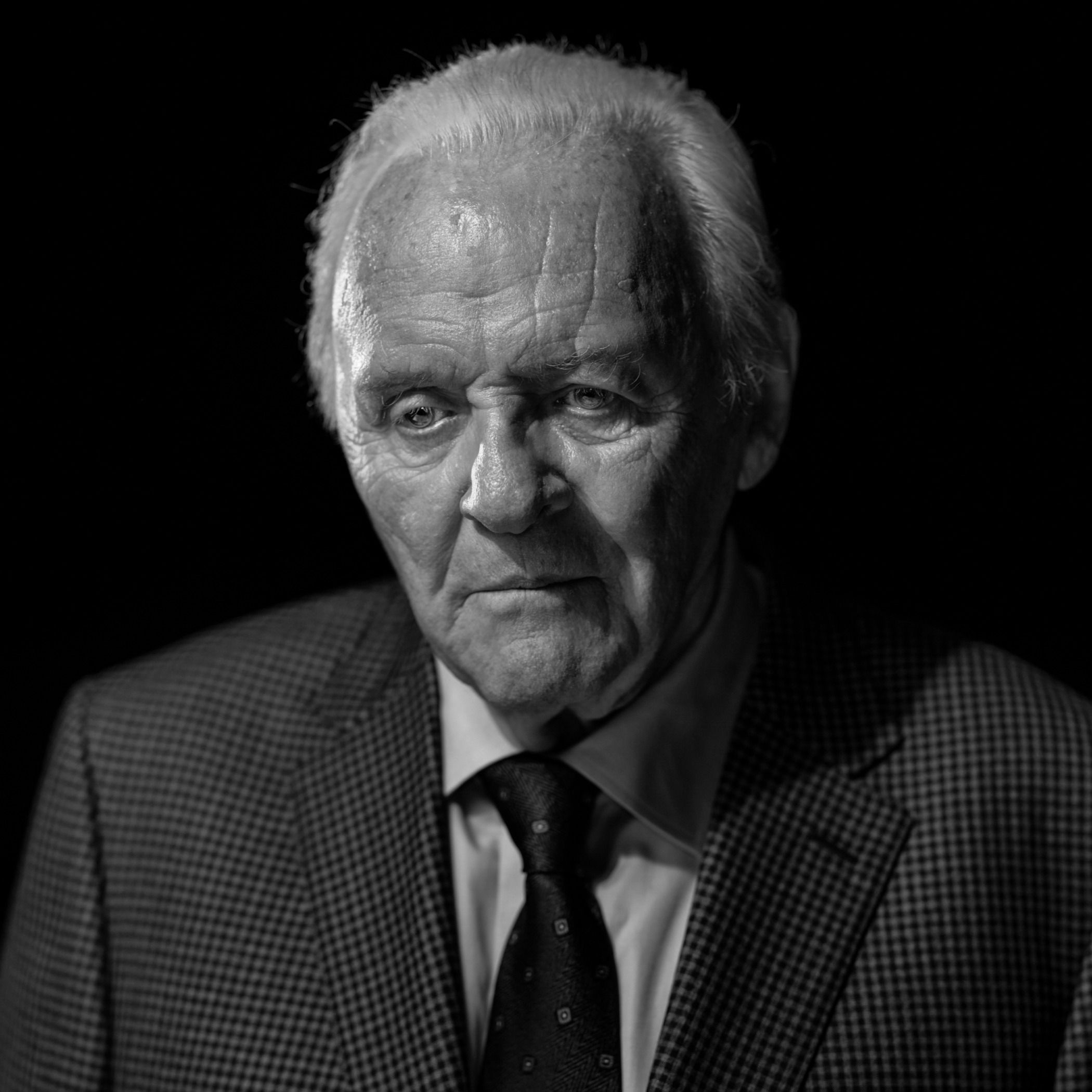
The Interview
Anthony Hopkins on Quitting Drinking and Finding God
00:40:46
The legendary actor, 87, is looking back with tears in his eyes.
Loading summary
Transcript176 lines
- [00:00]
Deloitte Announcer
With real world experience across a range of industries, Deloitte helps recognize how a breakthrough in aerospace might ripple into healthcare, how an innovation in agriculture could trickle into retail or biotech or even manufacturing. Is it clairvoyance? Hardly. It's what happens when experienced multidisciplinary teams and innovative tech come together to offer clients bold new approaches to address their unique challenges, helping them confidently navigate what's next. Deloitte together makes progress.
- [00:39]
David Marchese
From the New York Times, this is the interview. I'm David Marchese. In so many of Sir Anthony Hopkins greatest performances, he's able to suggest captivating hidden depths to his characters. That's true whether he's playing a murderer like Hannibal Lecter or a kindly doctor like he did in the Elephant Man. There's a sense that these men are thinking and feeling things that for whatever reason, they're keeping to themselves. The same can no longer be said for Hopkins. In his new autobiography, we did Okay kid, the 87 year old shares the details of his rough youth in Wales, his painful estrangement from his only child, a daughter from his first marriage, and his rise to Hollywood success. The book also reveals a man who isn't content to merely recount what happened and when. He's also given a lot of thought to the big questions, the why of it all and what it all means.
- [01:33]
Interviewer
And yet, even at this late stage.
- [01:36]
David Marchese
He remains mystified by the sheer luck and improbability of his unlikely life. Here's my conversation with Sir Anthony Hopkins.
- [01:52]
Sir Anthony Hopkins
Hello, David. Tony Hopkins.
- [01:54]
Interviewer
Ah, I was wondering, do I go? Sir Anthony, is that.
- [01:57]
Sir Anthony Hopkins
No, no, no.
- [01:57]
Interviewer
Tony, nice to meet you.
- [01:59]
Sir Anthony Hopkins
Good to meet you.
- [02:00]
Interviewer
You know, I thought it might be interesting to start with a key epiphany.
- [02:05]
Interviewer/Assistant
That you write about in the book.
- [02:07]
Interviewer
You know, we all have our turning points in our lives, but you have such a specific one and know exactly when it happened. A moment that sort of changed everything for you. Can you tell me about what happened.
- [02:18]
Interviewer/Assistant
On December 29, 1975 at 11 o'.
- [02:22]
Sir Anthony Hopkins
Clock, well, almost 50 years ago. I'm always slightly reluctant to talk about it because I don't want to sound preachy, but I was drunk, driving my car here in California in a blackout, no clue where I was going. And it was a moment when I realized that I could have killed somebody or myself, which I didn't care about, but I could have killed a family in a car, you know, And I realized that I was an alcoholic and I came to my senses and I said to an ex agent of mine at this party, In Beverly Hills. I need help. So I made the fatal phone call to an intergroup in LA, 12 step program. So we'll send somebody over to meet you. I said, no, I'll come to you. So I went to this intergroup office, so 11 o' clock precisely, looked at my watch and this is the spooky part. Some deep, powerful thought or voice spoke to me from inside and said, it's all over now. You can start living. It is dissolving for a purpose, so don't forget one moment of it.
- [03:41]
Interviewer
And it was just a voice from.
- [03:42]
Sir Anthony Hopkins
The blue, from inside, deep inside me. But it was vocal, male, reasonable, like a radio voice. And the craving to drink was taken from me or left, I don't know, have any theories except, you know, divinity, or that power that we all possess inside us, that creates us from birth. Life force, whatever it is, it's a consciousness, I believe. That's all I know. Shall I give you another epiphany?
- [04:15]
Interviewer
Yeah.
- [04:15]
Sir Anthony Hopkins
I go back to 1955, Easter. My school report had arrived, the dreaded school report. I was 17 and I was dreading this day because my parents would read these charitable reports on my progress in school. Because I was a dummy. I was known as Dennis the Dunce. Couldn't understand anything was going on. Resentful, lonely and all that. I remember my father opening the report, the dreaded moment. About five o' clock in the evening. We were going to go to see a film. I remember beautiful spring day. And he opened the report and it said, anthony is way below the standard of the school, which is her death knell, really. My father said, I don't know what's going to happen to you. I don't know. Good. But he was worried because, and quite reasonably, he'd spent a bit of money to give me an education and I wasn't capable of meeting that standard. I couldn't understand anything. My brain was sort of cut off, but I remember taking a slight move away, I said, one day I'll show you. My father looked at me, he said, well, I hope you do. At that moment, what I decided was to stop playing the game of being stupid and a dummy. But we step into circles of energy which are negative and we play a role because it's easy to say, well, you know, I'm not. It's not meant for me. Well, there's a truth in it. But at the same time you have to say, wake up and live. Act as if it is impossible to fail. And that's what I did.
- [06:00]
Interviewer
You grew up the son of a.
- [06:02]
Interviewer/Assistant
Baker, working class in Wales.
- [06:04]
Interviewer
And I can't imagine that you knew.
- [06:06]
Interviewer/Assistant
That many artists or actors.
- [06:08]
Interviewer
Was the idea of becoming an actor something that you or your family had ambivalence about?
- [06:16]
Sir Anthony Hopkins
No, I think as a 17 year old boy who didn't know anything really something sparked me and I got a scholarship to an acting school in South Wales. I'd never acted in my life, but I did an audition and they gave me a scholarship. How, I don't know. And I remember, this is another thing, I remember going to see it, a play with the great Peter o' Toole at the Bristol Old Vic. He was playing Jimmy Porter in Look Back in Anger and onto the stage came this lightning bolt. Peter o', Toole, very dangerous actor. And I thought, God, if he stepped off the stage, he'd come and kill us all. And 10 years later I was in the theatre, the National Theatre, playing Andre and Lawrence Olivier's production of Three Sisters by Chekhov. Knock on the door at the end of the evening, who should be that? Peter o'. Toole. Now that's weird. And he said, I want you to do a film test for me. It's a film with Katharine Hepburn called the lion in Winter.
- [07:26]
Interviewer
Yeah, it was your first film.
- [07:27]
Sir Anthony Hopkins
Yeah. So I showed up and did the test. He said, right, you've got it, you've got the part. And he'd had a few to drink and we had a few to drink of that day. Now that's beyond explanation to me. And when I look at that film, which I do occasionally, I think, how on earth did that happen? Why me? I don't know to this day why. And I am what I am and I do what I do because I love doing it. It's all in the game, wonderful game called life. No sweat, no big deal. There are no big deals.
- [08:03]
Interviewer
The idea that essentially life is a.
- [08:05]
Interviewer/Assistant
Game, there are no big deals. We don't need to take anything so seriously. You just gotta do the best you can.
- [08:11]
Interviewer
That's sort of, in a way a recurring theme in your book. And I wonder if we believe that.
- [08:18]
Interviewer/Assistant
You know, we shouldn't take anything too seriously. What should we take seriously? What does matter in life?
- [08:25]
Sir Anthony Hopkins
Well, I don't mean to, you know, be irresponsibly indifferent to everything. There are difficulties, there are monstrous difficulties in life and, yeah, you take notice of them. But finally, I think now approaching 88 years of age, I wake up in the morning going, I'm still here. How, I don't know. But whatever is keeping me I think. Thank you very much. Much obliged. Beyond my finite self, there's not much I can do. I had a gift when I was a boy. I could suddenly learn lots of words of speeches from Shakespeare and poems and all that. Now, at this age, I look at those poems that I wrote down, or they bring back clear memories of my childhood and I get very moved by it. I just have to think of them. I get tearful, not through sadness, but through the wonder of having been alive, having lived those years. And my clear memories of Wales, my clear memories of my parents and their struggles and hardships after the war years. You know, they really struggled to make a living and to give me an education. I look back with tremendous gratitude and I get kind of weepy because I remember the glory of being a child. You know, I had a good childhood. I wasn't bright in school. I was hopeless and I was bullied a lot. I was slapped around. But I look back and I think, well, that's part of growing up. And I wasn't bright. And in those days, teachers could knock you about. I remember being slapped across the head by a teacher several times because I didn't know something. And what I would do, revert to would be called in the army, dumb insolence. I wouldn't respond. I'd just withdraw into myself and I'd stare at them blankly and it drove them nuts and they're all dead now.
- [10:22]
Interviewer
You won.
- [10:24]
Sir Anthony Hopkins
I won.
- [10:26]
Interviewer
So when you were a kid and you would hear your father or teachers.
- [10:32]
Interviewer/Assistant
Say you were a dummy, I'm sure.
- [10:34]
Interviewer
That the voice, your voice in your own head when you were younger also.
- [10:39]
Interviewer/Assistant
Said, I'm a dummy.
- [10:41]
Sir Anthony Hopkins
That's right.
- [10:41]
Interviewer
And I think people are often in their lives, and certainly true for me, you know, we do battle with this.
- [10:47]
Interviewer/Assistant
Voice in our head that tells us we can't do things or we're stupid.
- [10:51]
Interviewer
Or whatever it may be, how did you quiet that voice or learn to control it?
- [10:57]
Sir Anthony Hopkins
Well, it's still there in me from childhood. But what you do it now. WHISPERS so what? I say shut up. I just. Yeah, thanks a lot. We all have problems. We've all got limitations. But I do believe that if you say, wake up and live, act as if it is impossible, for we actually tap into a power that's in ourselves which helps us to do. Well, not everything, but some things. I discovered that I could compose music. I discovered that I could write. I discovered through my lovely wife, Stella, that I could paint. And I remember she was an example because she changed my life. She found Some drawings in some old scripts of mine. Just after we got married, she said, these drawings, you did these? Yeah, you gotta paint. I said, I can't paint. She said, of course you can. Just do it. So I then bought some canvases and acrylic paints and pens and inks, and I just do it.
- [12:04]
Interviewer
You know, often when I've talked with.
- [12:06]
Interviewer/Assistant
Actors, they've suggested that something about acting and something about their affinity for acting or gift for.
- [12:14]
Interviewer
Has to do with the way that.
- [12:15]
Interviewer/Assistant
Acting fulfills something for them.
- [12:18]
Interviewer
Is there anything that you find acting fulfills for you, some inner need?
- [12:26]
Sir Anthony Hopkins
Well, a need would sound rather sad. I just enjoy it. I enjoy the scientific fun of it, of learning a script or learning all the lines. And I'm very good at that. I learn everything there is to. About the text that I'm studying, because that reformed something in me. And I suppose on a deep psychological level, I'm trying to escape from what I was. I don't know.
- [12:52]
Interviewer
What were you. What is the thing you were trying to escape from?
- [12:55]
Sir Anthony Hopkins
Well, that lonely kid, you know, and actually the vain surprise of saying, I did it. I survived my loneliness. I survived those bullies, not that I blamed them. God bless them all, even the teachers who beat me about. I mean, I'm not a victim. And, you know, if people choose to wallow in there, oh, well, okay, go ahead, but you're going to die. And that's why I drank, to nullify that discomfort or whatever it was in me, because it made me feel big. You know, booze is terrific because it makes you instantly feel in a different space, and I enjoyed that. I didn't do it that long. I did it for 15 years. But I remember thinking, this is the life. And all actors in those days, Peter o', Toole, Richard Burton, all of them, and you know them. I remember those drinking sessions, think, this is the life. We're rebels, we're outsiders, so we can celebrate. And at the back of the mind is. And it'll kill you as well. And I remember thinking, this is going to kill me, the drinking. Yeah, because I was drinking like I was going out of fashion. And those guys I worked with, they've all gone. And they were very talented people, wonderful. But once you get into that schizophrenic stage, when your personality becomes rabid, and from the moment you're a jolly nice guy in the bar, and suddenly you turn viciously, say, you talk to me. That's what was happening to me.
- [14:28]
Interviewer
You write about how you were influenced.
- [14:31]
Interviewer/Assistant
By older actors like Laurence Olivier or Katharine Hepburn sort of helped you understand about film acting.
- [14:37]
Interviewer
But I was curious about whether any.
- [14:39]
Interviewer/Assistant
Of the younger actors that you've worked with over the years, people like, you know, Nicole Kidman or Brad Pitt or.
- [14:46]
Interviewer
Ryan Gosling, have they taught you anything about acting or shown you anything about the craft?
- [14:57]
Sir Anthony Hopkins
No, it's always been a pleasure to work with them. I mean, Brad and everyone you've just mentioned, nothing but praise for them. I was working with a young actor a few years ago, young Canadian actor who looked a bit like James Dean. I think he thought he was James Dean, but we were doing a scene together and see your mumbo. I say, can't hear a word you're saying. Huh? I can't hear you. Why are you mumbling? I didn't want to spoil his day, but I said, if you do that, you see, they will go to the pub next door because you're supposed to tell us the story. Speak up, be clear. Wandering on like a backstreet. Marlon Brown is not going to help you at all in your career. Never heard him since.
- [15:49]
Interviewer
In reading the book and in reading.
- [15:51]
Interviewer/Assistant
Sort of older interviews with you or older articles about you, to me there's a consistent sense that comes from you that acting shouldn't really be taken that seriously.
- [16:03]
Interviewer
Actors are entertainers. And I wonder, do you think acting has any greater claim on the truth?
- [16:13]
Sir Anthony Hopkins
No, it's an entertainment. Maybe it's an educational way of entertaining.
- [16:18]
Interviewer
So it has no deeper importance.
- [16:21]
Sir Anthony Hopkins
I'm not dismissing it, but I'm just saying, you know, if I start taking myself too seriously, I do think it's only a job, it's only acting. So for me they're just pastiches, little dabs of paint in one's life. And not to be taken, because at the moment, when you get to a certain age in life, you're going through, you've got ambitions, you got great dreams and everything's fine. And then on the distant hill is death. And you think, well, now is the time to wake up and live and really enjoy it.
- [17:01]
Interviewer
Do you feel like you achieved your dreams?
- [17:03]
Sir Anthony Hopkins
Oh, yeah.
- [17:05]
Poetry Reader
I didn't know if they were dreams.
- [17:06]
Sir Anthony Hopkins
They just happened to me because I can't take credit for them at all. I cannot. I mean, my life is a mystery to me. I'm not trying to sound ultra modest or humble, but I have to confess that I don't understand how it all happened. The miracle is I look at my hands, you know, my hands are an 87 year old man's hands. I'm slowing down. And, you know, my body's creaky, although I'm still strong. But the miracle of it is I'm still here. And that's not a mathematical formula. That's a miracle of life that's in us all. The heart that still beats. I look at my cat, I watch him sleeping, I watch him, you know, out for the count. And I look at the miracle of his life. A little cat. The miracle, the sheer miracle. To dismiss it as a sacrilege.
- [18:08]
Interviewer/Assistant
What snaps you out of the miracle?
- [18:11]
Sir Anthony Hopkins
My bad back.
- [18:12]
Interviewer
That'll do it.
- [18:14]
Sir Anthony Hopkins
Yeah, but it's not even that bad. I get a bit of treatment, lower back, bit of stiffness. And what I do now is slow down. I take everything very slowly because, you know, I'm strong, my legs are strong, I work out. But what I do is I take it easy because one trip, one fall can kill you.
- [18:36]
Interviewer/Assistant
I mean, your age is.
- [18:37]
Interviewer
It's a fact, it's undeniable. But it doesn't really seem from afar.
- [18:42]
Interviewer/Assistant
As if your productivity has slowed down.
- [18:46]
Interviewer
You work a lot. Do you know what to do with yourself when you're not working?
- [18:51]
Sir Anthony Hopkins
I play the piano, I read.
- [18:52]
Interviewer
But why do you work so much is my real question.
- [18:54]
Sir Anthony Hopkins
They often still offer me work. I don't know what's in their minds. They may think I'm 40. I don't know if they give me these jobs to do. And I think, okay. And I think, well, if they're game to employ me, I hope I just show up fit and well and ready.
- [19:12]
Interviewer
But what do you say yes to? I mean, do you just say yes to everything?
- [19:15]
Sir Anthony Hopkins
Anything I can? Well, why not? No, I say yes, as long as it's a good script, not too far fetched. As long as the writing is good and directors amenable. Yeah, why not?
- [19:31]
Interviewer
How often these days do you get.
- [19:32]
Interviewer/Assistant
A director who's not amenable?
- [19:36]
Sir Anthony Hopkins
Oh, they're all amenable now.
- [19:38]
Interviewer
Is that a change?
- [19:40]
Sir Anthony Hopkins
Well, I used to, in the past, have a few problems with those days. There was. There were tyrant directors, tyrannical bullies, few of those. But when I used to confront them, I would confront them in no uncertain terms. I'd say things like, you talk to me like that and you'll wake up with a crowd around you. Whether I meant it or not, I don't know, but I wouldn't put up with it. I said, don't talk to me like that. I said, no, you shut up. And either they would or they wouldn't. I remember working with a director who Was giving notes to a young woman, fine actress, and he started shouting at her. I hold it. You raise your voice one decibel to this lady, and I'm going. And you, my dear, should leave as well. She said, afterwards, thank you. I said, how long has he been doing that? You said, from the whole film. You should have told me. I can't even remember the exact. I think he's gone now. But no, I defend people. Don't raise your voice. It's a film. It's a stupid film. That's all it is. It's not important. Doing take after take after take after take, who cares?
- [20:58]
Interviewer
Do you feel that any of the films that you've made, Would you call them important?
- [21:03]
Sir Anthony Hopkins
No.
- [21:04]
Interviewer
Not one?
- [21:05]
Sir Anthony Hopkins
No.
- [21:06]
Interviewer
The Elephant Man. Give me the Elephant Man.
- [21:09]
Sir Anthony Hopkins
Yeah, it was a good film.
- [21:12]
Interviewer
The Remains of the Day.
- [21:14]
Sir Anthony Hopkins
Yeah, they were good, but Silent of the Lambs. Ah, but the thing is, you know about all that stuff people ask me about. Silence of the Lambs. How did you do that? I said, well, I am not Hannibal Lecter. I'm not a butler. I am not this and I'm not that. I'm just a mechanic. I show up. No, my life. Somebody said, how did you play the Remains of the Day? That butler, how did you play him? I said, well, I was very quiet, very still, and walked about quietly.
- [21:47]
Interviewer
That's it. It's that easy.
- [21:49]
Sir Anthony Hopkins
Yeah, but how did you play Hannibal Lecter? Well, I played the opposite of what they promised. Oh, he's a monster. Good morning. You're not real FBI, are you?
- [22:02]
Interviewer
Gives me the heebie jeebies.
- [22:03]
Sir Anthony Hopkins
Don't do that, because you play the opposite, and it's easy.
- [22:10]
Interviewer
I'd like to return to the material.
- [22:13]
Interviewer/Assistant
From the book for a second and.
- [22:15]
Interviewer
The specific material I'd like to focus on. I know it's sensitive for you.
- [22:20]
Sir Anthony Hopkins
I know what you're going to talk about. My domestic life.
- [22:22]
Interviewer/Assistant
Yes.
- [22:23]
Poetry Reader
No.
- [22:23]
Sir Anthony Hopkins
No.
- [22:25]
Interviewer
Even though it's in the book?
- [22:26]
Sir Anthony Hopkins
No, it's done.
- [22:29]
Interviewer
Can I ask a general question that's not specifically about the material in the book? Well, it's about the. I'll stumble through this part of the.
- [22:38]
Interviewer/Assistant
Reason that the material in the book about your relationship with your daughter. Your estranged relationship with your daughter. Part of the reason why I found it so painful is that it resonated with me for personal reasons. I've seen my father, I think, twice in 20 years. You know, I've spoken to him once.
- [22:59]
Interviewer
In those 20 years, and I'm very curious about other people's experience of that kind of estrangement.
- [23:07]
Interviewer/Assistant
In this instance, the estrangement is my choice.
- [23:10]
Interviewer
But I just wonder if you have.
- [23:13]
Interviewer/Assistant
Thoughts about where reconciliation might lie between estranged parents and children.
- [23:20]
Sir Anthony Hopkins
My wife, Stella sent an invitation to come and see us. Not a word of response. So I think, okay, fine. I wish her well, but I'm not going to waste blood over that. If you want to waste your life being in resentment 50 years later, 58 years later, fine, go ahead. It's not in my ken. See, I could carry resentment over the past, this and the other, but that's death. You're not living. You have to acknowledge one thing, that we are imperfect. We're not saints. We're all sinners and saints, or wherever we are, we do the best we can. Life is painful. Sometimes people get hurt, sometimes we get hurt. But you can't live like that. You have to say, get over it. And if you can't get over it, fine, Good luck to you. But I have no judgment. But you did what I could, so that's it would. And that's all I want to say.
- [24:38]
Interviewer
Do you hope your daughter reads the book?
- [24:40]
Sir Anthony Hopkins
I'm not going to answer that. No, I don't care.
- [24:44]
Interviewer
I'll move on.
- [24:45]
Sir Anthony Hopkins
Please. I want you to. Because I don't want to hurt her.
- [24:48]
Interviewer/Assistant
I understand.
- [24:49]
Sir Anthony Hopkins
I don't want to. I don't want to make any. No. 20 years. The offer was made. But fine. Onwards.
- [24:58]
Interviewer
Towards the end of the book, you.
- [25:00]
Interviewer/Assistant
Talk about a couple labels that might apply to you, one of which is Asperger's.
- [25:06]
Interviewer
I think you say in there that your wife, Stella, sort of suspect that you may have Asperger's. Have you ever been diagnosed?
- [25:14]
Sir Anthony Hopkins
No. I'm told I have all the symptoms. I don't know what any of it means. If I have it, then I'm happy. I don't know.
- [25:23]
Interviewer
But the other label, it's right in the same paragraph. You say another label that might apply is the label cold fish. And you say that you prefer the cold fish label to the Asperger's label.
- [25:35]
Interviewer/Assistant
Why is that?
- [25:36]
Interviewer
Why does that feel more fitting or.
- [25:38]
Interviewer/Assistant
More comfortable to you?
- [25:40]
Sir Anthony Hopkins
Well, it's only a turn of phrase. A coldfish. I'm not a coldfish. I have lots of feelings bundled up with them. They're deep inside me. When I read something from the past, I get tearful. It's not. I don't get attached to sentimentality. In this business with actors who admire and I've worked with. I form no attachment. I respect them, but I form, well, the coalfish is. I am remote. I am a loner, and I have never been able to shake that. I have acquaintances, friends, if you want to call it that. I don't have any close friends. I'm a little distant, a little suspicious. I suppose I'm comfortable just chanting along through my. My slightly isolated life. But I'm not a recluse. I don't live in a tower. I live in a house here. And I'm traveling a lot. I have my immediate family, my niece Tara and my lovely wife Stella. And they boss me about, they tell me what to do, and I'm happy with that.
- [26:57]
Interviewer
The personal remoteness you described, I was wondering if that.
- [27:01]
Interviewer/Assistant
How that might actually benefit your performances.
- [27:04]
Interviewer
Sometimes, because when I think of some.
- [27:06]
Interviewer/Assistant
Of my favorite performances that you've given, I'm thinking of things like Remains of the day or 84 Charing Cross Road. The Father, even, on some level, Silence of the Lambs or Shadowlands has this too there. I feel like there is sort of an emotional remoteness to some of those.
- [27:21]
Interviewer
Characters, and I wonder if that's something.
- [27:24]
Interviewer/Assistant
That is just sort of like a fingerprint, maybe, or a signature of a good Anthony Hopkins performance, or is that an intentional performing strategy?
- [27:34]
Sir Anthony Hopkins
I think it's partially intentional, because many years ago, there were two teachers at the Royal Academy. They were brief visitors there. They did not appreciate the Academy, the academics, but they were teachers of the Stanislavski system, let's say. And I remember this one teacher called Jat Malmgren, and he was a dance teacher, he's Swedish. And I used to go to these painful classes of movement. I hated them. And I'm built like a Welsh rugby scrum, you know, a bit beefy. And the other, Anthony, he said, you have too much extroverted motoric energy and you will become insensitive. I didn't know what he was talking about, but I gathered instinctively to develop the other side, which was to pull back, be in the darkness, be in the shade, called remote. And it's the remote that paid off for me because I had to change my whole psychology to not be that rambunctious rugby player coming on the stage, bumping into people, being ferocious. Gradually, I learned, no, no, pull back, pull back. There's one acting note that it was Gloria Graham, the great movie star. She was doing a film with Bogart called In A Lonely Place, and Bogart said to her, stay in the shade. Don't go to the camera. Let it come to you. He saw something in her because she was a little crazy, you know, he said, let it come to you. And I think he had that quality as well. And that's the more magnetic side. Yeah.
- [29:11]
Interviewer
It compels you to watch.
- [29:13]
Sir Anthony Hopkins
Well, because you're not doing anything. Well. Chilton says to Clarice Starling, what's he like? You mean Hannibal the Cannibal? And Chiltern, the head of the asylum, says, oh, he's a monster. And she goes down the pass, away to the cell. May be expecting to see a blubbering lunatic. And Jonathan Demme said to me, Said, how do you want to be seen by Clarice? Do you want to be lying on the bunk, or do you want to be reading? I said, no, I want to be standing. Why? I said, I can smell her coming down the corridor. When she sees me. There's this still perfectly civil gentleman. Good morning. You're not real FBI, are you? All the way to the FBI. That's the way to build a portrait. And it's all remote. Because Lecter is the remote, spellbinding character. And if you have remoteness as the centrifugal force in you. That's the driving force that pulls you in.
- [30:26]
Interviewer
There's another epiphany that I'd like to.
- [30:29]
Interviewer/Assistant
Go back to, if you don't mind. This is another one you describe in the book. You were driving in Los Angeles in, I think, the late 70s.
- [30:38]
Sir Anthony Hopkins
Yeah.
- [30:39]
Interviewer/Assistant
And you felt a pull to go over to a Catholic church. And you went inside. And you told a young priest there that you had found God. Now, I get the sense that you're not, you know. Going to church every Sunday. Or sort of praying in a conventional way. So what is God to you?
- [30:57]
Sir Anthony Hopkins
Well, it's a touchy subject, isn't it? Because I'm religion. And, you know. But what happened that morning when that voice said, it's over now. You can start living. And it has all been for a purpose. So don't forget one moment of it. I knew that was a power way beyond my understanding. Not up there in the clouds, but here, in here. So I chose to call it, at that moment, God. I didn't know what else to call it. Short word God, easy to spell. And I recently wrote a piece of music. Which was conducted in Riyadh. Goodbye, piano and orchestra. And at the end, it came to me, as I was writing it, as I was composing it. That that's it. We come full circle. We dip down to. That's all, folks. And that it was all a dream anyway. Everything is a dream. And it's goodbye. Before death takes Us.
- [32:08]
Interviewer
If you're getting nearer to the big.
- [32:10]
Interviewer/Assistant
Goodbye, do you take any pride or draw any meaning or take any solace from what you leave behind, both as a person and as an artist?
- [32:24]
Sir Anthony Hopkins
Oh, you mean a heritage, A legacy. A legacy. I never think about it. I never think about it. When they cover the earth over you. That's it. We move on. I remember going to. I was asked by the widow of Lawrence Oliver John Claret, if I would read the last lines of King Lear at the casket in this little church in Sussex. I was astounded that I was asked to do it. There was Olivia's casket, full of the flowers and wreaths and collections of flowers from Shakespeare's Winter's Tale. And after that we got into our cars and we went to the crematorium. And I was sitting next to Maggie Smith, the great actress Maggie Smith. I didn't know her that well, but we were sitting next to each other and we both worked with Olivia. And there was the casket. And finally, as the curtain went, you could hear the rollers taking them into the crematorium, into the flames. Maggie Smith said, what a final curtain. And you think, God almighty, what is it all about? The wonder of all that energy that had gone into his life or anyone's life. Not just a celebrity, but anyone's life. The energy that goes into survival. Seeing my own father dying, you know, going to the hospital the night he died and standing at the foot of his bed, my mother smoothing his hair, and I felt his feet at the foot of the bed. They were dead cold. He's gone. And as I stood there that silent night in that empty sounding hospital in South Wales, a voice again came to me. You're not so hot either. This is what'll happen to you. And it's a great wake up call. When you know that it's a fairly.
- [34:32]
Interviewer
Brusque voice, you're not so hot.
- [34:35]
Sir Anthony Hopkins
But what it is, it's an awakening, several awakenings and epiphanies. And you think, yeah, that's right.
- [34:39]
Interviewer
But, Sir Anthony, I realize I'm dancing.
- [34:41]
Interviewer/Assistant
Around a question that I would like your answer to. Do you think your life has had meaning?
- [34:50]
Sir Anthony Hopkins
The only meaning I can put to it is that everything I sought and yearned for found me. I didn't find came to me.
- [35:09]
David Marchese
After the break, a poetry reading by Sir Anthony Hopkins.
- [35:30]
Deloitte Announcer
A biotech firm scaled AI responsibly. A retailer reclaimed hours lost to manual work. An automaker now spots safety issues faster. While these organizations are vastly different, what they have in common sets them apart, they all worked with Deloitte to help them integrate AI and drive impact for their businesses. Because Deloitte focuses on building what works, not just implementing what's new. The right teams, the right services and solutions. That is how Deloitte's clients stand out. Deloitte together makes progress.
- [36:06]
Isabella Rossellini
What can a barbershop teach us about mental health? And how can hair braiding help weave together a community? Hi there, I'm Isabella Rossellini. And in the latest episode of this Is Not a Beauty Podcast from l' Oreal Group, we'll hear from a Congolese refugee in London and a New York based barber to understand how beauty shapes our relationship relationships. Listen now on your favorite podcast platform.
- [36:36]
Deloitte Announcer
A warm dinner, a full table, peace of mind for every family. That's the holiday we all wish for. Your donation to Feeding America helps make it possible, not just for one family, but for communities everywhere. Because when we act together, hope grows. Give now and your impact may be doubled. Visit feedingamerica.org Holiday brought to you by Feeding America and the Ad Council.
- [37:13]
Interviewer/Assistant
Hi, Tony.
- [37:14]
Deloitte Announcer
Hello.
- [37:15]
Sir Anthony Hopkins
Is that David?
- [37:15]
Interviewer
It is.
- [37:16]
David Marchese
David.
- [37:16]
Sir Anthony Hopkins
How are you? Good, good.
- [37:19]
David Marchese
So I, of course, saw that at the end of your book, there's an appendix that includes a handful of poems which. Which is something I'd never seen done in an autobiography before. Can you tell me why you decided to include those poems?
- [37:33]
Sir Anthony Hopkins
When I was a kid, I learned a lot of poems, a lot of words, and I was very moved by them from, I think from about the age of 11. There was one occasion I was in school. I was sitting in the back of the classroom where I was satisfied, sullenly not wanting to be involved in anything. And the English teacher called me, said, come up here to the front of the class. He said, I want you to read this poem. He seemed to have an instinct about me, that I knew something. And he handed me a poem, which was West Wind by John Macefield. He said, read that. He said, out loud. I've read it. And I was strangely moved by it. And at the end he said, that's it. Okay, good. Thank you. That's very good. So it was my first good review, I think, and I think that's what it is. It's an expression of my life. I read poems and I get kind of. Yeah, I get moved by them. And I don't know why. I think it's to do with my age and how poetry digs really deep inside us, beyond our understanding.
- [38:50]
Interviewer
Would you be willing to read the West Wind by John Macefield? That is One of the poems that.
- [38:56]
Interviewer/Assistant
You included in the appendix.
- [38:57]
Sir Anthony Hopkins
Let me just find that. Have I got a minute? Yep.
- [39:01]
Poetry Reader
Hold on a second.
- [39:06]
Sir Anthony Hopkins
Ah, well, yes.
- [39:10]
Poetry Reader
It's a warm wind, the west wind full of birds cries I never hear the west wind but tears are in my eyes for it comes from the westlands the old brown hills and Aprils in the west wind and daffodils It's a fine land, the westland for hearts as tired as mine Apple orchards blossom there the air's like wine There is cool green grass there where men may lie at rest and the thrushes are in song there, floating in the nest Will you not come home, brother? You have been long away It's April and blossom time and white is the May and bright is the sun, brother, and warm is the rain Will you not come home, brother? Home to us again? The young corn is green, brother where the rabbits run Its blue sky and white clouds and warm rain and sun Its song to a man's soul, brother Fire to man's brain to hear the wild bees and see the merry spring again Larks are singing in the west, brother, above the green wheat so will.
- [40:26]
Sir Anthony Hopkins
You not come home, brother?
- [40:27]
Poetry Reader
And rest your tired feet? I've a balm for bruised hearts, brother Sleep for aching eyes, says the warm wind the west wind full of birds cries it's the white road Westward is the road I must tread to the green grass, the cool grass, the rest for heart and head to the violets and the warm hearts and the thrushes song in the fine land, the westland.
- [40:58]
Sir Anthony Hopkins
The land where I belong.
- [41:04]
Interviewer
I'd like to end on that eloquent grace note. Sir Anthony Hopkins, thank you very much.
- [41:08]
Sir Anthony Hopkins
Thank you.
- [41:14]
David Marchese
That's Sir Anthony Hopkins. His memoir, we did okay, Kid, will be published on November 4th. To watch this interview and many others, you can subscribe to our YouTube channel@YouTube.com betletheinterviewpodcast. This conversation was produced by Seth Kelly. It was edited by Annabelle Bacon. Mixing by Sonia Herrero and Katherine Anderson. Original music by Dan Powell, Diane Wong and Marion Lozano. Photography by Devin Yalkin. Our senior booker is Priya Matthew and Wyatt Orme is our producer. Our executive producer is Allison Benedikt. Video of this interview was produced by Paola Neudorf. Cinematography by Nicholas Krauss and Zebediah Smith, with additional camera work by Ricardo Mejia and Jackson Montemar. Audio by Tim Brown iii. It was edited by Amy Marino and Caroline Kim. Brooke Minters is the executive producer of podcast video. Special thanks to Rory Walsh, Renan Borelli, Jeffrey Miranda, Maddie Masiello, Jake Silverstein, Paula Schuman and Sam Dolnick. Next week, Lulu talks to Jennifer Lawrence about how becoming a mother influenced her performance in her new movie Die My Love.
- [42:27]
Jennifer Lawrence
My experience with my second was I just felt like a tiger was chasing me every day. I've had so much anxiety. I had non stop intrusive thoughts that I was just like at the whim of they'd like controlled me.
- [42:42]
David Marchese
I'm David Marchese and this is the interview from the New York Times.
- [42:56]
Deloitte Announcer
A warm dinner, a full table, peace of mind for every family. That's the holiday we all wish for. Your donation to Feeding America helps make it possible not just for one family, but for communities everywhere. Because when we act together, hope grows. Give now and your impact may be doubled. Visit feedingamerica. Org holiday brought to you by Feeding America and the AD Council.