← The Interview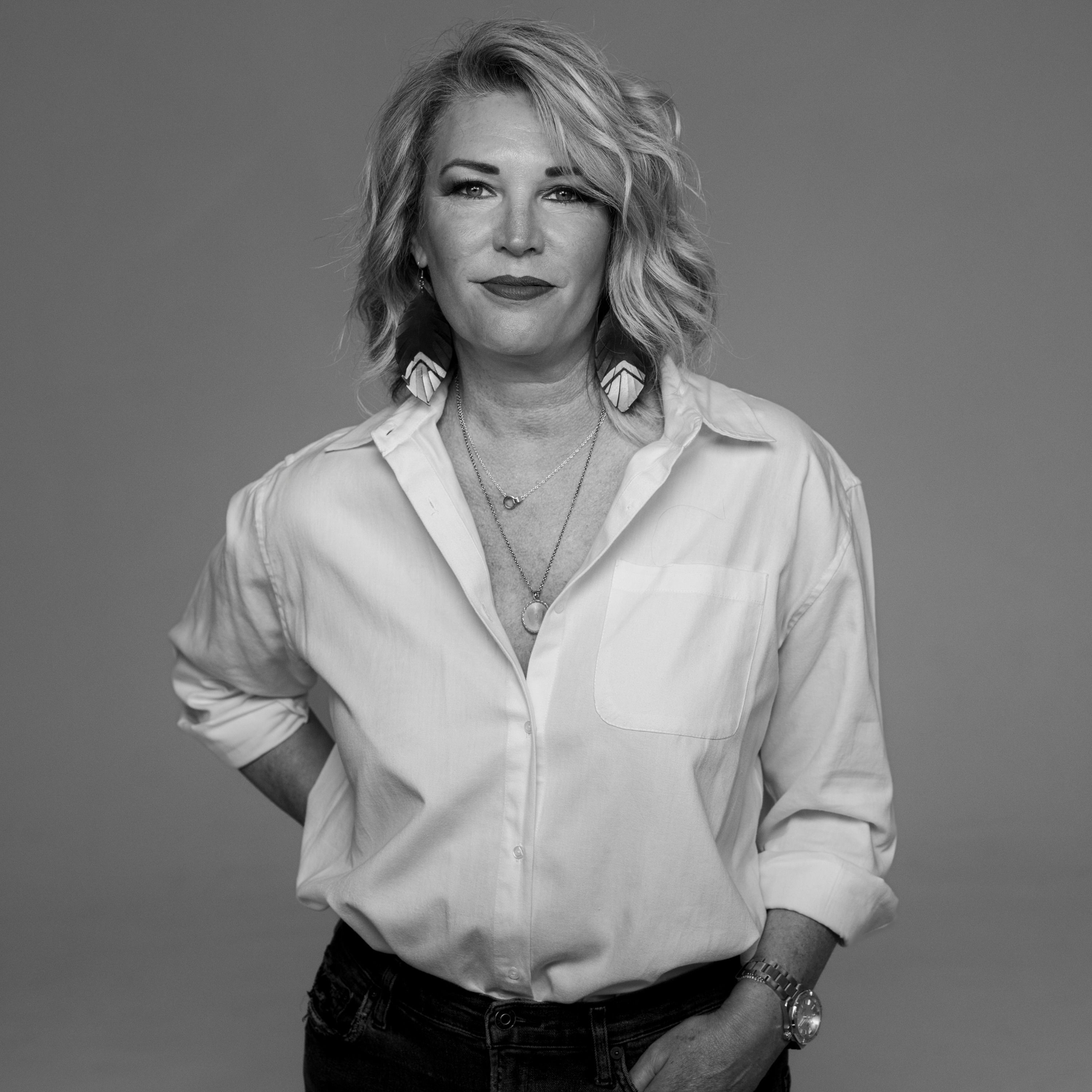
The Interview
Jen Hatmaker's Life Exploded in Middle Age. So She Built a Better One.
00:45:43
The former evangelical star on waking up halfway through her life.
Loading summary
Transcript124 lines
- [00:00]
A
And now a next level moment from ATT Business. Say you've sent out a gigantic shipment of pillows and they need to be there in time for International Sleep day. You've got AT and T5G so you're fully confident, but the vendor isn't responding. And International Sleep Day is tomorrow. Luckily, AT&T 5G lets you deal with any issues with ease, so the pillows will get delivered and everyone can sleep soundly, especially you. ATT 5G requires a compatible plan and device. Coverage not available everywhere. Learn more@att.com 5G Network.
- [00:35]
B
From the new York Times, this is the interview. I'm David Marchese. What happens when you reach middle age and the very things that sustained you, that gave you structure and identity, that made you you, are gone. That kind of supercharged middle age crisis is precisely what happened to Jen Hatmaker twice. Hatmaker, who's 51 years old, had built a career as a Christian women's influencer, best selling author, and TV personality. But about a decade ago, she went through a very public shift away from some of her more conservative stances, a shift that alienated a big part of her audience and forced her to find a new one. Then in 2020, Hatmaker discovered that her husband of 26 years was cheating on her. They divorced soon after, and for the second time, she had to pick up the broken pieces of her past life and start all over. Her upcoming book, a Memoir, which will be published next month, marks the first time she's gone into detail publicly about that painful, heartbreaking, but ultimately hopeful process. Here's my conversation with Jen Hatmaker. Hi, Jen.
- [01:48]
A
Good morning.
- [01:49]
B
How are you?
- [01:50]
A
I'm good. Nice to meet you.
- [01:52]
B
Good to meet you. If you're ready to get started, we can get started.
- [01:55]
A
I'm ready.
- [01:56]
B
All right. So, you know, I was looking on your website and you describe yourself and you say that, you know, I used to be a darling of the evangelical women's subculture, but now I am a bit of a problem child. So to start, how had you become a darling?
- [02:16]
A
Let's just get into it.
- [02:17]
B
Yep.
- [02:22]
A
I grew up in a really traditional, regimented Christian environment, particularly the Southern Baptist world. My dad was on staff at a church my whole life. And so I was trained in the rhetoric and in the language that was my native tongue and had always been, well, good at being good. And so that was a great environment for me to succeed in because it's rules based, is behavior based, and it is real, real clear demarcations. This is what we do. This is what we don't do. This is what we believe, this is what we don't believe. And so I went to a Baptist college and I married a ministry major. So I'm already building an impressive resume to succeed. And we immediately went into full time ministry, which is to say he did for his job, but the way that it works in church work is a two for one.
- [03:25]
B
Which means what?
- [03:26]
A
His job was my second job. So I had a full time job. I was a teacher, but I was at every single church thing that existed in our home. We had, we were student, he was a student pastor. And so we had the students over, I guess always. I felt like seven days a week. All the trips, all the camps, all the, all of it. So I came up through that world. And then When I was 29, I wrote my first book. Miraculously, it got published. Miraculously, it became a five book contract. And so thus began my ascent into. Listen, there's no reason you would know this, but evangelical lady subculture, it's a thing, okay? It's a whole thing.
- [04:10]
B
What is it about me that makes you think I wouldn't know about evangelical lady subculture?
- [04:13]
A
I mean, I'm not certain you're the target demo. I could be wrong. I mean, I don't want to judge.
- [04:19]
B
But how do you understand the influence that you had within that subculture? Like what were people looking to you for?
- [04:29]
A
Well, it dovetailed with the rise of social media. And so I had kind of twin paths. I had sort of a traditional publishing path in that I was writing books and they were going on shelves. And then I had this larger world that existed on the Internet, which is how I think I hit a moment in that space where it was just growing as fast as I could keep up with it. And so I think what people were drawn to at the time, if I'm guessing, is that I held to most, if not all of the traditional doctrines. The theology, the talking points, the party lines. I didn't threaten those. At the same time, I was funny and kind of had a shiny personality.
- [05:25]
B
Right. You weren't finger wagging or scolding?
- [05:27]
A
No, no, no. I was kind of entertaining and just spicy enough to make me a little interesting, but without threatening the story. And so that was the magic formula. For women, men had a different set of expectations, but for women, being pretty, funny, smart, entertaining, good communicator, while staying inside the boundaries of the community, that was it.
- [05:59]
B
And what put you outside the boundaries of the community? Why are you now a problem child?
- [06:04]
A
It started when I started Picking up the mantle of anti racism. That did not go well. That went on for a couple of years. And then we hit 2016. And there are two huge things that year. The first was being anti Trump. In my perspective. I did not feel like I was abandoning my faith to be anti Trump. It was my faith that compelled me. So that was absolutely going terribly. I was losing a thousand followers a day. And then there was this slower burn that had been going on for a couple of years in that I was internally and privately going through a doctrinal reversal on what I had always been taught about the LGBTQIA community. And so I guess, like, maybe 10 days before the election, I gave an interview to RNS, to religious news Service, in which I said, I've changed my mind on this, and I'm in full, you know, affirmation of the LGBTQIA community. I would perform a gay wedding. I would drink champagne. I mean, I went all in, you know, and that was it. My books were pulled off shelves the next day. My most successful book was put out of print. All my speaking engagements were canceled. My social media following just halved overnight. My publisher put out a press release the next day against me, and there was nothing left. It was just scorched earth. And I thought my career was over for sure. But then, to my surprise, my community began backfilling with hundreds of thousands of primarily women who were in such a similar seat as me, going, this is what we were raised in. This is what we were taught, but this is no longer holding. And so that began a whole new period of my life.
- [08:07]
B
You know, I think the notion of being honest with oneself and true to oneself, in a way, it's kind of the foundation of your upcoming book, Awake, which is centered on the dissolution of your marriage, your divorce from your ex husband. And, you know, you start the book with this very dramatic scene of realizing that your husband is being unfaithful to you.
- [08:32]
A
I do.
- [08:33]
B
Can you, as much as you're comfortable doing, tell me about the sort of initial feelings of realizing that not only was your husband cheating on you, but he had basically been living an entire other life for a couple years?
- [08:47]
A
Yeah. To be sure, at the time, that was the singular most shocking thing that has ever happened to me. We were prototypes, to be honest. We had. We were pastors. We had started a church in Austin. We had been married for 26 years. We had followed the rules. And so there was this initial period of just grief and trauma as the story unfolded. And it was so bad. But as I started to, like, work through that recovery process, I had to finally begin admitting this marriage was in trouble. Because for a while, my preferred story was everything was great. He's a terrible person. He ruined our family. He broke us apart. He betrayed. And that is to some degree true. That's not an untrue thing to say. But what is untrue is that everything was going great until it wasn't. Because if this house crumbled to its foundation when I was told it would last forever, let's take a look at every individual brick and see if maybe it wasn't such a shock that the house fell apart after all.
- [10:02]
B
Do you think there are ways in which your split from the evangelical community contributed to the tensions with your ex husband?
- [10:11]
A
Not exactly. We were in alignment in terms of how we were evolving in our faith, in our theology. We were in kind of lockstep on that. Maybe not in identical timing, but pretty close.
- [10:28]
B
Right.
- [10:29]
A
What it did, though, was put our marriage into a real pressure cooker. He was also. He had a full time career in Christian work as well. And so when that article, for example, came out with RNs, he had a Christian leadership book out that was only three months old. So it was immediately dead in the water. So it did have an effect on us. It had an effect on our finances. It had an effect on our psyche. Make no mistake about it. The evangelical community can terrorize you. And they did. And so it just. It was a stressor that certainly should be considered as a factor.
- [11:06]
B
It was like a literal stress test.
- [11:08]
A
A literal stress test. And we had to kind of go, God, what are we gonna do? Like, what's our. These. These careers, as we knew, are over. So, you know, we really did have to recalibrate, and that was in 2016. And I lost my marriage in 2020.
- [11:25]
B
Yeah. I gotta ask. You know, the way you initially found out about your ex husband's infidelity was you two were in bed in the middle of the night, and I guess he thought you were asleep and you overheard him sending a voice text to his girlfriend.
- [11:42]
A
That's right. Did he.
- [11:43]
B
Do you think he wanted to get caught on some level? That seems bonkers.
- [11:48]
A
It's bonkers.
- [11:49]
B
I don't mean to be glib, but that. It, like.
- [11:51]
A
No, no, it's bonkers. And there was a lot of alcohol involved. And so that was another, like, contributing factor to just the complete disintegration, not just of our marriage, but kind of of him at the time. I always think about that night as there was my life before that moment at 2:30am and then there's my life after. And that was the dividing line of my story.
- [12:16]
B
And your divorce became. Scandal is not quite the right word. It's close, but, you know, sort of became a newsworthy event in the evangelical world.
- [12:26]
A
That's right.
- [12:27]
B
But only after, you know, someone sort of digging around into public records. And then, you know, this is a journalist. And then wrote an article.
- [12:35]
A
That's right.
- [12:35]
B
Revealing that you'd gotten a divorce. What was that experience like of being made to publicly acknowledge this thing that you probably weren't yet ready to publicly acknowledge?
- [12:48]
A
I mean, journalists, am I right?
- [12:51]
B
Some of them are okay.
- [12:54]
A
I have a soft spot for them. I had certainly gone quiet online. Everybody knew something was wrong, and I had said as much. I said, listen up, everybody, we're in a crisis. I'll say more later, but can everybody just give us a little bit of space? And we had filed, and we tried to keep that file private with initials instead of our full names. And, you know, my attorney had done the best she could do. But another journalist, and I'm using that term loosely, her whole deal is raising the alarm on Christian leaders in Christian spaces. And so, you know, she said, I've got ahold of this public filing. These people are getting divorced. And it was so interesting because, and this is not surprising, again, one of those bricks that I took a really hard look at that built a flimsy house was not just religious dogma and organized faith limitations, but the patriarchy, particularly inside that space. And so it wasn't surprising at all to see that the response to her expose was to come for me, that this was my fault, that my walking away from the evangelical community four years earlier was a signal.
- [14:23]
B
Right. Almost a divine punishment.
- [14:25]
A
That's right. I did something, obviously, because, of course she didn't know why we were getting divorced. I had obviously done something wrong, and this was my fault. My husband was completely omitted from the reckoning. And I would say, to be fair, the greater community really took her to task for exposing our divorce before we had even said it publicly. But it didn't matter. It was too late.
- [14:51]
B
You know, I'm also curious about the larger cultural context that you had for marriage and what marriage is and what marriage means. Because in the book, you write a little bit about the purity culture that you were raised in, and then, you know, you did get married. Were you a sophomore in college? How old were you?
- [15:08]
A
Yes, I was 19.
- [15:10]
B
You were 19. What did you understand about marriage and what were you taught about what Marriage.
- [15:16]
A
Even meant so for me. And this is not just located in the Southern Baptist ecosystem. We were taught there's zero sex before marriage. The first time you're ever gonna have sex is your wedding night. Like, geez. Our dads would give us what were called purity rings. They went in our left hands and that was the placeholder for our purity until some man put a wedding ring on it. And then it was God. We all went through this curriculum called True Love Waits. And it was, I mean, obviously abstinence only. And the language around all that instruction was baked in with fear and shame. It was really scary to imagine getting on not just the wrong side of our parents, of our faith communities, but on the wrong side of God. Holy shit. We were scared to death. And then of course, when kids had sex, because of course they did. Golly, the shame, the ostracization, the. The rejection. And so what that meant was, geez. A whole generation of us came into marriage absolutely freaked out around sex. We had no idea what the hell we were doing or what we were supposed to be doing once we could finally have it. So there was this narrative, particularly for women, which was, don't be slutty, don't be and have sex before marriage, but the day you get married, girl, you better turn it on. Like you turn into a vixen in that bedroom and you give it up any old time, and you're supposed to be amazing and it's up to you to keep that bedroom spicy and keep that husband, like, happy with you and coming home to you and you only. And so what could go wrong? Right, what could go wrong?
- [17:13]
B
Yeah. It was also interesting for me to go back to your earlier books.
- [17:19]
A
Oh boy.
- [17:21]
B
There's nothing bad. There's nothing bad.
- [17:22]
A
I'm gonna hang up this phone.
- [17:24]
B
You know, sort of the image you were portraying in your work was sort of like. I wouldn't say it was feminist, but it was like coming up to feminist. Feminist adjacent, you know, that's fair. And then also empowerment.
- [17:38]
A
That's right.
- [17:39]
B
Encouraging women to adopt some more non traditional roles and duties within the family. And then. And that feels to me different or almost opposed to the ideas that seem ascendant in like the Christian women's influencer world. Now the trad wives are sort of giving this image of like a perfect traditional family or like feminism is a bad word. What might explain the shift towards more rigid certainty, more rigid gender hierarchies? Like, why is that more popular now?
- [18:14]
A
Mm. I don't know how pervasive it actually Is, you know, there's the Internet world and there's the real world, and I'm not really sure where the balance is there in my real world. I don't know anybody like that. That is bonkers. It's bananas to watch. It's bananas. So I don't know if it's just catching a lot of traction because it's. It's like watching a show, you know, it's like watching a reality TV show. For me, this is just anecdotal. I don't really know what the real numbers are between the growth of the tradwife model. I have no idea.
- [18:52]
B
You know, I've seen people argue that tradwife content is actually consumed more by men than by women.
- [18:58]
A
You don't say. You don't say now. I would just say, look, this is just armchair expert here. It's interesting to me to notice that if we come up to the political sphere and take a peek at what the gop, what the far right, is banging the drum for in terms of gender roles, you know, maybe it's not such a surprise that this tradwife narrative is really having a moment.
- [19:30]
B
Well, you know, one other hypothesis for explaining the appeal of tradition broadly defined is that the world right now and for the last little while has been so defined by, like, upheaval and change and instability that people find tradition and hierarchy and those kinds of things just comforting.
- [19:53]
A
Could be. It could be. There could be a more sincere altruistic explanation besides the evil gop. Sure, we can go yours or mine, whichever way you want to go. Might be both. And I can understand that as somebody who was raised in a traditional space like that and for a long time found a great deal of comfort in it. I get the appeal. It worked for me, too, for a long time. Until it didn't.
- [20:22]
B
Presumably, you have close friends and family members who are still in the community that you're no longer a part of. How do you reconcile the fact that people you love and care about and think are good people are still part of the community that was so aggressive to you and which you've so aggressively rejected?
- [20:45]
A
Some of that is just a complete shit show. Yeah, I am working that out on a daily basis and deciding, where is my line? Like, is there a line? First of all, is there a line where I just go, the chasm is too big? Like, we are now debating people's dignity or their humanity or their right to get married or their autonomy over their body. You know, these are consequential, enormous ideas that are not Removed from me. I have two black kids. I have a gay kid. I have a black boyfriend. I am a woman with a body. I have two daughters. We live in Texas. Geez. Like, they're not removed, these big ideas. And in the faith world, a lot of that ideology that I do not abide by has been tied up in a bow with faith that those are together. And so we are tiptoeing through this in factions of our family. I think, like a lot of American families are right now.
- [22:08]
B
Is there ever any part of you that wonders if in embracing more progressive ideas or what your critics would call wokeism?
- [22:16]
A
Sure.
- [22:16]
B
You've just swapped one set of beliefs for another?
- [22:19]
A
Yeah, yeah, there is that possibility. And I would say when I think back to Jen hatmaker of like 20, like 16, 17, 18 even, that's pretty recent history. I was absolutely still an evangelist. I was just an evangelist for different ideas. I mean, I never met a fight that I was invited to that I didn't accept wholeheartedly. I mean, I fought with everybody. I fought with everybody on Twitter. I fought with everybody everywhere. I could not let anything lay. I had on my boxing gloves and I was ready to duke it out. And I did. And so, yeah, to some degree, you can take your extreme ideology and just locate it in a different zip code. And I don't know. And again, David, this goes back to like my childhood because we were taught in my church culture that and this is not hyperbolic or we were taught that we were responsible for people's eternity. Like it was on our hands. Like if we did not evangelize, if we did not tell people about God in the right way, and if they went to hell, that's on us. Like, that is a heavy responsibility to put on the head of an 8 year old. That took a long time to purge. A really long time to purge. I am not responsible for everybody's worldview, for their choices, for their actions, for what they think. I thought for so long, I'm like, I'm a good communicator. I'm good at this. I will communicate so brilliantly that I'll just convince everybody to believe what I believe. You know, I'll get everybody to be right with me. Cause I'm so good at talking. So here I sit right here in midlife going, oh, not sure that was true. Not sure I had that control all along.
- [24:29]
B
You no longer go to church, right? You've stopped going to church?
- [24:32]
A
Well, yes, for now. I'm a complicated person because I'm still like big Fan of Jesus, don't like so many of his folks. But, you know, I lost my marriage in July of 2020. So we're at the beginning of the pandemic. So that meant there was no church to go to for a while. You know, churches were virtual. They were shuttered. And so I didn't have to make that hard choice back then because I had nowhere to go. And by the time it was time to come back, when church started meeting again and I went back to my own church that I was a founder of, and. And I felt like I could not shoulder everybody's shock and pain and pity that our story had disintegrated in the way that it had. Having been their faith leaders from the get go, I couldn't handle it all. So I stayed home and I haven't gone back. And that's not to say that I won't ever. I don't really know. But for right now, the organized religion part of faith is the part that is not serving me. Right now.
- [25:42]
B
Organized religion is not something that is nourishing or helpful to you right now, but it is clear that there are aspects of Christian faith that are meaningful to you.
- [25:54]
A
That's right.
- [25:54]
B
The term you've used is bricks that are. I'm going to continue the metaphor. They are building blocks for good job for how you live your life. But it's interesting for me, me to hear you say that, because I'm also thinking about it in the context of criticism that has been leveled at you from, you know, the person I'm thinking of is Allie Beth Stuckey, who a couple years ago, the way she put it was that you continually spout nonsense, you know, and her argument is basically that you have, you know, like a salad bar approach to faith. You sort of pick and choose what you like and discard what you don't like, and you sort of let your positions be defined by feelings, I would say, rather than scripture. Is there something that that line of criticism is missing about you and about Christianity?
- [26:44]
A
Oh, yeah. I mean, I know that criticism like the back of my hand. I've been at the center of that narrative for so long, it will be written on my tombstone. I don't listen to that, and I don't care about that, and that doesn't bother me, and I pay that no heed at all.
- [26:59]
B
And why do you think it's wrong?
- [27:02]
A
I think it's wrong because my faith is still what anchors me, what leads me, what compels me, what sustains me. It is still the driver of my life. And it's really interesting to discover that because I'd always deeply succeeded in what I considered the two institutions that kept me credible. Right. That put me out of the line of fire of that sort of criticism, and that was church and marriage. And so now, having lost one for sure and sort of disconnected myself from the other one, I've discovered a faith that exists beautifully outside of all of that.
- [27:49]
B
I want to go back to the material in the book now, I promise I don't mean this insensitively or skeptically, but the story you tell in your book about divorce does fit very cleanly within the common tropes of divorce memoirs. The sort of initial conflict, grief, and then at the end, coming out into self actualization. You know, I suspect that things aren't always so clean. Are there aspects of your divorce that you just felt didn't fit in with the larger story you were trying to tell in the book?
- [28:35]
A
Well, I hope what readers will see pretty immediately is that I included every scrap of sorrow in this story. I shied away from none of it. And I hope that they'll also see that there is a, I don't know, I hope, a high degree of self awareness where I really examine my own complicity, I examine my own patterns. I talk about my failures. I talk about what a fumbling idiot I was when I had to all of a sudden build an adult life by myself. So it's not a shiny story, but maybe it fits into the arc, because maybe that's how the ARC works more than it doesn't, which is that women are truly, genuinely capable of recovery and rebuilding. So I'd like to say that my story is not at all special, and I think that's what makes it important.
- [29:36]
B
And you also describe yourself in the book as being in a codependent relationship. How did your codependency show up in your marriage?
- [29:47]
A
First of all, I didn't even know what that word meant until I got divorced. I thought that meant needy or, like, fragile or something. I'm not really sure. But when I learned that codependency is essentially, this is a terrible reduction, feeling and trying to become responsible for other people's choices, feelings, and lives and then allowing however they're living their life to affect you, well, that was fairly indicting. I came to understand that I had spent my entire marriage as a codependent, which was me trying to manage my husband's behavior, how he was, how he acted, how he talked. If he hurt people's feelings, I would come behind and try to prop that up and shine that up and razzle dazzle that a bit. I did that with the kids. I can't tell you how many times I'd go upstairs and be like, you know, dad did not mean that. Try to manage their feelings about it. And then turns out I did that with a lot of people. And so purging myself of codependency has been one of the biggest and heaviest lifts of the last five years. And anyway, I'm doing terrible at it.
- [31:06]
B
Have there been moments that made you realize in the last five years since you got divorced that made you feel like, yes, I am on my way to being a functional, independent adult.
- [31:18]
A
That's the good news. So some of it was forced in which, as mentioned, I was a teenage child bride and had never spent one minute of adulthood in independence. Not one.
- [31:33]
B
I think you say in the book you'd never been to a movie by yourself.
- [31:35]
A
I'd never been to a movie by myself. And I had handed over all financial labor to my ex husband. So I didn't know what our bank accounts were. I did not know how much money I made. I had never filed taxes. So some of it was just by necessity. I had to build my own independent life because there was no one else to do it for me. And then I discovered I'm good at this. And I will tell you that this has been the best thing that has ever happened to me. I mean it. And I'm not trying to just put the shine back on the penny. It's really true. It's like I woke up halfway through my life.
- [32:32]
B
After the break, I talk to Jen again and we get into the parts of her divorce she's not at peace with yet.
- [32:40]
A
I value marriage. I value longevity. My in laws are at 53 years. My parents are at 53 years. I saw that I wanted that future.
- [33:05]
C
I'm Dr. Sarah Rahal, the founder and CEO of Armra. I developed armor Colostrum because I know your body was designed to thrive. It's your natural state, your birthright, and you can reclaim it. Colostrum is the first nutrition we receive in life with every essential nutrient our bodies need. It's nature's original blueprint for health. After a devastating health crisis almost took my life, I made it my mission to harness this power. Using proprietary technology, AMRA captures over 400 bioactive nutrients in every scoop, delivering over 1000 benefits that transform your health at its foundation. Whether for gut health, metabolism, skin, hair, immunity, mood, energy, fitness or recovery, I invite you to Join this collective revival of health and discover radical transformation for yourself. Visit armr.com that's a R M R A dot com and enter code culture30 for 30% off your first subscription order. The statement has not been evaluated by the Food and Drug Administration. This product is not intended to diagnose, treat, cure, or prevent any disease. Need to restock inventory, cover seasonal dips, or manage payroll. On Deck's small business line of credit provides immediate access to funds up to $100,000 exactly when your business needs it. With flexible draws, transparent pricing, full control over repayment, you can tackle unexpected expenses without missing a beat. Apply today@ondeck.com and funds could be available as soon as tomorrow. Depending on certain loan attributes, your business loan may be issued by Ondeck or Celtic Bank On Deck does not lend in North Dakota. All loans an amount subject to lender approval.
- [34:43]
A
Hi, Jan. Hey, David. How are you?
- [34:46]
B
Thank you very much for taking the time to talk with me again. I appreciate it.
- [34:49]
A
Delighted to.
- [34:51]
B
So, you know, I feel like I need to start on a skeptical note. It's something I'm thinking about.
- [34:56]
A
Okay.
- [34:57]
B
You know, like, you really talk a lot and have talked a lot for years about the importance of, you know, honesty and authenticity, which I really think if you were to poll content creators and influencers, like, the number one thing they would say that they're offering is honesty and authenticity.
- [35:17]
A
Pretty buzzy, right?
- [35:18]
B
Yeah. And like I told you, I'd been reading your books, and I was sort of struck by how in the book that you published in 2020, which is called Fierce, Free, and Full of Fire, you know, it's really a lot about honoring truthfulness and, like, sort of being the most truthful version of yourself. And you even have, like, a little bit in there about the importance of, like, realness with you and your husband. And of course, this was being written at precisely the same time that your marriage was falling apart. So were you just not comfortable sharing that side of yourself, or did you feel like it was too risky from, like, a business perspective to talk about what your real troubles were like? Help me through my skepticism.
- [36:03]
A
Obviously, you know how publishing works. So I wrote that book in 2018. That's how long it takes. And so in 2018, we were not at the apex of our crisis. We were on the very, very slight incline to our. Our worst final year, for sure, which would have been leading up to July 2020. And if you a keen eye would have noticed in Fierce, that where I did talk about my marriage at length, one of the long sections was about our communication struggles.
- [36:41]
B
Yeah. And being in counseling. Right?
- [36:42]
A
Yeah, in counseling. How we were circling the drain around the same repeated patterns neither one of us could ever seem to break, and that we were each other's trigger. And so I think if you read with the advantage of hindsight, you can see on the page that we were slogging a little bit at the time. But you know, I have always said, David, and I think this is fair, that there is a difference between secrecy, which is generally marked by shame, and privacy, which is marked by discretion. And even the most public person deserves some privacy inside her marriage. And so I understand your skepticism, and I will say I certainly did not know in 2018 what I knew two years later.
- [37:38]
B
Who are the folks that you see online when you see them posting things? I'm talking about influencers or content creators that make you go, ah, you're full of baloney.
- [37:48]
A
He wants me to name names. I certainly feel like I have developed a bit of a radar for it, if that's what you're asking. So I recognize what to me I can smell in the air as fear. I think that's the driver. It's a fear of getting found out, a fear of losing what you have or losing people's good opinion of you or your marriage or whatever the thing is. So I feel like I can tell when I see it, something in the eyes that's a little dim. I'm like, I remember that feeling.
- [38:33]
B
You use this metaphor a couple times. Of the bricks in your marriage, some of them ended up being faulty, you know, so that the foundation started to crumble. And you know, you said it wasn't all your ex husband, certainly. So what were some of the faulty bricks that you were responsible for?
- [38:51]
A
I was responsible for plenty of it. I co signed the gender role that I was handed. I signed at the bottom and said, I agree, I agree to these limits, I agree to this subservience. I will uphold these standards. And so I not only toed that line for a long time, I repeated it and I taught it right.
- [39:16]
B
You were sort of like a willing accomplice.
- [39:18]
A
That's exactly right.
- [39:20]
B
You know, sort of in the context of gender roles, I think that sort of an under discussed subject related to divorce is the way that people in a relationship or in a marriage, they do take on a sexual identity and then when that relationship ends, you know, it can be necessary but also hard for people to sort of forge a new sexual identity for themselves. And I don't want to come off as like remotely Skeevy. Or like, I'm crying it to your.
- [39:51]
A
Dear life, but like David's being pervy. You guys, like have your own ideas.
- [39:56]
B
About sex and sexuality changed both since marriage ended and also since leaving the church.
- [40:05]
A
Yes. The short answer is yes and truly, how could it not? I mean, until 2020, I hadn't had sex with a different person. Since 1992, it's been a minute, right? And that was a young kid with some weird malformed ideas about sexual health and possibility and connection and my own body, my own preferences. Not one person ever talked to us about our own preferences. That was not a thing. And so I'm grown now and I'm in much better control of my own self awareness in every possible way, but including a sexual ethic. And of course, you know, there's sort of a trope that women around my age get divorced and just absolutely go bananas, you know, just bananas. That wasn't my story. I'm not judgmental of it. I'm truly not. But that was never really going to be my way.
- [41:08]
B
It's just like middle aged spring break or something.
- [41:11]
A
Completely. In fact, I spent exactly 12 hours on a dating app before bursting into tears, pulling my sweatshirt over my face and deleting the app. So that's how well that went for me. But it is interesting to have grown up, to have become mature, to have developed the capacity for critical thinking, to examine the systems, the rules, the limitations that I was handed as an 18 year old and go, all right, where are we at now? And so I think it's an interesting time to have a bit of a sexual renaissance. If I am allowed to say that this is a better version of me in every way.
- [41:57]
B
You know, I want to return to the subject of the story that often gets told about divorce. We talked about the idea of common divorce narratives or tropes. You know, like they start in a rough place and kind of like end in an unambiguously better place.
- [42:14]
A
Yeah.
- [42:14]
B
I just want to try and complicate that a little bit one more time. And I'll use a personal example. My parents divorced when I was very young and it was 100% the right decision.
- [42:24]
A
Sure.
- [42:25]
B
But I think the experience affected my parents and my brother and I in ways that I think, you know, sort of still have ripples all these years later. And, you know, the feelings got shut away or feelings got stunted. And I think it's fair to say that, you know, some things got broken and they were put together, but it was not like they were put Together like brand new again. And I just think it's sometimes when things break, they don't get, you know, you can't put Humpty Dumpty back together again. I'm sure my parents would be super happy about me, their divorce to Humpty Dumpty.
- [42:59]
A
Sure.
- [43:01]
B
But do you think there are, there are things with your divorce that you feel like you haven't been able to integrate or that just don't fit into the everything is better now, of course story. So what are those things?
- [43:15]
A
And I don't think I ever said everything is better now. I didn't write that story because I've not lived that story. And it's tempting to assign that meaning, except I didn't say that. And that's not real life. My oldest son, Gavin, and his sweet young wife are about to have their first baby in six weeks. This first grandbaby. What we always dreamed about was those kids bringing home that baby to our house. And we would rock them on the porch for all their days. Nobody dreams about bringing their new baby to two different houses, to two different families. It is not perfect. You cannot glue Humpty completely back together again. There's cracks and there's some missing pieces and some of that will just always be true. When it comes to my kids story, that is certainly true. Their life split in half. There's a before and an after for them. And to some degree, the after will always be a little sad. And it will be for me too. I had a different vision for my life and I value marriage. I value longevity. My in laws are at 53 years. My parents are at 53 years. I saw that. I wanted that future to say nothing of the lingering effects of just pain without judging it up. Just the pain of betrayal and of loss and divorce is sad. And so I don't think I, I know that I have never said everything is so perfect now, but I do stand by this. Having access to literally hundreds of thousands of women, I do see that there is a real common experience where women have lost a marriage around here, around this middle space in often devastating ways, soul crushing ways. And they don't just recover, they rebuild and they ultimately flourish. And I am just convinced that women are not permanently defined by the men who leave them. You see it once, maybe you see it twice. Hmm. You see it thousands of times. You go, maybe this is not a story that always ends in sorrow.
- [46:06]
B
That's Jen Hatmaker. Her memoir, Awake, will be published September 23rd. This conversation was produced by Seth Kelly with help from Wyatt Orme. It was edited by Annabelle Bacon, mixing by Sonya Herrero Original Music by Pat McCusker, Rowan Nimisto and Marion Lozano Photography by Devin Yalkin. Our senior booker is Priya Matthew and Paola Neudorf is our senior video journalist. Our executive producer is Alison Benedict. Special thanks to Rory Walsh, Renan Borelli, Jeffrey Miranda, Matty Masiello, Jake Silverstein, Paula Schuman and Sam Dolnick. Also, we have a new YouTube channel where you can watch lots of our interviews. Subscribe@YouTube.com BeTheInterview podcast next week, Lulu talks with Arundhati Roy, who has a new memoir about her complex relationship with her late mother.
- [47:00]
A
Even as a young child, I could see that her anger against me and my brother was somehow connected to what she herself was going through. So one half of me was taking the hits and the other half of me was taking notes. And somehow that in a sense, made me a writer very early.
- [47:24]
B
I'm David Marchese, and this is the interview from the New York Times. Sometimes an identity threat is a ring of professional hackers, and sometimes it's an overworked accountant who forgot to encrypt their connection while sending bank details.
- [47:54]
A
I need a coffee and you need.
- [47:56]
B
Lifelock because your info is in endless places. It only takes one mistake to expose you to identity theft. LifeLock monitors hundreds of millions of data points a second. If your identity is stolen, we'll fix it, guaranteed, or your money back. Save up to 40% your first year@lifelock.com specialoffer terms apply.