← The Interview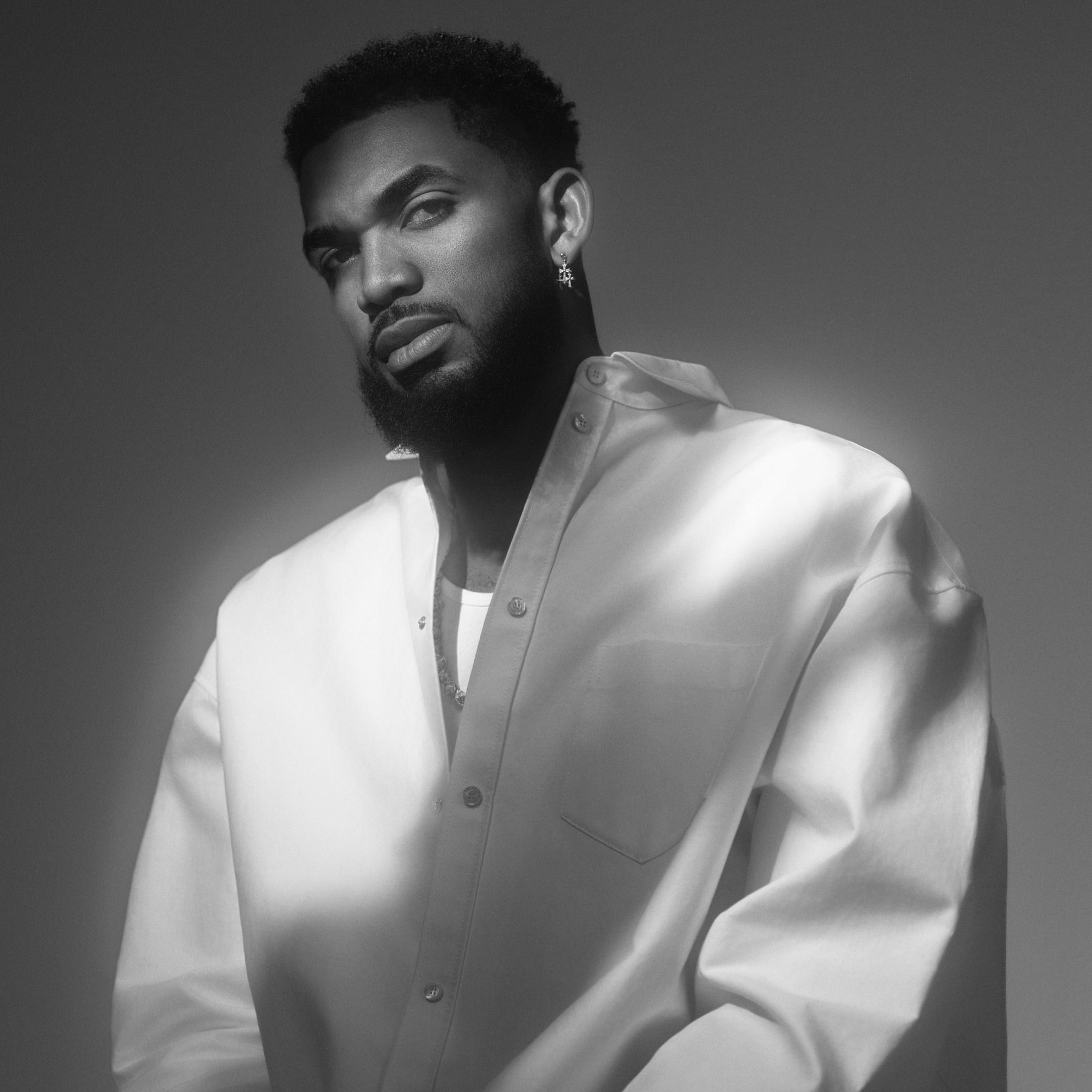
The Interview
Karl-Anthony Towns Knows the Knicks' Win Was Bigger Than Basketball
00:39:24
New York’s star center on playing for his mom, Patrick Ewing. generations of emotional fans — and himself.
Loading summary
Transcript211 lines
- [00:01]
A
This podcast is supported by Her Private Hell, official selection of the 2026 Cannes Film Festival. Her Private Hell is the newest film from Nicholas Winding Refn, director of Drive and the Neon Demon. It has been hailed by critics as a visually striking hypnotic neo noir. Starring Sophie Thatcher and Charles Melton, Her Private Hell is now playing in theaters.
- [00:29]
B
I'm David Marchese, and today I'm talking to N.B. nBA champion Karl Anthony Towns. The seven foot tall center for the New York Knicks helped the team secure its first title in 53 years, lighting up the court, the city and the country, and landing his fiance, Jordan woods bag, which was seen as a lucky charm for the team in the Guggenheim Museum. Townes grew up in New Jersey, so joining The Knicks in 2024 was something of a homecoming. His mother died of complications from COVID in 2020, and he has said her memory fueled him through this year's playoffs. So what's it like making New Yorkers the happiest they've been, maybe ever? Here's my conversation with Karl Anthony Towns. Carl Anthony, thank you for being here.
- [01:20]
C
I appreciate you having me.
- [01:21]
B
You know, even just on the way into the studio, there were people congratulating you, wanting to shake your hand. And when I've been talking to Knicks fans, something people will say is, I can't believe that happened.
- [01:34]
C
Almost like, I still can't believe that happened.
- [01:36]
B
I was going to say, how does it feel to you now? Like, about a month after it happened,
- [01:41]
C
it still is something hard to believe. You know, 53 years, me as a Knicks fan growing up, just seeing the Knicks not be able to win the championship and to be in a Knicks jersey and be the one to do it with the Knicks, it's an honor, It's a blessing. I still can't fathom that we've done it. And I keep now being hearing people call me champ, and I'm like, I don't know why they keep calling me that, but it's something that I've earned and it's something that we've earned and the city's earned and the right to be calling ourselves champions.
- [02:11]
B
All right, I want to do some pure, like, relive the Magic fan service with you right now. So I think game four of the Finals is the game that people are going to.
- [02:20]
C
I don't know what happened that game.
- [02:22]
B
No one knows what happened to that game, but that's the game that people are going to be talking about years from. So first half of that game, you guys are getting your butts kicked, you know, you're down.
- [02:31]
C
I feel like that was all playoffs. It was the whole finals.
- [02:35]
B
But talk to me about what you were thinking and feeling late in the first half when you're down almost 30. Like, I. I know you're gonna say, you know, we just need to hit singles, stay in it. But there was there a moment where like, oh, this is just not our night, or, they're kicking our. Our butts tonight.
- [02:48]
C
I mean, I'll put the words for you. Cause I know you don't wanna say we was getting our ass kicked for sure. You know, they're hitting shots we're not hitting, many shots they're executing at a higher level. We weren't. They were bringing more physicality to the game than us, and we weren't. So we had to take our game to another level and amplify ourselves. And in the face of adversity, we found ourselves finding our best version in the second half. And last year, we had the same situation in Boston, game one and game two, and we found ourselves winning down 20 plus at halftime. I just told the guys and everyone, we have experience coming back from these moments, especially in the playoffs. Just trust our experience, trust each other. And if anything, let's go out there and let's swing for the fences, you know, at least give ourselves a chance, you know, and if not, at least we'll have a different standard walking into the next game. We build off of this game, get ready for Game 5. But this team, man, they're special. Have no. No quit in them. And we went out there in the second half and we found a way to get the job done.
- [03:47]
B
And then when in the second half, do you really think, all right, this might happen? Is it. I think it's early in the fourth. You hit the three falling down.
- [03:55]
C
Oh, yeah, step back.
- [03:56]
B
Yeah, but when did you really start
- [03:58]
C
to think, nah, I'm just playing with you.
- [04:00]
B
Don't even answer that. I know you were trying to get a foul.
- [04:02]
C
Don't answer that, don't answer that, don't answer that. I thought we had a good chance of winning. When I walked in the building, oh, a couple. I felt really good. And I told my wife, I told everybody. I felt really, really good about the game. Obviously, as the first half was going on, I was like, man, maybe I was wrong. First half didn't give me the best feelings. But the second half, I think as soon as we got it into, like, that 15 point range, I felt really good about our team finding a way to win.
- [04:29]
B
And do you feel in that Moment when you're starting to claw back and getting closer, do you feel the spurs tightening up? Like, what is your analysis of what's happening on the other side?
- [04:40]
C
I think, I think sometimes when you're a young team, you look to not lose the game. And we were looking to win the game and that was what made us bring such an aggression to the game. And I think they were trying to protect the lead, you know, and you know, if you looked at our playoff run, you've seen us get a lead and instead of protecting the lead, we're trying to build the lead.
- [05:00]
B
I think there was also one stretch too where maybe they took something like nine three pointers in a row and you feel like maybe, maybe a more mature team takes a different approach.
- [05:08]
C
You know, it's so weird. Cause when you're in the game, that's why a lot of times, I know reporters hate when we say I gotta watch the game to like actually give you an honest answer on the situation. You're asking because in the game I didn't realize, and this is my first time hearing that they took nine threes at one point in the game. I mean, even it was six, seven, eight. We weren't aware of that because we're so locked into the game just trying to find a way to get a stop, go back down the court and make a bucket. You're not really thinking about what type of shots they're shooting. You're just, I just need to get a stop at all costs. Whatever it takes. Whatever threes they hit, they hit two big threes. What? De' Aaron Fox hit a left wing three and then Victor Wamoyama hit a pull up two pointer. They hit some shots at the end, but we did such a great job as a team just sticking with it, finding ways to make that one bucket, get that one stop. And of course the right hand of God came through of OG getting to tip him.
- [06:00]
B
All right, you need to tell me about OG's play. Where are you on the court? What is your sense of I'm right next to him. I was going to dunk it.
- [06:07]
C
Yeah, I was going to dunk it in. I was going to dunk it. I seen OG flying in the sky and I'm like, all right, well if he tries to tip the ball back in and then doesn't it goes long and it goes off the front ring. I'm a dunk it back in. OG made it. It was something special. You know, the play was designed to go to me and then two people guarded me Inbounder and the person defending me. And we finally, we got the ball to jb, and JB took a quick pull up three, and OG who was inbounding the ball, found himself with no one on him, and he crashed to the board and got an offensive rebound, which was the tip in, and found a way to make the bucket, I mean, gonna go down as one of the greatest plays in New York history. One of the greatest plays in NBA Finals history.
- [06:50]
B
And then when you see that ball go through the hoop, what is the feeling that goes through your body at that moment? Or are you even having thoughts?
- [06:57]
C
No, when you see me in the game, you see me telling everybody, it's so loud, I didn't hear the whistle. So I just see people running on the court. So my first reaction is to tell everyone, get off the court right now. And like, let's stay focused on the game. But then I realize I look back and I see the ref grabbing the ball, and I'm like, oh, it's a timeout. I. I see OG And OG Is very, you know, OG how he doesn't
- [07:19]
B
have a lot to everyone.
- [07:19]
C
This is New York Times. That means New York all knows how OG Is. And I just saw him and it was one of those things, you know, you want to hype him up and stuff, but I have such a close friendship with OGs, one of my best friends. I was like, nah, you gonna get a hug for this one. This is a career changing bucket for all of us at one time. And, you know, and he gave us a chance. We still had to get a stop, and he gave us a chance to get that stop blessed and God is good to us. I was able to get a hand on the basketball, too, on the inbound on the next round for Castle.
- [07:50]
B
Did OG Ever have more to say about that play in the locker room? Did he do the same? No, of course no.
- [07:55]
C
OG Went to the locker room. You know, he did the usual. OG has no reaction, no emotion on his face whatsoever. And he was just like, yeah, I guess I made it. I guess. You know, OG OG Is too funny, man.
- [08:07]
B
There's another moment from the series I want to ask you about. I think you had just scored against Wemby, and. And maybe it was a timeout, a TV timeout, and you're coming off the court and, you know, we're not supposed to curse here, but the cameras caught
- [08:20]
C
you saying something like, oh, something like,
- [08:24]
B
he can't fudge with me. Maybe what you said. But did you feel like you had understood something about how to play against him or what was that in response to?
- [08:36]
C
I was just being competitive. It's all respect to the opponents and stuff. I just was being competitive. And I have tremendous confidence in my ability and what I do and the work I put in. So, you know, it was the moment. It's the NBA finals and you're on the biggest stage against one of the best players in the world. And I wanted to prove again after all these years, prove again where I stand in the NBA.
- [08:56]
B
Yeah, because you had to take it a little personally just as a competitor. Right. To hear.
- [09:00]
C
Nah, I mean, I just.
- [09:02]
B
Well, to hear how much people were talking of Wemby before.
- [09:04]
C
I don't. I'm glad he deserves it. He's a generational player. He's seven, five, seven fold, whatever you want to say. He's extremely tall and he's. And he's God gifted with intangibles that none of us were able to get. I mean, I'm 7 foot, thank God, but 74 would have been cool too. And he deserved it. But you know, I've earned my stripes in this league too. And I'm a competitor and I wanted to go against. I always say I want to go out there and play against the best. And I was out there with one of the best. And we just wanted to compete at a high level.
- [09:36]
B
And when you talk about being a competitor, I think you're known for being a nice guy, a sweet guy, even just talking to you now. Like, you smile easily, you have a nice disposition, you're joking around in the green room. But I can imagine that being a professional basketball player pushes you towards a kind of aggression. Aggression or hardness. And is that something that came naturally or did you feel like you had to develop that. That side of who you were?
- [10:02]
C
I was definitely more aggressive when I was younger.
- [10:06]
B
When you were younger, you were more aggressive.
- [10:07]
C
I just had a mean streak to me. Cause I understood what it was to be the young kid playing with the older kids playing basketball. There's no respect given to the young kid, especially to the younger brother. So I had to go earn it. And every day I learned how to earn it. When I was 13, playing U16 basketball, U17 basketball. Going out there and competing against the best of the best at age groups way higher than mine. And you know, when you do, you understand. You know, you gotta bring that kind of aggression to the game. Especially for me at the time, I wasn't physically mature yet to dominate or out physicality these older kids. So you learn how to get crafty with it, you learn how to get a little finesse with the game. And then as I got older, I had the finesse, I learned the physical attributes, you know, to playing against older kids. I actually got my strength, I got my maturity going. So while doing that, I also learned how to maintain and my mom taught me really well how to take that aggression and utilize it to my advantage and also be passionate about the game and how to love playing the game at a highest level.
- [11:12]
B
You spoke very movingly. I think it was after game one, Right. About your mom in an on court interview where, you know, you lost her during COVID and you talked about how, you know, she was kind of there with you.
- [11:25]
C
Yeah.
- [11:25]
B
And it seemed clear that this idea that in a way you were playing for her was motivating. Is that actually what was going on? Like, did you think during the playoffs, like, I am here trying to commemorate my mother in a way? Like, what were you thinking about in terms of her?
- [11:43]
C
For me, I think about the finals and I say, you know, I've dedicated my life to this game. I've dedicated my time with her and precious time. I could have been hanging out with her, enjoying life with her. I spent it in the gym, working on my game, working on my craft, playing basketball games, you know, getting treatment on my body, getting ready for the next game, you know, mentally, not maybe always being 100% present. Cause I'm thinking about that opponent, I'm thinking about that team that has coming up. We got that big game coming up. So I've sacrificed so much for this game. It would be a disservice to her if I didn't try to capitalize on this opportunity as much as possible. So I wanted to make her proud and I wanted to maximize this opportunity because I've worked my whole life for it.
- [12:29]
B
And did you find yourself thinking about her at moments during the games?
- [12:33]
C
I mean, I think about her all the time. It's not just basketball. My life doesn't revolve around basketball. It's just my job. I still have a whole life outside that revolves not around basketball. And I think about her with the basketball in hand and not after you guys won.
- [12:49]
B
Who was most meaningful for you to celebrate with in terms of sort of remembering your mom and.
- [12:56]
C
And remembering my mom, my wife.
- [12:59]
B
Yeah.
- [12:59]
C
You know, being with Jordan, I think was great. You know, the next closest woman in my life was there and able celebrate that moment with me and seeing all the trials and tribulations it took to get there. Trading from Minnesota To New York coming up short last year, this year, all the rumors and everything, trade rumors and stuff, and then to still find yourself in this spot. Winning the championship is a testament to her love. She's given me all and the support she's given me and to my father as well, who has been with me every step of the journey since birth. And it was really special. I think the most meaningful one after I spoke on was Patrick Ewing. Just to see all that, just all that years of misery, and it's just that exhale he had, you know, I could tell he just had the weight of the world on his shoulders. And for finally, for the first time, he could, like, breathe and he could see the end goal for the Knicks. We had talked about this moment since I got here, and I've leaned on his experience, his wisdom, and not only that, he's become a really, really great friend of mine and someone I love to just pick up the phone and just talk with and have a good time. And I know while he may have been disappointed that he was not the one in the jersey bringing it home, he is the Knicks culture. He is the Knicks team. You know, he's the most recognized Knick of all time, and especially in my life that I've been able to recognize and see. So he's played against my dad, too. And just to see that moment happen and to see him finally get that moment to hold the trophy, I knew how much it actually meant to him on the side as well.
- [14:31]
B
What did. What did you guys say to each other after you won?
- [14:33]
C
No, it just simply. It was. This was something that he needed to see in life. And I'm just honored I was able to make it happen and help him help this team make it happen for him.
- [14:44]
B
And I think the way that in press conferences and, you know, in on the court interviews after the games, the way that you're willing to show your emotion and be vulnerable in those moments and be yourself is not something that, I don't know that it's something that we necessarily encourage in professional athletes. Is that something that you consciously decided you were going to be willing to put yourself out there in that way? You just can't be any other way.
- [15:15]
C
I'm just myself, not trying to be anybody. I'm just trying to answer the questions as honestly as I can. And in doing that, I guess my personality shows itself sometimes. And I'm not going to say sorry for any of it, because that's how my mother raised me. She told me to be comfortable in my skin I've always been comfortable in my skin and to never diminish my light and my value to help other people's narratives and opinions get amplified.
- [15:41]
B
Have you learned anything from Jordyn woods about how to be a public figure? Because she's obviously an influencer, an actress. What is she telling you?
- [15:49]
C
It's weird.
- [15:50]
D
It's.
- [15:51]
C
I guess you could say a relationship in Hollywood hasn't lasted as long as ours. Like usual, it doesn't do it. That's just kind of not the norm. And we found ourselves finding each other at the foundational level of just being friends for years. And now we're here with wedding bells incoming soon. So I think for her, she's just taught me so much about. About myself and things I had to work on myself that maybe I wasn't willing to work on or I didn't recognize. And she makes me better all around, you know, and, and. And also just made me better with patients as well.
- [16:24]
B
And her handbag, of course, became sort of like a lucky charm for the team.
- [16:28]
C
The one that won us the chip.
- [16:29]
B
Yeah, even I think it was at the Guggenheim for a little while.
- [16:32]
C
Since it's been out of Guggenheim. It's still there, is it? It's still there.
- [16:36]
B
So do you know where it's going to be? In your house? Do you have a.
- [16:40]
C
This week it'll be leaving the Guggenheim because it's going to Fanatics Fest with Michael Rubin and everybody. So it's going to be really cool to have all the fans and New York fans be able to get close to the bag and see it in the sports environment after that. I think she needs to retire. It's a she. So the bag. Yeah, the bag is a she. So I think she needs to retire. I think she needs to go to our house and just live its days with the sun in his face and just enjoying what it's been able to accomplish.
- [17:06]
B
I also want to ask some questions about the internal dynamics of the team. You know, one of the big changes, obviously, between last year and this year was the coaching change and something that people pointed to in terms of, like, key differences between Tibbs and Mike Brown is, you know, certain flexibility or like Coach Brown's willingness to have back and forth with players or change dynamics.
- [17:30]
C
I mean, both the coaches did an amazing job. One took us to the Eastern Conference finals and we just came up short. The other took the same team that Tibbs did an amazing job with. Was able to watch from afar and see what he could do from his coaching style, his personality, Traits to help us, and we found a way to win a championship. But that's not a testament to Tibbs not being the guy or Tibbs not being good enough. He's always been good enough. He has a championship to show for as well. Tibbs is an amazing coach, an amazing person, too. And, and to see his growth as a person from when I was with him in Minnesota to the, When I got here to the Knicks, has been amazing. And, and it's made us even closer. And man, Tibbs. Tibbs gets a lot of credit for this, man.
- [18:12]
B
But I'm not trying to subtly, you know, throw shade on Coach Tibbs or anything, but just like, from your perspective, what was the biggest change that Coach Brown brought to the team to help you guys get to that next step?
- [18:24]
C
I mean, he just, he, he, he built off of what, you know, on an amazing foundation that Tibbs had set. And then he built off of that and added his own, his own swag and flavor to it. So, you know, I think he did a great job of finding the right combinations that worked. You know, Landry Shammont was huge in the playoffs. And shout out to Ariel Haporti, too, man, he had some big moments when we really, really needed him. And Mitchell Robinson and Jose Alvarado, you know, and you, Mohamed Diawara, all these people had an amazing impact on the game, especially Tyler Kolik during the year when JB got hurt, played some amazing basketball. So I think Mike did a great job of just finding at the right time and the right place where he needed to put, you know, certain players into the game and not put them in the game. Shout out to him. Amazing chess game he played.
- [19:10]
B
And so in the first round of the playoffs, right, you're down 2:1 to the Hawks. And then there is this. It seems like there's this strategic decision made to, to change where you're playing on the court and to run more of the offense through you. You're sort of standing basically at the
- [19:26]
C
top of the, top of the key elbow, top of the key hub.
- [19:29]
B
So just talk to me about from a strategic basketball perspective and then also from a Karl Anthony town psychologically perspective, what was the importance of that change? Like, what did it unlock?
- [19:42]
C
I mean, for us as a team being the hub, it drew out the, you know, their five man or their four man, and it put us in a great spot where the four man, if he was guarding me, was guarding, you know, their five, I would have to guard OG or Josh, which, you know, with that speed advantage and that kind of Advantage. I was able to utilize my passing ability to get guys easy buckets, easy passes, easy plays to be made. Whether it was me getting an assist or me making the pass that led to the assist, you know, it was making it easier on our offense. It took so much pressure off of JB having to dribble, dribble, dribble, and figure out, like, what's going to happen. So. And it put. It made it easier for him to score, you know, less energy expended and gave us more energy to do other things. And for me, as a competitor, as a player, something I asked for all year, you know, and it was finally time to utilize that, that talk. And, you know, my teammates trusted me, Mike trusted me, the coaching staff trusted me. And a vital point of our, of our season, probably the most vital point, and I was, I'm just glad I was able to repay their trust with some amazing games.
- [20:46]
B
So you'd had that idea earlier in the season.
- [20:48]
C
I wanted to, I wanted to maximize what we could do all year. And we've done a great job getting to the point and finally pulling out another chess piece of ours.
- [20:57]
B
And were there other players on other teams who you had seen do something similar? We've seen Jokic since Jokic, right? That's the obvious thing.
- [21:04]
C
Jokic a bunch. And you see Alperence and Goon do it a bunch and Damonta Sabonis as well. So, you know, it's a brand new team, new system. There's a bunch of things we want to try to learn throughout the year. But in learning throughout the year, we were finding ourselves still winning.
- [21:19]
B
Does unlocking that feel like something that you're going to then bring into the upcoming season?
- [21:25]
C
We'll see. We'll see. Opponents will have to see. They'll have to figure it out.
- [21:29]
B
I mean, my, my advice would be do that. It seemed like it worked pretty well.
- [21:35]
C
I think the way we did it this year worked as well.
- [21:37]
B
That's true. After the break, Karl Anthony Towns tells me what it's actually like when an athlete gets traded.
- [21:47]
C
It's just kind of like your world changes, you know, it's not like an away game becomes a home game all of a sudden. And I think, personally, just tough.
- [22:13]
A
This podcast is supported by Her Private Hell, official selection of the 2026 Cannes Film Festival. Her Private Hell is the newest film from Nicholas Winding Refn, director of Drive and the Neon Demon. It has been hailed by critics as a visually striking, hypnotic neo noir. Starring Sophie Thatcher and Charles Melton. Her Private Hell is now Playing in theaters.
- [22:35]
D
New Lancome Absolu Longevity MD Backed by 20 years of research and five patents, the formulas combine Mitopure, the number one selling urolith longevity supplement, with Lancome's exclusive skincare compounds. The collection helps reverse your skin's visible biological age. It's designed and clinically measured to work on two the visible signs of aging, like elasticity and the look of fine lines and the invisible ones, like the rate of surface cell renewal happening within the skin. Start your visible biological age reversal@lancome.com LongevityMD this message is brought to you by AppleCard. AppleCard puts the power of titanium in the palm of your hand. What does that mean? It means the power to earn unlimited daily cash back on your purchases every day. It means a materially different credit card accepted anywhere in the world. MasterCard is accepted. Ditch the plastic, upgrade to titanium. Apply in the wallet app on iPhone today, subject to credit approval, Apple card is issued by Goldman Sachs Bank USA Salt Lake City Branch terms and more at applecard.com,
- [23:46]
B
Obviously as a professional player, you can only control what you can control, but you had the experience in Minnesota of playing with the same team for. You were there nine years.
- [23:57]
C
I was there nine years.
- [23:58]
B
And then getting traded. And I think, you know, lots of people in life, you know, we can't necessarily control every aspect of our jobs, but the idea of somebody just, you know, tapping you on the shoulder one day and saying, hey, you're. You gotta go work in some other city. It's not your choice. Yeah, that's kind of a wild thing. I know what is most challenging about that experience of just being waking up one day and having somebody say, hey, you don't work here, you work there.
- [24:22]
C
It's just kind of like your world changes, you know, it's not like an away game becomes a home game all of a sudden. And I think personally, just tough, you know, you're living a whole different lifestyle. You go from living in a big house and having, you know, six, seven, six years dedicated in the house. Built a life there, you know, every little things that, you know, this whole house like the back of your hand. And then all of a sudden you're getting traded and you're in an apartment, much less space, you know, gotta adjust. You're in a city now. You're not in the outskirts in a suburban town, you know, so it's totally different and a different way of living, too. But this is the life we chose and there ain't no crying at all about it. I'm super honored that I was able to. You know, getting traded, it sucks. It's never good. But to get traded back home to a team I rooted for my whole entire life. And when I was younger and for a team that gave my father his only chance in the NBA, I mean, couldn't have went to a better situation for me and my family. So it's a big honor. And on top of that, Jordan always wanted to live in New York and she loves New York. Before we got traded here. So the wife was happy, the family was happy, I was happy. It's a great situation.
- [25:37]
B
So when you get the call that you're traded.
- [25:39]
C
I didn't get a call. I got told.
- [25:41]
B
You got told? So when you get.
- [25:42]
C
I got told.
- [25:44]
B
So when you get told that you're traded, what's the first call that you have to. Are you like, oh, I gotta call a mover? Do you think I gotta call my family? What's the very first thing?
- [25:54]
C
I remember having to call Jordan in Paris and she was having a good time and I said, no, take me off speaker right now.
- [26:00]
B
Oh, no.
- [26:01]
C
I think that was one of the first calls I made. And then second was I didn't have to call my dad. He was there, he heard the news. I said, I heard it too. And he was shocked. And I was shocked. And second was calling my agent and having that conversation about what I was just told because even she didn't know at the time.
- [26:21]
B
Did Kevin Garnett talk to you after you were traded?
- [26:24]
C
I talked to KG all the time. That's my vet, that's my mentor. So we've been talked a bunch.
- [26:28]
B
Yeah, I interviewed him a few years ago.
- [26:30]
C
You did?
- [26:30]
B
Yeah, yeah. And just his intensity. Did you just.
- [26:33]
C
In conversation, did you hear the word Lord a lot or.
- [26:34]
B
No, I heard some other words that I'm not allowed to say. Setting. But he was sort of a mentor to you.
- [26:42]
C
Yeah, he was.
- [26:43]
B
Can you talk about some of the advice that he gave?
- [26:44]
C
Yeah, I mean, just, just in.
- [26:46]
B
In family friendly language.
- [26:48]
C
Well, I can't speak then. I'm just playing with you. I think he was so big about routine.
- [26:54]
B
Yeah.
- [26:55]
C
And I was already huge about a routine. Like routine was everything to me. So me and him got along so well about that because our routines, we're syncing with each other, like coming in to lift, coming, going to sauna, getting a workout in on the court, you know, it was kind of. We were kind of like, you know, I was the young. I was the young fella and he was My og, he was my vet. So I was just under his wing, just learning how he became a hall of Famer, one of the best forwards of the game ever. And taking those lessons and those teachings, especially the fundamental aspect that he was so big about, just taking that in my every. Not only in basketball, but my everyday life and just about, you know, getting the fundamentals right.
- [27:34]
B
He must have given you a hard time about defense, though, right?
- [27:37]
C
I mean, I was guarding him well when he was there, but he's just. He's a competitor. And, you know, me and him are really fierce competitors. So we don't like losing or even having giving opponents a chance to win. So we had a bunch of fun and practices and just, I guess you want to say talking smack to each other a lot. It was fun.
- [27:59]
B
Wait, but Karl Anthony. I want to say this with love. Okay? I'm saying this with love. Sometimes, and this is the reason I bring up the defense thing. Sometimes I'm watching you on defense and you do those, like, 30 foot away from the basket fouls. I think you're always, like, near the top of the league leader for fouls per game every year.
- [28:18]
C
That means I'm being physical.
- [28:19]
B
But it's just so different than your offensive game, which to me always feels like so finesse. Yeah, finesse, controlled, precise.
- [28:28]
C
It's all. It's all reaction.
- [28:30]
B
So explain to me the decision, boy.
- [28:32]
C
Like Kyrie. It's all reaction.
- [28:34]
B
So you're just swiping.
- [28:35]
C
I'm reacting a lot. Oh, and offense on defense, I mean, I'm getting a lot of steals. I get a lot force. It gets a lot of defense. What were we in defense this year?
- [28:44]
B
What's that?
- [28:44]
C
We were like a top three defense this year.
- [28:46]
B
Yeah.
- [28:46]
C
There you go.
- [28:47]
B
Yeah.
- [28:47]
C
Yeah.
- [28:48]
B
So you think you're just getting.
- [28:49]
C
And what's. And what's.
- [28:50]
A
Number.
- [28:50]
C
Number one thing done in NBA right now? What probably isos and what P&Rs pick and rolls. So I'm involved in all of them. So we did pretty damn good job at it this year.
- [29:00]
B
All right. All right. That's my one constructive criticism. Less reaching.
- [29:04]
C
Less reaching.
- [29:05]
B
Less reaching.
- [29:06]
C
No one said that. You've never been sold in the playoffs.
- [29:10]
B
When he was working, my wife, she was watching a lot of the games with me, and she said she would watch you do interviews and then watch Jalen Brunson do interviews.
- [29:19]
C
Oh, we're totally different.
- [29:19]
B
And she said Jalen's the dad of the tee and Kat is like the mom of the.
- [29:25]
C
That's funny. Actually, that's Actually pretty cool. I never heard of it like that.
- [29:28]
B
Yeah, like, you're sort of more openly emotional, a little bit more expressive. He's kind of more buttoned down.
- [29:33]
C
Yeah, yeah, yeah.
- [29:34]
B
Is that how it plays out?
- [29:37]
C
I've never heard of it like that. That's intriguing. I'm gonna say that to jb. That's actually pretty funny.
- [29:41]
B
Does that seem accurate? What do you think of that description?
- [29:46]
C
I don't think it's too far off. I don't think it's too far off. I mean, I think in a way, aren't we both like, our parents? In a way, I feel like he gives more of, like, Rick energy and I give more of, like, Jacqueline energy, you know, and that's beautiful. That shows great parenting too, you know, and that shows our parents have gotten us to this point. So shout out to, you know, Rick and JB's mom, and shout out to my mom and my dad for getting it done for us and leading us. To be one, men that people respect is the most important thing as a parent. You want to have kids that people respect more than anything. And two, you know, know, giving us, I guess you could say those personalities has gotten us this far.
- [30:27]
B
And your dad coached you a little bit, right?
- [30:29]
C
He did.
- [30:30]
B
Was there ever any question that he
- [30:32]
C
was better than me? Oh, my bad, my bad, my bad.
- [30:36]
B
We know the answer was there.
- [30:38]
C
He knows the answer.
- [30:39]
B
Was there ever any question in your mind about whether you wanted to be a professional basketball player? Was that? No. So from as young as you could
- [30:48]
C
remember, that was really, really good at basketball. It was natural.
- [30:51]
B
But is it what you wanted to do?
- [30:52]
C
No, I wanted to be an MLB player. I wanted to play Yankees. I wanted to put the pinstripes on and the true Dominican in me. And I wanted to be like Robinson Cano. I wanted to be like Alex Rodriguez. I wanted to be like the great Yankees, you know, for me too. Albert Pujols and these great Dominican players have come before me, and I just. It just wasn't in my cards. At one point, I made the last minute decision when I was really looking to take this professionally. I wanted to go back to basketball, and I've been playing basketball my whole life, and I went back to basketball and got back on the scene and never looked back since.
- [31:32]
B
And what was the inflection point there? Like, why did you make the decision, not baseball?
- [31:37]
C
Honestly, it was my childhood friends. Oh, it really was my childhood friends Vic Singh and Greg Davis back from Piscataway. They just was like, we miss playing with you, man, you haven't been around. You know, I know you're playing a bunch of au baseball and travel baseball and stuff. And I know you said you quit basketball, but, like, you don't have to play, like, full time. Like. And I'm always a person. Like, I. I get obsessive. Like, if I give my attention to something, I want to go 110% at it and be the best of the best at it. So they asked me to do it, and they kept. You know, we went to the park one day playing basketball in Jersey, and they park and Piscataway, and I just was like, you know what? I do miss hanging out with y' all playing basketball a little bit. I'll come just to play one tournament and play. And so they brought me back to basketball. And it's funny now that I. Greg was with me on the court at San Antonio after Game 5 with the Finals trophies and everything, and Vic is still one of my closest friends. Like, those are, like, my brothers, and they've been to my games. And it's really crazy that now they're seeing me in these NBA games. And before I told them I never even wanted to touch basketball again.
- [32:41]
B
And so when you do finally get to the league, is there a game or a moment or a play where you really think I belong here?
- [32:52]
C
I'll tell you, I actually wasn't even in the league. I remember when I played before my freshman year, I played Team USA with Kobe and LeBron, a Dream Team V2. And I remember it was a big game, and everyone was telling Dominican Republic versus Team usa And I understood the situation and got myself a nice little supercut cut across the street before going to Thomas and Mack. And I got the job done. And when I was out there, I felt like I could be in the NBA. I could belong. And I knew I had more years to go, and I had to still grow as a player, physically, mentally, but to already go out there and feel very confident and feel good about my game already there. And I said, man, the league's in trouble. In a couple years, when I get even more figured out and right, I'm gonna be a problem. And I damn sure it became a problem.
- [33:46]
B
Let me ask you some league questions. Okay. You know the east this year, right? Giannis went to the Heat. Kawhi looks like he's gonna go to the Raptors. I know it's a little up in the air right now. Jaylen Brown went to the Sixers. Who are you most worried about?
- [34:02]
C
The Knicks. That's all I need to worry about.
- [34:06]
B
Do you get why Jaylen Brown is now on the Sixers of all the teams, for him to end up on the fact they trade him to, like, one of their biggest rivals.
- [34:14]
C
Pretty fun. It's pretty fun. I mean, like I said, control the controllables. If I worried about all the uncontrollables in my life and professionally, I'd be lost in the sauce.
- [34:25]
B
But, of course, your buddy Mitch Robinson now on the Celtics.
- [34:28]
D
That's tough.
- [34:28]
C
That was a tough one.
- [34:29]
B
I have two questions about that in good conscience. Could the team do hackamich if you were playing the Celtics? That'd be heartbreaking if you guys did that.
- [34:40]
C
I don't know how that. I don't even know if I could look at Mitch with a Celtics jersey on after everything. So I don't even know. I don't even know if I could. I'll just have to start laughing at Mitch when we see each other. He owes me a pickup truck. Now. I'm talking about that.
- [34:54]
B
For what?
- [34:55]
C
I don't know. I just want a pickup truck.
- [34:57]
B
You just say to him, you owe me a pickup truck.
- [34:59]
C
You owe me a pick a truck.
- [35:02]
B
But, you know, watching him shoot free throws, as a fan, is the most, like, emotional rollercoaster experience. Because you just want to.
- [35:09]
C
It's emotional rollercoaster watching a man shoot free throws.
- [35:11]
B
Oh, it is. Because you want him to succeed so badly.
- [35:14]
C
That's not like walking up to a woman at a bar and saying, all she could say worse is, no, that's
- [35:20]
B
easier than watching shoot free throws. Cause, you know, it's like, you know, he struggles with the free throws. You want him to shoot them so well, and then it ends up still being a struggle. What is the experience for the teammates when you're watching Mitch go through?
- [35:36]
C
Oh, we love it. We love going to see him shoot free throws.
- [35:38]
B
What do you love about it?
- [35:40]
C
Just one, it gets a foul, puts us closer to the bonus. It gets closer for me. For all of us. Like, whatever. It's me, Jalen, anybody. We get closer to getting that foul, getting to the free throw line. Two, Every time it happens, it gives us breaks. It gives us a break to kind of think about what we want to do next. And three, we believe in Mitch. Like I said, we believe everyone on that team, one through 15. We know we see each other, get to put the work in and everything. So when he goes up there, we're excited because we can't wait to talk junk when he makes it. So we're Always excited when we get to see Mitch go up there.
- [36:15]
B
You know, we're almost at the end of our time, but, you know, when you leave the building, you're gonna have a similar experience.
- [36:22]
C
They know I'm here. They know I'm here.
- [36:23]
B
When you came up.
- [36:24]
A
What an honor.
- [36:25]
B
Just be able to represent joy for people in the city of New York seems like such a privilege. And it's gonna be that way for the rest of your time on the Knicks, probably for the rest of your life. When you're in the city.
- [36:35]
C
For the rest of our lives.
- [36:36]
B
Talk about what that means to you.
- [36:38]
C
Yeah, I talked about it after the game. If we're talking about the impact of this win, you talking about I leave, and everyone congratulates and says champ. The word champ, which is still crazy. We started this interview talking about how surreal it still is to have a championship, to bring so much joy to families for them. Especially those families that have previous generations of Knicks fans who have been just begging for a chance to be in the NBA Finals, let alone winning the NBA Finals after 53 years. And then last time being 27 years ago against the spurs, too. Ironically, I feel like a Love island character getting back my phone after the playoffs and seeing these reels and these videos and these Instagram posts about the. The grandfather celebrating it with his son's kid and passing that kind of Knicks fandom down to the kid or the father who grew up watching The Disappointment of 1999, or Families and those people who have those lost loved ones and going to the cemetery to celebrate the Knicks win with them. And I know how special it is because I saw people in Brooklyn sharing, and they got their own NBA team, so that's kind of crazy to do, but it just shows, you know, New York's so unified with each other when you give them something to be unified for and for us to reach the mountaintop and give so many people something to cheer for and so many people to have hope for, because inspiring hope is one of the hardest things to do. And for us to be able to do that is something truly special.
- [38:13]
B
So just the last question. The margins in professional sports between winning
- [38:18]
C
and losing are very slim.
- [38:19]
B
So slim.
- [38:20]
C
You know, it's like one small decision changes everything.
- [38:23]
B
One small decision changes everything. Last year, you know, you guys are up big against the Pacers in the fourth quarter. They pull off a comeback against you. This year, OG tips it a shot that if he missed that 999 times out of a thousand, I am dunking that. I know you were saying you would have dunked it, but, you know, it's.
- [38:41]
C
I'm dunking. I'm telling you, I'm dunking it in.
- [38:44]
B
But it's. You know, no one would have blamed him if he missed that. That was sort of a miraculous shot. Yeah, of course. And then just the level of intensity and focus that it takes, and it seems almost unbelievable that you can win once. Does it then seem even more daunting to try to win another one, to have to think, can we come back and win it again back to back?
- [39:05]
C
Well, my competitive spirit says, you know, that's what we're planning to do. And now, you know, I know we were always the underdogs. In every series, we gotta be ready to always be looked at as the favorites, and that's not something we like a lot. So we're gonna have to go out there and continue to have that underdog mentality, that mindset, and just, we're gonna have to be even a better version of ourselves. Even though a lot of y' all say we were one of the best ever in the playoffs, we gotta find another level because people are gonna be ready for us this year, and they're not gonna get caught slipping anymore, so.
- [39:37]
B
All right, I'm gonna say it back to back. We're going back to back.
- [39:40]
C
I ain't gonna say that. I'm gonna say we're gonna do our best.
- [39:42]
B
All right. Thanks, champ. That's Karl Anthony Townes. To watch this interview and many others, you can subscribe to our YouTube channel@YouTube.com betheinterview podcast.
- [40:03]
A
This conversation was produced by Seth Kelly.
- [40:06]
B
It was edited by John Woo, mixing by Sophia Landman, original music by Dan Powell, Rowan Nimisto, and Marion Lozano. Photography by Devin Yalkin. The rest of the team is Priya, Matthew Wyatt, Orme, Paola Neudorf, Joe, Bill Munoz, Eddie Costas, Jeremy Rocklin, Kathleen o',
- [40:25]
A
Brien, and Brooke Minters.
- [40:27]
B
Our executive producer is Allison Benedikt. Next week, we're off. Then in two weeks, we'll share my interview with Billy Strings, who's currently filling
- [40:36]
A
arenas playing traditional bluegrass music.
- [40:38]
C
There's this little devil on my shoulder
- [40:40]
B
that tells me I don't deserve any of this and thinks that I should
- [40:45]
A
be in some little trailer somewhere addicted
- [40:47]
C
to drugs or something and not a penny to my name. So it does feel like I'm kind
- [40:52]
B
of playing for my survival a lot. I'm David Marchese, and this is the interview from the New York. Gun. Injuries are the leading cause of death for children and teens in the United States. Some people avoid talking about gun violence because they don't think they can make a difference. But every conversation matters. When it comes to gun violence, we agree on more than we think, and having productive conversations about gun violence can help protect children and teens. Learn how to have the conversation@agreetoagree.org, brought to you by the Ad Council.