← The Interview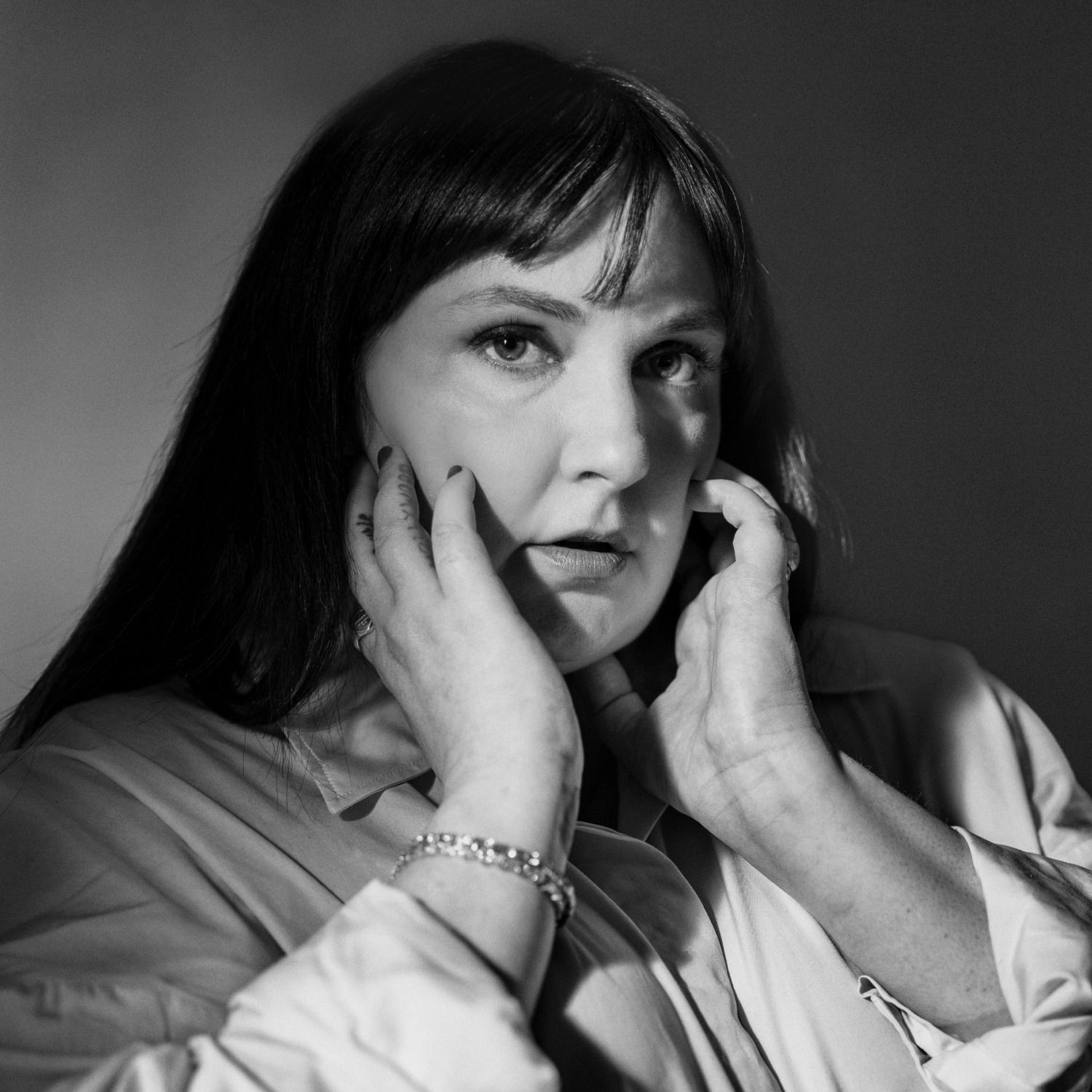
The Interview
Lena Dunham Is Still Trying to Figure Out Why People Hated Her So Much
01:03:35
The writer, actor and lightning rod is not done sharing yet.
Loading summary
Transcript166 lines
- [00:00]
Advertisement/Commercial Voice
If you, your parent or spouse served in the military, you could join our family. Our members saved an average of $70 a month on auto insurance when they switched. Tap the banner or visit usaa.com join today to check your eligibility restrictions apply.
- [00:21]
David Marchese
From the New York Times, this is the interview. I'm David Marchese. There are very few celebrity memoirs I've been more eager to read than Lena Dunham's fame Sick. That's partly because she's such a sharp, funny writer. It's also partly because her HBO show Girls was a true generational touchstone. But a bigger part of it is because I knew she'd have smart things to say about what exactly she represented to people back in the 2010s. Dunham, if you'll remember, was a lightning rod for so much discourse. Her show was divisive and buzzy, sure, but probably not as much as she was during the days of Girls, which Dunham created when she was only 24. She was scolded for being, unselfaware, an oversharer, privileged, not attractive enough, self absorbed, you name it. Now she did, and she'll admit this, have an unfortunate knack for putting her foot in her mouth. But there was something about the intensity of the reaction to her that in retrospect seems awfully disproportionate. As she reveals in the new book, things were just as turbulent behind the scenes. In addition to writing about her toxic relationship with fame, Dunham tells in detail how she was concurrently dealing with drug abuse, dysfunctional sexual relationships and chronic illness. It's a lot. And now at nearly 40, she's ready to talk about it all. Here's my conversation with Lena Dunham.
- [01:54]
Lena Dunham
Thank you so much.
- [01:55]
David Marchese
I like your.
- [01:56]
Lena Dunham
Oh, thank you. I'm a bunny owner, so it's nice.
- [01:59]
David Marchese
Oh, you have bunnies.
- [02:00]
Lena Dunham
Oh, yeah. In my apartment. Free roaming bunnies.
- [02:02]
David Marchese
Yeah.
- [02:03]
Lena Dunham
I feel deeply connected to rabbits. They're the most, they have the most highly, like wound up nervous system of any animal. And their nervous system is like their superpower and their curse. And I love that about them. And when a rabbit relaxes, it's a huge compliment because they don't do it in nature. It's like completely.
- [02:23]
David Marchese
The ears are always straight up, right? Yeah, yeah.
- [02:26]
Lena Dunham
Unless they've been bred to flop. But like, if a rabbit relaxes around you, you're like, I have achieved a feat because in nature this rabbit would be ready to run at all times.
- [02:36]
David Marchese
Yeah. You know, we were just making small talk here and talking so nicely out in the hall and Now I just have a bunch of incredibly heavy questions to ask.
- [02:44]
Lena Dunham
I can't wait. I can't wait. You said that? And I was like, yeah, that seems right.
- [02:48]
David Marchese
Yeah. Who. Whose name are you most anxious about popping up in your inbox and saying they've read the book? Whew.
- [02:56]
Lena Dunham
I mean, anytime you get feedback from someone you've written about that you love or have loved, who isn't in your life anymore, that's always a stressful name. But honestly, like having my parents read it, when was the most anxiety producing part of the process? Because I knew they were both going to fact check, look at it in a sort of like macro career arc way because their artists were also looking at it in a protective parents way while also looking at it at their own depiction and like wading through all of that. So I feel like my parents, when they popped up in my inbox, they. That was a curl up day.
- [03:42]
David Marchese
And what was their response?
- [03:44]
Lena Dunham
My father said one of the most amazing things, which is, he said, it's hard for me to understand why anyone would want to publish a book such as this and the such as this. And he said, it's beautifully written. I'm very proud of you. Some people are going to really understand it, connect to it and feel it's for them. And some people are going to say, why won't she shut the fuck up already? And I thought that was like a pretty accurate assessment of the options. And I liked that just on the
- [04:15]
David Marchese
idea that some people will read it and understand it. You know, there's so much in the book about addiction, you know, traumatic physical things that have happened to you, chronic illness, you know, career ups and downs, personal relationships coming together and falling apart. And you're sort of amazingly candid about this stuff. And it's coming from someone who I think has often been misunderstood. Do you have a hope that in publishing the book you will be better understood by the public?
- [04:58]
Lena Dunham
That's a really good question. And one of the reasons I took so long to write the book was, was it was really important to me that I not put it out from a place of saying, like, here's a referendum on how I feel that I have been perceived because I. I feel like every two years they publish a new article about a woman and they're like, blank is finally telling all. Beep is finally herself, ABC in her own words. And it's like, let's. In a lot of ways, I think it's about keeping a career arc alive. And I wanted to make sure that in Publishing the book that I knew what my own aims were. And I don't like revenge writing. I don't like writing that's like, here I am. Kiss my ass. Like, it's. It was really like, hopefully, I know there are other people who will understand this. And more than ever before, I feel that I'm at peace with the fact that there are people who will never understand and they don't need to.
- [06:01]
David Marchese
Right at the beginning of the book, you write about your name, Lena Dunham, and how you felt like your name almost started. And this is for you, not even for other people. Your name for you started to carry negative connotations. Like, I think you say it almost was like a. Sounded like a joke that kind of felt like a slur or something. So what did your name represent, do you think?
- [06:24]
Lena Dunham
Well, it became synonymous. Like, there was a period of time where I would be watching just like a show I enjoyed and then I would hear my own name and it would take me like three minutes to realize that there had been a joke that was synonymous with whether it was like myopic millennial thinking or hapless feminism or man hating or like liberal twit dumb or, you know, it's a long list of. It's a long list. And like there were the people who maybe shared my politics and shared my lifestyle but were irritated that I was talking. But suddenly I was like, it meant one thing to people who did connect me. It meant something to. It had a meaning in sort of an. I mean, I was very early. I had an early experience of the alt right Internet that I think was very specific. And then it also meant something different to people who were just like turning it into a sassy punchline. But I didn't feel. I remember there was a day, and this is not in the book, where I was going to vote with my father. And I'd been on the. I'd been campaigning for Obama. It was 2012. And I remember he said, like, I don't know, maybe you should just go. I don't know if I want to go vote with like Lena Dunham. And I was like, my father feels like going to vote with me is going to like signal something when he just is like a WASPy man who wants to get in and get out.
- [07:49]
David Marchese
Right? And it's not like, ugh, voting.
- [07:51]
Lena Dunham
Yes. Like, he's like, I don't wanna go and have it be like a whole thing where we're voting together and that.
- [07:56]
David Marchese
It's crazy.
- [07:57]
Lena Dunham
Yeah, it's crazy. That's Your father, so who's like my best friend in the world. But he was saying basically, can you just go around the block and vote on your own? And that was the moment when I kind of understood something's gonna. Cause the show had only been on the air for six months at that point.
- [08:13]
David Marchese
And I mean, with the benefit of hindsight, what do you think the intensity of the loathing, which seems so disproportionate, like you were a person that had a TV show, you know, it's crazy. And you know, the HBO numbers are not network sitcom numbers.
- [08:32]
Lena Dunham
That show was watched by like less than a million people a week.
- [08:35]
David Marchese
So what do you think the depth of that negative feeling was really about?
- [08:42]
Lena Dunham
I mean, I'd be lying if I didn't say I haven't spent time thinking about this. Because you have to. It's. You can't. It can't be avoided. I'm gonna say something that's going to sound like a cop out, but I can only phrase it this way. I have annoyed people since I was so small. Like I was an annoying kid. It was truly at school, like I was a try hard. I was loud, I was. Didn't always know how to operate in like. I didn't always know how to like move through space with other kids in a way that wasn't a little bit off or disruptive. And one, I remember one of my friends being like, but you've annoyed everybody since preschool. Like what's good? But I also. That's coupled with. There was the intense rage about the female sexuality on the show. There was the intense rage about my body, which is so crazy to look back on now. Cause I was this little slip of a 26 year old. And had I known my own powers, I would have behaved very differently. And then I would be lying if I didn't say that. My own way of moving, whether it was through media or how I myself online or even in my writing, didn't quell it. And then of course, as detailed in the book, like my. All of that had an effect on my health, my mental health, which then began to deteriorate, which was a secret I was trying to keep. And those secrets are hard to keep.
- [10:19]
David Marchese
A second ago you were saying, you know, you're. When you were 26 and just a slip of a person, if you had known your power, you would have behaved differently. What did you mean by that?
- [10:30]
Lena Dunham
Great zeroing in, David. I guess what I'm saying is that I thought I was the most. The feedback that I got, which Was like, this is the most ungainly thing. This person is an eyesore. Like, that's how I perceived myself. The show was about somebody who had a negative self perception and made romantic and platonic choices that reflected that. And I guess something that is, Listen, would that we could all do our youth over, but now that I'm gonna be 40 years old, it's like looking back, I looked at a lot of photos and diaries and moments to put the book together and I felt sad that that person didn't have a sense that she. Not even just about being normatively beautiful. Although, like the I. Although the way that I was spoken about, I mean, that's what so many women's bodies look like. That's not what my body looks like anymore, but it was, I was like full of light. And it's interesting, as I looked at the photos over the course of the show, I could see it's such a cliche, but it was like the lights just went out.
- [11:40]
David Marchese
It's clear from the book. And even just, you know, thinking back to how sometimes you would respond to critics online, you know, you, you were pretty aware of the negativity that was sort of circling around you all the time online specifically. And I'm wondering if, if you can talk about like what the lure of engaging with that negativity was because. And maybe it's a naive thing to say. I. I kind of wonder like, well, why didn't you just not go on the Internet?
- [12:12]
Lena Dunham
You're right. And I remember my parents used to say, that doesn't exist if you just shut your phone. It doesn't exist. And I was very like, you guys don't understand. This is a different world. You check your email once a week. But they were right. I think one of the many contradictions of my life is that I like to express myself in totality. I like to maybe make things that I never thought of anything that I made as controversial. But I also, like, I grew up in the New York art world. Like I grew up going to see like Vito Acconci do Seed Bed. Like I wasn't having an experience of any kind of moralism. In fact, the opposite. The idea was like, if you say it's art, it's art. And art is designed to like stretch the human capacity for understanding. And so I never thought of anything I did as controversial. And then my feeling was, well, yeah, I like to make whatever I want, but then I don't want anyone to ever be upset with me. And so when it came, I think that what it seemed like at the time was that again, that I was always trying to explain myself to people, not really realizing that actually it was cyclical.
- [13:28]
David Marchese
And what do you think it is about either you or people that the negative stuff, even in the face of so much positive affirmation you were getting, is what sort of sticks with you because the other, you know, you were getting all this negative shit all the time. But also you were in mid-20s, had like a very buzzy, popular show, probably a lot of opportunities.
- [13:57]
Lena Dunham
Yeah, I was making good money rewarded for what I did. You.
- [14:01]
David Marchese
Why, why doesn't. Why didn't that part of it seem to stick?
- [14:04]
Lena Dunham
A really great question. And I think it's a human nature question because, you know, one friend of mine who read the book was like, you know, you reflect so much on the relationships that were painful, but like, where are all the people that loved you and supported you and took care of you? And I hope that, I mean, they're all in the acknowledgments. But I was born with such a healthy dose of guilt, shame and self hatred, which is in direct contrast to my almost pathological need to continuously express myself. And that is like the. Those things are dancing all the time.
- [14:43]
David Marchese
You think you were born with a self hatred.
- [14:47]
Lena Dunham
I mean, not to get too woo woo, but sometimes I feel like we just are. Like there's so much just ancient generational
- [14:56]
David Marchese
stuff like Shirley MacLaine style or.
- [14:58]
Lena Dunham
No, I'm not gonna go as far. Although I respect Shirley MacLaine's work as. And I.
- [15:03]
David Marchese
Who wouldn't?
- [15:03]
Lena Dunham
Yeah, and I'm not against going there, but. And you know, who hasn't tried past life regression once if they're going through something? But I guess, you know, there's this like pride mixed with this incredible desire to like self immolate and self erase. And I don't ever remember not having it. So that makes me feel like it. And I don't look at my parents and go, you guys did this to me. So that makes it a little bit of an existential mystery.
- [15:32]
David Marchese
Yeah, I have some questions that relate to that, but I'm gonna. Because I have a theory about this existential mystery for you, but I'm gonna save it. I'm save it.
- [15:42]
Lena Dunham
If David Marchese can explain me to me, it would be. It would help me a lot and save me a lot of money.
- [15:49]
David Marchese
Well, you can make the check out to cash in this.
- [15:51]
Lena Dunham
Okay, great.
- [15:52]
David Marchese
But before that, you were living through this period where there was all this kind of distracting and Painful noise in the outside world. And you were having complicated relationships with the people you were working with, and on top of that, you were feeling unwell, you were ill. How did your health affect your relationships with the people around you?
- [16:24]
Lena Dunham
One of the reasons the book is called Famesick is because the two most corrosive forces in my relationships were celebrity, how it perverted the space around old relationships, how it colored my ability to understand new relationships and whether they were authentic. And illness, because illness, like fame, can make you zero in and contract into self. Because, like, pain, physical pain is, like, one of the most selfish feelings that exists, because all you want is to be out of it. And then also illness is really scary to people, so they want a narrative in which you. It happened. You had a cold for three days, you recovered, you got appendicitis. They took it out. And the relentlessness of it and the fact that it was like. I was like, okay, I got a surgery. I'm gonna be better. And then three months later, something. And I didn't have a sense of, like, medical misogyny. I didn't have a sense of the. I was raised to be like, I'm a good Jewish girl. And what doctors tell me, I listen to and to assume that they were right. And the. And somehow my health picture kept getting less clear, not more clear, which also makes it very. I understand, very hard for other people to empathize with, because it seems abstract, amorphous, like, they lose sympathy or think
- [17:52]
David Marchese
you're making it up.
- [17:53]
Lena Dunham
Yeah. And also, we live in a society where the highest value for people is, like, movie sets. People come, they're like, I slept two hours. I drank a coffee. I said, bye to my wife. I'm back. Like, they treat it like an extreme sport. And the highest value is just to be able to go and go and go. And it took me a really long time to understand that wasn't, like, my only value. That actually I could have a fragile body and a strong mind and have a lot to offer without, like, betraying my own physical self over and over and over again. But it's still a dance all the time.
- [18:33]
David Marchese
You also, in addition to being chronically ill, you had multiple traumatic bodily experiences, which I'm really sorry that you went through. Thank you. But you write about being a child and a babysitter molesting you. You write about abusive sexual relationships.
- [18:56]
Lena Dunham
Yeah.
- [18:57]
David Marchese
And so I'm like, yeah, so how did. And so all those experiences, you know, what's the. You know, I haven't. Didn't coin this phrase, but the body keeps the score. All those experiences with your body had sort of a myriad emotional ripples.
- [19:19]
Lena Dunham
Yeah.
- [19:19]
David Marchese
So how did your sense of your body affect your own sense of self?
- [19:28]
Lena Dunham
It's really interesting. I mean, I have a whole sort of theory of the case about illness that would take a long time. I was never a healthy kid. And often that was perceived as, you know, she just wants to lie in her bed. Like, I really was always fighting against, like, laziness label. Like, I was like, I will prove to you that is not what I am, even if my body is a little floppy. Those experiences that you describe created a distance between myself and my body that then made it hard to identify quickly. It made it easy to separate myself from pain and to keep moving. But it made it hard to tune into my own body and identify what was happening to me physically. There's a book about eds, about Ehler Danlos Syndrome, my sort of kind of, like, overriding diagnosis, which is called the Body is a Doorway by Sophie Strand. And she said this thing, which I couldn't believe someone else was saying it, but she said, I always felt like I was a balloon floating above my body. And I had said that countless times and had no idea that anybody else in the world experienced that. And then what was. You know, I once had a really interesting conversation with Gabor Mate, who's amazing thinker. He was interviewing me for a book that he wrote about the sort of intersection between illness, addiction, and trauma. And he has, like, some of the most developed, I think, thoughts about that of anyone working. And I asked him this question. I said, like, why? I understand it happening once when I'm a little kid. Why does this keep happening to me?
- [21:24]
David Marchese
What is the this?
- [21:26]
Lena Dunham
The this is finding myself in situations where I am suddenly not in control of what is happening to my body. Another person is making the decisions. And he said, lena, it's like, once you have that experience as a kid, it's like the weak wolf that gets picked off the pack. Like, someone who is looking for that sees you. And it wasn't shaming. It was so beautifully put, which is like, these experiences build up in you. You develop more distance from your body. People who want to cross boundaries are able to identify that you are someone who might not know how to deflect that. And because before, it felt like this, like, Series of unfortunate Lemony Snickets, Series of Unfortunate Events. And I needed some, like, I needed some cohesion, and I needed some narrative cohesion to understand why there was this, like, consistent Pattern of feeling at least violated. And that was really soothing to me. And then once you get sick, especially gynecological illness, which is still not like the most beloved topic in American culture, we might say your feeling of yourself as a vital young person is extremely diminished and your feeling of yourself as like a viable partner is extremely diminished. And it is also a crazy hormonal ride which. So it's. There's a lot. I hoped that in the book I was able to capture those different kind of like buckets in which illness separates you from yourself.
- [23:16]
David Marchese
The psychological paradigm that you just described sort of coming, coming from Gabor Mate is his name, where, you know, it's like people saw something in you that they could exploit in a way.
- [23:31]
Lena Dunham
And I want to say to anyone who's hearing this, that's not anyone's fault. People we know culturally now more than ever that people who are exploiters are going to do exploiting and they are looking for the people they can do it to in the most consequence free way. And that is not the fault of the person being exploited. That's the fault of the person doing the exploiting.
- [23:57]
David Marchese
I also want to know how that paradigm fits or doesn't with descriptions you give in the book of abusive or near abusive sexual relationships where you had feelings of, you know, like wanting to be degraded or, or like you were seeking out situations in which seemingly like you could confirm the bad feelings you had about yourself.
- [24:30]
Lena Dunham
My experience was that there was something about recreating a situation I had been in, not by choice with some measure of what appeared to be my own free will that somehow made me think that if I executed it right, I could erase the thing that had happened before and maybe I will even be loved for my ability to perform well in this kind of dynamic. And it's interesting because now, like kink and sub dom stuff and everybody's on field, but like when I was 24 and these things were happening to me, I thought I was alone. I thought I was the biggest. I, like would go home and I'd be like, I cannot even look my parents in the eye. No one has ever been a worse child than me. And of course these things have existed since the beginning of time. Now we have language and we have language for people to identify their desires in a healthy way. We also know that sometimes people use this language to excuse behavior that is actually not consensual or not healthy. And I think in the book I wanted to capture the complexity of placing yourself in a situation that you knew was at Least to the outside world. Unsavory and trying to find some shred of dignity or romance in it. And I think the saddest thing for me, looking back, was the idea that I thought at the other end of it there might be something resembling love.
- [26:02]
David Marchese
Yeah. Yeah. This is maybe a difficult question to have perspective on or maybe even a little too psychologically abstract in a way. But might there be ways in which the dynamics that you just described in terms of sort of like personal or sexual relationships had parallels in your relationship with the public?
- [26:25]
Lena Dunham
Yes. You know, it's a classic. It's like, I'm going to lean into what people think I am, but I'm going to do it my way. I'm going to find my version of it. And actually.
- [26:33]
David Marchese
But leaning into a thing that, you know, makes you feel bad 100%.
- [26:36]
Lena Dunham
And I think the thing that concerned my parents is. Is this book. Another iteration of that.
- [26:41]
David Marchese
Yeah.
- [26:42]
Lena Dunham
And I had to explain to them sort of what I explained to you, which is like, I had to get comfortable with the idea that this is what I had to do to keep. Like, I had to write this to keep living my life in a way that felt. Felt true. But I know people who and have been in a dynamic where you're continuing to go in and go in and go in. And it's like the girl in the horror movie where you're like, don't go down the stairs. She's going down the stairs. You know why she's going down the stairs? Cause she's a slut and she's gonna get killed. So that's like. It 100% echoes it. And what was also interesting was those dynamics which were in life, scary, at times lonely. Those would be recreated on television and people thought they were funny and fun and at times sexy. And, you know, I didn't write Adam's character to be a romantic hero. And by the end, everyone was like, I want a boyfriend like that. I want a boyfriend who throws two by fours and spanks me. And that is not what I was going for. But it was certainly a lesson in what we desire cannot be untangled from what we have been through and what we fear. It just can't.
- [27:54]
David Marchese
I want to ask about two of sort of your central relationships during the Girls period. And the first is with Jenni Connor. So you write. So Jenny Connor, co showrunner, sort of your. I don't know, what would you call, like, consigliere during the show?
- [28:11]
Lena Dunham
Yeah, she was my partner in making the show and she was my Teacher. And she was my best friend at the time.
- [28:17]
David Marchese
Best friend. And you had this incredibly supportive, also kind of symbiotic relationship while you were working on the show. And that ultimately that relationship sort of soured. And it seems that by the end of the book, the. The conflict there or the tension there is really around values. And you imply that sort of there was like a trans. A business kind of transactional aspect to your relationship with Jenny from her perspective that was sort of not quite with what didn't align with what your goals were, you know, what your values were, which you in the book say are basically art and family. And I want to know if your relationship with Jenny or not. If I want to know what your relationship with Jenny taught you about the difficulty of being in business with friends.
- [29:14]
Lena Dunham
I mean, I have so much. This is not like when I say I have so much gratitude. I have so much gratitude for Jenni. The amount of times in a day that I think about something that she taught me or I say a joke that is deeply embedded in the history of our friendship and sort of laugh with myself. Like she was my. I mean, I remember my mom saying, like, this is your first real friend. And I also was extremely naive about the fact that when you work with people and your creative financial futures are intertwined, there are going to be moments where that is just in tension with friendship. I was not an adult and I was. I still lived with my parents and I was desperately looking for safety and for a sense of security and for a sense of something that was. I just forgot the word for. Oh, unconditional. Something that felt unconditional. And business relationships are.
- [30:18]
David Marchese
They're conditional. They have to be by definition.
- [30:21]
Lena Dunham
And I remember again, my parents who come up a lot in this book, their wisdom, my father being like, you know, not everybody, like, says I love you to everyone they work with and like sleeps over at their house. And I look back at that and I think that I can recognize now as a 40 year old, the inherent challenges of that and that in a way, I was looking for a different kind of relationship than the one that work can provide.
- [30:51]
David Marchese
Is there a way that you can imagine that things would have developed with her that would have allowed you two to continue working together? Or do you think it was sort of a necessary break that had to happen?
- [31:05]
Lena Dunham
I made a necessary break with everything. So I don't think. I mean, there's a moment that I talk about in the book where I broke up with my business partner. I broke up with my partner. I had a Hysterectomy. I stepped back from work. It was like I went from full on to like sitting in a back room in my parents apartment in silence, collaging letters together and like making like my mom coming in and being like, that's really nice. Which, like, you've made a collage that says see me or something. Like, it was not. It was not a time where I was capable of really keeping anything going. And I'm not a big. So much has happened in my life that's wonderful. And so much has happened that's challenging. I'm not a big redux person. Like, I look back and I go. I remember once I said to my mom, like, I'm so glad you're my mom. And she was like, it could have been no other way. And there's so much it could have been no other way in this story. And I like, went. I had to detach from this entity that I had created and everyone who was responsible for helping me keep that entity alive.
- [32:16]
David Marchese
Um, the, the. That line that your mom said, you know, it could have been no other way sort of echoes a line that Adam Driver says in the book where sort of you guys are kind of wrapping up your work together on Girls. And I can't remember if you're apologizing or you're just sort of.
- [32:37]
Lena Dunham
We're just sort of saying like, look what's happened.
- [32:39]
David Marchese
And he says something like, you know, it is how it had to be. That was my long winded way of segueing into an Adam Driver question.
- [32:48]
Lena Dunham
Yeah.
- [32:49]
David Marchese
Which the Adam Driver that you describe in the book, just as an artistic collaborator, is sort of this, at least my reading of it is kind of like a volatile, extremely intense artist who, you know, could get really mad on set or, you know, do things that felt risky. What did you think was driving that behavior on the set?
- [33:17]
Lena Dunham
You know, I think that that was all of our first job. So I wouldn't presume to know how anyone. I wouldn't say that Girls would be a roadmap for how anyone behaved anywhere else. It's like it was very like seven strangers sent to live in a house in Seattle. What's going to happen? You know, a bunch of. I mean, it's one thing that's miraculous is like no one dated and no one punched each other. Like, it was. In a way, we did the best you possibly could. And always. And I hope I portray this in the book like Adam is a meticulous artist, and where he has to go to get there is secondary to Me to where he gets. And, I mean, I love watching him. I learned more from him than anyone I've ever stood across from on camera. I feel like, in a way, like, that was the best I'll ever be at acting. And I don't know if I could even pull that off again because so much of it came from what was being handed to me. But, you know, one person wants to be left alone in the corner to breathe. One person wants to be, like, talking shop right until the minute we go. I once did scenes with a guy who used to do the night at the Roxbury Headbang until the minute that we called action. Which is, like, a little weird during sex scenes. But, you know, it happens. But I think I have a deeper understanding. And sometimes. I mean, I'm not a big. I just said I'm not a big redux person.
- [34:51]
David Marchese
But, like, you did just write a memoir.
- [34:53]
Lena Dunham
I did just write a memoir. And I think that, like, were I to go back, that I would so not take that behavior personally. Like, I would understand everyone's just doing what they need to do to make it happen.
- [35:09]
David Marchese
There's this scene in the book involving you and Adam where it seems like there had, you know, the idea of you guys having. You two having a sexual relationship was, like, in the air, sort of. And you make a plan for him to come to your apartment. And, you know, he says yes, and this is. This is in. In your telling.
- [35:35]
Lena Dunham
And I'm like, what are you talking about? That's not in the book. I didn't put that in the book.
- [35:40]
David Marchese
And he gets there and calls up to you, and you don't answer the call because it seems you were apprehensive about what the sort of emotional fallout of sleeping together might have been. I think the word you use in the book is you were worried about maybe some possible humiliation or whatever it was. And, like, why was humiliation the thing that you were worried about happening there?
- [36:14]
Lena Dunham
I mean, I was worried about humiliation happening everywhere, so. And I also wanna say, like, when you're that age, there's this. Like. I remember in college, you go out at night, and it's like every. You look around at, like, your 15 guy friends, and it's like, who's gonna kiss who tonight? Like, it's. So there's something in the air all the time, but it might mean nothing. And I think in that relationship, what I was trying to capture was not necessarily specific to that dynamic, but was this feeling like we were all coming out of that phase and entering this adult Professional phase where we were still kind of moving through the world in this youthful way where it was all ripe with possibility and not saying what we felt and trying to read each other's signals. And there was something scary about it, and there was something glamorous about it. And then having an adult awakening that. Having an adult awakening that wasn't always, you know, I had been so of the mind that, like, any scrap of positive male attention was going to automatically elevate me to some. I don't know. So I wouldn't be scared of. Suddenly, I would never be afraid of death again. But. And then realizing actually that the supreme force was the work and that everything had to. Much like Adam's acting, everything had to be in service of that work.
- [37:49]
David Marchese
Another of the central relationships you write about in the book is your relationship with Jack Antonoff.
- [37:55]
Lena Dunham
Yeah.
- [37:55]
David Marchese
And I want to know how fame helped deepen that relationship and then how fame also may have destabilized that relationship.
- [38:12]
Lena Dunham
So I'll just start by saying, like, it's so thrilling now to look at sort of now to look at the. To have met this person, you know, the week that his first single came out and to see the trajectory of his career and his powers. It's a unique privilege to have every breakup song you love written by your ex. I feel blessed. When I was. I talk about this in the book, but when I was at rehab, this girl kept playing this song or this pink song over and over and over again. And at one point I was like, my ex boyfriend wrote that. And she looked at me like, okay, lady, yeah, and I'm the queen of England. But what I tried to capture in the book is, like, you know, I was very. I was a really late bloomer. So that was my first. You know, a lot of people are like, had my high school boyfriend, then I had my college boyfriend. I didn't even have a language to think that, like, when you. I felt like you fall in love with someone and then you're together for the rest of your life. Like, I was so. You know, my parents got together when they were 27. They're 76 now. They, like, met in Soho as young artists. I was like, okay, I'm perfectly on time. Here we go. And something I talk about in the book is, like, that ending was extremely intense for me in a way, where I looked around and I was like, is everybody this upset about their breakup? But it was also because of what it represented publicly for me, which was the idea that, like, if you have this dynamic, intelligent Talented man who is signing off on you. How bad could you really be?
- [39:48]
David Marchese
Right? Right? Yeah, I just, you know, I have not experienced a relationship with a famous person. But I would think there's gotta be something where, like, sort of exhilarating or intoxicating, where it's like, you're super cool and I'm super cool, and the world's telling us we're all super cool and like, I love you, and I love you, and everything's super awesome. And. And then, like. But then at some point, life has to happen, and it's.
- [40:13]
Lena Dunham
It's like, well, also, what delays life more than the things that prevent you from having to deal with life. Right. Are, like, lots of external support money. No 1 under 30 should be given any money, because then they can just, like, play house for as long as they want. And something that I really respect about Jack in Love is he's, like, a real entertainer. He brings, like, positivity and joy and has a deep, deep connection with his audience and cares. And I am a much different, internal, weird other kind of creature. And it's like, on the one hand, we have Bruce Springsteen, and on the other hand, we have. I don't know what I. I was about to be like Edna St. Vincent Millay after she got addicted to opium and fell down the stairs. And they're living together in an apartment. It's an interesting reality show, and it was so special to have that buddy through everything. But then life does happen, and the most intense version of life happening is illness. And I try to make it really clear in the book that any young person who was around that and thought, this isn't what I want my life to look like right now. I have no. Because I was like, this isn't what I want my life to look like either.
- [41:36]
David Marchese
You're pretty coy about who the teen pop star was that Jag is hanging around with in the book.
- [41:43]
Lena Dunham
There's no teen pop star in the book, David. You misread. You misread.
- [41:47]
David Marchese
Do you think it would be giving people a green light of pure heroin to really say who the pop star was?
- [41:56]
Lena Dunham
How long did you rehearse that for? That was really good, but it was Connie Francis.
- [42:02]
David Marchese
Oh, interesting. Yeah.
- [42:03]
Advertisement/Commercial Voice
Wow.
- [42:04]
Lena Dunham
It was Connie Francis, huh?
- [42:05]
David Marchese
Interesting. You know, I'm conscious of the time. I don't want you to feel trapped
- [42:10]
Lena Dunham
here, but, no, I love hanging out with you.
- [42:12]
David Marchese
I feel like I'm just hopscotching around. Cause there's so much in the book, and it's hard. But can I ask about rehab now.
- [42:19]
Lena Dunham
Yeah, of course. I loved rehab. I did. I genuinely did.
- [42:24]
David Marchese
And just for sort of chronological context. So girls is done.
- [42:29]
Lena Dunham
Girls finished in. In September of 2016. It's gonna be 10 years this year.
- [42:34]
David Marchese
You kind of bottom out for a variety.
- [42:36]
Lena Dunham
And so April of 2018, I turned 32 the day that I left. And I'm about to be 40. So I've been sober for. It'll be willing eight years in April.
- [42:50]
David Marchese
Good for you.
- [42:51]
Lena Dunham
Thank you. It's been a really good thing for me, something that I didn't know I needed because I never drank, I never smoked weed pretty much until the minute I got there, I had no idea that I belonged there. I thought I was following doctor's instructions a little too well. And suddenly I realized that I had a, like many American people, a dependent relationship with pharmaceuticals and that I was lucky enough that I could go somewhere and work through that rather than sort of like so many people have to, you know, grip the walls in their car or their bedroom and. And. And it was a really important page turn experience. A lot of addiction is feeling a positive feeling that is in direct contrast with the rest of your life. Looks like your life is falling apart and you're like, sitting on your bed in a good mood. There's nothing in that. And I want to have good feelings that, like, you can explore and move through and are layered. I want to have good feelings where you look under them and there's more.
- [43:54]
David Marchese
You know, earlier in the conversation, you know, you said you kind of felt like you were born with certain feelings about yourself, and those feelings, you know, then had all sorts of ramifications for the life you led and the feelings that you were comfortable with and the feelings that you pursued. And I want to just throw my
- [44:18]
Lena Dunham
theory out because maybe thinking I was born with it is like a cop out. Do you know what I mean? It's not actually wanting to going, I was born that way. Great Lady Gaga song. Very positive message. This is a different story. So, yes, I would love your theory. Thank you, David.
- [44:32]
David Marchese
And you tell me if it's hoo ha. But I wondered if because of your chronic illness, your normal state, the state of being which was actually comfortable for you, was a state of extreme discomfort. And as a result, in all these different ways, whether it's your relationship with the public or maybe with other people or your relationship sexually, you put yourself in positions where you were going to feel bad because feeling bad was your baseline.
- [45:11]
Lena Dunham
I think that's. I'm taking that back to therapy, David. That's really thoughtful and compelling and true. And the. Yes. And I would add. Cause there's no. No. Is that when you're in pain, the only thing that overrides it is more pain and different pain. That's why I have so many tattoos. Cause, like, if you're in pain and then somebody's tattooing you for an hour, that's what you're focused on. And if you're in pain and somebody else takes the reins and puts you through an experience, that's what you're focused on. And it's interesting because my capacity for discomfort has also been something that has helped me a lot in my life. My ability to withstand stress, my ability to deal with like. Like, my husband is like, you have like, more shit going on in an hour than I do the entire year. He's like, if I was having your day, which is just a normal day doing show business things, he's like, I would go to bed and I wouldn't get up. The first time that we, we created a show together, the show too much, and we got our first review and he was awake and he gets the guardian and it was a like one star and he threw up. And I, like, I turned into like a coach. I was like, do you like your life? You gotta pay to play, brother. Like, I turn, I. I became someone completely different. But it was like that ability to handle negative inputs, I'm not gonna say with elegance. Cause that's not a word anyone would associate with me, but at least with a certain kind of stoicism and moving ahead is something that has sustained me and has certainly come from being sick.
- [46:59]
David Marchese
This will be the final question for this go around and then we're going again. So you're someone who, particularly early in your career, was criticized for oversharing. This term, oversharing. And I want to know what you've learned up to this point from having the experience of sharing so deeply in your art on, you know, arguably overlong Instagram comments.
- [47:33]
Lena Dunham
Yeah, some people might say they're overlong. I might say I'm using the medium in a fresh new way. David, who says Instagram is not a platform for half baked essays about your relationship to bikinis.
- [47:49]
David Marchese
And now also having shared so deeply and in such detailed fashion in the book. So what do you now understand about sort of processing who you are in kind of a public fashion?
- [48:06]
Lena Dunham
Well, it's interesting, like the idea of oversharing, because now we have all these words like trauma, dumping, or like the idea that like, you can share In a way that sort of like. And you can share in a way that's a violation to other people. Like, I now. And I'm not. People think I'm joking, but I'll like, be having conversation. I'll be like, are you comfortable with me sharing something about sexual violence? And they're like, what? Like, I, I never want to. People will make the choice to pick up my book. They'll know what it will be. But I'm actually like, I think I try to be quite conscious of in life, like not loading people up with stuff that they don't need. And I certainly have lots of people come up to me in the street and load me up with stuff I might not need. But I like it anyway. Keep it coming. And I think that, I also think that oversharing is a label that's almost exclusively assigned to women. Like a memoir about the same things for a man would be considered brave, incisive, and rebellious. Rebellious, like we're having, we're having feminine, no holds barred. That's all the words. And, and the idea is like your feminine female, whatever experience, queer, whatever it may, like, insert experience belongs behind closed doors where it was meant. You know, like, keep it. Stuff it down and get back on your fainting couch. And I always, as a kid looked around and felt frustrated by what people weren't saying. I was always trying to understand, like, when we're making movies and we're like, what's the note behind the note? Like, I was like, I know there's something I'm missing and I know there's something people aren't saying.
- [49:48]
David Marchese
And.
- [49:48]
Lena Dunham
And I don't like this feeling of being on the other side. I don't know who once said it. There's a quote where someone, I don't like being on the other side of secrets. I don't like it. And when I have felt it's not even about how other people have reacted. When I haven't felt satisfied with my own work is when I've tried to take a complex thought and trivialize it. Like I'm no longer interested in like big, sweeping statements about female sexuality or the experience, or like I'm interested in long term exploration of topics that I will return to again and again, hopefully till I'm a very old lady.
- [50:34]
David Marchese
And I'm looking forward to returning some of these, to some of these topics
- [50:38]
Lena Dunham
with you after a little break. Thank you so much. Thank you.
- [50:42]
David Marchese
Yeah, thank you. After the break, Lena and I speak again. And she tells me she got a second opinion about my theory, by the
- [50:55]
Lena Dunham
way, I did you know how I said I'm going to take your theory to my therapist? Yeah, I did.
- [51:00]
David Marchese
And.
- [51:14]
Advertisement/Commercial Voice
Day or night, VRBoCare is here 247 to help make every part of your stay seamless. If anything comes up or you simply need a little guidance, support is ready whenever you reach out. From the moment you book to the moment you head home, we're here in to help things run smoothly. Because a great trip starts with the right support. And hey, a good playlist doesn't hurt either.
- [51:43]
Lena Dunham
So good, so good, so good.
- [51:46]
Advertisement/Commercial Voice
New markdowns up to 70% off are at Nordstrom Rack stores now. And that means so many new reasons to rack.
- [51:53]
Lena Dunham
Because I always find something amazing.
- [51:56]
David Marchese
Just so many good brands because there's always something new.
- [51:59]
Advertisement/Commercial Voice
Join the NordicLub to unlock exclusive discounts. Shop new arrivals first and more. Plus buy online and pick up at your favorite Rack store for free. Great brands, great prices. That's why you rack.
- [52:13]
Apartments.com Advertisement Voice
Ever walk past a place for rent and wish you could just take a peek inside? Maybe even explore the layout? Envision the natural light streaming through the windows or plan where your vinyl record collection would go. At apartments.com you can. With tools like their 3D virtual tours, you can see the exact unit you could be living in. Really envision yourself in your new home with apartments.com the place to find a place.
- [52:47]
Lena Dunham
Will I get in trouble if I bring a la cologne latte by my face occasionally?
- [52:52]
David Marchese
I don't think so.
- [52:53]
Lena Dunham
Okay, good. I didn't know there was like a branding issue. Okay. Maybe they won't want to be associated with me.
- [52:59]
David Marchese
You do feel so. Or you seem to me so at peace or reconciled maybe would be a better word with so much of what you write about in the book. But there is one area where sort of intuit that maybe you don't feel quite as much at peace. And that's around the statement that you put out in 2020, 2017, which you write about in the book in like a slightly oblique way. But you know, you defended the girls writer Marie Miller against accusations of rape. You later apologized for that defense. You also write about in the book how, you know, I think maybe you had. You were not in a great headspace at that time. You were sort of in a confused place.
- [53:46]
Lena Dunham
I was on drugs. It's okay to say I was on drugs. And that's. Yeah.
- [53:50]
David Marchese
But it seems like that still sort of weighs heavily on you. And I was just wondering like, have you forgiven yourself for that?
- [54:00]
Lena Dunham
I think. And by the way, I didn't say I was on drugs to kind of like, create a blanket excuse. Just when you said confused headspace, I was like, no need. No need to be polite about it. Yeah. The reason I wrote about it in an oblique way is just because I felt like that story touches on a lot of other people's lives. And I struggled with whether to even include it, but it felt important because it was a real bottom in my sense of myself, in my sense of my relationship to the public. And as for the question of will I ever forgive myself or will. I think that. I think what I was trying to say is that there were lots of things that publicly. I look back and I go, that was so dumb. That was so dumb how people responded. That was so. I did not have to apologize that the entire thing was this strange dance, but that was one where I did have to apologize, and I'm grateful that I had the opportunity to. And I can only hope that the way that I included it in the book won't feel gratuitous or like it dredges too much up for other people. And it was definitely a dance to figure out how to do that.
- [55:19]
David Marchese
I have another question that connects to my big theory I had about some of your behavior.
- [55:27]
Lena Dunham
By the way, I. Did. You know how I said, I'm gonna take your theory to my therapist? Yeah, I did. And, I mean, she seemed pretty. She seemed to agree. She seemed to think like, yeah, that guy's got. Got this. Got the joint cased. Then she offered some further thoughts that had to do with my childhood. And I was like, I gotta go sleep.
- [55:53]
David Marchese
Okay, so let. Let. Let me. Okay, let me air it out. So, you know, we were talking about how, you know, sort of people could. Could really just be mean to you, like, you became a. A punching bag. And I sort of was wondering if
- [56:09]
Lena Dunham
it was sort of unifying because it was safe to do it on the right and it was safe to do it on the left, and we do need things like that.
- [56:16]
David Marchese
Sorry, don't make me laugh. I'm asking a serious question.
- [56:18]
Lena Dunham
Okay, okay, okay.
- [56:20]
David Marchese
But, you know, the thing I left out of that was, you know, and so sort of my theory was that, you know, in some ways, maybe, you know, you. You were looking to feel bad. But the thing I. I left out of that was, of course, that you were at saying provocative things that sort of made people angry or irritated, you know, and, you know, I don't. I don't want to go through the list.
- [56:47]
Lena Dunham
I don't think we need to I don't think that would be necessary.
- [56:50]
David Marchese
We're not doing it. We're not doing it. But, but I, you know, it's, I just wondered if you know, there, there obviously was a way in which you were interested in pushing boundaries and you've probably always, I think you even write about in the book, you've always been interested in pushing boundaries.
- [57:06]
Lena Dunham
Yeah.
- [57:07]
David Marchese
But I wondered if maybe the thing that you were interested in wasn't just the pushing of the boundary, but getting scolded for pushing the boundary.
- [57:17]
Lena Dunham
You know, self awareness. Like I wouldn't say it's the specialty of the house for 20 somethings. So I probably wouldn't have been able to hear that and receive that when things were going on. I mean my, it was a complicated mix because I also like I was always interested in pushing boundaries, but I also came from a very boundary pushing place. Like I was 10 and like going to see an art show where it was like a woman sold herself to an art collector as the art. And so you're watching a video of the two of them having sex and I'm standing there and watching it between my parents. Like my sense of what was like naughty behavior was different. Like, you know, one of my father's big thought things he always said when we were kids is there are no bad thoughts, only bad actions. A lot of people think there are bad thoughts and that you're supposed to, I mean a lot of. And that you're supposed to keep your bad thoughts to yourself. And I always thought like if we're all just saying what our worst thoughts are, then we're saying them and we don't. Aren't alone with them and isn't that better? So there was a part of me that just had a really different like worldview. But also the thing that you're saying is 100% accurate too. Like I, and I think I said to you in the last interview, I was like one of the great conflicts of my life is that I like to do and make whatever I want and then have no one ever be mad about it. And I remember once saying that to my parents and my mom being like, well that's actually the most self aware thing you've ever said.
- [58:54]
David Marchese
You know, so, so one thing that actually I was thinking about with the book was something that felt a little absent for me and that was, you know, the book is so much about the life and I felt it wasn't so much about the art, you know, sort of where, where the art comes from, who, who you know, Sort of what you were trying to convey at different parts of your career, what, you know, what you took from the artists who were important to you. And I know all that stuff can be very hard for artists to write about. Sometimes they don't even know the answers to those kinds of questions. But was that an intentional choice on your part?
- [59:35]
Lena Dunham
The first part is that there were so many other people telling us what they thought that Girls was about in positive ways, in negative ways. Practically more people talking about what it was about than even watch the show. So many people had thoughts. And I also learned to sort of keep. It was like. It was so precious to me, what I was maybe actually trying to say, and so expansive that it was easier to talk about other things and to keep that stuff close to the vest. But then also, I'm still so in my life as a writer and as a director, and it grows and it changes all the time. And so there's something about talking about your sort of vision for your work or your very specific creative interest that feels like you're 88 and, like, looking back on a complete life. But now that you're saying it, I mean, those. When you said, you know, what you took from the artists that were important to you, that could be a whole separate book in which I talked about who I was obsessed with at any given time and what I took from their life and what I took from their work. And so it was almost too vast to touch, I think.
- [60:51]
David Marchese
Yeah. You know, what you just said about how there was so much discussion around the work, you know, it's obvious that sort of the insane amount of attention you were getting back then, you know, it's. It's receded. You're not the. The focus of this. Of scrutiny in the same way.
- [61:10]
Lena Dunham
No.
- [61:10]
David Marchese
Is there anything that feels freeing creatively about not sort of being a sort of a public figure in the same way? Because I'm just thinking of an example, like, I was trying to think of analogies earlier when I was thinking about this question, and it's not a perfect analogy, but you'll get what I mean. There's somebody like, you know, like a Paul Newman who. Who arguably, when he stopped being, like, tippy, top of the A list leading man and started doing kind of quieter, smaller, more character parts, like, his work actually got kind of more interesting in a. In a way. I wonder if sort of that resonates for you at all.
- [61:49]
Lena Dunham
I mean, I would love to feel analogous to a still tanned and sexy midlife Paul Newman taking on more independent and character roles. So thank you. I mean, for me, personally, everything feels freeing about it.
- [62:05]
David Marchese
Oh, good.
- [62:06]
Lena Dunham
And now it's this kind of miraculous thing where I get to make work that's exciting to me. Of course, there are projects still that interest me that I know are not going to necessarily excite. You know, some of the things when I go like, you know, I'd love to do a slow and meandering depiction of women who spent time around Jack Kerouac. That's not gonna, like, light up the airwaves. But I get to work a lot. I have time to think. I have time to dream. I'm engaged with so many other artists that are fast compelling to me. Every day has, like, an exciting creative wrinkle to it. I think some people there are people who are really good at being artists and also maintaining this sort of dance that you do with the public. And it wasn't my gift. And I also just had to realize that everybody's capacity is different. And I thought that what I had to prove was that I had the. That I could take it all, that I was tough enough to take it all. And now that is not. Doesn't seem like an important character trait to me. And I feel that I was always sort of meant to be where I am now.
- [63:31]
David Marchese
Lena, I really enjoyed speaking with you. Thank you very much.
- [63:33]
Lena Dunham
It was really a pleasure. David, thank you.
- [63:40]
David Marchese
That's Lena Dunham. Her memoir, Fame Sick, is available April 4th. To watch this interview and many others, you can subscribe to our YouTube channel@YouTube.com betheinterview podcast. This conversation was produced by Wyatt Orme. It was edited by Annabelle Bacon, mixing by Sophia Landman, original music by Diane Wong and Marian Lozano. Photography by Philip Montgomery. The rest of the team is Priya Matthew, Seth Kelly, Paola Newdorf, Joe Bill Munoz, Amy Marino, Jeremy Rocklin, Kathleen o' Brien and Brooke Minters. Our executive producer is Alison Benedikt. Next week, Lulu talks with actor Charlize Theron about the childhood trauma that shaped her into the action star she is today.
- [64:27]
Advertisement/Commercial Voice
I'm scrappy, and I'm a survivor, and I feel like sometimes that's the thing that sets you apart from actual skill. You know, I think there are people that would probably take somebody down way better than I can, but if my life depended on it, I'm gonna bet on me.
- [64:44]
David Marchese
I'm David Marchese, and this is the interview from the New York.