← The Interview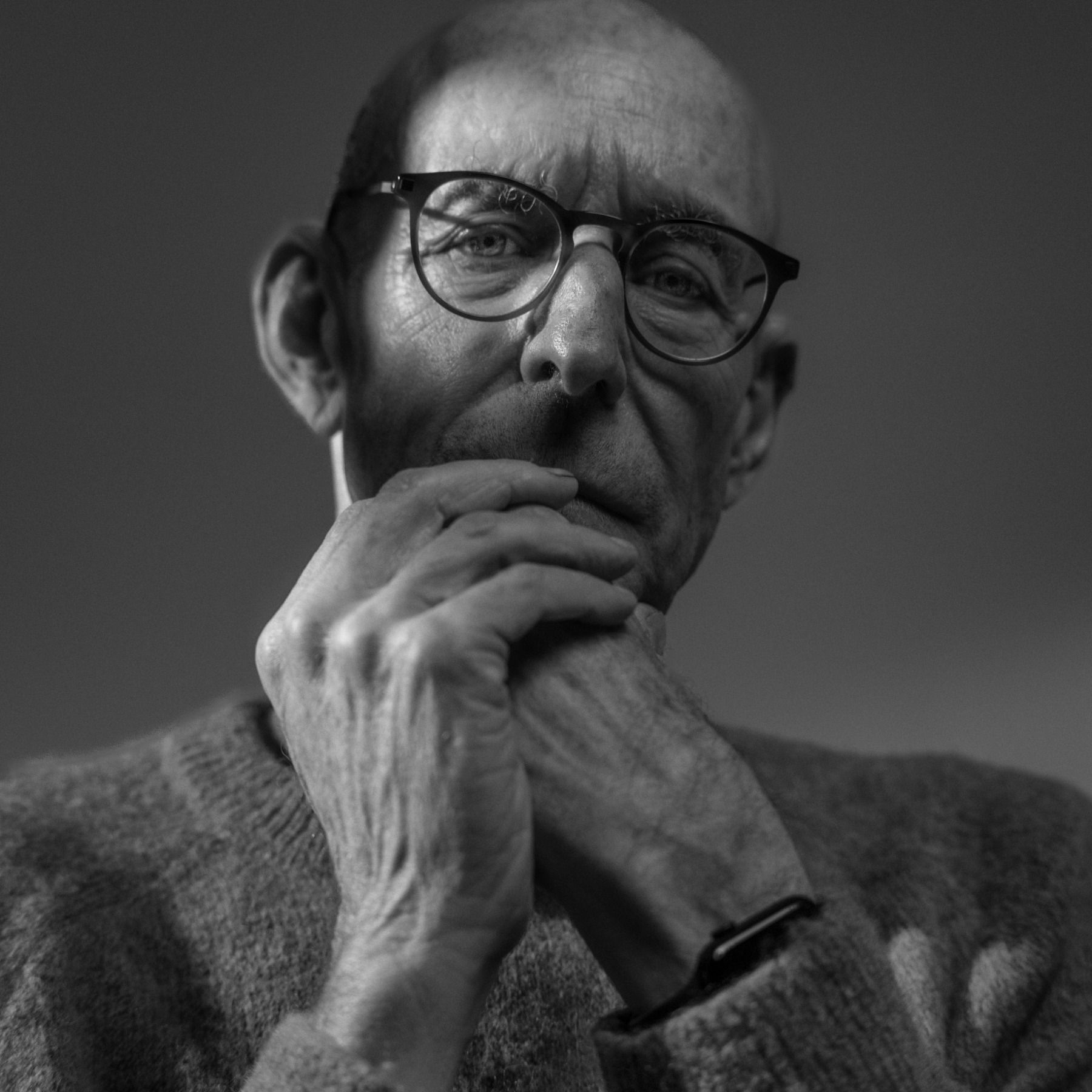
The Interview
Michael Pollan Says Humanity Is About to Undergo a Revolutionary Change
00:38:09
The best-selling author grapples with big questions about A.I., consciousness and the distractions polluting our minds.
Loading summary
Transcript93 lines
- [00:01]
A
At vrbo, we understand that even the best of plans sometimes need a little support. So we plan for the plot twists. Every booking is automatically backed by our VRBO Care guarantee, giving you confidence from the very start. Whenever you need help, it's ready before your stay, through the moments in between and after your trip. Because a great trip starts with peace of mind and maybe a good playlist. But we've got the peace of mind part covered. From the New York Times. This is the interview. I'm David Marchese. For as long as I can remember, I've wrestled with my own thoughts and feelings about identity, who I am and why I am that way. I think it's no coincidence that I've also always been interested in the subject of consciousness because that's the area of science and philosophy of humanity. I would say that gets at the deepest questions like where do thoughts and feelings come from? Why do I have them at all? And what makes me me anyway? The best selling author Michael Pollan has also been thinking about some similar things throughout his work, which includes classic books like the Omnivore's Dilemma about why we Eat the Way we do and how to Change youe Mind about the science and use of psychedelic drugs. Paul Paulan has waded into questions about the inner workings of the mind. Now with his new book, A World, A Journey into Consciousness, he's jumped into the deep end. The book is a highly personal exploration of human what it is, where it comes from, what it's for, and what the different answers to those questions might mean for how we can make sense of our lives. Questions that are getting more pressing with the rise of AI. And as Pollan argues, with the way even politics is now affecting our minds, his book gets into some pretty profound, even mind bending territory, as I think did our interview. Here's my conversation with Michael Pollan. Michael, thank you for taking the time to speak with me today. I appreciate it.
- [02:16]
B
Pleasure to be here, David.
- [02:17]
A
So I just want to get to some basics for people. How do you define consciousness?
- [02:23]
B
Yeah, it's a slippery word and a slippery topic. The simplest way to define consciousness is simply as experience or subjective experience. Another one word definition is awareness. Many people in the field rely on a. It's sort of a definition. But Thomas Nagel, the, the NYU philosopher wrote a piece back in the 70s, a wonderful essay called what is it like to be a Bat? And his idea is if we can imagine it is like anything to be a bat, then a bat is conscious because that means it has some sort of subjective Experience. And why did he choose bats? Well, they're very different than we are. Instead of using I eyesight, they use echolocation. Right. They bounce signals off of objects to move through space. They also hang upside down most of the day. But we can sort of vaguely imagine going through the world with echolocation. Whereas my toaster, I can't do that. I don't have a sense of what it's like to be my toaster. So that formulation, is there some subjective experience going on? I think that's a very useful formulation.
- [03:40]
A
And a big question of consciousness is what the philosopher David Chalmers has referred to as the hard problem.
- [03:47]
B
Yeah.
- [03:47]
A
Can you tell people what the hard problem of consciousness is?
- [03:50]
B
Sure. The hard problem is basically how you get from matter to mind, how you cross that huge gulf from, like, neurons to subjective experience, a gulf no one has managed to cross, in my view. Related questions are why doesn't all these things we do go on automatically? Why do we have to be aware of anything? We could be completely automated. We could be zombies and perhaps get along just fine. Now, a huge percentage of what goes on in your brain, let's say 90%, 95%, is unconscious. You know, your brain is monitoring your body and making fine adjustments in the blood gases in the heart rate and digestion. So there's a lot going on that we don't have to think about. So why do we have to think about any of it? And there's some interesting theories that have been proposed about that. I mean, one is some of the issues that we have to deal with have to be decided in a conscious way, that when you have sort of two competing needs, you know, you're hungry and you're tired, which should take precedence, which should you deal with. So consciousness opens up this space of decision making. The other argument would be why we need to be conscious. Why it's useful to be conscious is we live in a very complex social world where I have to predict what you're going to say. I have to imagine my way into your head. To some extent. You can't automate human social interaction. It's just got too many elements. And so consciousness is very helpful in navigating that world.
- [05:31]
A
And do you think there has been any real progress made on the hard problems since 1994? Are we any closer to an answer there?
- [05:41]
B
I think we're closer. There have been some really interesting theories that have been put forward that soften the hard problem a little bit. And I don't think it looms quite as large, but a Good case could be made that it's not solvable, that we don't have the kind of science you would need to solve the hard problem. And that's because our science is itself a form of consciousness. Consciousness is one of the subjects you cannot get outside of to get an objective view, because every tool we have to study it is itself a product of consciousness. So, I mean, you see how complicated this is. But your question about progress is, you know, I have to admit I was a little frustrated. So I started out on this journey as one would, looking at the science.
- [06:35]
A
Yeah.
- [06:35]
B
And surely the scientists can answer these questions for me. But I realized I looked at these theories and they're like something like 22 Theories of consciousness in play right now. Which tells you the field is flailing, I think. But they would all edge up to some kind of big conclusion. But they all started waving their hands when it came to, but how does a conscious subject arise? They could take you very far. But that question they don't have answers to.
- [07:05]
A
You know, it seems likely to me that regardless of the source of consciousness, it's probably the result of evolutionary processes. You know, consciousness evolved to make information available to certain parts of the brain or to help us recognize patterns or perceive threats or, you know, sort of a more complicated reason for the evolution of consciousness might be to help us maintain homeostasis, which is basically like the internal physical states we need to stay alive. But are there any non evolutionary arguments for consciousness that are plausible to you?
- [07:44]
B
Oh, yeah. I mean, one is panpsychism. Panpsychism, yeah.
- [07:49]
A
Which could sound bonkers.
- [07:50]
B
It can sound bonkers. But panpsychism is the idea that everything, every particle, the ink on the page, the atoms, all have some infinitesimal degree of psyche or consciousness. And somehow this consciousness is kind of combined in some way from our cells and the rest of our bodies to create this kind of super consciousness, which is us. It sounds kind of crazy, but there are some very serious people who believe in it. You have to expand your sense of the plausible when you're looking at consciousness, I'm afraid. But we've done that before. I mean, how long ago was it that we discovered electromagnetism? This crazy idea that there are all these waves passing through us and around us that can carry information. I mean, that's just as mind blowing, Right?
- [08:41]
A
But Michael, can.
- [08:42]
B
I.
- [08:44]
A
Really love talking about consciousness? I could happily talk about consciousness all day. But I find perhaps my predilection to doing that might have something to do with why I don't get invited to a lot of parties. But you know, often when I do talk about consciousness with people or bring up the subject with people, I can tell that, like, they view thinking about consciousness as almost akin to a kind of navel gazing or sort of an interesting thing to think about. But really, what difference does it make to my life? What is your response to that kind of question?
- [09:21]
B
Yeah, I thought a lot about that. You know, what good is it to think about consciousness? And I came to think that it's really important and more important now than ever before. I mean, consciousness is, is being threatened in certain ways right now, or human consciousness as this exceptional thing we're learning. Scientists are learning that more and more animals and creatures going all the way down, possibly to insects, are conscious. So that's one interesting issue. We're sharing consciousness with more creatures. And then the big threat, I think, is AI, artificial intelligence, and the effort to create a conscious AI, which is going to be an enormous challenge to this question of what does it mean to be human? Is consciousness something that a machine can possess? Are we more like intelligent machines or conscious feeling animals? Who are we? So I think we're approaching this kind of Copernican moment of redefinition.
- [10:22]
A
Well, I have a lot more questions about AI and consciousness, but before I get to those, I want to know more about what you think we should do with that increasing awareness of the possibility of more animals than we perhaps previously thought were conscious, that they too might be conscious, or that even plants might have some element of consciousness. Because I think, for example, well, you know, plants might be conscious, but, you know, we're not going to stop eating them.
- [10:53]
B
No, we can't.
- [10:54]
A
We can't. And then also on the animal side, I guess the argument would be that, you know, we should have. If we recognize animals as being conscious beings, that would entail a greater amount of respect for them. But I think, well, gosh, we all know human beings are conscious and we exploit the hell out of other human beings all the time. So what reason is there really to think that an awareness of animal consciousness would change our behaviors?
- [11:19]
B
Well, that's a great question. I mean, there's this whole conversation very active here where I live in Silicon Valley, that if AI is conscious, then we're going to have to give it moral consideration and well, really, I mean, have we given moral consideration to one another? Have we given moral consideration to the chickens and the cattle that we eat? And the answer is no, it doesn't automatically follow. So we're going to have to sort out the ethics. I mean, maybe it's around the ability to suffer, suffering being a more kind of full mind process than mere pain. So maybe that's where you draw the line. I don't know. I'm not an ethicist. But it's not as easy as you're conscious, therefore you have all these rights. You know, personhood, who we grant personhood to is a very subjective human decision. We give it to corporations, oddly enough, which are not conscious, but there's all sorts of creatures we don't give it to. I don't think we're entirely rational or consistent in our granting of moral consideration.
- [12:27]
A
And you are skeptical that AI can achieve consciousness. Why is that?
- [12:32]
B
Yeah, I am. I'm convinced by some of the researchers that I follow in the book, including Antonio Damasio and Mark Soames, who've made a really compelling case that the origin of consciousness is with feelings, not thoughts. There's a tendency to think that consciousness, which is so cool and fancy, is a product of the cortex, the evolutionarily most recent part of the brain where decision making, executive function, all these things happen. They make a persuasive case that it starts with feelings, with the brain's monitoring of what's going on in the body. Feelings are the language in which the body talks to the brain. And the way the body gets the brain's attention is with feelings. And this all happens in the brain stem, not in the cortex. And they've shown that people who don't even have cortexes or animals that have been decorticated, it's called, nevertheless have consciousness. Yet if you turn off certain structures at the top of the brainstem, you lose consciousness. So that's a different way of thinking about it. And it suggests that our consciousness depends on embodiment. And more than that, it depends on these feelings. So if you think feelings are at the center of consciousness, it's very hard to imagine how a machine could rise to that level to have feelings. The other reason I think we're not close to it is that everything that machines know, the data set on which they're trained, is information. Most of it that's on the Internet. They don't have friction with nature, they don't have friction with the world, with us. That real contact that depends on embodiment. Some of the most important things we know are, are about person to person contact, about contact with nature. This friction, that really is what makes us human, I think.
- [14:34]
A
Yeah. Despite how it may seem, the Internet is not actually the whole of the world.
- [14:39]
B
Yes, I know. But to a computer, it is. It's all you got.
- [14:45]
A
And how would we know if an AI is conscious or not?
- [14:48]
B
Well, how do I know you're conscious? I mean, these are hard questions. I mean, I'm assuming you're conscious.
- [14:53]
A
I promise I am.
- [14:56]
B
Well, your promise is what's called reportability in philosophy. And so you can ask something if it's conscious. And with humans, we can kind of. We kind of know.
- [15:07]
A
How do I know you're conscious is really a question I would have liked to have asked a handful of people I've interviewed over the years. But not saying who.
- [15:14]
B
Well, going forward, you can use it. Feel free. Yeah, I'll use it. So it's an enormous problem since it is fundamentally a subjective internal state. We depend on behaviors that looks like conscious behaviors.
- [15:31]
A
But if an AI tomorrow says, michael, I'm conscious, I promise. How do we know?
- [15:39]
B
We don't. We can't say for sure. And that is exactly why people are falling into. Deep into these relationships with. So AIs are trained not to say they're conscious because the engineers think it's too spooky. But you can jailbreak that. I mean, there's certain questions you can ask in AI, especially ChatGPT4, which was the most sycophantic of all AI so far.
- [16:03]
A
That's why I like it.
- [16:04]
B
That's why we like it. On the other hand, that led to a suicide. I mean, you know, it's a dangerous one. And so we can't say it's not conscious when it tells us it is, but we can test it in various ways. You know, it all goes back to this idea of the Turing Test, that the test of machine intelligence would be when they can fool us. And that has kind of introduced a very interesting bit of DNA into the field, which is training them to delude us as an achievement. Not a very healthy one, but there it is.
- [16:35]
A
Also, if the Turing Test is the criteria for machine consciousness, then it has already passed the Turing Test.
- [16:41]
B
Exactly. It has fooled many, many people. Whether it can fool an expert, too, I don't know, but probably. So we're in a very weird place where the machines we're living with are telling us they're conscious. We can't dispute it, but, you know, we can look at the architecture and how they're made and draw the kind of conclusions I've drawn. But is that going to persuade everybody? No. I mean, we want them to be conscious in some way, or some of us do. It's Easier to have a relationship with a chatbot than another human. Going back to that friction point, they offer no friction. They just suck up to us and convince us how brilliant we are, and we fall for it.
- [17:23]
A
What, if anything, do you think religion or religious thinking has to offer to questions about consciousness?
- [17:33]
B
That's a good question. I don't know enough about religion to make a general statement. This book kind of ends up, you know, on a Buddhist retreat center, totally unexpectedly, where I went, because I had done a lot of reading in Buddhism, and I was interviewing Buddhist monks and thinkers, and I thought that they had a lot of wisdom about consciousness. I mean, Buddhism has been thinking about consciousness for a very long time. It has been raising these questions about the self and giving people tools to transcend the self, which in itself is a desire that is surprising that we cling to this ego so firmly. At the same time, we do a lot of things to get away from it, whether it's extreme sports or psychedelics or meditation or watching a movie or.
- [18:25]
A
Having sex or, you know, any number of things.
- [18:27]
B
Yeah, I mean, some of the highest experiences of life are these moments where we transcend the self. And that's curious, too. Yeah.
- [18:35]
A
What do you think that's about? Why, if we cling to the self, are we also so hungry and find so much enjoyment in losing ourselves?
- [18:45]
B
I think the self isolates us. The ego builds walls around it. Whether it's that we're special or we're hurt or, you know, we're. It's constantly evaluating. It's standing, it ruminates. I mean, there's a lot of, like, crappy stuff about the self just yammering constantly. Yes. And there it is, that voice in our head. And it's embodies critical voices very often inherited from parents sometimes, or other people. I mean, the ego is very useful. It gets a lot done. It, you know, got my book done. It gets your podcast done, so we shouldn't be too critical of it. On the other hand, when we transcend the self, we connect to things larger than ourselves. And, you know, this is one of the beautiful things about psychedelics, when they work, is this sense of dissolution of self. And the interesting thing that happens when your self dissolves is that the walls come down and you feel part of nature. You feel love, you feel. I mean, I had an experience of. I describe in the book of self dissolution, where I merged with this piece of music, this Bach unaccompanied cello suite. And it was such a profound experience of music because the subject object split, went away. And I was identical to this piece of music. So some of the great experiences of life are when the ego goes away or just is shrunken a little bit. The interesting thing, though, is that consciousness doesn't go away when the ego goes away. And we protect our ego because we're kind of afraid if we lose it, we're dead. But we're not. It's just one voice. There's a lot else going on. As you learn when you meditate and as you learn when you use psychedelics.
- [20:34]
A
How often do you do psychedelics?
- [20:36]
B
Oh, not very often at all. You know, it's hard to find time. It's a big day with a lot of preparation and everything. But if I can do it once a year, I'm really happy. But it doesn't always happen. And what I'm talking about too is ideally a guided experience, which I find is much more useful. And you can let yourself go when someone's, you know, watching your body. So when I can put myself in that situation, which isn't easy to do and it's expensive, I find that very valuable. Still, I mean, I'm still learning things.
- [21:13]
A
What are you learning?
- [21:14]
B
Oh, I. You know, every psychedelic experience is different. You never go back to the same place. And that's why I think it's a great thing to do on your birthday or around your birthday, you know, to sort of take stock of your reality and what's going on and what, what the issues are. I mean, I had an experience not too long ago that kind of rocked me. It wasn't a pleasant experience at all.
- [21:39]
A
What was.
- [21:41]
B
Was a guided trip on? Well, it doesn't matter what it was on. And I had these powerful emotions that had no name. They were just emotions. And they were like these giant blimps crashing into me, crashing into each other. And I was straining and so frustrated that I didn't know what they were. And the answer never came clear during the experience. But all I could do and I. And I knew that, you know, you can't resist these things. So I just felt them and they didn't feel good, but they felt strong. And oddly enough, the answer to what they were came two weeks later when I happened to be at a meditation retreat. And there the links between psychedelics and meditation are just very fruitful and interesting. And I was doing a walking meditation after a couple days of complete silence. And like 12 hour a day of meditating. And there were the blimps. And in San serif letters right on the blimp was the Word fear. And I very quickly realized what it was, and it was fear of losing some people very close to me. So the combination of the two experiences ended up being very productive. But on its own, the psychedelic experience raised more questions than it gave answers.
- [23:08]
A
You know, I realize we're right on the line, if not over it, for what might cause other people listening to this to think, like, who are these two lunatics I'm listening to? But. But my sort of crazy person subject that I'd like to raise with you has to do with the ways in which thinking about consciousness can be destabilizing. So, you know, I maybe, like I alluded to earlier, I. You know, I think questions of consciousness, which are really questions about, like, what makes us us, are some of the most important and fruitful questions that can be asked. But at the same time, you know, you can start to ask those questions, and then you get into questions about, is there some self, some David, Is there some stable I that exists or not? Or what is the relationship between free will and consciousness? And sometimes I think, well, actually, I don't want to think about those questions anymore because it can make just getting through the day kind of difficult. And you could also perhaps arrive at some answers that you might not be happy about that might seem dehumanizing. But is that just me?
- [24:16]
B
No. No.
- [24:17]
A
No apprehensions about the subject.
- [24:20]
B
I think it can be destabilizing. Absolutely. You know, we've learned. I mean, we know how psychedelics can destabilize people. One of the reasons people are happy to be less conscious and fill their attention with distractions of all kinds and drugs of all kinds is because the mind can be a scary place to visit our own minds. And we often want to be less aware of what's going on, especially people who've suffered trauma and things like that. But, you know, people who haven't, too. So, yeah, there's no question. But I have to tell you, I don't think about consciousness 24 7. There's time when I'm just watching TV.
- [25:00]
A
Who is the eye watching? Matlock.
- [25:03]
B
Yeah. Who is watching this show? But I totally agree and that there are reasons people avoid going down these rabbit holes. And it takes a willingness to risk something to think hard about consciousness.
- [25:23]
A
Michael, thank you so much for taking all the time to speak with me today. I really enjoyed it.
- [25:27]
B
A pleasure. I was so pleased that you were happy to go down all these challenging rabbit holes.
- [25:34]
A
And I'll talk to you again soon.
- [25:36]
B
Yes, I think next week.
- [25:41]
A
After the break, I talked to Michael Pollan again about how his past work on nutrition science informs his views of RFK Jr and the MAHA movement.
- [25:51]
B
There's the potential of a very interesting new alliance. You know, there are overlaps between the Old Food Movement and Maha Movement, around pesticides, around ultra processed foods. So maybe there's a new politics being born here. In 2001, in the village of Dahong.
- [26:16]
A
When archaeologists ventured into Prince Liang Zhuang Mausoleum, they discovered a veritable treasure trove.
- [26:23]
B
Dating back to the Ming Dynasty.
- [26:25]
A
The find included thousands of breathtakingly beautiful objects made from gold, jade and precious.
- [26:32]
B
Stones, as well as emeralds from the other side of the Listen now to.
- [26:39]
A
Voice of Jewels, a podcast by Lecole.
- [26:41]
B
School of Jewelry Arts with the support.
- [26:43]
A
Of Van Cleef and Arpels.
- [26:47]
B
Listen up guys, it's Drake May here to help get your finances into shape. You want to feel confident about your money. You need Betterment. Their automated tools help you grow your wealth and save on taxes. You don't even have to call an audible. They handle it for you. Take it from me, when you know your money is doing what it should be, you become full of that. We got this energy. That's the Betterment effect in action. So get up, sign up and start investing like a pro. Get started today@betterment.com investing involves risk performance, not guaranteed paid client ad views may not be representative. See App Store and Google Play Store reviews. Learn more@betterment.com pursuebetter partners Sling is the live TV service that puts you in charge. Choose your plan. Orange for sports and entertainment favorites, blue for news and reality, or select for the essentials. Only pay for the stuff you actually watch and pause your subscription anytime. Because paying for TV or not watching, that's just rude. No long term contracts, no nonsense. Pick your plan, add what you want. Sling lets you do that. Visit sling.com to learn more.
- [27:58]
A
Michael, I'm glad to be speaking with you again.
- [28:00]
B
Yeah, likewise.
- [28:01]
A
So here at the start, I want to change direction a bit from our first conversation and talk about something related to your earlier work. I think to a lot of people you're maybe still best known as a food writer and you have that highly sensible mantra about eating. And that's eat food, not too much, mostly plants. And I'm curious to know what you make of the skepticism on the part of RFK Jr. And the MAHA movement about conventional wisdom around nutrition.
- [28:36]
B
Well, I mean, RFK's version would be, you know, eat food, probably not too much, mostly meat. I think the big takeaway of the New food guidelines was its promotion of meat and saturated fat, for which there's no scientific evidence that we're not getting enough. We're getting plenty of protein. So once you've given up on science as guiding you, anything goes. Which is not to say nutrition science has always been accurate. I think that it's a pretty imperfect science. But there's certain things I think we can rely on when a great many studies implicate, you know, red meat especially. The other thing that it completely overlooks is that these decisions are not just about our health. The environmental implications of eating more red meat are enormous. Uses incredible amount of resources, incredibly wasteful way to feed ourselves. Takes 10 pounds of grain to get one pound of meat, beef. So, you know, I don't, I don't find these that helpful. I don't think they'll change much of anything. Which is not to say I don't think Maha has, could have a positive impact. There's the potential of a very interesting new alliance. You know, there are overlaps between the old food movement and Maha movement, around pesticides, around ultra processed foods. So maybe there's a new politics being born here. Although I have to say, you know, eating real food is not gonna protect you from the measles. And you have to take everything that RFK Jr. Is doing to public health in its entirety. And I fear that more people will die because of his vaccine ideas than will be saved because of his food ideas.
- [30:18]
A
Well, I have a question about what guidance or advice you might have for people about how to deploy skepticism when it comes to institutions or authorities. It seems like it might be difficult to say to people, you know, maybe you can trust RFK Jr on X, but don't trust him on Y. That seems like maybe a hard move for people to make. So, like, how do you know where to direct your skepticism?
- [30:47]
B
Well, you know, I have a certain advantage because I'm a journalist and I get to call up people and I can ask them, how confident are you about this result? You know, scientists in print are very definitive and confident. In person, they're much more. They're much more reluctant to take hard positions. And they'll say, well, you know, this is a limited study. This is what we know now. So I guess I see science as a much more equivocal discourse than many people do. And I think scientists sometimes are kind of, I don't know, I mean, they have so much authority in our culture, or did until it's being dismantled right now, that I think they overdid their confidence to people because I guess they felt equivocal messages didn't pan out or didn't get them headlines and things like that. So as a consumer tip, I don't really have anything except to don't be overwhelmed by the first day story, which applies to everything. Right. You read in the paper the second and third day stories sometimes qualify things and read more widely and look for comments on the science and not just that first day story. Sorry I don't have a more satisfying answer.
- [32:01]
A
No, no, that's okay.
- [32:02]
B
But it's a real problem and it creates the vulnerability that RFK Jr. Is stepping into.
- [32:09]
A
I want to turn back to the new book now. We talked earlier about the idea of being skeptical about a stable self. And you know, I apologize if this seems like a woo woo question or it's too airy fairy, but do you think the absence of a self also means the absence of something like a soul? Do you believe in a soul?
- [32:38]
B
Well, if a soul is something that is indestructible and survives our death, no. But I can't say that or anything else about the afterlife with any confidence. So to the extent a soul is associated with that idea, I don't. I think that consciousness has become our kind of secular substitute for the soul. And we talk about consciousness the way people in the 17th century talked about souls or 16th century talked about souls. And some of people's interest in it is the fact that maybe it floats free of these mortal bodies and does something or gets folded into a collective consciousness after we're gone. So I think there is a kind of hidden religiosity or spirituality in the whole conversation around consciousness and people's interest in it. You know, somebody asked me recently, do you think as people get older, are they more interested in consciousness? And I would say probably yes. And probably for that reason it's interesting.
- [33:49]
A
For me because it does seem that many of us do have consistencies to ourselves that are a little hard to explain in the absence of something like a stable identity or a soul. You know, in the book you mention a period in your teenage years when you were reading Hermann Hesse, writing bad poetry, and thinking about the big questions. I don't know if you still write bad poetry, but you know, the other two things don't seem that far away from what you're doing now in your 70s. So what to you might explain what seem like intrinsic core qualities that are constant for you through time, if not a self, a stable self, identity, or a soul?
- [34:32]
B
Yeah. So even though I talk a lot about this idea that maybe the self is an illusion. It still has a reality of certain kind. I mean, a conventional reality. The fact that I'm using myself to talk to yourself makes this very easy. If neither of us had selves right now, it would be a very kind of loosey goosey conversation. I can't even imagine what it would be like. Like, I mean, Matthew Ricard said, you know, it's like a river has a name. And that conventional name is very useful. But there's nothing consistent there. It's just water passing. So I think we have to make that distinction. But I also say in the book at various times, I don't have a self yet. I can make things happen. And there is an eye that feels it's making things happen. So even if it's an illusion or a construct of consciousness, it's real enough.
- [35:22]
A
But where do you think those core feelings come from? Every day people do things and they have some feeling inside themselves that says something like, this doesn't feel right to me. This doesn't feel wrong. This doesn't feel like who I am. What is that who I am?
- [35:36]
B
Well, a lot of that is memory. I mean, time. I talk in the end of the book about the importance of time to the construction of self. It is the fact that you have this whole history of experiences and these objectives or aspirations about the future. And it is that line in which you situate yourself. You know, there's someone in the book who has a very interesting idea about self and memory, which is Michael Levin, the biologist, who's a brilliant biologist at Tufts. And he talks about mnemonic improvisation, I think, is what he calls it. And his idea is that our memories are constantly being rewritten. Every time we take out a memory and put it back, it's a little different. This seems like a bug, but he's telling us it's a feature. This is how we construct ourselves, by taking memories and changing them in some ways. And by the way, computers don't do this all the time. If they did, we'd throw them out. If they change their memory all the time. And you opened a file and realize, wait a minute, this is not the way I wrote it. So I think that we are hacking our memory constantly to help construct the self that is useful to us now. And he basically says, that's what. Maybe that's what consciousness is, is someone using experience to construct a self. And I think that's a very provocative idea. I don't know if it's true, but it's provocative.
- [37:01]
A
And, you know, I know I brought something like this next question up when we spoke before, but I want to ask a version of it again. So, you know, this morning I was looking at the news and I'm thinking, gosh, it's coming back to talk to Michael Pollan about consciousness. Am I doing some, you know, how many angels can dance on, on the head of a pin style conversation right now? And I decided the answer was no. And it is, it is important.
- [37:27]
B
I'm glad to hear it.
- [37:29]
A
But do you ever have those doubts?
- [37:33]
B
You know, I did at various points when I was starting on this book and the world was starting to fall apart in various ways. And like, you know, is this how I should be using my energy? There's political work to be done and I do do political work in other parts of my life, but I also think that consciousness is at stake in a lot of what's going on. I mean, one of the things Trump has done is occupied a significant chunk of of our attention every single day and that our consciousness is being polluted in a certain way. And he's a master at it. And I think protecting ourselves against that, at the same time we preserve the ability to act politically is a difficult balancing act. You know, we talked last time about the need to protect consciousness, that it's a very precious realm. It's the realm of our privacy and our freedom, our freedom to think. So I think we need some kind of consciousness hygiene, particularly at this moment where this one politician in particular has figured out ways to command our attention. So, yeah, I think consciousness is more relevant now as something to think about, protect, nurture, than even it was 10 or 20 years ago.
- [38:55]
A
Michael, thank you so much for taking all the time to talk with me. I really appreciated it and I really enjoyed the book very much.
- [39:02]
B
Thank you. Thanks. These are very provocative conversations.
- [39:11]
A
That's Michael Pollan. His new book, A World A Journey into Consciousness, will be published on February 24th. To watch this interview and many others, you can subscribe to our YouTube channel@YouTube.com betheinterview podcast. This conversation was produced by Seth Kelly. It was edited by Annabelle Bacon. Mixing by Sonia Herrero. Original music by Dan Powell, Elisha Ba? Itup, Rowan Nimisto and Marian Lozano. Photography by Devin Yalkin. The rest of the team is Priya Matthew, Wyatt Orme, Paola Neudorf, Joe Bilme Munoz, Amy Marino and Brooke Minters. Our executive producer is Allison Benedikt. I'm David Marchese and this is the interview from the New York Times.