← The Interview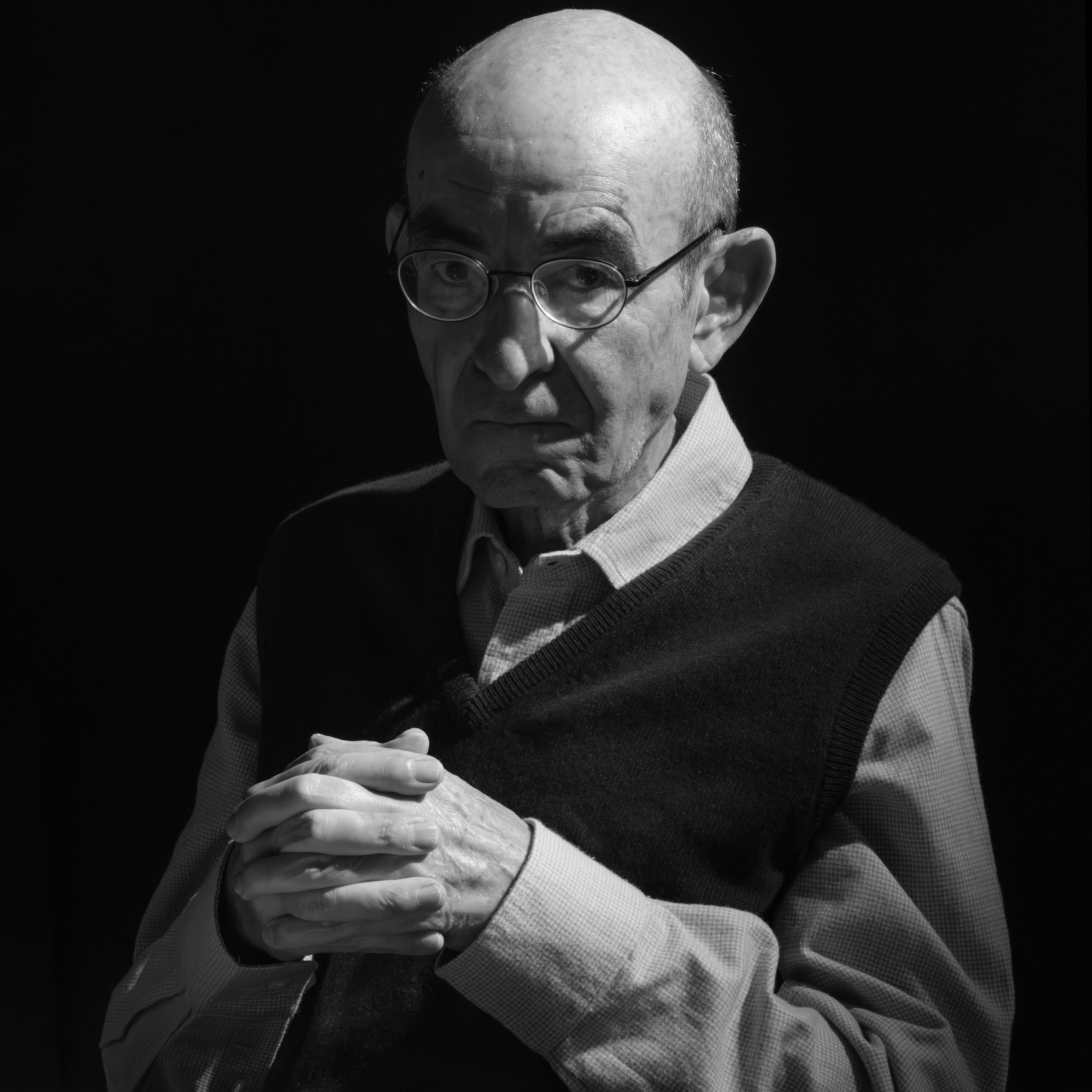
The Interview
Raja Shehadeh Believes Israelis and Palestinians Can Still Find Peace
00:43:50
The writer and lawyer has been documenting the occupation for decades. Somehow, he maintains hope.
Loading summary
Transcript100 lines
- [00:00]
A
Don't just imagine a better future, start investing in one with betterment, whether it's saving for today or building wealth for tomorrow. We help people in small businesses put their money to work. We automate to make savings simpler. We optimize to make investing smarter. We build innovative technology backed by financial experts. For anyone who's ever said, I think I can do better, so be invested in yourself. Be invested in your business. Be invested in better with betterment. Get started@betterment.com investing involves risk performance not guaranteed.
- [00:38]
B
From the New York Times, this is the interview. I'm David Marchese. The writer, lawyer and human rights activist raja Shahade, who's 74, has spent most of his life living in Ramallah, a city in the Israeli occupied West Bank. Since he was a much younger man, he's been writing about what it's been like for and other Palestinians to live under Israeli occupation. That work, which is defined by precise description and powerfully measured emotion, has won him widespread acclaim. His 2007 book, Palestinian Forays into a Vanishing Landscape won Britain's Orwell Prize for Political writing. And here in the United States, his book we could have Been My Father and I was a finalist for the 2023 National Book Award. He's also a co founder of Al Haq, a human rights organization that has documented abuses against Palestinians in the occupied territories for over 45 years. To read Shahade's work, including over the years several pieces for the New York Times opinion section is to be exposed to a thinker with a long and stubbornly optimistic view of the Israeli Palestinian conflict, one who believes that peace remains possible. He also believes that for peace to have any chance of prevailing, there's so much from the dominant stories told about the region to how we talk about the conflict in the front first place that needs to be reconsidered. But at the end of another brutal year of strife and suffering, with a ceasefire between Israel and Hamas holding but a plan for what's next still unclear, I thought it might be helpful to speak with a writer who has a real sense of the ways in which the past need not predict the future and the ways in which it should. Here's my interview with Raja Shahade. Mr. Shahade, thank you for taking the time to speak with me today.
- [02:27]
C
Please call me Raja.
- [02:28]
B
Raja, thank you. I appreciate it. Just to start, your mother and your father, who's a lawyer, were from Jaffa, which is now part of Tel Aviv Yafo area, but when they lived in Jaffa, it was part of the British Mandate Palestine can you tell me about how your family ended up in Ramallah, in the West bank.
- [02:51]
C
In 48? In April, the Irgun, the terrorist organization, started bombing Jaffa. They bombed the center of Jaffa and it was getting dangerous, but they decided to stay. And then Jewish terrorists started bombing the Banshee, which is a suburb of Jaffa, and it became very dangerous. And they had a three year old daughter and they decided that they will leave to Ramballa, where they had the summer house, because Jaffa in the summer is very humid and hot. So they left in 28 April to Ramallah and they were never able to return.
- [03:29]
B
I know in your work you've written about the experience of being in Ramallah and seeing the lights off in the distance and you know, they were the lights of Jaffa. And of course, you've lived in Ramallah your, your whole life. Can you tell me about how living in the occupied territory in the west bank has affected your own sense of agency over your own life?
- [03:55]
C
Well, I grew up in Ramallah with an exiled family, and my grandmother was always yearning for Jaffa. And they were looking at the horizon and seeing the lights of Tel Aviv, really, and thinking that this is Jaffa. And so I learned to look at the horizons also and think that I'm looking at Jaffa. Although I had never been to Jaffa, of course, because I was born after the Nakb, after 48. And so I had a sense of Ramallah was not the real home. It was just a temporary home. And it was an exile's consciousness. The expectation was always that we will be returning.
- [04:33]
B
You use the term an exile's consciousness. How would you characterize that?
- [04:38]
C
I would characterize it by the feeling that where you are is not home. Where you are is temporary and the real home is somewhere else where you came from. You don't feel you belong to the place that you are in.
- [04:52]
B
You know, it's striking to me in reading your works, that you often express anger over the Israeli Palestinian conflict. But at the same time, I never get a sense from your work that anger consumes you, that you know the anger has curdled into a hate or is the prism through which you view the situation in Israel, in the occupied territories. So what is your relationship with anger? How have you not let it define you?
- [05:26]
C
I think anger is a very negative thing. And I've been always careful not to resort to anger. And I feel that always there's hope and there's possibility out and anger is a dead end. Anger is it imprisons you. And I didn't want ever to be angry to the point of being immobilized. And I think I take this after my father. My father was always active, always trying to find a solution, a way out. And I think I have the same attitude. I always try to find a way out and try always to look at the other side, the others, and try to put myself in their place and how would I feel if I were in their place and try to understand them and so that I see them as fellow human beings rather than as an object.
- [06:18]
B
I think it's fair to say that justice, or the pursuit of justice is one of the great themes of your work. And given that, particularly now when politics that are based in raw power are so ascendant, what is the role of a justice driven?
- [06:39]
C
Well, I think the first thing is to document and make clear what is the situation and avoid mystification. And I think the colonization works by mystifying, by making people lose a sense of who they are and how did they get to the point that they got to. Now I realize now that the people who are younger than me, who were born in the, let's say, 90s, never knew the land as it was before, never knew what the hills looked like before the settlements were built all over them, never knew the roads before they were distorted and became settler roads and full of checkpoints. And so one of the objects of my writing has been to describe the landscape as it was before that and to try and paint a picture of the beauty of the land before it was distorted by these settlements. And then also they might not be aware how we got into the situation, the legal situation that we are in now. And that is important, I think, to remove the mystery and explain exactly that it was a slow process which was deliberate. And that is also part of what my work has been trying to do.
- [07:58]
B
And when you talk about the process, you're specifically referring to the building of settlements in the West Bank.
- [08:06]
C
Yeah, that's part of it, of course. That's a big part of it.
- [08:08]
B
What are some of the other parts?
- [08:10]
C
Well, the other parts are how now the present generation of Palestinians have never met an Israeli who is not a settler or a soldier. And there were times when Israelis came over to Ramallah and to other places in the west bank and to Gaza actually, and went to restaurants and had businesses with the Palestinians. And there was interaction on many levels. And now none of this is possible because of the wall, apartheid wall, and because of the checkpoints. And so, so many Palestinians have never been to Jerusalem from Ramallah, which is 15 kilometers away, and never met an Israeli, normal Israeli civilian. And so they have a distorted picture of what Israelis are, and likewise the Israelis of the Palestinians.
- [09:03]
B
You know, it connects for me to this sort of illusion that I think is pervasive. And it's an illusion of collective responsibility. The illusion that all Israelis are in some way responsible for the actions of Netanyahu's government or the idf, or the illusion that all Palestinians are supporters of Hamas or might be terrorists. What might we do with that illusion? Is that just a fact of politics that individuals are ascribed responsibility that might not apply?
- [09:36]
C
I think that delusion was very dangerous because it led to the genocide in Gaza. So that the Israelis became convinced that all because their leaders said all the Palestinians are responsible for the murders that took place in October 7th. And so they went about killing civilians without thinking about it. Likewise, in the west bank, the settlers are. Now, I used to be able to speak to the settlers or to the army in the west bank and have a conversation with them and ask them why are they doing this? And so on. And now it's impossible. Now, they would shoot. And so it's very dangerous, this illusion. But then, of course, it's the leaders who indoctrinate their people or advise their people that this is the case, and that's where the problem comes.
- [10:28]
B
So how might we break the illusion?
- [10:32]
C
They can start teaching about the other and teaching the literature of the other and teaching that there were times in Palestine when the Jews and the Arabs lived together makeably and peacefully. And they were important times. They could concentrate on these issues rather than concentrate on the massacres that took place, which were not so frequent, but it did take place. But rather than concentrate on these, concentrate on the brighter spots. But that means that the state would have to be pursuing peaceful resolution. That's not the case now.
- [11:07]
B
Yeah. You know, it's interesting. I think people can often conceive of the conflict as being thousands of years old when the reality is it's a little over a hundred years old. And there's a long history of what you just described of a different kind of living in. In that region of the world than I think is often assumed to be the case.
- [11:27]
C
That's absolutely true. Palestine has always been a place for three religions. And the three religions lived side by side and enriched life because it's enriching to have the differences. And now one religion is trying to dominate and say it's the only one that is going to be allowed in that land. And that's perverse. That's perverse.
- [11:50]
B
Well, you know, what you're describing is Zionism. Can you talk about what your personal experience is of Zionism as a political project?
- [12:02]
C
Well, Zionism has made my life impossible all along because first of all, they tried to create a state in 48 and force people in Palestine to leave, and they didn't allow them to return. And so that was the beginning of the problem, not allowing the refugees to return. And then in 67, they continued with the policy of trying to build settlements and force, actually encourage people to leave. Rahavim called it negative magnet that they will make life so difficult for us in the west bank that we will leave. And so our life has been complicated by the Zionist aim of emptying Palestine from Palestinians. And we are subject to so many rules and regulations that make life rather impossible. But people have persisted on staying and refused to leave. And I think that it's been the most important tactic and strategy, much more important than armed resistance, because armed resistance only causes more arms, which Israel has.
- [13:20]
B
I think there is a lot of debate and discussion about the extent to which Zionism and Judaism are intertwined. And also, you know, then it ends up getting into questions of whether criticism of Zionism is de facto anti Semitic. But my sense is that it's not that difficult for you to separate the political project of Zionism from feelings about the Jewish people.
- [13:49]
C
Absolutely. I've never had that problem because I've always felt that Jews are just members of religion, and it has nothing negative about it and nothing in enmity with me. But Zionism, which is trying to use the religion to promote a certain political project, is an enemy to me. And the two are separate in my mind entirely. And I have no difficulty. And I find it very strange when people say that the criticism of Zionism is anti Semitic. But I understand that it's a political device in order to scare people into not attacking Zionism and calling them anti Semitic if they do.
- [14:31]
B
You know, you write at length about your friendship with a Jewish Israeli, Henry Abramovich. Are there aspects of your friendship with Henry that might serve as a model for larger groups of people in their political relationships?
- [14:50]
C
I had several very good friends amongst Israelis, and their friendship is very important to me. And the important thing is to be clear and open. And that, I think, can be the basis for a relationship between Israelis and Palestinians. Openness and clarity and attention to the suffering of the other. So I would not accept somebody as a friend who doesn't understand that the right of return is a right that should be upheld. Because to deny that Palestinians exist is so profound and painful that a friendship based on a denial of that would not be a good friendship, would not endure.
- [15:32]
B
When have your friendships with Jewish Israelis been most severely tested?
- [15:37]
C
Oh, they were. They were. And actually, now with the genocide, it's a very big challenge because I expect the Israeli friend to speak out and condemn and be attentive to my suffering as a Palestinian, seeing that part of my people are being murdered wholesale, like in Gaza.
- [16:00]
B
What you just described connects for me to something you wrote in your book, what Does Israel Fear from Palestine? In that book, you wrote about a conversation you had with an Israeli friend, and you wrote, and I'll just read it to you. Every time I mentioned an atrocity committed against Palestinian civilians by the Israeli army in Gaza, he brought up a criminal act committed by Hamas on October 7th. Then, with a sad voice, he assured me that the Israelis are suffering from trauma and are grieving. And it's completely understandable to me that people have a strong desire and maybe even a need to have their suffering recognized. But is there a way to address that need on both sides without invoking a kind of unproductive, endless competition of suffering?
- [16:55]
C
Yes, I think that is true, because also the suffering at the time of the Holocaust is always used as that we have suffered most and nobody can suffer as much. And every suffering is the suffering, and it shouldn't be underestimated. But to use that as a justification for causing more suffering to people is untenable. It's wrong, immoral. And that is why when this friend was starting to tell me that, you know, they are in trauma and justifying what is happening in Gaza because of trauma, I did not accept it. I thought this was very disappointing of that friend to tell me this, but there's a lot of it in Israel, I think, and there's this double consciousness of knowing and not knowing.
- [17:40]
B
Yeah. Can you tell me a little bit more about what you see as that double consciousness?
- [17:45]
C
Well, they, on the one hand, they know what they're doing in Gaza, and on the other hand, they're blocking it and pretending not to know. And that's how they can live with themselves, by blocking the knowledge that is there that they cannot deny that it's obvious that the whole world knows about it. And so it's a double consciousness. It's the same with the refugees. They knew about the fact that they threw out the Palestinians from their homes and yet didn't really know it and didn't really accept it. And so they blocked it. And that was why they were able to live in the houses of the Palestinians who left and not feel guilt.
- [18:27]
B
You've referred to Israel's actions as being self destructive for Israel. And I think for many who see Israel's actions as actually about self preservation, it might be hard for them to understand how someone could interpret those actions as self destructive. So can you explain what you see as Israel's self destructive tendencies?
- [18:52]
C
Well, by supporting the settlements and supporting the illegalities that are being committed by the settlers, the settlers now are beginning to act against Israeli Jews as well. And the right wing in Israel is trying to destroy some of the bases for the good things that Israel had of democracy, even though it was only for Jews. But they had some democratic aspects that are now being destroyed, such as the High Court. The High Court played an important role. And now with these changes in the High Court that the present government has been trying to make, they're eroding the power of the court and they're eroding many other powers of the state and making it difficult for the lower classes to survive because many are now under need help even with food and the economy is bad. And there is destruction of many of the good aspects that Israel had for the Jewish people of Israel, Jewish Israelis. And so that is the effect of the policies that they have been following against the Palestinians that are now reflecting badly on them.
- [20:08]
B
I want to sort of zoom out for a second and bring up an idea that is kind of about larger narratives. So when we talk about a year like 1948, that's a year that is subject to highly competitive narratives. You know, to an Israeli, 1948, of course, is the year of independence. To Palestinian, 1948 is the year of the Nakba. Is there a narrative, a new narrative that might be able to accommodate both sides of the conflict?
- [20:44]
C
Well, I think the new narrative would have a very important element which is that both sides must recognize the right of the other for self determination. And if there is a recognition of self determination for the other, then this is a very important starting point and a very important element in the narrative. And once we accept the right of determination for the other, then the other question becomes, how do we exercise that right of self determination? And there are many ways of exercising it in such a way that could take into account the possibility for the two sides to live together and find a relationship of living together. And that is the important element in the narrative. The other important element in the narrative is that the countries of the world which supported Israel, in building settlements and in complicating the situation, have also a role to play. And they have to take seriously that role and try to now play a role in bringing the two sides together.
- [21:43]
B
I just want to stay on the idea of narratives for a minute. The writer Edward said, the way he put it famously was that Palestinians lack the permission to narrate. Is that still the case?
- [21:57]
C
I think there has been almost a revolutionary change since the Gaza genocide, and Palestinians now are able, much more able to tell their story. I think Edward was referring to the fact that they could not speak about the Nakb at that time. And now it's possible to speak about the Nakb. And the word nakb has become well known. And you don't even have to explain what nakbi is, because people know about Naqbe. And there has been an opening to writers and to filmmakers and to playwrights to create works of art and literature and be published by establishment press and be distributed by distributors who in the past refused to distribute Palestinian literature. And so there has been a big change now in the world and much more knowledge about the Palestinians and much more openness to listen to the Palestinians. And that is a very fortunate thing. And it will make changes that are basic and fundamental.
- [22:58]
B
But despite that, there have been calls from Palestinians and advocates of the Palestinian cause to boycott the New York Times and other publications because of its coverage of the conflict in Gaza. But for you, how and why do you decide to engage with the media?
- [23:17]
C
I think that the criticism about the Times is right because the Times has not been very forthright in calling the genocide genocide and giving full coverage to the Palestinians, although this has changed in the recent weeks and months. And so there has been a change, and we should always work for change rather than give up, because the Times is a very important newspaper and has many important readers. And so it's important to keep the lines open and to try and bring it into more sympathy and understanding of the Palestinians. And this issue is an ongoing issue because it can be changed and then revert back to the old ways. So that is an ongoing battle.
- [24:10]
B
In, I think, November 2023, you wrote a piece for the New York Review of Books in which you described having two plumbers come to your home in Ramallah. This was one older plumber and one younger plumber. And you wrote about seeing the younger man looking at videos of October 7 on his phone and smiling about what Hamas was posting that day, which I think the idea of someone feeling pleasure about that day is horrifying to a Lot of people. And so how did you understand expressions of happiness about what happened on October 7th?
- [24:54]
C
Well, it was immediately after it happened, and so we didn't have much information except what was being streamed. Life of the breaking the barrier. And the idea that the people of Gaza, who had been imprisoned for 15 years were able to break the barrier was something that brought great happiness to this young man. And I understood his happiness because it was something that like the breaking out of a jail. And so at that point, we did not know all the details of what was happening and some of the horrors that were happening. And so I understood his happiness because of the bravery and the fact that it was possible to break through the barrier. But later on, when I realized what was happening and what had happened and some of the crimes that were committed, it was a different feeling that I had, of course.
- [25:50]
B
And bravery is a word that you used in a way that was interesting to me in, in your book called Language of War, Language of Peace, written in the aftermath of the 2014 Gaza war. And you referred in that book to the bravery of the Hamas fighters who were standing up to the mighty Israeli army. How do you reconcile the bravery that you saw, and I think bravery is widely understood to be a positive attribute with the fact of Hamas's violent religious extremism and total lack of regard for human rights, even in Gaza.
- [26:34]
C
I think the fact that Hamas was making attempts at fighting back the Israelis is a legitimate thing because the international law allows the occupied people to fight and struggle against the occupation, and they were struggling against power that is much, much more stronger than they are. And yet Hamas, of course, also is not very responsive to human rights at times. And that, I think, is something to be condemned. So the attempt at taking a stand against Israel is legitimate, but the excesses that go on with that are not acceptable to me. And so, for example, in October 7th, I thought that they were right to try and break through the barrier, and they were not right to commit atrocities against the civilians.
- [27:35]
B
And, you know, there's an aspect of this conversation that I realize, you know, I'm asking you to speak on behalf of Palestinians broadly. Do you find that to be a difficult position to be put in? Do you feel like there are things you can't or shouldn't speak to?
- [27:54]
C
I've always felt that I'm not representative of the Palestinians, and I'm too individualistic and too single minded to be able to represent the Palestinians. And I always refuse to speak as a representative of the Palestinians. I speak my mind and speak my feelings and opinions. And even if they are unpopular, I did not change them. And so if I'm asked to condemn one side or the other, I refuse, because I think condemning is such a useless thing. I mean, who am I to condemn? And what is the effect of my condemnation? And so very often the expectation is with the Palestinian, you have to start by making sure that the Palestinian condemns certain things before we can go any further. And I think that is a very unfortunate attitude.
- [28:46]
B
But surely your work is a condemnation of Israeli conduct, right?
- [28:51]
C
Well, yes, in a sense it is, but it's an attempt to explain the Israeli conduct and not stop at condemning the Israeli conduct, but explain it and explain it with the view of getting it changed and getting us out of this dilemma and this conflict that we are in.
- [29:10]
B
Are there things that you say that you find are controversial among Palestinians?
- [29:16]
C
Well, at this point, there are many Palestinians who are thinking in terms of one state, for example, And I think that I'd like one state, but I'm not sure that we are ready for one state. And so I prefer that first the ending of occupation, and then we work out how we want to live together with the other side. And it has to be a slow process, and that's not very popular amongst many Palestinians.
- [29:40]
B
Now, what do you think the end game is for the Netanyahu government in the west bank and Gaza?
- [29:47]
C
I think that if they continue as they are now, fighting wars on so many fronts and thinking that only by fighting wars and by strength can they survive, they will end up in a very bad state, and it will be the end of Zionism, and perhaps Israel will become a pariah state and totally undemocratic, and their future will be in peril, because you cannot keep on fighting wars and think that through fighting wars you will survive. Also, the assumption that the United States will continuously support them to the extent that they are now is beginning to be questionable. And without the support of the United States, their possibilities for fighting wars and winning wars is much less. And so I think that Israel is going in a very difficult and bad direction.
- [30:38]
B
Do you think Hamas is interested in a peace that doesn't leave it in charge of Gaza?
- [30:44]
C
I can't answer about Hamas. I don't know. But I think that Hamas is, of course, trying to stay dominant. But how it will stay dominant and under what conditions is a vital question.
- [31:00]
B
I've seen you refer to yourself as an eternal optimist. Is there anything that currently gives you cause for optimism about Palestinian statehood as well as peace between Palestinians and Israelis?
- [31:14]
C
Well, my father in 1967 proposed the Palestinian state in the occupied territories and never changed his mind. And for many years it looked like there is no support for such a position. And now there is support all over for the position of Palestinian state and the recognition of the Palestinian state by 170 countries. I think that is giving me a lot of hope for change. And the hope does not come from governments. The hope comes from people. And people are beginning to be attentive to the suffering of the Palestinians and to the Palestinian cause and they will eventually make a change in their governments. But it's a long term thing. And the same thing happened with South Africa. Apartheid was condemned by people in the world and who worked very hard to change it and to stop it. The governments refused and at a certain point the United States changed overnight. And after that change, the apartheid regime fell. And so I think there is hope for the Palestinians and hope that there is going to be a change in the positive direction.
- [32:24]
B
Raja, I'd like to end this conversation with a question that's a little bit left field from what we've been talking about up till now. But you're in Edinburgh right now, a city that you spend some time in. And I'm curious about something that you've said about the city, which is this said. It's a place where if you love something, when you come back, you find that it is still there, that it hasn't been destroyed. That's very comforting for someone who lives in a place that is constantly under attack. I understand how that would be comforting. But I'm wondering if there are also more complicated feelings that come along with that sense of comfort. Some internal dissonance maybe.
- [33:05]
C
I think that Edinburgh is a place that gives a chance to people to flourish and to be attentive to arts and beauty and so on. Whereas in our country now, every time we love a place, love a hill, love a landscape, it gets destroyed. And we are not given the chance to organize our life in a better way and in a more productive way because we're constantly struggling to survive.
- [33:34]
B
Is there any good Palestinian food in Edinburgh?
- [33:37]
C
I don't look for Palestinian food when I am outside.
- [33:40]
B
I guess you have that enough.
- [33:41]
C
I have enough. There is some Lebanese guy who is doing very well.
- [33:47]
B
Thank you very much for speaking with me today. I appreciate it and I'm looking forward to talking with you again in about a week and a half.
- [33:53]
C
I look forward to that too. Thank you.
- [34:02]
B
After the break, I talked to Raja again about how he makes his arguments.
- [34:07]
C
I've always been hesitant to use strident language and to be extremist in order to win the other side as well. And that has been my efforts all along to win the other side, but it has never worked.
- [34:40]
A
What makes an island vacation magical? The culture of music and dance. The art and architecture. The great outdoors. For Puerto Rico, it's all three. Visit San Juan and see the city's museums, music and dance schools as you pass traditional colonial architecture, or hear the island come alive at night. Whether it's Puerto Rico's iconic coqui frogs singing from the trees or enjoying salsa and reggaeton at local bars and restaurants, learn all the ways you can discover Puerto Rico. Learn more@discoverportorico.com My friend's periods are all over the place. Her doctor says it's normal, but she's having trouble getting pregnant and her period app isn't helping. So I told her to get pregnant in 2026, you need Mira. They call it the baby making machine because you can conceive 10 times faster. I got her one and Mira found her ovulation in minutes, tracking four hormones like a lab unwrap fertility clarity now get 17% off mirror for Christmas@miracare.com with.
- [35:39]
D
Venmo stash a taco in one hand and ordering a ride in the other means you're stacking cash back. Nice. Get up to 5% cash back with Venmo stash on your favorite brands when you pay with your Venmo debit card. From takeout to ride shares, entertainment, and more, pick a bundle with your go tos and start earning cash back at those brands. Earn more cash when you do more with Stash. Venmo stash terms and exclusions apply. Max $100 cash back per month. See terms at Venmo Me Stash terms.
- [36:18]
B
Roger, how are you today?
- [36:19]
C
I'm very well. I'm glad to see you again.
- [36:22]
B
So you know something that I was thinking about coming out of our first conversation was the way you use words like apartheid or genocide. These are highly contested terms, and sometimes I wonder if the impulse to debate those terms can risk turning arguments about the conflict into arguments about semantics. So I wonder for you, are there any downsides to using terms like genocide and apartheid? Or maybe the contentiousness is why you feel you need to use them?
- [36:56]
C
You know, I've been following the Israeli development of the apartheid regime in the West bank since 79 and documenting the changes that led to it. And so I'm very familiar with how it came about, and I didn't use the term apartheid, because I didn't want to alienate the readers and do exactly what you're saying, focus on the term rather than on the facts. But now that it has become very clear that situation is one of apartheid, I think it's very important to use the term. And likewise with genocide, I didn't use genocide until I became very clear that the definition of genocide exactly fits the case in Gaza. And then I thought, it's important to use the term because it has consequences, legal consequences, which I would like to see take place.
- [37:44]
B
What are some of those legal consequences?
- [37:46]
C
Well, it's a crime, and those who perpetrated the crime should be punished. And that's very important because otherwise they will repeat the same actions. And in a way, because nothing has happened to Israelis who advocated genocide in Gaza, they're repeating similar tactics in the west bank every day. And so it goes on and on and on. And the only way to stop it is by taking legal action against them. And it hasn't happened yet.
- [38:15]
B
After October 7, 2023, the anti Zionist Jewish writer Peter Beinart wrote a piece for the New York Times op ed section, the opinion section, where he argued that when Palestinians resist their oppression in ethical ways by calling for boycotts, sanctions, and the application of international law, the United States and its allies work to ensure that those efforts fail, which convinces many Palestinians that ethical resistance doesn't work, which empowers Hamas. Does that diagnosis ring true for you?
- [38:45]
C
Absolutely. Absolutely. And the best example is the case of sanctioning Ilhaq. Ilhaq is an organization which I started about 40 years ago, and the United States. Trump's government has sanctioned the organization and rendered it difficult to function because it cannot have access to its email, it cannot have funding, it cannot go on with its normal activities. And the videos that document violations of Israeli actions from YouTube have been removed. And so people will say, what's the use of human rights when this is a treatment? And when people have no protection against Israeli brutality by the army or the settlers, then they say, what's the use of being nonviolent when violence committed against us, Then the answer is the only way to do is to fight like Hamas. And that's what young people come to conclude.
- [39:42]
B
What would then disempower Hamas?
- [39:44]
C
I think if there is peace and if there is an attempt at negotiating with Hamas so that it changes its policies and positions, then there is a possibility for change. But Israel is bent on destroying Hamas through force and not through negotiations and through a peaceful means. And that is not going to work at all, it would perpetuate more and more violence.
- [40:11]
B
Do you think Hamas could accept negotiations that don't involve the dissolution of the State of Israel?
- [40:18]
C
I can't speak for Hamas, but I know that in 2017, they proposed something which went along these lines of accepting the State of Israel. And Israel did not respond at all. It said, this is public relations, didn't take it seriously.
- [40:34]
B
And you mentioned the sanctions against Al hq, the human rights organization you co founded, and I want to ask a question about that. So when the Secretary of State, Marco Rubio, released a statement announcing the sanctions, the justification he gave was that Al Haq has directly engaged in efforts by the International Criminal Court to investigate, arrest, detain or prosecute Israeli nationals without Israel's consent. Is that correct?
- [41:03]
C
Well, the Haqq has been involved in helping the investigation by the icc, by the International Criminal Court of Israeli crimes. And that is something that we have been hoping for all along, that it will come to a point when we can take the case to the highest court in the world. And so we gladly supported the investigation. And to be sanctioned because of our attempts at going into a court of law is very strange and very problematic for a country like the United States, which proposes to be a country for the rule of law and for human rights.
- [41:41]
B
And something that has struck me in talking to you is there's sort of a calm or a lack of stridency in how you make your arguments. And some of the language that you use, that to me seems very different than the stridency of younger pro Palestinian voices and activists. You know, an example of that stridency might even be something that has to do with Peter Beinart, who I mentioned earlier, who recently gave a talk at a university in Tel Aviv. And he got a lot of criticism from people who said, you know, you should be boycotting Israeli institutions and you shouldn't be engaging with them. And I think that kind of attitude is not one that you share. And I'm just curious to know if you see generational differences in how pro Palestinian voices express themselves and the tactics that they call for.
- [42:40]
C
Yes, but I think that even when I was young, I always had a milestone.
- [42:45]
B
Right. So it's you, not the generation.
- [42:47]
C
And I've always tried to understand the other side because I wanted to be effective and be effective by understanding other side and speaking to them in a language that they can understand. And so I've always been hesitant to use strident language and to be extremist in order to win the other side as well. And that has been my efforts all along to win the other side, but it has never worked. Never worked.
- [43:13]
B
So does the fact it never worked give you pause about the ultimate efficacy of your tactics?
- [43:19]
A
No.
- [43:20]
C
I think I'm going to continue on the same track because I think it is important to realize that we have two nations living on one small strip of land, that eventually they had to live together. And unless we try and make the others feel the humanity of us, and likewise they of us and we of them, then we cannot survive on this small strip of land.
- [43:44]
B
We're speaking right at the end of the year. What is your wish for the New year?
- [43:50]
C
I would like the end of the Gaza siege, which has been going on for 18 years. And I think that if the siege ends and people are able to visit Gaza, especially Israelis, and see what has been done to Gaza, then it might create a big change and awaken the Israeli people to the crime that they've committed in Gaza. And that could be very hopeful. And also it gives a chance for the Gazan people to live again and to be able to import the machinery they need to rebuild Gaza, which they are not able to do now. And it will end their suffering that has been going on for 18 years. It's too much. Too much. And so this is my hope for the New Year. And it is not a small thing. It's a big thing, but it's my hope.
- [44:37]
B
Raja, thank you for taking all the time to speak with me and I hope you have a happy holidays.
- [44:42]
C
Thank you very much.
- [44:48]
B
That's Raja Shahade. To watch this interview and many others, you can subscribe to our YouTube channel@YouTube.com the interview podcast this conversation was produced by Seth Kelly. It was edited by Annabelle Bacon, mixing by Sonia Herrero, original music by Dan Powell, Elisheba Itup and Marian Lozano photography by Philip Montgomery. The rest of the team is Priya Matthew Wyatt, Orme, Paola Neudorf, Andrew Karpinski, Amy Marino and Brooke Minters. Our executive producer is Alison Benedikt. We're off for the holidays the next two weeks, but we'll be sharing some great conversations from the archive in the Interview podcast feed. Have a happy holidays and we'll be back with more interviews in the new year. I'm David Marchese and this is the interview from the New York Times.
- [45:52]
D
With Venmo Stache. A taco in one hand and ordering a ride in the other means you're stacking cash back.
- [45:59]
B
Nice.
- [46:00]
D
Get up to 5% cash back with Venmo Stash on your favorite brands when you pay with your Venmo debit card. From takeout to ride shares, entertainment and more, Pick a bundle with your go tos and start earning cash back at those brands. Earn more cash when you do more with Stash. Venmo Stash terms and exclusions apply. Max $100 cash back per month. See terms at Venmo Me Stashterms.