← The Interview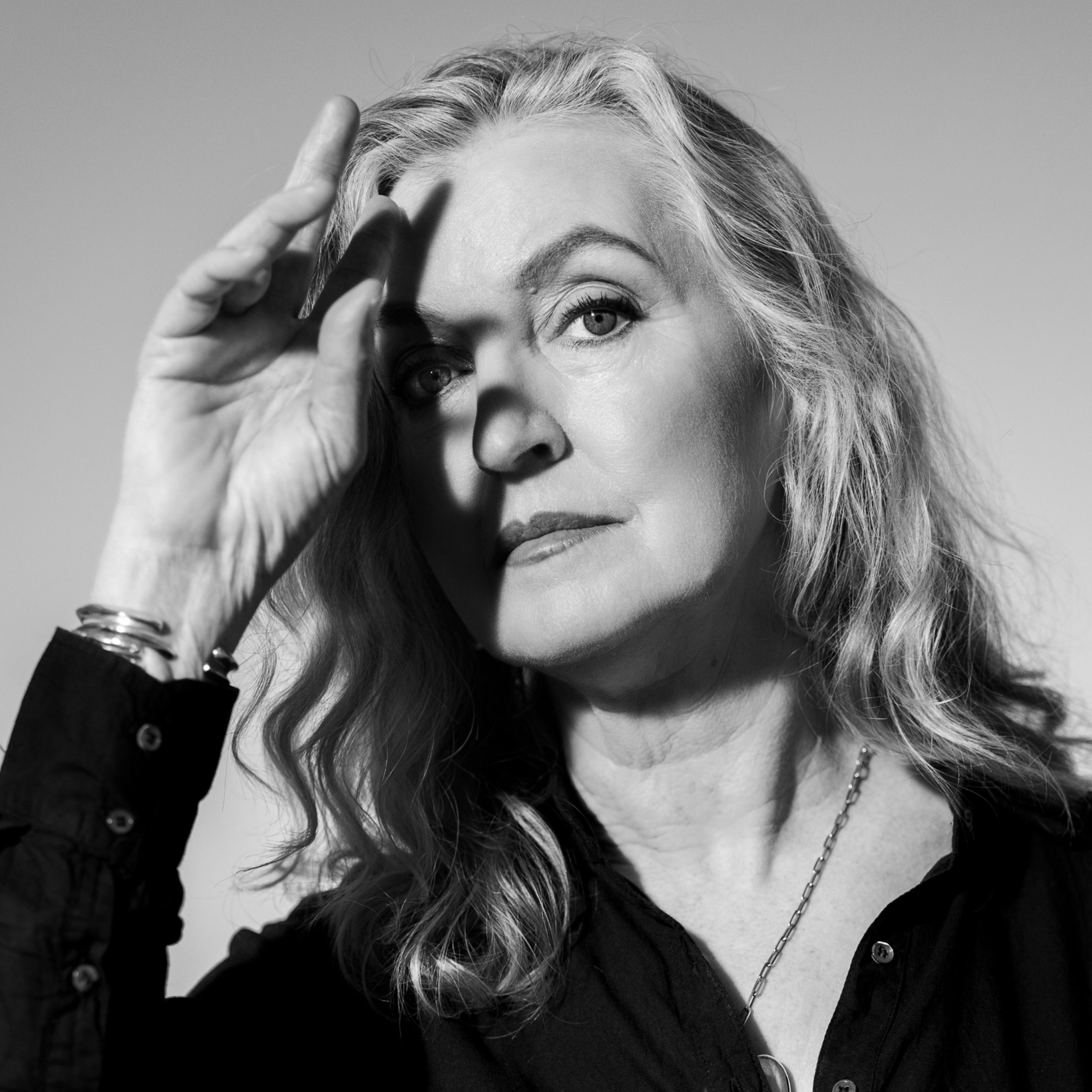
The Interview
Rebecca Solnit Says the Left's Next Hero Is Already Here
00:38:52
The writer and activist on how political change happens and taking the long view.
Loading summary
Transcript53 lines
- [00:00]
Alexa (Amazon Alexa Advertisement)
Say hello to Alexa and see how the experience is tailored to you. Alexa learns your preferences to serve you better. Planning a vacation? Ask Alexa to recommend a trip to check off your bucket list. Use Alexa to find the name of that song you love, discover new favorite shows or recipes, and do so much more. Ask Alexa anything and now Alexa is free with prime on your Amazon devices like echo and Fire TV. Get started at Amazon.com alexaplus.
- [00:33]
David Marchese
From the New York Times, this is the interview. I'm David Marchese. As the old saying goes, the only constant is change. Lately, though, the change can feel overwhelming. We are, after all, living through an era of widespread democratic backsliding, massive technological disruption, and the ongoing slow motion disaster of the climate crisis, to name just a few. But what if there was a different and more hopeful story to tell about all that upheaval? That's the question at the heart of the Beginning comes After the End, the new book by the prolific and critically acclaimed writer Rebecca Solnit. A thematic sequel to her earlier classic, Hope in the Dark, the book takes a longer view on progress and offers a more optimistic philosophy of change based on ideas of interconnection, feminism, ecological care, and political equality. It's not a naive book. Solnit is keenly aware of the massive challenges we're all facing, but it provides a stabilizing counterweight to the feeling that the world has spun dangerously off kilter. Here's my conversation with Rebecca Solnit. You know, Rebecca, it's a real pleasure for me to speak to you in part because A Field Guide to Getting Lost was a really big book for me and I read it not long after I had moved from my home in Toronto to New York City. And it felt like a real companion at the time and just the way it captured the idea that like displacement and a kind of solitude can actually be positive things. So thank you for that.
- [02:14]
Rebecca Solnit
I'm so glad you found it at the right time for you. And yeah, that book, we just put out a 20th anniversary edition and I got to spend some time revisiting it and rethinking what that hell it was I was doing in the early 2000s with it. And it's been really interesting. I wrote that book and then I wrote Hope in the Dark and I thought like, am I schizophrenic? These books are so different. And then I realized that Hope in the Dark, which is very political and very upbeat and A Field Guide to Getting Lost, which is introspective and kind of melancholy, were both about coming to Terms with uncertainty. But of course, I also wrote a field guide to getting lost, as I do a lot of my books, to kind of react against something happening in the culture and something that was already happening with tech was the idea that we want to live in a safe, circumscribed, known world. We don't want to leave the house without knowing exactly where we're going. In a sense that we need to be in control, that we need to know everything. And of course, we're never completely in control and we never completely know everything. So how do we look at it in a way that lets us accept it and maybe work with it instead of deny it or work against it?
- [03:25]
David Marchese
What in the culture would you say your new book is reacting against?
- [03:30]
Rebecca Solnit
Really a kind of cultural amnesia? I think of time in increments of a year, five years, 50 years, centuries. And across that time span, you can really see how profoundly the world has changed and is changing. You can see that these good things, feminism, civil rights movements, environmental awareness, indigenous resurgences, have had a profound impact. So often, often people seem to think in these very short term intervals in which they either think nothing has changed, or they just see the last bad thing that happened and think we're losing. So context is everything. And I often feel that a lot of pessimism, despair, doomerism, comes from not knowledge about the future, even though they think they're thinking about the future, but from lack of knowledge about the past. Despair and amnesia go hand in hand, and so do hope and memory, I think, in many cases.
- [04:30]
David Marchese
So when people are reading the news or thinking about changes from day to day or month to month, or even year to year, and it's making them feel like they're just barreling into a grim, dystopian future. What else should they be thinking about? Or what additional context should they have that would help them complete the picture and show them that there are these deeper currents of positive change?
- [04:56]
Rebecca Solnit
I think even the right tells us something if we listen very carefully to what they're saying, something very encouraging, they tell us, you all are very powerful, you've changed the world profoundly. All these things that are often treated separately, feminism, queer rights, environmental and climate action, ideas of equality, et cetera, are actually all connected. So they're basically telling us we're incredibly successful, which is the good news. The bad news is they hate it and they want to change it all back. So much of what we're seeing with Trumpism, with the far right resurgence or surge right now, is a fury at how the world has been changed and a desire to change it back, to put women back kind of barefoot, pregnant and in the kitchen, to recreate racial hierarchies that have been dismantled to some extent, to impose mandatory Christianity, mandatory heterosexuality, to punish difference and to deregulate protecting the environment, for which you also have to pretend that there are no consequences to destroying the climate, polluting rivers, destroying the natural world, et cetera, and pretend that we're not connected. And it's an anti connection ideology. And so there's a backlash. It is significant, but it is not comprehensive or global. I was on book tour last year in Europe and the Europeans kind of astounded me by being like, oh, Roe versus Wade was overturned. Doesn't that mean feminism has failed? And I was like, the United States is 4% of the population. Meanwhile, all these Catholic countries, Argentina, Mexico, Ireland and Spain, have greatly expanded reproductive rights and abortion access. And even the overturning of Roe vs. Wade just took away the national protection. A lot of blue states strengthened it. So it's really how you tell the story. And there's a lot of different ways to tell it. So I always want to give people these broader perspectives, these deeper perspectives, this equipment for understanding change in ways that empowers them to see it, to understand it, and to participate in it in ways I think you can't with the short term perspectives.
- [07:25]
David Marchese
Do you think progressive change is inevitable?
- [07:31]
Rebecca Solnit
I think nothing is inevitable, but I do think the word evitable should be used if we're going to use inevitable. In some ways, everything is evitable. We're deciding in the present what the future will be. And I think there's a lot of strengths and tendencies. But recognizing that the future does not exist really dismantles a lot of defeatism, despair, doomerism, cynicism, which often pretend to know what the future can and can't be as a way of pretending to a power they don't really have while abandoning the power we really do have, which is to make a future that doesn't exist yet in the present. And I've spent my life listening to people talk about what can and can't happen, and usually not coming back to apologize when it turns out that actually Donald Trump can be elected. Same sex marriage is gonna pass. We are gonna stop the Keystone pipeline. And sometimes when I wanna be kind of an asshole, I'm like, wow, do you bet on the horses? Cause you seem to be really good at knowing the future.
- [08:38]
David Marchese
You know, I was just reading an essay by this writer named George Shilaba, I think he's one of the best political writers in America. But he was pointing out that, you know, there can be a kind of value in certain forms of social conservatism that sort of maintaining certain cultural or religious traditions. You know, it helps with social stability. It helps with inculcating large scale trust among groups of people. But the problem in this essay was pointing out is when those traditions are based in illusions, it's like an illusion could be the authority of white men, or that a certain kind of Christian morality is the only valid kind of morality, or that one's country can do no wrong. But my question is, how do we promote stability and solidarity in the absence of the old illusions?
- [09:38]
Rebecca Solnit
I think that there are some really deep cultural traditions that are worth keeping, some of which are older than Christianity. And one of the really magnificent things I see happening in the United States right now is the recovery of some of the really old stories. And so I feel like part of the future, the best future we aim for, is built by going back to the oldest stories, back to recognizing that patriarchy is not inevitable or natural or the only way people have ever done things that there are in indigenous cultures, the Americas, in Asian and African cultures, there are matriarchal traditions. A lot of hunter gatherers just seem to have a lot more gender equality. So I think you can move forward with anchors in a deeper past and hope for a kind of stability and a deeper relationship to the old stories in the past.
- [10:34]
David Marchese
But why is it that it feels so much easier to internalize the upsetting aspects, the retrogressive aspects of the world we live in, rather than the more positive contexts? You know, it's like we're more drawn to pay attention to the fire than to the place where there's calm. I think you understand what I'm getting at with this question.
- [11:00]
Rebecca Solnit
I do. And in some ways, you're coming to the wrong person. My friend Sam calls me the hope lady, and I am. I remain hopeful, partly as defiance. They would like us to surrender, to feel powerless, that there's nothing we can do. But I think the evidence speaks to that. I think part of it that you're addressing is narrative itself. Most stories are, something goes wrong and then we have to address it. And when nothing goes wrong, there's literally no story. You walk through the jungle and the flowers are beautiful, but you better keep an eye on the tiger, because the flowers aren't going to eat you, but the tiger will. You gotta keep an eye on what's wrong, but Also, I think a lot of the stories of what's right are these stories of incremental change. And one of the stories I feel people don't really comprehend is the energy revolution. At the turn of the millennium. We didn't really have an alternative to fossil fuel, which is part of why so many people are still stuck in a kind of austerity of energy consumption, which is a good thing. But because solar and wind have suddenly become these incredibly cheap, incredibly effective, adaptable technologies, we can run almost everything on earth on renewables, have more energy than we could possibly use. And that's such an incremental story. I feel like very few people comprehend it because it's nerdy, it's technical, and it's really about something very incremental.
- [12:36]
David Marchese
I need to reveal my party pooper attitude about renewable energy or clean energy, which there's a comfort in knowing that clean energy is the future. But at the same time, the United States is pumping more oil than ever before. Our global climate temperature increase targets, we're going to blow past them. We have no idea what the feedback loop effects of rising temperature, what those effects will be or how bad they'll get. So while there is a comfort in knowing what our shared energy future is, it can feel like a cold comfort to me.
- [13:16]
Rebecca Solnit
Well, cold is good in the climate movement, you know, and you talk about comfort, I am not comfortable with where we're at. I am a climate activist, I donate a bunch, I do a bunch of work. The wonder and horror for climate is that the great majority of people on Earth support climate action. They want to see their governments implemented, they want to see the world around them change to a more climate friendly world, whether it's around transportation, urban design, agriculture, et cetera. The obstacles are not technological, they're not, you know, they're political. And a minority of vested interests. The fossil fuel industry and the rich and powerful and governmental figures who either are or serve the fossil fuel industry are what's holding us back. And so the wonder and horror exist side by side. That's part of the complexity I try and embrace. You can be thrilled by all the things that are happening and horrified by all the things that should be happening, but aren't. And so essentially everything we can save is worth saving. Everything we can do is worth doing. Every tenth of a degree we can prevent a temperature rise, saves places, species, communities, et cetera. So of course we're going to lose a lot. We've already lost a lot. But we don't have to lose everything. And we don't have to surrender Ooh, you got me all worked up.
- [14:48]
David Marchese
I feel like it probably didn't take
- [14:49]
Rebecca Solnit
that much, you know, I'm just passionate about these things. They are so worth doing. It is so not over. And we don't know what's going to happen next. And I was so shaped by the 1989 revolutions. Antiananmen Square ultimately was a tragedy, although it may have sown some seeds, we don't know. But I went back and read a bunch of the media in the English speaking world in the sort of spring and summer of 1989. Nobody foresaw that all that unrest in East Germany, Poland, Hungary, Czechoslovakia, the other Eastern European countries, was going to amount to much, or they just thought it was going to be chaos, which governmental people are always afraid of. The fact that they would topple totalitarianism across that whole swath of Soviet dominated Eastern Europe, largely nonviolently, almost all at once in October and November, was really inconceivable. And I think it was inconceivable to the people who did it. And knowing that we don't know is a really important kind of knowledge, because pretending you do know when you don't is stupid and misleading and something I wish a few more people would apologize a bit more for. About all these things that were never gonna happen or were inevitable that, you know, that turned out not to be quite that way, you know, if we're
- [16:16]
David Marchese
talking about counter narratives that can lead to positive change, I think one of the defining counter narratives of the last few years could loosely fall under the umbrella of, you know, the resistance, or another thing that is related in some ways might be called wokeism. And I would like to hear your perspective on whether any of the strategies or tactics against Trump and Trumpism have maybe been counterproductive. Because I wonder if calling him in the movement fascist, sexist, racist, almost regardless of whether or not an individual thinks that those terms are legitimately applicable, has pushed people into their respective corners and maybe alienated people who, you know, might otherwise be brought into the progressive fold. You know, so do you think there have been any missteps over the last 10 years in terms of.
- [17:17]
Rebecca Solnit
And that's the least of our problems. I mean, they are racist, they are authoritarian, they are misogynist, they are homophobic, and tiptoeing around it protects them and not the targets of the hatred and discrimination. I just get so tired of the idea that progressives have gone too far in asserting that, like every human being deserves human rights when people are being Shot in the streets of Minneapolis. And we are facing such horrific brutality that politeness is not really the problem to start with. I think we got into this situation in part by a lot of people in the mainstream thinking it was more important to be nice and polite than call things by their true names. This is really extreme stuff if we need to use extreme language to describe it. Let's be truthful, let's be accurate, and let's be bold. There's a wonderful historian, scholar of nonviolence named George Lakey who says polarization is good. That's when you have clarity. Sometimes people have to pick sides. And, you know, you do not get authoritarians to behave better by being meek and gentle and polite. You get it by being strong. I'd like to thank you for asking.
- [18:44]
David Marchese
Thank you for answering, but I want to switch subjects for a minute. You got a lot of attention for your book Men Explain Things To Me, which I think was published 2014.
- [18:57]
Rebecca Solnit
Yes.
- [18:58]
David Marchese
Adapted from an essay you wrote that that went viral. An essay that was credited with helping popularize the term mansplaining, even though I think the term does not appear in the essay. But was there anything about that book or that essay that you think got lost somewhere along the path to virality?
- [19:23]
Rebecca Solnit
Yeah. No. I wrote the essay in 2008 after joking for years that I was gonna write an essay called Men Explain Things to Me. And you never really know what you're doing as a writer in terms of you don't know how the audience will respond, which is one of the glories of it, at least for me. I don't know. And it went super viral. Then it got sent around in a bunch of interesting ways. But what I find a little disturb is that people love to tell the original anecdote over and over, which had happened in 2003 when I was passing through swanky Aspen, Colorado, and got taken to this swanky party full of swanky people and the swanky host sounds swanky. Ah, yeah. And, you know, not my scene when we were trying to leave the party, and he sat us down and said, so I hear you've written a few books. And I'd written seven. And what are they about? He said the book, most recent one, was about Eadweard Muybridge, the photographer whose revolutionary technologies laid the groundwork for the birth of cinema. And he said, oh, have you read about the very important Muybridge book that had just come out, and it turned out to be mine? It's a very funny anecdote. It also should be a horrifying anecdote about how deeply not listened to women are. But the next anecdote in that book is about a woman running screaming out of her house in the middle of the night, saying that her husband is trying to kill her. And a nuclear physicist, the uncle of my boyfriend in my 20s told me that anecdote and thought it was funny because he firmly believed in his upper middle class nuclear physicist suburb. Men do not try to kill their wives, but women are crazy and men kill their wives all the time, including in upper middle class white suburbs. And women die all the time of not being believed. Whether they say that that something's going on with their body, they need medical care, or they say a man's trying to kill them. And nobody talks about that anecdote, which I think is actually much more important. So I felt that the enormity of the situation really got underestimated when everybody enjoyed telling that opening anecdote. And I don't regret the way I wrote it. I wrote it in one sitting one morning because that anecdote really kind of got people's attention. But I just wish people would kind of hold the whole thing rather than that opening.
- [21:53]
David Marchese
I want to ask about the possible limits of storytelling, because the power of storytelling, the transformative, the socially transformative power of storytelling is something that comes up in your work a lot. And again, to be a David Downer, you know, I think we can look at the, you know, last 10 years to take a, a span of time and say, hey, you know, over the last 10 years there has been more powerful storytelling and powerful first person storytelling about any number of things, whether it's police abuse or the climate crisis or sexual assault. At the same time, one could plausibly argue that despite being awash in all this powerful storytelling, the underlying systemic issues that necessitate that storytelling not only maybe aren't improving, but in some cases are perhaps getting worse. So does that maybe suggest that storytelling can only be effective within a constellation of other strategies and tactics?
- [23:08]
Rebecca Solnit
I think absolutely there have to be other strategies and tactics. It's always important to recognize that stories can be destructive. Imprisoning, they can obscure the truth as well as reveal the truth. There's this period a while back when people were kind of flouncing around with this, aren't stories wonderful? And there are stories to justify white supremacy, misogyny, environmental destruction. The right has its stories, which the fact that this regime has to lie constantly says a lot about who they are. But yeah, stories can be destructive. A lot of stories can oversimplify. I do often see the stories people on the left tell, and the left I think is a lot of different things. Not a monolith, as very driven by their own version of sectarianism, grievance, often stories of oversimplification. Everyone in that category was like this and everyone in this category is like that. And I talk a lot about the fact that categories are leaky and often see one of the jobs I try and do is just trying to give people more complex understandings. So yeah, I think the idea that stories are these magical devices that will do all our work for us is itself a bad story. But the story is often only the beginning. When you change the story, that doesn't fix everything, but it's often is the beginning of changing everything else.
- [24:38]
David Marchese
Rebecca, thank you very much for taking all the time to speak with me today. I appreciate it and I'm looking forward to talking to you again next week.
- [24:46]
Rebecca Solnit
That was a wild gallop. My pleasure.
- [24:54]
David Marchese
After the break, Rebecca and I speak again about what she wishes Democrats would do different.
- [25:00]
Rebecca Solnit
I'm watching the left gear up to attack Gavin Newsom just in case he's the nominee in 2028 and it kind of makes my heart sink.
- [25:18]
Alexa (Amazon Alexa Advertisement)
Say hello to the all new Alexa and see how Alexa can do so much more for you. Need last minute concert tickets? Craving your favorite restaurant? Just sit back, relax and talk naturally. Alexa's on it. Alexa remembers what you love, anticipates what you need, and makes it all happen. Alexa brings thousands of possibilities to life, ready whenever inspiration strikes. And now Alexa is free with prime on your Amazon devices like echo and Fire TV. Amazon.com Alexaplus Real talent is defined by
- [25:49]
Rebecca Solnit
what people can do, not just where they learn to do it. In the US more than 70 million stars workers skilled through alternative routes are overlooked because they don't have a bachelor's degree. It's time to let the story unfold and gain access to a talent pool with valuable skills to help your business thrive now and in the future. See what others miss. Hire skills first. Learn why it's a competitive advantage@tearthepaperceiling.org Brought to you by Opportunity at Work in the Ad Council.
- [26:19]
Alexa (Amazon Alexa Advertisement)
This podcast is supported by BetterHelp International. Women's Day is this March time to celebrate all women, the leaders, the caregivers, the hype friends, the how do you do it? All types. Therapy can be a space to reflect, reset and reconnect. And BetterHelp makes it simple by matching you with a qualified therapist based on your needs and preferences. No pressure, no guesswork this month, visit betterhelp.com newyorktimes for 10% off. That's betterhelp.com New York Times.
- [26:58]
David Marchese
Rebecca, I'm happy to be speaking to you again.
- [27:00]
Rebecca Solnit
Likewise. David, what do you got for me?
- [27:03]
David Marchese
You know, there's something that I said to you earlier that I've been thinking about and want to amend. We were talking about green energy transition and how clean energy it's definitively on the rise. And I pessimistically did some well, but kind of quibbling with that. I was thinking about that. I was like, well, that was a stupid thing to say. Obviously any sort of clean energy transition is to be encouraged in every tenth of a degree of warming that we can prevent really matters. I think what got my back up a little bit when we were talking about that was this idea that somehow like the market will solve or help solve the climate crisis, even though the market is kind of the thing that got us into the climate crisis in the first place. So I think that's where my comment was coming from. I didn't want to come off like a kind of nihilist or something like that.
- [28:08]
Rebecca Solnit
Well, thank you. I figured you were just playing devil's advocate and yeah, I thought about that tenth of a degree thing and it's one of the complex things because I always feel like I'm asking people to go for nuance and shades of gray rather than black and white and the existence of contradictions and complexities. You really have to hold both that there's still a lot to hope for and there's a lot to mourn and those things can exist at the same time. I feel like a lot of the trouble we get in is people who need those all or nothing stories. And they literally hear me too often as saying, if we're not losing everything, then surely you just said we're winning everything. And I'm never saying that. And so you can be kind of heartbroken and exhilarated about climate at the same time and show up and keep doing the work, which keeps getting done with a lot of pushback, including from the current horrendous administration here in the
- [29:05]
David Marchese
U.S. well, whether it's to do with environmental degradation or degradation of our politics or degradation of people, it really seems to me like the public is hungry for an individual to be some sort of real counterweight or foil to Trump and Trumpism. And I don't know whether that person is Zoran Mamdani or Gavin Newsom is clearly trying to position himself as that person. I'd be interested in knowing your thoughts about him. But for whatever reason, that person has yet to be identified or yet to identify themself. Why do you think that is?
- [29:51]
Rebecca Solnit
I often think one of the great kind of weaknesses of our era is that we get lone superhero movies over and over that suggest that our big problems are solved by muscly guys in spandex whose superpower's ability to inflict and endure extraordinary violence, when actually the world mostly gets changed through collective effort. It brings up something really beautiful that Thich Nhat Hanh said at some point before he died a few years ago, which is the next Buddha will be the Sangha. The Sangha in Buddhist terminology is the community of practitioners. The idea that we don't have to look for an individual for a savior, for an Uberman. Maybe the community is the next hero. And that's exactly what Minneapolis is. And I think the counter to Trump always has been and always will be civil society. There's all this disparagement about wine moms. And I read two things yesterday, one from the left, one in the New Republic about centrists despising Trump resistance. And those of us who are making a racket were often coded female, as in hysterical, overwrought, need to calm down, no big deal, et cetera. And the left also, you know, was taking some swipes at wine moms and, you know, a huge amount of the important work I was thinking about this when I woke up in the middle of the night, is done by nice ladies. And I think a lot of people with platforms and a lot of the left want social change to look like, like the French Revolution or Che Guevara or something like that. And so the fact that nice ladies actually change the world, maybe it's about the fact that changing the world is more like caregiving than it is like war, but too many people still expect it to look like war. And I denigrate politicians I don't respect as windsocks. I think a lot of our billionaires are also windsocks. They looked liberal when Obama was president. And being liberal got you ahead in your pursuits. They now have become right wing authoritarians because the wind's blowing in the other direction. If Trump falls and, I don't know, AOC or whatever becomes president, their wind is going to blow in another direction. But I just want us to understand that most of the important change is collective.
- [32:24]
David Marchese
Do you think Governor Newsom is a win sock?
- [32:28]
Rebecca Solnit
Not exactly. I do think he's, you know, I think his trying to counter Trump by sound, making fun of Trump by sounding like Trump might have had its moment. But it's also one of those things I'm watching the left gear up to attack Gavin Newsom just in case he's the nominee in 2028. And it kind of makes my heart sink because I watch people tear down Al Gore, I watch people tear down Hillary Clinton, I watch people tear down Joe Bide, Biden, then Kamala Harris. And there's definitely major things to critique about every one of them. But at the moment when, you know, like the job is to defeat the other guy, you know, we defeat ourselves when that's what happens.
- [33:18]
David Marchese
I want to go back to your new book for a second. So the new book is kind of about the inevitability of, of social and political change, but there's also an inevitability to personal change. In all our lives, has there been a personal change that you went through that affected how you think about or respond to bigger change in the world?
- [33:48]
Rebecca Solnit
There's so many of them that it's hard to pick out one. I have an interesting experience every now and again that I think a lot of people have, especially if you're old enough to remember the 80s and the 90s and let alone the 70s. You go back to something that you remember fondly and you find out it's just racists or sexist or cruel in some way that we kind of didn't notice or have tools or language for. That was normal then, that's not so normal and acceptable now. And there's so many things. I wrote this book about Purple Rain, which I loved when it came out in 1984 and tried to watch during the pandemic. I love Prince. I love what feminist things a movie has, but there's a lot of just big time abuse of Apollonia, Prince's love interest that was kind of played for laughs and normalized in that movie. And I just thought, who was I when I was in my early 20s watching that movie without even the language or the space in which to feel that that stuff wasn't okay? Because if it wasn't okay, you were just at odds with the world. There's kind of no place to go with it. So I probably just laughed along. So, yeah, I think about. I have changed so much, and my change isn't really separate from the social change in so many ways. We've all been re educated around so many or educated around so many things.
- [35:24]
David Marchese
Can I just ask, I'm a big Prince Fan. And I think there's been stuff that's come out since he died about his treatment of women. And also like you're suggesting, the culture has moved in certain ways that cast his attitude towards women, or what seems like his attitude towards women was in a different light. How do you think differently about the art of someone like that now?
- [35:54]
Rebecca Solnit
And it really depends. I don't think there's a man who made art before. If I had a wristwatch, I'd check it about 10 minutes ago who was not. There's some. But you go back a certain amount of time and I don't know, I had a wonderful English professor, Dr. Pellen, who used to say, but fortunately Shakespeare hadn't read Freud. You know that there is a way in which we can't ask people from long ago to have our values. There's historians call it presentism. It depends. And I think there's some people who weren't better than their times. But some of that stuff, you know, just was kind of ugly then and is really ugly now. And it came up somehow in conversation, I think because Woody Allen is all over the Epstein papers. As a good buddy of Epstein's, the last Woody Allen movie I saw was Manhattan. I'm exactly the same age as the 17 year old or 16 year old who played his love interest, the middle aged guy's love interest in the movie. And it creeped me out. I knew those kind of guys in the late 70s and they were creepy and I was repelled. And I've never seen a Woody Allen movie since.
- [37:14]
David Marchese
I want to read a line from your memoir, recollections of my non existence, and then ask you about it. So the line is sometimes now I envy those people who are at the beginning of the long road of the lives they'll make, who still have so many decisions ahead as the road forks and forks again. You're no longer at the beginning of the long road of your life.
- [37:38]
Rebecca Solnit
Yeah.
- [37:39]
David Marchese
Can you see an exciting or pivotal or momentous decision coming?
- [37:47]
Rebecca Solnit
Other than refusing to ever do another book tour?
- [37:50]
David Marchese
No.
- [37:51]
Rebecca Solnit
And you know, I'm pretty happy with the path I'm on. And really I grew up with people telling me to have low expectations for myself. My mom told me point blank that my writing was just a hobby when I was in my mid-20s and that I should just glom onto my lovely successful boyfriend forever who I was in the process of leaving. My father told me the only advice he ever gave me, I think was I should be a business major because I'd never make a living in the humanities. And I didn't really expect to quite have the trajectory I did, and so I'm kind of thrilled with it. But you always have a little nostalgia, lots of points where you make decisions and just that so many of them are ahead of you, I think is both hugely burdensome and also really exciting for young people. I watch them decide who to marry, whether to have a start, a family and how or choose their profession, choose their major in college. I kind of hate the way people treat your later teens in your 20s, as though it's all light and fluffy when it's tremendously weighted because you're making decisions about who are you, who are your people, what is your life gonna be about? And, and even though they're changeable, they're often permanent decisions. You're hitting so many forks in the road and they're such big ones. And some of them are revocable, some of them aren't. So I think about that a lot, partly because I hang out with people of all ages and, you know, from three to their 90s.
- [39:36]
David Marchese
Rebecca, thank you so much for taking all the time to, to speak with me. I really enjoyed it and I appreciate that you did it.
- [39:43]
Rebecca Solnit
Absolute pleasure. David, take care.
- [39:51]
David Marchese
That's Rebecca Solnit. Her new book, the Beginning Comes after the End, is available now. To watch this interview and many others, you can subscribe to our YouTube channel at YouTube.com. the interview podcast this conversation was produced by Seth Kelly. It was edited by Annabelle Bacon. Original music by Dan Powell, Pat McCusker, Rowan Niemisto and Marion Lozano. Photography by Devin Yalkin. The rest of the team is Priya Matthew Wyatt, Orme Paola Neudorf, Joe, Bill Munoz, Eddie Costas, Kathleen o' Brien and Brooke Minters. Our executive producer is Alison Benedict. Next we're week Lulu talks with Illinois Governor J.B. pritzker. I'm David Marchese and this is the interview from the New York Times.