← The Interview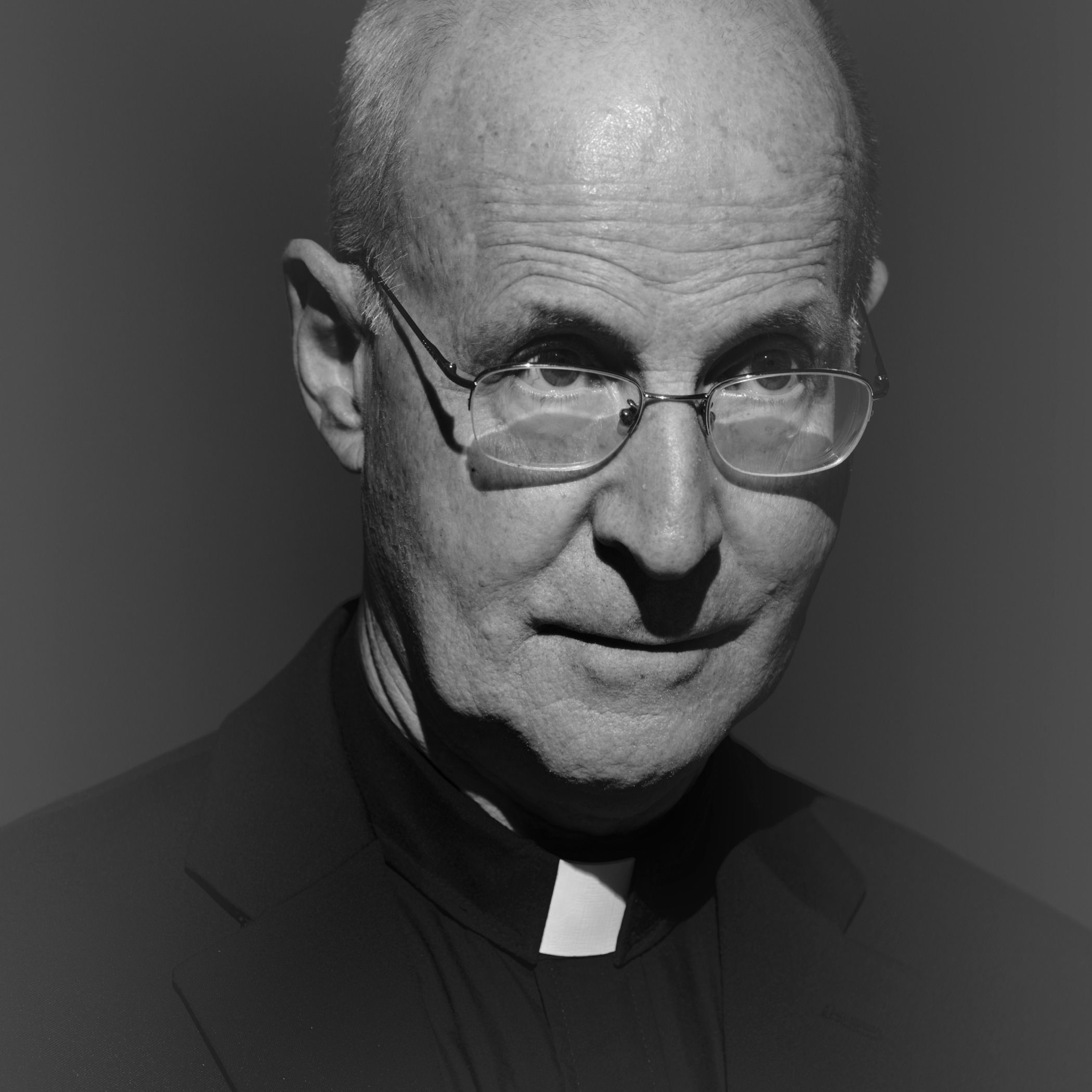
The Interview
Rev. James Martin on Our Moral Duty in Turbulent Times
00:41:30
The author and Jesuit priest discusses human dignity, political divides and how he sees the role of the Catholic Church.
Loading summary
Transcript117 lines
- [00:00]
A
This podcast is supported by McDonald's hot honey sauce. You'll want to make sure you're on time for the McDonald's breakfast menu now that it has the Hot Honey Sausage Egg biscuit. And for later in the day, try the Hot Honey Snack Wrap. It may beat what you thought was your fave. Hot Honey Sauce is at McDonald's for a limited time only. Hi, it's Lulu. You might be wondering what a new episode of the interview is doing in your podcast feed. Well, we've actually got two new episodes for you this week. Today, a conversation I had with Jesuit priest Father J and then David's interview with science writer Michael Pollan will be out at the usual time on Saturday. Here's the episode from the New York Times. This is the interview. I'm Lulu Garcia Navarro. Like many Americans, I've been watching the events in Minneapolis with growing alarm. The division and violence has many of the folks I've spoken to asking which side of this growing crisis they fall on and what they should do about it. That isn't just a political question, but a moral and spiritual one, too. And it's one that I've been thinking about even more since I had this conversation with Father James Martin. Martin is a bestselling author, editor at large of the Jesuit magazine America, and also a consultant to the Vatican's dicastery for communication. In layman's terms, that means that part of his job is to help explain the Catholic Church to Americans, which he's done on social media, in his writings and as an unexpected regular on late night TV shows. He's also ministered to LGBTQ Catholics, and he's part of the progressive wing of the church. All of this work has become more complicated as the conflicts in America have divided the church itself. Over the past year, American bishops and clergy have increasingly spoken out against the Trump administration's policies, including on immigration, even though many prominent administration figures like Vice President J.D. vance, Secretary of State Marco Rubio, and Press Secretary Caroline Levitt are Catholic. Martin and I spoke about all of that, including the situation in Minneapolis, though we did so before federal agents killed Alex Preddy. But so much of what we talked about, especially how to live up to our values in turbulent times, feels even more relevant now. We began, though, by talking about his new book, Work in Progress, which is about the summer jobs he had growing up working class in Pennsylvania and how they pre him for a life of service. Here's my conversation with Father James Martin. Father Martin, thank you so much for coming. I really appreciate you Taking the time, my pleasure. You know, I was reading something that you recently wrote in America magazine and you said, despair takes us away from God in the present. It keeps us focused on all the terrible things that may happen in the future. And that means that we can be blind to all the ways, even if they are small, that God is communicating with us now. And I found that quite a meaningful idea. You make the case that instead of focusing on what is lacking, we should be noticing the ways in which God does show up in small ways all the time. And I was just wondering, how does God manifest in those small ways that are so meaningful on a day to day basis for you?
- [03:30]
B
Well, I would say everywhere you can look for God. And one of the hallmarks of Jesuit spirituality, I'm a Jesuit, as you know, is finding God in all things. So God's presence is not just confined to within the walls of a church or in reading the Bible, but it's in nature and relationships and work and food and entertainment. And so the key is just being attentive and aware. Right. Really noticing. To take an example, if you're stressed out and you're, you know, facing a difficult medical diagnosis or financial problem and you pray for peace, you know, maybe it won't come immediately, but, you know, a couple hours later a friend calls and, you know, tells you something that helps you to calm down a little bit, to see God in that, to see God reaching out that way. And so that's, that's what I mean about noticing. And sometimes it takes some attention because we tend to want those fixes immediately. Sometimes God's a lot more quiet and subtle, tricky.
- [04:27]
A
So I'm gonna confess. I'm kidding.
- [04:30]
B
Feel free if you want to.
- [04:32]
A
I have had varying experiences with Catholicism. I grew up in a very Catholic household. And you'll be happy to know that I was also expelled from one Catholic institution.
- [04:41]
B
Wow.
- [04:42]
A
For a bad attitude. The nuns didn't like me very much. And, you know, you were not always called to the church. You grew up what I jokingly call a sort of negligent Catholic. Is that fair to say?
- [04:55]
B
I usually say lukewarm Catholic. I was baptized first Holy Communion, Confirmation, all that. We weren't super religious, but I mean, I prayed to God to ask for things. Let me get an A, let me get a home run in Little League. And then if I didn't, I was mad at God. I used to think of it as a very transactional thing too, which I think is the way a lot of Catholics and Christians think. If I do this God will do that. So, yeah, I would say lukewarm, Catholic.
- [05:21]
A
And we're sitting here because you've just written a book which is not about the things that you normally write about.
- [05:26]
B
Correct.
- [05:27]
A
Which are prayer and your experience as a Jesuit priest. This is a book about work and more specifically, your summer jobs when you were growing up. Why did you want to write a book like that?
- [05:41]
B
You know, initially I just wanted to tell these stories because I would tell these stories about these crazy summer jobs that I had, busboy, caddy, dishwasher, back in the 70s and then 80s, and some of them were kind of nuts. And I would tell these to my friends and they would think they were hysterical. So I started writing them down. And then I realized I could move from the funny summer jobs into my work at GE after I graduated from college and then into the Jesuits. So it became kind of a vocation story. I also, in terms of finding God in all things, I thought it was important to show how God could lead someone who was a busboy and a caddy and a dishwasher to the priesthood. And that God can be found in all sorts of ways and in all sorts of people.
- [06:19]
A
Yeah, I mean, you come from a working class background and many of your jobs when you were young were sort of manual labor. What did you learn from that?
- [06:30]
B
Not to treat people who are on the lower rungs of the economic ladder like dirt. That's one of the first things I learned.
- [06:35]
A
Because you were treated badly often.
- [06:37]
B
Yeah, in some places. I mean, you know, I was this 15 year old busboy or paper boy and you're not treated well. So I learned the value of just treating people with dignity. But I also learned the value, as I say in the book, of working hard, showing up, being on top time, listening to people, asking for when you don't know how to do something, apologizing, but not apologizing reflexively. There are a lot of life lessons in the book and I'm amazed that you know, because when I was a busboy or a caddy or a dishwasher, I thought, this is terrible. I just want nothing to do with this. I just want the money. I was really intent on getting rich, but now I look back and I say, I learned a lot.
- [07:14]
A
This is actually the perfect segue because you end up going to Wharton Business School. And I have to say, the way you described then going into corporate America, you end up working for ge. Right. You described it as literally soul destroying. I have never read such a grim description of what it's like to work in corporate America. I mean, you went to therapy, you got physically ill from it, you hated what you were doing. Why?
- [07:37]
B
You know, I want to say that the vast majority of people I worked with at GE were great, right? Immoral and kind. But there were enough jerks to make it really difficult. And the emphasis was on the bottom line. And this was the 80s. It was the age of the yuppie. And Jack Welch was the CEO of GE and would fire people regularly, right? We used to say, up or out. If you weren't moving up, they would fire you. And I couldn't see myself emulating some of the people above me, like the CEOs and the people in the C suite, as they say now. So I thought I won out, but where am I going to go? You know, I can't be like, what, am I going to play for the Phillies or be an opera singer. I didn't know what to do. And one night I came home and turned on the tv and there was a documentary about the Trappist monk Thomas Merton. And it just was so beautiful and so romantic and so captivating that I went out and bought his autobiography, the Seven Story Mountain. And I just devoured it. And I thought, this is what I want. And where has this been all my life? And it took me a couple years to think about it. And I was going to a psychologist. Cause I was so stressed. And one day he said the question that I think every young person should be asked, which is, what would you do if you could do anything you wanted to do? And I said, well, that's easy. I joined the Jesuits. And he said, why don't you? And I thought, yeah, why don't I? So I went home, I went back to my office and called the Jesuits and said, I'm ready to enter. And they were like, who are you?
- [09:03]
A
It brings me back to where we started, which is this idea of picking up on things and noticing things. It feels like you had not noticed that about yourself. This thing that you saw when you looked at the story of Thomas Merton at the Trappist monk, it sort of awoke something in you. But you had not really known that it was there.
- [09:23]
B
No, because I thought the idea that God would be, like, communicating with me seemed kind of arrogant. Right. And borderline delusional. Right. That God would call you. But the call, which I think I thought was like a vision or a voice, was really this desire. And I think I had to be so miserable at GE for God to break through. I think that happens a lot when we're vulnerable, God's able to break through.
- [09:46]
A
You're now this kind of. I'm going to use these words and I'm going to ask you what you think. Spiritual emissary to the wider world. I wanted to also talk to you about the church right now. How do you see the state of the Catholic Church in the United States?
- [10:02]
B
That's a big question.
- [10:03]
A
It's a big question. We're going to start big and narrow down. But I'm just wondering.
- [10:07]
B
In the United States.
- [10:07]
A
In the United States, yeah.
- [10:09]
B
Say healthy. Except for the fact that only 30% are going regularly. I think in general, healthy. Right. When I visit parishes and go to parishes, people are happy with their parish and they love being Catholic and they love the Pope. They especially love, now that we have an American Pope. They love Pope Leo. But I think there's some division, right? I think it reflects the political divisions that are going on. The church, you know, can feel very divided when you go in certain places. So among the ones who are still going to church and still faithful and still consider themselves Catholic, I think they struggle with certain church teachings and division in the parishes. And maybe, you know, Catholics who are more conservative think that the church should be more conservative. Catholics who are more progressive think the church would be more progressive. But I think the biggest crisis would be people who don't believe in God anymore. And we do see people falling away.
- [11:04]
A
It's interesting cause you started by saying healthy. And while, yes, there's that increasing secularization, people have left the church. Not so many people go to church regularly. We are seeing this growing desire, especially among young people, for connection and for faith. The number of Gen Z Catholics is actually increasing. Right. And that's according to a recent Harvard study. Young churchgoers seem to participate more deeply in the church than perhaps their older counterparts, which I found counterintuitive somehow that that's true. They go to confession more. They participate in the sacraments. I mean, you minister to young Catholics. What do you think is going on in that sector of the Catholic population?
- [11:45]
B
Well, interestingly, I see different surveys saying different things. I see surveys saying that what you just said. And I see surveys saying, oh, no, that's all overblown. But anecdotally I experienced that. Anecdotally, I experience, you know, people in their, like, 20s and even younger going back to church. Someone described it to me as post secular, which I like that the secular world is just like lacking for them. They want a sense of meaning. They want a sense of mystery. They want Community is a big word, Right. They want to belong. But I also think it's just. I think people have a natural desire for God in their lives. I really do. And I think for a lot of younger people, they're finding the secular world just doesn't do it. It's been a surprise, actually. This is like the last 10 years. And it's exciting, you know, for people in the Catholic Church. I think the challenge is to invite these people who might be looking primarily for an identity, right. With group, into a deeper relationship with Jesus and with God. That's. That's the key, right? So while you might be interested in a particular church because of, you know, the community itself, right. Which is where we find God. Right. There also needs to be a connection with Jesus and God. So it can't just be me and my community. Right. Are you helping the poor? Right. Are you living out what Jesus says? Right. Or is it just about kind of going to Mass and kind of ticking the boxes? So, yeah, people go to church to get something, which is fine, right? To get spiritual nourishment, to get reflections on the Gospels, to receive the sacrament. Right. Of the Eucharist. But it also does need to be giving. Are you doing kind of the hard work of Christianity?
- [13:21]
A
Kind of what we've been talking about is that the Catholic Church is having a moment in the United States.
- [13:26]
B
I'll say.
- [13:27]
A
And first of all, I'm just wondering what you think having an American Pope will do for the American Catholic Church.
- [13:36]
B
A lot. First of all, it brings the Pope and the Vatican closer to people. Right. And therefore, it brings God closer to people. He's not Jesus, he's not God, and the Vatican's not perfect, but it brings religion closer to people. To have him speak in English is shocking. And when he comes, whenever it is he comes, it's going to be a huge.
- [13:56]
A
Do you know when he's coming?
- [13:58]
B
No. I've heard some rumors, but they're only rumors. But his first visit to the US Is going to be nuts. I mean, I grew up outside of Philadelphia. I was just at Villanova a few months ago. That's all anybody wanted to ask me. When is the Pope coming to Villanova? And of course, everyone in Chicago wants him to come back.
- [14:17]
A
Of course. So there are a lot of questions about how he's going to manage this church. You know, he said recently in an interview, and I'm speaking specifically of the United States, sure. That he doesn't plan to get involved in partisan politics. Do you think he'll be Able to keep to that.
- [14:33]
B
Well, look, his mission is to preach the gospel. And if the gospel has political implications, so be it. Right. So when he sees migrants and refugees being abused. Right. Or not treated well, that's part of Jesus asking us to welcome the stranger. So he's going to say something about that. Right. I think what happens is people sometimes impute political motivations to what the Pope or a pope says. That is really just the gospel, like take care of the poor. Right. And if that has political implications, well, that's tough. Right. That's. That's what we're supposed to be talking about. He's pretty smart. He is not going to sort of wade into things in a sort of foolish way. He's a smart guy. I think one of the interesting.
- [15:15]
A
He also understands the American context very well.
- [15:16]
B
Right. I think one of the interesting things is, unlike what people, some people said about Pope Francis, you cannot say about Pope Leo, he doesn't understand the United States. That excuse is now out the window under Pope Francis.
- [15:30]
A
There was a lot of vocal opposition to his papacy here in the United States among a certain section of the clergy. Do you see that continue to be a problem? Is that a problem that Pope Leo is trying to diffuse?
- [15:45]
B
I think he's definitely trying to diffuse it, and I think he knows it very well. It was really sad. There was a lot of vocal opposition to Francis. I would say it was a minority, but they were very vocal, very well funded, very, you know, sort of persistent. And I. I was amazed because some of the same people who said you could never disagree with the Pope under John Paul and Benedict were like, disagreeing with Francis constantly and calling him an anti pope and he's a heretic and he's an apostate and all these things. It was amazing to me. It was really amazing to me to see. And I think there's a lot of desire among U.S. catholics for unity, because I don't think anybody likes it. I don't think people on the right like it or people on the left like it. So I think that they're looking to him to unify the Church. And you know what? I think he can do it, but it's gonna be hard.
- [16:34]
A
Can I ask you how that plays out, practically speaking, because immigration is a key issue. It's also a real fundamental part of the way that the Church sees its mission. I mean, I have been in many, many Catholic institutions on the US Border in Mexico that deal with migrants all through Latin America and here in the United States. And of course, this is a signature issue of the Trump administration as well. You know, in the fall, the US Conference of Bishops, they issued this rare collective statement objecting to the harsh treatment of immigrants. Words are one thing, action is another. What actions do you think the church should be taking?
- [17:13]
B
Well, as you pointed out, the church is already taking actions by working with migrants and refugees all over the place. Some of my Jesuit brothers work with migrants on the border. Right. They're already doing it. And so really, it's standing up with people that we've always stood with. Right. And it's advocating for people that we've always been next to. The US Bishops have been great on this, and it's one of the reasons is because the US Bishops and the Catholic Church knows that community so well. And look, it goes back to the gospel Jesus said in Matthew 25, you know, when you welcome the stranger, you welcome me. It's pretty. It's pretty clear. So people sometimes ignore it or they explain it away. They say, well, we only have to take care of migrants who are doing the following things, right? Or all the migrants are here illegally, when we know most of the migrants are here illegally, so they explain it away. I mean, I don't want to focus on just that because, I mean, there's all sorts of other Catholics that don't listen to other things, too, Right. Like economic things. Right. Or, you know, paying people a just wage, caring for the environment. You know, as Pope Francis asked us to do, a lot of people just exempt themselves out of that. The old expression is cafeteria Catholic. Right. You pick some and take and leave the others. I think in the United States, we are all, to a certain extent, cafeteria Catholics. Right. And there's some things that we don't like about the church and the church teaching, but the fundamentals really need to be accepted. And one of the fundamentals is caring for the poor. You can't get away from that. And caring for the stranger. And it's hard for me personally to watch Catholics, like, beat up on migrants and refugees. It's so clear in the Gospels. And if it's not clear enough in the Gospels, it should be clear enough from Catholic social teaching. And if it's not clear enough from Catholic social teaching, it should be clear from what the popes have said. So it's really kind of, we sometimes say, invincible ignorance. It can't be surmounted.
- [19:00]
A
Well, as we're speaking, we've seen pretty harsh tactics over the past few months and beyond employed by the Trump administration across the country in US Cities on a personal level, I can hear your distress, but I'm just wondering what your thoughts are on that.
- [19:17]
B
That no matter who a person is, no one should be treated like this. I mean, even if you're a prisoner on death row, right, you shouldn't be treated like this. Everyone has innate human dignity. And so what horrifies me is the treatment, the cruelty, the meanness. And it's shocking to me. I sometimes think, how can people sleep at night treating people like dirt and beating them up and calling them names? By the way, Jesus says in the Gospel, if you call someone a name, you're going to hell. There's something that we don't think about a lot, right? And that happens all the time. So it's horrifying to me. But again, I don't understand how people sleep at night. I don't understand how they can sort of reconcile that with the Gospels. It's amazing to me.
- [20:04]
A
How should church leaders then deal with this push, pull, though? Because you're talking about trying to bring unity. And yet, of course, there is division in society. There is division among the church leaders, There is division among the people who are actually in the pews. I mean, how are they supposed to navigate what is a very divisive time?
- [20:30]
B
Well, I think it's pretty clear one, it's never demonizing the other person, right? Always giving the other person the benefit of the doubt. It's continuing to preach the gospel in season and out, right? So I think it's possible, and I think a lot of bishops are doing a very good job with immigration. And I also think standing with them is important physically going to these places and being with them. Right? I'll tell you a story. There's a Jesuit who's a big hero of mine, Greg Boyle. Greg Boyle works in LA with former gang members. And I was interviewing him in front of a group of young people, and there were questions from the audience. And this one guy said to Greg, I work in the inner city, and so many of my people that I work with are despairing. What should I do? Right? And I was thinking in my mind now, what would I tell this guy? I would say, do this, do that, do this. You know what Greg said? He said, are you standing with them? And the guy said, of course. He goes, then that's all you should do. So I think that's what the Church needs to do, is to stand with these people, everybody who's on the margins.
- [21:33]
A
Does that mean priests standing up protests?
- [21:36]
B
I think it means everything. It means being with those people emotionally spiritually sometimes physically, means advocating for them. It means explaining them. Sure. Standing with people. I think that's a really helpful way of looking at what the church should be doing on their side. We are on their side.
- [21:55]
A
Father Martin, I do wonder how your own views have sort of evolved on this, because during the first Trump administration, you were very vocal on social media about things that you disagreed with. Have your views shifted on when and how to speak out on something?
- [22:12]
B
Yeah, I try to focus on the gospel, and I try not to critique someone by name, and I try not to get too political. I mean, we all learn on social media what's good and what's bad and what lands with people and what doesn't. And I think I'm on more solid ground by just quoting Jesus. I sometimes subtweet something, and I just write, I was a stranger, and you did not welcome me. Matthew 25. Look, that. That in itself should be more persuasive than anything Jim Martin says.
- [22:44]
A
Speaking of marginalized communities, you are extremely well known for your LGBTQ advocacy, and that is, I don't have to tell you, one of the most divisive issues in the church.
- [22:55]
B
Correct.
- [22:56]
A
Can you tell me how you became involved in this and why?
- [23:00]
B
Sure. I knew LGBTQ people, obviously. I live in New York. I have LGBTQ friends. I'd written a little bit about it, like, the early 2000s for America media, where I work, I minister to them. Right. But it wasn't until 2016, the Pulse nightclub massacre in Orlando, Florida, where 49 people were killed, and I saw the response of the bishops to be what I considered really paltry. It was the largest mass shooting in US History up to the time, and really, very few bishops said anything. And I really remember thinking, what does this community have to do to get the church to notice it? Does it have to be murdered? Is that what it is? So I did a Facebook video that went viral, and that led to a talk, and that led to a book, and it kind of blew up and went crazy. It's been a shock to me. When I was at the synod for the last two years, 2023 and 2024, I walked into the big hall, and it seemed like everybody knew me, which was really weird. It was a weird experience, in a.
- [24:05]
A
Good way or a bad way that everyone knew you.
- [24:07]
B
Sometimes good, sometimes bad. So there were three reactions. One was, since we were in Italy, Father James. Bravo. Agori. Grazie. You know, and you are a. The second reaction was, will you help me in my diocese? I don't know what to do. And the third reaction was shaking their. Literally shaking their finger at me and saying all sorts of critical things. Most of the people, the vast majority of the people, were very open and very positive and welcoming. But it's a really divisive issue, particularly in, as I found out, sub Saharan Africa and Eastern Europe. Unbelievable, the stuff that people said. And so it just, you know, it makes me want to work harder and want to reach out to more people.
- [24:55]
A
What position would you like to see the church take today on those issues?
- [24:59]
B
Listening, basically, at the synod, a number of people, and I made it a point to talk to people who disagreed with me and disagreed with other people who are ministering with LGBTQ people, because I wasn't the only one. And the main sort of response was, is a Western ideology that you are sort of imposing on our country. Now, it's hard to rebut that because you don't want to come off as colonialist or. It's unnatural. Just doesn't exist. I had a archbishop, I won't say from where, say to me, the reason that there are gay people in my country is because people like you pay them to be gay. And I said to him, you know, I want to be polite. I said to him, archbishop, you know, I don't know about that. I don't know about people being paid to be gay. I said, but you certainly have to admit that some people are born that way. No, they're not. It's unnatural. So that's where we are in some parts of the church. And so listening and just getting to know them is the first step. And it's happening, though, because more and more people are coming out. And interestingly, more and more nieces and nephews of bishops and priests and sisters are coming out. So it's oftentimes people in their families that help them to change, I think.
- [26:17]
A
I'm wondering if you think the church can ever really be a welcoming place, though, to LGBTQ people when church dogma and a large part of the church still sees their sexuality as ungodly in some way?
- [26:32]
B
The answer is yes, because there are plenty of parishes that are very welcoming where LGBTQ people feel extremely welcomed. You know, for a lot of LGBTQ Catholics, what they've said is, okay, I don't agree with this particular part of church teaching, but I'm Catholic, and this is my church, and I want to be here. And that's how they've kind of reconciled that. So the answer is yes. The invitation for the rest of the church is to say, you Know, can we extend the same welcome that we do to everybody else? Right. We're all, in a sense, imperfect and in all, in a sense, sinful and all, in a sense, unworthy. Right. But we welcome people. It's a very selective sort of focus on LGBTQ people, unfortunately, in the church, because you don't say to somebody, you know, anyone who uses birth control. Right. Anyone who's divorced or remarried, anyone who, excuse me, is masturbating. Right. These are all right, sinful things. We don't focus on that. How about anyone who doesn't care for the environment or pay a just wage or care for the poor or forgive or is kind? Right. We don't focus on them. They're welcome. So why not LGBTQ people?
- [27:37]
A
You know, you are part of a wing of the Catholic Church that is more liberal, I would say. Is that a fair estimation of your. Where you stand in the spectrum?
- [27:45]
B
I'd say progressive. I think that's fair.
- [27:47]
A
Okay.
- [27:48]
B
But I'm more traditional than you might think. That's what I would say.
- [27:51]
A
Would you say that too? Yeah, I mean, I think every priest is more traditional than you might think.
- [27:54]
B
Well, I mean, I believe in every word in the creed. Right. I'm very devoted to Mary. I love the saints. You know, I go to Mass every day. I go to confession a couple times a month. So, yeah, I'm pretty traditional. But on some things, I think people see me as more progressive. I think that's fair.
- [28:10]
A
Just with that said, I do want to get your view on a shift that people perceive as happening in the Catholic Church, which is that the energy seems to be on the conservative side of the spectrum in the Catholic Church at the moment. Here in the United States, that's where we see a lot of the sort of devotion, people coming in, wanting to embrace the church. That's the side of it that they find appealing. That seems different than the side that I hear you emphasize.
- [28:44]
B
Well, again, I'm more traditional than people might think.
- [28:47]
A
But you've been criticized for.
- [28:49]
B
But I will say what some see.
- [28:50]
A
As pushing a liberal agenda inside the church. I mean, would you accept that as a criticism?
- [28:55]
B
I would accept that. People do criticize me for that. But, no, I'm not pushing an agenda, really. And I really try to stay away from that. I just try to preach the gospel, and people interpret it as pushing some sort of liberal agenda. Yeah, I am actually not very political. For example, like, I don't really know much about politics. I don't sort of follow that too much. It's Just where I see people who are struggling. But you're right, there is a lot of energy around the more traditional side of the church these days, the United States, and we have to be attentive to that and meet people where they are, are. I don't know. I hope that answers your question.
- [29:31]
A
No, it does. I mean, you know, I guess what.
- [29:34]
B
I'm struggling with, I sometimes struggle with. We. I'm not saying you're doing this, but we sometimes sort of overlay political categories to the church. Liberal, conservative, progressive, traditional.
- [29:47]
A
I guess the reason that I'm asking about this is that more broadly, there is a renewed debate about the place of religion in American political and civic life. Right. Bible in schools. God being cited now by the White House press office. The vice president, he's one of the most prominent adherents of the Catholic sort of new right, if you will. Is there something that is beneficial about that? You know, that can be seen as having positive impacts for the Catholic Church in this country?
- [30:21]
B
Sure. I think when people bring their faith sincerely into the public square and into relationships with other people, it's a good thing. As long as it doesn't imply that somehow God is, like, on our side. Completely. Right. And if you're not with us, then you're against God. That's the problem. Right. That Jesus is on our side. And if you oppose us, you oppose Jesus. That's the problem. And by the way, I often wonder why we don't put the Beatitudes in classrooms. It's always the Ten Commandments. What about blessed are the poor? It's amazing to me that mostly Christians want the Old Testament in the classrooms and put on signs. But what about blessed are the poor? Blessed are those who mourn. Blessed are the meek, Blessed are the peacemakers. Why is there never a push for the Beatitudes? It's a very strange thing to me.
- [31:09]
A
Well, why do you think that is?
- [31:11]
B
Because it's hard, and it's stuff that we want to avoid. I mean, the Ten Commandments are hard, too, but I think these days the Beatitudes are harder. Blessed are the meek. Blessed are the peacemakers. We don't see too much of that.
- [31:28]
A
I'd like to end before we speak again by coming back to your book. The book finishes with you becoming a Jesuit priest, and that seems like it brought you a lot of meaning, a lot of peace and some job security.
- [31:43]
B
That's right.
- [31:44]
A
You know, in your book, you take a lot of lessons from all these different jobs. And I'm wondering what taking confession has taught you about human nature and about penance and forgiveness.
- [31:55]
B
Wow.
- [31:56]
A
Because you must hear it all, all the time. For people who aren't Catholic, they may not know you have this very particular role to be able to forgive sin.
- [32:06]
B
It's a great grace. My favorite line about confession comes from my professor, Peter Fink in theology, who said, confession is not about how bad the person is, it's about how good God is. That's my favorite. So it teaches me about God's goodness and also just how much people try. Right. Try hard and fail and keep going. But it really to be able to say to someone, you know, I forgive you is so powerful and it changes lives.
- [32:45]
A
Thank you so much.
- [32:46]
B
You're welcome. My pleasure.
- [32:47]
A
Appreciate your time and we'll talk again. After the break. Father Martin and I speak again about the situation in Minneapolis.
- [32:59]
B
Even if you argue that Renee Goode was somehow breaking the law, she did not deserve to be shot in the head. And I guess what I'm seeing is this coarsening of morality in the United States where people think that's okay or she deserved it.
- [33:25]
A
This podcast is supported by McDonald's hot honey sauce. You'll want to make sure you're on time for the McDonald's breakfast menu now that it has the hot honey sausage egg biscuit. And for later in the day, try the hot honey snack wrap. It may beat what you thought was your fave. Hot Honey Sauce is at McDonald's for a limited time only. This podcast is supported by the RealReal. Meet Christine. She loves shopping. And this is the sound of fashion overload. Too many fabulous things, not enough space. So Christine started selling with the RealReal. I've always loved collecting designer pieces, Gucci bags, Prada heels. But my style keeps evolving. Selling with the RealReal. Game changer. I earn more. And they do everything. Seriously. Just drop off your items or schedule a pickup. We handle the photos, descriptions, pricing, even shipping. You just sit back and watch your items sell fast to our 38 million members. And I get peace of mind knowing I earn more selling with the RealReal than anywhere else. Exactly this. That's the sound of your closet working for you. The Real real Earn more, save time, sell fast. And right now, you can get an extra $100 site credit. When you sell for the first time. Go to therealreal.com to get your extra hundred dollars. Therealreal.com that's therealreal.com. Hi.
- [34:49]
B
How are you?
- [34:50]
A
I'm good.
- [34:51]
B
I hope I was okay the other day.
- [34:53]
A
Oh, my goodness. Why would you think you weren't I thought, let me do some therapy. What's going on?
- [35:00]
B
I thought I spoke too fast. Did I speak too fast?
- [35:03]
A
No.
- [35:04]
B
All right. And I thought I should have, like, paused and thought about my answers. I hope they were, like, intelligible and thoughtful.
- [35:11]
A
And that's why we have a second call.
- [35:12]
B
That's right. So I'd like to redo the whole thing.
- [35:15]
A
Okay, let's do it.
- [35:16]
B
Yeah, let's.
- [35:18]
A
You will be unsurprised to know that I was also thinking about some things from our conversation.
- [35:23]
B
Good.
- [35:24]
A
You know, we touched on this political moment, and I did feel like it might be something that you were a little uncomfortable talking about. Do I have that right?
- [35:34]
B
Yeah. Cause I try to stay out of politics, per se. Yeah.
- [35:37]
A
Yeah.
- [35:38]
B
So you did pick up on that correctly.
- [35:40]
A
So I want to maybe tackle it in a different way. Less on the nose, but more just about how you think our. The church and spiritual teaching informs this moment that we're living through. Because one of the things that I hear a lot. I'm not a priest, obviously, but journalists talk to a lot of people, and we hear from a lot of people. And so many people ask me, how do I fight for what I believe in without adding fuel to the fire that is tearing us all apart?
- [36:11]
B
I can give you some tips. The first tip is always give people the benefit of the doubt. That's the first tip. And St. Ignatius talks about that. We call it the presupposition. Always try to put a positive spin on something that someone else is saying or doing. Second, for me, it's never go ad hominem. Right. You can talk about something you don't like, that a person did or something, some bill or some law or some action, but really never say this person is evil or this person is not a Christian or all that kind of stuff. And then third, I think, is being willing to put up yourself with a lot of hate and a lot of dislike. That's been really helpful for me in my LGBT work. The freedom from the need to be loved, liked, or approved of. One of the things I was not expecting was the hatred. And I mean, really hatred. You know, people. There are people online who hate me and who protest me, and I get talks canceled and people who think I'm a fill in the blank, heretic, apostate, demon, Satan, false priest. I mean, I got death threats and that kind of stuff. It's pretty horrible. And I always go back to this retreat I did probably about 10 years ago, where I was asked to pray over the gospel passage called the rejection at Nazareth. Okay, so Jesus gets up in the synagogue at Nazareth, his hometown, and he basically proclaims he's the Messiah. This is in Luke's gospel, I think. And initially, everybody likes him, right? All the townspeople at Nazareth, they would have all known him, but they turn on him and take him to the brow of a hill where they're trying to throw him off. They try to kill him, basically. And I remember in prayer during the retreat, I remember imagining myself with Jesus. And I said to Jesus in my prayer, not. You know, I wasn't hearing anything. How were you able to do this? And the words that came to me in prayer, which I will never forget, were, must everyone like you? And that was really a moment of invitation for me. Must everyone like you? Do I really need everybody to like me? And that's been a process for me, and that's a very freeing thing if you can get there, and I'm still on the way.
- [38:18]
A
There is, I think, a craving for moral clarity at this moment. And as with any conflict, moral clarity is being owned by people with very different viewpoints. And I am sort of curious how we navigate that. You know, it's like the idea of when people are fighting wars in the Middle Ages and both say that God is on their side, how do we understand who is right?
- [38:49]
B
I've been thinking a lot about Renee Goode and her killing, and I guess what I come down to is this. Even if you're breaking the law, no one deserves to be treated like that, right? So even if you argue that Renee Goode was somehow breaking the law, she did not deserve to be shot in the head. And I guess what I'm seeing is this coarsening of morality in the United States, where people think that's okay or she deserved it. So when you think of people like the inmates on death row, when you think of migrants, when you think of protesters, when you think of LGBTQ people, when you think of everyone, really, right, people in Ukraine, people in Gaza, everyone deserved to be treated with dignity. That's what we're losing. What's being set forth, I think, is that only our side deserves to be treated with dignity, and the other side is horrible and evil and subhuman, right? That's what's going on, which is a disgrace, because for Jesus, there's no us and them, there's just us. And all of us deserve to be treated with dignity. And I think the church has been very clear about that, and I'm grateful for that. And that's not a political message. That's the gospel. Everyone has dignity. Everyone is a beloved child of God. Everyone deserves to be treated with dignity and not shot in the head.
- [40:25]
A
I also saw a post from The association of U.S. catholic Priests, which is the largest organization representing priests in the US and the post said, in reference also to the good killing, among other things, that, quote, we need to be brave enough to name evil when we see it. And there seems to be a call to action in that. But I just wondered what that call to action should be.
- [40:52]
B
I don't know. And there's not a one size fits all answer. Here's something that I found really interesting. I heard this on a retreat. When Jesus left the earth right at the Ascension, there were still sick people in Galilee and Judea. He didn't physically heal everybody. Who did he heal? He healed the people and he preached to the people in front of him. And I think that's what we're called to do. We tend to want these sort of grand answers and it's important to think, you know, globally, but it's really important to do what we can one on one. So I find that very freeing. Jesus dealt with the person in front of him and so can we.
- [41:33]
A
Thank you so much. This has been such a wonderful conversation. I've really, really enjoyed it.
- [41:37]
B
My pleasure. Thank you.
- [41:45]
A
That's Father James Martin. His new book, Work in Progress, is out now. To watch this interview and many others, you can subscribe to our YouTube channel@YouTube.combletheinterviewpodcast. this conversation was produced by Wyatt Orem. It was edited by Annabelle Bacon, mixing by Sonia Herrero. Original music by Dan Powell, Sophia Landman and Marian Lozano. Photography by Philip Montgomery. The rest of the team is Priya Matthew, Seth Kelly, Paola Neudorf, Joe, Bill Munoz, Andrew Karpinski, Eddie Costas, Mark Zemel and Brooke Minters. Our executive producer is Alison Benedikt. On Saturday, David talked with writer and science journalist Michael Pollan, who has a new book about consciousness.
- [42:30]
B
The big threat, I think is AI, which is going to be an enormous challenge to this question of what does it mean to be human? Is consciousness something that a machine can possess? Are we more like intelligent machines or conscious feeling animals? Who are we?
- [42:49]
A
I'm Lulu Garcia Navarro and this is the interview from the New York Times.