← The Interview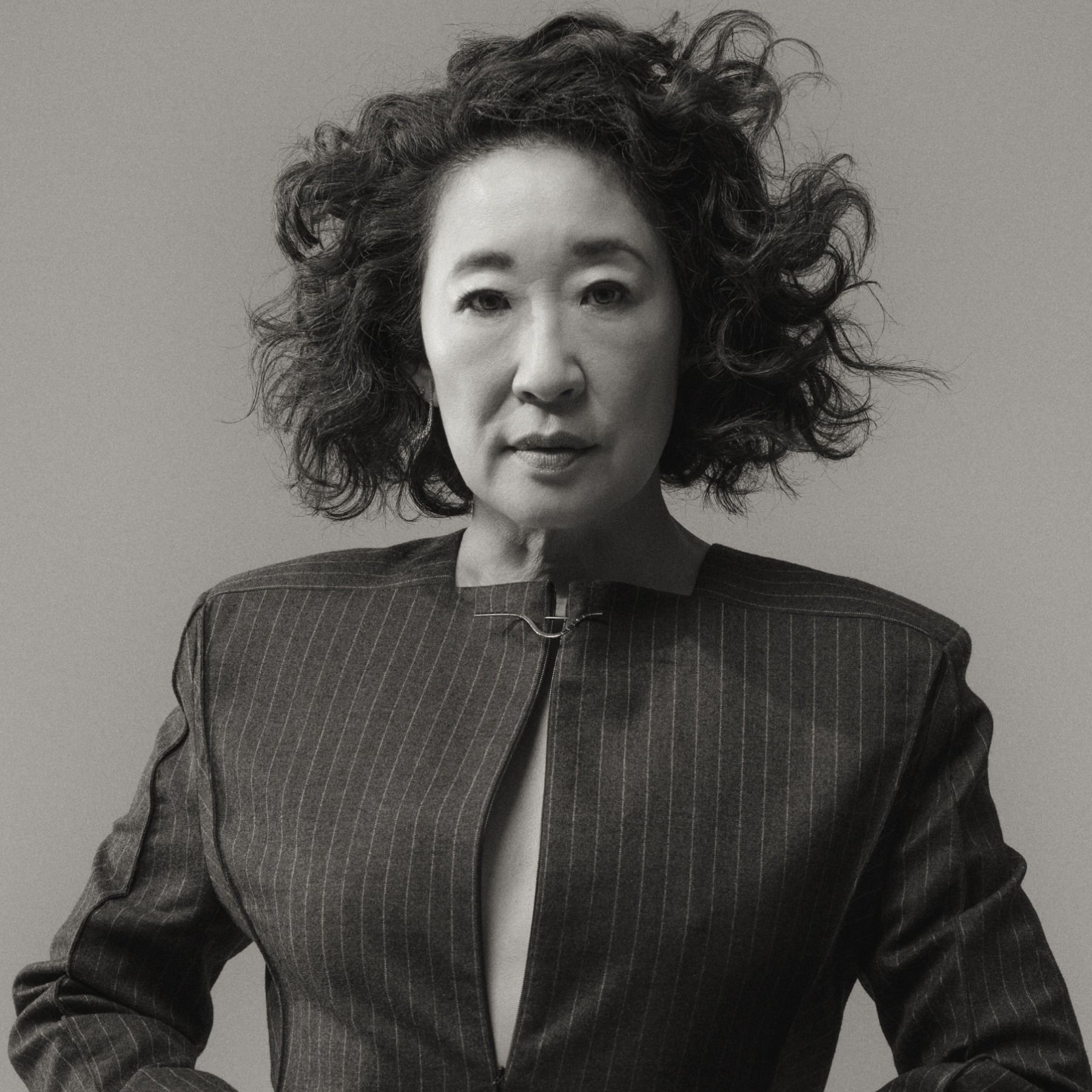
The Interview
Sandra Oh Knows What's Great About Middle Age
00:41:38
The actress discusses discrimination in Hollywood, what she’s learned about herself in her 50s and her iconic role on "Grey's Anatomy.”
Loading summary
Transcript137 lines
- [00:00]
Intuit QuickBooks
Do you own a business that's ready to thrive? It's time to let Intuit QuickBooks take things like unpaid invoices and tracking expenses off your plate so you can take things to the next level. QuickBooks is an all in one business solution that can help with those day to day tasks like invoicing and expenses. Manage and grow your business all in one place. Intuit QuickBooks your way to money. Get 90% off for 3 months limited time only terms and conditions apply.
- [00:30]
Lulu Garcia Navarro
From the New York Times, this is the interview. I'm Lulu Garcia Navarro. One of the most freeing parts of being a woman in middle age is letting go of all the stuff that weighed you down earlier in your life. By this point, we've achieved quite a bit. We've learned quite a bit about who we are and we've also learned quite a bit about ignoring those who would try and limit us. We're kind of whittling ourselves down to what matters. Sandra oh knows all about that journey. She's best known for the 10 seasons she spent on Grey's Anatomy playing the career defining role of Dr. Christina Yang after she left the show. She then played Eve Pilastri in Killing Eve, an intelligence operative in the UK tasked with tracking an elusive and entrancing female assassin. And this summer, she'll be on stage in Shakespeare in the park in New York City. She's playing Olivium in Twelfth Night. None of those characters were originally written to be played by an Asian woman, but O has broken barriers and paved the way for many of the Asian actors who have followed. Even as she says now in her 50s, she's still processing what it took to get there. As we do regularly on the show. I sat down with O twice. The first time was in front of a live audience at the Tribeca Festival. The second was a few days later, just the two of us. We talked about her career, aging dei, and for the first time publicly, she read from her personal diaries about key moments in her life and how she looks back on them. Now here's my conversation with Sandra.
- [02:03]
Sandra Oh
Oh.
- [02:15]
Interview Partner
This is exciting.
- [02:17]
Sandra Oh
All right. This is how we were on the couch backstage.
- [02:20]
Interview Partner
We just had a conversation on the couch which was we went deep fast. I was reading about you, of course, in advance of this conversation, and I came across this really great quote from 2019. You were one of Time magazine's 100 most influential people. Shonda Rhimes, who of course is the creator of Grey's Anatomy, wrote your entry and she said, and I'm quoting here, Sandra oh is a virtuoso. She treats dialogue like notes of music. And then just recently, you met Megan Thee stallion at a gala. And when she saw you, and I'm juxtaposing this for a reason, she said, the icon, the legend.
- [02:56]
Sandra Oh
Wow.
- [02:57]
Interview Partner
My whole year's made. I don't have to do anything else. How do you feel about that when people see you and are just overwhelmed?
- [03:06]
Sandra Oh
I really take that question to heart because it's taken me a long time to actually really receive it. I don't usually pay attention and I don't usually listen to it. And I've. You know, coming into. Deep into our midlife, I'm needing to listen to things that somehow I felt like I need to protect myself from either cause I want it so badly or I just don't believe it. And I think a part of being a full person in midlife is. Is to actually hear the positive things or one's effect on people. And so I think I'm still working on it to receive it. You know, in Twelfth Night, there's this one little passage that I've been working on, and I work on it. It's in Act 5, Scene 1, and Olivia is speaking to Viola, who's pretending to be Cesario. And she says, fear not, Cesario. Take thy fortunes up. Be that thou knowest thou art, and then thou art as great as that thou fearest. So for me, it's always a clue. For me, I can't remember a line. Like, I have to work on it because there's something in the line that I need to somehow ingest or understand. I don't understand that line quickly enough. But in that is actually, I think, the answer to your question, which is what I'm trying to work with, which is to not be afraid and to take thy fortunes up.
- [04:36]
Interview Partner
Were you afraid of it going to.
- [04:39]
Lulu Garcia Navarro
Your head or were you feeling like.
- [04:42]
Interview Partner
You didn't deserve it?
- [04:43]
Sandra Oh
I feel like it threw me off balance. I feel like I couldn't keep focusing on just the work. That there was something about it that was. Sometimes you're dealing with a projection that can be a little overwhelming. And I think I needed to kind of build my interior self to be able to stand steady with it.
- [05:05]
Interview Partner
So we're here in New York, but you live in Los Angeles and you, like many people, had to evacuate your home during the wildfires earlier this year.
- [05:13]
Sandra Oh
Oh, no, we didn't have to evacuate, but we were on standby.
- [05:16]
Interview Partner
Yes, you were on standby. You were thinking about it.
- [05:18]
Sandra Oh
Oh, yes.
- [05:19]
Interview Partner
And we Chatted before this event. And you told me how you had to make this difficult decision about what to take with you if you were going to have to leave.
- [05:29]
Lulu Garcia Navarro
Can you tell me that story?
- [05:30]
Interview Partner
What happened?
- [05:31]
Sandra Oh
Sure. It was a tough time for everyone, and we were close to one of the fires. So then it was like, what are we gonna pack in our car? And the first thing that I thought was, I went to, honestly, my journals. I have journals. I have journals since 1982. So there's a lot of them. And then I thought, I can't take them all. Which ones do I take? Do I take the first ones? Do I take the past 10 years, the last 10 years? And, you know, it just makes you think, what are the things that are very, very important to you? And I think that was the first thing that I thought about after you.
- [06:12]
Interview Partner
Told me that story. I did ask you to bring some of those diaries with you, and we're gonna be reading from some of them. And I wanna start with an excerpt from a momentous day in your career. This was your last day on Grey's Anatomy, which you were on for 10 seasons.
- [06:28]
Sandra Oh
10 seasons, yeah. It's amazing. It was amazing.
- [06:33]
Interview Partner
And so. Please.
- [06:34]
Sandra Oh
Yeah, sure. April 25, 2014. Yesterday was my very last day of work on Grey's Anatomy. It was joyous. I waited for my call time. I felt excited and jumpy to get to work. I had my hug from Laura and my first, last makeup from Norm. Desiree and I danced to Michael Jackson in the trailer. It was fun. I passed everything out and wrote some more cards. Grabbed a lousy lunch at the screening, took lots of pictures, lots of hugs. Then after lunch, they surprised me with a ceremony thingy for me. Tony and Joan. Cake sheet and cider. Very lousy, cheap and wonderful. Chris said words. Nicole and Brian and Carla gave me a frame call sheet. And I got two boxes filled with notes and gifts from the crew. I was deeply moved. We shot my last scene in the OR with Makev. I was in the gallery alone, tapping on the glass. I'd tap on the glass, wave goodbye, and then I'd fold to the ground and close the work. Then afterwards, Kev threw a little get together with food and margaritas back in Tony's office area. We ended the evening all in a circle, gabbing and gabbing, telling such fun and horror stories.
- [07:54]
Interview Partner
So I'm interested in you saying that it was joyous. I don't hear maybe a lot of sadness. This was the end of the biggest thing in your career.
- [08:02]
Sandra Oh
Why were you so happy no, no, no. It's because, like, you know, I'm still working on and figuring out what that decade of my life was. Not everyone gets to know that they're leaving a show. Yeah. And I was in, I think, a very, very fortuitous position, and I took advantage of it, fully meaning that I wanted to leave. Well, and I think that for me, one of the proudest things that I have in my life is how I left the show, because I was as conscious as possible with all the crew members and actually even with the public. I think I joined Instagram then, and it was basically to help people say goodbye. As I was saying goodbye, it was very, very, very thought out. It's really. Anyone who does, like, TV and R stuff, it's really, really hard to say goodbye because stuff is fast. You leave, you end, you cut, and then you. But I actually really worked to say thank you to everyone and to leave on my own terms.
- [09:13]
Interview Partner
Okay, I wanna break some news early here because you gave an interview this year where you said there's a chance you'd go back. What would it take? Are we talking guest appearance, or is Christina moving back to Seattle Grace?
- [09:26]
Sandra Oh
You know what? I gotta tell you. Let me redefine that for a second. What I have noticed, you know, this is 10 years out from leaving the show, is the deep appreciation that I have for the people who appreciate Christina. And it is that love that has made me go, oh, the fans really, really, really want it. And that for the first time, that's when I started opening up the idea. But for me, I think to really be true to the people who enjoy your work, you have to be true to yourself. So at this point, I don't think so.
- [10:09]
Interview Partner
Okay, sad face. I want to go back to your roots. You grew up in Canada. Your parents moved there from Korea. Your mom was a biochemist.
- [10:20]
Sandra Oh
Yes.
- [10:21]
Interview Partner
Your dad was a businessman. Clearly, both very driven people. How did they influence some of your early ambition?
- [10:28]
Sandra Oh
You know, I think that's a part about when you grow up a child of immigrants. Right. You know, I don't know. Maybe I can't say that because you grow up a child of immigrants. Like, you see your parents work so hard.
- [10:42]
Interview Partner
There's something to that. I grew up as a child of immigrants, and there's something.
- [10:45]
Sandra Oh
And you know what you have, and you know what you don't have. And then you can also see that what you want in your life and that you realize you cannot bother people for that, you have got to go do it yourself. I'm not sure. You know, I would say that I think that I did get a very high dose of ambition and drive. I actually think that comes a lot from my dad. But also my parents are very religious, and there's something equal in that, because their belief that you do something for the good of humanity was a big thing in our family. How you grow up, what you're supposed to do, and the responsibility that you have to do good. And I think that also really, really influenced us.
- [11:31]
Interview Partner
You've described yourself as a very emotional child, and you brought another diary entry that speaks to that. Can you explain when this is from?
- [11:40]
Sandra Oh
Yes, this is my very first entry. And I just want to actually maybe prompt it with. Don't worry. Sunday, the 3rd of October, 1982. Dear Arie, like diary. I hate myself. That's all. Oh, yeah. I also think I'll commit suicide. Spelled S u c I C I D E Nothing is worth living for. I'm no good at anything. I'm never happy anymore. I try so hard, but I never succeed. Spelled S u c C I D E Mom and dad always laugh at me when I try. I do stupid mistakes. Mom always yells at me. I have no self confidence. I don't believe in myself. I can't do anything. Someday I'll run real far. So far that no one will ever find me. I have a lot of thoughts, but I can't write them all down. I hate myself. Monday, the 4th of October. A great day. Don't worry, I turned out okay.
- [12:54]
Interview Partner
When you were revisiting this, were you surprised?
- [12:57]
Sandra Oh
I gotta tell you, I just have so much compassion for that young person. And honestly, I'm so pleased with myself that at 11, with so much feeling, that I unconsciously found some place to regulate myself, which was writing. I remember my mom didn't like it because I would always be writing. And she knew it was about her.
- [13:22]
Interview Partner
You know what I mean?
- [13:23]
Sandra Oh
She knew. It's like, what are you always writing? And I think that has just been a receptacle that started out as an unconscious place to feel safe, but eventually has helped me figure it out, who I am.
- [13:41]
Interview Partner
You know, there is a sense of a little girl who is just figuring herself out, possibly having a bad day, but also someone who feels deeply and connects deeply with herself and maybe the world around her. Did you know that you needed to have, like, artistic expression, that you needed.
- [14:02]
Lulu Garcia Navarro
To sort of have. Have that kind of creative outlet when.
- [14:05]
Interview Partner
You were a kid?
- [14:06]
Sandra Oh
Yes. Yes. I think I knew it real young. I know that. I love performing and I love Dancing. And I started ballet when I was 4 and I loved it. I loved it. And I just had so much feeling. It was very hard to manage. But I really remember my mom with this. Like, she would just let it all happen and just let it run its course. But I think that when I think about or try and feel that young person, I think it was a natural thing that I found an avenue to be able to express that because I just had so much of it inside.
- [14:51]
Interview Partner
So there's a fun fact. At age 15, you were in an improv group called Skid Row High.
- [14:57]
Sandra Oh
That's true.
- [14:57]
Interview Partner
A pun on Skid Row. And Alanis Morissette was briefly in the group because, of course. Were you two friends? I mean, do all Canadian famous people kind of come from the same place?
- [15:08]
Sandra Oh
Well, Canadians, we all know each other. I mean, that is kind of true. But, you know, Alanis came in very, very briefly to this group. Oh, my gosh, it's so great. Oh, my gosh, it's so great. Yeah, she came in, but she was also in the midst of, like, really a burgeoning music and musical career. So she just came in for like a couple of shows and we did. Gosh, we performed shows where she would sing and some of us would be her backup singers. I'm not joking. Gosh. Does anybody know her song? Fate, Stay with me? Fate, fate, fate, stay with me I wanna be, wanna be, wanna. I can't believe it. I haven't thought about that since I was a kid.
- [15:51]
Interview Partner
I'm impressed.
- [15:51]
Sandra Oh
But we would be on stage with her kind of like singing Back up. It was actually a really super creative time. You know, there were these guys who were in Second City in Toronto, and they moved to Ottawa and they created this amazing improv games for kids. And it started in Ottawa and then it grew to nationwide. And I learned a lot. I learned a lot from them.
- [16:21]
Interview Partner
You became an American citizen in 2018, and you're now a dual citizen. And you became a citizen so you could vote in the US Elections after Trump came into office. I want to ask you about talking politics in this moment.
- [16:35]
Sandra Oh
Oh, boy.
- [16:36]
Interview Partner
Do you think there's a chilling effect now that people don't in Hollywood want to express themselves politically because things have changed?
- [16:45]
Sandra Oh
Absolutely, yes.
- [16:47]
Interview Partner
Do you think it's coming from a place where actors are self censoring because they don't want to alienate certain groups? Or do you think it's coming from overhead where studios are sort of afraid of being penalized by this administration?
- [17:04]
Sandra Oh
Oh, I don't Think it's. I don't think it's as conscious as that. You know, I think when you're a public figure, you understand that there are systems that are larger than you. You know what I mean? And I think what's so difficult is that when you lose your story and you lose your narrative and, and you have no control over that, that is a very, very distressing place to be where you're always thinking about, am I going to lose my livelihood or then not feel safe? Am I someone going to dox me? Or all that stuff. And so I think again, people who are have of a public profile are always kind of managing that. But it's really because it's so easy to things out of context be misunderstood and mostly losing. Losing one's own identity in someone else's or some other system story.
- [18:00]
Interview Partner
Do you think we're losing something by actors and actresses and others feeling afraid to actually be able to express themselves? Or do you think actually it's better that they're not like opining?
- [18:09]
Sandra Oh
The thing is, some people can and some people want to. And I understand that right now we're in the middle of an interview, right? But my work is not to give an interview. It's a part of it, right? My work for me is not to makes statements. My work is to be an artist and to create stories, be a part of stories, make you feel things, make you feel connected, connect with material that you might not have thought about. That's my work, right? I try and concentrate on that because that's my job. My job is to make you feel something.
- [18:44]
Interview Partner
Then let's talk about your work because you're going to be in Shakespeare in the park here in New York. In one of my own favorite Shakespeare plays, Twelfth Night, I played Mariah in high school.
- [18:53]
Sandra Oh
Lovely.
- [18:54]
Interview Partner
Happy to know this one is very starry. It has you. Lupita Nyong'. O. Peter Dinklage. So how is the rehearsal going?
- [19:03]
Lulu Garcia Navarro
You haven't started yet?
- [19:04]
Sandra Oh
You haven't started yet.
- [19:05]
Interview Partner
Then how are you looking forward to.
- [19:06]
Sandra Oh
Oh, my goodness. I mean, I will say I started learning this very early, finding myself deep into my midlife. The way that I learn things now and the way that I work is totally different. I need to. It doesn't stay in my head, it needs to enter my body. So I started learning these lines, like probably in February, slow. I'm slow in February. And it's just been a joy. And again, as I brought up earlier, that quote, like when you have time to kind of just really, really Play with and wonder what's underneath. These words to my own life, it's just been joyous.
- [19:43]
Interview Partner
I mean, you play interesting women who are complicated, idiosyncratic, and a lot of Shakespeare is up to the actor's interpretation. So what are you thinking about for Olivia?
- [19:52]
Sandra Oh
Oh, I don't know.
- [19:53]
Interview Partner
Who is she?
- [19:54]
Sandra Oh
I don't know.
- [19:54]
Interview Partner
Oh, you don't know.
- [19:55]
Sandra Oh
I don't know. It's also like this. I want to be very, very facile with the dialogue. Right. And then all you want to do is, like, to be as present as possible to whoever you're acting with. It's impossible to know kind of what you're going to do without the other person. That's the thing about theater. Right. It's like, you know, when you're on film, I don't know how many times I've acted to a piece of tape. You know what I mean? Cause that's just. It is. Or you can't see the angle. You can't see the person. So, you know, you're acting to, like, a piece of tape on a tennis ball. Right. But the theater is all about, like. All I'm doing is reacting to what you're saying and the questions that you're asking me.
- [20:33]
Interview Partner
Right.
- [20:33]
Sandra Oh
So I don't know what I'm gonna say. I don't know how it's gonna be. And I don't wanna settle into anything before I know, oh, my God, how Lupita's gonna say something. I'm so excited.
- [20:43]
Interview Partner
Yeah. I mean, when you say that, you don't know who Olivia is yet, for you, I'm thinking of other female characters that you've played that are so iconic. The through line that I see in these characters, if you think about Christina and you think about Eve Polastri and now Olivia, is that a lot of these roles are about relationships with other women.
- [21:05]
Sandra Oh
Yeah. Yeah.
- [21:06]
Interview Partner
I mean, clearly you're drawn to that. Yeah.
- [21:10]
Lulu Garcia Navarro
I mean, you don't.
- [21:11]
Sandra Oh
I don't choose it for that. Right. But, like, you're right. But eventually, then it becomes that, I think also for me, like, the life of a woman. Do you know what I mean? The fullness and the wholeness of our psyche. I'm always interested in that. I'm always wanting to play in that field, not only for myself, but just for us to see it. You know what I mean? To see it. That it's not in service. And this is also what I'm very, very, very grateful for. It's not the characters. A lot of the characters I've played are not in service for the typical structure of, you know, the husband or the hero man or whatever. I'm never cast in that, by the way. I'm never cast in that. You know, I was always so hurt by that. Cause it's like, I want to get parts. I want to get parts in big things and blah, blah, blah, blah. But really, sometimes those characters are not full fleshed characters and full fleshed women. And I think I am absolutely. I guess I am drawn to that. Yeah.
- [22:15]
Interview Partner
You've actually brought up something that is interesting, which is the parts that you have been cast in and the parts that you haven't been cast in. And I want to ask you here to read from a moment in your life when you encountered real discrimination in.
- [22:29]
Sandra Oh
Hollywood, because I can't believe all those prompts. I was like, oh, my God, I have something for that.
- [22:36]
Interview Partner
Because you've talked about this in other interviews. You had just arrived from Canada and we're looking for representation, and you took a meeting with a big agent.
- [22:44]
Sandra Oh
August 1, 1995. You just don't know what's ahead of you. That's the good and the bad of it. You just can't see what lies ahead. So says Sheila, calming me with her faith. Like Joel said as I wept into the pay phone outside the building where my appointment canceled out on me. Just when you think you can handle the rejection, something comes along that's new or different, and it's the same. The pain's the same and overwhelming. And you try not to take it so personally or cosmically, but you feel it. Nothing she could think of to send me out on. Nothing. There's nothing there for me. Why am I here? What do I have to do to make a place for me in this world? She goes, people aren't open. Basically, there are no parts for you because you're Asian. So you're better off getting famous in Canada and living there. You need tape and a movie with that. I have all that. Now what do I do? And then where is the art through all this shit? Putting on makeup and armor to make it through the day. And where is the work? And I can feel myself starving. Starving for the work, the growth of the working kind. And not beat yourself up for wanting to go home. Yes, it's a new place. Yes, it's hard, but thinking, I've got to do this. Do what, San? Do what? So much further to go. Is this what it is to be an artist? To try and be one? I feel uncomfortable and would never call Myself, one confidently artist. Actor. Yeah, but artist. There's something greater in that. Something to do with time, with skill, with. I want to be one. Patience, says Sheila. I know you have enough faith, but it's patience. And what if this is it? Isn't there more I'm supposed to do? Isn't there more I'm supposed to become?
- [24:55]
Lulu Garcia Navarro
When you revisited that, what was that like?
- [24:59]
Sandra Oh
You know, that experience of meeting that agent and being told a bunch of stuff. It's taken me a long time to untangle that. It's taken me a very, very long time. The saving grace, I think for me was that question or was that desire. I want to be an artist. I want. What is this? What am I supposed to do? Because I think ultimately that's how I figured it out, because I followed that. Do you know what I mean? I didn't follow what that lady said. Right. I followed the question that I think that I've always had, or that drive that was there to say, what am I supposed to do? It doesn't feel like what she just said. I know I'm here for something. I don't know what. So I think that so much of who I've become kind of stems even from that entry.
- [25:57]
Interview Partner
What helped you say, that's not me. I won't internalize that. That's not me.
- [26:05]
Sandra Oh
No, but I did. I think I did internalize that profoundly. I think that there's so much internalized self hatred, and I mean, not to get too much of a downer, but there is a lot of internalized hatred, racism, sexism, that I think, you know, again, this is the great thing about hitting midlife for me. It's just been something that it's taken a long time, and I think I can't be the only one that it takes this long to try and untangle.
- [26:39]
Interview Partner
In your previous entry, on that terrible day outside that agent's office, said, would you consider yourself an artist? You know, you were grappling with that question. Have you come to an answer now? Can you feel confident in the answer now?
- [26:50]
Sandra Oh
I do. I do. I feel confident as an artist, and I don't. I think it takes. It takes time. So the Sheila I'm talking about is beautiful Sheila Benson. She was the film critic of the LA Times for many, many years. And she's no longer with us, and I anyway, but she was older than I when I stayed with her. And it's just the way that she says, you can't see what's going to come, and you need patience. You Cannot see that when you're 24, you cannot. And that's okay. But what I see now through patience, of not patience, but actually going through 30 years of life, is that, like, if your aim is true, I just. When you do that with devotion and you gain skill and practice it for a long time, I do think that's what develops a life of an artist.
- [27:48]
Interview Partner
You're now in your 50s, and you've been talking about middle age, and I'm wondering how you're settling into that.
- [27:54]
Sandra Oh
It's great. It's great. Don't let anyone fool you. Like, seriously, don't let anyone fool you. I feel it's tougher on my body, it's tougher on my mind in certain ways, but it is great. Let me tell you, it is great because I feel balanced enough to really start digging into very important questions. When you realize that it is not up to anyone else to free you, it's up to yourself. So it's just like whether you have body issues where they. Again, things about your past, you know, how you grew up, your trauma, those are the things that now you have some space and are able to kind of handle grappling because those things stay down, repressed for a very long time. And I think you have to grow in an interior sense to be able to handle those things that come up. But my joints hurt. My joints hurt. Now.
- [28:55]
Interview Partner
I want to end with your journal. You chose something that you wrote in the last few weeks.
- [29:00]
Sandra Oh
Oh, I will say I think I write a little differently now because basically all my journal entries are kind of. It's rarely now just kind of like a straight journal entry. It's much more poetic and it's much more. There's images and there's drawings and scribbles, but I'll share this. May 21, 2025. I know I'm jumping all around with my journals, and I'm not sure why that matters much. Seeing that I'm probably not gonna get around to reading all this, like, putting together all the clues of my life or figuring out myself as an artist. I think somewhere, maybe always, I wanted a record so that sometime in the future I could, or someone else could figure out who I am or was, have one fell swoop to see all the patterns. Where I grew up, how I didn't, what was going on, putting together all the clues from my daytimers, what I was doing, where was I traveling, what I was thinking, to remember or to imagine.
- [30:11]
Interview Partner
I want to thank you for opening your diaries to all of us. It is an act of intimacy. And I think it really helped us understand you better. So thank you, Sandra.
- [30:25]
Sandra Oh
Oh, thank you, Lulu. Thank you so much.
- [30:42]
Lulu Garcia Navarro
After the break, I talked to Sandra again. This time just us, one on one. And we do wade into politics.
- [30:49]
Interview Partner
The words diversity, equity and inclusion are good things. To be awake is a good thing. Those are words that I take to heart and that have now been co opted and now vilified. It's heartbreaking to me.
- [31:11]
Foreign.
- [31:16]
Intuit QuickBooks
Do you own a business that's ready to thrive? It's time to let Intuit QuickBooks take things like unpaid invoices and tracking expenses off your plate so you can take things to the next level. QuickBooks is a powerful AI driven, all in one business solution that can help with day to day tasks like invoicing expenses and taxes. QuickBooks can help you unlock the growth in your business so you can get back to enjoying your business. Manage and grow your business all in one place. Intuit QuickBooks your way to money. Get 90% off for 3 months limited time. Only terms and conditions apply.
- [31:59]
Lulu Garcia Navarro
Hi, Sandra, how are you?
- [32:01]
Interview Partner
I'm so happy to see you.
- [32:02]
Sandra Oh
Hi. Hi.
- [32:05]
Interview Partner
I got a little bit of a cold at the commencement speech.
- [32:10]
Lulu Garcia Navarro
Yeah, since we spoke. You gave a commencement speech at Dartmouth?
- [32:15]
Interview Partner
I did. Like I said, the commencement speech was very stressful for me. Oh, not stressful. That's not the right word. But then I got sick.
- [32:25]
Lulu Garcia Navarro
You had been talking to me about how stressed you were about it. Why was it stressful actually doing it?
- [32:34]
Sandra Oh
You know, I think it's the call.
- [32:35]
Interview Partner
To speak to young people, especially at this moment that, you know, when Shonda presented the offer to me, it was actually last year, at the end of September in 24. And so many things have changed since September 24th. And as things kept on ramping up, the depth of where I felt like I had to go to be able to speak honestly to this group of graduates became much more serious. And so I think that's why. I don't know if nervous is. Yeah, I think it was.
- [33:07]
Sandra Oh
I think I was nervous, but I.
- [33:09]
Interview Partner
Think I do this. I think this is my tendency to do this. I put a lot of pressure on myself to be able to really deliver something that will hopefully be useful to them.
- [33:23]
Lulu Garcia Navarro
You know, you've just touched on something which I wanted to ask you about because in our first conversation, you really didn't want to talk about politics. But in your speech, you did nod to this political moment and here's what you said.
- [33:36]
Sandra Oh
What if I say the wrong thing? What if I were to talk about diversity equity. Okay, okay.
- [33:53]
Interview Partner
What if I change the.
- [33:54]
Sandra Oh
Words like including diverse equalness or diverting equitable inclusivity, Would that still be bad? Could I get deported? See, that should be a bad joke. And it is, but it's not.
- [34:15]
Lulu Garcia Navarro
What it made me think about was that you've said before that part of the reason that you were initially cast in roles early in your career in Canada was because the government there had mandates for multiculturalism. And I was wondering, like, what mandates for inclusion have done for you personally?
- [34:34]
Interview Partner
Oh, huge.
- [34:36]
Sandra Oh
Are you kidding me? Oh my gosh.
- [34:39]
Interview Partner
Like when I was cast, you know, my early days of cutting my teeth.
- [34:43]
Sandra Oh
Of being in front of a camera.
- [34:44]
Interview Partner
That was when I was in high school in Ottawa. And because I am myself, I am an Asian woman, and I also speak French, oh my gosh, I ticked out so many boxes. You know, it's a double edged sword because, you know, I couldn't move up so high up the ladder because the structure of, of casting and racism is entrenched. Right. But because Canada is a, the, the way that the country is set up, there is more inclusion, there's more understanding that people have come from someplace else to come to this country and that this country was, you know, taken from our indigenous people and first nations people. Right. And during that time, it wasn't like, it wasn't like I didn't know it. And that causes itself things that you have to figure out as someone who benefits from dei. But it gave me a foot in the door and it also gave me a lot of experience.
- [35:44]
Lulu Garcia Navarro
Through your own experience, I'm wondering what.
- [35:47]
Interview Partner
You think we might have lost with.
- [35:49]
Lulu Garcia Navarro
This push against dei. And then because you talked about that double edged sword, might there be gains because we are reexamining how we deal with this very persistent problem of structural racism?
- [36:04]
Interview Partner
This is like such a huge question, those two points of it that I also, speaking to another woman of color, it's really important conversation because I'd say probably, I would imagine, you know, both of us were in the similar age. There's a lot of time that we just spent with our heads down and doing the work and then eventually the work rising to get to the place where we are at. And that did happen for the both of us.
- [36:31]
Lulu Garcia Navarro
Yeah, it did.
- [36:32]
Interview Partner
But meanwhile, there's a lot of things that either we benefited from or a lot of the things that we had to bat away or a lot of the things that we are still internally wrestling with. But I want to start at the beginning of your question, which is what is lost. For me, what is lost is the real beginning of a recognition that I thought was happening in the past five to seven years that there was a recognition that racism actually exists. And it's a structural issue. And from my point of view, it is not a blame game, it just is. But it's kind of trying to come to a truthful or an agreed upon reality that in the larger picture of what we know, life is not fair. And so the words diversity, equity and inclusion are good things. To be awake is a good thing. Those are words that I take to heart and that have now been co opted and now vilified. It's heartbreaking to me because what's being lost or what's being dismantled is a recognition that that life is not fair. So that's the thing that I think is really painful.
- [37:56]
Yeah, I think one of the things.
- [37:58]
Lulu Garcia Navarro
That I've found hardest when a discussion about DEI and what it means has sort of surfaced is that it has been increasingly hard to find the language to talk about the realities that many black, brown, Asian people deal with every day. There had been a language for that and that language seems no longer to be available. And so it's made it, I think, very hard for people to really talk about their experience in the world and see that experience of racism and discrimination validated.
- [38:39]
Interview Partner
I totally agree, I totally agree. But I also feel like it's always going to be talked about. We'll always find community. And it's also, I think the real muscle around it is being okay with yourself and, or in our industry, having a relationship with your creative self. Because that relationship will ground you as all these waves of whatever, disappointment, whatever, you get harassed, whatever. I mean, it's going to happen. And the more you have a relationship with that and can concentrate on that, the stronger you will be to figure out your language with others and to keep grounded and your heart open.
- [39:25]
Lulu Garcia Navarro
So we ended our first interview with one of your journal entries. And there's a line in there I want to come back to. You wrote that you thought maybe the journals could be one fell swoop to see all the patterns where I grew and how I didn't. Where do you feel like you still need to grow?
- [39:43]
Interview Partner
Oh, Lila, I want to ask you the same question because I feel like we are at very similar points in our life. You know, women who are deep into this very rich middle part of your life. And I really appreciate this time because I also think that only now do you have enough strength and hopefully curiosity to go into the places of asking the question, why did I do that? Who has been steering this ship? Because now, on this back half of my life, I'm the captain of this ship. I am me. Right now. I am really working with the internalization of my own issues, which, my God, we all have. What it is to live in patriarchal society, what it is to live as a person of color in a predominantly white space society. How that has made me who I am now, and now what I need to do to free myself from it as much as I can for the.
- [40:56]
Sandra Oh
Rest of my life.
- [41:02]
Lulu Garcia Navarro
That's Sandra oh. She'll be in Twelfth Night at the Delacorte Theater in Central park starting August 7th. This conversation was produced by Seth Kelly. It was edited by Annabelle Bacon, mixing by Sophia Landman Original Music by Pat McCusker, Rowan Nimisto and Marian Lozano Photography by Devin Yelkin. Our senior booker is Priya Matthew and Wyatt Orme is our producer. Our senior video journalist is Paula Neudorf. Our executive producer is Alison Benedict. Special thanks to Davey Gardner and the whole Tribeca team. Also thanks to Christina Josa, Rory Walsh, Renan Borelli, Jeffrey Jeffrey Miranda, Maddie Mastiello, Jake Silverstein, Paula Schuman and Sam Dolnick. If you like what you're hearing, follow or subscribe to the Interview. Wherever you get your podcasts to read or listen to any of our conversations, you can always go to nytimes.com theinterview and you can email us anytime@the interviewytimes.com Also, we have a new YouTube channel where you can watch many of our interviews. Subscribe@YouTube.com the Interview podcast next week, David talks with former Secretary of Labor Robert Reich.
- [42:10]
David
I'm asked very often, should the Democrats move to the center? I don't even know what the center is. Where is this? Where is the center between. Between democracy and dictatorship, which is what we're really now facing?
- [42:24]
Lulu Garcia Navarro
I'm Lulu Garcia Navarro, and this is the Interview from the New York.
- [42:36]
Sandra Oh
You'Ve.
- [42:37]
Alzheimer's Association
Learned so much from your loved ones. Now it's your turn to learn for them. If you notice changes in your loved ones, such as trouble with familiar tasks or confusion with time or place, that's not normal aging. It could be Alzheimer's. Some things come with age, some don't. Learning the signs of Alzheimer's can help with early detection, which can lead to better care and support for your loved one. Learn the warning signs at 10signs.org, brought to you by the Alzheimer's association and the Ad Council.