← The Interview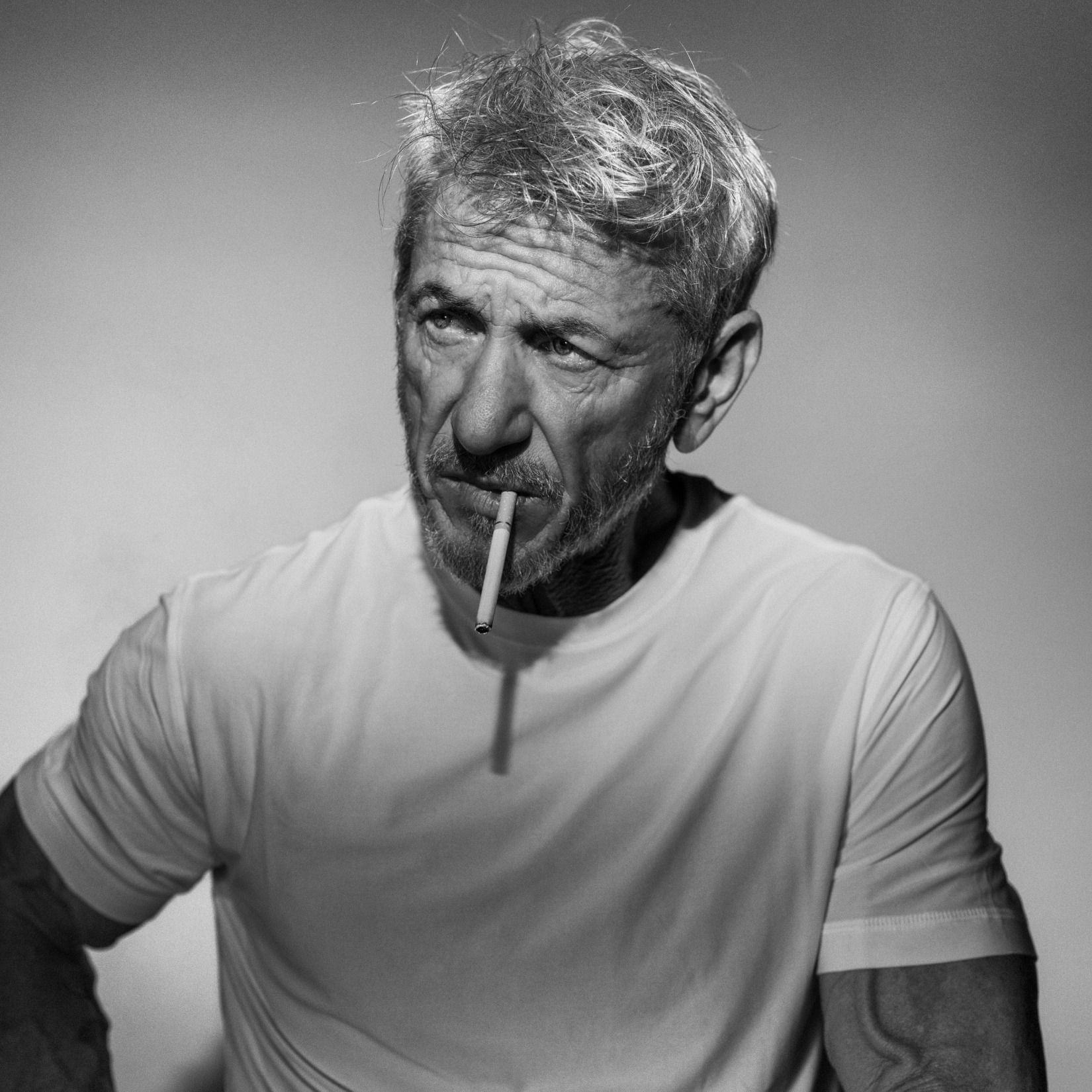
The Interview
Sean Penn Let Himself Get Away With Things for 15 Years. Not Anymore.
00:51:04
The actor and instigator is ready for his renaissance.
Loading summary
Transcript267 lines
- [00:00]
Clinique Advertiser
Taking care of your skin is a personal, daily ritual. No matter what regimen works best for you. It's important to remember that great skin care doesn't have to be complicated. With Clinique's classic three step routine, fresh, radiant skin is as easy as 1, 2, 3. Clinique's iconic trio of products used to cleanse, exfoliate and moisturize is specifically created to address your skin's needs and provides a refreshingly simple solution for maintaining beautiful, resilient skin twice a day, every day. Great Skin starts here. Visit clinique.com to learn more.
- [00:41]
Interviewer
From the New York Times.
- [00:42]
David Marchese
This is the Interview. I'm David Marchese. Sean Penn's new movie, One Battle After Another is tough to pin down. Written and directed by Paul Thomas Anderson and co starring Leonardo DiCaprio and Teyana Taylor, it's about radicals on the run in an America that looks very like our own. The movie is politically charged and it's also spiked with moments of weird humor, anger and a lot of heart. I think it's going to cause all sorts of reactions, which makes it a perfect fit for Sean Penn because the actor is also, in his own way, a kind of provocateur. He's always willing to stir up strong feelings and make things happen. He does that in his acting, of course, and he's won Academy Awards for his work in mystic river and Milk. He does it in his occasional somewhat gonzo journalism, and he's also done it as an outspoken advocate for his liberal political views. That swaggering approach to life has caused more than its share of skeptical eye rolls in his direction, but it is hard to doubt Penn's commitment to world affairs. The best proof of that is his long running humanitarian aid group called core, which lends on the ground help in places like Haiti, Sudan, and even here in the I spoke with Penn a few weeks ago at his home in Malibu. We talked in a room surrounded by personal memorabilia ranging from photos of family and his famous friends to an impressive and frankly daunting collection of knives. His big dog wandered in and out of the room and the smoke from his cigarettes lingered in the air. He was, I gotta say, exactly what I'd been hoping for, sincere, funny, a little crotchety, self aware about his own grandiosity, and as always, unafraid to let it fly. Here's my conversation with Sean Penn.
- [02:43]
Interviewer
So we're all ready to go. Are you ready?
- [02:45]
Sean Penn
Sure.
- [02:46]
Interviewer
And do I need to give a spiel beforehand? You know, basically what we're doing here, right?
- [02:50]
Sean Penn
Let's find out as we go.
- [02:54]
Interviewer
So can you just explain to the audience where we're doing this interview?
- [03:00]
David Marchese
I would call this your man cave.
- [03:02]
Interviewer
Or the Jon Penn version of Elvis's jungle Room.
- [03:05]
Sean Penn
Hq.
- [03:05]
Interviewer
Hq.
- [03:07]
Sean Penn
When I'm not on my feet, I'm in this room. When my girlfriend is not in town, I sleep in this room. It's the room in my house where I feel most comfortable. But it is also a room in process of curation. All of my personal and family stuff, there's some in here. And I am not 45, I'm 65. And I can forget things that are impossible to forget. And I look around the room and I go, I knew that guy or I was in that place at that time. So it's a room that in its own way, it's like if someone had a lot of post its to remind them where they put their keys, which makes me very happy.
- [03:57]
Interviewer
So I want to start with something.
- [04:00]
David Marchese
That I think about a lot.
- [04:01]
Interviewer
You're a politically involved person. You made a documentary about Zelensky. You help run a humanitarian aid organization. You're fully aware of the challenges we're all facing right now. Given that, what makes you decide to take time away from focusing on addressing those challenges to do a movie? And then do you ever wrestle with.
- [04:29]
David Marchese
The utility of making art? Right now.
- [04:34]
Sean Penn
This is going to go a little sideways, but maybe in a good way. In a way, I'd always kind of felt intuitively that it's all exactly the same thing, whether it's acting or working with core or I do a lot of woodwork, whatever the various kinds of things, what happens hopefully over time, is that the utility or like what I want to turn this into a conversation about is the discussion of what one does, what their purpose is. Right. What's our purpose? Your work as an actor is exactly the same job as your work as a craftsman or a welder or core representative. It just feels like, which hammer are you picking up on that day to hopefully make a contribution. So it could be said that if an audience member goes to a movie and recognizes something from the story or from a character that is familiar and leaves them feeling, let's say, less alone for a moment, it's a similar relief and a similar moment of being able to breathe and be present. And that's no different than to rebuild housing for someone. It's all kind of one thing.
- [06:05]
Interviewer
Can you tell me a bit about.
- [06:08]
David Marchese
What ideas drew you to one battle after another?
- [06:14]
Sean Penn
Well, it's sort of, in some ways.
- [06:16]
It'S Simpler than ideas. I had briefly worked with Paul Thomas Anderson on Licorice Pizza, but more than that, I'd known him for a very long time, and he had offered me a movie.
- [06:34]
David Marchese
Which movie was that?
- [06:36]
Sean Penn
It was the one that Adam Sandler did.
- [06:39]
Interviewer
Oh.
- [06:39]
David Marchese
Punch Drunk Love.
- [06:40]
Sean Penn
Punch Drunk Love. And I read it, and the only reason I didn't do it is because it wasn't that I didn't like the role he was offering me. It's that I couldn't do that movie and not do the Adam Sandler part. I. I had an approach in my head very different than what Adam did beautifully, but a very different attack on it. So I said, you know, let me know if Adam gets sick or drops out. But anyhow, so there was a predisposition to work together, and we would always flirt with it when we would see each other. And then I got sent this, and I knew Leo was attached to. I think I got about 10 to 15 pages in, and I was just. I could not have been happier with what he had decided to take on. And I immediately told Paul, you know, tell me where to go.
- [07:37]
Interviewer
You know, to me, the movie has.
- [07:40]
David Marchese
A lot of tonal variation, but I found parts of it actually quite chilling, particularly the depiction of an America that appears to be run by fascistic white nationalists.
- [07:53]
Interviewer
And you're not quite sure, is this, you know, how much of an alternate reality is this really supposed to be showing us? What's your answer to that question? How close are we to the America that the film shows?
- [08:10]
Sean Penn
It's a good question, and I think a very good question for everyone to ask. What is America? Right. Which, by the way, of course, we know, never fulfilled its promise to everybody. We know that, but that's part of. It takes time to grow. Right. And I'm okay with that. And, you know, and I'm sorry if I'm in a lucky crew because of the color of my skin or the gender or whatever, but.
- [08:37]
But I.
- [08:38]
You know, just sitting back, it looks like things are going to take time. My father was blacklisted by the country he fought and risked his life for and had 100 medals on his chest. And they told him he couldn't work again in the country. And he couldn't even get any bitterness going towards it. He just said, hey, speed bumps in the making of a country.
- [08:59]
Interviewer
This was during the Hollywood blacklist, just.
- [09:00]
Sean Penn
For people who don't know. Yeah. And I. And I aspire to. To think that way. We're in a period of incredible unpredictability and chaos. And ugliness. A lot of ugliness. Stupidity over dependence on technology, Misuse of it, Disconnection. But, you know, maybe the way to deal with that is to say, that's okay, what do I do tomorrow?
- [09:27]
And this fight for freedom.
- [09:31]
And by the way, that's when it happens. It happens in a fight. Everything we always celebrated in America happened in a fight. And guess why? That's what being human is.
- [09:41]
Interviewer
You know, your character in the film, Colonel Steve Lockjaw is, at least in.
- [09:47]
David Marchese
My reading of him, he's this sort.
- [09:49]
Interviewer
Of stew of perversions and insecurities. Can you just tell me about how you thought about him or what went into him?
- [09:59]
Sean Penn
So there's a great conversation with the former president of Uruguay, Pepe Mujica, Jose Pepe Mojica, But Pepe to his friends, let's say. And he was turning on its head this old idea that's been hardwired into us. How if we don't understand history, we are bound to repeat it, when in fact, all history tells us is that we are bound to repeat it, period. And if we are going to improve, it's not from reading history books. It's from going through the hell that we create for ourselves and others through our own experience. The human being has to experience it themselves. Now, has that applied to Lockjaw and what I saw? I think that one of the reasons we can be cynical about humankind is because we idealize humankind. And I think what I was reading was someone who worships at the church of lethality and understands lethality. And from that foundation, Paul's writing all made sense to me.
- [11:30]
David Marchese
There was a roundtable you just did for the Times with some of your colleagues from one battle after another.
- [11:37]
Interviewer
And in it you said, prior to.
- [11:40]
David Marchese
Working with Paul Thomas Anderson, you'd sort of been burnt out or disillusioned with acting for the better part of 15 years.
- [11:46]
Sean Penn
Yeah, well, really prior to working with Christy hall and Dakota Johnson, oh, on daddio, I got two gifts in one year that broke. A 15 year sort of depression about the movies.
- [12:00]
David Marchese
What was that depression about? Why were you disinterested in acting?
- [12:06]
Sean Penn
I think that for a long time I gauged the value that a film would have to me to begin with, on what we'll call a good script, a good cast and a good director, and a subject that I would want to go see a movie about. Those things were enough for a while. You get older, you get more aware of the sacrifices. That time. It's about time, right? Which we don't get more of. And it's not enough to work with people you respect and like. You want the same thing you find in family. You want to be people you love. And it wasn't since Gus van zant's movie milk that I'd had that kind of feeling. So I kept taking these jobs that I thought were good jobs about good subjects with good directors and. And I was missing my family, whatever that meant. Literally, my dog. And I said, what the fuck am I doing here? And especially when you're playing, like, a leading role or you have a lot of younger actors, there was a responsibility to take on as a kind of leader on the energy and the focus on the set. And I'm faking it. And you're miserable when you're faking it. Really miserable, even resentful. And what do you want that guy around for? And I just felt like, maybe I'm done with all this.
- [13:42]
Interviewer
Do you think the work suffered during the period?
- [13:45]
Sean Penn
Question about it. You are given automatic cover if you've had, you know. You know, once you represent a certain kind of quality stamp and you get away with too much. I remember Marlon said one time he. He would call it. I'd really have to suit up for that one, you know? And I remember I was doing a play in San Francisco, and he was intermittent. I'm stealing this description. Jack Nicholson's very good with words.
- [14:19]
Interviewer
Du Nicholson delivering it, though.
- [14:22]
Sean Penn
He says, you know, old Marl, he's intermittently contemptuous. And backstage in San Francisco at the magic theater, Marlon's call comes through out of the blue. What are you doing? Because we hadn't been in touch for a few months. He didn't know I was doing a play. Well, I was about to open in the fucking play, like, the next day. And he hears this, and he says, you know, the idea of opening it in a play to me would be like summoning up the inquisition. And I got to the point where I was feeling like suiting up was summoning up the inquisition. And to get re. Enthused and to feel your imagination opening up again and to connect with the childlike thing that comes with inventing a character. When you've lost touch with that and then you rediscover it, I think it's even better.
- [15:37]
Interviewer
When you were sort of coming up in the 80s, you became friends with.
- [15:41]
David Marchese
People like Nicholson, Brando, Charles Bukowski. You were friendly with the novelist Harry Crews, the great actor Harry Dean Stanton.
- [15:51]
Interviewer
Dennis Hopper, all kind of these figures who had an aura of rebelliousness and it seems like those were folks that you sought out and they were all quite a bit older than you. What were you looking for from your.
- [16:03]
David Marchese
Relationships with people like that?
- [16:05]
Sean Penn
You know, this funny thing we do sometimes, like, what age do you feel? What? You know, how do you identify right from a young age, out loud. I've always. And I am still today. It's very specific.
- [16:20]
It's 77.
- [16:21]
Interviewer
You feel 77.
- [16:22]
Sean Penn
I can't wait. I know that guy. Like, that's that. That's. When I look in the mirror, I'm waiting for that guy to show up. My father died at 77. I had already chosen 77.
- [16:34]
Interviewer
Paging Dr. Freud.
- [16:36]
Sean Penn
Might there be a connection that just. Well. Well, that means I'll live longer because he started smoking a lot earlier and didn't. And didn't do a lot of exercise. But, yes, I find it easier, let's say, to have a friendship where you're not going to be frowned upon if you say, hey, want to get a drink? I have. You know, nowadays one has friends that will, you know, get a green juice or something.
- [17:05]
Interviewer
Nothing wrong with green juice.
- [17:07]
Sean Penn
There's nothing wrong with anything anybody wants to do that doesn't hurt someone else. I'm just talking about my own personal enjoyment. I like to share a drink with someone. And then also, these are all the people you mentioned were all, yes, the kind of people that excited me about the job. These were just interesting guys who I liked a lot, who were incredibly generous towards me as friends and also as, you know, encouragers, supporters of, you know, the kinds of stories I wanted to tell and how I wanted to work and so on.
- [17:44]
Interviewer
There's a quote I saw that your.
- [17:46]
David Marchese
Mom, the actress Eileen Ryan, gave.
- [17:49]
Interviewer
I think she gave it to Woody.
- [17:51]
David Marchese
Allen, where, you know, you were working with Woody on Sweet and Lowdown, and Woody said he's something to the effect of, you know, he didn't quite get you or understand how to connect with you. And your mom, in her telling, said to Woody, you know, it's like, the.
- [18:06]
Interviewer
Thing you need to understand about Sean.
- [18:07]
David Marchese
Is that he's just embarrassed at having had a happy childhood.
- [18:12]
Sean Penn
You know, everybody's gotten that wrong. And it is true. I had a very happy look. This place, minus 80% of the houses, is where I grew up.
- [18:22]
David Marchese
Right.
- [18:22]
Sean Penn
I grew up in the Valley till I was nine. But those years when you're becoming, you know, somebody who's not just having his butt wiped.
- [18:32]
Interviewer
It'S a different age for everyone, though.
- [18:34]
Sean Penn
We're here. This was Huckleberry Finn by The sea. I had two parents who were together from the day they met for 41 years, madly in love with each other. Psychiatrists have been pushing, pushing, trying to find that capital T trauma in my childhood. It's not there. I made every demon door in my life as a young adult and forward. I did it myself. My parents were great loving family, great brothers. It was surfing and surfing and surfing and the ocean every day. And, yeah, I've never been embarrassed about that. I feel lucky as hell about that. I just. I was confused for a long time. Why did I want to walk through all the fires I built? And, you know, and maybe I still sometimes do, but I had nothing to do with my childhood.
- [19:32]
David Marchese
That question followed the subject of your friendships with those guys I mentioned because I wondered if something in you thought that guys like Dennis Hopper or Bukowski.
- [19:45]
Interviewer
Represented what an artist was supposed to be.
- [19:49]
David Marchese
And you thought, like, the atmosphere of.
- [19:51]
Interviewer
Your youth was not conducive to the kind of artist you wanted to be.
- [19:56]
Sean Penn
My childhood was, but if I had one drawback, a lot of it was spent waiting for it to be over. And there's a reason for that. Because of this barbaric enforcement of mandatory schooling in public schools, which stole a lot of my childhood. I never spent a productive minute in school. I didn't want to learn until I was older. I would choose not to if I had to do over again. I resent that. You're miserable. You're stressed, you're exhausted, and you're not in the ocean when there's a great swell because you're in a cement palace with some, you know, shit. And I hated it. Yeah, okay. Tell the shrinks it was school fucked me up.
- [20:45]
Interviewer
But, you know, the sort of.
- [20:47]
David Marchese
The way you put it was, you know, you went through some fires.
- [20:51]
Interviewer
And in reading about you primarily from.
- [20:55]
David Marchese
The book Sean Penn, His Life and.
- [20:57]
Interviewer
Times, Right, which, you know, probably was.
- [21:00]
David Marchese
Published about 20 years ago ago or.
- [21:02]
Interviewer
So, was by Richard Kelly, was basically.
- [21:04]
David Marchese
An authorized biography of you done in oral history, like an oral oral history fashion.
- [21:09]
Interviewer
And there are a few references in there from people you worked with or.
- [21:12]
Sean Penn
People you've done so much homework.
- [21:14]
Interviewer
Well, I try, but in the biography of you, a lot of people who you worked with and are close to.
- [21:20]
David Marchese
You refer to you as having a real anger inside you.
- [21:25]
Interviewer
Where does that anger come from?
- [21:28]
Sean Penn
Look around. My reaction to people at large. I've always stood by that. I love humanity. My problem is with humans. You go to the market, or even worse, somebody who's had a. Well, anyone who has some affinity for excellence, goes to the market and gets in line. And this person who's at the register was not really listening when they were taught how to use it. And they're struggling with that while they're extending a personal conversation with the customer in front of you. And, you know, that's not how life's supposed to be. There's supposed to be an experience of professionalism. You get on an airplane and.
- [22:18]
Interviewer
What are you talking about?
- [22:19]
Sean Penn
Incompetence drives me out of my fucking mind. It triggers me on a level you can't imagine. I start to equate my soul with a volcano. And I'm okay with that because I'm learning more and more how to create separation.
- [22:40]
Interviewer
Also, your dog just came in, though.
- [22:42]
Sean Penn
She knows when she has to console me. Hey, baby, it's right here. The problem you're looking for is right here. Yeah, so, yeah, there's. And, you know, I think anger is among the things that can fuel us, but we have to be fueled.
- [23:01]
Interviewer
How does anger fuel you?
- [23:05]
Sean Penn
Well, when I allow it to fuel me productively, I am mission focused because I know that if I go to extreme competence, it is the best way to fight the opposite. Where did you. Okay, so, yeah, you are highly competent. I. This kind of homework is. I mean, maybe New York Times, it's normal. I don't know. But where did all that come from?
- [23:41]
Interviewer
I feel like if I'm going to have an expectation that the person is going to engage with me at a certain level, then I owe it to them and to myself to be as prepared as possible as a way to earn the right to have the kind.
- [23:58]
David Marchese
Of conversation that I want to have.
- [23:59]
Sean Penn
That all describes pride. And I guess that's another thing I could say, I think is all too absent too much of the time. You know, I've just gone through three fucking plumbers who are completely incompetent. And I don't know how you get through the day that way.
- [24:13]
Interviewer
That said, my next question is a goofy one that I just want to hear some details about the story behind it. But in the biography of you, and this is an anecdote that's also repeated in a great profile of you by John Lahr from the New Yorker.
- [24:26]
Sean Penn
And we could disagree about that, but go on.
- [24:30]
Interviewer
Where.
- [24:31]
David Marchese
Describing a misadventure in Macau in 1986, where apparently, you know, as one does.
- [24:39]
Interviewer
Sometimes, you dangled a pushy paparazzo over a balcony, then were sort of jailed after for cause. You were in Macau filming Shanghai Surprise with Madonna. Then you Went to jail briefly. But you broke out of jail and.
- [24:53]
David Marchese
Escaped from the country. And this is the detail that I need more information on. Escaped from the country by jet foil?
- [24:59]
Interviewer
Yeah. More, please. How did you find the jet foil?
- [25:03]
Sean Penn
That's how you get back and forth between. At the time, was there a jet.
- [25:07]
Interviewer
Foil waiting for you? Did you know how to drive a jet foil?
- [25:09]
Sean Penn
It's like the ferry.
- [25:10]
It's like they go back and forth all day long. Yeah.
- [25:13]
David Marchese
So it wasn't that exciting.
- [25:14]
Sean Penn
I didn't know we were passengers on the jet foil. It was a straight run to the Oriental Hotel, not long by car. It took us coming in maybe five minutes on foot. It probably took us 10 minutes. And we were running pretty fast and just got on like normal passengers and then had to go and hang out in a house on the Kowloon side and wait until something got settled. But the guy, it was never. First of all, we didn't put him past his waistline over that balcony, and there was never an intent to drop him off of it. It was. It. It started with a friend, my friend at the time, who was my kickboxing trainer, who needed a job. So I got him a job as, like, security. And he react. Overreacted, definitely. This guy was holding something when he jumped out at us. And so he responded very instinctively toward the guy. I responded instinctively toward the situation. And about halfway to the balcony, I saw it was a camera and not a weapon or something like that. So I was marching him through the room also to what was an open balcony. And, yeah, we got him about, you know, just holding him down across it. And I'm yelling at my friend, you know, it's a camera pocket, you know, and we didn't have time to pull him back before the hotel security who were walking us to the room now turned on us and grabbed us off of him. We never got to show we weren't going to kill him. And that's when Midnight Express happens. And we just flew out of there. And he didn't know what happened by the time we ran out the door and we ran to the jet Foil. And that's the whole story.
- [27:10]
David Marchese
Yeah.
- [27:12]
Interviewer
I was secretly hoping there was kind of a.
- [27:13]
David Marchese
More of a James Bond element, but.
- [27:16]
Interviewer
Mystery solved. There was an interesting quote by you. It's something.
- [27:21]
David Marchese
Actually, I have it written down.
- [27:23]
Interviewer
You.
- [27:23]
David Marchese
You say that hypocrisy is the primary experience of American life, and I'm curious about how your own hypocrisy has shown up.
- [27:33]
Sean Penn
Well, daily, my first dance. Well, okay, just Using this conversation. If you gave me five minutes, I could come up with a good list of 10 people who can tell you stories of my own incompetence. It doesn't mellow my anger at it. Where I really get upset on a societal level is that like arrogance, hypocrisy has found its way recently in a very potent way into being what we might call associate with charisma. I think we're really dangerously adept at giving celebration to great weaknesses and as I said earlier, uglinesses, petty things. But yes, I'm not speaking as someone separate from the problem. I guess I. I try to stay within contradiction. And I think what I'm talking about myself is that I am certainly willfully contradictory.
- [28:50]
Interviewer
Is there a contradiction that you could tease out for us?
- [28:54]
Sean Penn
Sure. Ukraine deserves our full support in their killing people. That's contradictory to almost anything else I would say or espouse. I don't think there's another solution. It's part of the solution. It's not the whole solution. But that's contradictory.
- [29:22]
Interviewer
I do have a bunch of more politically oriented questions, questions about core, but I feel like it would be tonally abrupt to move to those questions now. So I'm going to save those for when we speak again in a few days. But thanks for taking all the time today.
- [29:38]
Sean Penn
You bet.
- [29:39]
Interviewer
And I'll talk to you again in, in a few days.
- [29:41]
Sean Penn
I appreciate it. Professional.
- [29:43]
Thank you.
- [29:48]
David Marchese
After the break, Sean and I speak again about the unsettling times we're living in and his reaction to Charlie Kirk's killing.
- [29:57]
Sean Penn
This one seems different. It seems different than the members of Congress. It seems different than the insurance executive. It seems seems different even than the attempt on the President. There's something about this one.
- [30:22]
Clinique Advertiser
Taking care of your skin is a personal, daily ritual. No matter what regimen works best for you. It's important to remember that great skincare doesn't have to be complicated. With Clinique's classic three step routine, fresh, radiant skin is as easy as 1, 2, 3. Clinique's iconic trio of products used to cleanse, exfoliate and moisturize, is specifically created to address your skin's needs and provides a refreshingly simple solution for maintaining beautiful, resilient skin twice a day, every day. Great skin starts here. Visit clinique.com to learn more. Don't just imagine a better future. Start investing in one with betterment. Whether it's saving for today or building wealth for tomorrow. We help people in small businesses put their money to work. We automate to make saving simpler, we optimize. To make investing smarter, we build innovative technology backed by financial experts. For anyone who's ever said, I think I can do better, so be invested in yourself. Be invested in your business. Be invested in better with Betterment. Get started@betterment.com investing involves risk performance not guaranteed.
- [31:29]
Indeed Advertiser
You just realized your business needed to hire someone yesterday. How can you find amazing candidates fast? Easy. Just use Indeed. Join the 3.5 million employers worldwide that use Indeed to hire great talent fast. There's no need to wait any longer. Speed up your hiring right now with Indeed and listeners of this show will get a $75 sponsored job credit. To get your jobs more visibility at Indeed.com NYT just go to Indeed.com NY right now and support our show by saying you heard about Indeed on this podcast. Indeed.com NYT terms and conditions apply. Hiring Indeed is all you need.
- [32:20]
David Marchese
Hi, Sean.
- [32:21]
Sean Penn
Good morning.
- [32:22]
Interviewer
So, you know, I think when we.
- [32:24]
David Marchese
Spoke last time, I said I was gonna hold the political questions for this follow up, so that that's what I'm gonna do.
- [32:33]
Interviewer
And we're just gonna start in kind.
- [32:35]
David Marchese
Of a heavy place because I don't.
- [32:36]
Interviewer
Know how to get into it more easily.
- [32:39]
Sean Penn
Sure.
- [32:40]
Interviewer
So, you know, we're, we're talking again just a couple days after Charlie Kirk was assassinated, which just another demoralizing event in what feels like the ongoing degradation of civic life in America. I know that people's mileage may vary, to put it mildly, with your political opinions, but I do know that you take being an American citizen and what it means to be an American seriously. So I want to know how you understand this moment.
- [33:18]
Sean Penn
Well, a couple of angles to take that from. First of all, I think just as a human on earth, it's fair to say I'm processing what happened the other day.
- [33:29]
I.
- [33:32]
I've increasingly lost any kind of understanding about why we have as a country become so compliant with the public facing polarization. When any of us who step out at all talk to, let's say, each other at all understand that while there's this incredible partisanship that is expressed in the power hustling of politics and media, it isn't so that that's the case with individuals. And I'm getting to Charlie Kirk. You know, the old adage about we have so much more in common than we do in distance, you know, is so true. These fashions of violence, and we might be on the precipice of this one seems different. It seems different than the members of Congress. It seems different than the insurance executive, it seems different even than the attempt on the President. There's something about this one. Charlie Kirk, it seemed to me I didn't follow him a lot, it seemed to me, was one of these people who certainly I disagree with on what almost everything, truly believed, everything that we disagreed on. I didn't get the sense that he was one of these snake oil salesmen. I think we need that guy. We need that debate. We aren't perfect. We've got to fight it out and find the center on and find a compromise. If somebody really believes something, that's your friend.
- [35:17]
Interviewer
Well, it depends what they believe, right?
- [35:19]
Sean Penn
Well, I'm not talking about some sociopathic Nazism. I'm talking about if somebody believes that a human being starts at conception. If you can't understand that concept, you're just stupid. And if you're not willing to tolerate the concept as a concept that's held and as deeply as one may hold that belief, and as deeply as I may have a belief that I don't know, let the woman decide. All of these are valid opinions. What's the consensus in society civilly? And we're. We're taking the easy chicken shit road out when we start to put this murderer who shot the insurance executive. I'm no fan of health insurance companies, but Jesus, man. Is that the best argument you got?
- [36:13]
Interviewer
Do you think President Trump has beliefs?
- [36:17]
Sean Penn
I am not able to discern them.
- [36:21]
David Marchese
You had made the documentary about Zelenskyy and Ukraine Superpower, which came out, I think, in 2023.
- [36:29]
Interviewer
Have you spoken to Zelenskyy since making that film?
- [36:33]
Sean Penn
Yes.
- [36:34]
Interviewer
Do you have a sense of how he understands Trump and America's actions towards Ukraine in 2025?
- [36:43]
Sean Penn
Oh, I think he has developed a.
- [36:45]
Very sophisticated understanding of it, yeah.
- [36:48]
David Marchese
What is that understanding, to the best of your knowledge?
- [36:51]
Sean Penn
It wouldn't be for me to say anything. It's going to reflect on what he communicates to the President of the United States.
- [36:58]
Interviewer
Also in Superpower, there's just a brief.
- [37:00]
David Marchese
Mention of when you and Jack Nicholson were at the film festival in Moscow for. I guess it was for the pledge and you had some sit down of some type with Vladimir Putin.
- [37:12]
Interviewer
And in the film you just glancingly.
- [37:14]
David Marchese
Refer to that meeting as. As a deviant memory.
- [37:18]
Interviewer
I'm wondering if you can tell me any more about what your impressions of Putin were. Did you feel like you had a chance to get any sense of him as a human being?
- [37:30]
Sean Penn
I was by no means a student of the fellow at that time. You know, by Now I find him transparent and almost uninteresting.
- [37:42]
David Marchese
Why is that?
- [37:44]
Sean Penn
I think it's his inability to face a new world makes him static. People are allured by the spook history of him with kgb, and still this is just one very talented man.
- [38:06]
But the Alphabet of his.
- [38:11]
Manipulations, from the expressions he gives in inflection and voice to what's in his eyes when he smiles, when he doesn't, the sarcasm, the sincerity when he's serious and telling.
- [38:26]
His people this or that or using.
- [38:29]
A speech to them to tell it to us, whatever the case may be. I've seen the tape too many times and I'm just bored and disgusted.
- [38:39]
Interviewer
So you're saying you think he's a limited actor?
- [38:41]
Sean Penn
Well, everyone's a limited actor.
- [38:43]
I guess I was saying it's circling.
- [38:45]
Back to what I said before, but no one more limited than the static.
- [38:49]
David Marchese
Yeah. How have your politics changed over time?
- [38:56]
Sean Penn
I think I idealize humanity less. And in that I understand that we're going to keep killing each other for the foreseeable future. So I'm a little more pragmatic about how to support the ability to do terrible things when we have to. But if you're at the same place politically when you're older as you were when you're younger, I think you're adding a problem to the world.
- [39:26]
David Marchese
It's static.
- [39:27]
Sean Penn
Yeah, it's interesting. I just remembered. Brought my family on a safari many years ago and we went out to visit a very unhabituated, in terms of tourist, Maasai tribe. They'd never seen white people before. And I said to our guide, who was had come from that tribe, but actually had gone off to university and come back, I said, it's incredible. It's so incredible. It's so enriching to see a culture so preserved. And he said, don't do that. He said, anything that remains static dies. And I think that in this country, if this can be a turning point, this Charlie Kirk thing in a positive, that's true for his supporters in honoring the memory of the guy or for his detractors, it's understanding that we are not going to be what we were before. We can be better, we can be worse. But what's going to be the architecture of the new America? I think that's where we can put our hope and encouragement and our imagination, which is really the only thing that's going to get us anywhere.
- [40:47]
Interviewer
Just to turn a little bit more.
- [40:49]
David Marchese
Explicitly to the subject of artists and politics.
- [40:52]
Interviewer
I don't know if you Pay attention to this kind of stuff or if you're aware. But there was a pledge that more.
- [40:58]
David Marchese
Than 2,000 people in the film industry signed. That's tantamount to a boycott of the Israeli movie industry. It's of course in response to the humanitarian crisis in Gaza and that people signed it like Javier Bardem, who you've worked with, Emma Stone, Adam McKay, Joaquin Phoenix, Tilda Swinton, Brian Cox, Mark Ruffalo.
- [41:16]
Interviewer
Do you see value in cultural boycotts generally? And what's your view of this one specifically?
- [41:24]
Sean Penn
I wasn't aware of it. I've been, I was kind of off grid for a few weeks. I'm catching up now. So I haven't heard about this. Typically I kind of have an allergy to movements or group things. I think coming out of the 1960s where as a kid I'm, you know, I certainly grew up in an anti engagement in Vietnam War family, you know, I thought this anti war movement was the coolest goddamn thing until so many in it started using that term baby killer. And so I get a little bit scared. I'd rather kind of. If I'm going to boycott something, I kind of want to do it myself and, and see if other people do the same. But, but I think there's time and place for it and I have and would consider things this one.
- [42:14]
David Marchese
It's tricky, very tricky.
- [42:15]
Sean Penn
Who does it punish? What are the real holds on free speech there? You know, the far right and Netanyahu are truly criminal problems. That's got nothing to do with, let's say the better intersects between Israel and the United States. This current administration is an enemy of every state and humanity at this current Israeli administration.
- [42:44]
Yeah, yeah.
- [42:45]
And so I may well support that. I don't, I just don't know how it affects things. And I want to know better before I consider that.
- [42:54]
Interviewer
Has your humanitarian group CORE have, has.
- [42:57]
David Marchese
It looked at trying to help in Gaza?
- [42:59]
Sean Penn
You know, my co founder called me after that really, really awful day.
- [43:06]
Right.
- [43:07]
David Marchese
October 7th, you mean?
- [43:08]
Sean Penn
Yeah.
- [43:10]
And we work in conflict zones. We've been in Ukraine since day one. We're working in Sudan. And so we have people who are, you know, they know the risks of where they're going and so on. But part of my job is, you know, rational consideration of risk, benefit. And my feeling right from GO was I don't trust any of our governmental organizational contacts on either side. And I'm not ready to ask our.
- [43:42]
People to go there.
- [43:43]
And I had friends whose organizations went in and they lost some people. And so yeah, so I'm sure that we will, at some point engage with the aftermath of that situation, but we have not to date.
- [43:58]
Interviewer
You know, I'm sure there's some part of you that blanches at the word.
- [44:05]
David Marchese
Celebrity, but you are a celebrity. And being a celebrity, activist or humanitarian, whatever label one wants to put on, it cuts in different ways. You know, you can bring positive attention to a cause, as you did, you know, in Haiti after the earthquake in 2010, or as you're doing with Ukraine.
- [44:22]
Interviewer
Or your celebrity can, in some cases, overshadow the cause.
- [44:26]
David Marchese
I think the example here would be your Rolling Stone piece about the Mexican.
- [44:30]
Interviewer
Drug lord El Chapo, which even you.
- [44:32]
David Marchese
Referred to as a failure because you.
- [44:34]
Interviewer
Had written it hoping to start a.
- [44:36]
David Marchese
Conversation about U.S. drug policy. And mostly it became a conversation about you and how you got access and El Chapo's approval and, you know, even in some cases, your writing of the story.
- [44:46]
Interviewer
So my question is, do you feel like you have any control over the relationship between your celebrity and how it shines a light on the issues that you care about?
- [44:57]
Sean Penn
First of all, I would agree with everything you just said, and I would also project that out to every daily journalist in the world that there's going to be a time where it's going to affect things in a negative way. I would even say that the majority of the mainstream press does that more than not.
- [45:18]
David Marchese
It does what more than not adversely affects society? Huh?
- [45:22]
Sean Penn
You know, these kind of editorial screaming matches between non experts is become the fashion of the day, taking up our valuable airtime and time that we need to be informed about what's really going.
- [45:36]
On in the world and how, you.
- [45:38]
Know, all of us have a responsibility to engage and do something about it, whatever that little or big thing is, you know, so. Which is only to say there was a lot of. But it didn't matter because I should have seen that coming. And so how do you not immunize yourself, but how do you immunize the impact of the story? And you do have to consider that. You do have to consider the optics when you step out into that ring for sure. And so you take lessons learned and try to do it better.
- [46:11]
David Marchese
Well, what other lessons did you learn from the El Chapo story?
- [46:16]
Sean Penn
You know, this is a very difficult one for me to talk about because there are things that it's a long tale if I start to talk about it. And it's also that to connect the dots, I'm talking about some people who I do not want adversely affected by what I would say.
- [46:35]
David Marchese
Right.
- [46:35]
Sean Penn
So I don't. It's not that I'm uncomfortable with the idea of talking about it. I'm uncomfortable because mechanically, I don't know how to communicate it without the parts that I don't want to communicate on behalf of others.
- [46:47]
David Marchese
So I get what you're saying. What's in your glass, by the way? What are you drinking this morning?
- [46:51]
Sean Penn
Orange. Una Straight.
- [46:55]
Straight on the rocks.
- [46:57]
Interviewer
Lots of people can get involved in politics, and for a lot of reasons.
- [47:03]
David Marchese
Whether it's humility or whether it's timidity, not a lot of people have the.
- [47:10]
Interviewer
Thing that you seem to have, which.
- [47:12]
David Marchese
Is the desire or willingness to be a man in the arena, to paraphrase.
- [47:18]
Interviewer
Teddy Roosevelt, who or what compelled that feeling in you that you didn't just want to give money or watch from.
- [47:26]
David Marchese
The sideline, that you wanted to be there on the ground.
- [47:30]
Sean Penn
Muhammad Ali, Bob Geldof, Bono.
- [47:33]
George.
- [47:35]
Interviewer
George Harrison.
- [47:35]
Sean Penn
You mean Clooney Harrison concert. You can't just say George concert from Bangladesh. Well, it's because he's in the current conversation so much.
- [47:46]
Interviewer
George Clooney, right.
- [47:47]
Sean Penn
Yeah.
- [47:47]
You know, I was watching the. CNN had a documentary on Live Aid, and I was at Live Aid, and I know I didn't know anything about anything that was going on.
- [47:57]
David Marchese
Were you there with Madonna?
- [47:59]
Sean Penn
Yeah, yeah.
- [48:00]
And what it led to was astonishing. I mean, Bono is. You talk about somebody who stands with empathy, it would take too long. I'll save it for somebody who wants to talk to me about him for a book.
- [48:16]
I could tell you stories that the.
- [48:18]
World doesn't know about this guy that. I mean, he's an extraordinary, extraordinary human being.
- [48:25]
Interviewer
You know. What name you didn't mention in that.
- [48:27]
David Marchese
List of influences you just gave was your father. My hunch. This is just my psychoanalysis from afar.
- [48:38]
Interviewer
Is that some part of your desire.
- [48:41]
David Marchese
And maybe even need to try and.
- [48:44]
Interviewer
Participate in the world and do good in the world comes from wanting to.
- [48:47]
David Marchese
Live up to the ideal of your father, who stood up to the Hollywood blacklist, and on top of that was.
- [48:53]
Interviewer
A sort of heroic fighter pilot in the Second World War.
- [48:58]
Sean Penn
Yeah, not.
- [48:59]
Not a pilot. He was a tail gunner and a bombardier.
- [49:01]
David Marchese
Ah, sorry.
- [49:02]
Sean Penn
I'm sure you're right.
- [49:03]
I'm sure you're right.
- [49:04]
You know, he's been my hero in everything. Most significantly, I think, just a guy.
- [49:10]
Who.
- [49:13]
Remained gentle and never entered bitter. I think I'd be raving if I, you know, flew 37 missions, shot down twice, and barely made it over Allied lines, and then was told I can't work in the country I fought for and risked my life for. I think I'd be friggin seething, not him.
- [49:35]
Yeah.
- [49:36]
In fact, whenever I was seething, I'd come home with an opinion about something. Somebody else thought this, and he'd listen, listen, listen. He'd just say, everybody has their own truth, kid.
- [49:50]
David Marchese
You know, we talked about how in the relatively recent past you struggled with motivation about acting. And I know also that it's again, something that came up in the conversation.
- [50:03]
Interviewer
But I know also that you can feel a lot of anger at the world. So what gets you up in the morning these days?
- [50:12]
Sean Penn
I don't think that I have felt. I felt, and I'm not adverse to feeling extremely frustrated with the world, the world we know what we're saying. I think I don't want to be grandiose, but. Or I don't know how not to.
- [50:30]
David Marchese
Be, but I was going to say.
- [50:32]
Interviewer
What, stop now?
- [50:34]
Sean Penn
Yeah, but.
- [50:38]
I haven't experienced, let's say, anything like. I don't even know if I would call what Russia and Putin are up to right now something that I engage in a lot of rage about. I don't need the rage to get me to a clarity of knowing how evil and obscene it is. And so the frustration is with those who are not willing to be sober enough to recognize our sacred duty to support the defense of Ukraine. But I don't even call that anger so much. And I certainly haven't experienced anything like depression. Sadness, yes. I've lost a lot of friends in the last years. Sadness, sure. But depression, no. I wake up every fucking day. This eye is clear about the threat to the environment, the anguish people are going through, attempts to figure out how or where I can be. Any value added. This one is driving me from the time I wake up. And all I see is that right now this is still a fucking magic trick of a beautiful cosmos to be gifted with and I am going to fucking enjoy it every day. And I do, you know, sorry to those who would have me do otherwise.
- [52:01]
But I am feeling great.
- [52:05]
Interviewer
Sean, thanks for taking all the time to talk with me. I appreciate it.
- [52:08]
Sean Penn
You bet.
- [52:10]
Interviewer
I'll catch up with you for a green juice someday.
- [52:13]
Sean Penn
I might spike mine. I'll bring a flask.
- [52:20]
David Marchese
That's Sean Penn. His new movie, One Battle After Another, is in theaters now. This conversation was produced by Wyatt Owens and Seth Kelly. It was edited by Annabelle Bacon, mixing by Sonia Herrero, original Music by Pat McCusker and Marion Lozano, photography by Devin Yalkin Our senior booker is Priya Matthew and Paola Neudorf is our senior video journalist. Our Executive producer is Alison Benedict. Special thanks to Rory Walsh, Renan Borelli, Jeffrey Miranda, Nafim Shapiro, Maddie Masiello, Jake Silverstein, Paula Schumann and Sam Dolnick. Also, we have a YouTube channel where you can watch lots of our interviews. Subscribe@YouTube.com betheinterview podcast. I'm David Marchese and this is the interview from the New York Times.
- [53:22]
Indeed Advertiser
You just realized your business needed to hire someone yesterday. How can you find amazing candidates fast? Easy. Just use Indeed. Join the 3.5 million employers worldwide that use Indeed to hire great talent fast. There's no need to wait any longer. Speed up your hiring right now with Indeed and listeners of this show will get a $75 sponsored job credit. To get your jobs more visibility at indeed.com NYT just go to indeed.com NYT right now and support our show by saying you heard about Indee Indeed on this podcast. Indeed. Com NYT Terms and conditions apply. Hiring Indeed is all you need.