← The Interview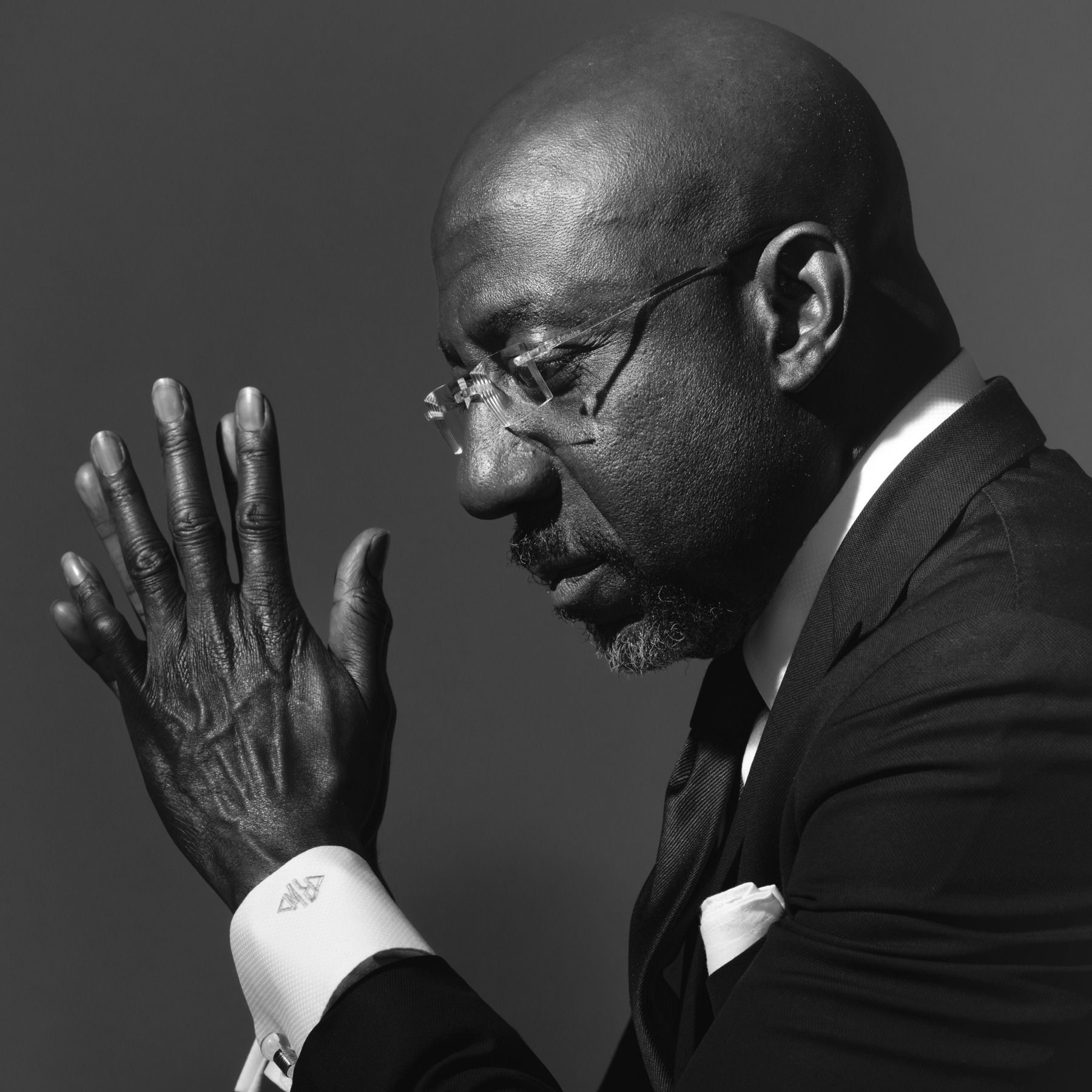
The Interview
Senator Raphael Warnock Says the Supreme Court Has Done ‘Violence’ to Democracy
00:50:23
The Democrat from Georgia on what he sees as the moral issues of our time.
Loading summary
Transcript111 lines
- [00:00]
Philip Morris International Representative
This podcast is supported by PMI us, the US Businesses of Philip Morris International. At PMI us, we're committed to offering science backed smoke free products to adult smokers while making it our mission to help prevent underage access. Learn more about our 10 point approach to underage access prevention@USPMI.com interview listeners.
- [00:21]
Wesley Morris
Hello, this is Wesley Morris. I host a show called Cannonball and I'm just here to let you know that Cannonball is going to be live at the Tribeca Festival this year. I'm gonna be on stage with Cynthia Nixon, which is very exciting and we're gonna talk about, yes, that Cynthia Nixon. And we're gonna talk about some great art about New York City and the show. We're gonna do it Friday, June 12th at 6pm I'll say it again, Friday, June 12th at 6pm and you can get your tickets right now as I speak@tribecafilm.com audio that's tribecafilm.com audio can't wait to see you there. Please come join us.
- [01:08]
Interviewer (David Marchese)
From the New York Times.
- [01:10]
David Marchese
This is the interview. I'm David Marchese. Give Senator Raphael Warnock credit for timing. In his new book, the Crooked Places Made Reflections on the Moral Meaning of America, the Democrat from Georgia identifies voting rights as one of the country's most pressing political and moral issues.
- [01:30]
Interviewer (David Marchese)
Following the Supreme Court's recent blow to
- [01:32]
David Marchese
the Voting Rights act and the resulting rush to redraw districts in the name of partisan gerrymandering, that issue has turned for many into a full blown crisis. Warnock's emphasis on the moral underpinnings of politics comes naturally. In addition to being a senator, he's also the senior pastor at Atlanta's famed Ebenezer Baptist Church, a position previously held by the Reverend Dr. Martin Luther King, Jr. So as a man whose influence literally encompasses both the church and the state, Warnock is well positioned to talk about another issue, Christianity's place in the public sphere. We spoke about that as well as what's behind the attack on voting rights, what certain Republicans get wrong about religion and his own family story. Here's my conversation with Senator Rafael Warnock.
- [02:31]
Interviewer (David Marchese)
Senator Warnock, thank you for taking the time to be here with us today.
- [02:34]
Senator Raphael Warnock
Great to be with you.
- [02:35]
Interviewer (David Marchese)
It's an interesting time to be talking to you. You have called the Supreme Court's recent ruling on voting rights Jim Crow and New Clothes. And you know, we're in a moment where voting rights, it's a very fraught issue, more fraught in a way than it's been in decades I would say, and I want to know a little bit more about sort of your personal relationship with voting rights, because your parents and grandparents grew up in the Jim Crow South. So can you tell us a bit about what voting rights means to you from a family perspective?
- [03:08]
Senator Raphael Warnock
Yes. I talk a lot about voting rights because for me, voting rights is not just one issue alongside all the other issues we fight and struggle and debate about in our democracy. It's the very house in which we live. It's the framework in which we get to fight for the things that matter. And so I'm a child of the South. My mother grew up in Waycross, Georgia, literally picking somebody else's cotton in the 1950s. And because of the arc of progress in this country over the last 60 years, I often say the hands that used to pick somebody else's cotton got to pick her son to be a United States senator. And so this story of fighting for voting rights doesn't feel distant to me. We've only been a democracy in a real sense since 1965. And what it seems to me we are witnessing in real time is an assault on those basic voting rights. And it's been stepped up over the last few years. But let me be really clear.
- [04:17]
Interviewer (David Marchese)
Sure.
- [04:18]
Senator Raphael Warnock
I don't separate this. Right now, black voters are at the center of the debate that we're hearing. I think that the Supreme Court has committed violence against our whole the ways in which ordinary people can have a voice in our system. The same Supreme Court that has gutted section 2 of the Voting Rights act, gutted section 5 in 2013, it's also the same Supreme Court responsible for citizens United States. And so whether we're talking about black voters or white working class voters, ordinary people, the voices of the people, are being squeezed out of their democracy. And as someone whose parents lived through that ugly history, I take deep offense and I'm very concerned about our country.
- [05:15]
Interviewer (David Marchese)
I think there are those who would point to your being able to be elected as senator. And this is sort of underpinning the logic of some of the Supreme Court's decisions lately. But the fact that you are a senator is a kind of evidence that the Voting Rights act as conceived is no longer as necessary or as important as it was. So what's your response to that kind of logic?
- [05:41]
Senator Raphael Warnock
Well, the folks who say that don't know how it got here. Even in my last runoff, state officials in Georgia looked at the anatomy of my victory in the runoff, which, by the way, is itself a vestige of the Jim Crow South. They Cut the runoff in half in terms of the number of weeks. And then as we were going into the runoff that weekend, state officials in Georgia said, sorry, you can't vote first weekend of the runoff. And they were referencing an old law in Georgia that said, you can't vote first weekend if it was a few days after a holiday. And so they said their hands were tied. So I decided to untie their hands and sue them. So it took a court decision and two appeals so that students who were home that weekend, so that young people, so that working class poor people who are disproportionately black and brown could turn out and vote. About 70,000 people voted. I won by 100,000 votes. This is how voter suppression works. It's the ways in which you begin to chip away at people's access, which again, disproportionately impacts black people, brown people, poor people. That's how you swing an election. Roberts put forward this theory that we no longer need the protections of the voting rights. That's what he said in 2013. But what has happened in the years since that awful decision in 2013, Shelby versus Holder. Yes, I'm sitting here. But the fact is, the gap between in voter turnout, the racial turnout gap, has actually grown wider since 2013. And it's grown twice as fast in the states that used to have to pre clear that were under Section 5, Southern States primarily. It's grown twice as fast in those states now that we have lost the protections of Section 5. Roberts has long felt that we didn't need the Voting Rights Act. He despises the Voting Rights Act.
- [08:07]
Interviewer (David Marchese)
But why do you think that's the case? Why do you think?
- [08:09]
Senator Raphael Warnock
You'd have to ask him. But he has felt this way since he was a young lawyer in the Reagan Justice Department. It was the Congress in the 1980s, the U.S. congress, that overwhelmingly said, look, the impact matters. And a young Robert said, no, it shouldn't be impact. You should have to show intent. He was saying that as a young lawyer in the 1980s, just 15 years or so after the voting rights law was passed. He's never believed in it, in my view, and he's carrying it out decades later.
- [08:47]
Interviewer (David Marchese)
But I want to ask a little bit more about the Calais decision in particular. So a lot of the discussion in the wake of the Calais decision has been about its partisan implications. It's provided an opportunity essentially for Republicans to carve out seats for themselves that they didn't have before. And that discussion, it's conflating race and partisanship. Sort of like collapsing two things into one. And what does focusing on the intertwining of race and partisanship get right in terms of understanding the Kelly decision? And what does it get wrong?
- [09:26]
Senator Raphael Warnock
Look, the idea that you can just completely separate these things, I think is, on its head, false. Basically, the decision said you can engage in partisan gerrymandering. Right. As long as it's not racial, it's just partisan. It's dishonest. The decision is dishonest. When LBJ passed the voting rights bill into law, he said, I think I just gave the south to the Republicans for a long time. And those words were prophetic. As a result of that decision, the old Dixiecrats and the old Democratic Party left the Democratic Party. And where did they go? They went to the Republican Party. So the irony of this moment is that the same partisans who were attacking voting rights in the 1960s are now attacking it again.
- [10:22]
Interviewer (David Marchese)
You just brought up LBJ saying, passing this is going to lose the south for the Democrats, and it ended up, like you said, to be true. That was a. I guess you could call it like an unintended negative consequence of the Voting Rights Act. Can you foresee any unintended negative consequences for the Republican Party in the wake of the recent Supreme Court decisions about voting rights?
- [10:48]
Senator Raphael Warnock
I think that they may get some outcomes that they don't expect. Yeah, there could be some surprises that come. I do see opportunities, and I think that they have unleashed something potentially that they did not anticipate, and that is the deep offense that people will feel. Not just black voters, certainly black voters, but people of moral courage, people who just have a sense that everybody's voice needs to be heard. I think that we may witness a kind of turnout that could completely change the math of gerrymandering. I think we're seeing historic voter turnout in the early voting in Georgia right
- [11:32]
Interviewer (David Marchese)
now, given that sort of this gerrymandering battle. I do think race to the bottom is what it is in terms of fair representation for people. That is a fact that that's happening. Do Democrats have any choice other than to participate in that race to the bottom right now?
- [11:54]
Senator Raphael Warnock
If I had my druthers, we'd get rid of gerrymandering. And I've got bills to do so. So Republicans can join me anytime. I have a bill right now. If they join me in that effort, we could get rid of gerrymandering. Right. But in the meantime, it was Donald Trump who called into the state of Texas and literally said, give me more seats again, politicians thinking about themselves rather than the people and the Supreme Court poured fuel on that fire. It would be irresponsible in this moment for Democrats to unilaterally disarm. We cannot, in fact, I think blue state governors, given the reality that we are in, have, have a moral obligation to look and see where, you know, we can increase our opportunities to win.
- [12:47]
Interviewer (David Marchese)
You would probably know these numbers better than I do, but I think when President Biden was elected in 2020, the voter turnout was huge. And the percentage of people who voted, eligible voters who voted, was probably mid-60s, I would guess. So there is, like you're suggesting in America.
- [13:04]
Senator Raphael Warnock
Yeah. And that's the irony of this moment, that even when we have so called historic turnout in America, it's nowhere near what it ought to be.
- [13:12]
Interviewer (David Marchese)
Well, that's my question. Aside from outrage or moral outrage about a given political event, what do you think is the key to getting those huge numbers of people who are either disengaged or alienated from the political process to show up and vote?
- [13:35]
Senator Raphael Warnock
Well, first of all, let's be clear that there are partisan actors, there are craven politicians in our country who don't want people to show up. They really don't want this diverse, multiracial, multi generational coalition that sent me to the Senate showing up. And part of the reason why I know that they're craving politicians again who don't want them to show up is we haven't even put the infrastructure in place to receive them. I mean, look, do you remember that there was that big debate about SB202 and folks were talking about the fact that you couldn't bring water?
- [14:12]
Interviewer (David Marchese)
Yeah. Could you explain what SB202 is for people who don't know?
- [14:15]
Senator Raphael Warnock
Yeah. This is the voting law in my view. It's voter suppression law. Passed in Georgia right after I won and John Ossoff won. It did things like said, you know, people couldn't bring water to folks, you know, while they were standing in line, couldn't bring refreshments. And there was a lot of outrage about that. I actually think we were asking the wrong question. The question we ought to be asking is, why are people in line so long that they want lunch? I don't want refreshments when I go to vote. I want to be able to vote. Now. We're all entitled to our own opinions, not our own facts. The data shows that black and brown voters have to stand in line a lot longer than their white counterparts. The experience around voting in some neighborhoods doesn't look the same way it does in others. If you're a working class person and you gotta take off from work to vote, that is a kind of poll tax, in my view. We should have weekend voting. We shouldn't be fighting it. We should be able to. People should have mail in voting. We shouldn't be fighting it. We should be making it easy to vote.
- [15:23]
Interviewer (David Marchese)
But do you have any sense of. When we talk about the legions of people who are not voting, do you have a sense of how that breaks down between people who find that there are obstacles to their ability to go vote as opposed to people who are disengaged? Is one a bigger problem than the other?
- [15:46]
Senator Raphael Warnock
There's no question that disengagement is a real issue in our country. I mean, I think that we've made our politics too much about the politicians. If you listen to the way we talk about politics in America in the public square and with respect in the media, too often it's about the politicians.
- [16:12]
Interviewer (David Marchese)
It's like sports and talking about the
- [16:14]
Senator Raphael Warnock
quarterback like it's sports. Which politician is up, who's down, who's in, who's out? And I think workaday people, ordinary people, are saying to themselves, who cares? And so this is why I got involved in something as messy as politics. I mean, it was a. You know, there's a degree of peril for a pastor to get involved in this. It's messy. But I have a faith that, you know, requires me to be engaged. You know, when I think about my own journey. I grew up in public housing, first college graduate of my family. And here I sit with 4 degrees, including a PhD pastor of Ebenezer Baptist Church, a US senator who gets to do these things, right. What keeps me up at night is that it would be harder for me to do those things now than it was for that kid growing up in the 1980s because of attacks on, because of growing inequality, because of attacks on things like the Pell Grant, because of our refusal to invest in the next generation, because of our obsession with the culture wars, rather than focusing on American competitiveness. And now we're dealing with AI and all of these things. The whole range of issues we really need to be focused on. But right now we've got demagogues who are distracting us with the politics of division. And I think people are turned off.
- [17:48]
Interviewer (David Marchese)
I want to switch gears just for a second, just because I saw it kept showing up on the bestseller lists. Your colleague in the Senate, John Kennedy's book How to Test Negative for Stupid, has been a big bestseller. He's a Republican senator from Louisiana. And so I was reading it and towards the end, he does kind of just like a rapid fire assessment of various hot button issues in America. And when he writes about race and he says that America is not a racist country and the country's history is proof that it's not a racist country, I think it's pretty easy to imagine someone else saying, actually the country's history is proof that racism is pretty deeply embedded. But I don't think Senator Kennedy's view is wildly out of line with the view of a lot of conservatives and how they see race in the country. And it made me wonder about for you, where do you find common ground there when there's such a fundamental disagreement about the country's history when it comes to race?
- [18:57]
Senator Raphael Warnock
He is oversimplifying a complicated issue. I've always said that America has a complicated story. All families, I know this as a pastor, all families have a complicated story. And I embody the complexity of the American story and my own story. I had an older father, World War II era veteran, and as a kid I remember him telling me the story about how when he came home, he had to give up his bus seat to a teenager while wearing his soldier's uniform. And that wasn't that long before I was born. But he had to give up his seat. But now his son sits in a Senate seat. I love this country, flaws and all, but part of how you love somebody is you tell it the truth. And I'd be irresponsible to sit in this seat while ignoring the fact the land of the free is the mass incarceration capital of the world. I got a brother who went through that system. He made a terrible mistake. What he did cannot be justified. But he was a first time offender, nonviolent drug related offense, went to prison, was sentenced to life without parole. Nobody died, nobody got, no one was hurt violently, physically, nobody even got high. Long story. And yet I sit here. That's the complexity of the story that perhaps I know in a way that's different from my colleague and friend, John Kennedy.
- [20:47]
Interviewer (David Marchese)
In your new book, you write about
- [20:52]
Senator Raphael Warnock
how
- [20:54]
Interviewer (David Marchese)
Christians in the United States have in the past stood on the wrong side of justice, slavery being the prime example. And you also write about how, for example, House Speaker Mike Johnson spent a lot of time praying in the Capitol's chapel in advance of the passing of the one big beautiful bill, which is a bill that you describe as Robin Hood in reverse, robbing the poor to give to the wealthy. And I was reading those things sort of in the Same context of people of faith and people of sincere faith, which I believe Speaker Johnson is taking political actions that you see as ungodly or immoral. And it was interesting to me that I didn't really feel like in the book, you directly grappled with the question of how you understand when fellow believers take positions that you can't morally abide. So from, like, a theological perspective, how do you understand that?
- [22:14]
Senator Raphael Warnock
For me, the acid test of one's faith is the depth of your commitment to the people who are on the margins. And I'm a Matthew 25 Christian.
- [22:28]
Interviewer (David Marchese)
It's what you do unto the least of us. You do unto me.
- [22:31]
Senator Raphael Warnock
You do unto me. And so I don't understand how you read that, say a long prayer, hold hands with your fellow legislators, and then cut a trillion dollars, $1 trillion out of Medicaid, calling it waste, fraud, and abuse. What are you saying about those people? And so in light of that, for me, I have to ask whether the religion is more performative than substantive. You know, I don't, you know, like to use these fancy words, but, you know, we. We. I'm a trained systematic theologist, theologian. There's something called the hermeneutics of suspicion.
- [23:15]
Interviewer (David Marchese)
Tell people what that is when.
- [23:17]
Senator Raphael Warnock
When you. When you look at a text or you look at the world and you. And you. With a critical view where you ask the hard questions.
- [23:23]
Interviewer (David Marchese)
Yeah.
- [23:23]
Senator Raphael Warnock
So I want you to know that I apply that same hermeneutics of suspicion to my own faith. I examine myself and I ask, and I invite other people to ask, what's really driving this? Why are you taking that view? Why did you vote this way actually, on that? What's really driving it? I know you said that you're focused on this issue, and I've seen this with my colleagues. Usually, if you ask politicians enough questions about why they're voting, what they're voting, it's somewhere connected to their politics. And so the question I always ask myself, am I so committed to self preservation that I can't be effective? And so I think that the speaker has a certain agenda and a certain view, and it is what I think that obviously plays a huge role. And there's a long history of that. I mean, you know, there were many Christians on the wrong side of slavery. They were on the wrong side of Jim Crow segregation. And so part of the obligation, I think, of a person of faith is to ask yourself, what are you actually worshiping? What are you actually committed to? Are you committed to the poor? Are you. Are you committed to the despised and the rejected. Would Jesus agree with the actions of ICE in this moment in which we're seeing organized cruelty on our streets, masked men jumping out of unmarked cars, separating families, terrorizing whole communities of people, whether they're documented or not, whether they're citizens or not? What is it in the gospel, I would ask my colleagues, what is it in the Gospel that says that this is right, do unto others as you would have them do unto you? There's some variation of that in all of the great faith traditions, in Judaism, in Christianity, in Islam, in the Baha' I faith, all the great traditions. And that's the question, I think, that people aren't asking themselves deeply enough. Because if you do, you might actually have to make some decisions that make you a little bit uncomfortable.
- [25:54]
Interviewer (David Marchese)
What's a decision you've made that's made you uncomfortable?
- [25:59]
Senator Raphael Warnock
I don't know. That's an interesting question. I mean, look, as someone who votes all the time in the Senate, You know, there are always these different interests in people speaking into your ear about what needs to be done. And on the one hand, there is the desire to fight, to work for the people that sent you there. There's also the recognition that if you can't stay in that seat, you can't do those things. So if we're honest, all of us who are in elected office live in that tension. And I'm in a purple state, the same state that sent me to the Senate voted for Donald Trump. Those are the politics that I navigate every single day. What helps me in that regard is that while I do love this job and it's a dream job, because when I get a victory, the scale of the victory is something that be hard to do almost anywhere else. So I do feel a moral obligation to try to stay in the seat, to do the work. But what does help me in that regard, and I hope puts me above being just another transactional politician, is that I don't need this job. I really don't. I mean, in terms of my own sense of personal fulfillment and my own sense of somebodyness, if you will, I don't need this job.
- [27:44]
Interviewer (David Marchese)
Because you have Ebenezer.
- [27:46]
Senator Raphael Warnock
Well, because I have a project, and that project has changed. That project is human fulfillment. That project is justice. And I don't need any particular job to do that.
- [28:01]
Interviewer (David Marchese)
You know Mark 12:17, right?
- [28:04]
Senator Raphael Warnock
You tell me. I love this. Tell the Christian preacher the scripture. Believe it or not, I don't memorize. I haven't memorized the whole Bible.
- [28:15]
Interviewer (David Marchese)
It's a famous line it's render to Caesar the things of Caesar and to God the things that are God's.
- [28:20]
Senator Raphael Warnock
Yes.
- [28:20]
Interviewer (David Marchese)
How do you understand that line?
- [28:24]
Senator Raphael Warnock
Pay your taxes, show up as a good citizen, but don't bow down to see them. That's what it means to me. Yeah, like, you know, I didn't mean
- [28:37]
Interviewer (David Marchese)
to test you on that one. I figured you'd.
- [28:40]
Senator Raphael Warnock
Sorry.
- [28:42]
Interviewer (David Marchese)
But it is a piece of scripture that's about church and state. And I really want to understand for you a man who is driven by his faith, who is a pastor, what I'm driven. Where are the lines that you draw, if you draw them? And this isn't a leading question. This is a question comes out of sincere curiosity. But how do you delineate between when you're driven by faith and when you're driven by the public good? Because I don't know that it can be a perfect overlap of those two circles. Maybe it can. You're in a better position to tell me.
- [29:31]
Senator Raphael Warnock
I'm driven by the values in my faith, and it's the values and not the creeds that I try to take in a responsible way to my work. But those values, in my view, are resonant in all of the great faith traditions and in people who claim no faith tradition at all, but are people of moral courage, love, truth telling, justice, making, compassion, empathy, looking into the eyes of your neighbor and seeing a glimpse of your own humanity. That's what drives my work and not the creeds of the faith. And you didn't ask me, but I'll venture out a little bit into the waters, please, and say that this is what drives my view. For example, on the whole issue around reproductive choice, I get a lot of attacks from folks on the right who try to challenge my pastoral identity, my Christian identity. I'm unbothered by that. On the LGBTQ question, for me, we live in a diverse democratic republic. And on the issue around choice, I have a deep, deep reverence for life, and I have a profound respect for choice. The question there is, whose decision is it?
- [31:08]
Interviewer (David Marchese)
And
- [31:10]
Senator Raphael Warnock
I think that a woman ought to have autonomy, the ability to decide.
- [31:16]
Interviewer (David Marchese)
I was about to call you Reverend instead of Senator, but this is a question for Senator. What you just described, the. How you get attacks on the right from people who are against your positions on women's choice or lgbtq. I have to believe that certainly many of the people who are attacking you are authentic in their belief that your positions are ungodly. Now, I apologize if this is like a Religion 101 question, but how do you know, you're right. Why? How do you have confidence that your position is the moral one?
- [32:04]
Senator Raphael Warnock
Oh, if you absolutely know. And look, there are things that I clearly believe deeply, but faith isn't about knowing. Faith is just that. It's an act of faith that is part of my core identity. I don't even respond to people who say that because they clearly didn't grow up in my church.
- [32:27]
Interviewer (David Marchese)
They don't know people who say what?
- [32:28]
Senator Raphael Warnock
Who question my Christian sincerity, authenticity. Like, I don't even have time for that. It's so basic to who I am. I often joke that, you know, I grew up in a Pentecostal holiness tradition. My folks spoke to us in King James English. Thou shalt wash the dishes, lest I smite thee with my rod and my staff. When my dad dropped me off to college, I was looking for him to give me a few dollars. And, you know, I'm one of 12 children in my family. First college graduate. He was generous, but, you know, he had. They didn't have any money. He literally looked me in the eye as I was, you know, looking for a few dollars to get through my first semester. You know, I needed to buy books. My dad looked at me in the eye, and in King James English, he said, silver and gold hath I none, but such as I have give. I unto thee the Lord Jesus Christ go with you, son. That's the household I grew up in. So I don't have time for people who want to question my faith identity. I believe in, you know, I'm part of the Kingian tradition. And that movement changed America. And at its height, Martin Luther King Jr. And Rabbi Abraham Joshua Heschel marched together. Rabbi Heschel said when I marched alongside Dr. King, I felt like my legs were praying. So where is there room for him and the Hindu and the Sikh and people, again, who are agnostic, folks who are atheists or searching or searching. And maybe in part because the expression of the God that they are hearing that is a racist, classist, misogynistic, homophobic God, they don't believe in that God, so they call themselves atheists. Well, the Christian pastor's got a message for them. I don't believe in that God either.
- [34:40]
Interviewer (David Marchese)
There's a lot of discussion on the right about Christianity being under attack in this country. Vice President Vance, for example, talks about a war being waged on Christians in the United States. Do you understand where that perception comes from?
- [35:00]
Senator Raphael Warnock
Well, who's waging the war?
- [35:02]
Interviewer (David Marchese)
Well, he would say another thing he said is that the left has labored to push Christianity out of national life.
- [35:08]
Senator Raphael Warnock
I think that a war on Christianity, my view of the faith is cutting a trillion dollars out of Medicaid because Jesus spent much of his ministry read the Gospels, healing the sick, even those with pre existing conditions. That's what leprosy was. He never billed them for his services. They're taking healthcare away. That's what a war on Christianity looks like to me. I often say that I'm not a senator who used to be a pastor. I'm a pastor in the Senate. But this pastor who serves in the Senate does not want to live in anybody's theocracy. Christian, Jewish, Muslim, I don't want to live in anybody's theocracy. And what they are asserting is a kind of dangerous Christian nationalism. I'm struck by J.D. vance saying he's defending the faith on the one hand, but he seems more than willing to attack the Pope when the Pope doesn't agree with his politics or when the Pope is just calling us to think about peace. I mean, did you hear him? And he literally said, you know, the Pope needs to be careful when he's talking about theology. J.D. vance, who is the newly converted Catholic, newly converted Catholic and writes a whole book talking about his conversion, which in and of itself is interesting to me. You know, seemed more than willing to attack the Pope and say that he needs to be careful about talking about theology. He's already instructing the Pope on how to be a good Pope. And so I think you see the callousness. I think you see the hubris, the willingness to attack the church and the Pope himself if it gets in the way of his political agenda. I'm not impressed.
- [37:25]
Interviewer (David Marchese)
Thank you very much for taking all the time to talk to me today. I appreciate it.
- [37:28]
Senator Raphael Warnock
Thank you.
- [37:31]
David Marchese
After the break, Senator Warnock and I speak again and he doubles down on his criticism of the Supreme Court.
- [37:37]
Senator Raphael Warnock
I do wonder what they're thinking as they're watching this. But you know, I guess if they are as partisan as they appear to be, maybe they're happy with this.
- [37:57]
Apple Card Advertiser
This message is brought to you by Apple Card. For a limited time, when you get a new Apple card and purchase AirPods Pro 3 at Apple, you can earn back the cost up to 250 daily cash. New AirPods Pro and up to $250 daily cash back. Now that's music to my ears. Subject to credit approval limitations and spend requirements apply. Apple Card is issued by Goldman Sachs Bank USA Salt Lake City Branch terms and more at apple.co airpods all aboard.
- [38:24]
Princess Cruises Advertiser
Choose your perfect Caribbean escape with Princess Cruises. Maybe you spend a day relaxing on the top deck, golden sun, a refreshing pina colada, and nothing on your schedule except dinner and a show. Other days you embrace a tranquil shore, snorkel mask in hand, ready to explore white sand beaches and crystal clear waters. The best part, relaxation and discovery are both on the itinerary. Sail to the Caribbean with Princess Cruises. Visit princess.com or contact your travel advisor to book Princess Cruises ships registered to Bermuda.
- [38:56]
Apple Card Advertiser
Your gut isn't just about digestion. It's the command center of your whole body. New Ollie. Precise probiotics are made with clinically studied strains to provide targeted benefits beyond digestive health by supporting your metabolism, skin health or stress response. Start giving your body what it needs. Shop precise probiotics with skin, stress or metabolism support at your nearest Walmart. These statements have not been evaluated by the Food and Drug Administration. This product is not intended to diagnose, treat, cure or prevent any disease.
- [39:32]
Interviewer (David Marchese)
Senator, there's something I want to ask you about that I just find bonkers in the public discourse right now. And I think you might. You might be well positioned to offer a perspective on it. So I was reading about James Talarico in Texas, and apparently some of his opponents refer to him as an Antichrist. And also Tucker Carlson has talked about whether Trump is the Antichrist. Peter Thiel, in private talks, apparently is often talking about the Antichrist or is saying perhaps Greta Thunberg is the Antichrist. I cannot recall a time in my living memory when the subject of the Antichrist was in political or public discourse. Does it make any sense to you?
- [40:19]
Senator Raphael Warnock
No. I mean, I think that we're in a moment where folks are weaponizing whatever they can grab. And religion is not unusual, that religion becomes a part of that. So what I tried. I don't use my faith as a cudgel. I don't use it as a weapon. I use it as a bridge. And this fight about the Antichrist, as you're describing it, if you think about it, get beneath the religious language, what it really is is a way of saying who's inside and who's outside, who belongs and who doesn't, who's on the side of good, who's on the side of evil. And what I'm trying to do is remind us of who we are as an American people.
- [41:04]
Interviewer (David Marchese)
You know, you and I spoke maybe a week and a half ago, something like that. And when we were talking, I had asked you about if you had made any decisions that you were uncomfortable with. And you said that everyone in elected office lives in the tension between wanting to do the right thing and the realization that you need to stay in the seat that you hold so that you can continue to try to do the right thing. But you didn't actually give me an example of a decision you'd made that was difficult in that way. So can you share a specific political decision or a political vote you made where you felt that tension most strongly?
- [41:44]
Senator Raphael Warnock
You know, one of the things that I wish I had pushed harder for is voting rights. There was a moment where there was an effort to raised the debt ceiling. I was literally a freshman. I'd just gotten here. We were 50, 50 Senate. And I warned my colleagues that I felt very strongly that we needed to do everything to put out the fire that was raging against our democracy in the wake of January 6th. This was months after that. State legislatures all across the country, including my own state, had released dozens of voter suppression bills. And I was worried that we might get to a place in our democracy where we would have crossed the Rubicon and it would be very, very difficult to get back. And so that was a tough decision for me. I literally thought seriously about withholding my vote on the debt ceiling deal. But the concern was that, you know, you're talking about the American economy and that the people that I worry about the most, the most vulnerable members of my state, you know, poor people, middle class people, that it would hit them the hardest. And so I still do wonder about that decision. As I'm watching what's happening, I wonder if I made the right decision, that maybe I should have pushed harder.
- [43:18]
Interviewer (David Marchese)
And so you're saying you could have withheld your vote in order to gain what, voting rights?
- [43:24]
Senator Raphael Warnock
I wasn't to argue that if you wanted my vote on this, we needed to find a path to get voting rights passed. All the Democrats were on it, but we had two Democrats who are no longer in office who were not willing to make any adjustment to the filibuster. We weren't even trying to get rid of the filibuster, Just make an adjustment so that we could get this done. And the process, we were probably mansion, mansion and cinema. And I thought seriously and prayed some long nights about whether I should put my foot down completely on that issue. I talked to folks that I respected a great deal. At the end of the day, I was worried about the economic pain that would create for folks. And so I went with the caucus. But as I'm watching what's unfolding right now, I Don't know if that was the right decision or not. I do know that we should have pushed harder to get voting rights done.
- [44:19]
Interviewer (David Marchese)
And let me stick with voting rights for a second. So you're against gerrymandering, but also, when we were talking earlier, you said that you do feel that Democrats have a moral obligation to compete with Republicans as far as redistricting goes. But what is the way out of this sort of doom spiral of competitive gerrymandering? Like, can you describe a world in which this problem has been solved and districting is fair? Like, how do we get there? What does that look like?
- [44:49]
Senator Raphael Warnock
I think that the democracy would be better off if we had more competitive congressional districts in our country. And so each side would lose a little something. We'd have to give a little, get a little. But I actually think that at the end of the day, the country would be better off. And I have a bill that would do just that. We could ban partisan gerrymandering right away if the Congress decided to do so. I've got my bill so far. I've got no Republican takers. But I'm a preacher, the doors of the church are open, and I'd love to see us find a bipartisan path towards a democracy where the voters are speaking. And rather than politicians picking their voters, the voters are picking the people that they want to represent them.
- [45:36]
Interviewer (David Marchese)
But districts would be drawn by independent committees or something.
- [45:39]
Senator Raphael Warnock
Is that independent, bipartisan committees.
- [45:45]
Interviewer (David Marchese)
We were also talking about the voting rights in the context of Justice Roberts and Alito, and you said that you believe Justice Roberts despises the Voting Rights Act. That may or may not be the case. I don't know what's in his, but his opposition to it. It has to do with jurisprudence, right? Not race. But my question to you is whether or not jurisprudence can be in the context of the Voting Rights act, can be disentangled from race, or is opposition to the Voting Rights act de facto racist?
- [46:23]
Senator Raphael Warnock
I think that what the Supreme Court did the other day was deeply intellectually dishonest. You cannot disaggregate the ghosts of Jim Crow and the reality of race in our country from the struggle around voting rights. I wasn't making a comment about what's in the Chief Justice's heart, but the legacy of the Roberts court is that through the Shelby case, through the Calais case, and through the Citizens United case, they've done a lot of damage to our democracy and our electoral system.
- [47:05]
Interviewer (David Marchese)
But I guess another way of asking the question I was trying to get at is what you describe as intellectual dishonesty. Is that tantamount to racism?
- [47:16]
Senator Raphael Warnock
What I'm concerned about, let me put it this way. What I'm concerned about is impact, which is the very thing the court decided that they won't even consider. They won't deal with the impact of the decisions that they're making. And we're seeing in real time the consequences of that as literally, you've got Southern states that are in the middle of an election, deciding to pause the election, throw out votes that have already been cast so that they can draw lines to get a partisan advantage, and then claim that it's not about race. Well, in many cases, it's not. It's about power. But people who are greedy for power, people who want to hold on to power, they will use anything to hold on to power, including race.
- [48:01]
Interviewer (David Marchese)
I'd like to ask you about something that Justice Clarence Thomas said in a speech at the University of Texas not that long ago.
- [48:08]
David Marchese
He said progressivism seeks to replace the basic premises of the Declaration of Independence and hence our form of government. It holds that our rights and our dignities come not from God, but from government.
- [48:21]
Interviewer (David Marchese)
So he's basically suggesting progressivism is anti God, immoral and anti American. So you're a progressive politician and a pastor who just wrote a book about American morality. What do you think Justice Thomas doesn't understand about progressivism?
- [48:37]
Senator Raphael Warnock
Well, it's rich to hear from someone who spit their career working in government that somehow government doesn't have a role to play in making sure people have their voice. I don't know what to make of what Justice Thomas is saying. I know that he seems seriously compromised to me by the gifts that he's received over the years. And it. It's just interesting to me that Republicans are so obsessed right now with playing with the lines. Justice Thomas, along with his colleagues, are complicit in this. And I do wonder what they're thinking as they're watching this. But I guess if they are as partisan as they appear to be, maybe they're happy with this.
- [49:31]
Interviewer (David Marchese)
And just the last question for you. I think one of the animating ideas of your book is that in a lot of ways, America has, you know,
- [49:40]
David Marchese
its moral compass has gone awry or
- [49:42]
Interviewer (David Marchese)
it's lost its way morally. What sort of practical, specific signs are you looking for, or should any of us be looking for that would make us think America has found its way morally?
- [49:59]
Senator Raphael Warnock
What would that look like?
- [50:01]
Interviewer (David Marchese)
Yeah.
- [50:02]
Senator Raphael Warnock
Isaiah says that the glory of the Lord shall be revealed, and all flesh shall see it together. I don't mean to preach here, but I have to tell you that as a preacher, I used to think that that text meant that the glory of the Lord is so amazing and so overwhelming that all flesh will see it. And you can't help but see it because it's God's glory after all. I actually read it in the reverse now, particularly in this moment, I think that the insight again, whether you're a person of faith or not, I think the insight that the prophet is laying out for us is that there are some things we can only see when we get together.
- [50:38]
Interviewer (David Marchese)
Senator, thank you again for speaking with me.
- [50:40]
Senator Raphael Warnock
Great to be with you.
- [50:46]
David Marchese
That's Senator Raphael Warnock. His new book, the Crooked Places Made Straight, is available starting June 16th. To watch this interview and many others, you can subscribe to our YouTube channel@YouTube.combletheinterviewpodcast. this conversation was produced by Wyatt Orme. It was edited by John Woo, mixing by Sophia Landman. Original music by Dan Powell, Rowan Niemisto and Marion Lozano. Photography by Philip Montgomery. The rest of the team is Priya Matthew, Seth Kelly, Paola Neudorf, Joe, Bill Munoz, Eddie Costas, Amy Marino, Mark Zemel, David Hur, Kathleen o' Brien and Brooke Minters. Our executive producer is Alison Benedict. Next week, Lulu talks to Seth Rogen about relationships, money, and the ambition he's had. From an early age.
- [51:36]
Senator Raphael Warnock
We would skip school to write Superbad, and I think even my parents could probably see, like, oh, he really likes this. And he's really motivated to try to succeed at this. Not in like a cute kid way, but in a way that felt real.
- [51:50]
David Marchese
I'm David Marchese and this is the interview from the New York Times.
- [52:11]
Shopify Advertiser
What would you do if your online store converted 36% more shoppers? You could take 36% more vacation.
- [52:17]
Interviewer (David Marchese)
Another pina colada.
- [52:18]
Shopify Advertiser
Yes, please Open a new retail location with 36% more square feet.
- [52:23]
Interviewer (David Marchese)
Fantastic.
- [52:24]
Shopify Advertiser
Hire 36% more help.
- [52:26]
David Marchese
You're hired and you're hired.
- [52:27]
Shopify Advertiser
Shopify has the world's best converting checkout up to 36% better than other e commerce platforms. What you do with those extra sales is up to you. Switch to Shopify today@shopify.com setup and get a $1 trial. Shopify.com setup.