← The Interview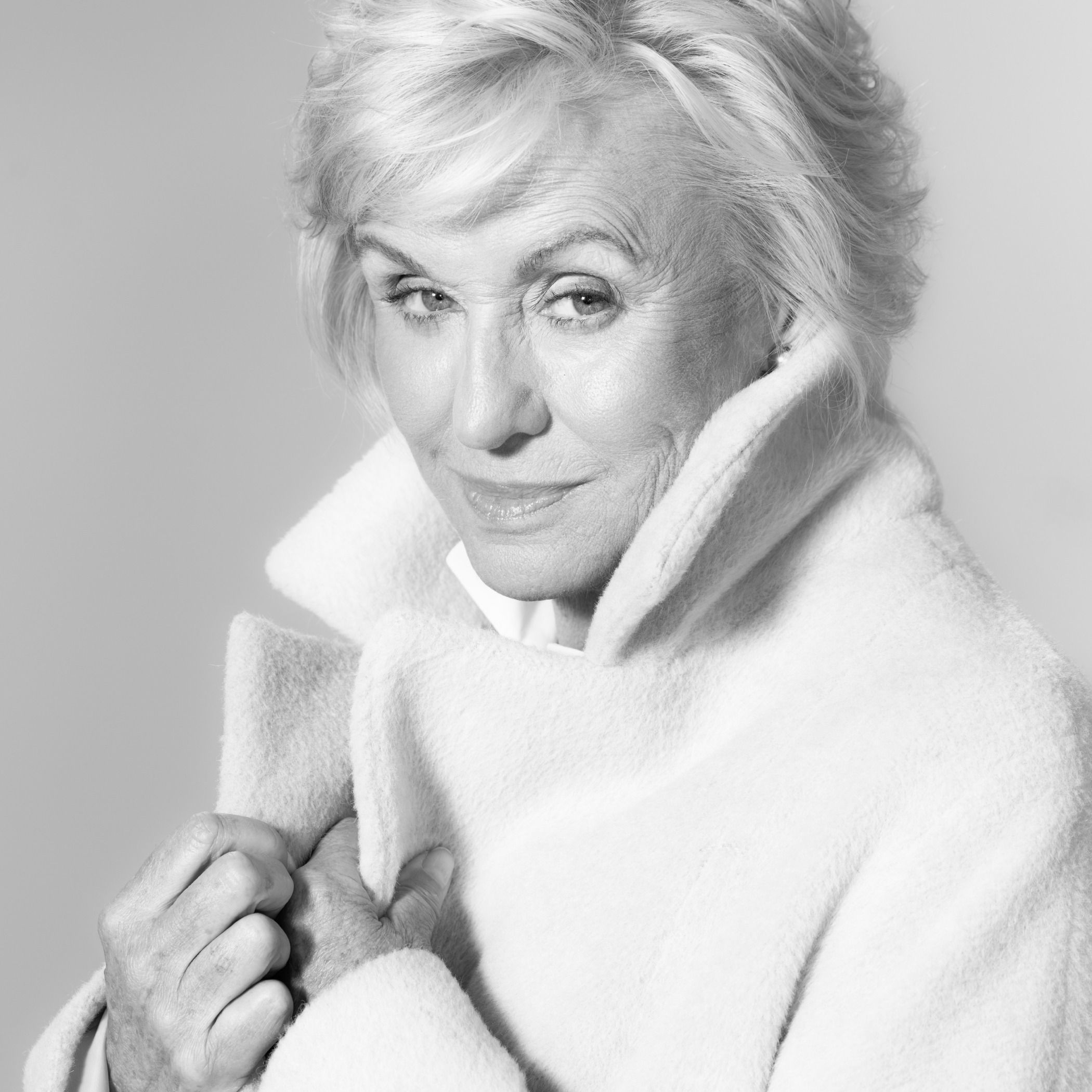
The Interview
Tina Brown Thinks the Über-Rich Have It Coming
00:48:38
The longtime editor and chronicler of the elite says she’s liberated and is letting it rip.
Loading summary
Transcript126 lines
- [00:00]
Podcast Announcer
This podcast is supported by the International Rescue Committee, co founded with help from Albert Einstein. The IRC has been providing humanitarian aid for more than 90 years. The IRC helps refugees whose lives are disrupted by conflict and disaster, supporting recovery efforts in places like Gaza and Ukraine, and responding within 72 hours of crisis. Donate today by visiting Rescue.orgRebuild.
- [00:31]
Lulu Garcia Navarro
From the new York Times, this is the interview. I'm Lulu Garcia Navarro. The lavish expense accounts, the power, the shoulder pads, the days of elite media in New York are long gone. But there is perhaps still no sharper observer of politics and culture than one of that period's most prominent figures, Tina Brown. In the 80s and 90s, she was the editor in chief of Vanity Fair and the New Yorker until leaving to start an ill fated magazine called Talk with Harvey Weinstein. That venture folded after a few years, but Brown wasn't done entering her online era with the launch of the Daily Beast in 2008 and becoming an author of books about the royal family and her time at Vanity Fair. These days, she's brought her signature stinging analysis of the media, the royals and the political class to Substack, where her deeply enjoyable newsletter is called Fresh Hell. At a time when there is so much change and uncertainty in our media, in our politics, I thought it would be grounding to sit down with someone who has the long view. Tina did not disappoint. And just a note. Our first conversation happened before news broke that King Charles had stripped Prince Andrew of his titles, seemingly for his association with Jeffrey Epstein. We did chat about that more in our second interview, and both conversations happened before the latest batch of Epstein messages, some mentioning President Trump, were released by Congress. Here's my very entertaining conversation with Tina Brown.
- [02:12]
Tina Brown
Gosh, this is the. The lair, the coven.
- [02:16]
Lulu Garcia Navarro
It is.
- [02:16]
Tina Brown
Hi, I'm Lulu. Nice to meet you.
- [02:18]
Lulu Garcia Navarro
Nice to meet you. So happy. Happy to have you here.
- [02:20]
Tina Brown
Thank you.
- [02:21]
Lulu Garcia Navarro
Please, have a seat.
- [02:23]
Tina Brown
Okay. Thank you.
- [02:27]
Lulu Garcia Navarro
I want to actually start by reading some of you to you. Here are some of your descriptions of some folks that we all know. Mark Zuckerberg, Meta's slippery salamander, Prince Harry, the ginger whinger. Lauren Sanchez has proved that landing the fourth richest man in the world requires the permanent display of breasts like genetically modified grapefruit. And you describe our president as Tyrannosaurus. I mean, it's wonderful writing. I just wonder how you come up with these acid descriptions.
- [02:59]
Tina Brown
Well, something happens, you know, when I sort of hit the typewriter. The typewriter, you know, that dates me. Something happens when I hit the keyboard. And also I think that because I'm writing this Substack Fresh Hell, it's a kind of. I'm in a different zone. I'm sort of my diary self, if you know what I mean. And I don't feel I have to have any sort of restraint anymore, which, you know, is very exciting to me as a writer.
- [03:23]
Lulu Garcia Navarro
I mean, this is the thing that really comes through that you are writing now like you just are not going to be censored in any way. You're not afraid?
- [03:33]
Tina Brown
Well, I mean, I sort of feel, you know, I think of myself in the third trimester of my life rather than the age that I.
- [03:40]
Lulu Garcia Navarro
And we'll go through your many iterations.
- [03:41]
Tina Brown
And why not? You know, it's like I feel liberated in some way. I don't care if. And it's sort of great not to, in a way, be sort of in charge of lots of people either, because I don't have to worry. Well, what happens if I want that person to advertise or if I want to put that person on the COVID I can just sort of let rip. And it's liberating. And I think it's needed, actually, you know, because there's so much kind of pussyfooting and mealy mouthing around that has been going on in writing, it seems for the last sort of 10 years that now you can just really have fun, and I can have fun anyway, and I'm trying to.
- [04:20]
Lulu Garcia Navarro
Mm. As you mentioned, these descriptions come from your substack Fresh Hell. But before you were on substack, you were the original queen of Conde Nast. You became the editor of vanity fair at 30 in 1984, which is very sobering for those of us who did not get to such august heights so young. And then, of course, you went on to run the New Yorker. You know, there's a lot of nostalgia for that era now. There's books, articles, podcasts. Do you miss that time? What do you miss about that time?
- [04:51]
Tina Brown
Well, you're absolutely right about the nostalgia. You know, my book, the Vanity Fair Diaries, which I wrote, you know, seven or eight years ago, people just keep coming up to me and saying, oh, I've been reading it. It's like the. You know, I feel so nostalgic for that period. I think it's because this was when work was so much fun. You know, it's like all the fun has come out of work. Because now for the journalism, media world, it's all about, like, how do you get a platform that anybody will look at? How do you Raise the money for what? Can you say that some sponsor doesn't want you to say? It's like, this was a period that I lived through where it was this hell for leather pursuit of great stuff, and I had a ball doing it. And the offices of Vanity Fair were just the HQ of interesting, adventurous talent. And the same at the New Yorker. I realize now how terribly lucky I was at the New Yorker to be sitting there with people like Art Spiegelman and Adam Gopnik and David Remnick and Jane Mayer and all these wonderful writers arguing about what we were going to say in the pieces. You know, whether we wanted to reuse that story, whether it was accurate, whether it was fair, whether it was all these stored things that we talked about were nothing to do with. Like, is our business going up in flames? And that's unfortunately what this latest. The newer generation have experienced ever since they've begun their careers, which is very, very sad.
- [06:19]
Lulu Garcia Navarro
I mean, I have a theory for why there is so much nostalgia, which is even as the Internet has sort of democratized the way that people get information and who gives information. We've seen the whole system that you presided over in that era sort of be dismantled. And I think people are craving a bit more of authority, because people want to guide through the muck. They want duration.
- [06:47]
Tina Brown
Of course they do. I mean, the gatekeepers have gone. Everyone goes, yes, well, as if the gatekeepers were some kind of terrible inhibition to doing anything good. The gatekeepers were also the tastemakers. So the thing about not having any gatekeepers means that there is no one person who's got the flair, the taste, and the courage to say, I like that. I want to do it. Whether it's somebody running a streaming service or somebody running a book publishing company or somebody running a magazine, you want those people whose taste is. Is confident and unfortunately lacking. Those gatekeepers now is just this big blob out there of just sort of, you know, stuff. Stuff and dross that comes careening at you and you don't know where to find the good stuff. I think that's the biggest problem of our time, is that, you know, there is brilliant writing out there. I mean, I see it all the time, but finding it is like the needle in the haystack. It's like, I'm always feeling, what have I missed? What have I missed? Cause somebody will say, oh, did you read that great piece? It's like, where. What? You know, I thought, I've got like a thousand subs to, you know, things I'm reading Social media. I'm reading the old guard stuff, but my head is exploding. There is nobody who can actually tell you, very few, anyway, that can corral the good stuff for you and tell you this is needed. And I personally miss it very much, and I think other people miss it. They're exhausted, you know, and unfortunately, what it's leading to is just a lot of people checking out. So it's a very demoralizing time. You know, I'm always being asked by sort of young people at, you know, journalism colleges and so on, like, how do I get into journalism? And I look at them sort of feeling like, often I say, actually, you should go to India, because India, in fact, has a very vibrant literary culture. You know, there's not much literary culture about anymore. You know, India, for some reason, there's a lot of sort of interest in intellectual debate. And, you know, you go out and everybody's talking about articles and pieces and books, and there seems to be a great deal of energy. So it's a long way to go. Should we say to get into.
- [08:49]
Lulu Garcia Navarro
I can't believe that you are. That your advice is go to India.
- [08:53]
Tina Brown
It's not popular. I will say that when I say that, you do see the light fade from the eyes. You know, I would be a little.
- [08:59]
Lulu Garcia Navarro
Demoralized if that's the advice that I was getting now, trying to break in. I want to get back to your early career a little later, but you are actually an authority on some pretty current things that are happening that actually had their roots in that era of the 80s and the 90s. And one of them, of course, is Jeffrey Epstein.
- [09:18]
Tina Brown
Mm.
- [09:19]
Lulu Garcia Navarro
You knew Jeffrey Epstein. You knew Ghislaine Maxwell socially. In your book the Palace Papers, you described her as omnipresent in the social scene. She was always at book launches and cocktail parties. How did you understand their relationship? Was it love? Was it money? Was it both?
- [09:38]
Tina Brown
Well, I mean, I didn't. I didn't understand their relationship at the time. Because you never saw Epstein with her, actually, when Ghislaine was kind of. I think Epstein was slightly in her rearview mirror when I knew her. I didn't really know about that background with Epstein until, you know, I read about it later. I think that she was an abused figure herself, actually. I mean, her father, Robert Maxwell, was a really terrible, tyrannical guy, a press baron at the time and a crook. You know, he also, very ironically for her, in terms of her life story, he also died mysteriously in a suicide, or was it a murder? When he went over the side of his bo Having robbed the pension funds. So he was a crook, the father, but he was a crook. That was the king of the world for a time. So she was raised, you know, in that atmosphere of the glorious press baron, only to find that, in fact, he was a crook. So she had that sort of trauma. But I also had this great sort of story in my book, which I found when I was reporting the palace papers, that she took somebody up to her room when she was a little girl to show her her room. And she said. And all the brushes were like, her hair brushes were laid out on the counter. And she said, oh, yes, she said, those are my hairbrushes. Daddy lets me choose one when he wants to beat me. So, I mean, you just suddenly saw, you know, he was sort of asking her to curate her own punishment for him to abuse. So that, I think is at the core of it that her father was this really terrible person. But I think with Epstein, she was mad about him. You know, I think she was crazy about Epstein. And the only way she felt she could get into his good graces, if you like, was to sort of participate in and in the end, you know, curate his abuse of young women. And, you know, one thing I really strongly feel now is that there's a kind of sense that, oh, Epstein, you know, Ghislaine was his sort of procurer. Okay, that's bad enough. But actually, when you read the new recent book by Virginia Giuffre, who, of course, was the sex slave of Epstein, it's so clear that, you know, she wasn't just a procurer. That's bad enough. But she was a real participant in the sexual abuse. I mean, she joined in in the threesomes, hurting the girls during sexual, you know, activities. And she wasn't just a stand in for Epstein. She was, as I think Virginia says, you know, twin. They were twin halves of the same evil. And I think that's true, actually. But you never would have known it from seeing her work those parties. And I think she deserves to, you know, rot in that prison a very long time, in my view.
- [12:09]
Lulu Garcia Navarro
Do you think she will?
- [12:10]
Tina Brown
I wouldn't be at all surprised if on his way out, Trump does pardon her when MAGA no longer counts. After all, once he's out of there, why should he care about MAGA anymore? He won't. He will have, you know, the crypto coffers will be full. And he might want to pardon Ghislaine just because he can. But I think if he did it now There would be a real uproar.
- [12:32]
Lulu Garcia Navarro
You know, in the early 2010s, when you oversaw the Daily Beast, you ran one of the first national series on the Epstein stories.
- [12:39]
Tina Brown
Yes.
- [12:39]
Lulu Garcia Navarro
And you noted after you wrote about that period that they didn't really stick at the time.
- [12:46]
Tina Brown
They didn't. I mean, when we published Conchita Sarnoff, who was a campaigner for sexual trafficking, she brought the story to us. We were the very first to run the piece about the sweetheart deal between Acosta in Florida, the DA with Jeffrey Epstein, where he got a sort of, you know, light slap on the wrist.
- [13:04]
Lulu Garcia Navarro
Punishment, who then became, of course, Trump's labor secretary in the first term.
- [13:08]
Tina Brown
And so we ran that piece and then we ran these other pieces, and Epstein, as I write, you know, came in to the offices of the Daily Beast and tried to stop me running it. I never know to this day how he got past security, because nobody said, jeffrey Epstein's coming up. But I got back from the art department, where I was working, and there he was, sitting there with his very cold, dead eyes. And I said, what are you doing in here? I mean, I said, what are you anises? And he just looked at me and said, just stop. Just stop. And it was a very chilling encounter. I said, you know, Jeffrey, if you have something to say, you know, say it to our lawyers. You know, we escorted him out. He didn't follow up. Why didn't he follow up? Well, he decided, I think, that instead he would go on a kind of blitz about his philanthropy, which he did. I mean, from that day, he was sort of constantly sending out releases about all this philanthropy he was doing. And I think he thought he'd sort of got away with it. What changed, of course, I think, was MeToo when Julie Brown did her brilliant series in the Miami Herald. That was after MeToo. And after MeToo, people began to be much, much more focused on abuse of powerful men, of young women. So I think at the time that we published it, Epstein wasn't that well known. It was a kind of insider, social story. He was some guy, rich circuit. Nobody really knew Jeffrey Epstein. You know, it went away very quickly, and I think it shows how times have very much changed that. Post me to. Things have changed, I'm glad to say.
- [14:37]
Lulu Garcia Navarro
You know, one of the stories in that series that you ran was headlined Epstein Society, Friends, Close Ranks. And it's a chilling story, actually, having read it recently. Someone in the piece said, a jail sentence doesn't matter anymore. The only thing that gets you shunned in New York society is poverty, which is just incredibly callous.
- [14:59]
Tina Brown
No, it is true. And listen, I was invited to a dinner after he had been convicted. The publicist called me in the office at the Daily Beast, and she said, tina, I want you to come to this great dinner I'm hosting. And she said, it's at Jeffrey Epstein's house. And the other guests are Charlie Rose, Woody Allen and Prince Andrew. I mean, it really does make you laugh. It's a fabulous.
- [15:24]
Lulu Garcia Navarro
But I said, this is the one that's profiled in this piece. This is how you knew about it?
- [15:27]
Tina Brown
That's right. And it's very funny because Lloyd Grove, who was a journalist at the Beast Suit, reminds me whenever I see him, he was sitting right there when I yelled into the phone, what the hell is this, the Predator's ball? You know, because I was outraged that she hadn't seemed to read our pieces about this guy. No, thank you very much. I decline. You know, I don't want to have dinner at Jeffrey Epstein's house.
- [15:49]
Lulu Garcia Navarro
Well, you bring up someone who again is in the news, which is Prince Andrew. And one of your other specialties is the royal family. You've written books about that. The case that you make in the palace papers, which I found really interesting, is that peripheral royals are a real problem for the royal family because they're more susceptible to getting into unsavory entanglements because they have no money, but they have a lot of influence and they have a lot of cachet and people want pay for play. And so you've seen sort of iterations of this throughout the history of the royal family. You know, it's pretty well understood that when William becomes king, he wants to sort of sweep house and make a lot of changes. I wonder, as someone who has studied the royal family and knows it so well, what changes do you think he should make?
- [16:39]
Tina Brown
Well, yes, I mean, I think that William was quite beady eyed when he was interviewed recently by Eugene Levy on the Reluctant Traveler. And he did that sort of rather unexpected interview where he said there will be changes, looking very sort of grim. I think he's just dying to clean house, actually. I mean, I think that some of the palaces probably have to be turned over to the public. I mean, how much overhousing do you need in that family? I mean, there are so many. I think that he will probably do some of that. There has to be more transparency about the royal finances. I think that, you know, the truth is they've been quite brilliant at staying pretty opaque about where all this money comes from, you know, in different directions. And, you know, don't forget the Queen was there for 70 years. Right? So, you know, the Queen. The hagiography around the Queen is intense. You know, I mean, you're not allowed to ever criticize the Queen. The fact is that she has quite a lot to answer for with Andrew's truth. Because the Queen enabled Andrew in a really terrible way. He was her favorite. I mean, she protected him. And Mummy was the only person, his only client, essentially. You know, I mean, she was the one who protected him. So unfortunately, it made him worse. You know, I mean, he was never made to stand up and be counted.
- [17:51]
Lulu Garcia Navarro
Essentially, because we have to close the circle on royal scandals. Harry and Meghan are also trying to make their own way in the world. They've had a rocky time being entrepreneurs. Do you think they have anything to offer anymore?
- [18:07]
Tina Brown
I think it's very sad what's happened to them, actually. I really do. I mean, they've just made so many mistakes. I have never seen anybody in professional life make as many mistakes as certainly as Meghan has. And unfortunately, Harry is not the brightest bulb either. So he thought that Meghan would be his great sort of guide in the big wide world beyond Buckingham palace, as it were. And it turns out that Meghan makes one terrible professional decision after another. And now there's sort of pariahs everywhere, it seems, which, you know, is a very difficult situation for them because America was supposed to be the place which paid the bills. And, I mean, what is sad, I think, is that Harry's very good at being a prince. He's actually very good at it. I mean, if there is such a thing as being a prince, he knows how to do it. You know, he's charming, he's upbeat, he's attractive. He makes people happy when he walks into a room. He's very good with young people. You could send him around the world and he's always going to be welcomed and appealing. And I think he's realized too late that sort of he was born to be a prince and now he's essentially just some kind of guy doing PR gigs while Meghan, you know, tries out her latest cooking idea or what, you know. And it looks really more and more as if Harry's best decision would be to find a way to come back to England. I'd like to see a way for him to sort of make amends with his family. But I think it gets harder and harder as the years go by, let's put it that way. And I think that William is gonna be the decider of that. And I think William has a very tough view of the whole situation, which is the betrayal of Harry is not something that can be remedied.
- [19:47]
Lulu Garcia Navarro
Why is this something that you keep coming back to the Royal Family? I mean, obviously, where you started in the uk, you sort of brushed up against it. But why has it been an enduring sort of interest?
- [19:58]
Tina Brown
Well, lots of reasons. First of all, when I write about the royals, it enables me to write about a lot of other things too, which do fascinate me. Class, you know, British society, celebrity culture. These things all pertain to these royal stories. So that's very interesting to me. The other thing that's very interesting to me is the ongoing human drama of real people with real feelings and hurts and pains and joys in tension with a monarchical system which is a thousand years old. So that is in itself extremely interesting. You know, there are people who are as human as you and I, but they're actually in this cage and somehow have to find a life inside it. You could almost argue it's too cruel a predicament for modern humans.
- [20:46]
Lulu Garcia Navarro
As promised, I wanted to get back to your time editing the big magazines where you started. Anna Wintour, the great Vogue editor, is stepping down. She was there while you were at VF in the New Yorker. You're both women who've broken a lot of barriers, contemporaries at the time. How do you see her legacy?
- [21:08]
Tina Brown
I mean, I think Anna's really remarkable. I mean, she's got such an incredible work ethic, and I mean, she just. In a sense, I mean, she became Conde Nast. I mean, she went from being the editor of Vogue to being sort of connective tissue. Connective tissue for the entire company. And, I mean, hats off to her. That's obviously something she wanted to do. I think it must have been a kind of a bit nightmarish, frankly, to be staying in that same environment as it changed and changed and changed. But, you know, she's always found a way to reinvent. I think her role, though, is really a difficult one because, you know, the whole question of a magazine company like Conde Nast has changed so utterly from the times when we were there, in the great days when Si Newhouse Jr. Owned it. And we were so lucky to have him actually working in this private company where we were just allowed to get on with our work and our creativity. And I think a lot of her time now is spent on all this kind of corporate hell. So, you know, I think that she must love what she does.
- [22:08]
Lulu Garcia Navarro
Do you regret leaving Conde Nast when you did? I mean, when you look at her career and, like you said, she became Conde Nast, her sort of legacy is very much cemented. You could have had that too.
- [22:21]
Tina Brown
Do I regret leaving the New Yorker to go and work with Harvey Weinstein? Is that. Let's cut to the chase here. I don't think that was a brilliant career move, I have to say. So I certainly regret that. But I've also had a very interesting life since, you know, I was never gonna be a keeper at Colne Nast. You know, I mean, I was there for 17 years. That's a long time. Personally, I think 10 years is the right amount of time to be the editor of something. I was actually. I was eight and a half years at Vanity Fair, and then I was, I think, six and a half years at the New Yorker when I left, Lured away by Harvey Weinstein to start Talk magazine. But, you know, I'm a very restive, creative person. And there's no way that I would have ever stayed to be the symbol of Conde Nast. No.
- [23:06]
Lulu Garcia Navarro
You've kind of touched on it in some of your writings about that period. And knowing what the 80s and 90s were like, I imagine it was pretty sexist.
- [23:15]
Tina Brown
Yeah.
- [23:16]
Lulu Garcia Navarro
You know, we're at a moment now with a lot of regression in terms of the way women are talked about, perceived what their role in society is viewed as. I'm wondering what you remember about that time.
- [23:27]
Tina Brown
Well, my. My major frustration, and it was sexist, I didn't think at the time, but I now realize was, was that as great as Sy Newhouse was, sort of as a boss, it was a very patronizing relationship in the sense that he was not interested in my views of how the business should be run. Essentially, I said I thought we should have a production company. I thought we should be doing festivals, you know, conferences. I did one conference. I managed to slip one in. And I said, I think we should be doing live events. And I laid out this whole kind of thing. And he just looked at me and he said, stick to your knitting, Tina. You're an editor.
- [24:01]
Lulu Garcia Navarro
Is that a quote?
- [24:02]
Tina Brown
That is a quote. And I just was, like, so bummed, you know, by the whole thing, you know. And I must say, one of the things I find exciting at the moment, actually, is the fact to see Barry Weiss, you know, who's created the Free Press and has sold it now to the Ellisons for 150 million and has gone on to run CBS. I thought that's Just so great that she was able to be heard essentially as someone whose business concept was right and correct and interesting. So she shows, I think, the difference in the eras, if you like.
- [24:35]
Lulu Garcia Navarro
Well, we should say that your substack has been reprinted on the Free Press.
- [24:39]
Tina Brown
It has? Oh, you say yes, it has. Yes, yes. No, I'm at Myra, actually.
- [24:43]
Lulu Garcia Navarro
I was very curious to think about what you would make of her.
- [24:46]
Tina Brown
Well, I mean, I think Barry saw the rise of irritation with woke culture, as it was said, and she wrote it to the top, if you know what I mean. She created sort of Free Press around that irritation, if you like, and did it very well. She has a bigger challenge now that the Trump world has turned that whole concept into something so much more ugly, frankly. And I think that's gonna be a real challenge for her, actually, because now she's running. But in put in charge in cbs, what is she gonna do when the first call comes from the White House telling her they hate the story? That's in preparation, you know, and she is supposed to be defending journalism. I think that's going to be very, very difficult, frankly, for her. And if I'd been advising her, I would have said, take the money for the Free Press, but don't get involved with cbs. But she didn't ask my opinion on that.
- [25:41]
Lulu Garcia Navarro
Another person who came after you is Graydon Carter, who was the editor of Vanity Fair. And he wrote in his memoir recently some things that were perhaps less flattering about you. He said that the first two years there were pretty dreadful in part because, I'm quoting, the Tina Brown allies who had been left behind were deeply hostile and subversive. And that when he arrived, there was almost nothing lying around that I thought was worth publishing. Were you surprised to read that?
- [26:13]
Tina Brown
I actually didn't read it because I'd heard so much about it that by the time I got it, I sort of didn't want to read it. Look, I left behind a whole team. I mean, whether they were subversive or not, I have no idea. I mean, at that point, my head was totally in the New Yorker. So, you know, if they were subversive, it had nothing to do with me because I was out of there. I mean, I'm very much a person who the door shuts and I'm gone. You know, I was deep in the New Yorkers, very challenging culture itself of having all these old guard people who I had to woo or fire or romance or whatever. So I wasn't involved in his first two years. I had nothing to do with any of that. And as to how there being nothing lying around, I'm surprised to hear that. Cause there were a lot of great pieces that were left behind, so. Yeah. No, but he did a great job himself, you know, I mean, I don't know quite why he remains sort of weirdly bitter about me. I don't know. Because he did a great job and Vanity Fair and was a great success. So what is there to be bitter about? I'm not sure.
- [27:08]
Lulu Garcia Navarro
I mean, he wrote that he'd heard a rumor that the style director of the magazine would go to your apartment to help style your clothes for the day.
- [27:15]
Tina Brown
You bet she did.
- [27:17]
Lulu Garcia Navarro
That's true. She'd come over every morning.
- [27:20]
Tina Brown
No, not every morning. If I was gonna go to some big event, I would certainly have her ask her to come over and help me for sure. Why wouldn't I? I think everybody would. You know, she had much better taste in clothes than I did.
- [27:31]
Lulu Garcia Navarro
Why do you think he brought these things up? I mean, what do you think?
- [27:34]
Tina Brown
Because I think. Look again. I mean, I'm afraid. I hate to say it, but I think it's the sort of the sexiest way of looking at women. I don't really know. I think it's the sort of condescending myth that, you know, that makes men feel better sometimes, you know, because we're very threatening. And therefore my success had to be wrapped around with a kind of somewhat belittling sort of rockette imagery. I have to say that what used to amuse me, really, is that, you know, when I got awards, you know, as an editor, they would always. The citations were always so much more silly than those citations that men would get. It would be like, gina Brown is the buzzy, irreverent editor of the. You know, it's like, excuse me, I just published a 30,000 word piece about an El Salvador atrocity. You know, And I'm still like the buzzy. Like as if I'm some kind of a, you know, can. Can dancer or something, you know. But I've sort of got used to that now.
- [28:36]
Lulu Garcia Navarro
And I hate that word. I've seen you in your writing say that. You just hate that word, buzzy.
- [28:40]
Tina Brown
It's a silly word. You know, the whole thing about buzz is people are talking about what you've written. Okay? Isn't that what we all want? You want to land into silence. You want to publish something into a sort of cosmic darkness out there. You know, if I published a magazine and people weren't talking about it, I'd failed You know, so. Yeah, no. So I sometimes sign my letters. The erstwhile queen of buzz.
- [29:13]
Lulu Garcia Navarro
The once and future, perhaps. I am wondering what your take is on this current media moment where we're seeing a lot of very fraught relationships between media organizations and people with money. The LA Times, the Washington Post, David Ellison, the son of Larry, one of the richest men in the world, who is now in charge of Paramount and cbs and obviously outlets especially now, need to have a relationship with people with money. And they always have had that relationship. I just wonder, why do you think people like this get involved in journalism?
- [29:55]
Tina Brown
I wish that they would learn something about journalism before they leap in and think that they can just simply buy journalism and then start to insert themselves. I mean, I am so bored, frankly, with sort of the uber rich thinking that just because they're rich, they know everything about everything, because they don't, you know, and they're so disrespectful, frankly, of our business, if you like. You know, I don't think that I know anything about, you know, I don't know, rockets. Rockets or whatever it is that happens on Amazon's platforms. I mean, I would be humbled in the face of such brilliant engineers or whatever, but they have absolutely no respect for. For us, Absolutely none. And that is my major beef, you know, essentially, with the digital barons. I am probably burning with resentment about it at all times, actually. Really? Yes, absolutely. I find it intolerable, to be honest, because I have such respect for journalists and, for instance, investigative journalism, to the point that, you know, I was married to a great journalist, Harry Evans, and I started a foundation in his name and a fellowship for young people who are good investigative journalists. So I have a strong belief in our profession, and it's a very proud profession. And I don't like seeing it being turned into this kind of commodity by people who I would have thought one or two of them might care about it. You know, you think one or two of them would care, but they don't seem to. You know, it's tragic.
- [31:36]
Lulu Garcia Navarro
I don't think we can talk about this era for journalism without talking about the President, Donald Trump. You and he again, were coming up in that same era. I'm not really.
- [31:48]
Tina Brown
You really got it in for the 80s, haven't you?
- [31:49]
Lulu Garcia Navarro
But I just wonder, what did he learn back then, you think, that has made him such a master manipulator of the media and the attention economy today?
- [32:00]
Tina Brown
I mean, we got it all from Roy Cohn, didn't he? Which is like, never apologize, just Say whatever you want and never admit that you're wrong. And keep your mind on the only thing that's important, which is the deal and the money. And, I mean, I actually think that Trump this time has really decided that this is going to be about collecting the biggest haul that he can. You know, in days when there was more of a collective media, you could do a big story about, say, you know, the corruption of the current administration, and people would have read it and talked about it and paid attention to it. I think today it often doesn't land the stuff because people are reading different things. I mean, they're not reading the same thing. So he's understood this, and this is where Trump is really brilliant. I mean, he is an amazing communicator, and he understands that people won't pay attention. And so as a great producer, which he is, he knows that, like, every two or three weeks, he has to produce another distraction. He knows that people will not be paying attention. They don't. And he understands that brilliantly, I think. And it's the reason it's all getting torn apart.
- [33:12]
Lulu Garcia Navarro
I mean, how do you shock people in an era where there is no shame?
- [33:18]
Tina Brown
Well, it has to be simple. That's the thing we've learned. I mean, people never will understand, for instance, crypto. All the crypto deals, it's never going to land because people don't even understand what crypto is. I mean, let's just rent Sam Bankman Fried to explain it to us. I don't understand what a blockchain is. I mean, you know, it's like people don't understand what that is. It has to be something they can really see. Like, you remember the Menendez corruption case, Senator Robert Menendez, and they found these gold bars in his closet. Okay, that we understand. We get that. Big gold bars in a guy's closet. Corruption. See it. You know, it's almost like we need a scandal with Trump where people can really understand what happened, you know, and it's interesting that the Epstein case has got as far as it has, but pedophilia is something people understand and has a face. There's a face. And I think that Trump has actually misjudged that one. I mean, he thought that he could ride that until he was president and then sweep it away. I'm not sure that he can. He might find that it does keep surfacing because it's really something people can understand and feel horrified by.
- [34:27]
Lulu Garcia Navarro
So who is the most odious person in media right now?
- [34:30]
Tina Brown
God, so many. I mean, I'M so disappointed in Jeff Bezos. I have to say. I saw him as a big savior of the Washington Post, and it seems like he's just totally flipped. I mean, Tucker Carlson really mystifies me. He worked for me at Talk magazine. Did he? Yes. My two political correspondents were Jake Tapper and Tucker Carlson.
- [34:55]
Lulu Garcia Navarro
Well, they seem to have done all right.
- [34:56]
Tina Brown
They both have done extremely well. But Tucker was a really good writer. I mean, he was such a good writer that I thought he was a star writer. You know, I would have certainly had him at the New Yorker. He had such a wonderful gift of tone of phrase. He had a kind of satirical eye. He was wonderful. And something strange happened. You know, he had a head transplant and turned it into this kind of frothing lunatic. And I don't understand what happened to him. So there's been people who have changed and I think what has shocked me really about this era is how fast people can change.
- [35:35]
Lulu Garcia Navarro
Tina Brown, thank you so much. We're gonna speak again, but I really appreciate you coming in.
- [35:40]
Tina Brown
Thank you.
- [35:46]
Lulu Garcia Navarro
After the break, I talk to Tina again and she tells me the lesson that she takes from Zoran Mamdani's win.
- [35:53]
Tina Brown
You know what? Money doesn't just buy everything. I mean, all that money went into kind of stopping him and he, he still.
- [36:16]
Podcast Announcer
This podcast is supported by the International Rescue Committee. Co founded with help from Albert Einstein, the IRC has been providing humanitarian aid for more than 90 years. The IRC helps refugees whose lives are disrupted by conflict and disaster, supporting recovery efforts in places like Gaza and Ukraine and responding within 72 hours of crisis. Donate today by visiting resque.org rebuild does.
- [36:43]
Google Cloud Gemini Enterprise Advertiser
It feel like working with AI is too much work? What if all the AI your business needed was in one place? That's Gemini Enterprise from Google Cloud, a simple, easy to use chat interface that connects Google's best models with your company's data. No matter where it lives. Anyone, not just devs, can run AI agents that actually give time back and build AI tools with enterprise grade security. The best of Google AI is now for every business. Learn more about gemini enterprise@cloud.google.com what makes.
- [37:15]
Podcast Announcer
An island vacation magical? The culture of music and dance. The art and architecture. The great outdoors. For Puerto Rico, it's all three. Visit San Juan and see the city's museums, music and dance schools as you pass traditional colonial architecture, or hear the island come alive at night. Whether it's Puerto Rico's iconic coquille frogs singing from the trees or enjoying salsa and reggaeton at local Bars and restaurants. Learn all the ways you can discover Puerto Rico. Learn more@discoverportorico.com.
- [37:58]
Lulu Garcia Navarro
Hi.
- [37:59]
Tina Brown
Hi, Lulu. How are you?
- [38:00]
Lulu Garcia Navarro
I'm very well, thank you. How are you?
- [38:02]
Tina Brown
I'm in London and having pretty great time, I have to say.
- [38:06]
Lulu Garcia Navarro
So since we last spoke, there have been, to say the least, some developments on the Prince Andrew front. King Charles stripped him of his last remaining titles. He is no longer a prince. Evicted him from Royal Lodge. So are we at the end of the Prince Andrew sorry saga?
- [38:25]
Tina Brown
Well, the problem is, I fear we're not. What you saw really, in the last couple of weeks was the sort of result, in a sense, of the kind of conflict and dithering, really, of the king who didn't want to go as far as he had to go, sort of pushed by public opinion. I mean, it would have been much better if he'd simply stripped him of all of his honors originally, you know, or rather that had been done in 2019 when his mother was there, instead of which, you know, it's been allowed to kind of bleed out in one episode after the next. I do think that he actually should have left the country. But how it's all gonna work out? I don't think they've really solved it. No, it's better than it was.
- [39:03]
Lulu Garcia Navarro
I mean, isn't part of the problem with someone like Andrew that if you cut him off completely and you kick him out of the royal family utterly, then he is a loose cannon out in the world with no means of supporting himself and could wreak all sorts of havoc?
- [39:19]
Tina Brown
Indee. No. I mean, he would have only his secrets to sell, essentially, and they can't allow that to happen. And the same is true of Fergie, who is such a wild, loose cannon. So they have to be kept sort of under control, but it's pretty hard for them to do that. And I think when William is king, you know, I think he might be even tougher on the situation. I don't quite know what he could do to make it even tougher, but I think he will be.
- [39:44]
Lulu Garcia Navarro
Are you a royalist?
- [39:45]
Tina Brown
I certainly much rather have a royal family than, you know, a republic. I've come to see that actually countries which do have a monarchy tend to be more stable. And I think that, you know, they do rally the nation. They can change the mood by their sort of ability to just be above politics. And I think being above politics is a huge asset right now to any nation.
- [40:07]
Lulu Garcia Navarro
Well, speaking of politics, that brings us to something that happened since we last spoke as well. Which is a big earthquake in your adopted city of New York. New Mayor Zoran Mamdani, who has very much scared, I think, the plutocratic class.
- [40:24]
Tina Brown
I know, it's great. It's wonderful that he's done that.
- [40:28]
Lulu Garcia Navarro
I mean, tell me, what does his rise, do you think, say about how people are feeling about the elite world of tastemakers that you came up in and the elite in general?
- [40:37]
Tina Brown
Well, I think, honestly, it was a battle cry that absolutely needed to be sounded. You know, I mean, we have in the last sort of few years, been so bullied by the super rich. There's a sense that the rich are the ones who have the voice in every debate, whether it's about academia or just the way the nation is run or how we live our lives with the tech revolution, et cetera. And people have felt, I think, more and more hopeless about the enormity of the wealth and the impossibility of fighting it for regular, as it were, people. And I do think that Mamdani has shown how to get your sort of fight back and has won against all those people. I mean, it's very inspiring, coming up from nowhere. And yet the power of his ability to sort of excite and inspire people has made people feel, you know, what? You know, money doesn't just buy everything. I mean, all that money went into kind of stopping him, and he. He still won. And you don't have to like his ideas even to just be glad of that. I'm sort of very glad of it.
- [41:41]
Lulu Garcia Navarro
What do you think happens next?
- [41:44]
Tina Brown
I think we're underestimating the power of humanity. And I sort of think that's what the Mamdani showed. I mean, we've tended all to think this is the inevitable direction. You know, the AI uber barons, et cetera, dictate how we're all going to live. And then we'll inherit the Earth. Everybody else is a kind of a peasant. You know, all of these things have become very depressing.
- [42:05]
Lulu Garcia Navarro
We all end up as, like, drones. Slaves to our technology.
- [42:09]
Tina Brown
Exactly. We're all just going to be drones and slaves. And I think that we will be to a certain extent. But I kind of also am beginning to think that maybe humanity has a bit more juice in it than they might anticipate. And, you know, things can change very, very quickly in America. It's one of the reasons I love living in America is it's, you know, it's very exciting place. The whole mood can change overnight, you know, and all of a sudden people will just turn around and say, look, I don't want you deciding how my life is gonna go. So I'm feeling quite optimistic at the moment.
- [42:41]
Lulu Garcia Navarro
You know, one of the things I really thought about since our last conversation is how valuable it is to have people with a wide lens on history talking about this sort of very strange, very unsettling moment, which was one of the reasons I wanted to talk to you. But it also made me think about your late husband, Harry Evans, who was a legendary journalist in his own right. He was 25 years older than you. Did he see things differently than you because you were from different generations? And did he help give you a different perspective?
- [43:12]
Tina Brown
He did, yes. Because I'd never met anybody who had more passionate moral convictions than Harry had. And sometimes people thought because he was such a kind of congenial, sort of joyful kind of personality, they might have mistaken that for someone who was perhaps pliable. But actually, when it came to his moral convictions, he was absolutely rock solid. And he also never gave up. You see, I mean, this is the thing that I used to most admire about Harry. He was so tenacious, and he was so outraged by things. He never lost his capacity for outrage at all. Never. And always was thinking of ways that, you know, he would fight back. And in fact, when he didn't have a paper anymore, you know, that was actually kind of painful for him because, you know, he would say, like with a school shooting, it would say, why aren't they, you know, every member of the nra, let's get their pictures, put them on the front page, you know, like, name them, shame them, you know, so, you know, he had this incredible fight in him, and, you know, it always lifted me up and made me feel, you should never just simply be a bystander to amorality, malfeasance of any kind. He refused to be a bystander in life. He was a man of the arena. He believed in it. And I think that's what really rubbed off on me.
- [44:27]
Lulu Garcia Navarro
Hmm. He passed away five years ago.
- [44:30]
Tina Brown
Yes.
- [44:30]
Lulu Garcia Navarro
I'm just wondering how you have dealt with that loss, because it was a real partnership.
- [44:35]
Tina Brown
It really was. I mean, it was. It's. You know, it's agony. I miss him every. Every single day. You know, I mean, I really do. I mean, he. He was such. So sustaining to me. So, you know, it's tough. You know, you go to things on your own, and you've got no one to come back and scream with laughter about, you know, the pretentiousness of the evening that you've just had, which is what I would do with him. So, yeah, no, I miss him enormously, as do the children. But, I mean, knowing that he was older meant I knew that this moment would come. And when it did, it was still much more agonizing than I ever thought it would be.
- [45:12]
Lulu Garcia Navarro
I mean, you mentioned your children. You wrote an essay in this paper last year talking about your son who has a developmental disability. He lives with you. He's in his late 30s. I imagine that having a son who's part of a very vulnerable sector of society has changed your perspective on power and its uses.
- [45:31]
Tina Brown
Yeah, I mean, you know, it's certainly true that Georgie's. He actually recently moved out to his own little apartment just around the corner, which is really sweet. I mean, it means I see him just as much. But, you know, we have to walk a block. I definitely think that when you're part of the community of parents whose children are not going to be, you know, who are not talking about, you know, going to Harvard and all the rest of. Does give you a really different outlook on the world. And I think that Georgie has made me much more connected to people who, you know, everything isn't so perfect. And the pain of seeing people, for instance, you know, who. Who don't have any resources, contacts, whatever to make the situation easier is, you know, I think about it all the time. I mean, it's. It's hard enough having a child with these kind of issues when you do have resources and, you know, you do have enough income to be able to bring in people to help and support and so forth. If you don't, I. You know, it's unbearable. And these are. Never discuss these problems. I mean, it's never a cruel cause, if you like to talk about these issues. But behind the closed doors of millions of houses and apartments, there are, you know, frankly, sort of desperate mothers. And it usually is the mother who does not know what to do without the fact they now have an adult living with them who they're going to have to support probably for the rest of their lives, and then what will happen afterwards? You know, I mean, if I had cloned myself three times over with time, you know, I would spend most of my time on that problem because I just think it's one of the great silent issues of our times right now.
- [47:05]
Lulu Garcia Navarro
How was it when your son moved out? I mean, must have been bittersweet.
- [47:09]
Tina Brown
Well, yeah, I actually really miss him because he used to sort of, you know, he's completely unfiltered, which is one of his most hilarious attributes. So I Mean, I'd be in the middle of a zoom, and he'd sort of wander past with his towel, you know, from the shower, and he's sort of, you know, just his towel, and he'd be sort of start talking in the middle of my zooms, and I would be saying, like, you know, get out of my zoom, Georgie. Get out of my zoom. You know. But now I kind of really miss him looming in his crazy sort of way. There's a real sweetness to having that person, you know, in one's life. We were like. We became like the odd couple, you know, having this rubbing along together, and I secretly wish he would move back. Actually, I'm slightly working on it.
- [47:50]
Lulu Garcia Navarro
I'm just wondering, you know, we've sort of run through the gamut of your life, and I'm thinking about the last five years in particular since your husband died, and now your son's moved out. And it reminds me of something that you said in our first conversation, which is that you've been really shocked by, quote, how fast people can change. And. And so I want to ask you, how have you changed in the past five years as a journalist and as a person?
- [48:20]
Tina Brown
Well, I mean, you know, I think that I'm not someone who sort of looks back and sighs and says, oh, it was all so different. And Harry was a wonderful example of that. He was always just as passionately excited about what he was doing at that moment than he was, you know, at the height of his career at. So I've learned how to really take pleasure from the moment that we're in and not to be someone obsessed with the past.
- [48:49]
Lulu Garcia Navarro
What should the headline for this interview be?
- [48:53]
Tina Brown
Dinosaurs Still Rule the Earth. Question mark?
- [48:58]
Lulu Garcia Navarro
Oh, no, I think exclamation point at the very least. You are an exclamation point for sure.
- [49:05]
Tina Brown
Well, thank you, Lulu. I enjoyed talking to you.
- [49:08]
Lulu Garcia Navarro
I've loved talking to you, too, Tina Brown. Thanks again.
- [49:12]
Tina Brown
Thank you.
- [49:18]
Lulu Garcia Navarro
That's Tina Brown. Her substack is called Fresh Hell. This conversation was produced by Seth Kelly. It was edited by Annabelle Bacon. Mixing by Sonia Herrero. Original music by Dan Powell, Alicia Ba itup and Marian Lozano. Photography by Philip Montgomery. Our senior booker is Priya Matthew and Wyatt Orme is our producer. Our senior video journalist is Paula Neudorf. Our executive producer is Alison Benedict. Also, we do have a YouTube channel where you can watch lots of our interviews. Subscribe@YouTube.com the Interview podcast. Next week, David talks with author and YouTuber John Green about finding hope in a seemingly hopeless time.
- [50:02]
Tina Brown
I don't think humanity can afford despair because the problem with despair is all it does is make more of itself. I wouldn't have an issue with despair if it caused me to be like a better human or a better dad or whatever. But despair for me just sort of like sinks me deeper and deeper into the couch.
- [50:18]
Lulu Garcia Navarro
I'm Lulu Garcia Navarro and this is the interview from the New York Times.
- [50:36]
Kachava Advertiser
We've all done it. Stock our fridge with good intentions only to sacrifice nutrition for convenience. Keep your body and mind nourished with whole body meal shakes from cachava. It's got 25 grams of protein, 6 grams of fiber, greens and so much more, but it actually tastes delicious. Try one of Kachava's indulgent flavors today. Shop now through December 2nd. To get 30% off your first purchase of two or more bags, go to cachava.com and use code N Y T. That's K A C-A V A.com code N Y T.