← The Interview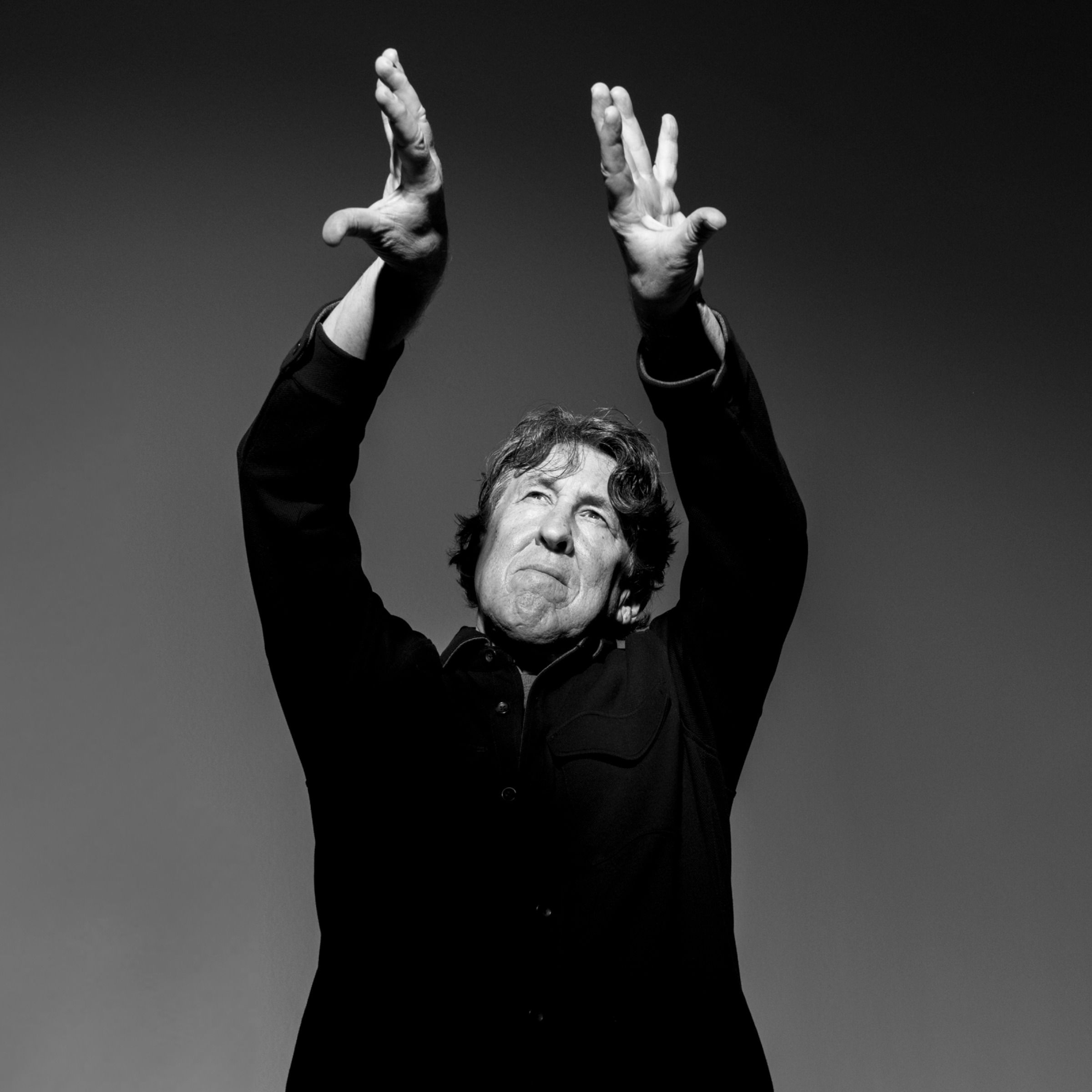
The Interview
What Happened to Cameron Crowe? He Has Answers.
00:51:45
The writer-director made hit after hit movie, until he didn’t. But he doesn’t let it get him down.
Loading summary
Transcript235 lines
- [00:00]
Clinique Narrator
Taking care of your skin is a personal, daily ritual. No matter what regimen works best for you. It's important to remember that great skin care doesn't have to be complicated. With Clinique's classic three step routine, fresh, radiant skin is as easy as 1, 2, 3. Clinique's iconic trio of products used to cleanse, exfoliate and moisturize is specifically created to address your skin's needs and provides a refreshingly simple solution for maintaining beautiful, resilient skin twice a day, every day. Great Skin starts here. Visit clinique.com to learn more.
- [00:40]
Interviewer
From the New York Times.
- [00:41]
David Marchese
This is the interview. I'm David Marchese. As a former rock journalist myself, Cameron Crowe's career always seemed impossibly cool and impossible to replicate. He got his start as a teenager in the 70s, going on the road and hanging out with the likes of Led Zeppelin, the Eagles, and David Bowie for Rolling Stone magazine. Trust me, that does not happen anymore. He would eventually turn those experiences and.
- [01:10]
Interviewer
His mother's completely understandable worries about them.
- [01:12]
David Marchese
Into his classic film, Almost Famous from 2000, which he directed and which won him the Academy Award for Best Original Screenplay. Those experiences are also the backbone of his new memoir, the Uncool. But the book's tight focus on those early days means there's kind of a lot left untapped. That includes Crowe's transition to writer director of beloved films like say Anything, Singles and Jerry Maguire, as well as some thornier subjects like the end of his marriage to musician Nancy Wilson and what some people, myself included, see as a real change in the quality of his more recent work. So what happened? And has any of that tougher stuff chipped away at the idealism at the center of his earlier successes? There's a lot to talk about. Here's my conversation with Cameron Crowe.
- [02:06]
Interviewer
Cameron, thank you for taking the time.
- [02:08]
David Marchese
To talk with me today.
- [02:09]
Cameron Crowe
So great to be doing this. And thanks for you taking the time, you know.
- [02:13]
Interviewer
So the memoir overlaps with the Almost.
- [02:16]
David Marchese
Famous story in a way.
- [02:18]
Cameron Crowe
Yeah.
- [02:18]
Interviewer
You know, both in terms of the.
- [02:19]
David Marchese
Beginning of your career and some of the family dynamics that you were living through at the time, particularly with your mom.
- [02:25]
Interviewer
But Almost Famous, I think it came out almost exactly 25 years ago. You've been thinking about this part of your life, these formative experiences for a long time now. You've really been working through this material for years and years and years.
- [02:41]
Cameron Crowe
I'm a packrat.
- [02:42]
Interviewer
What are you still trying to figure out? I think you're maybe an emotional packrat.
- [02:46]
Cameron Crowe
What Are you still figuring out really? Well said. Well, I love that time when everything meant life or death emotionally, and you really felt things and you hadn't built up, like, many layers of leather, like, skin, like. Oh, yeah. When I first started directing, one of the things that really drove me crazy was when people would say, like, that's not how it's done. Let me. Let me show you how it works. And they didn't seem to have joy. And I wanted to never forget the joyful experience of following your dream and finding yourself voice in the world, which to me is sometimes a youthful experience, and sometimes it doesn't happen until late in your life. But I loved the journey of finding that kind of comfortable place where, you know, like, this is who I am as a writer. This may even be who I am as a person. So I wanted to make sure that I wrote something that captured that feeling. Not through the mists of time, not through, like, a thick wall, a thick, you know, glass wall where you see, you know. Yes, that's how it used to be. I wanted to write something about the time when Bowie was still alive, Glenn Frey was still alive. And I wrote it for pure pleasure. And then eventually I knew it was gonna get published, but I pressed send on the manuscript the night before the Palisades fire showed up to, I thought, consume our house. So I remember thinking, like, okay, I sent it in. If I lose everything, I did write the thing that kind of captured the sum total of all those memories and everything I kept. So I'm really proud of it.
- [04:26]
Interviewer
Can you put me back in a moment? When you were 19 years old doing what you were doing, and you thought.
- [04:34]
David Marchese
Well, it's all happening.
- [04:38]
Cameron Crowe
Really. It started before that. It started when I was 14 and 15, when I just wanted to get backstage and I had all these questions. I did way too much research and stuff. And as a fan, I had a huge notebook, generally one, sometimes two, full of questions. I think people tended to show pity on me. Sometimes standing outside with this notebook full of questions and a tape recorder, it's like, let's let him in. And once I was in David, I always found, like, the doors would open. Like, people like Jim Croce or Glenn Frey of the Eagles or these people whose music I really had questions about were so relieved and happy and excited that there was somebody who was actually a fan and knew their music standing in front of them with a tape recorder, turning. Turn it on. Let's talk. It was embarrassing when people would bust me about my age, but exciting when they laughed about it and said, ask me whatever you want. So I just kept going with it.
- [05:42]
Interviewer
And was there something that you saw in those earliest days that made you.
- [05:47]
David Marchese
Think like, oh, I'm seeing something that most people don't get to see?
- [05:52]
Cameron Crowe
Yeah, the hunger of people that weren't understood in their own adolescent life. They chose music because music chose them.
- [05:59]
Interviewer
They.
- [05:59]
Cameron Crowe
And it was a day to day kind of crusade to like keep this life alive where they were understood. Also, there wasn't a feeling that rock was going to last that long. So there was that thing of like, well, we're making hay while, you know, the sun shines here. But I saw a documentary on the Eagles recently where Don Henley said, you know, basically we don't know what we're going to do when our real life starts. And you know, he's planned a sphere and it's 55 years later. So everybody, I think, was kind of like on an adventure not knowing where it would end.
- [06:36]
Interviewer
When did your real life start?
- [06:39]
Cameron Crowe
I think my real life started when Jan Wenner called me in to have a conversation about what I thought was a congratulations for having gotten Led Zeppelin for the COVID of Rolling Stone. Led Zeppelin hated Rolling Stone. Led Zeppelin were the last band that you would ever expect to see in Rolling Stone. Cause it was a well known feud. And Jan called me in to talk to him and in fact it was, yeah, you did well. But is it a real piece of writing? And this was a day where he had lost his own mentor, Ralph Gleason, and he kind of was working his way through a bottle of vodka and didn't need to see me. Could have blown off the meeting, but he didn't. And he talked to me about that and then he said, meet me at my home. And I met him later at his home and he gave me a copy of Joan Didion's Slouching Towards Bethlehem and said, read some of this stuff and read. Read her earlier profile on the Doors. You'll see how to really write like a real writer. And I was hurt, but also challenged. And on the way back from San Francisco, that day was when my real life started.
- [07:48]
David Marchese
And so that would have been like 1975 or so.
- [07:51]
Cameron Crowe
5. Yeah.
- [07:52]
Interviewer
Also easy for someone to. For an editor to hand a writer a copy of Joan Didion's work and say, yeah, use this as your model. Good luck.
- [08:01]
Cameron Crowe
Well, it was well thumbed, so I knew there was some history in connecting with the book. But it was great and it did inspire me. And her profile of the Doors, where the Doors Are waiting for Jim Morrison to show up is incredible.
- [08:14]
David Marchese
Yeah.
- [08:15]
Cameron Crowe
You know, everything you need to know about that band, and you feel like. Like you had a front row seat to an experience, which is what I always wanted to do, and create that feeling as a writer.
- [08:26]
Interviewer
Are there any experiences from those 70s.
- [08:31]
David Marchese
Days that stand out to you as ones that you, you know, have lingered.
- [08:35]
Interviewer
With you, but you don't know how they fit into the larger story of your life?
- [08:41]
Cameron Crowe
Interesting. Bowie was like that for me because, you know, I cover this thin white Duke period where he was kind of lost in Los Angeles and allowed me or asked me to do a profile on him that took place over that period of time. And it was a wild kind of glimpse of, you know, his own kind of untethered brilliance at the time. But when I re interviewed him in, like,2012 and asked him about that story.
- [09:13]
Interviewer
I know where you're going.
- [09:14]
David Marchese
This is fascinating. Keep going.
- [09:15]
Cameron Crowe
Yeah, I know what you're talking about. And I think I made him a little melancholy and regretful that I had glimpsed this time when he was untethered. And so what was fascinating to me was that time that he was slightly embarrassed about now was one of my most formative times. So that was something that made sense to me later because he was essentially telling me when I re interviewed him, like, hey, I'm glad you had a good time. I scared myself to death and almost died in the time that we knew each other really well. But guess what? I live in soho now. I have a beautiful life. I love my children and I love my wife. And, like, see you later. Yeah, it's.
- [09:56]
David Marchese
It's. The exact example you're pointing to is one I was thinking about also. So it's like, you know, you're hanging out with David Bowie in 1975, 76. Whenever it was when he was in his, I believe it was like, maybe.
- [10:10]
Interviewer
It'S from one of your profiles of him. He's, like, only eating peppers and drinking milk or something like that and thought.
- [10:16]
David Marchese
He was being pursued by witches.
- [10:18]
Interviewer
And so you wrote this profile that.
- [10:20]
David Marchese
Kind of has, like, an effervescence to it, I would say.
- [10:23]
Interviewer
And then when you spoke to Bowie about it later, you know, he basically says, I was mentally ill. And I thought, like, from a larger perspective, are there things that your age and perspective prevented you from seeing and therefore stopped you from putting into the stories?
- [10:46]
Cameron Crowe
I think I always wanted to put my experience forward in the stories. Some stuff would be in between the lines, but mostly I wanted people to feel what I Felt. And I'm still like that making movies. It's like I want to create that feeling. And it's the feeling that music gives you where you're. You're transported into this place that's a safe, glorious kind of place, and it's not going to last forever, but you feel it while you're listening to this music that means so much or has touched your soul. And I wanted to create that feeling journalistically, too. Like, I wanted you to feel like you were in the car riding with Bowie. And this is the guy that you still don't really know that well in media. He was a warm hugely. He could see. He kind of saw around corners musically and culturally and stuff. And so his. His kind of lost weekend was more, I think, amazing than he wanted to remember. But the point was, I saw stuff. I saw glimpses of things, and I tended to write about it a lot, but also to put you, the reader, into a place where you felt what I felt.
- [11:58]
Interviewer
Do you think anything you learned from.
- [12:02]
David Marchese
Doing your job as a journalist, you were then able to bring back to the relationships with your family?
- [12:09]
Cameron Crowe
Ooh, ask me that again. That's really a great question.
- [12:13]
Interviewer
Yeah. Because you were still a young man, you know, and young people, you know, in their late teens, early 20s, they're still kind of figuring out their relationships with their siblings, with their parents. And you were in a situation where you're sort of practicing the art of understanding someone, of learning how to talk to all different kinds of people, of knowing when to listen, when to interject.
- [12:38]
Cameron Crowe
It's a great question. It teaches you to listen. It teaches you to have empathy. It teaches you to see people in very tough situations and, you know, how to read a room. It's true. And I brought back a lot of empathy from my parents and for my sister because I could see the daily battles that everybody suffered. You know, some people think because I got published as a young guy and, you know, had success early on, that was kind of obvious in Rolling Stone and stuff, that, like, I was a candide, you know, that life was just easy, and I was just, like, cruising through every open door and, like, you know, he's living a Cinderella story. But it was tough. You know, everything is a negotiation in a way to get yourself access, to get yourself in the position where you can do the interviews. And the other thing is, there's always a story behind the story.
- [13:31]
David Marchese
What was the story behind the story with your family?
- [13:38]
Cameron Crowe
I think because I was the youngest and I was the last, I was for my mom, in particular, it was. I was the one that they could get everything right with. And so they came to it with. With a certain playbook that they learned from two children before me. So they reluctantly let me go out into the world and fight these battles and win and lose and stuff. But it was. It was kind of me coming back wounded from some of those battles that provided some of our most important times where it was just me and my parents sitting around talking about the ups and downs of life and how you have to fight to be optimistic and how being a warrior for that kind of optimism is a good life to live. And I think that. That I learned with them as a family.
- [14:36]
Interviewer
You know, there's that phrase, everywhere you.
- [14:38]
David Marchese
Go, there you are.
- [14:39]
Interviewer
You know, that's what I'm thinking about. It's impossible to avoid your journalism being.
- [14:44]
David Marchese
A reflection of who you are.
- [14:45]
Interviewer
So I'm gonna nerd out just for a second on Lester Bangs, who is sort of a legendary rock critic who.
- [14:54]
David Marchese
Died, I think, in the early 80s, still a young man, just in his 30s, I think.
- [14:58]
Cameron Crowe
Yeah.
- [14:59]
Interviewer
And was sort of a mentor.
- [15:01]
David Marchese
And he was played by Philip Seymour Hoffman in Almost Famous. And in Almost Famous, the Lester Bangs character functions as kind of like the.
- [15:09]
Interviewer
Moral conscience of journalism and of rock and roll.
- [15:12]
David Marchese
And he's kind of like the Obi.
- [15:15]
Interviewer
Wan Kenobi figure for the character of.
- [15:17]
David Marchese
William, who was based on you.
- [15:19]
Interviewer
And in the film, and it's also in the book, too, Lester sort of.
- [15:25]
David Marchese
Cautions you against being seduced by the people that you write about.
- [15:29]
Interviewer
You know, don't turn in some story.
- [15:30]
David Marchese
That just makes them look like a cool geni. My question, though is.
- [15:37]
Interviewer
Is that what you ended up doing most of the time, the thing that Lester asked you not to do?
- [15:44]
Cameron Crowe
Well, this is an interesting thing. Cause the last time I saw Lester, he. The guy who said, don't hang out with the rock stars, don't make friends with the rock stars, was friends with Bill Spooner from the Tubes. And the last time I saw Lester, we were hanging out with Bill Spooner from that band. And Lester had a wonderful relationship with Bill. And I think what he was, and it's a fair question for sure, is like, don't sell yourself out. Like, you're going to be seduced, you're going to do all that. Like, yeah, you can be a so called friend. This may not last forever, but you can be on a very kind of, like, you know, almost a confessional basis with somebody. And you're not a friend, but you're a sympathetic Listener. And I always felt like that was a great place to be, particularly if I loved the band or the artist I was writing about, because I was in heaven. But I think what Lester was also talking about is, like, don't try and join the band. Don't try and be that person. You know, study that person from a distance. And then, like I always wanted to do, I wanted to bring people along with me. I never thought I could play guitar or any of that, but I could spend some time around Jimmy Page and maybe get something across that you, as a Led Zeppelin fan, would be listening to. Like Cashmere. And you will have read this story and you like Cashmere more because you get where it all came from.
- [17:08]
David Marchese
Well, and sort of in a convoluted way. Part of what I was trying to get at with the first part of my question is that, you know, it is the personal decisions you made were a reflection of the person you are, who is an optimistic person, an idealist and a fan. And I think if a dyspeptic personality.
- [17:26]
Interviewer
Like Lester perhaps were in those same situations, he probably would have come back with very different stories.
- [17:32]
Cameron Crowe
And he did. And he would mix it up with Lou Reed. He would, like, come at these people. And sometimes this is another thing that's, like, a choice you make as a journalist. Like, is the story about you, or is it a story about what you learned when you were there?
- [17:47]
David Marchese
Would you say you're friends with Joni Mitchell?
- [17:50]
Cameron Crowe
I am friends with Joni Mitchell, proudly, in the best way. She was my best interview at Rolling Stone. The 79 interview that we did when she was putting out the Mingus album was by far, far the best interview I did there. And she speaks in third draft. And so it's really fun to talk with her.
- [18:13]
David Marchese
And where do things stand with the biopic you're making about her?
- [18:17]
Cameron Crowe
We're going to make it next year. There's not a lot I can say about it. Soon I'll be able to speak more kind of definitively about who's in it and how we're going to do it and everything. But it came from a very interesting place. I was working on another script and another project, and I loved writing about Joni. And so she was coming, you know, back into the world a little bit after her aneurysm. But she was putting out an archival set of her earliest stuff, which she always said, like, I'm never gonna put that stuff out. It's naive. But then I think she. And history kind of said, go back and check that stuff out. So she was putting out the archive and I said, yeah, sure, I'll write liner notes for sure. But I also want to interview Joni. And we started talking and her memories of childhood and growing up and everything were so vivid. I actually had a dream of a structure of how to tell that story. So I called over to her place and told Marci Gensik, who's her kind of right hand person, that I'd had this dream about what a structure would be for a movie about her life, though we've never talked about it and. But if somebody comes knocking, come to me first and I'll tell you this idea and we'll see what happens. She's like, they're knocking. They're knocking all the time. And Joni wonders why you've taken so long to call and ask this question. So, yes, come over and tell us what your idea is. And this was about four and a half years ago. And she said, wonderful, let's spend every Monday night. Let's talk. You come over here, we'll talk. You ask me anything you want. And I'm here to serve this idea. And so that's what I've been doing all this time. It's been an incredibly inspiring time. The most I've interviewed anybody, the deepest tissue kind of conversations I've had with any artist. I've just found it like, incredibly invigorating and can't wait to make the movie.
- [20:13]
Interviewer
Are Meryl Streep and Anya Taylor Joy playing her at different parts of her life?
- [20:17]
Cameron Crowe
Can't confirm that. I wish they could.
- [20:20]
Interviewer
And what is most important to you.
- [20:22]
David Marchese
To convey about Joni Mitchell that maybe hasn't been conveyed already?
- [20:29]
Interviewer
What part of her story still don't.
- [20:31]
David Marchese
People really know about her life from.
- [20:34]
Cameron Crowe
Her point of view and the many people along her path? Everybody's kind of phobic about the term biopic, but a biographical story about somebody, I always felt, musician or not, should give you the feeling that you came to being interested in this person over like a Joni Mitchell movie should feel like a Joni Mitchell album. Be good to the people that have been there as a fan all along. And that's the best road to telling a biographical story about a musician, for sure. Like, that's the sensibility I crave and it's in a movie now. Yes. And that's the Joni Mitchell dream.
- [21:15]
David Marchese
And I have a handful of questions about your Hollywood career.
- [21:19]
Interviewer
But before we get to those, just because I think it's useful, practical information for people, give me Glenn Frey's recipe.
- [21:26]
David Marchese
For a good buzz.
- [21:28]
Cameron Crowe
It's come into the room, drink two beers, immediately get a good buzz going, and ride that buzz. And have one more beer, preferably long neck bud, and do one every 45 minutes. You will find that you had a great time and met a lot of won.
- [21:47]
Interviewer
Have you tried that?
- [21:48]
Cameron Crowe
Oh, yes, it works. It does work.
- [21:51]
Interviewer
So you don't have to be a member of the Eagles for that.
- [21:53]
Cameron Crowe
No, no. It's really just. I think the key thing is the long neck Budweiser. Yeah, yeah. But this is one of the great things that was so fun to write about was because Glenn was like a student of not only how to succeed in a rock band, but also how to carry yourself as a teenager. And his nickname was Teen King. So he totally saw me as this awkward person and be like, okay, you're getting a good face. It's kind of getting long, maybe a little too long, but it's good. It's good. I wouldn't do a mustache. What you gotta do is just kind of know that you got a quality. And this girl you were talking about earlier that, you know, likes a better looking guy and whatever. Hey, if she can't smell your qualifications, you gotta move on.
- [22:42]
Interviewer
Understanding someone's qualities strikes me as not.
- [22:46]
David Marchese
Dissimilar from what a director has to understand about people.
- [22:49]
Cameron Crowe
Yeah.
- [22:50]
Interviewer
Are there actors who come to mind who. You understood something about who they were that maybe they didn't even know was in there?
- [22:59]
Cameron Crowe
The thing that comes to mind is Jerry Maguire. I always loved how playful Tom Cruise is as a person. He is. He called me right after say Anything came out and said, hey, this is a really good movie. You made a great movie. Congratulations. You got to do more of these things. This is really good. I'd love to work with you someday. Take care. So I knew he was a guy that had kind of a adventurous, fun spirit. Anyway, so I forget. It was early in the process of filming, and I had a whole, like, you know, set full of people. It was smi, his sports agency. And this is the scene where, you know, he's leaving. He's got, like, a goldfish and everything. And who's coming with me? And, you know, marching through the office. And I just had this feeling, what if you fall down? What if you fall down on your face? Do a pratfall and do a prat fall. And they're all there. We had a. We had a set full of people and they're watching Tom Cruise. How does he do it? How does he act? How's he. What's he going to do? And so I thought, like, okay, let's do one where you do the pratfall and let's see what happens. And at that point you're standing there, you're going like, okay, I'm telling Tom Cruise to fall on his face. My bet is that he might do it. And Tom Cruise goes, yes, let's do it. Don't tell anybody. And he did it. And it was the oxygen left the room in such a profound way. And then he got up and everybody realized that it was part of the scene and it got applause. So that was an example of like kind of seeing a nugget and asking them to bring it on camera. I would say 90% of the time you ask for that, you'll get it.
- [24:47]
David Marchese
Tom Cruise was in Jerry Maguire and then of course he was in Vanilla sky also.
- [24:52]
Interviewer
And you know, I rewatched those movies.
- [24:55]
David Marchese
In advance of talking to you and thanks.
- [24:57]
Interviewer
I think it's. I'm gonna sound like a doofus, but because it's not like Tom Cruise is lacking in public adoration. But I think now when you spell.
- [25:09]
Cameron Crowe
Doofus, do you spell doofus with two O's or D U, F U S?
- [25:13]
Interviewer
I've never even considered spelling it with D U, F U S. Is that how you spell it?
- [25:18]
Cameron Crowe
Good. No, I'm double O. Just checking, just checking.
- [25:24]
Interviewer
But I rewatched those films and I was sort of curious for your sort of perspective on Tom Cruise's career over the last 10 years or so, because he's really focused on these spectacular films.
- [25:39]
David Marchese
The Mission Impossible movies, or, you know, he did the Mommy movie, which are.
- [25:43]
Interviewer
Very different from the kinds of character.
- [25:45]
David Marchese
Driven performances that he gave for you.
- [25:48]
Interviewer
Do you think just his interests as a storyteller have diverged from the kind of work that he was interested in when he was making films with you. Like, how do you see where he's gone?
- [26:00]
Cameron Crowe
I see that there's a time coming and it might have already started where he's going to sag into character roles as strongly as he sagged into doing action movies and learning to do action movies in the highest of quality circumstances. And that Paul Newman character phase that's just around the corner, I think will fry people's minds in a way. I think what Tom does is becomes an absolute student in whatever he's attaching himself to. And so, like, of course he's going to have the best stunts. Of course he's going to have done the work to know how to do this. And that but when that Paul Newman phase starts again, he's going to apply the same kind of passion to it. It's going to be amazing. I'll tell you one little thing. I have the same lawyer as Clint Eastwood, and Bruce Ramer is his name. And he invited me to a dinner party and sat me next to Clint Eastwood. And I was so nervous. What do you say to Clint Eastwood? So I'm sitting there and Clint Eastwood leans over and says, tom Cruise. And I go, oh, man, Tom Cruise. I love working with Tom Cruise. And he goes, In 100 years, they're gonna look back. That's the career. Tom Cruise's career.
- [27:24]
David Marchese
Yeah.
- [27:24]
Cameron Crowe
That's the career to watch when everything melts away and it becomes simple statements of what happened at a certain time in history. You're gonna read Tom Cruise's name.
- [27:34]
Interviewer
And just on the subject of seeing.
- [27:36]
David Marchese
Things in actors that maybe hadn't been utilized by other directors, I'm thinking of John Cusack in say Anything. There's a great quote from John Mahoney, who played the dad in say Anything and of course, played Frasier' dad for years on Frasier. But John Mahoney has a line about John Cusack that he said in an interview somewhere that say Anything is where I'm paraphrasing, but say Anything is where John Cusack discovered his Cusackness.
- [28:04]
Interviewer
And I think that's exactly right.
- [28:07]
Cameron Crowe
I think he wanted to dial down his Cusackness. When I met him, he was like, I can't do another teen movie. I'm like, oh, it's really not a teen movie. I swear. I mean, I think Cusack grew up on that movie in a lot of ways. He'd done Eight Men out and stuff with John Sayles. But there was a kind of a tortured wisdom about him in say Anything that I loved so much. The first time I saw him, he was facing away from me in a coffee shop in Chicago, and he hadn't even turned around, and I knew he was Lloyd. Then he turned around and we started talking. And then he said, I'm never gonna do this part because I don't want to be that John Cusack guy again in that way. So the making of say Anything, I would say we were fighting with that perception of earlier period Cusack and current Cusack. Throughout the entire making of the movie. Into the session where we worked on sound. At the end, after the film had been shot, he watched one of the scenes and said, oh, yeah, yeah, yeah, all right. I guess I do get what you were going for.
- [29:20]
Interviewer
You know, there's the iconic scene in.
- [29:23]
David Marchese
The film where he, John Cusack's character, holds up the boombox and Peter Gabriel's in youn Eyes plays to Ione Skye's character.
- [29:29]
Interviewer
Is it right that John Cusack did not want to have to hold the boombox up?
- [29:35]
Cameron Crowe
Oh, baby. So right. He really felt like it was a subservient act. And why does Lloyd have to be a wuss like that? Like, why? No, this is an epic wuss phase for you. But really, I think we struggled with how to get that scene. And it was the last scene on the last day where we got the scene that's in the movie. And it was the cinematographer, Laszlo Kovac's, like, really legendary cinematographer, who knew that we'd been battling. We had actually shot the scene where Cusack had the boombox on the hood of a car and he was standing like this, saying, like, well, that's more. That's more what I would do, you know? And I think after we had shot that for a while, I started worrying that the executives were going to see this and I would get in trouble. And Laszlo knew that and leaned over and whispered in my ear, don't worry, there's no film in the camera. So he knew we were chasing the grand moment of holding up the boombox. So on the last day, as we were losing the sun, he said, I found a place across the street that would be good, and the car is parked there. Let's get him across the street and see if we can get it. And so we ran across the street. Cusack said, okay, I'll do it. And so he's holding out the boombox, literally kind of pissed that he's having to do it one more time. And you knew it watching it in the monitor, that was the perfect emotion for the scene.
- [31:09]
Interviewer
In what way are movie stars like rock stars? And in what way are movie stars.
- [31:16]
David Marchese
Different than rock stars?
- [31:17]
Interviewer
I have a theory about this, but.
- [31:18]
Cameron Crowe
You tell they want to be each other. They want to be each other. One has all the magnificence that the other one feels is just around the corner in the right circumstance. But they appreciate the artfulness in what the other one does. The difference is. The difference is probably that actors sometimes have to give up what's perceived as the power of what they're doing to another person, the director. So it's like they're not actually making the thing totally, whereas a musician generally is making the thing totally, or possibly working for a tough producer or something. But one perceives a Little more liberty in the other's job.
- [32:03]
David Marchese
I think from the fans perspective, a difference for me is that the musicians that I really love, I really identify with personally. And I think the actors and actresses.
- [32:13]
Interviewer
I love, it's more a feeling of.
- [32:16]
David Marchese
Sort of admiration or idolization a little bit. There's more of a distance there. Whereas with, you know, Bob Dylan, Bruce Springsteen, whomever, like, I feel like they're.
- [32:27]
Interviewer
A part of me almost in a way that feels different to me than I feel about my favorite actors.
- [32:33]
Cameron Crowe
Super true. And they've authored more stuff from the heart that could speak to you personally as well as a musician. Yeah, it's really true. But I like creating a character in a movie that feels as inviting to you personally as the way you just described what a musician can do for you. It's like, if you can get that feeling from a character in a movie, you've got it all. And I think that's one of the reasons why I love using music in movies so much and. Cause that marriage, when that happens, is just like, it's everything.
- [33:07]
David Marchese
Who's an actor that you've worked with that sent your latent journalist bells ringing.
- [33:15]
Interviewer
Who you thought, gosh, that would be.
- [33:16]
David Marchese
A good person to write about?
- [33:17]
Interviewer
There's something going on there that I'd like to get to know more about.
- [33:21]
Cameron Crowe
Oh, wow. Great question. Well, Penelope Cruz was one.
- [33:24]
David Marchese
Tell me about that.
- [33:25]
Cameron Crowe
Fascinating.
- [33:26]
David Marchese
He was in Vanilla Sky.
- [33:27]
Cameron Crowe
Person. She's in Vanilla Sky. Fascinating person. Reads a room like nobody you've ever seen. I don't know that I've ever seen anyone that read the room in such a deep tissue way. I thought she was really fascinating. I wish I'd written about Philip Seymour Hoffman. He was another guy. Was very mysterious to me, David. He didn't want to come in and rehearse, but he was really sweet about it. And I said to him, it's really important to me playing Lester Bangs. Like, I really need you to come to LA at least for a couple of days and work on this stuff. He's like, well, you'll find you won't need a couple days. I was like, well, I need it. And so he got on a plane and he came out, he walked in, sat down, did all the scenes, was on a plane two hours later. He knew his craft, he knew his instrument. He knew. And he had Lester down then. This is what's great about having a collaboration with an actor that doesn't have to be totally on your wavelength. Because he also was curious about my method of directing and using music and stuff. So yeah, writing about that guy, I am bummed that I didn't get a chance to spend some time with him. I still haven't seen the profile where they really pulled the curtain back on Phil Hoffman. I probably should look harder.
- [34:55]
David Marchese
After the break, I asked Cameron more about his life in Hollywood and for his response to people who say his more recent movies haven't quite hit the mark.
- [35:04]
Cameron Crowe
Yeah, getting bad reviews, having people question some of your stuff. It is. It is part of the big ride. And if you're lucky, you get to stay on the ride.
- [35:35]
Clinique Narrator
Taking care of your skin is a personal, daily ritual. No matter what regimen works best for you, it's important to remember that great skin care doesn't have to be complicated. With Clinique's classic three step routine, fresh, radiant skin is as easy as 1, 2, 3. Clinique's iconic trio of products used to cleanse, exfoliate and moisturize, is specifically created to address your skin's needs and provides a refreshingly simple solution for maintaining beautiful, resilient skin twice a day, every day. Great Skin starts here. Visit clinique.com to learn more.
- [36:09]
Movie Trailer Narrator
Paul Mescal and Josh O' Connor star in the History of Sound, a sweeping and tender romance that spans decades and continents. In 1917 Boston, a chance encounter in a piano bar leads two students to a folk song collecting trip through the backwoods of Maine and an ensuing love affair that will change both their lives forever. In select theaters now and theaters everywhere September 19th, visit mubi.comhistoryofsound to get tickets. That's m-b I.comhistory history of sound Every.
- [36:38]
Cameron Crowe
Vitamix blender has a story.
- [36:40]
Clinique Narrator
I have a friend who's a big cook. Every time I go to her house, she's making something different with her Vitamix, and I was like, I need that.
- [36:47]
Cameron Crowe
To make your perfect smoothie in the morning or to make your base for a minestra verde or potato leek soup.
- [36:53]
David Marchese
I can make things with it that.
- [36:55]
Cameron Crowe
I wouldn't be able to make with.
- [36:56]
Clinique Narrator
A regular blender because it does the job of multiple appliances and it actually has a sleekness to it that I like.
- [37:04]
Cameron Crowe
Essential by design, Built to last. Go to Vitamix.com to learn more. That's Vitamix.com.
- [37:24]
Interviewer
Most people are not going to understand this reference, but it doesn't matter because you're going to understand it. I'd like to now enter the Lester Bang's Lou Reed portion of the interview.
- [37:33]
Cameron Crowe
Okay, let's go down that hallway and turn into that room.
- [37:39]
Interviewer
So your transition to Hollywood really started.
- [37:42]
David Marchese
With the, you know, the screenplay to Fast Times at Ridgemont High.
- [37:46]
Interviewer
That movie, sort of inarguable teen classic. The first movie you wrote and directed.
- [37:52]
David Marchese
Say anything.
- [37:53]
Interviewer
Another, I think, inarguable teen classic. Maybe doesn't even need the term teen put in front of it.
- [38:00]
Cameron Crowe
Thanks.
- [38:01]
Interviewer
And then really just kind of like a.
- [38:03]
Cameron Crowe
You sound like me trying to talk to Cusack about why you should do the movie. Forget the teen part.
- [38:09]
Interviewer
Forget the teen.
- [38:09]
Cameron Crowe
Forget it then.
- [38:10]
Interviewer
It's really just a pretty amazing run.
- [38:14]
David Marchese
So it's singles.
- [38:15]
Interviewer
Jerry Maguire, Almost Famous, Vanilla sky, which was, I think, 2001, which some people might quibble with, but, you know, made money.
- [38:24]
David Marchese
You know, is.
- [38:25]
Interviewer
It certainly a bold film.
- [38:26]
Cameron Crowe
Wears well over time, I feel. Go ahead.
- [38:30]
Interviewer
Since Vanilla sky, it's been Elizabethtown, We.
- [38:33]
David Marchese
Bought a Zoo, Aloha. The TV series Roadies, which, you know.
- [38:38]
Interviewer
I'm sure they have their fans, but I don't think anyone would. Would really argue that they're on the level of the work that came before. Something changed there.
- [38:50]
David Marchese
How do you understand that shift?
- [38:53]
Cameron Crowe
I think some of that was taking time to raise two boys and really investing time in that. My sons, Curtis and William, and just like building for the future in a lot of ways. And I actually appreciate the question because I've thought about it, too, and I think there are waves you go through as a writer where you feel connected to things that you really need to write about and have the skills to do it properly. Properly. And then there are times where, as Billy Wilder says, you want to chase the batting average of the left fielder in the Dodgers, where if you get close to a.500 season, you might be a legend. I think all the movies that you mentioned, including Roadies, the Series, they have pockets of stuff that I'm super proud of and are part of a growth step that I think is still happening. We Bought a Zoo I'm really happy with We Bought a Zoo. We Bought a Zoo speaks more to me over time than many of the other things I've done. My mom thought We Bought a Zoo was one of the very best. I know the title is daunting and kind of sends people into another place when they see the title. It's like, maybe I'll choose something else tonight. But We Bought a Zoo has a misleading title, I think, in. In many ways.
- [40:16]
Interviewer
Well, I mean, it is what the movie's about.
- [40:19]
Cameron Crowe
It is what the movie's about, but it's also about, you know, a guy that follows his Instincts. I went to Hawaii not too long ago. Well, it was a while ago because Don Ho was still alive. And I went to see Don Ho and there's like a line to get your CD by Don Ho signed after the show. So I'm in the line and I get up to him and I have my cd. I say, hey, don't. It's to Cameron. And he goes, how long ago did you retire? And I'm like, retire? I'm years away from retiring. But it was at that moment that I was like, oh, shit, man. I got to pick up the pace here because Don Ho thinks I'm in retirement. And I've never felt more, I don't know, excited about telling a story. And I think the Joni Mitchell movie is exactly the right story to be telling right now. So it's one long adventure that I'm very proud of.
- [41:14]
David Marchese
I think we can go deeper.
- [41:15]
Cameron Crowe
Let's go deeper.
- [41:15]
Interviewer
The first thing you said in response.
- [41:17]
David Marchese
To the question was about sort of taking time to raise your sons.
- [41:21]
Interviewer
And can you just unpack that for me a little bit? Are you suggesting that sort of what.
- [41:26]
David Marchese
You maybe needed to function as an.
- [41:29]
Interviewer
Artist was in tension with being a dad? Was your attention pulled in a different direction?
- [41:34]
David Marchese
Why is that where you went with your answer?
- [41:37]
Cameron Crowe
Kind of. I'll tell you. Because when you. When you raise a child, you can no longer call yourself a kid, I think. And so that was entree into, like, you know, what you can do to make the world a better place through these people that you brought into the world. And I thought every day was an important learning process. It was a little different than waking up in the morning and just getting right into transcribing interviews or writing all day long. Nobody going to knock at your door because you're going into that hallowed place where creativity happens? No, you have to kind of. You have to parcel out the time you're going to do the work. So there's. That's one thing, but the other thing is, you see, what's truly important is you want to leave behind people that carried a message that will resonate. And I wanted to learn about that for a while and write with that in my heart. And a lot of the stuff didn't come out or hasn't come out. There's a movie about Marvin Gaye that I spent many years working on trying.
- [42:43]
David Marchese
To get made, right?
- [42:44]
Cameron Crowe
Yeah, yeah. And there's like so much personal writing in that. But I believe everything kind of works the way it should. I love being a parent. And learning how to, like, you know, schedule your life emotionally. But you're not defined by your hits, nor are you defined by your misses. And that was what I learned from Billy Wilder.
- [43:08]
Interviewer
Which, of course, you put together a great book of your interviews with Billy Wilder.
- [43:13]
Cameron Crowe
Yeah, yeah.
- [43:13]
Interviewer
You know, in Conversations with Billy Wilder, there's a part where you're talking about.
- [43:19]
David Marchese
Jack Lemmon in the apartment and why he's so good in it. And you say, you know, it's something like. I think you're talking about his performance. You say it's something like one inch to the right or to the left and the movie is lost in pathos or sweetness.
- [43:33]
Interviewer
And I think that after Vanilla sky, for whatever reason, your writing moved one inch to the right or left. And I have three theories about it. Do you want to hear them? Cool.
- [43:45]
Cameron Crowe
All three, please.
- [43:47]
Interviewer
You're like, why is this guy telling his theories for.
- [43:50]
Cameron Crowe
I love it. Come on.
- [43:52]
Interviewer
I've been thinking about it a lot. So here's the first one. The first one is that it seems to me that Almost Famous was the.
- [44:00]
David Marchese
Culmination of your career and in some ways your life.
- [44:05]
Interviewer
It was really what you had been working towards as a storyteller. And then you did that film and you sang your song beautifully and that after, maybe there was some struggle to.
- [44:19]
David Marchese
Figure out, like what was the next song you could sing quite so beautifully.
- [44:25]
Interviewer
How does that theory grab you?
- [44:27]
Cameron Crowe
I'm waiting for two and three, too, man. I want the big picture. I want the big picture.
- [44:31]
Interviewer
Okay.
- [44:34]
Cameron Crowe
Hit me with the deuce. Come on.
- [44:37]
Interviewer
Okay, the other one or the next one, is that Vanilla sky is the first film that you made.
- [44:46]
David Marchese
That was, you correct me if I'm wrong, that was based on pre existing material.
- [44:51]
Cameron Crowe
Yeah, yeah.
- [44:52]
Interviewer
So it was the first time you were working with an idea that you hadn't self generated. And then that film was sort of, at the time, certainly the reviews were pretty mixed, pretty divisive. And I wondered if that. Then after, if like the experience of doing that made you feel like, okay, I'm go. That maybe was mixed. I need to do something that's more Cameron Crowe. And you were doing like Cameron Crowe cover versions of yourself, like you were writing what you thought the idea of Cameron Crowe was supposed to be writing. And that accounts for why, like some intangible thing about the writing felt different to me. And then the third one.
- [45:31]
Cameron Crowe
Bring it, brother. Come on.
- [45:34]
Interviewer
Okay, and then the third one. Yeah, the third one is your ex wife, Nancy Wilson.
- [45:41]
David Marchese
You know, she the lead guitarist in.
- [45:44]
Interviewer
Hart, or I should say Ripping lead guitarist in Hart. Ripping those albums still. And her playing still stands up incredibly well.
- [45:51]
Cameron Crowe
Incredibly well.
- [45:53]
Interviewer
Who worked on the music for a lot of your films.
- [45:56]
David Marchese
Also, you two got divorced in 2010.
- [45:59]
Interviewer
And I wondered if losing the solidity.
- [46:03]
David Marchese
Of that relationship both sort of emotionally and creatively affected the work in some way.
- [46:13]
Cameron Crowe
Well, all three. Okay, well, let me tell you something. Here's what I was thinking through a lot of what you were just saying. Okay. I love being studied that carefully. By you, by anybody. I'm honored. I'm totally honored. There's elements of truth in all three, and then there's a truth. That would be four, and I would choose four.
- [46:37]
David Marchese
What's four?
- [46:38]
Cameron Crowe
And four is life is the best writer. And sometimes you have to let life show you a little bit of what that is. And so I had been living a life that was pretty stacked with stuff for a long time. And what was important to me around the time of. I don't know, I think post Vanilla sky maybe, was to let life in a little bit and let. Let your experiences show you what the next chapters were going to be like. I did want to write about relationships as you age. I did want to write about family and all that stuff, but you got to take a break and let that particular kind of sunlight in to show you what life is like as that. Like, I always love Francois Truffaut because he made movies about growing up. You got to grow up with him. So I always thought, like, God, I want to be one of those guys where you people can kind of grow up with you. So in a way, I took time to grow up. But the one quibble I will have with your spectacular tray of three theories is, I never wrote to be like Cameron Crowe. I never did that. And I've read that. I've read where people say, like, oh, he's trying to do a Cameron Crow thing. I'm not sure I know what that is. Maybe it's something that's heartfelt and dialogue heavy or something. I'm still not sure if it's something like matters of the heart are important in the story that you tell. But I never sat down and tried to write a Cameron Crowe type thing because I never appreciate artists that I felt did that myself. That's the one thing where I thought, well, no, that's not true. But, yeah, getting bad reviews, having people question some of your stuff, it is part of the big ride. And if you're lucky, you get to stay on the ride.
- [48:42]
David Marchese
You know, I read there was an article about Nancy Wilson in People a few years back. And in there, she's talking about sort of your divorce. And she said, I think our relationship became more about the work than about a real relationship. And we lost track of each other inside the work.
- [48:59]
Interviewer
Do you understand what she meant?
- [49:01]
Cameron Crowe
Yeah, I think that's fair.
- [49:02]
David Marchese
Yeah, tell me about that.
- [49:03]
Cameron Crowe
We worked a lot together. So that was. I mean, let me tell you how fantastic it is to go into the kitchen and say, I need a Simon and Garfunkel kind of mood piece. Would you just put that. Just put that in the back of your head for something. Cause I'm gonna need that at some point. Give me a guitar, she says. You bring her a guitar. She stands in a robe in the kitchen first thing in the morning, playing the score that you hear in Jerry Maguire right off the top of her head. This is an elixir that was in all the movies we worked on together. And we worked, you know, 36 hours a day on that stuff. And it probably wasn't great for the marriage. But I think what she's saying is there was a. A magic to the time that we had in Seattle when the Seattle music was exploding. And it was all just in our neighborhood. And it was a very quiet but noisy time. And then when we moved back down to la, it became a noisy, noisy time. And I don't know that we flourished perfectly. But I'm very proud of our two sons. And Nancy, you know, we have a great relationship. Nancy's out there playing the best guitar ever right now.
- [50:33]
David Marchese
You know, even as a younger man, you were writing these characters that were basically. I think of them as battered idealists. You know, Jerry Maguire, Lloyd Dobler, and say anything is like that.
- [50:49]
Interviewer
You know, since you wrote the. Those characters, you know, you've just experienced so much more life, so many more ups, so many more downs. And I wonder, do you think about those characters any differently at 68 than you did when you wrote them? And then also, what is the state.
- [51:11]
David Marchese
Of your own idealism?
- [51:14]
Cameron Crowe
The fires of my own idealism are. Burn brightly. It's kind of how I live. I love all those characters. Is that crazy? I love them because they're part of my family, in a way. I lived with them, and I still live with them. And I get Steve Dunn from Singles. That guy still speaks to me. They all still speak to me in a way, because I just. I love characters, and I love building worlds. I love it. And it does make me. Just sitting here talking, it does make me want to capture things that are happening in my life right now too. And so I just want to speed it up a little bit because it kind of takes me a while to like finish and hone a script and stuff. Yes, I want to be that person that writes about my age group in some way or another as I get older. So I have some catching up to do.
- [52:12]
Interviewer
Cameron, you had me at hello. Thank you very much for taking all the time. I really appreciate it.
- [52:17]
Cameron Crowe
You bet.
- [52:23]
David Marchese
That's Cameron Crowe. A Memoir will be published October 28th. To watch this interview and many others, you can subscribe to our YouTube channel@YouTube.com betheinterview podcast this conversation was produced by Wyatt Orme with help from Annabelle Bacon. It was edited by Alison Benedict, mixing by Sonia Herrero, original music by Diane Wong and Marian Lozano, photography by Devin Yalkin. Our senior booker is Priya Matthew and Seth Kelly is our senior producer. Video of this interview was produced by Paola Neudorf, cinematography by Dan Hollis and Alfredo Chiarappa, audio by Tim Brown and Nick Pittman. It was edited by Amy Marino. Brooke Minters is the executive producer of Podcast Video. Special thanks to Rory Walsh, Renan Borelli, Jeffrey Miranda, Matty Masiello, Jake Silverstein, Paula Schuman and Sam Dolnick. Next week, Lulu talks with Reese Witherspoon about the new season of the Morning show and the pressures of her early days in Hollywood.
- [53:26]
Clinique Narrator
Yeah, I watched them chase Britney Spears and she had two little children and I had two little children and I felt like it was this really unfair portrayal of her as a bad girl and but I was a good girl and it was a very punishing time for women who were in the spotlight.
- [53:43]
David Marchese
I'm David Marchese and this is the interview from the New York Times.
- [53:57]
SoFi Loan Advertiser
High interest debt is one of the toughest opponents you'll face unless you power up with a SOFA personal loan. A SOFI personal loan could repackage your bad debt into one low fixed rate monthly payment. It's even got super speed since you could get the funds as soon as the same day you sign. Visit sofi.compower to learn more. That's sofi.com p o w E R Loans originated By SoFi Bank NA Member FDIC Terms and Conditions apply. NMLS 696891.