Podcast
The Jag Show: Podcast Tips, Tricks, and Best Practices
Hosted by JAG (Jon Gay) · EN
Podcast and radio veteran Jon "JAG" Gay provides tips, tricks, and best practices for you and your podcast. By day, JAG launches and improves podcasts for financial advisors, small businesses, nonprofits, and corporate communications departments. His company rebranded from JAG in Detroit Podcasts to JAG Podcast Productions in August, 2025.
After 15 years as a radio DJ and program director, and now 8 as a podcast host and producer, he brings over two decades of audio experience and perspective to the podcasting world.
16episodes
Episodes
Newest firstAll episodes
Chat-Based Editing?! Interview with Riverside's Kendall Breitman
Oct 100:59:55Tap to summarizeOn September 30th., International Podcast Day, the Podcast Super Friends, welcomed Kendall Breitman, Community Lead at Riverside, with big news on a major product rollout: Riverside's launch of its new chat-based editing tool — the "AI Co-Creator," affectionately nicknamed “Coco” by the internal team. Co-Creator introduces a major shift in how podcasters can handle post-production. Instead of manually editing timelines or transcripts, users can simply type what they want — like “make this episode more engaging” or “cut the part about watermelons” — and Riverside’s AI will handle the edits. The tool supports everything from layout changes, B-roll additions, branding overlays, to audio cleanup like EQ adjustments and filler word removal, all with user-guided flexibility. Kendall walks us through the evolution of the tool — how it started as a way to generate show notes and blog posts directly from transcripts, and now powers full post-production editing, video layout automation, and audio enhancements like Magic Audio and Smart Mute. Co-Creator’s AI capabilities also include adding royalty-free music, removing background noise, and even dynamically changing video composition based on prompts. While you still have full control to fine-tune manually, the tool helps users speed up their editing dramatically. We also discuss the importance of community feedback. Kendall emphasizes Riverside's commitment to implementing user suggestions quickly, with the Facebook group "Conversation Creators by Riverside" acting as a hub for ideas and feedback. In fact, several features — including the Editor Add-On that lets producers access client accounts — were born directly from community input. The conversation touches on pricing barriers for small-scale producers, the benefits of using iPhones as high-quality second cameras, and the addition of Safari support — making the platform even more accessible. We also explore Riverside’s live streaming capabilities, which let creators stream to multiple platforms including YouTube, LinkedIn, Facebook, and custom RTMP destinations — with multi-channel live chat support. Kendall suggests this is a great next step for creators looking to deepen audience engagement, especially as platforms reward live content in their algorithms. Wrapping up, Kendall highlights Riverside’s free resources, like the Community Hub (riverside.com/community) and their live workshop series, which showcase workflows from everyday creators. She also teases future updates and encourages everyone to keep checking back — because the features keep rolling out fast. More: https://riverside.com/community Riverside Users Facebook Group: https://www.facebook.com/groups/264571558188791 Superfriends' websites: Johnny Peterson - Johnny Podcasts https://www.johnnypodcasts.com Catherine O’Brien - Branch Out Programs https://www.branchoutprograms.com Jon Gay: Jag Podcast Productions https://www.jagpodcastproductions.com David Yas: Pod 617 - The Boston Podcast Network https://www.pod617.com/ Matt Cundill - The Sound Off Media Company https://soundoff.network 00:00 Introduction to the Podcast and Guests 01:02 Big Announcement: Chat-Based Editing 03:27 Evolution of Riverside's Editing Tools 04:45 Community Feedback and Feature Development 07:51 Introducing the AI Co-Creator: Coco 09:33 CoCreator's Journey and Marketing Assets 10:52 Editing with Coco: Enhancements and Control 12:00 Advanced Editing Features and AI Capabilities 14:03 Audio Enhancements and Magic Audio Features 16:42 Filler Word Removal and Audio Quality 18:54 Maintaining Creative Control with AI Tools 22:32 Exploring Media Board Functionality 23:44 Video Editing Techniques and AI Integration 25:02 Enhancing Video Quality with Creative Edits 26:57 Browser Compatibility and User Experience 27:12 Safari and Cross-Browser Functionality 29:01 Using Mobile Devices for Recording 30:10 Community Engagement and Feature Awareness 31:22 Community Resources and User Feedback 34:05 Understanding Podcaster Needs and Trends 36:42 Challenges in Podcast Promotion and Repurposing 39:10 The Importance of YouTube for Discoverability 42:56 Producer Tools and User Feedback 44:58 Navigating Technical Challenges in Podcasting 47:40 Enhancing Collaboration with Riverside's New Features 49:37 The Rise of Live Streaming in Podcasting 56:59 Riverside's Comprehensive Podcasting Solutions 58:19 Community Engagement and Resources for Podcasters Find jag on social media @JAGPodcastProductions or online at JAGPodcastProductions.com Hosted by Simplecast, an AdsWizz company. See pcm.adswizz.com for information about our collection and use of personal data for advertising.
Transcribe →
Podcast Crutches - What's Yours?
Sep 2500:03:25Tap to summarizeWhat is your podcast crutch? We all have them.So I was sitting at a Detroit Tigers game with a friend the other day. Sadly, we were at a Detroit Tigers game. And we were talking about the WJPZ at 50 podcast that I had done. And he was teasing me that the "whispered wow" is what he called the hallmark of any JAG podcast. When somebody says something compelling or interesting, I tend to sit back and say, "Woooow."And I thought about it. He was probably right. And then he joked that other people have stolen it from me. I don't think it's original to me. That said, I was recording a podcast the very next day and I caught myself saying, "Wow," when somebody said something interesting. Now, there's nothing wrong with occasionally using a crutch or occasionally having a trademark of your podcast. And my friend wasn't criticizing me, but it got me thinking. We all have verbal crutches.I know one podcaster that as she gets ready for her next question, she says, "aaaaand," until she thinks of what she wants to look for. Some people say, um, uh, you know, like- those words that we all use in regular conversation.And this is not something that you are going to know off the top of your head what it is.My challenge to you, once you're 10, 15 episodes deep in your podcast, go back and listen to yourself. Now, I know this is something that's difficult for a lot of people because physiologically, your voice does not sound the same on a recording as it does inside the bones conducting inside your skull. Nobody likes how they sound recorded. But go back and listen to yourself and see if you can find certain crutch words you use and be aware of them. That way you can sort of...try to avoid using them, or at least overusing them in the future. It's okay to have crutch words, but as with everything in podcasting, all things in balance.Okay, one pet peeve for this week before we wrap up. The lavalier mic. These guys here. If you're a podcast or especially on YouTube, I see this all the time on YouTube.Do not use a clip on tiny lavalier mic as your interview mic. I can't tell you how many times he somebody on YouTube go back and forth, hey, quick, quick, let's do this. These mics are designed to clip on to a lapel and be "this far" from somebody's mouth, not right up here. It's going to sound distorted. It's not going to sound good. Then that goes for these old school lapel mics, lav mics and these new school mics that clip on.And Rode makes these, this is a knockoff version of a those. They're designed to clip on and be a certain distance from your mouth. You risk having the audio distort and clip and be too loud if you don't use mics as they're designed. If you're going to interview somebody, have a handheld mic and do it the old school way. Use mics the way in which they're designed.If you need me, I'll be telling the neighborhood kids to get off my lawn and their music is too loud. Lata! Find jag on social media @JAGPodcastProductions or online at JAGPodcastProductions.com Hosted by Simplecast, an AdsWizz company. See pcm.adswizz.com for information about our collection and use of personal data for advertising.
Transcribe →
Taylor Swift and The Future of Podcast Movement
Sep 1000:12:40Tap to summarizeThis year’s Podcast Movement convention marked a clear turning point in the evolution of the podcasting industry. I’ve been attending this event since 2018, and it has always been a valuable space for independent creators like us. But now, the shift toward corporate interests is more evident than ever. With the merger of Podcast Movement and Sounds Profitable, and the major announcement that the 2026 event will move from its usual summer schedule to New York City in September, it’s clear the focus is shifting toward advertisers and industry execs. While this move might serve the broader industry well, it raises valid concerns for independent creators who may be priced out or feel sidelined.In a candid conversation with Tom Webster and James Cridland, I asked for clarity on where indie podcasters stand. Tom acknowledged that not everyone will fit into the new model, but there will still be space carved out for us. So while we’re keeping an eye on how this transition plays out, we’re also considering events like Podfest, which may better cater to creators.One of the most actionable takeaways came from producer Jay Yow, who stressed the importance of wearing headphones while recording. It’s not just a technical recommendation—it’s essential for clean audio. Poor sound can sabotage a good show, especially on remote platforms like Riverside or Squadcast. His argument? If Taylor Swift can wear headphones on camera, so can we.We also revisited the ongoing debate between video and audio podcasting. While video is great for discovery—especially on YouTube—audio remains the foundation. As Johnny Podcasts puts it: audio is your shoes, video is your socks. You can skip socks, but you can’t skip shoes. Resources should go to audio first, especially since many YouTube “viewers” are actually just listening in the background.The biggest research insight came from Hal Rood and Tim Bronsil's "The Podcast Study," who revealed that most listeners focus on just three main podcasts, spending 75% of their time with their favorite. To stand out, we need to avoid wasting those critical first 30 seconds of our show. Open strong, skip the fluff, and immediately give listeners a reason to stick around. It’s what separates a casual listener from a loyal one.Rob Walch of Libsyn reminded us again that shortcuts like “buying downloads” are scams. Real growth takes time, and authenticity matters more than inflated numbers. Despite claims of 4.6 million podcasts, only around 354,000 are active. The space is wide open if we’re consistent and committed.Finally, we dove into SEO and PSO strategies. SEO helps our episodes show up in search results, while PSO focuses on discoverability within platforms like Apple and Spotify. To win at both, we need smart titling, backlinking, frequent publishing, and full show notes on our websites.All in all, the industry is changing fast—but with the right tools and mindset, there’s still room for independent voices like ours to thrive. Find jag on social media @JAGPodcastProductions or online at JAGPodcastProductions.com Hosted by Simplecast, an AdsWizz company. See pcm.adswizz.com for information about our collection and use of personal data for advertising.
Transcribe →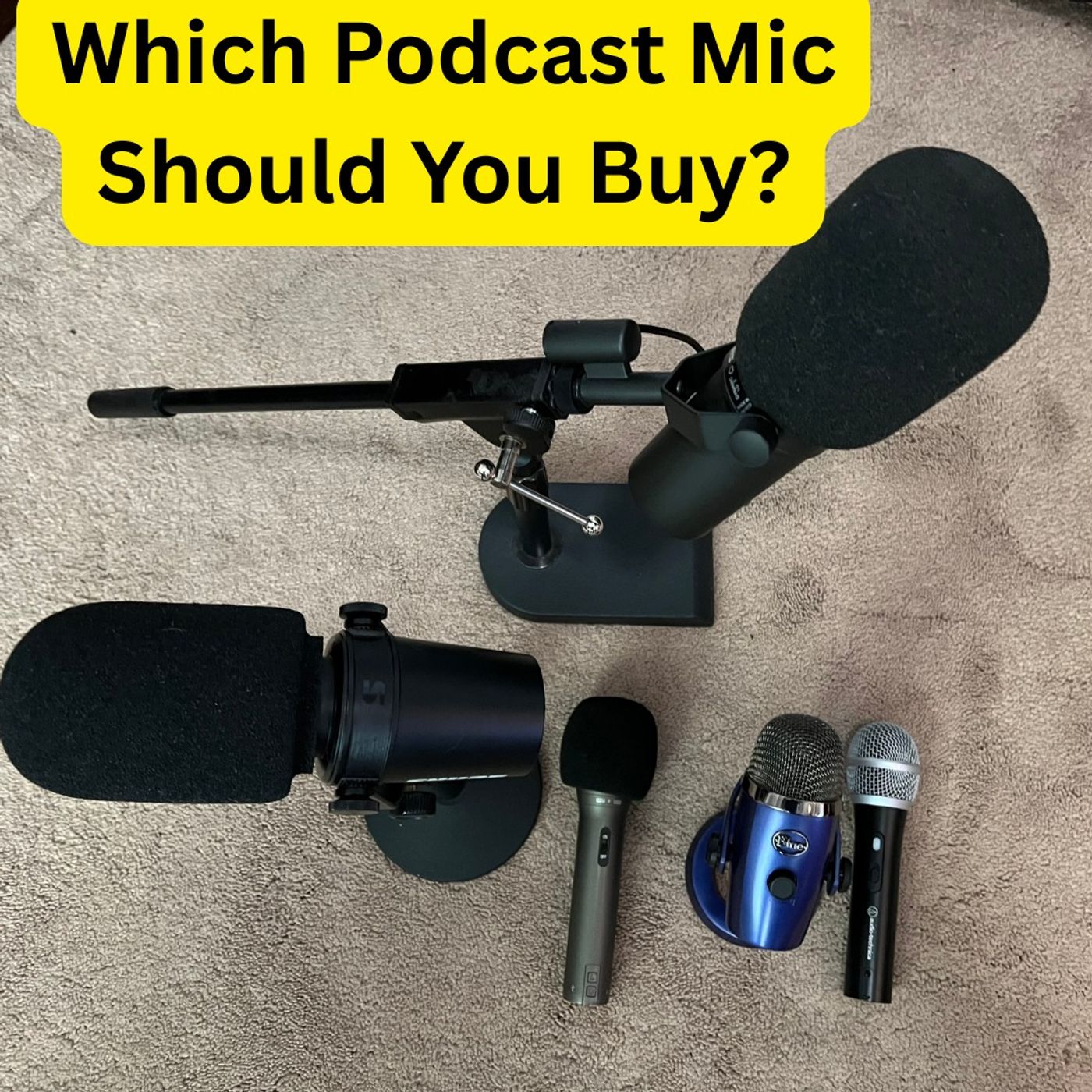
Which Podcast Mic Should You Buy?
Aug 4, 202500:05:47Tap to summarizeToday, I'm breaking down 5 popular mics that you may have seen in your search for the perfect podcast mic. We start with the well-advertised, terribly performing Blue Yeti. I explain why you're better off to skip it, and buy a dynamic microphone for cheaper.Next, the nearly interchangeable Samson Q2U and Audio Technica ATR-2100X. The ATR has a USB-C option, but has been in very short supply lately. The Q2U is only USB-A, but you can buy an adapter/dongle and use a USB-C port on a newer computer. Both are around $60-$70.Middle of the road, you can upgrade to the Shure MV7 - for around $300. High quality mic for a little bit more than entry level.If budget isn't a concern, or you're spending a marketing budget, splurge on the Shure SM7B. You'll see it in most high-end podcast productions. And it's been used by everyone from Michael Jackson to Eminem....to me.Microphone questions, reach out any time. Find jag on social media @JAGPodcastProductions or online at JAGPodcastProductions.com Hosted by Simplecast, an AdsWizz company. See pcm.adswizz.com for information about our collection and use of personal data for advertising.
Transcribe →
10 Questions to Ask Your Podcast Listeners
Dec 5, 202400:05:19Tap to summarizeIn this episode, we explore the significant impact listener surveys can have on a podcast's success, especially during the holiday season. Listener surveys allow us to connect directly with our audience and understand their preferences, making it easier to create content that resonates. In the radio world, we called this “Hugging your P1s”—a term for our most loyal listeners. Providing incentives, like gift cards, can increase participation, especially during this time of year when engagement may naturally decline.Listener surveys also serve as valuable content. By dedicating an episode to discussing survey questions and linking a Google form in the show notes, we can keep our audience engaged and gather data simultaneously. Credit for many of these survey strategies goes to Melissa Joy Dobbins of the Sound Bites podcast. Here are the ten questions we recommend asking:How long have you been listening? This helps us gauge listener loyalty and the effectiveness of outreach over time.How did you discover the show? Knowing whether it was through social media, a search engine, or word of mouth can refine our marketing strategies.Where do you follow or subscribe? Asking this not only provides insight but also reminds listeners to follow or subscribe on platforms like Apple, Spotify, or YouTube.How do you consume the show? Identifying whether listeners prefer audio, video, or both informs future production plans.What topics or guests should we cover more? This ensures our content aligns with audience interests.What topics should we cover less? Feedback on what isn’t working is just as valuable.Have you shared an episode? Understanding how listeners share the show helps us improve its reach.Would you leave a review? While not a primary call to action, reviews offer social proof and strengthen credibility.Would you support the show financially? Options like listening to ads, Patreon subscriptions, or buying merchandise can diversify our revenue streams.Demographic insights: Gathering age, gender, and other details respectfully helps us better understand our audience.By using these questions, we gain actionable insights to refine our content, marketing, and engagement strategies for 2025 Find jag on social media @JAGPodcastProductions or online at JAGPodcastProductions.com Hosted by Simplecast, an AdsWizz company. See pcm.adswizz.com for information about our collection and use of personal data for advertising.
Transcribe →
How Matt Got to Episode 300 (Podcast Superfriends)
May 24, 2022Tap to summarizeIn our May 2022 livestream, the 5 "Podcast Superfriends" assembled to talk about how Matt Cundill pushed through the usual podcast obstacles to get to the 300th episode of The Sound Off Podcast.We cover lessons learned, and how they can apply to our clients. What's changed since the show started? Should you "batch record" or do one episode at a time? What about live vs recorded?The five podcast "Superfriends" are:Johnny "Podcasts" Peterson of Straight Up Podcasts in Fort Worth: https://straightuppodcasts.comCatherine O'Brien of Branch Our Programs in Baton Rouge: https://www.branchoutprograms.com/David Yas of Pod 617 in Boston: https://www.pod617.com/Matt Cundill of the Sound Off Media Company in Winnipeg: https://www.soundoff.network/And Jon "JAG" Gay of JAG in Detroit Podcasts: https://jagindetroit.com/ Find jag on social media @JAGPodcastProductions or online at JAGPodcastProductions.com Hosted by Simplecast, an AdsWizz company. See pcm.adswizz.com for information about our collection and use of personal data for advertising.
Transcribe →