
Podcast
The Jeremy Hanson Podcast / Optimized Entrepreneur
Hosted by Jeremy Hanson · EN
The Jeremy Hanson Podcast is a top entrepreneurship and small business podcast for people who want real-world strategies—not hype. Hosted by entrepreneur and business owner Jeremy Hanson, the show explores how life, mindset, and business intersect in the real world. Episodes cover entrepreneurship, small business ownership, leadership, financial independence, service businesses, and personal growth. Unlike motivational fluff podcasts, The Jeremy Hanson Podcast delivers practical insights from real experience—what works, what doesn’t, and why. From building profitable service businesses to navigating anxiety, relationships, and responsibility as a business owner, this podcast is built for people who want control over their income and their life. New episodes dive into business strategy, mindset, leadership, and the realities of entrepreneurship in today’s economy—without corporate filters or influencer nonsense. If you are rebuilding your life, reevaluating your career, or looking for a smarter path forward, The Jeremy Hanson Podcast is designed for you. This show speaks to people who want clarity, ownership, and practical direction rather than shortcuts or hype. New episodes are published every Tuesday morning, delivering real-world insights on entrepreneurship, business ownership, leadership, and personal responsibility to help you build a stronger business and a more intentional life. entrepreneurship podcast, small business podcast, business mindset, entrepreneur success, business ownership, service business podcast, leadership development, financial independence, personal growth for entrepreneurs, building wealth through business, blue collar entrepreneurship, real world business advice, starting a business, growing a small business, local business strategy, business systems, business responsibility, mindset for business owners, practical entrepreneurship, life and business balance, self improvement for entrepreneurs, podcast for entrepreneurs, podcast for small business owners, business growth strategies, ownership mindset, long term wealth building
40episodes
Episodes
Newest firstAll episodes
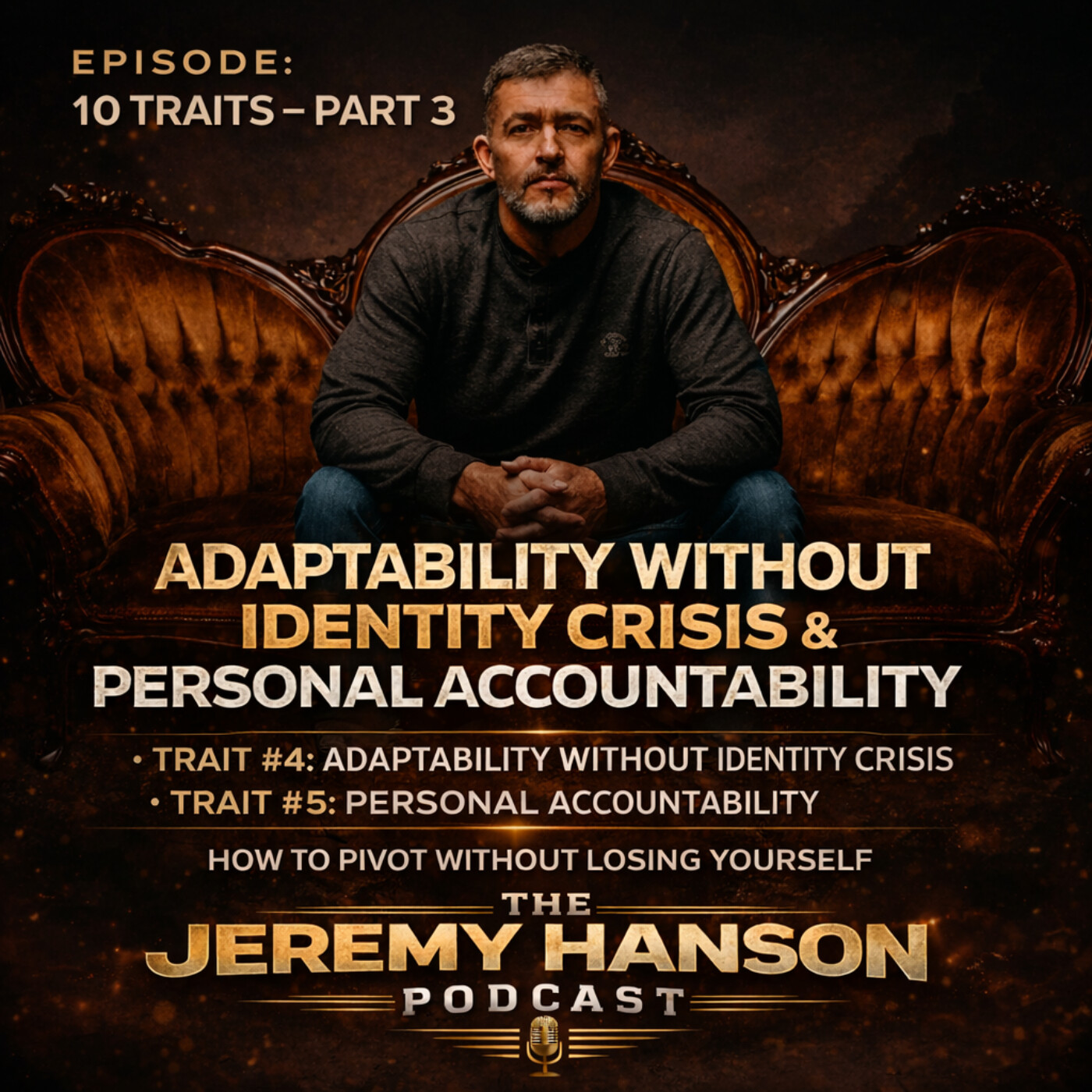
154 - The Steering Wheel of Entrepreneurship: Adaptability + Personal Accountability (10 Traits Part 3)
Mar 300:43:24Tap to summarizeIn Part 3 of the 10 Traits series, Jeremy Hanson breaks down two traits that determine whether your business grows—or collapses under the weight of the person running it: Trait #4: Adaptability Without Identity Crisis and Trait #5: Personal Accountability.You’ll learn how to pivot without turning every market shift into an identity crisis—by separating your tactics from your mission. Jeremy explains the difference between real adaptability and chaos, the three signs you’re fusing strategy with ego, and the Three-Layer Check to make evidence-based changes without burning down what you’ve built.Then the episode goes deeper into Personal Accountability—not self-punishment, but leverage. Jeremy shares the mindset shift that changes everything: the moment you take responsibility, you gain the ability to change it. You’ll get a simple, repeatable framework called the Ownership Audit (state the outcome, assess external factors, assess internal factors, choose actions) so you can stop blaming circumstances and start operating with real control.If you’re a service business owner, entrepreneur, or leader navigating algorithm changes, shifting markets, team issues, or inconsistent results—this episode gives you practical tools to adapt quickly, lead clearly, and build a culture where ownership is standard.Get more resources at www.jeremyhanson.pro.adaptability without identity crisis for entrepreneurshow to pivot in business without losing your missionseparating identity from strategy in entrepreneurshiphow to adapt when your business plan stops workingaccountability framework for business ownerspersonal accountability vs self blame in businesshow to stop blaming the market and take ownershipownership audit framework for entrepreneurshow to build an accountable culture in a small businessleadership accountability examples for service businesseshow to pivot marketing channels when they stop workinghow to respond when the algorithm changes your businesshow to take responsibility without shame spiralingbusiness mindset traits of successful entrepreneurshow to lead a team with clear standards and ownershiptactics are negotiable mission is not entrepreneurshipwhat to do when employees underperform as the ownerhow to create training standards for service business teamsevidence-based decision making for entrepreneurshow to improve business results through accountabilityentrepreneur adaptabilitybusiness pivot strategyidentity and entrepreneurshippersonal accountabilityleadership accountabilityownership mindsetaccountability culturebusiness leadership traitsentrepreneur mindsetservice business leadershipdecision frameworksbusiness growth habitsself leadershipoperational excellencescaling a businessadaptability without identity crisispersonal accountabilityentrepreneurial traitsbusiness leadershipbusiness mindsethow to pivot in businessaccountability frameworkownership auditleadership culturemission and valuesservice business operatorsmall business leadershipdecision makingdisciplined executionentrepreneurial resilienceEntrepreneur mindset, business pivot, personal accountability, leadership habits, scaling systems, service business growth, ownership mindset, adaptability, decision frameworksAdaptability trait, accountability trait, entrepreneur leadership, team standards, culture building, operational leadership, small business owner coachingWhat is “adaptability without identity crisis”?Changing tactics fast while keeping your mission and values intact—so the how changes, but the why doesn’t.What is the Ownership Audit?A 4-step accountability tool: state the outcome, list external factors, list internal factors, then choose specific actions you control.What’s the difference between fault and responsibility?Fault is cause. Responsibility is response. You may not have caused it, but you’re responsible for what you do next.Sponsor Fabric by Gerber Life Get started today at https://meetfabric.com/hansonSponsor https://quickbooks.com/payrollSee Privacy Policy at https://art19.com/privacy and California Privacy Notice at https://art19.com/privacy#do-not-sell-my-info.
Transcribe →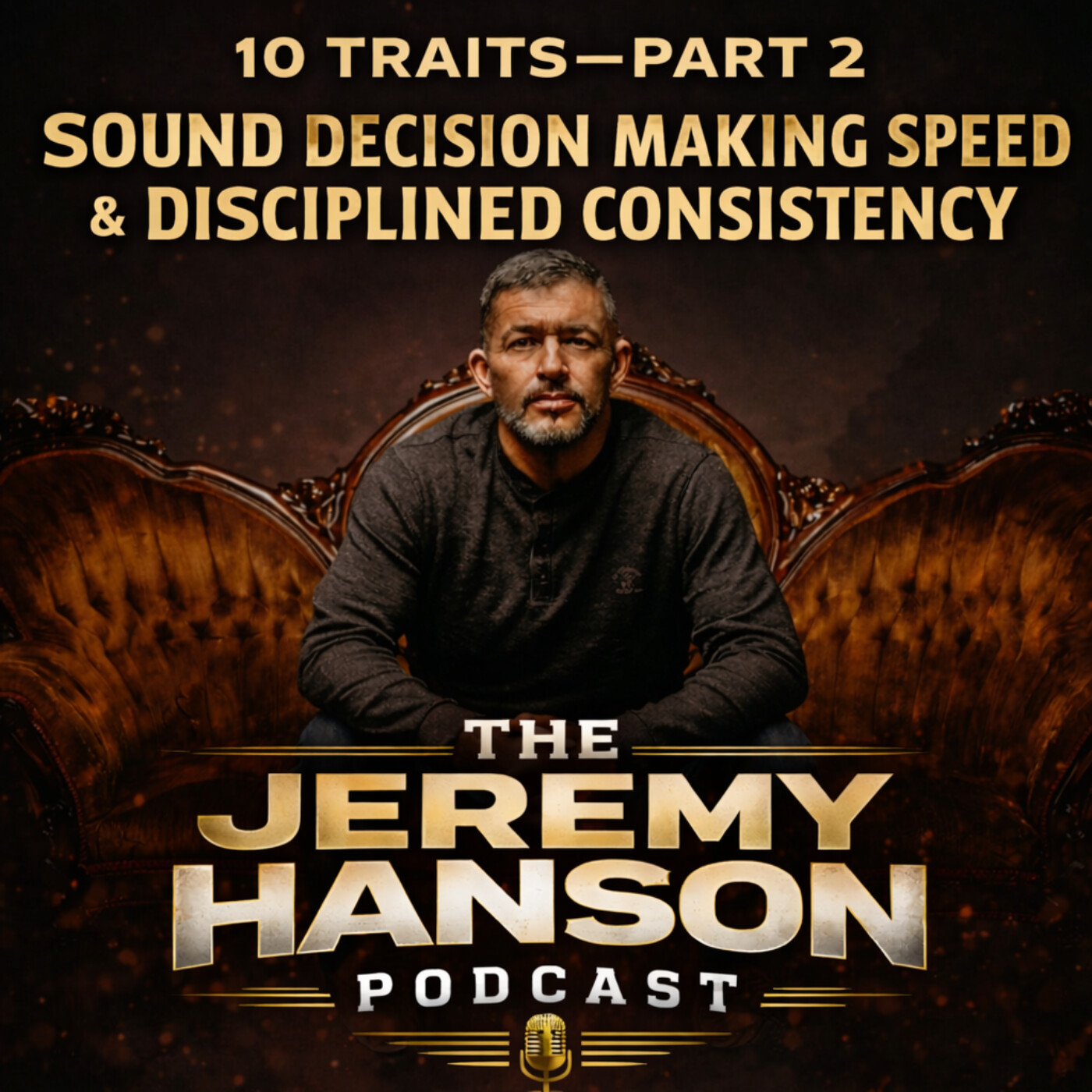
152 - 10 Traits of Elite Entrepreneurs — Part 2: Sound Decision Making Speed & Disciplined Consistency
Feb 2400:45:35Tap to summarizeIn Part 2 of the 10 Traits series, Jeremy Hanson breaks down two of the most overlooked but powerful characteristics separating struggling entrepreneurs from high-performing operators:Sound Decision Making Speed and Disciplined Consistency.If you’ve ever felt stuck overthinking a hire, delaying a pivot, second-guessing a pricing change, or starting strong only to lose momentum weeks later — this episode is your blueprint.Jeremy explains:• The 70% Decision Rule and why waiting for certainty kills growth• The difference between reversible and irreversible business decisions• How slow decision makers silently drain revenue and team morale• Why hustle culture is destroying long-term operators• The Core Three Framework for predictable weekly momentum• How inconsistency disguises itself as “strategy problems”• The real psychology behind execution breakdown• How to build compounding growth instead of chaotic spurtsThis episode is built for serious entrepreneurs, service business owners, founders, operators, and high-level performers who want to eliminate paralysis and build sustainable growth systems.If Part 1 (Emotional Regulation) was about internal control, Part 2 is about converting control into measurable business results.You don’t need more motivation.You need better decision systems.You need structured consistency.Jeremy gives you both.For deeper frameworks and implementation tools, visit:jeremyhanson.proEmail Jeremy:unleashedentrepreneur@gmail.comentrepreneur traitsbusiness decision makinghow to make better decisionsdisciplined consistencyentrepreneur mindsetbusiness leadership skillsdecision making speedsmall business growthoperator mindsetbusiness executionhow to make faster business decisions without regretwhy entrepreneurs struggle with consistencyhow to stop overthinking business decisionsdecision making framework for entrepreneurshow to build disciplined consistency in businessdifference between hustle and consistency70 percent rule for decision makinghow to grow a service business consistentlyhow to avoid business paralysishow to execute business strategy consistentlyweekly rhythm for entrepreneurscore three business frameworkhow leaders make decisions quicklyhow to stop delaying important decisionswhy inconsistency kills small business growthentrepreneurshipsmall business ownerbusiness growth strategiesdecision makingleadership developmenthigh performance habitsdiscipline in businessservice business successoperator mindsetbusiness systemsconsistent executionmental toughness for entrepreneursentrepreneur podcastbusiness strategy podcastself development for entrepreneurs How do successful entrepreneurs make decisions quickly?A: Successful entrepreneurs use structured frameworks like the 70% rule, categorize decisions by risk level, and implement time boundaries so decisions don’t stall growth. Why is consistency more important than hustle in business?A: Consistency compounds results over time, while hustle creates short-term bursts followed by burnout and instability. What are the three most important weekly business activities?A: Lead generation, customer retention, and systems/team development — known in this episode as the Core Three. How do I stop overthinking business decisions?A: Categorize decisions by stakes, set time limits, accept imperfect information, and implement recovery plans instead of waiting for certainty.EntrepreneurshipBusinessLeadershipSelf-ImprovementService BusinessesSmall Business StrategyMindset & PerformanceJeremy Hanson dives into Sound Decision Making Speed and Disciplined Consistency — two traits that determine whether entrepreneurs build momentum or stall out. Learn the 70% rule, the Core Three framework, and how to eliminate decision paralysis while building long-term compounding growth.Right Side Up powered by TempoStreamline your hiring with pre-vetted, qualified candidates who actually fit your business.Learn more: https://www.rightsideup.comSquarespaceBuild a professional website you can control without hiring a developer.Start your free trial: https://www.squarespace.comSee Privacy Policy at https://art19.com/privacy and California Privacy Notice at https://art19.com/privacy#do-not-sell-my-info.
Transcribe →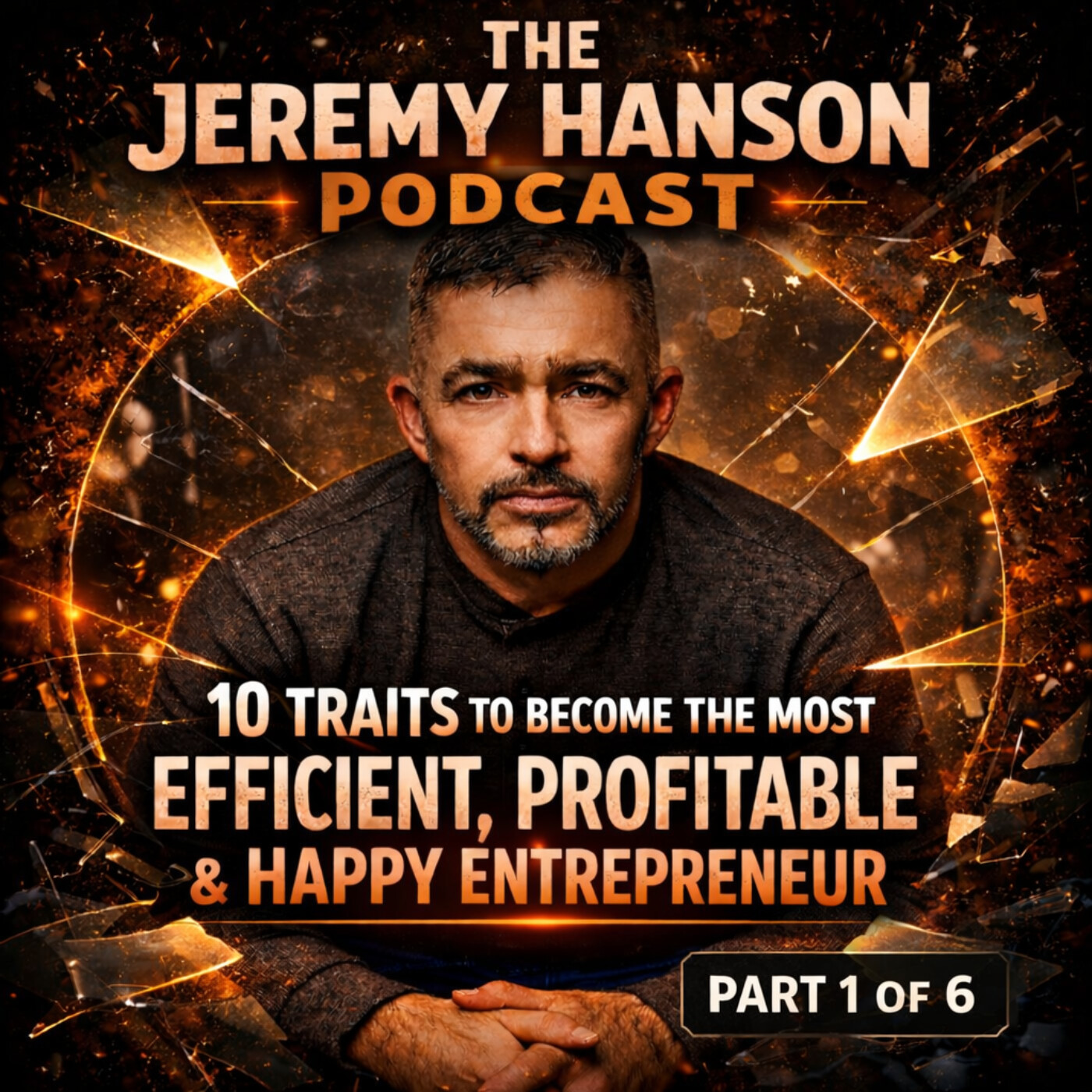
151 - 10 Traits of Highly Successful Entrepreneurs | Efficiency, Profitability & Sustainable Success Part 1
Feb 1700:51:25Tap to summarize10 Traits of Highly Successful Entrepreneurs | Efficiency, Profitability and Sustainable SuccessWhat Traits Make Entrepreneurs Successful, Profitable and Happy Long-Term?The 10 Traits Every Profitable Entrepreneur Must Develop in 2026Entrepreneur Success Blueprint: The Internal Skills That Create Real WealthHow to Become a More Efficient and Profitable Business OwnerThe Personal Development Advantage in Modern EntrepreneurshipWhy Internal Capacity Determines Business SuccessDETAILED DESCRIPTION (SEO + AEO Optimized)Markets are harder. Competition is stronger. Attention is fractured. In today’s economy, opportunity is not the limiting factor. You are.In this 52-minute episode of The Jeremy Hanson Podcast, Jeremy breaks down the ten foundational traits that separate struggling entrepreneurs from efficient, profitable and genuinely fulfilled business owners.This episode is not about hacks, trends or tactics. It is about internal capacity — the real competitive advantage in 2026 and beyond.You will learn:Why emotional regulation matters more than motivationHow decision velocity compounds long-term successThe power of systems thinking in scaling businessesWhy financial literacy determines survival and growthHow strategic patience builds lasting wealthThe importance of ruthless prioritizationWhy operational detachment separates owners from operatorsHow relationship capital outperforms transactional networkingWhy adaptive learning keeps you ahead of disruptionHow sustainable intensity prevents burnout while maximizing outputIf you run a service business, manage teams, build multiple ventures, or are scaling a podcast or brand, this episode provides the internal framework required for long-term dominance.Business does not get easier.You get stronger.And your personal development becomes your moat.Listen now and identify the two traits holding you back — then commit to building them deliberately over the next 90 days.entrepreneur traitssuccessful entrepreneur habitsbusiness success traitsentrepreneur mindsetsmall business leadershipbusiness growth skillsfinancial literacy for entrepreneursscaling a businessentrepreneur personal developmentprofitable business habitshow to become a profitable entrepreneur in 2026traits of successful small business ownershow to build emotional resilience as an entrepreneurhow to scale a service business without burnoutwhy financial literacy matters for business ownershow to make faster business decisionshow to build systems in a small businesshow to grow a profitable business long termwhat separates successful entrepreneurs from failed oneshow to run multiple businesses efficientlyWhat traits do successful entrepreneurs have?How do entrepreneurs stay profitable long term?How can I become a more efficient business owner?What mindset is required for business success?How do I avoid burnout as an entrepreneur?What skills are most important for scaling a small business?How do I build better systems in my business?Why is emotional regulation important in leadership?entrepreneurshipbusiness leadershipsmall business growthservice business ownerpersonal developmentemotional regulationdecision makingsystems thinkingfinancial literacyprofit marginscash flow managementscaling a companybusiness systemshigh performance habitsburnout preventionstrategic planningrelationship capitaladaptive learninglong-term wealth buildingEntrepreneurshipBusinessSmall BusinessLeadershipSelf-ImprovementBusiness StrategyPersonal GrowthThis episode of The Jeremy Hanson Podcast is sponsored by Intuit QuickBooks — accounting and financial management software designed for small business owners, service businesses, and entrepreneurs. Jeremy discusses how QuickBooks supports invoicing, cash flow tracking, payroll integration, and real-time financial reporting.Sponsor URL: https://quickbooks.intuit.comSee Privacy Policy at https://art19.com/privacy and California Privacy Notice at https://art19.com/privacy#do-not-sell-my-info.
Transcribe →
150 - The Mirror Moment: Kill the Excuse Contagion & Become an Expert Problem Solver (Part 1)
Feb 1001:00:22Tap to summarizeIf your service business isn’t where you want it to be—more profit, better crews, fewer fires, real growth—this episode forces the most important question: why, exactly, are you still stuck? Not the polished answer. Not the supply-house answer. The honest one.In Part 1 of the Expert Problem Solver series, Jeremy Hanson breaks down the excuse contagion—how “reasonable” explanations like “I can’t find good help,” “the economy is terrible,” “I don’t have the capital,” “my market is too competitive,” and “I’m waiting for the right time” become a cultural virus in the trades. These narratives often contain partial truth… and that’s why they’re so dangerous. They quietly remove your agency.You’ll learn why smart business owners rationalize failure better than anyone, how industry groupthink makes excuses feel like “common sense,” and why the question isn’t whether your explanation sounds true—but whether it’s useful. Jeremy confronts the most common contractor myths head-on, including the “good help” fallacy, the waiting-for-timing trap, and the perfectionism alibi that keeps owners planning forever while competitors pass them.This episode is the Mirror Moment: the line between owners who stay stuck and owners who get results. Not motivation. Not fluff. Ownership, diagnosis, and operational maturity—the foundations of building a business where good people stay, customers return, and growth becomes repeatable.You’ll also get a practical assignment to end the episode: identify your top three excuses, then write the three actions you’d take if those excuses were no longer allowed.Next episode (Part 2): Root Cause Diagnosis—why most fixes fail, why problems repeat, and how expert problem solvers cure systems instead of reacting to symptoms.Primary keywordsexpert problem solverservice business coachingcontractor mindsetbusiness excusesownership mindsetleadership in tradesscaling a service businessblue collar business growthoperational systems for contractorshiring and retention for service companiesSecondary keywords“no one wants to work anymore” mythtrades business leadershiphow to build a great teamtraining systems for technicianspay progression systemscheduling systems for crewsperfectionism in businesshow to stop procrastinating in businesscontractor pricing strategy (setup for later episodes)root cause analysis (teaser for Part 2)Long-tail phrases (high-intent search phrases)how to stop making excuses in my service businesswhy contractors can’t find good employees and how to fix ithow to build a company culture that retains good technicianswhat to do when “no one wants to work” in the tradesservice business leadership systems that prevent chaoscontractor onboarding and training checklist systemhow to create a pay progression ladder for technicianshow to stop waiting for the right time to grow my businessperfectionism is keeping me from launching a service business offerhow to take ownership when business results are badwhy my service business is stuck even though I work 70 hourshow to build a service business that runs without the ownerhow to turn average employees into high performers with systemswhy blaming the economy keeps contractors brokehow to audit my business like an expert problem solverShort-tail phrases (high-volume targets)contractor coachingservice business growthhiring for contractorsemployee retentionbusiness systemsleadership mindsetstop procrastinatingperfectionism in businessscaling a trades businesscontractor leadershipSponsor Links https://squarespace.com/HANSON https://meetfabric.com/hansonSee Privacy Policy at https://art19.com/privacy and California Privacy Notice at https://art19.com/privacy#do-not-sell-my-info.
Transcribe →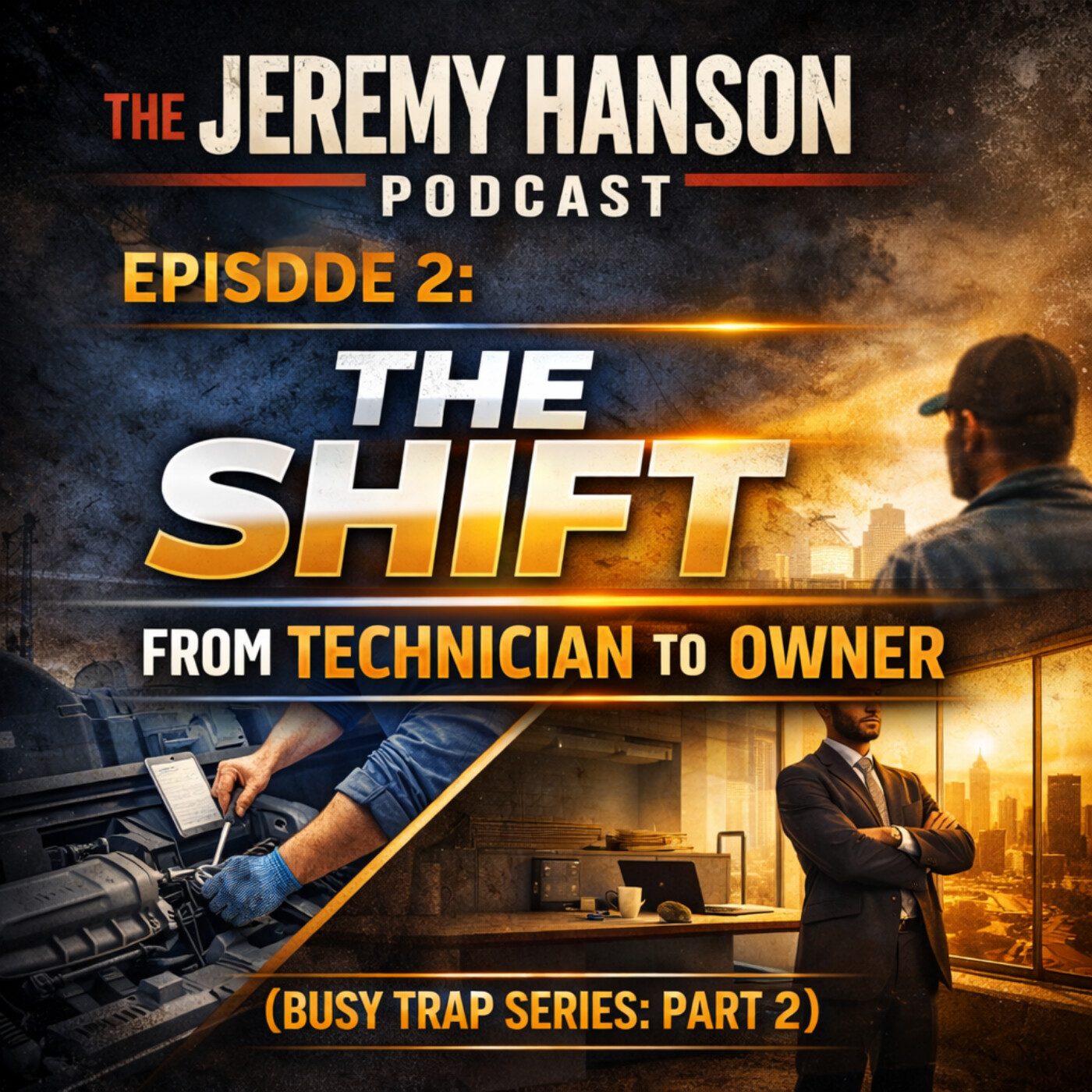
149 - The Shift — From Technician to Owner (Part 2 of the Busy Trap Series)
Feb 300:59:25Tap to summarizeMost service business owners don’t fail because they aren’t skilled enough.They fail because they never make The Shift.In this episode of The Jeremy Hanson Podcast, Jeremy breaks down the exact moment every tradesman hits—the moment when working harder stops working—and explains how staying stuck in technician mode quietly caps income, destroys time freedom, and turns a business into a high-stress job.If you’re a pressure washer, HVAC tech, electrician, plumber, roofer, cleaner, or contractor who feels constantly busy but never ahead, this episode exposes why—and shows the way out.Jeremy walks through the core mindset and operational shift required to move from being the business to owning the business, including:Why technician skill does not translate to business growthThe difference between busy work and CEO-level workHow the “Dirty Truck Trap” keeps owners stuck in constant executionThe CEO Rate vs. Tech Rate—and why most owners sabotage their earning powerHow underpricing creates volume dependency and burnoutThe Stop-Doing List that frees up time and restores leverageHow to build systems that allow your business to function without youWhy delegation feels risky—but staying indispensable is worseThe emotional identity shift from “hero” to “architect”How to build a service business that can scale, absorb pressure, and breatheThis episode is not about motivation, hustle culture, or generic business advice.It’s a tactical, field-tested breakdown of what actually separates overwhelmed operators from owners who control their time, margins, and future.If you’ve ever asked yourself:Why am I so busy but still stressed?What happens if I get sick or injured?Why does my business fall apart when I step away?This episode gives you the answer—and the path forward.PRIMARY SEO KEYWORDStechnician to ownerservice business owner mindsetworking in the business vs working on the businesstrades business growthblue collar business ownershipservice business systemsstop being busy in businesshow to scale a service businessCEO rate vs technician rateSECONDARY SEO KEYWORDSpressure washing business growthHVAC business owner adviceplumbing business scalingelectrician business systemscontractor business leadershipsmall service business operationspricing strategy for tradesmendelegation for business ownersservice business burnoutAEO / VOICE SEARCH & AI-FRIENDLY LONG-TAIL PHRASEShow do I stop being busy in my service businesswhat is the difference between a technician and a business ownerwhy service business owners burn outhow to work on your business instead of in itwhen should a tradesman stop doing the work himselfhow to build systems in a service businesswhy being busy doesn’t mean your business is growinghow to scale a blue collar business without burnoutwhat is CEO work for a small business ownerhow to delegate without losing qualityPODCAST PLATFORM TAGS / METADATA (Optional Add-On)Categories:BusinessEntrepreneurshipCareersManagementIdeal Episode Placement Tags:Service Business GrowthTrades EntrepreneurshipSmall Business SystemsLeadership for ContractorsEat real, chef-crafted meals without losing time. Tempo delivers fresh, ready-to-heat meals in just two minutes—no prep, no cleanup, no compromise.https://tempomeals.com/hansonStop doing repetitive work. Zapier connects your apps and automates the busywork so you can focus on what actually makes money.https://zapier.com/jeremySee Privacy Policy at https://art19.com/privacy and California Privacy Notice at https://art19.com/privacy#do-not-sell-my-info.
Transcribe →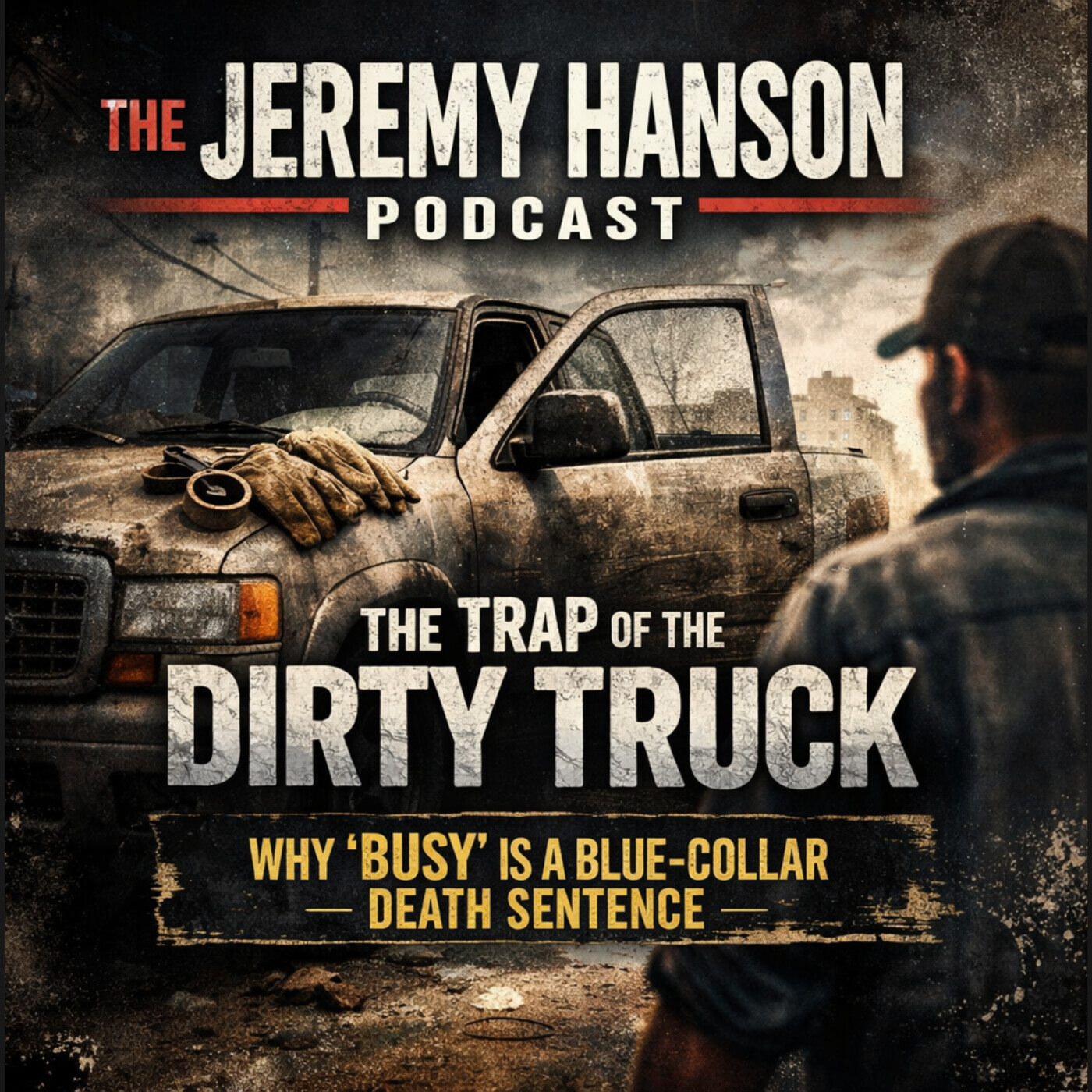
148 - The Dirty Truck Trap: Why Being “Busy” Is Killing Blue-Collar Business Owners
Jan 2700:45:43Tap to summarizeIf you’re a service business owner who’s constantly busy but still broke, exhausted, and stuck in your truck, this episode is for you.In this hard-hitting episode of The Jeremy Hanson Podcast, Jeremy breaks down the “Dirty Truck Trap”—the mindset that convinces blue-collar entrepreneurs that nonstop hustle equals success, while quietly destroying margins, health, family time, and long-term business value.This isn’t hustle porn. It’s real, field-tested truth.Jeremy speaks directly to contractors, tradesmen, and service business owners who are booked out, working 60–70 hour weeks, and still wondering why the bank account feels tight. He explains the dangerous difference between being busy and being effective, why so many owners unknowingly build jobs instead of businesses, and how staying in “technician mode” keeps you trapped as the highest-paid employee in your own company.You’ll learn:Why being busy feels productive—but actually prevents growthHow the “dirty truck” becomes a prison instead of a toolThe cultural traps that keep blue-collar owners under-earningThe hidden costs of hustle on your health, marriage, and kidsWhy most service businesses collapse the moment the owner steps awayThe mindset shift required to move from technician to operatorThis episode is raw, honest, and uncomfortable in the best way—designed to challenge the beliefs that keep hard-working people stuck for decades.If you own a service business and feel like you can’t slow down without everything falling apart, this episode will help you finally understand why—and what needs to change next.dirty truck trapblue collar business ownerservice business ownertrades business growthtechnician to operatorblue collar entrepreneurshipcontractor burnoutbusy vs effectiveservice business scalingsmall business tradesself employed vs business ownertradesman burnoutservice business systemscontractor business mindsetpricing problems in tradesservice business marginsblue collar burnoutcontractor overworkedsmall service business growthworking in the business vs on the businesswhy being busy is killing my service businesshow to get out of the truck as a contractorwhy contractors work so hard and make no moneyhow to stop being the bottleneck in my businesstechnician to operator transition for tradesmenservice business owner burnout symptomshow to scale a blue collar businesswhy my service business depends on mehow to build systems in a service businesswhy hustle doesn’t work for contractorsSee Privacy Policy at https://art19.com/privacy and California Privacy Notice at https://art19.com/privacy#do-not-sell-my-info.
Transcribe →
147 - Starting a Business in 2026: Is the Juice Worth the Squeeze?
Jan 2000:54:49Tap to summarizeIn this episode of The Jeremy Hanson Podcast, Jeremy Hanson delivers a raw, no-nonsense breakdown of when—and if—you should start a business in 2026.This is not motivational fluff or startup fantasy. It’s a grounded, real-world analysis of entrepreneurship in today’s economy, covering risk, timing, discipline, and the uncomfortable truth most people avoid when thinking about business ownership.Jeremy explores why so many people feel paralyzed right now, how inflation, AI, and economic uncertainty have distorted decision-making, and why 2026 is not a boom year—but a sorting year where disciplined operators quietly win while others hesitate.You’ll learn:Why most people never fail in business—they simply never startWhat the 2026 economy actually looks like beyond headlines and hypeWhy service businesses and skilled trades are outperforming digital fantasiesThe lie about confidence that keeps would-be entrepreneurs stuckWho should absolutely start a business in 2026—and who should notWhether the “juice is worth the squeeze,” and what that squeeze really costsThis episode is designed for entrepreneurs, small business owners, service professionals, and anyone questioning whether now is the right time to take control of their income and future.The Jeremy Hanson Podcast focuses on entrepreneurship, business systems, life optimization, and real execution—helping listeners move from thinking to doing with clarity and honesty.Learn more and explore additional resources at www.optimized1.com.🔑 SEO KEYWORDS & PHRASES(Use in ART19 backend, PodSEO, Podpage, and metadata)Primary Keywordsstart a business in 2026entrepreneurship podcastbusiness podcastsmall business growthservice businessbusiness ownershipSecondary Keywordsshould I start a businessbusiness risk vs rewardstarting a service businessentrepreneur mindsetbusiness systemsbuild wealthself-employmentAEO / Voice Search Queries“Is it worth starting a business in 2026?”“When should I start my own business?”“Best entrepreneurship podcast for real advice”“Should I quit my job and start a business?”This episode is sponsored by Zapier—automate your work with AI and get started for free at zapier.com/jeremySee Privacy Policy at https://art19.com/privacy and California Privacy Notice at https://art19.com/privacy#do-not-sell-my-info.
Transcribe →
146 - Build Smarter in 2026: Business, Systems & Real Growth
Jan 1301:10:09Tap to summarizeIn this episode of The Jeremy Hanson Podcast, Jeremy breaks down what it really takes to build a business, brand, and life that actually works in 2026.This is not hype. This is systems, discipline, and real-world execution.Jeremy shares practical insight on entrepreneurship, service businesses, side hustles, and building scalable systems that reduce stress while increasing income. Whether you’re launching your first business, rebuilding after burnout, or trying to turn momentum into long-term growth, this episode is designed to help you make smarter decisions—faster.You’ll hear real talk about:When starting a business is actually worth the riskWhy most people fail—not from laziness, but from poor systemsHow to build an online presence that supports your business instead of distracting youThe importance of structure, consistency, and execution in modern entrepreneurshipHow tools and platforms can remove friction and free up timeThe Jeremy Hanson Podcast is focused on helping entrepreneurs, builders, and doers stop overthinking and start executing with clarity. This show blends business strategy, mindset, life optimization, and hard-earned lessons from the real world—without fluff or guru nonsense.If you’re serious about building wealth, freedom, and a business that fits your life instead of consuming it, this episode will help you reset your approach and move forward with confidence. Learn more and explore resources at www.optimized1.comSquarespaceBuild your website, brand, or business with Squarespace.Start your free trial today and save 10% off your first website or domain.https://www.squarespace.com/HANSONUse code HANSON at checkout.Tempo MealsFresh, chef-crafted, dietitian-approved meals delivered to your door—ready in just two minutes.Get SIXTY PERCENT OFF your first box. https://tempomeals.com/hansonRules and restrictions may apply.See Privacy Policy at https://art19.com/privacy and California Privacy Notice at https://art19.com/privacy#do-not-sell-my-info.
Transcribe →
145 - "2026 Service Business Data: Why NOW Is The Perfect Time To Start (94% Surge in Entrepreneurs)"
Jan 600:35:09Tap to summarizeThinking about starting a service business in 2026? The data says this is YOUR year—and waiting could cost you the market.In this episode, entrepreneur and podcaster Jeremy Hanson breaks down the hard numbers behind why 2026 represents a once-in-a-decade opportunity for service business owners. With a 94% surge in entrepreneurial intent, retiring Baby Boomer business owners creating market vacuums, and median startup costs dropping to just $12,000, the barriers to entry have never been lower.Discover why the "cheapest guy" business model is dead, how 60% of consumers now pay 15% MORE for reliability, and why response time beats price in winning customers. Learn how AI-augmented operations, subscription revenue models, and the invisible floor of delivery platforms are creating predictable cash flow for pressure washing, lawn care, HVAC, food trucks, and mobile service businesses.Whether you're running a side hustle or ready to scale to six figures, this episode delivers actionable insights on 2026 consumer buying behaviors, the trust economy, and why local service businesses are outmaneuvering corporate giants. Stop overthinking. Start building. The window is open—but it won't stay open forever.Perfect for: aspiring entrepreneurs, service business owners, food truck operators, pressure washing businesses, lawn care companies, HVAC contractors, mobile detailing, cleaning services, and anyone ready to stop planning and start doing. Listen now and discover why life rewards the doer, not the thinker.#ServiceBusiness #Entrepreneur2026 #StartABusiness #SmallBusinessTips #EntrepreneurData #BusinessStartup #SideHustle2026 #ServiceIndustry #LocalBusiness#PressureWashing #FoodTruckBusiness #LawnCare #HVACBusiness #CleaningBusiness #MobileDetailing #HomeServices #ContractorBusiness #ServiceEntrepreneur#SubscriptionBusiness #AIForBusiness #TrustEconomy #ConsumerBehavior #BusinessTrends2026 #SmallBusinessGrowth #EntrepreneurialIntent #StartupCosts #BusinessData#StopThinkingStartDoing #TakeAction #DoerNotDreamer #EntrepreneurMindset #BuildYourBusiness #BusinessOpportunity #TimeToStart #ActionTaker #EntrepreneurLife#BusinessPodcast #EntrepreneurPodcast #SmallBusinessAdvice #HowToStartABusiness #BusinessStrategy #MarketTrends #EntrepreneurialSuccess #BusinessEducation#JeremyHanson #TheJeremyHansonPodcast #OptimizedEntrepreneur #PodcastEpisode #BusinessPodcast2026See Privacy Policy at https://art19.com/privacy and California Privacy Notice at https://art19.com/privacy#do-not-sell-my-info.
Transcribe →
144 - Top 10 Personal Development Traits Every Entrepreneur Must Master in 2026 | The Optimized Entrepreneur
Dec 3000:49:23Tap to summarizeStop chasing tactics. Start building capacity.In this essential episode of The Jeremy Hanson Podcast, entrepreneur and multi-business operator Jeremy Hanson reveals the 10 personal development traits that will separate successful entrepreneurs from the rest in 2026 and beyond.After running service businesses for over 20 years—including cleaning companies, pressure washing operations, and food trucks—Jeremy has learned that business success is downstream from personal development. The entrepreneurs who win aren't just smarter; they're more disciplined, emotionally resilient, and intentional about how they show up every day. THE 10 TRAITS COVERED:Emotional Regulation - Master your internal state instead of relying on motivationDecision-Making Speed - Make fast, imperfect decisions with incomplete dataDisciplined Consistency - Execute boring fundamentals when no one's watchingAdaptability Without Identity Crisis - Change tactics while maintaining core valuesPersonal Accountability - Take radical ownership of every outcomeFocus in a Distraction Economy - Protect deep work and say no ruthlesslyCommunication That Creates Clarity - Lead through precise, purposeful communicationLong-Term Thinking - Play multi-year games in a short-term worldPhysical & Mental Self-Mastery - Treat yourself as your company's operating systemPurpose Beyond Money - Build a mission that sustains you when motivation failsWHAT YOU'LL GAIN:Why personal capacity matters more than business tactics in 2026Practical frameworks to develop each trait in 90 daysReal examples from two decades of entrepreneurial experienceThe foundation of The Optimized Entrepreneur methodologyInsight into the ecosystem launching in 2026 (interviews, workshops, courses, community)PERFECT FOR: Service business owners, operators, builders, and entrepreneurs who want to build businesses that don't break them—and who understand that sustainable success requires internal work, not just external tactics.EPISODE BREAKDOWN:[0:00] Cold Open - Why 2026 Requires Different Entrepreneurs[2:45] The Real Competitive Advantage[8:15] Traits 1-5: Foundation of the Optimized Entrepreneur[21:00] Traits 6-10: Advanced Operator Skills[34:30] The Optimized Entrepreneur Ecosystem Reveal[40:00] Your 90-Day Action PlanTAKE ACTION: Choose ONE trait from this episode and commit to developing it over the next 90 days. Focused effort on one area creates compound results across your entire business.www.jeremyhanson.pro Subscribe for weekly insights on building sustainable, profitable businesses without burnout. Join the movement of entrepreneurs who are optimizing themselves first—and watching their businesses transform as a result.#TheOptimizedEntrepreneur | #JeremyHanson | #EntrepreneurshipIn2026#Entrepreneurship #PersonalDevelopment #BusinessGrowth #LeadershipDevelopment #EntrepreneurMindset #ServiceBusiness #SmallBusinessOwner #BusinessStrategy #SelfMastery #EmotionalIntelligence #ProductivityHacks #EntrepreneurLife #BusinessPodcast #ScalingBusiness #StartupAdvice #OperationalExcellence #EntrepreneurTips #BusinessLeadership #SustainableSuccess #BusinessSystems #PurposeDrivenBusiness #Entrepreneurship2026 #TheOptimizedEntrepreneur #JeremyHansonPodcast #DecisionMaking #Consistency #Focus #Accountability #LongTermThinking #EntrepreneurialResilience #BusinessOwner #SoloPreneur #MultiBusinessOwner #CleaningBusiness #PressureWashing #FoodTruck #ServiceIndustry #SmallBusinessSuccess #BuildToLast #AntiHustleCulture #IntentionalEntrepreneurshipSee Privacy Policy at https://art19.com/privacy and California Privacy Notice at https://art19.com/privacy#do-not-sell-my-info.
Transcribe →