← The Jim Acosta Show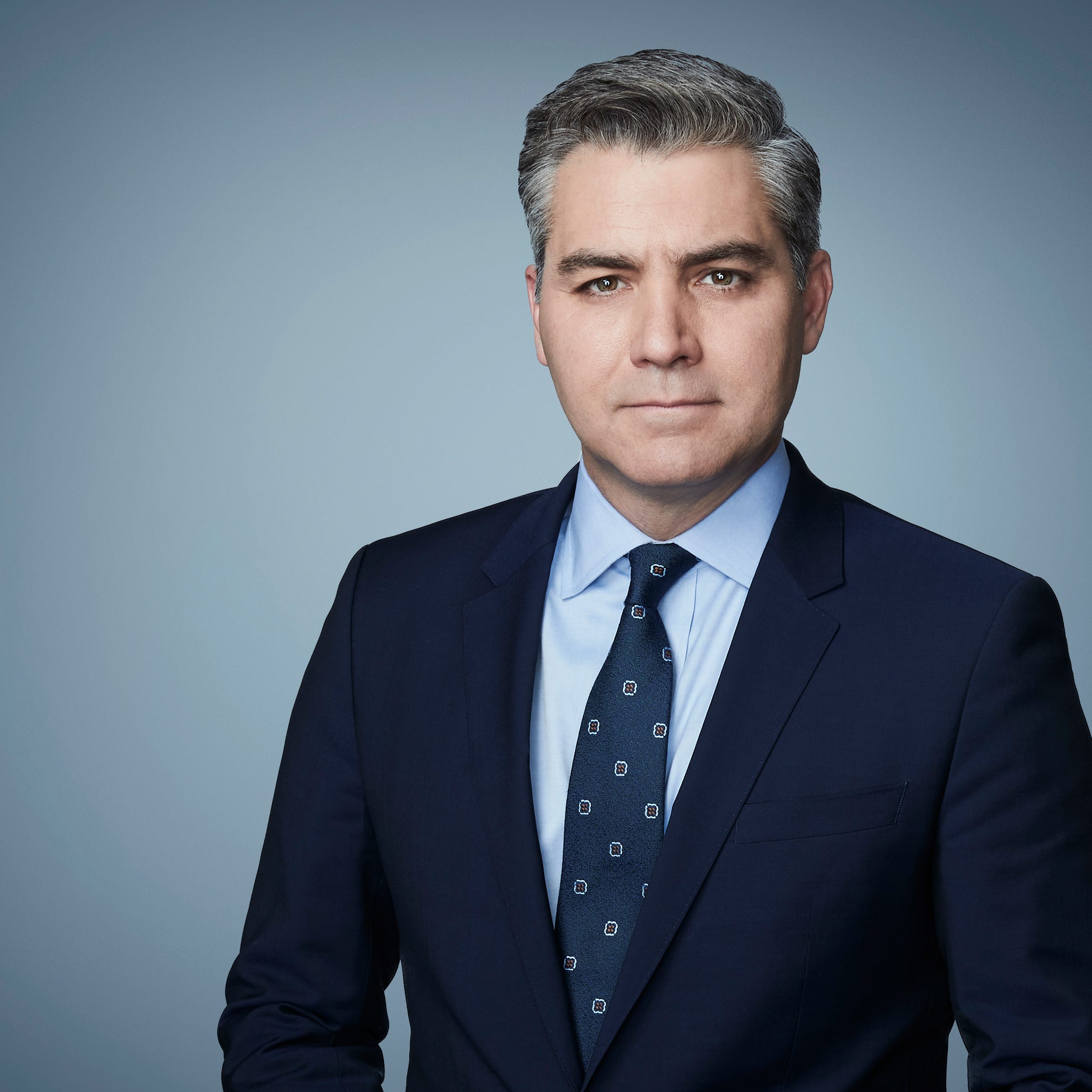
The Jim Acosta Show
Attorney for Epstein survivors Spencer Kuvin on the Trump cover-up & "The Devil Reached Toward the Sky" author Garrett Graff on 80 years since Hiroshima bombing
00:58:55
Loading summary
Transcript85 lines
- [00:00]
Jim Acosta
Foreign welcome to the Jim Acosta show. It's another day that ends in Y and the Epstein gate cover up. Trump said he would release the Epstein files. That hasn't happened. He's now claiming it's not unusual that his personal attorney is meeting with Epstein's ex girlfriend behind bars just before she was moved to a minimum security prison. Not unusual. Everything is unusual. And how Donald Trump is handling all of this, and that's putting it mildly. My big guest for this hour is Spencer Coogan. He is a personal attorney for several of the survivors of Jeffrey Epstein. Spencer, it's good to talk to you. Really appreciate your time. I guess. First of all, how has been the reaction from some of these Epstein survivors that you're in contact with, I guess ever since this controversy got started? What was it today about a month ago, when the Justice Department put out that memo saying there's nothing to see here with the Epstein files and they tried to sweep it under the rug.
- [01:06]
Spencer Kuvan
Yeah. Well, thank you for having me on, Jim. I do appreciate it. You know, a lot of times what gets forgotten in this whole story is frankly, the victims we're talking about, you know, the drama surrounding Epstein and all the people involved with Epstein, but it's really about the victims and what happened to them now going on almost 20 years ago. Right. So this story has been around since its inception about 20 years ago when this, when this whole thing broke out. You know, these are victims who have been disappointed by the federal government on repeated occasions. Right. If we go back to the origination of the story, these victims were disappointed because the state attorney refused to prosecute the case originally. Then the FBI picked up the case and promised them they would prosecute it, and they didn't. And then they're disappointed because the FBI enters into a sweetheart deal with the U.S. attorney's office and Epstein. And then they're disappointed again years later when he's rearrested and they allow him to somehow die in jail. And now they're just being disappointed yet again by the Trump administration promising to release information about co conspirators that we know exist. We know they're out there and they're still playing hide the ball. It's frustrating. They have been continually frustrated and now for most of their adult lives, they have just, they've had no justice.
- [02:31]
Jim Acosta
Yeah. And it's very strange the way Trump has behaved in all of this. I mean, you know, he, he looks like somebody who has something to hide. I've said that repeatedly on this show. I, I don't think that that's a stretch. I think that's a perfectly fair thing to say. I mean, this is somebody who said during the 2024 campaign and before that that he was fine with releasing the Epstein files. Multiple people who now serve as administration, Cash Patel, Pam Bondi and so on, all said the same thing. J.D. vance, who's apparently having this strategy meeting tonight and then, you know, to talk about this Epstein stuff and how they're going to roll it out, I suppose. But, you know, then Todd Blanche, Trump's personal attorney, now Justice Department lawyer, you know, top lawyer at the Justice Department, goes down to meet with Ghislaine Maxwell, and just a few days later, she's moved to a minimum security prison. And I'm sure you've seen this, Spencer, but let's play it for the viewers. Trump was trying to blow this off yesterday is no big deal. He said it's not unusual that this, this whole thing took place. Let's listen to that.
- [03:33]
Donald Trump
Just a very highly thought of person, respected by everybody. And I didn't talk to him about it, but I will tell you that whatever he asked would be totally appropriate. And it's not an uncommon thing to do that. And I think he probably wants to make sure that, you know, people that should not be involved or aren't involved are not hurt by something that would be very, very unfortunate, very unfair to a lot of people. But I will say this. Todd Blanche is one of the most highly respected people you'll ever meet. So I know this, I didn't discuss it with him. But anything he talked about with her or the fact that he did that, not unusual, number one, and most importantly is something that would be totally above board.
- [04:17]
Jim Acosta
Yeah. Not unusual. Trump says.
- [04:22]
Spencer Kuvan
How many different things about what he just said are just not correct. I, I would start with the not unusual part. It is unusual. It's highly unusual. You know, look, the transfer of her from one facility to another, that did not occur, or the fact that that was going to happen, didn't happen after the interview. My guess is in dealing with these exact kind of cases, in fact, I had a sex trafficking case where I had to conduct a deposition, sworn testimony of a sex trafficker that was behind bars in jail just last week. And he came out of his cell, he showed up for the deposition, says, I'm not talking to you. They don't have to talk to anyone. Glenn Maxwell did not have to talk to the doj. She could have just refused it. My guess is her lawyer probably said, if you want her to Talk to you? You better give her something. What can you give her to convince her to talk to you? And they probably rolled out the offer of transfer to a nicer facility in Texas and said, look, if she gives us the time and talks to us, will agree to a transfer so that she can go to a nicer facility. So it was a strictly quid pro quo. That's how these things work. When you have a bargaining chip, even if you're an inmate, you're going to play it. But you don't conduct an interview with someone who's a convicted liar. Nothing that woman says can be trusted. Nothing. The only thing that we can trust and the only thing the victims want to see is the evidence, the physical evidence, the videotapes that we know the FBI has over thousands of hours of videotapes taken inside the mansions. The documents. Right, all of those investigative memos that the FBI has done. That's what needs to come out. Not a lying convicted sex predator who is going to get up and lie to save her own tail.
- [06:20]
Jim Acosta
Yeah, and, and what do you think they're trying to hide here? I mean, what do we think is in those files? I mean, is there anything that you can share in terms of what your knowledge is? I mean, I know you probably can't get into names and that sort of thing, but maybe you can, I don't know. But what can you share? What do you think they're hiding?
- [06:39]
Spencer Kuvan
Here's what I can say with certainty, because this is generally in the public domain at this point after this many years of, you know, little bits of information leaking out. Yeah, we know that a number of people visited the mansions that he had in Manhattan, in Palm beach, in New Mexico and in the Virgin Islands. We know that a number of very famous people, politicians, you know, actors, notable individuals have flown on his jets back and forth to different locations. Royalty, you know, including an up to royalty. So those people that are out there already, we know that they traveled and were traveling within his circle. Epstein's orbit always contained young girls wherever he went. Yeah, wherever he went, he had young, teenage, young girls around him everywhere. So if you're traveling with Jeffrey Epstein to Jeffrey Epstein's home, it would have been impossible for anyone in that orbit to not see, see what is happening around you with these young girls. It's odd, right? You should never, if you're a politician or a famous individuals want to be caught around somebody who has a cache of young girls around him. It's just odd. That's even if they didn't do anything inappropriate. It's just inappropriate to be friends with a guy. And then we know that there were individuals, including royalty, that were socializing with him even after he was convicted here in South Florida, after my cases were finished, and he then pled guilty and got the sweetheart deal, he still had people that were socializing with him and pretending like it never happened.
- [08:27]
Jim Acosta
Yeah, well. And. And, I mean, you know, it's been reported that Donald Trump flew on the plane. And, you know, I don't know what you can say about that, but in the cases that you dealt with, the. The victims, the survivors that you. Were there any dealings with Ghislaine Maxwell? Was she in the picture at that point? And what. What. What do those folks. And I feel terrible for them. These victims, these survivors, what do they say about Maxwell?
- [08:57]
Spencer Kuvan
So there were two groups of victims back in the original cases that I handled in 2007, 2008. Those were all very young local girls that went to a local high school called Royal Palm Beach High School here in the western community in Palm Beach County. These Girls were ages 14 to 16 years old who were convinced to come out to the mansion on Palm beach island back in the early 2000s and ended up in a situation where Epstein had them, you know, get undressed and naked, massages and whatnot, at his home here in Palm Beach. They did not interact with Maxwell. They interacted with recruiters that were working in the Palm beach mansion that were young Girls in their 20s who had recruited them, essentially working in this recruiting scheme. Those recruiters would work with Maxwell directly, and Maxwell would train the recruiters how to get young girls. And from time to time, Maxwell would also reach out and find young girls to recruit and bring back to Epstein and again to become victims. We had evidence in one of our cases where Ms. Maxwell literally was in a car with another witness and. And stopped the car in the middle of the streets and saw a young girl walking on the street in a little high school school uniform, stopped her, gave her her number, and said, you should call me. I work for a guy that handles models and. And we love. You know, you're beautiful, and you need to come visit us. That's what she was doing. She was hunting. In addition to that, I had one victim who went public, Caroline Kaufman in New York. And she was recruited out of a horse show in upstate New York and brought to the home in Manhattan. And she was actually attacked sexually by not only Epstein, but in addition, Ms. Maxwell. So Maxwell was not only just recruiting victims, but she was playing a part Actively in the abuse of victims.
- [11:00]
Jim Acosta
And so what are your clients saying when, when they hear that there's this very strong speculation that Donald Trump is going to pardon her, that there's going to be a quid pro quo? I mean according to, according to ABC News, during her interview with Blanche, she said nothing would be harmful to Donald Trump. Telling Blanche that Trump had never done anything in her presence that would have caused concern. This is according to sources familiar with what she said. This is what they're telling ABC News now. Yeah. So obviously. Yeah, that's very self serving sounding. Yeah.
- [11:34]
Spencer Kuvan
Go ahead that statement for a minute.
- [11:35]
Jim Acosta
Yeah, please. Yeah, right.
- [11:37]
Spencer Kuvan
She says that I didn't meaning her, she didn't see anything that she found inappropriate. She didn't find sex trafficking inappropriate. She didn't find raping young girls inappropriate. So how are we to utilize her judgment of what is and is not appropriate to determine whether or not she believes someone, Trump or anyone else did anything appropriate or not? And again, she said very carefully, I didn't witness anything. Which means that if she provided a young 14 year old to someone, anyone. Right. Let's not say it's Trump, let's say it's Mr. Jones. And Mr. Jones takes this 14 year old behind a closed door. I don't know what's happening behind that closed door, but I have a strong idea what's happening because of the sex trafficking that I've been doing for the last 10 years. So look, there are so many ways that her attorney can coach her to give answers that may be helpful to the administration but yet are still subverting the truth. That's why videotapes documented evidence. That's what the victims want released, not some liar who's going to testify just to save her skin.
- [12:48]
Jim Acosta
Yeah. And I mean those, those files are kind of a motherlode.
- [12:54]
Spencer Kuvan
Right?
- [12:54]
Jim Acosta
I mean they have a lot of, of very important information in there. Absolutely. And I, you know, this is what the survivors want. This is what they've been asking for.
- [13:04]
Spencer Kuvan
For years and always, always advocated the co conspirators are just as guilty and should all be brought down and should have been brought down when Epstein was convicted.
- [13:14]
Jim Acosta
Yeah. And what, what do you think is the potential if Ghislaine Maxwell is pardoned, if she is set free? What do you suspect the blowback to be like? The reaction to be like it would.
- [13:33]
Spencer Kuvan
Be absolutely unbelievable and an atrocious miscarriage of justice. I mean it would just be absolutely awful for something like that to occur. But again, there are ways that the administration can do it without having a large blowback. In other words, to minimize the blowback, the administration could say, look, if you testify and keep everything about Trump quiet and say he didn't do anything wrong, then what we'll do is we'll commute your sentence. And immediately before Trump leaves office, the day before he leaves office, he signs the commutation and her sentence is over, thus decreasing her sentence to three and a half. Just three and a half years from now or four years from now, getting released. Yeah, That's a way he could do it and not care about the blowback at that point. Because he's walking out of office.
- [14:24]
Jim Acosta
Yeah. And in the meantime, he's made her life more comfortable by moving her to this minimum security prison, which, I mean, you know, the Washington Post had a story out this morning. They talked to a variety of, you know, corrections experts who say, you know, this is, you know, contrary to what Trump says, this is all highly unusual.
- [14:43]
Spencer Kuvan
Of course it is. It's incredibly unusual. It violates the Department of Justice and Department of Prison zone standards and protocols for who can be and who cannot be transferred to a facility like this, which is infamously known as Club Fed. I mean, they get customized workouts every day and can walk around and chit chat with the others and, you know, specialized meals, and it's a hotel that they just can't leave.
- [15:13]
Jim Acosta
Yeah. And, you know, the other thought that's been on my mind and I wanted to ask you about is, I mean, I spoke with Jeffrey Epstein's brother, Mark Epstein, a couple weeks back, and he suspects. And, you know, if you talk to Julie Brown over at the Miami Herald, she has feelings on, on this as well, that, that there, there's something fishy with Jeffrey Epstein's suicide as, as it's been described by the authorities.
- [15:42]
Spencer Kuvan
Real fishy.
- [15:43]
Jim Acosta
Yeah. What, what are your thoughts on that?
- [15:45]
Spencer Kuvan
Yeah, so, I mean, I've seen the evidence when it occurred. You know, I had a number of people that reached out to me because of my connections with the case for so long and for so many years. I actually had a former guard that, that was at a fairly high level at the institution where he was being held. Now, the guard that called me made it clear he wasn't working there at the time. He had left and retired. But the way he explained it to me was that this was a prison within a prison within a prison. I mean, it was the most secure prison that we have here on the east coast of the United States. You've got terrorists that bombed, you know, the World Trade center that were being held at this particular prison. There are cameras every. Everywhere. And for Jeffrey Epstein to be able to allegedly commit suicide in a facility like this, you would have had to have a massive failure within the system. And they said that cameras weren't working right. Two guards fell asleep. His cell was littered with bed sheets and wires and pills and all kinds of things strewn about his cell. He had just been removed from protective custody on suicide watch, where he would have had a second roommate or a cellmate that was in with him. So all of that had to occur, which means that it was a massive failure on the part of Department of Justice, which they never investigated the failures, and nobody has been reprimanded as far as I. I've heard. Yeah, or he didn't commit suicide. And the one piece of physical evidence that has me convinced that it wasn't suicide is a picture from his autopsy showing the ligature mark on his neck. That is the most convincing evidence I think I've seen, because, unfortunately, I have seen in my career suicides and autopsies before. And when you have a ligature mark and somebody is hung, the ligature mark is at an angle because they're hanging from the second rung of the bunk bed, which is where he. They claim he had hung himself. And that ligature mark is going to be angled. If you look at the ligature mark that he had, it's straight across his neck, almost as though it was from directly behind him. That, again, physical evidence is what I rely upon, not people and testimony that physical evidence does not comport with a suicide. So it's highly suspect. And, you know, look, all I would say is that I hope Ghislaine Maxwell has evidence that's protected somewhere, physical evidence that she can use to protect her own skin, because I wouldn't be surprised if she doesn't make it out alive either.
- [18:38]
Jim Acosta
Yeah, no. No question about it. I mean, that's been on my mind, too, is, you know, what happens to her. But, you know, when you mentioned the evidence, the physical evidence from the. From the prison where. Where Epstein was being held. There's also this. This issue of missing footage, missing security camera footage. Pam Bondi apparently put out this excuse that, you know, one minute of every day, there's a. There's a. There's a gap in the security camera footage. And then just the other day, CBS News reported. I'm sure you saw this.
- [19:10]
Spencer Kuvan
Yeah.
- [19:10]
Jim Acosta
That the FBI apparently is in possession, or the Department of Justice is in possession of the full video that there. There's not a gap missing in that video. And so just again, it's just there are all these crazy questions that are emerging in this, in this case, and it just begs the question, what are they hiding? What are they covering up? Why won't they release the files? It seems to me the public has a, at least the, the Oversight Committee up on Capitol Hill and the House of Representatives should have the ability to review that footage and see, you know, what the unedited footage or the unaltered or whatever it is footage looks like. Because that sounds strange too.
- [19:53]
Spencer Kuvan
Inside of his cell, though.
- [19:55]
Jim Acosta
That's right.
- [19:56]
Spencer Kuvan
The footage shows outside of his cell, people entering or leaving or, you know, that's not going to be the penultimate footage that you would want to see. You'd want to see the footage from inside of his cell. And apparently those cameras weren't working.
- [20:11]
Jim Acosta
Yeah, right.
- [20:12]
Spencer Kuvan
So who the heck knows? And, and look, as far as the, you know, congressional oversight, one of the things that I think is important to note that's missing from the subpoenas that were issued by Congress. I did not see where they have issued a subpoena for Alex Acosta. Alex Acosta was the lead prosecutor at the Southern District of Florida. He's the one that shut out my clients and didn't tell them that this deal was going down. And he's the one that negotiated the sweetheart deal and signed off on it. He's the one that the federal judge here in Miami said violated the Crime Victims Rights act by failing to inform the victims that they were negotiating a deal.
- [20:54]
Jim Acosta
Yeah. And Trump strangely made him the Labor Secretary. I remember this because where is his subpoena? Where is his subpoena? Where is Alex Acosta? And as I often point out, no relation here, but no relation now, but, but I, but I do think that that's a very important point because you're right, the Oversight Committee chairman, James Comer put out those subpoenas and he asked for Bill and Hillary Clinton and all these attorneys general and so on, but not Alex Acosta.
- [21:20]
Spencer Kuvan
Why not Ask prosecutor who's seen all the evidence, he's seen it all because he had to. He prepared a 40 count indictment that we still haven't seen. They buried the indictment.
- [21:32]
Jim Acosta
So what's your sense of how this is going to play out? Do you think Maxwell cuts a deal, she sprung loose, she's pardoned. I know you thought that maybe it might happen towards the end of his administration, but I, I, that's a long time for her to be cooling her heels inside club Fed. And I just kind of wonder where this might be heading. And, and I guess the larger question is, do you think Donald Trump has something to hide here, personally?
- [22:01]
Spencer Kuvan
Yes, I absolutely think he does. Without a doubt. I think he has something to hide, whether or not it's something that's criminal or whether or not it's just his associations. And multiple times that he appears in the record with regards to Epstein, you know, that we wouldn't know until we actually see the documents, but he definitely doesn't want his name associated with this pedophile and this sex trafficker. So. And we do know that his name appears in the record numerous times. We just don't know what context he appears within the records. And I think that that would be embarrassing to him if it came out that way. So he's trying to avoid that. You know, what I would also point out is they throw up this false concept of security that. Oh, we audiotaped the interview. Okay, well, I've audiotaped interviews before. How many times do you sit even for. For, you know, for you, Jim. Right. We talked before the tape started rolling, did we not? And we discussed some issues before the tape started rolling.
- [23:01]
Jim Acosta
Right, sure, sure.
- [23:02]
Spencer Kuvan
It happens all the time. So then the attorney gets in there and says, okay, listen, here's the deal. If you exonerate Trump, we'll cut you a deal. And here's the deal. Here's how it's outlined. You can talk about anybody else, just don't talk about Trump. You good with that? Okay, I'm good with that. Okay. Record.
- [23:24]
Jim Acosta
Yeah, but that's not on the recording. Exactly.
- [23:26]
Spencer Kuvan
You never know.
- [23:27]
Jim Acosta
You'd never know.
- [23:29]
Spencer Kuvan
That's why all of this needs to be in the open. But it's.
- [23:34]
Jim Acosta
And when they say, well, we'll put out grand jury testimony, and I guess she has said, no, I don't want the grand jury testimony out there. Probably because she doesn't want more damaging testimony out there that's been released, you know, you know, painting the picture of a monster, which is what she is, and she doesn't want that out there. But, you know, the, the grand jury testimony is not going to tell us anything as it relates to Donald Trump. I can't imagine that would say anything.
- [24:00]
Spencer Kuvan
There were only five victims in the grand jury. That's it. There were four victims that were discussed and only two witnesses that testified. It's a very limited piece, very small piece of this entire story.
- [24:12]
Jim Acosta
Yeah. And what is the. What is life like for the survivors? You know, you use the word victims and that is, that is. I know people say, oh, we should call them survivors, but they are victims. I mean, that's, that's just, that's the way it is. They were victimized, they were raped and abused and so on. But what is life like for the ones that you've represented? I can't. I mean, I just have to think their lives were taken from them. That's the awful tragedy of this.
- [24:42]
Spencer Kuvan
Yes. And I think that that's the case with some of the victims. And I think it is a, it's very individual how trauma affects a young child and how that affects them growing up into their future and adulthood and parenthood and whatnot. It is individual to each victim. So there is no generic way to say, okay, when this happens to a child and it's going to affect them this way. Some of the victims have moved on with their lives, put this in their past, basically locked it in a box in the back of their brain, and I never want to deal with this again. And they have families, they're married with children themselves. But it affects them in ways that aren't necessarily apparent to even them. So, for example, you know, they have daughters and they're now in their 30s, and their daughter wants to go to a friend's house for a party or an event. You become a hyper protective parent because of what happened to you as a child. And that hyper parenting can affect how you parent your own child. You have other women who were devastated and never really got over it and have mental issues, cope with drugs or alcohol because that's the way they were able to cope with the trauma that affected them. You know, it's, it's a real cross section of how it affects everyone.
- [26:11]
Jim Acosta
Do they ultimately get justice? Do they ultimately get the truth?
- [26:19]
Spencer Kuvan
That would be the hope, but after 20 years of doing this, I'm not optimistic.
- [26:28]
Jim Acosta
Yeah, and, and, and it has to be stated very clearly. Somebody who is standing in the way of that right now is the President of the United States.
- [26:40]
Spencer Kuvan
Yeah, I mean, as I've said numerous times on different networks, all he has to do is sign an executive order today. You know, he has no qualms about signing executive orders on a heartbeat. Sign an executive order releasing everything. That's it. Stroke of a pen. I hereby direct the Department of Justice and FBI to release all documents and investigative files on Jeffrey Epstein and Glenn Maxwell. Done. You could do it tomorrow.
- [27:08]
Jim Acosta
Well, I, I don't see that happening. But Spencer Cuban, I, I appreciate you giving your time and representing your clients the way that you have and, and just being a, know a truth teller and all of this, I, you know, this, this cover up is, is just crying out for justice and for truth and something for these survivors, these victims that they can hold on to and say, you know, this, this, this, the struggle that I've been dealing with for all these years did add up to something.
- [27:42]
Spencer Kuvan
I agree, I agree. And he, and I would tell anyone and everyone that can access information on the Internet. You know, there were phone message books, phone message pads that were confiscated and taken by police at his mansion in Palm Beach. I implore everyone to find them and read them, find out who was calling the house. There's information that I just can't disclose, but any information that's in the public domain, it's free and fair game. And the press and individuals should be asking everyone who called that house and who's showing up on those message pads, why were they calling that house?
- [28:17]
Jim Acosta
Yeah, it's a damn good question. Maybe we'll look into that. Spencer Kuvan, thank you very much for your time. Really appreciate it. Let's stay in touch.
- [28:26]
Spencer Kuvan
Absolutely.
- [28:27]
Jim Acosta
Thank you. And so, you know, it's hard to hear an attorney for these victims, these survivors, to say that he's, he has his doubts as to whether we're going to get to the truth, get to justice and all of this. And justice includes the people who were a part of this being held accountable, and they just haven't been at this point. And as we were discussing, the President of the United States is very much standing in the way of all of that. And I appreciate Spencer for his time and the work that he's done. Hope to have him back soon. I, I do want to switch gears because I have a. Just a terrific journalist and author coming on, Garrett Graff. He and I have spoken many times in the past, but Garrett's out with a great new book, and this is 80 years since Hiroshima. Correct me if I'm wrong, Garrett. On this day, August 6, 1945, I'm just reading from an excerpt of your book that appeared in The Washington Post. Eighty years ago today, a B29 bomber named the Enola Gay took off in the Northern Mariana Islands for a mission that its flight crew knew would make history. It belonged to the 509th Composite Group, a unit that had been created and trained in secret for some nine months for the sole purpose of dropping the world's first atomic bomb. And Garrett is the author of the book the Devil Reached Toward the Sky, an oral history of the making and unleashing of the atomic bomb. And Garrett joins me now. Garrett, great to see you. Thank you so much for doing this. Really appreciate it.
- [29:56]
Garrett Graff
Oh, it's my pleasure. It's so great to talk to you again, Jim. Yeah.
- [30:00]
Jim Acosta
And I guess, you know, so many different places to start, I guess. Your thoughts? It's now been 80 years and you know, it's interesting, in recent years the public has sort of had Hiroshima come back into the, into the culture. There was the, the movie, the Oppenheimer, which was just a blockbuster, runaway hit, Oscar winner and so on. And I think there's sort of, there's a renewed fascination with what took place 80 years ago. Tell us about the book. Why'd you write it and your thoughts on this day.
- [30:31]
Garrett Graff
Absolutely. I think you are absolutely right. You know, you, you have covered over the last couple of years as we've have been hitting these 80th anniversary milestones of World War II. We saw Joe Biden speak last year on the cliffs for the D Day celebration in normandy. Today again, 80th anniversary of Hiroshima. Saturday, 80th anniversary of Nagasaki, next week, the 80th anniversary of the Japanese surrender and really the end of World War II.
- [31:06]
Jim Acosta
Yeah.
- [31:07]
Garrett Graff
And I think that these 80th anniversaries feel so poignant in a way because they are also simultaneously marking the unofficial passing of the last of that greatest generation who fought and won World War II, or in Japan's case survived the bombings in Hiroshima and Nagasaki. We saw this morning, you know, big milestone anniversary memorial in Hiroshima, some of the last surviving Habakusa of the, the so called bomb affected people who, you know, the youngest of which are over 80 years old today. And for me, I wanted to tackle this project. This is as you know, my third book length volume of oral history, following on books about 9, 11 and then 1 last year about D Day. Because we have at this moment sort of every first person memory we will ever have of World War II. And I think it's important to oral history has this special value, I think, in allowing you to go back in the shoes, in the footsteps, in the experiences of the people who lived these apocal world events at a moment when they don't know the outcome. I think one of the challenges of the way that we usually teach history is that all of these, none of these events were as simple or neat or clean or preordained as history sometimes makes them out to be. Look at our current moment today. You know, none of us know how this story that we are living through right now is going to turn out. And I think, you know, to me, the value of this project is to go back and take a reader who is never going to know the events Of World War II in living memory and going to experience them only as history. But put you in the shoes of what these decisions and moments were like when we didn't know who was going to win World War II, when we didn't know whether Adolf Hitler was going to develop the bomb first, and we didn't know whether the atom bomb would work at all.
- [33:45]
Jim Acosta
That's right. No. And it's extraordinary. And I was just reading these excerpts this morning, and of course, I'm going to pick up your book like everybody else, but, I mean, you do include this oral history that. That offers these. These quotes from the crew members on the Enola Gay and. And just feel free to jump in and correct me if I'm reading any of this incorrectly, but Tibbets says, you know, at one point. I'm just reading from Tibbets, one of the crew members. With the release of the bomb, the plane was instantly 9,000 pounds lighter. As a result, its nose leaped up sharp, sharply. And I had to act quickly to execute the most important task of the flight, putting as much distance as possible between our plane and the point at which the bomb would explode. And, you know, this, you know, Sweeney chimes in after the bomb is dropped and explodes. The sky was bleached to bright white, brighter than the sun. I instinctively squeezed my eyes shut, but the light filled my head. And just the details go on and on. Johnston. We felt a double jolt as the shockwave hit our plane. And then, Tibbett says, there was a startling sensation that I remember quite vividly to this day. My teeth told me more emphatically than my eyes of the Hiroshima explosion. Just extraordinary. Just in the cockpit, you know, on the plane, kind of memories in their own words.
- [35:13]
Garrett Graff
Yeah. And I think what you see in those last couple of chapters of the book, I mean, the book tries to cover the whole development of the Manhattan Project, the unlocking of the secrets of the atom, you know, the work of J. Robert Oppenheimer and his physicists in Los Alamos, the incredible Herculean work in Oak Ridge, Tennessee, and Hanford, Washington. But I think it's those last couple of chapters of the book, you see this jarring juxtaposition between the celebration and the triumph of the flight crew and the workers on the Manhattan Project at this moment when the atom bomb is dropped and the horror and the tragedy of the victims in Hiroshima. And later, three days later, in Nagasaki. And I think it is that juxtaposition that the Manhattan Project in some ways, is one of humanity's greatest triumphs, and it is simultaneously one of humanity's greatest tragedies. And in those final chapters, the. The crew of the Enola Gay, they have this wonderfully successful mission. They land back in Tinian in The Marianas Islands, 1500 miles back from Hiroshima, and receive a hero's welcome. Paul Tibbets has medals pinned on his chest on the tarmac there. And then they go off to a literal celebratory barbecue party, you know, back in Oak Ridge. Back in Los Alamos, there are huge parties and parades of honking cars and, you know, silly drunken antics among the lab crew as they celebrate dropping this weapon, both for the scientific achievement, but also in the way that they hope that this is going to hasten the end of the war. And then back in Hiroshima, you have a city being consumed by a firestorm with hurricane force winds. That photo that you popped up on the screen a few minutes ago of that cloud, for many, many years, people thought that that was the mushroom cloud over Hiroshima from the atomic bomb itself. It's actually the cloud from the firestorm that took place hours later as the city burned and tens of thousands of people were killed on the ground.
- [38:24]
Jim Acosta
It's so incredible. And to go back and see these images, it's hard to believe that human beings went through this. I mean, it is difficult to wrap your head around.
- [38:37]
Garrett Graff
And.
- [38:37]
Jim Acosta
And I guess, Garrett, the question that I have, and forgive me for offering up the layman's view of history here and wondering if you could impart any knowledge on from your end of things, but what about this question of. And this is something that, you know, guys talk about on bar stools and so on. Did. Could the. Could the. Could the war have ended any other way? Would the Japanese have surrendered had these bombs not been dropped? Because Harry Truman was, I mean, famously convinced that this was the only thing that would do to stop it, to end it.
- [39:13]
Garrett Graff
Yeah. And, you know, this is a debate that we have had for 80 years. It has gone through, you know, enormous cycles of sort of revisionist historiography as the pendulum swings from one end to the other of the debate. You know, in the 1990s, there was a huge controversy at the Smithsonian about the display of the Enola Gay and sort of what it represented and how that display should be framed against the backdrop of this tragedy. And I've sort of come to think about it in a couple of different components. Because I think that the fundamental question is unanswerable, but there are sort of facts that we can tease out of it. You know, a big part of this debate is, is the dropping of the atomic bomb the last act of World War II, or is it the first act of the Cold War? How much of this is really about the US Trying to signal to the Soviet Union that it possesses this bomb? As it begins to think about the post war era, the bomb definitely saves American lives. It foreshortens the war. It, you know, you'll hear a lot of people sort of throw around this number of, you know, half million casualties or a million casualties if the US Ever actually had to invade Japan. There are reasons to doubt those numbers, but the numbers would have been large at the same time. I spent a lot of time in the book looking at what I sort of call the permission structure of the end of the war, which is the scale of World War II is almost unfathomable in its death and destruction. This is a war that kills in the neighborhood of 60 million people, you know, 2%, 3% of the entire world population. At point this time. This is, you know, 15 million combatants, 45 million civilians. Numbers so large that we still round off the number of Chinese dead to the closest 5 million, because we don't really know what the actual number is. Through that spring, the US is engaged in firebombing Japanese cities and towns. And we, you know, the deadliest day of World War II, the deadliest day of human conflict in history, is not the dropping of the atomic bomb. It's the. It's Operation Meeting House, the bombing in March of 1945 of Tokyo, where in a single night of incendiary raids, we firebomb the city and kill 100,000 thousand Japanese in a single evening. Over the course of the rest of that spring and summer, we bombed 66 other cities, you know, down to, you know, cities the rough equivalent of, you know, in US terms, you know, Butte, Montana, Seattle, Los Angeles, Des Moines, Grand Rapids, destroying 50, 60, 70% of those cities in single nights of bombing. So much so, so devastatingly so that US War planners end up having to save Hiroshima, Nagasaki, and a few other cities to demonstrate the atomic bomb on. Because if we firebomb the cities first, there's not going to be enough of the city left in order to drop an atomic bomb on it. And, you know, one of the sort of weird sets of the quotes in the book are the memories of people in Hiroshima and Nagasaki wondering why no one has bothered to bomb their city yet over the course of the. Of the spring and summer of 1945, and, you know, sort of them figuring like, our day is going to come at some point, and we, we just don't know when. Japan is also in that summer, facing a massive food shortage. The rice crop is collapsing. The naval blockade that the US has instituted is heading the country towards widespread famine. It's on track for 200,000 civilians a month starving to death. This is something where, you know, the war ending in August as opposed to November or December or sometime in 46, actually has a pretty material number of Japanese civilians who, Whose lives were probably saved by the war ending in August. And then that brings us to sort of what to me is the last point to consider, which is we now have a much better understanding of, of how far Japan was from surrendering in August 1945, that even actually after the second bomb is dropped on Nagasaki, the far right wing of the Japanese military is still so focused on continuing the war that there is a coup in Tokyo on the night of August 14, where Japanese troops storm the Imperial Emperor's palace and try to find and destroy the Emperor's surrender message before it can be announced to the Japanese public on August 15.
- [45:16]
Jim Acosta
So almost a coup there. Yeah.
- [45:21]
Garrett Graff
It is even at that point, up until the night before the surrender is actually announced, that Japan, their major factions of the Japanese military who still want to fight on. So the Emperor ends up being deeply swayed by the dropping of the bomb. He says so. And if we take his words at face value, you know, certainly amid. Against the backdrop of this attempted couple, you know, I think there's good reason to believe that the atomic bomb at least affected his thinking about the end of the war.
- [45:59]
Jim Acosta
And as you said, I mean, the Germans were trying to do this too. The Nazis were trying to do this too. Yes, And I mean, that's the other component.
- [46:09]
Garrett Graff
Yeah, and that's actually, you know, particularly now as we mark the 80th. We. Yeah, you say the atomic bomb. We immediately associate that with Japan. Hiroshima, Nagasaki. But the genesis for this project is absolutely rooted in the war in Europe and the rise of the Third Reich. And it is the. It is this wave of mostly Jewish refugee scientists coming to the United States in 3940, 41, fleeing the enveloping cloak of fascism fleet, fleeing the anti Semitism of Hitler's Third Reich, showing up on our shores and telling our government and telling our military, hey, guys, you gotta get on this atomic bomb thing, because we know Werner Heisenberg back In Germany. He's our friend, he's our colleague. He's at work on this. And if Hitler gets the bomb first, the whole world is going to be different. And Jim, I think one point I want to sort of just pick up there that I think has this really important modern relevance to us is the way that almost exactly 80 years after the Manhattan Project, after the atomic bomb, we are watching the Trump administration undo exactly the institutions and systems of relationships that the Manhattan Project really gifted to the United States, which is this relationship between government and higher education and science and research communities that did not exist before World War II and became a central core strength of the post war age. And I think it arguably is what really allows us to be the economic superpower that we become after the war.
- [48:21]
Jim Acosta
And it's being deconstructed right now that in partnerships. I mean, you hear, you see the headlines every day now, scientists saying, well, maybe I'll do my work overseas, and so on. Didn't mean to interrupt, but. Yeah, yeah.
- [48:34]
Garrett Graff
And I think to me, there is this again, part, part of the reason I hope people sort of can read this book and think about this time and its relevance today. It does not feel like a coincidence to me that we are flirting with authoritarianism and watching democracy backslide in the United States at the precise moment when we are losing the last of the generation who fought World War II and built the institutions that came after, sort of that we are losing this generation who understand how bad fascism is, understand how hard it is to root out once it takes hold, and understand how hard it is to build the institutions and systems that kept us sort of peace, kept peace, prosperity and stability on the global stage for the last 80 years.
- [49:37]
Jim Acosta
Yeah, yeah. I mean, the, the, you know, the term the greatest generation. I know people have problems with that. I, I don't personally. I've been to Normandy a couple of times. I saw Obama speak there. I was there for one of the Trump visits as well. And these, the magnitude and the scope of the sacrifice that was made there, just there. I mean, you just, you know, extrapolate that out to all of these places all over the world where this war was being fought. And you're absolutely right to, to think that these lessons are being lost on so many Americans, to me, is, is, is. It is part of this tragedy that has to be talked about and, and rediscovered. And I'm so glad that you wrote this book, Garrett, because it reminds us of, this is what we need to hold on to. This reminds us of this struggle we almost Lost?
- [50:37]
Garrett Graff
Yes. Yeah. You know, I think when you get back into World War II, it was a more close run thing for longer than we like to remember, and that it was really the industrial might of the United States that ends up winning that war. I make the point in this book that as much as we talk about where World War II was fought and we remember Midway and Guadalcanal and Okinawa and Bastogne and El Alamein and Omaha Beach, World War II was won in the Willow Run aircraft bomber factories of the Ford Motor Company. It was one in the shipyards and landing craft factories of Higgins Industry in New Orleans, and it was one in the rad lab at MIT and the labs of the Manhattan Project and the factories at Oak Ridge and Hanford where we developed radar and the proximity fuse.
- [51:50]
Spencer Kuvan
And.
- [51:52]
Garrett Graff
Ultimately the atomic bomb. And it was that level of industrial might and the home front industrial activity that we were able to muster that was the decisive turning point of World War II.
- [52:09]
Jim Acosta
Well, I can't wait to pick it up and start making my way through it. It's a great summer read, and it's an important summer read, Garrett, as you point out. Garrett Graff, thank you so much for your time. The. The book. There it is right there. The Devil Reached Toward the Sky. An Oral history of the making and unleashing of the Atomic Bomb. Garrett, great to catch up with you again. Great stuff, as always. Your 911 book, your.
- [52:34]
Garrett Graff
Your World War.
- [52:35]
Jim Acosta
Other World War II books, just, I mean, they're just absolutely invaluable. So thank you for your contributions. Really appreciate it.
- [52:40]
Garrett Graff
Thank you. And I really appreciate what you are doing on. On behalf of our democracy every day. Oh, man.
- [52:46]
Jim Acosta
Thank you so much, Garrett. Really come back anytime. We'll do it again. Thanks so much.
- [52:51]
Garrett Graff
Thank you, sir.
- [52:52]
Jim Acosta
Thank you. The great Garrett Grab. I mean, he's. He's an amazing author, and I, you know, over time, watch Garrett's work over time, and because he's got notice, he's a young man, and 20 years from now, 30 years from now, there's going to be a whole slew of these books, and it's going to be. It's going to be just a treasure trove of information. And he's absolutely right. We cannot lose sight of what this generation fought for, what this generation won. I mean, it is the way of life that we all enjoy today. And it leads me to, I mean, close on, you know, some thoughts that perhaps are not so optimistic and inspiring. I mean, perhaps you saw this yesterday when Donald Trump was walking around on the roof of the White House. You know, we'll show this in a second here. You know, doesn't he have better things to do? First of all, I mean, there he is. He's walking on the roof of the White House. He's being asked all these questions by reporters and so on. I mean, honestly, I'm not, I'm not really sure he made a whole heck of a lot of sense up there, but he's been acting like somebody who, who thinks he's not leaving. I mean, that's, that's the point I want to make at the end of this, this program. Donald Trump is acting like a president who's going to be making the White House his, his personal residence for as long as he's here on Earth. And, you know, just the other day, the White House released images of this proposed $200 million ballroom that they want to. There, there it is, right there with the gold chairs and the golden chandeliers. It looks like an extension of Mar a Lago and Palm Beach, Florida, let's face it, it's, it's gy, it's tacky. You know, it is the stuff of emperors. It is the stuff of an authoritarian leader. He, this is his view of what America is. And of course, you look at the Oval Office, I mean, I've talked about this a number of times. There's enough faux gold, you know, fixtures in this, in this Oval Office these days, you know, to, to make Napoleon blush. And, you know, it just makes you wonder, you know, picking up on the conversation that I was having with Garrett Graff a few moments ago, you know, this, this country fought a, a war that ended with an atomic bomb being dropped on Hiroshima and on Nagasaki. And as Garrett was mentioning a few moments ago, nearly did not end the war because elements of the Japanese military did not want to give up the fight even after two atomic bombs were dropped on their country. And the people of this country, scientists, industrialists, of course our soldiers, they, they pulled off a miracle in saving this country from darkness, from saving this country from the Nazis, saving this country from emperor rule. And here you have Donald Trump sashaying across the roof of the White House hoping to make more changes there. You know, they recently paved over the Rose Garden. He's installed these giant car dealership looking American flags. We all love the American flag, but they look like they belong at a car dealership. And I don't think he quite understands that this time around, he's going to have to give it up. He's going to have to give it up last time around. He didn't want to give it up. He tried to overturn an election. He tried to incite an insurrection that resulted in a day of violence and shame for our country because he didn't want to accept the results of an election. Because he thinks he's a king. He thinks he's an emperor. But no amount of gold leafing and golden ballrooms and whatever the hell he was doing up on that roof makes you an emperor. Donald Trump. None of that makes you a king. Makes you tacky. Makes you gody. There's no question about it. Makes you a dictator wannabe. That's for certain. But it will never make you a king. It will never make you an emperor. The best of this country defeated that decades ago. I want to thank Spencer Kuvan for coming on the show and all the work that he does representing survivors of Jeffrey Epstein and Ghislaine Maxwell. I also want to thank Garrett Graff. Please check out his book. It's terrific. Really appreciate everybody tuning in. Thanks so much for watching. Still reporting from Washington, I'm Jim Acosta. Have a good evening. Good night. Sam Sa.