← The Jim Acosta Show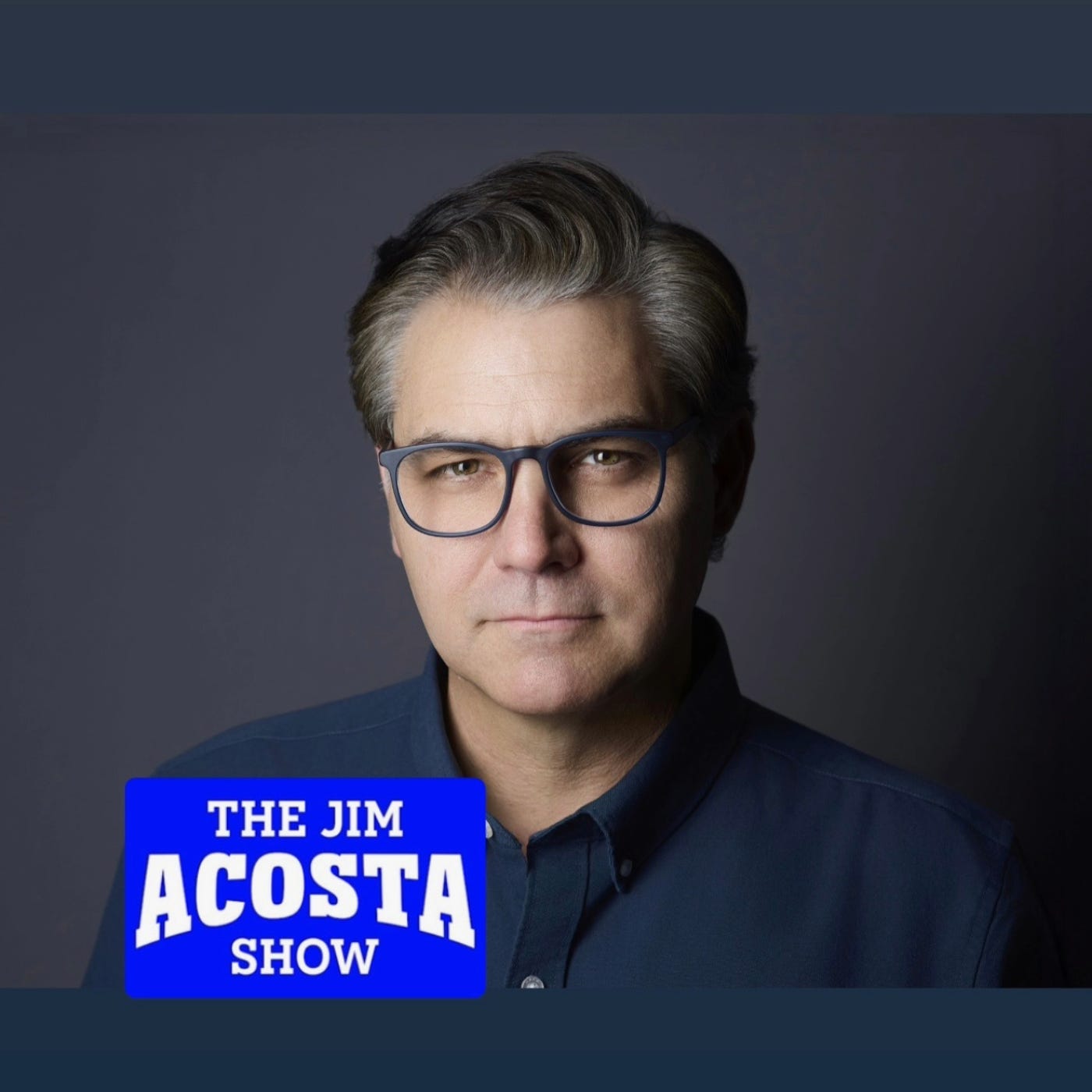
The Jim Acosta Show
My live interview with actor Cary Elwes about the devastating wildfires in LA... and his road back to recovery.
00:28:03
Loading summary
Transcript60 lines
- [00:06]
Jim Acosta
Takes a second or two to connect.
- [00:07]
Cary Elwes
100%. Just like my phone after the fire. It takes a second or two.
- [00:15]
Jim Acosta
That it does. That it does. Looks like people are joining. And we are live. Okay, terrific. This is wonderful. This is great. All right, thanks, everybody, for tuning into my newscast earlier today. This is Jim Acosta. But tonight I want to take a break from all of the political news of the day and remind everybody out there that some of our fellow Americans are hurting and hurting deeply. Specifically, I want to talk about the ongoing recovery process in Los Angeles after the devastating fires there just this evening. For example, it is being reported that State Farm Insurance is requesting a 22% increase in rates from California state officials, obviously pending approval. But it is a reminder of just how much this disaster has impacted the people in California. My very first guest ever on the Jim Acosta show knows this devastation all too well. The legendary actor and star of the Princess Bride and so many other amazing films, Cary Elwes and his family lost their home in Malibu after the blaze swept through his community last month. And Kerry joins me now. Kerry, it is great to see you. Full disclosure, you and I are friends, and I really just, it just means so much to me that you are with us this evening. It really, really means a lot.
- [01:44]
Cary Elwes
Means a great deal to me, too, Jim. Thank you for having me.
- [01:47]
Jim Acosta
Absolutely. And I guess, you know, you and I were talking about this on the phone earlier today, and you have an amazing story to tell. Tell us in a moment about your dad, and I want to hear about that. But I guess first of all, take us back to the beginning and what you went through because as so many people probably remember, you captured this incredible video of the fire sweeping through the area. And that was on your way out as you were just trying to survive in the moment.
- [02:14]
Cary Elwes
Yeah. So I live in Malibu, as you say, and those of us who live in Malibu are used to fires. We get them quite often. In fact, we'd had a fire sweep through our canyon a week earlier. And I stayed up all night getting all the hoses ready, watching these unbelievably brave helicopter pilots drop water and fire retardant on the hills. They were called off to another area. That was obviously more important at the time. And one pilot, I want to make sure to mention this one pilot stayed. I'm sure he was disobeying orders, but this guy was so brave at night through the smoke, which is terribly dangerous. He wanted to get that last fire out. He wasn't going to leave till he got it out. And I just thought, wow, we are so lucky to have these brave individuals out there who are risking their lives to save our homes and our community. And so, yeah, I just wanted to mention. But then this next fire happened, this cataclysmic event that it's hard for me to put into words, Jim, but it started in Palisades. I had a firefighter, a volunteer firefighter, friend of ours, very dear friend of ours, who helped me prepare for every fire, including this one. And when we saw the winds pick up 90, 95 miles an hour, 80, 95 miles an hour, he told me, carrie, this is the big one. This is the one that firefighters have been talking about for years. They knew it was coming. And he said, listen, it's not going to be like any other fire that you fought. This is highly dangerous. And when you get the warning, don't stay and fight it like you did before. Get out. So I evacuated my family. Obviously, that was the first thing I did. I got my family out. I want to make sure they were saf. Thank God my sister in law and my niece came to rescue me and get her out. And they took some items with them. So I was able to get some things out. But then the third warning came, and that one was the one that had helicopters flying over and telling us to all leave. And I could tell from the fact that the winds were so powerful, Jim, that it blew our car doors off the hinges. They blew the car doors off the off dangers. And so closing them took all the strength I had. And the trees were all bending over like sideways. The embers were flying so hard and so fast that when they hit you, they felt like little tiny heated bullets, little tiny pin pricks of heat. And so I thought this, I better grab what I can. And you end up in that moment, as I'm sure you know. The things you get when you're leaving, when you're scrambling at the last minute, end up being very simple things, you know, photographs that you hadn't downloaded and copied my daughter's artwork, she's a wonderful artist and she makes pottery. And I collected them all. Obviously, like every parent is proud of that kid being a talented artist. And so I was grabbing all those things and packing them very carefully. And I think that took time because you don't want these things to break. And then I heard the warnings coming again and my wife was calling me. She was obviously very distraught. She could tell already from Palisades how devastating it was and that she was begging me to leave. And so I did. And and we got out by the grace of God, we got out all safe and. Yeah, but we were the lucky ones, Jim. You know, I had stories of people who stayed to fight the fire and perished. And so, yeah, our hearts go out to those families who've lost their loved ones.
- [06:21]
Jim Acosta
Yeah, it's been devastating just to hear all of these stories, and it's unimaginable. It's something that you can't get your. Your head around. The sheer scope of it, it's just so big. And there's no telling how long it's going to take to get back.
- [06:38]
Cary Elwes
Yeah. The first thing I thought of when I saw the devastation the next morning, it reminded me of when I went to visit ground Zero. Now, obviously that was a bigger event and more truly something that's incomparable. But the only comparison I can draw from it was that when you go to Ground zero, and I know you did, you can't get your head around it. You're like, you can't wrap your head around it.
- [07:03]
Jim Acosta
It's too much.
- [07:04]
Cary Elwes
Too much. And to see that Palisades, this community, all these homes wiped off the map, I mean, there's no way to describe it. This was an event that was cataclysmic on so many levels and devastating to so many people. When I say we're the lucky ones, I know I have neighbors who were dropped by their insurance carriers, in some cases just two weeks before this fire, some after the Woolsey fire, in some cases just two weeks before this event, and lost everything. We know people who are still living in their cars in our neighborhood. I mean, the impact of this is gonna be felt, I think, for more than a decade or so. And the scars will last forever. I think, Jim, it's truly tragic, really sad.
- [07:55]
Jim Acosta
It really is. And to hear about your. Your daughter's pottery, that speaks to me as a father. I can just imagine in my mind trying to grab my kids prized possessions and their things that they care about and trying to get out in time. And you just know that you're not going to be able to get everything. And, and when you, when you make the comparison to Ground zero, I think that's. It's a good one. I also think about Katrina. I covered Katrina and I remember going back to places on the Gulf coast and you just find neighborhoods that are just completely gone. They're just gone. And you don't know if they're ever going to come back. They may not. Some may not come back.
- [08:33]
Cary Elwes
Yeah.
- [08:34]
Jim Acosta
And so I'm just wondering, what was it like when you went back.
- [08:40]
Cary Elwes
Sure.
- [08:41]
Jim Acosta
Tell us about that.
- [08:42]
Cary Elwes
Okay. I took my wife. She really wanted to see. I woke up the next morning. Literally. I get up at 4 every morning anyway, and I obviously don't wake her, but I waited to a decent hour to wake her and say, honey, I think the home's gone. I feel it. I need to see it. And God bless her. She said, okay, let's go. And they weren't letting anyone back up. And we would stop by a number of police officers obviously doing their job and quite correctly. So they wanted to. To protect us and make sure we were safe. And thank goodness, one police officer in one particular canyon. And I don't want to get this guy in trouble, but he said, carrie, if you see any fire in front of you or anything dangerous in front of you down poles or anything like that, just turn around. It's not worth it. And so I assured him that I would. And he saw the honesty in my eyes that I wasn't going to try and risk. I certainly wouldn't risk my wife's life or my own. And so we went up the canyon and yeah, we drove underneath, down telephone poles that were still burning. It was like a movie. It was really bizarre. And fire is still burning to the left of us and to the right. And we followed fire trucks actually up the hill. So I thought, we're safe behind these guys because if they can make it and they know it's safe, then it would be okay for us. And we did. And we got to the home and it was leveled. It was gone. But, yeah, it was a very hard thing to acknowledge. We'd lived there for over 30 years. I spoke to Billy Crystal. Billy Crystal, our dear friend Billy lost his home. He and his wife had lived there for over 40 years. So a lot of people lost their homes that they lived in for many, many years and built many cherished memories there. And so. But like I said, we were the fortunate ones. We were able to get out safely. And. Yeah.
- [10:55]
Jim Acosta
And Carrie, I know that you recently, you were telling me this earlier today when we were discussing this. You recently had this sort of moment in your life that told you that everything was going to be okay despite this. I mean, I know you're putting on such a wonderful face and a brave face and saying, we're going to get through this. You know, we're okay. But I know that you had this moment recently where you felt like this message was coming to you into your heart and telling you that it was going to be okay. And it Was delivered by somebody special to you.
- [11:34]
Cary Elwes
Yeah.
- [11:34]
Jim Acosta
Can you talk about that?
- [11:36]
Cary Elwes
Sure. I was in Louisville shooting this movie with. With. With Gus. And I was having a hard time reconciling the fact that I'd lost some very personal items at my father's. My father died when I was 13, and I was fortunate enough to find some items of his after he passed away that were deeply personal to him and obviously meant a great deal to me. Because if you've lost a loved one, as you know, having items that were Meant something to them or that you felt meant something to them helps you hold on to that memory. Yeah. So I was really having a hard time, and I was really beating myself up about it. Jim. I really thought, how could you have left this? And, you know, the mind is a terrible thing. It'll run through all kinds of things as you're lying in bed or just about to fall asleep and go. It's like a computer asking you, do you want to delete this file or do you want to save it? And those memories, those come back to you are, oh, you lost that. Oh, you lost that. Don't forget, this is gone now. And so these things were running through my head, and I was just beating myself up about it. And I had this extraordinary event happen to me a few days ago where I was dreaming, and I saw my father in the dream. And I'd had two previous dreams about him in my life. Both those times, he hadn't spoken to me. He just came to me in the dream. And I was grateful for them because you're lucky to have, if you have, any interaction with loved ones in your dreams from the spirit world. And this one was different. This one was very real and very vivid. And he was lying by the pool on a hot summer day. He was wearing bathing trunks. He had been swimming. His hair was wet. He had little droplets of water on him, and he had his back to me. And as I was thinking, oh, my gosh, in my head, is this really him? A voice off camera. It was like a movie. A voice said, look who's here. And he turned around, and it was him. And he got up to hug me. He had a huge smile on his face, and I rushed him. And I think I heard him when I hugged him. I was hugging him so hard. But the extraordinary thing, Jim, was that I could feel the sunburn on his back. I could feel the water droplets on my hands when I hugged him. And it was so real. It was so vivid. And I looked up at him, and I said, I'm so sorry, dad. I'm so, so sorry about the things that I'd lost. And he looked down at me and he said, it's okay. It's okay. And he hugged me again. And I tried to continue the conversation because I knew this was so real. I knew that it was happening, that I didn't want it to end. And I said, oh, you know, I want to let him know that I'd taken my family to visit a home that he had rented for us. And he said, I know, I know. And then he had to go. And what he was telling me with those two things, when he said it's okay, he was saying, it's okay to let go. Let go. These are just things, and I don't want you to suffer about it. And I want you to learn to let go. It's a great life lesson, really, learning to let go. And so it really helped me on this journey that I've been having that I'm on, and I'm so grateful for that. I mean, if you get a chance to have your loved one visit you while you're dreaming, as anyone will tell you, has experienced that, it's not like anything. And what it made me realize is that love never dies. It's there forever. Just like the line of my character in the Princess Bride, death cannot stop true love. All it can do is delay it for a while. And now I'm a firm believer of that. I'm out there telling everyone and talking to fans and friends who've reached out. By the way, if there's been anything that really has warmed my family and my heart in this whole event, it's all the friends that have reached out, like yourself and the fans that have been so supportive. It's just been overwhelming and really beautiful. And, you know, and so we're really grateful for that. We're grateful for, you know, we have such admiration. We were talking about it, my wife and I, for FEMA and the Red Cross and all these incredible agencies that are working so hard to help folks get back on their feet and. And the charities that have come together, the stores that have opened incredible donation centers which we've, you know, my family and I have been fortunate enough to benefit from these resources, and this community has come together in a way that's so, so beautiful. I hope and pray, Jim, that this isn't a transitory thing. You know, like, after 9, 11, we lost all divides in this country. No one was red or blue or this or that. We were all together. LA has that right now it's a beautiful thing, people coming together to help each other in ways that is so touching. And I pray that this lasts, that it's not something that in a few months time that we all go back to putting our fences up and, and, and you know, forgetting that important thing, that we're all in this together. Yeah.
- [17:29]
Jim Acosta
Well, first of all, Carrie, the story about your father, I mean, I. That is so deeply moving and touching. I just want to thank you, first of all for sharing it because I know not only does it help you to share that story, because my goodness, the amount of hurt that you must have in your heart, multiply that by everybody else who has been through this right now. I mean, you can just feel the pain that people are going through just through you. And it must be helpful for you to get that out. But I also think it's helpful, Carrie, for people to hear this message, to hear that you can get through this, that this community can get through this. And what you're saying is so right about the post 9, 11 days in New York and the way people came together in places like New York and Washington, Shanksville, Pennsylvan, and now LA has a very similar but different task ahead of. Ahead of it. The people have to come together in order to get through this. There's just no other way.
- [18:35]
Cary Elwes
There's no other way.
- [18:36]
Jim Acosta
There's no other way.
- [18:37]
Cary Elwes
No.
- [18:38]
Jim Acosta
And do you know what happens next? I mean, just to walk us through the logistics of how do you put this together? How do you rebuild? How do your neighbors rebuild? Will you have a community again? How does all of that work? Does anybody have the answers at this point?
- [18:57]
Cary Elwes
I don't know. I don't have those answers, Jim. Again, I think this event was so monumental. This is the worst fire in not just California's history. This is the worst fire in American history. We've never seen anything like this. I mean, anyone who claims now that there's no such thing as, as a global warming or climate crisis, honestly, this is a warning, okay? These winds were unprecedented. We're in January when we should have rains in California. We're in a drought in January. And all the brush is just pure fuel at this point. And this was an event that. I don't know. I mean, it was truly, hopefully one of a kind, but it's something that. That is not nature made. It's man made. It's man made. Okay, all right.
- [19:51]
Jim Acosta
I was there in October and for a wedding and was hiking in those hills in the Palisades. And I remember looking at the brush there at the time and thinking, this is out of control drought conditions and a recipe for disaster. And it just got worse after October, November, December, I mean, right into January, that severe drought continued. And I have to think the folks there are today, Kerry, like yourself, worried that this could happen again. If the elements come together in just the right way, this could happen again.
- [20:27]
Cary Elwes
Yeah. Yeah. One of my favorite sayings is from George Santana. I don't know if I'm pronouncing his name right.
- [20:35]
Jim Acosta
Yeah.
- [20:36]
Cary Elwes
His quote is this, if we do not learn from history, we're doomed to repeat it. Jim and I feel like these things that happen in life that are catastrophic, that are warnings that we need to learn from.
- [20:52]
Jim Acosta
Yeah, it applies to a lot of things these days.
- [20:56]
Cary Elwes
A lot of things. A lot of things. And we ignore these warnings at our own peril. Clearly, Jim. Clearly. And so I'm grateful for my family. I have a beautiful family. I'm so blessed. I really do. And they've been my rock. I said to my wife, I go, you know, if it weren't for you, I'd be. I don't know where I'd be. Be a mess is where I'd be. But she. She and my daughter have been unbelievably strong through this and have helped me realize just how. How incredible they are, how resilient they are and able to get through this with dignity and grace. And they've shown me just how to handle it. They really have.
- [21:44]
Jim Acosta
Well, one of the reasons there's so much going on in the world right now, there's so much going on in America right now, there's so much happening in Washington right now. And one of the reasons why I thought it would be so great to talk to you this evening, Kerry, is that we cannot lose sight of what our fellow Americans are going through, what our fellow human beings are going through. People like yourself, the person next door, the person in the community who doesn't have the same advantages in life that you and I might have, others may have. Your story, the story of what Los Angeles has gone through is a reminder that we still, despite everything that's going on in the world, despite what's going on in America, whatever is happening in Washington, we have a responsibility to take care of one another. And when people are hurting, you have to be there to help. And I was worried that the story of LA and these fires was starting to get moved to the back page. And that's why I wanted to have you on, Kerry, to remind People, thank you. We cannot lose sight of what LA has gone through, what California has gone through. And we just have to make sure we get as much help as humanly possible to the people here, because, Kerry, we don't know where something like this might happen next. There was all this talk about disaster aid and which state, and that state, it's la now it may be something else because of climate change in a few months from now, 100%.
- [23:22]
Cary Elwes
Look at North Carolina. I mean, I was devastated by that. My family and I saw that on tv, and we were absolutely just heartbroken for that community and what they went through. And seeing all these poor people who were buried under all this mud and debris, it was just heartbreaking. And so we're seeing that these events, these hurricanes, these floods, these fires, I mean, it's not a coincidence that they're getting more and more intense each year. Jim, you know, I mean, really, let's face facts here. Like I said, we can ignore these facts at our own peril or we can pay attention to them and do something about it. But you're right.
- [24:07]
Jim Acosta
And if we keep having these natural disasters, and it seems like every time we have one, this is the most expensive natural disaster that we've had in American history. And so many of them seem to tie back to climate change.
- [24:22]
Cary Elwes
That's what makes it an unnatural disaster. Jim, they're not natural. They're not. I mean, we're making old enough 100%. 100%. So the sooner we realize that we have a responsibility for what's happening, and it's not something that is just nature happens to be going through a cycle where these hurricanes and tornadoes and floods and fires are happening just because it's a cycle, it's not. How many hurricanes have we had this year already? They're coming larger and faster and more powerful each time they happen. And I think that, like I said, I don't want to be the guy who's screaming from the rooftop that we need to do something about it. But on the other hand, I think that, like I said, we ignore these warnings at our own risk.
- [25:23]
Jim Acosta
That's right. And we're getting warning after warning after warning, and if we don't listen, it is just going to get worse. If we don't make some changes, I. It is going to get worse. Carrie, anything else you want to. I know you're working on this film with the acclaimed director Gus Van Sant. You were in Kentucky, you know, I can't wait for that to come out.
- [25:47]
Cary Elwes
Thank you.
- [25:48]
Jim Acosta
And to see what's been happening in your career. I just want to say friend to friend. It's just been delightful to see.
- [25:53]
Cary Elwes
Thank you. Thank you, Joe.
- [25:55]
Jim Acosta
As a. As a huge Princess Bride fan back in the day and always.
- [26:00]
Cary Elwes
Thank you.
- [26:01]
Jim Acosta
You know, it's just lovely to see. And for folks out there who are wondering, Kerry is the real deal. He is such a. What you're watching right now is exactly how Carrie is. If you sit across from him at a cafe, as you and I have a few times.
- [26:14]
Cary Elwes
Yes, yes.
- [26:16]
Jim Acosta
Just. Just a wonderful guy and I appreciate a friend. I appreciate your time so much tonight.
- [26:22]
Cary Elwes
Thank you. Well, the feeling is mutual, Jim. I. From the moment I started tuning into your shows, I became an immediate fan and I made it my mission. You can ask my wife. She was like, honey, really? I'm like, no, I have to meet this guy. I have to get to know him. He's brilliant. He's so bright and so heartfelt and real. And I thought you attract people in your life. I always say friends of the family, you choose for yourself. And I really consider you like a brother. I really do.
- [26:50]
Jim Acosta
I feel exactly the same way. And I remember that first time we sat down together and I was a little nervous. I was like, oh, my gosh.
- [26:56]
Cary Elwes
I was the same way.
- [27:00]
Jim Acosta
And then it was like a couple of jokes later, bad jokes, we should say, and we were off to the races. So. Yeah, Yeah, I just. When this happened out in California, I just have to say my heart sank, My heart broke, I cried. I just. It just pains me that you have been going through this, but I know.
- [27:19]
Cary Elwes
Thank you.
- [27:19]
Jim Acosta
The strength that you bring to the roles that you play in Hollywood and then some is the strength you're going to bring to this next. This next challenge. And anything you need, you just let me know at any time.
- [27:32]
Cary Elwes
Thank you, Jim. Thank you. Thank you.
- [27:35]
Jim Acosta
Great. The great Cary Elwes. Carrie, great to see you, sir.
- [27:38]
Cary Elwes
Great to see you too, Jim. Thank you for having me.
- [27:41]
Jim Acosta
God bless you.
- [27:42]
Cary Elwes
You too. God bless.
- [27:43]
Jim Acosta
All right, take care. All right. Good to see you, sir.
- [27:45]
Cary Elwes
Bye. Bye.
- [27:46]
Jim Acosta
Thanks, everybody, for tuning in. See you next time.
- [27:48]
Cary Elwes
Yes. Thank you.