← The Jordan B. Peterson Podcast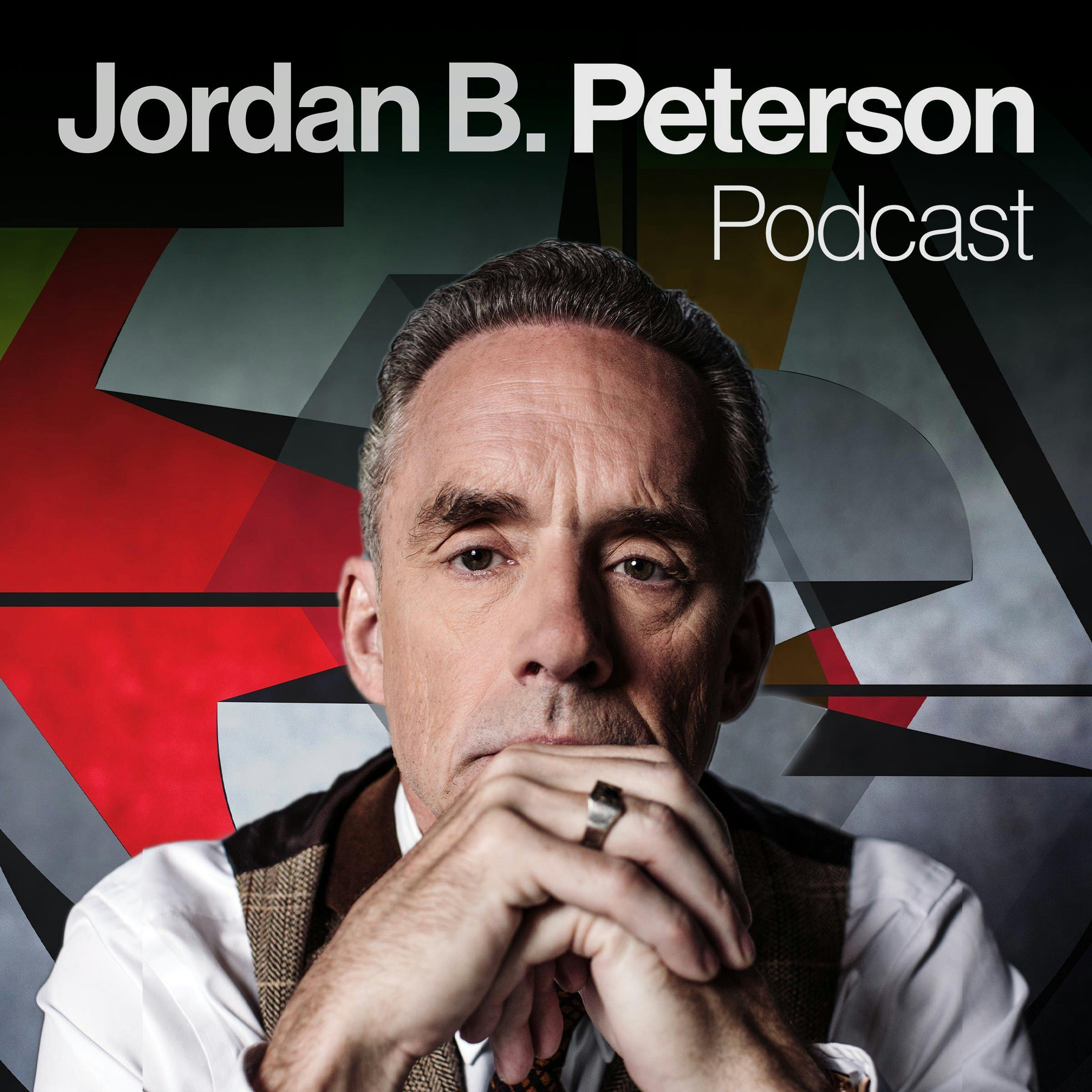
The Jordan B. Peterson Podcast
490. Bringing Woke Capitalism to a Shuddering Halt | Robby Starbuck
01:39:20
Dr. Jordan B. Peterson sits down with filmmaker and activist Robby Starbuck. They discuss Robby’s choice to abandon the life of a Hollywood filmmaker, what broke his faith in the Democratic ideology, why a willingness to risk everything is necessary for substantive cultural change, exactly how Robby is taking on woke corporate America, and why it's working. Robby Starbuck, a filmmaker and anti-communist once directed Oscar-winning actors and some of the biggest music stars in the world but seeing the threat of Marxism in America set a fire inside him due to his own Mom and grandparents fleeing communism in Cuba. He knew he had to stand up. He started his public stand by endorsing Trump in the 2015 primary. Hollywood didn’t like that very much. This episode was filmed on September 20th, 2024 - Links - For Robby Starbuck: On X https://x.com/robbystarbuck?ref_src=twsrc%5Egoogle%7Ctwcamp%5Eserp%7Ctwgr%5Eauthor On Instagram https://www.instagram.com/robbystarbuck/?hl=en Websit...
Loading summary
Transcript89 lines
- [00:15]
Jordan Peterson
Hello everybody. I had the opportunity today to talk to Robbie Starbuck and I came across him on X. He's been mounting a single handed war, although he has a team against woke capitalism and I'm not a fan of woke capitalism. I can't imagine anything more preposterous than woke capitalism because the WOKE movement is essentially Marxist. It's a deadly enemy of anything vaguely smacking of capitalism. And so the notion that giant corporations are promoting a pathological form of compassionate neo Marxism is absolutely preposterous. In any case, of all the people that I've been watching over the last couple of years, Robbie, Starbucks seems to have mounted the most effective sequential campaigns against the woke capitalists. Now there's been other contenders in that regard. The Republican Treasurers Association, I probably got that name wrong. It's done a pretty good job of pushing back against the ESG mongers like Blackrock. But Robbie Starbuck has gone after Tractor Supply, John Deere, Harley Davidson and a host of other corporations who are named in the, in the, in the interview and very effectively. And so I've been wondering just who this guy is. You know, from my perspective he just popped up on the landscape. That doesn't mean that I'm informed enough to know what I should know about where he came from. And we delved into that too. But the first time he went after tr, he went after Tractor Supply and I thought, well that's really interesting. And then John Deere and I thought, oh, that's twice, you know, and he said successful both times. And then Harley Davidson, which was really the killer as far as I was concerned, because there's nothing more absurd that you can possibly contemplate than woke Harley Davidson. And so I wanted to know who he was and what's he up to and whether he can be trusted and what's motivating him and how he views this in the long run and what his strategy is in his approach. And we covered all of that. And so if you're very interested in how to conduct yourself so that you can be an agent of appropriate change while taking the responsibility necessary to do so, you could do a lot worse than to listen to Robbie Starbuck for 90 minutes. Well, thanks for agreeing to talk to me today, Robby. I've been following you for a while on X as have an increasing number of people and you sort of, as far as I was concerned, you sort of popped out of nowhere and all of a sudden you're causing major trouble to corporations everywhere, corporations who richly deserve it. And I gotta Say Harley Davidson tops the list in terms of foolish corporate maneuvering contrary to the interests of their committed consumer base. I think they did something even more foolish than Budweiser, which is really quite a hard contest to win. So the first thing I'd like to know, and perhaps everybody watching and listening, is, well, who are you, and what have you been doing? Let's lay out your plan and your strategy and how you develop that. So just a history of you and then what it is that you've been up to.
- [03:33]
Robbie Starbuck
Yeah, so this is.
- [03:34]
Jordan Peterson
Maybe let's reverse that. Let's. Let's start with what you've been up to and then do a history of you.
- [03:39]
Robbie Starbuck
Okay, so. Well, the way this all started, you know, we've had sources giving us great stories for a long time, and so there's a measure of trust that gets built up. You know, like, for instance, one of those stories was my wife and I, we put out the story about Vanderbilt's transgender pediatric clinic early on, and then Matt made it a huge national story, did a fantastic job, and together we were able to convince the legislature here in Tennessee to ban hormones and puberty blockers and these surgeries for minors. And so as a bipolar, when was that? Oh, that would have been last year at the very beginning of the year, maybe even at the tail end of 2022. I'm terrible with dates, but it was, you know, it was fairly restrictive.
- [04:22]
Jordan Peterson
Yeah. Okay.
- [04:23]
Robbie Starbuck
And so, you know, as a byproduct of that trust you build up, people, they start to think of you when they've got a story themselves that they feel like is newsworthy. And so one of those stories was someone came forward from Tractor Supply, and they had worked there a very long time, and they said, you know, you would not believe the stuff happening at this company. I don't recognize it anymore. I love working here. This has been the best place, you know, best decision that I had made, at least I thought, until recent years. And then they laid out the evidence of kind of what had been going on. And to be really candid with you, Jordan, I didn't really believe some of the stuff they were saying. I had to send out a couple people from my team and myself to verify some of the things they had said, but it all checked out. And so I had sort of this epiphany where I said, this is Tractor Supply. And for those who are not familiar, maybe in a different part of the world, Tractor Supply is, like the most American American place you could go to shop. You know, I mean, this Place is filled with like American flags and it's a farm store, you know, so I've got cattle, for instance, Jordan, and chickens. And so like we'd go there sometimes to get some things we needed if there was just like something we needed in a pinch. And my kids love that store. So I realize as a byproduct of this whistleblower coming forward, that I myself am helping fund things that are directly opposed to my values. You know, like this company was funding pride events in my own community, in my own state. Things that I don't believe kids should be exposed to. No matter what the orientation of the people involved is. I think that it's wrong to expose kids to sexually charged material. So, you know, if I'm, if I'm not okay with that, I assume a lot of other customers, tractor supplier, are not okay with it. So I said, you know what, we're going to go at this from a very different vantage point. I'm going to look at sort of the history of boycotts, what has worked, what has not worked. And I want to have something I believe is something we can replicate. Because if this is happening at Tractor Supply, this is happening in many other places. So from that look backwards, I realized, number one, all of this craziness really has accelerated since George Floyd. That's where the vast majority of it originated. And so, and maybe not originated, but where it exploded, I should say. And as a byproduct of that, the Overton window shifted wildly like we've never seen seen in my lifetime at least. And so I realized for us to be able to take that back to some semblance of sanity, what we really have to do is make sure we're focused on the right targets at the right period of time. And think about this strategically. And we need to avoid the pitfalls of two of the biggest responses PR departments. Think about. Number one is let this blow over. So these stories can't blow over. They can't be 24 hour news cycles. And number two is that we understand that the old system was something where these big companies could go to major media outlets if they knew a bad story was coming. They could say, hey listen, we're going to up our ad spend, kill the story. Well, we live in a new time now where that's not possible. And I know for a fact, I won't say who, but at least two of the companies that we focused on tried that. They tried going to major media outlets to kill the story and it worked in that area, but it wasn't enough to kill the story in total, because we live in a new dynamic where more people were watching my video than were watching those news networks reports, you know, on any given night. So, you know, some things have fundamentally changed. And we saw pieces of that through what happened with Bud Light. And so we took the good pieces, left the bad pieces, which was that Bud Light was terribly unfocused in terms of telling people what they needed to do. And Bud Light was also an anomaly in the sense that they were lucky they had such a large product category because many people who were trying to punish Bud Light went out and bought a beer that actually was owned by ab, the same parent company that owns Bud Light. So in many respects it was unsuccessful in that regard. But we said, if we do this the right way and we sort of act as, you know, sort of a mouthpiece in general for, like, how you do this effectively, I think we can make real change happen. And so when it worked with Tractor Supply, we felt like our model was correct. And that essentially relies on shifting the window back to sanity by focusing on the companies first. That primarily depend on the conservative consumer walking through their door. And then as time goes on, you kind of slowly shift to like the 50, 50, what I call jump ball companies, where it kind of depends on everybody. And then you can look at the ones where maybe conservative consumers are in the minority, which is few and far between, honestly. But once you get there, suddenly you realize, taking an eagle eye view of the situation, that these companies on the far left that would still adhere to these values, they're going to be looked at as the weird ones. And so that's sort of where we're hoping to get with this project.
- [08:56]
Jordan Peterson
Okay. Okay. So I have a bunch of questions that emerges from that. Let's walk through in chronological order, if you would, the companies that you've been going after, and just tell the story of each company, if you would. And so you said you started out in this broad space, not exactly going after corporations per se, but you were concentrating on the transgender butchery in Tennessee. Was it in Tennessee specifically?
- [09:23]
Robbie Starbuck
Well, we've done it, you know, we've looked at it in total. We also made the film the War on Children, which at this point is the most watched documentary of the year. I think Matt will surpass us at some point with his new film, and I'm happy for him to do so because it's an incredible film, but that focused on it from a broad national level. All the issues facing kids, which included gender, ideology. But yeah, in Tennessee, as far as a news story goes, that was a big focus for us a couple years ago, making sure that at least here where we live, that that was something that would not be happening to children.
- [09:55]
Jordan Peterson
Okay, okay. And when did the war on children come out?
- [09:58]
Robbie Starbuck
It came out in February of this year, February 24th.
- [10:02]
Jordan Peterson
Okay. Now, so before we go into the corporations, why don't you let everybody know who you are? I mean, like I said, for me, you burst onto the landscape relatively suddenly. And so just give us a history of your endeavors and how you got involved in this enterprise.
- [10:24]
Robbie Starbuck
I think it's interesting the way the world works now because it definitely can feel like that. I think in any sense, no matter what somebody does, it's like people feel like, oh, they just kind of popped up. Right. I've been around a long time, though. I started out actually as a director producer in Hollywood. So I directed Oscar winning actors, actresses, some of the biggest music stars, people like Natalie Portman, Smashing Pumpkins, Megadeth, all across the board. And so that's a unique sort of unicorn like background for somebody who comes out as openly conservative. But in 2015, that's for sure. Yeah, in 2015, I saw a very dark picture of what our country could become if we did not make the right decisions. And that was something that I think was largely informed by my family history. So my family originally is from Cuba, and so they lost everything to communism. And that anti communist sort of education I got as a child about what it steals from you made me first a voracious reader because I realized that information was the most dangerous thing to authoritarians, especially on the left, but authoritarians in general. And so I wanted to read everything, I wanted to know everything I could possibly know. And as a byproduct of that, I became increasingly conservative. But when you try to make it in Hollywood, the reality is you simply cannot be open about it or you're going to be blacklisted. But in 2015, I decided, you know what? I have to be open about it. I've got to talk about it. Because we're at this crossroads where if we go down one of these roads, America can become Cuba. And if we head down that road, the future for my own kids is a dark one. And my great grandfather, he was like my father figure. He warned me so many times as a young man, if you ever see these warning signs, you need to speak up and do whatever you can. And so at that point, I had to drop the cowardice, because there's a lot of cowardice involved in that operative mode of thinking where you think, okay, I have to be quiet or I'm going to lose X, whatever that may be. Because that really is how people lose their countries. They lose their countries inch by inch, through silence. And so I said, you know what? If this burns down my career and everything I've built up, so be it. I believe in my ability to go and figure out something else. And so I came out, I endorsed Trump in 2015.
- [12:49]
Jordan Peterson
That's a crucial point. That's a crucial point that you made there. I. Two crucial points. You know, the fact that you lose a country slides into totalitarianism an inch at a time. And it does that because people are unwilling to give up something they have, they think they have, and will remain silent. And then you might say, well, what's the counter position to that? And the counter position is that your best way forward is to say what you think. And if you're a credible and able person, then that will open up all sorts of new opportunities to you. It might mean that you lose some of the things that you depended on. But the thing you have to think about in that situation is that if you're in a situation now that is already so rotten that its maintenance requires your silence, you've already turned three quarters into a braying donkey. If you want to use the Pinocchio imagery or a slave, and maybe you want to cling to your slavery, but if it means you're voiceless, then you've lost all that security is illusory. It's an illusion. So you're giving up something that you actually no longer have. But you also had enough faith in yourself, in yourself specifically, or what, in the pursuit of the truth, to motivate you to take the risk of. And exactly what did you do in Hollywood? I mean, I don't mean as a career, because you laid that out a bit, but how was it that you revealed your true proclivities?
- [14:14]
Robbie Starbuck
Yeah, you know, there's so many really, I think, important, poignant things you just said. I mean, one of them being that Hollywood and entertainment in general and the mindset that sort of permeates throughout it, it is a prison, and it is sort of like a mental slavery. And I think that's one thing there's just a really, I think, broken perception about, because there's this belief, I think, that's pervasive throughout society, that celebrities, let's say, have it all right, and that they're just. They're able to kind of have the world as their Oyster. But the truth is, in my experience, having been very close to a lot of these big stars, is that I've never met a more depressed group of people who are more broken internally, who don't know who to trust, and who really have their life kind of in shambles in the most personal ways. And so that was just something I recognized early on in my career, and it made me second guess my own desire to be in that industry. But at the same time, I was a young dad who was focused on, I need to make money. I'm lucky to be here. I've got a great job that's really paying me well. I need to protect that for my kids. And that's something that a lot of people convince themselves, you know, sort of that manufactured consent of silence is born through that excuse in your head that, oh, well, I need the money to take care of my family. Right. But like you said, the belief is so important in yourself that you can exist in some other way. And anytime you're trapped in a system that requires your silence in order for you to be remunerated, that's probably a really dark system, you know, it's not.
- [15:47]
Jordan Peterson
Yeah, yeah, right, exactly.
- [15:48]
Robbie Starbuck
And there's these people who say as well, when you break out of that, that you're gonna lose friends. Well, that in itself is a really, really, you know, kind of poisoned well. Because the truth is, they're not your friends if they don't know who you are and if they don't love and appreciate you for who you truly are. So it's actually one of the most freeing things, is for people to speak up to a group of people and realize, oh, these people who I sort of had this illusion were my friends. They're not actually my friends. And so that's something I encourage young people to do all the time, is be yourself. Be true to yourself and what you believe in. Because if you're putting on a mask for somebody else so that they will like you, they don't actually like you, they don't care about you. They care about this fictitious person you've made up because you believe that's what's likable. Just be you. And so in that sense, you know, I think your desires, when it becomes, you know, sort of onto the subject of work or politics or what have you, it's sort of a similar thing. You just have to be honest and true. And that's what I've always believed, you know, that if I follow what I know is right, things are going to.
- [16:53]
C
Work out Attention men who still believe in the American dream. In a world gone mad, the Precision five from Jeremy's Razor stands as a beacon of sanity. Five blades and superior engineering offer a shave as unshakable as your faith that the nation's best days still lie ahead. Experience an exceptionally smooth, remarkably close shave and a testament to the fact that merit still matters. Stop giving your money to woke corporations that hate you. Get Jeremy's Razors Precision 5 instead. Available now at jeremysrazors.com Walmart.com and Amazon Prime.
- [17:24]
Robbie Starbuck
You know, and some of that is religious.
- [17:26]
Jordan Peterson
That's the hallmark of faith. Well, that's the hallmark of faith. It's a kind of. It's a kind of courage, first of all, to be willing to take the risks that go along with the truth. But it's also faith in the proposition that the truth does set you free. That doesn't mean that it won't come with interesting twists and turns, let's say, of the sort that you just described. You'll discover who your false friends are. Well, that's painful, but it's useful. The other thing that happens too, and I'm sure this has happened to you, although you haven't mentioned it yet, is that once you do say what you think, you may lose a certain number of people around you, although other relationships will strengthen. But there'll be all sorts of other people that flock to you in consequence who are, I wouldn't say precisely of like mind, but also willing to, let's say, risk the truth. And so whatever you lose on the friendship side, you'll gain in terms of true allies. And that's actually a good deal. Now you have to wade out the lag period, you know, and there's some unpleasantness that might come along with that. But that's also partly why that faith is necessary, right? I mean, there's an assumption that I've come to, which is twofold, I would say. The first is that there's no difference between speaking the truth and having the adventure of your life. Those are the same thing. And the second thing is that whatever happens to you if you speak the truth is the best thing that could happen under those circumstances, regardless of how it looks to you in the moment. And, you know, your momentary view isn't omniscient. And so the fact that, you know, imagine you suffer for three weeks and then things are really good for a year because of it, well, those three weeks are still gonna be miserable. And if you used your judgment, then you'd think, oh, God, this is a complete catastrophe. But you don't have that longer term view. And I think faith in the redeeming power of the truth is equivalent to the longest possible term view. So, all right, so you were in Hollywood working, what period of time was that? And do you want to just flesh out what you did a bit so we have some sense of what it was that you were involved in and also what you risked when you decided you were going to make what you actually thought clear?
- [19:43]
Robbie Starbuck
Yeah. So in 2015, that's when I came out and endorsed Trump in the Republican primary. And I did so publicly. And I had a following already at the time because I guess I was sort of a new crop of directors where we had kind of our own followings online. And a large reason I even broke into the industry without any family connections or being from a wealthy family or anything like that was because I was lucky enough to kind of like break into the industry at a time where digital was starting to be a problem for film. And so I was able to come into record labels and say, hey, we can do the music videos you guys want at half the price. You guys are doing them already because digital doesn't require the expensive film. And this is sort of the area that we're fantastic at. And as a byproduct of that, we were able to grow quite a successful company. And so I think at our strongest point, we had over a dozen directors across the world. Europe, Canada, US and in general, we did a lot of different music videos, commercials, documentaries, and then we worked with big motion pictures like Paramount Pictures. We did a lot of projects with. So things that we would do that people would be familiar with is any of the big movies from Paramount, basically, Transformers, Terminator, anytime they had a music video, you know, that would air with the film or, you know, on MTV and stuff like that, we would do a lot of those, you know, tons of music videos in general, that's sort of the side of the business everybody likes because they're all popular. You know, those get hundreds of millions or billions of views. And so people, people like that stuff, but honestly, the stuff that makes money is the commercial stuff. And, you know, so we did a lot of that stuff as well. And in general, you know, it's something that makes a decent living and everything. You know, I'm not going to lie, it's great in that respect, but if it requires your silence, it's not worth it. And so that's sort of where we made the decision, my wife and I, that this was not Right. For us. And we were also, at the same time, sort of having our faith transformed in many different ways, or strengthened, I should say. And so, you know, that choice to leap strengthened our faith because as dangerous as it was to do, it required a level of trust in God I had not handed over previously. And I had always been reluctant to hand anybody that trust because I was a very precocious kid. I was all about, like, you know, some sense of leadership and control in anything I did. So that everything was perfect. Right. And that was the first time in my life I just handed over control and said, all right, I'm going to jump, you know, and we literally, we picked up our kids and we moved across country to Tennessee. And that would be about six years ago. And it was not only best decision we've ever made outside of getting married and having kids, but it was one that it really set me up to have the courage to be able to do the things we're doing now because we trusted God and God was there for us every step of the way. In ways that I'm still figuring out where I'm constantly surprised by just sort of the amazing nature of how things can happen. Right. And some of them happen in ways where it does feel miraculous. And we didn't know anybody here. We just jumped. We knew this was where we were supposed to go, and we did it and it all worked out. And, you know, as far as these projects, I just became increasingly vocal online about my political views. And, you know, we had a number of different projects, like our film, where we were trying to make as much of a difference as we can. But I always go back to, with this project, what sort of became different inside of me is that for a very long time I had this belief, sort of a naive belief, that, hey, we've got this party of people whose job it is to fight for us, right? So, like, if we get the right people elected, they're gonna fight, they're gonna win. And it's a very naive belief. Yes, we do need those people in office because there are going to be change makers. But I think one of the great mistakes we've made on the conservative side is depending on these people to save us. They're not going to save us. We need to take individual responsibility. And I think that's what's been missing. And if you look at the left and how they've arrived at this moment where they have total control of every cultural institution in our country, and you could argue globally, they got there not through the trust of their leaders, but because they have an incredibly active activist base that is willing to do whatever is necessary to win. And our side has kind of lacked in a lot of effects when it comes to that, because I think it comes down to, honestly, just the very simple truth that a lot of us tend to be individualists, and on the left, they're collectivists. Right. And so they're. They're willing to sort of be like bees, where, you know, they'll all die for. For the queen bee. Right. And they're willing to kind of like, carry out whatever it is that's necessary for the survival of their ideology. For us, we're all kind of individual, and I think one of the things we have to do is be able to match the energy that they have, but in very intelligent ways. And that's kind of what we've done to approach this project, is make sure that we're active in every sense that, you know, we're inspiring people to believe you can make a difference, one person can make a difference. Every person on this chain of events, from the person who's the initial whistleblower to us about a company to the very end where we're in conversations with the executives, every individual involved is necessary to be able to bring these wins that we've been bringing, where we bring a bunch of corporations back to sanity.
- [25:07]
Jordan Peterson
Yeah. Okay, so a couple of things that I wanted to go through with you there. So, yeah, so you said you came out in 2015 in Hollywood to support Trump. So that was pretty daring and pretty early. I mean, it seems to me that 2014, 2015, is about when things had got out of hand enough to go sideways. Something shifted at that point, and part of that, I think, was probably the increasing dominance of cell phone technology and the fact that everybody's so interconnected and that information was moving around so insanely fast. But something definitely shifted. I started to become aware of things at the University of Toronto, for example, that just hadn't been there before. My graduate students were starting to talk to me about being afraid to broach certain topics in class. Like, that had never happened before. I was never nervous at Harvard or at the University of Toronto to. To review what I had learned from the research literature to my undergraduates. And my attitude was, too, that if any student was perturbed by the content, they were more than welcome to leave. And I made that clear, and I never had any trouble. But then all of a sudden, you know, my students were starting to report to me that they were nervous. And then I started to get nervous about talking about gender differences, which is a core element of my field, actually, because I'm a personality psychologist, so. And the university started to move in a real DEI direction. Something shifted in 2014. Okay, so now we've established that you had a genuine career, that you were up and coming, that you were on the cutting edge of the technological revolution in Hollywood, and so you had something at stake. You decided that you were going to publicly support Trump, and you said at the same time that you were undergoing something approximating a reevaluation of your faith and that you had. And your wife, because you mentioned her, had decided to, what, in a sense, throw caution to the wind. And so tell me a little bit more about how you came out in support of Trump and why you did it, then, how you discussed that with your wife and how that was tangled up with your progression, let's say, with regard to your faith.
- [27:12]
Robbie Starbuck
Yeah. You know, my wife is just the treasure of my life in so many ways, because she's the person who made me believe I could just be me, and I didn't need to put anything else on. And that's kind of, I think, the mark of a great woman and I think a great partner in general in life, is that they're going to give you that courage to just be you. And as much as many of us just want to have that innately, sometimes we don't. And you need that validation in your life that, like, hey, you be you. We will take whatever comes along with that. And so my wife, she's as conservative as I am. I think maybe even on something, she might even beat me. And, you know, she was a big believer from the very beginning. She grew up in the south, that California was a horrible place. But increasingly, during the Obama years, it got much worse. And you could see the writing on the wall. I mean, to give you an insight visually, because I'm a very visual person. The day we moved out of California, I will never forget this, we used to take our kids all the time to Malibu Pier. They have a breakfast spot there and stuff. And our kids just always loved that spot. And it was kind of like our family's spot. We went every week pretty much. And so we went there as our last thing altogether in California. And we were in the sand, and our kids are playing. And our youngest one, who at the time probably was around two years old, she says, dad, what's that? Said it in a much cuter voice than that, because she's still trying to pronounce things correctly. I look down, it's a hypodermic needle. And that to me was like, I still had that feeling, am I doing the right thing? Right? Am I crazy doing this? I looked down and I saw that needle and it was like confirmation from the heavens. Like you're not only doing the right thing. This is the writing on the wall. This is where this place is going. And it couldn't have been, I think, any more eye opening as to what the future was gonna look like. And it's just like all encapsulated in that little moment, this little beautiful, precious, innocent child. What's that, daddy? And it's this symbol of the brokenness of the state in California and really of leftism in total and what it produces because it's anti family, it's anti child, and it's really producing a future where hedonism reigns and hedonism has more rights than goodness. And I think that that's something that was definitely very motivating to me going forward that this was a fight not just about Republican versus Democrat, right versus left, which can be kind of boring. It was really a fight of good versus evil. And that's something that became more apparent in the years afterward and I think is the most apparent it's ever been now. I think you even have very non political people now waking up and going, this is sort of good versus evil. That's, that's what it looks like. And I think that's going to become increasingly the conversation because, you know, I've got friends who had been atheists their whole life and I find it fascinating. I have never seen a wave of atheists turning to God the way I have in recent years.
- [30:19]
Jordan Peterson
And yeah, yeah, that's for sure.
- [30:21]
Robbie Starbuck
It really is fascinating. And for them, you know, because they're very analytical, very based in like, sort of like what can I see, measure, feel and touch. Right? And for them, the thing that turns them is not historical evidence, it's not things like that. The thing that has been turning them is just simply visually watching the world around them move and feeling the evil that is coming forth in the United States from the left primarily. And that has been moving.
- [30:47]
Jordan Peterson
And you put your finger on that, you put your finger on that with regards to the war on children. I mean, I haven't seen anything worse in my entire life and I've spent so personally what I've seen firsthand, but also what I've investigated historically, I don't think I've ever seen anything worse than the trans butchery in Relationship to children that rivals or exceeds anything I only fortunately read about in relationship, say, to Auschwitz. But it also rivals the worst of the Japanese atrocities in China, which were the worst things that I'd ever come across historically. And so it's a level of pathology that I would have regarded as inconceivable, especially with regards to both the medical and the psychological community. Like, as far as I can tell, what the medical community is doing to children. And we know now it's about 8,000 young women who have insurance coverage in the United States. So it's far more women than that because these are just the insurance cases. 8,000 have had double mastectomies since this idiocy began. And as far as I can tell, that is literally a crime against humanity. That with the sterilization and the mutilation, because minors cannot provide informed consent to procedures like that. Anyone with any sense understands that if informed consent means anything, it means that minors cannot consent to their own sterilization and mutilation. And yet no one's being prosecuted, not to the degree they should have. And we know that the scale of this catastrophe is much wider than this. Mere 8,000 girls. Merely, like, it's a terrible number of people. We've turned the country upside down for far less consequential occurrences than that. And so, like, I can't characterize that as anything other than evil. And, you know, we should leave that term for when it's actually useful. And that does point to something moving below the surface that's more than merely political. And there is a transformation of belief in the air, there's no doubt about that. And it is, you know, in large part for the reasons that you're describing. Okay, so delve a bit more into the faith element, if you would. And where did you move in Tennessee?
- [33:06]
Robbie Starbuck
So we're just outside of Nashville. We went full farm. We've got a farm. Yeah, we've got. We've got cattle, we've got chickens. You know, like, we went big. We were, like, going to change our life. We're going to change our life. We're going to drink raw milk. We're going to have cows. We're going to do the whole thing. And I think it's something interesting. As you were speaking, I never gave much credence to the idea of parallel universes. It just seemed kind of complex. But then again, I don't doubt God's ability to create complex things. Right. But the change you're describing that happened around those Obama years in the United States at Times I almost wonder if we slipped into a parallel universe. Because the things that you were just describing are so absurd. 8,000 women, many girls having double mastectomies.
- [33:54]
Jordan Peterson
Those are all girls.
- [33:55]
Robbie Starbuck
Those are all girls, all under 18.
- [33:57]
Jordan Peterson
The 8,000 figure, all of them, 8,000 under 18. That's not the full total of the double mastectomies.
- [34:03]
Robbie Starbuck
That's just minors in the 8,000 children. And, you know, I've interviewed one of them, Laila Jane, who at 13 had hers. The barbarity involved is unthinkable. And I remember just a decade ago, I could have gone up to anybody. Well, it would have been a little more probably, you know, 12 years ago, I could have gone up to anybody, regardless of their political belief, who they voted for. And I could have asked them, is it okay to give a double mastectomy to a 13 or 14 year old who was confused about their gender? Every single person would have said, absolutely not. That's abuse. You belong in jail if you do that. Right?
- [34:38]
Jordan Peterson
So, yep, yep, yep.
- [34:40]
Robbie Starbuck
What changes that in such a short period of time? You know, I. The only answer I have is evil or a parallel universe.
- [34:48]
Jordan Peterson
Yeah, well, it's not only. See, it's even worse than that. Because it's not only that these procedures, which are experimental and sadistic and profit oriented and ideologically addled and cruel and counterproductive and rife with side effects, but it's not only that those are being conducted. Conducted en masse, lied about. This is something that never happens. It's like, no, it's happening and it's happening a lot. I know. For example, there's a black market in puberty blockers. So whatever the figures are for children that are put on puberty blockers, which is part of the pathway to surgical transformation, the true number of kids who are experimenting with puberty blockers is much greater than that. Yeah, but so it's happening. It's happening at large scale. The people who are doing it are lying about doing it and covering it up. And this is the capper. Opposition to it is essentially criminalized. And so that's like. That's a perfect trifecta. So, you know, I'm in trouble in Canada, for example, because I objected to Elliot Page.
- [35:56]
C
Are you tired of feeling sluggish, rundown or just not your best self? Take control of your health and vitality today. With balance of Nature. With balance of nature. There's never been a more convenient dietary supplement to ensure you get a wide variety of fruits and vegetables every day. Balance of Nature takes fruits and vegetables. They freeze, dry them, turn them into a powder, and then they put them into a capsule. The capsules are completely void of additives, fillers, extracts, synthetics, pesticides, or added sugar. The only thing in balance of nature fruit and veggie capsules are fruits and veggies. Right now you can order with promo code Jordan to get 35% off your first order. Plus get a free bottle of fiber and spice. Experience balance of nature for yourself today. Go to balanceofnature.com and use promo code JORDAN for 35% off your first order as a preferred customer. Plus get a free bottle of fiber and Spice. That's balanceofnature.com promo code jordan for 35% off your first preferred order, plus a free bottle of fiber and spice.
- [36:50]
Jordan Peterson
Ellen Page displaying herself so wonderfully after her surgical transformation to 1.4 million followers, which was, you know, unconscionable in my regard. I know that she had her problems and they were genuine, and I have some personal sorrow, let's say, for her confusion, because her situation is catastrophic. But once you advertise that to your 1.4 million followers and you're a celebrity, you're not a victim, you're a perpetrator. And enough is enough, you know, and if she only convinced one other girl to go down that road, that's like one girl too many for criminal.
- [37:29]
Robbie Starbuck
It's barbaric.
- [37:30]
Jordan Peterson
Beyond. Well, it's. It's crimes against humanity level criminality. And my sense is it won't stop until there are people prosecuted on that basis. It's so. And it's such a growth industry, you know, it's so pathological.
- [37:45]
Robbie Starbuck
Yeah, they're making a lot of money off this, which is a whole other layer of sick. But you know what this is like. It would be like if I went on my social media channels and I started doing heroin in front of people and I started telling them how good it feels and how great it is. And some people pick up heroin as a byproduct of it and they kill themselves on it. That's on me. You know, that's. That's principally on me. It doesn't matter how good it made me feel. It's still something that is going to have the capacity to break and kill people. And that's what this ideology is. And when you're doing that, especially to children, I mean, there's something about that that's just incredibly demonic.
- [38:26]
Jordan Peterson
Yeah, it's. It's beyond. It's every. Well, you know, I talked to who broke the W Path file. Shellenberger, Schellenberger. I talked to him about this when he broke the W Path files, and he had said he had watched my conversation with Abigail Shire when I came. I was ill for a while, and when I came back and hit my podcast again hard, the first podcast I did with was with Abigail Dreyer, who wrote Irreversible Damage. And I was very nervous about doing the podcast because at that point, it was. Your reputation was on the line if you objected to the transgender surgery crowd. And so we walked through her book, which is. And I looked into the surgical procedures, which are like, they're brutal and barbaric and experimental beyond belief. And that's what I wanted to point out is, you know, Schellenberger talked to me about that because he watched that podcast and, you know, and Schellenberger is a pretty brave journalist. And his basic response was something like, this is so awful. There's. It must be exaggerated. There's no way it could be happening. And it took him basically two years to wrap his head around the fact that, no, this was happening. That major. The major medical establishment, American Medical Association, American Psychological association, were not only on board with this, but promoting it and persecuting people who objected to it. You know, and it's. It's really something. It's really something that's actually, as you're. As you also alluded to, it's really incomprehensible. It's so terrible. It's no wonder people don't believe it. Right. It's no wonder that people are turning a blind eye to it, because it's very. But it also makes me think, you know, that must have been what was happening in Nazi Germany when rumors of the persecution of the Jews and their demolition and all the other people the Nazis went after started to circulate. And people weren't nearly as connected then as they are now. It was going to be much more easy for them to turn a blind eye to things they couldn't possibly believe were happening. Well, we're in that situation now. It's so sickening. It just. I just can't believe that it's happening, and I can't believe that it's happening while people are proclaiming that that's the moral pathway. It's like, what the hell? Okay, so fine. So fine. You saw something was happening. In 2015, you had a good career in Hollywood. You decided that you're going to move to Tennessee, to Nashville, Which. Nashville. Two thumbs up for Nashville. It's a great place. And You've done that. And then. Okay, so let's get the timeline going here. And so you started the. Was the activism, the more conservative level, public activism? Did that initiate on your part with the transgender issue and then move from there?
- [41:22]
Robbie Starbuck
Well, I had been outspoken about education and mandates and things like that around Covid, but it's one of those central issues where actually I was going to say this people should know you. And I didn't plan to talk about the transgender issue, honestly, but it's actually important because I have noticed this issue more than any other issue when it comes to transitioning children to just beyond barbaric. Barbaric sounds like too nice a word for what is happening. That issue has been what has activated more people, especially in spheres of influence that have never involved themselves for very practical, business oriented reasons, into this sphere. And to say, I am going to fight and put it all on the line, because this is a line that means so many other things. You know, what they've done to children tells you everything about what they're willing to do. In every other sense. That's a truth that I'd say the most intelligent people I know have all figured out this line means a thousand other things and they're all supremely evil. And that's why you're seeing so many prominent people that you would have never expected stand up, speak up, put their money and their time into the fight. Like Elon Musk. I mean, if you had told me years ago, Elon Musk is going to come out and support your movie and promote it, and it's going to end up getting almost 60 million views largely as a byproduct of him and Donald Trump Jr. Promoting it. I would have said you're crazy, because I'm very practical and pragmatic. And I recognize as somebody who owns all these incredible businesses, even if he does agree with me, that's a very dangerous position for him to take with the government contracts and things like that that he has to deal with. So you have to ask yourself, why would somebody like that be willing to risk everything that they've achieved? And it's very simple. This line marks an evil that will beset not just our nation, but the world for the next generation and the generation after it. And you're going to have to get to the darkest of places for a small group of people to rise up and do whatever's necessary to bring back some semblance of sanity and liberty. I don't want us to get there. And that's the thing is some people would say, like, oh, well, you're a fascist. You're a radical, or whatever it may be. What I think is actually fascist is what's going on now where you've got these people in these institutions who believe it is fundamentally their right to shove their ideology down everybody else's throat. That's what's happening in corporate America. That's what's happening in education. It's happening all over the place. That's what I find fundamentally to be wrong. But it has a cascading effect that will continue on and will destroy the lives of our kids and grandkids. And so I think it's important people recognize that about that transgender issue, when it comes to kids, it is something that means so many other things.
- [44:02]
Jordan Peterson
Well, we can elaborate on that briefly. I mean, in 2016, when I released. I released a couple of videos that caused a major kerfuffle that really hasn't died down around me since. And the videos were essentially objecting to the government of Justin Trudeau, deciding that it was okay to put words in people's mouths, including mine, with regards to the transgender issue. And I felt two things at that point. I thought, okay, well, you've jumped out of your bailiwick there, buddy, because you don't get to. There was never legislation in any Western country ever that compelled speech among private citizens, ever. So there were certain types of commercial speech that were regulated, but for commercial reasons. And so then I thought, too, well, now we have this idea that we can mess with the fundamental category of sex and make that a social construction and generate confusion around that. And I thought, well, that's the most fundamental perceptual category, I think. Sex. It's more fundamental than black and white, up and down, night and day, like male and female. If you don't get that right, you don't reproduce. And so that disappeared 650 million years ago. Like the sex, sexual differentiation is hardwired at the most fundamental level. And what that means is that if you can confuse people about that, they will swallow any lie. I warned the Canadian Senate about this in 2016. I said, if you start to confuse young people about sex, you will produce an epidemic among young women, like a contagious epidemic. Because I knew the literature on contagious psychological epidemics. It goes back 300 years, and it's always young women. It's likely because they hit puberty earlier than young men and so have to contend with the brute force of biological transformation when they're still relatively immature, comparatively speaking. And so for whatever reason, they're more susceptible to psychological epidemics. And so, you know, you have two things going on. You enforce the lie that men can be women. You. And so you prime people for the lie. And then you confuse the most vulnerable people and tilt them into, like, an irrecoverable pathology. And then it got even worse, because I didn't think at that time that we would have an epidemic of, like, mutilating and sterilizing surgery. Like, you know, I have an imagination for evil, but I got to say, it didn't extend that far because it seems absurd. Well. Well, it is. It is. It's. It. It's. It's. It's the. It's the ultimate and evil clown.
- [46:45]
Robbie Starbuck
Yeah.
- [46:45]
Jordan Peterson
Like, it's the worst thing that you can imagine. It's got this horrible element of satirical black. The blackest of satirical comedy, you know, and you can see that in the transgender movement on the political side, you know, in all sorts of other ways, because the drag phenomena is satire of femininity. And so it's got that dark edge to it. And, you know, when that was a fringe thing for theaters, well, it wasn't disrupting all of the world, but when it moves to the center, whenever the fringe moves to the center, all hell breaks loose, because the fringe is multiplicity, and the center can't be multiplicity. Obviously, it's not a center. Then it's chaos. So, okay, so War on Children, investigation into the transgender phenomenon. Now that. Now you start taking on the corporations, and you start with Tractor Supply. So walk us through that story, if you would, and then let's walk through the corporations one by one, and if you would, detail out how your strategy developed and your influence grew.
- [47:58]
Robbie Starbuck
Yeah. So with Tractor Supply, essentially, the way we approached it is, number one, we had to make sure we didn't play into the PR strategy of this will blow over. So what we did is we said, okay, the first video is going to be like a knockout, where it's gotta be really strong. But we can't put everything, because we need to be able to have pieces of information, information every day just dripping out that you include many of the pieces that are still very impactful. So we hold back some of the stuff that we would consider the best stuff, as long as we can make sure we have a decent portion of sort of explaining the problem in that first video. Our first video on a company tends to be somewhere between seven and 10 minutes. Any longer than that, people. You know, I think if you're talking about the attention span of millions of people who are swiping on social media. You start to lose people, you know, so we stick to that, that time span. And then each day we sort of drip out different pieces of what we've found through our investigations. And our investigations are a combination of what the whistleblowers bring forward to us and then secondary, we do really great open source investigations on the companies. You'd be shocked, Jordan. Actually, I don't think you would be because of your background in psychology. I think a lot of people would be shocked by the types of interviews that executives at major companies grant where there's like five views ever, all time on the interview. But they do it because of their own narcissism, you know, so. And they're filled with mistakes. And so nobody's ever really gone through all these, logged them, cut them, labeled them, and saved them for the future. We've been doing that now for a couple of months on, on a lot of companies, okay. Companies that we've never said a word about. We've already got every crazy interview their executives have ever given and we've got them cut, labeled, and ready to go when we move on to them. The other part of this is we recognize going one by one is important because just like, you know, any sort of hunt, when you've got animals all together as a herd, they're much stronger. So if you try to take on corporate America by going and attacking a group of them who are all together as 100 corporations, you're going to get nowhere. But if you focus in on one and make them the target of the ire of customers that they need in their stores, that's a, that's a totally different prospect because at the end of the day, these are public companies, by and large, that we do this with because private companies are a little bit different in terms of their ability to kind of wiggle and skate out of a lot of this. But with public companies, the board has a fiduciary duty to shareholders. So if the board is aware that conservative consumers make up a cross section of their customer base that is anything beyond 20%, it's malpractice for them to allow a story like this to go and grow legs for over a month and reach hundreds of millions of people, because each company we focus on has generated hundreds of millions of impressions. So that's better than a lot of national ad campaigns can do. And that's not counting, by the way, the mainstream media coverage of what we've done. I don't even know what Those numbers would be. I mean, I'm less and less impressed by the stuff that they're able to pull in because it seems like people like yourself or me, they're dying. They really are. They're dying breed. But in general, for these companies, no.
- [51:04]
Jordan Peterson
They'Re a suicidal breed.
- [51:06]
Robbie Starbuck
They're a suicide. That too. But in general, we're crossing into this new paradigm of how information. And so I think this is one of those early stories where corporations are having to learn some very hard lessons. But I will say a lot of them are learning quickly because if you look at sort of what we did in the timeline, we went from tractor supply, took about three weeks to get a statement from them where they changed all their policies. I mean, they dropped every woke thing that we had put out there. Then after that, we focused on John Deere. For those who are unfamiliar with John Deere, big tractor company. I mean, we're talking again about a company that depends on probably 90% conservative consumers, right? And for them, it took about three weeks as well to get them to flip. Then we got to Harley. Harley was one that I think was psychologically very important to what we have done going forward. But you know what's interesting, Jordan, is that they're one of the smallest companies that we have flipped. But I would say psychologically maybe the most important one, because their CEO was not a typical CEO like many of the CEOs of these companies that we have flipped. They're kind of agnostic about the whole thing, if not opponents of the wokeness. But they didn't know what the heck was going on at their own companies. And there's this like pervasive ignorance about how bad it's gotten. And then they're like, oh, gosh, we didn't know that. Yeah, let's fix it. But in the case of Harley, this CEO is a true believer. This is a guy who founded the B team with Richard Branson. The B team's explicit purpose is to force wokeness through corporate America by bringing in new leaders who believe in the woke ideology in general. You know, so they want to do this on a global scale. And they've been quite successful at a number of companies forcing these new leaders in and bringing their ideologies with them. And so that was one where I said, you know what? They may dig in their heels, but we need to do this right to where if they do dig in their heels, they're not going to recover from it. Because we have to make this just absolutely clear to the consumer how far gone they are from the values of their consumer base. And I think we did a good job of that. Again, we started with the long video explaining the problem, but we had such a large amount of material, you know, like one of the videos we held back initially was the interview of their CEO describing himself as the Taliban of sustainability. And so for people, I thought it was very important we break that video down. Taliban of sustainability, what does that actually mean to me? What it means if you describe yourself that way, the Taliban of anything. It means you are willing to do anything for what you believe in. There is no red line you won't cross. You are a terrorist for that cause. That's what it means to me. And sustainability is just a buzzword to describe wokeness in total. Right? So I hear, when I hear Taliban of sustainability, I hear I am a terrorist for this left wing ideology. I will do anything to make sure that it comes to fruition. And if you look at sort of the policies they had adopted, well, it's very clear that seems like that was the direction they were going. And he even had an explicit, you know, desire to reshape capitalism is the way they say it. Marxists love to do that. You know, reshape capitalism. You know, you can eliminate cronyism from capitalism, but that's not what they were describing. They weren't describing removing cronyism. They were describing a system where essentially, you know, businesses operate as a social benefit to society. That's not what capitalism was ever meant to be. That's not capitalism. And the way they describe it is just a pathway to pure Marxism. And it's something actually, I think is a very important, interesting point that I think you will find interesting and maybe have some things to say on. You know, I think coming from a family who had communism steal everything, I think it's very important people understand the modern left. They are a new age version of the Communist party. And when I say that, there's some fundamentally important differences. But I think once people hear them, if they scoffed at the beginning, at me using the term communist to describe what they're doing, I think they won't after they hear this.
- [55:01]
D
The radical left's stance on abortion has reached alarming levels. From supporting free abortions to even advocating for infanticide, we're witnessing an unprecedented assault on the sanctity of life. This isn't just politics anymore. It's a moral crisis. But there's hope. Preborn, the nation's largest pro life organization, is fighting back. They're strategically positioned in high abortion areas, offering A lifeline to women and their unborn children. When you join forces with preborn, you're protecting the greatest victims in our society. Babies in their mother's womb. Over 300,000 babies have been saved through preborn's efforts. When a woman considers ending her pregnancy, preborn is there. With compassion, support, and the power of ultrasound technology, this simple tool doubles a baby's chance at life. You can be a part of this crucial mission. For just $28, you can fund one ultrasound. $140 saves five precious lives. For those able to make a larger impact, your tax deductible donation of $5,000 will sponsor Preborn's entire network for 24 hours, helping rescue 200 babies. To make a difference, dial 250 and say baby, that's pound 250. Keyword baby or donate securely@preborn.com Jordan that's preborn.com stand with truth. Stand for life. Dial pound 250 and say baby or visit preborn.com Jordan today.
- [56:28]
Robbie Starbuck
You know, the fundamental difference here is that they no longer believe in the need to seize the means of production because they realize something incredibly important. The power structure on the left realized that optically, it's going to be really hard to sell the idea of communism to a populace who understands that communism killed so many people in such a brutal way. Right? Like, that's not going to be a popular cell to come out and say, hey, we want to be communists, we want to take over industry. We want to control your life. That's not something people generally are going to be really amenable to, right? Not if you say it openly. What they realized was you don't need to go seize the means of production. You just need to control the minds of the people in charge of production. And if people doubt that that's the path we're on, look no further than big tech. Look at Google, look at Facebook. Every one of these companies acts as an arm of the state's ruling party. That's not capitalism. That's not business just doing its thing, answering to the free market. We fundamentally shifted from a system where customer is king to one where the needs and desires of the Democratic Party are king. And secondary to that are the needs and desires of blackrock, State street, and Vanguard. Now we're fundamentally shifting the reality back with what we're doing to say, no, actually, customer's king. Because you know what? If you own John Deere, you own tractor supply, you own Harley Davidson. Guess who's not walking in your door to buy your products. BlackRock's, not, Vanguard's, not, State Street's, not, the Democratic Party is not. My people are. And so fundamentally shifting that reality. I think psychologically, a lot of important things happen from forcing Harley to change. One of those things was that people felt like, okay, one, maybe a fluke, two, possibly just extremely lucky three companies in a row. It was like, oh, this is actually working. This is a trend. This is something that can be replicated and continue. And we are a force in the market where we're shifting. In the case of Tractor supply, it was an almost 3 billion loss in market cap during our campaign with John Deere. Almost 10 billion loss in market cap during our campaign. $10 billion. And as you look at what's happening in the market, one of the fears that a lot of people tried to sell about, you can't leave wokeness, it's going to lose you money. Every company that has come out and rejected these policies as a product of our campaigns has seen their stock go up the day that they announced that they were dropping these policies. Every single one had their stock go up the day they announced. That's not an accident. The market's not going to punish you because retail is more involved than ever in the market. And these bigger players like Vanguard, State street and blackrock, they actually, I think, don't know what to do with us. They don't know what to do now that there's an activated consumer base on the right who is willing to use their wallet as a weapon because they fundamentally understand that I'm right in terms of the thesis that at the end of the day, you need us to walk in the doors. If we don't walk in the doors at these places, you're toast. You can go and have institutional investors try to prop you up till the next quarter, but when you have to report earnings and people see that you had a really sizable loss in one strategic area of your business, or maybe the business in total, you're going to have big problems. You're not going to get your bonus. There's financial consequences for the decisions you've been making. And so that's what we're trying to make abundantly clear. So as a byproduct of that, one of these other positive things is psychologically in the minds of executives, okay? Things have changed now. These people are somebody you need to be afraid of. If they come to your door, they mean business. They have the ability to reach hundreds of millions of eyeballs. And you don't want that. You don't want to be the story anymore. So we fundamentally altered our approach a little bit. Now instead of just going straight with the story, we started to reach out ahead of time and say, hey, we've been investigating, here's what we found. We're planning a story and essentially, you know, we want to make sure our story is right. If you have any corrections or you want to let us know about any changes you're considering as a byproduct of reading our reporting, let us know. You have until this date to give us a comment, correction or feedback as far as changes go. And we offer off the record conversation between Robby and your executive. If they want to talk through this issue at all, we're happy to do so. And I've had those off the record talks with a lot of these companies and their executives and they've frankly been very productive talks. I'm very pragmatic. I mean, to them, I'm sure they would love if I was kind of an idiot and I was trying to strong arm them into this, but I'm not. The truth is, for us it's fundamentally simple. We're going to report one way or the other. It's just either going to be about your past failures or you changing things. That's up to the companies though. We're not like these shakedown artists on the left. We're not asking for money, we don't want money, which a lot of them I think find quite surprising. Like I'm willing to fund whatever we need to myself. And then we've got great subscribers on X who help fund our research team growing. Because I'd say the hardest part of what we do right now is we've got over 5,000 whistleblowers. So it's important that people continue doing that. 5,000? Yes, 5,000. And we don't want to discourage people from doing it because we're scaling up our team to be able to meet the needs of the number of whistleblowers we're getting. And they're fantastic. You know, people are sending us evidence probably right now as you and I.
- [61:34]
Jordan Peterson
Say, how many corporations, how many corporations are implicated in that network of 5,000?
- [61:39]
Robbie Starbuck
We don't have a solid number on that because there is crossover between the 5,000. So, you know, maybe 10 of them are at the same company type thing. I don't think we've broken that down to see what that actually looks like. But I mean, we're talking, you know, well into the hundreds and hundreds, if not over.
- [61:54]
Jordan Peterson
So that's the order of magnitude.
- [61:56]
Robbie Starbuck
And so then we have metrics for, you know, how, how do we do this to make sure we choose the right companies to be able to move us in the direction we want to go to sort of change the norm. You know, because I'm a big believer, everything I do in life, I always teach my kids this. Any big decision you're going to make or change you're trying to make, always try to go outside of yourself, go into an eagle eye view. You know, you're just kind of looking at things from overhead in as unbiased of a way as you possibly can. And when I look at sort of the lay of the land here as if this is a battlefield, I see very clearly you have to make the right decisions or you're going to get cut off the knees very easily. And so for us it's pick the right companies. And those metrics are fairly simple. Right now. It's like we look at who the customer base is, we look at the regions that they do well in, we look at what do they sell, who are they selling to in general? Because there's different subgroups within the demographics of who their customers are. And then secondary to that, this is a big one. And I think this is more of a feel than a science. We do look very deeply at the board and at the executives and the psychology of who they are as people. So we look at the psychology of these board members because I think that gives us a really strong window into sort of how we fix things. Right? Because each one of them is different. Some of them are true believers, some of them are not. And they're just simply there at that moment in time. Because after George Floyd, they gave license to these crazed lunatics in the HR and PR departments to go and apply all these policies. That would mean that that executive was not a racist, because that's really what they were concerned. They didn't want to be pitted as a racist because at the time they felt like that would have been fatal. And now we're in a fundamentally different time because 4 years ish later the whole companies had to experience what this looks like. Right? And so what was sold to them as this unifying, diverse, inclusive thing is anything but. Everybody's experienced it. They'd rather have their eyeballs poked out than do another DEI training. Because frankly, we all know that it's mind numbingly stupid and it's beyond farce because it's simply propaganda at this point. I've done over 100 of these trainings, these big DEI trainings the major companies use. They are some of the most ludicrous trash I've ever read in my life. And every single one of them has one thing that I found in common. They pretty much all have resources, okay? At the end of the training, they've got this resources section. I have yet to find one resource that is even center lane politically. Every single resource that is recommended is extremely far left. And the number one most recommended resource in these DEI trainings will always be kind of darkly funny to me. It's Ibram Kendi's how to be an Anti Racist.
- [64:30]
Jordan Peterson
Right, Right.
- [64:30]
Robbie Starbuck
Which I find really ironic since these are major corporations telling their employees, you should read this book as part of your DEI training. And the book says, to be an anti racist, you must be an anti capitalist. That is the thesis, the core thesis of the book. And you've got the largest companies in the Fortune 100 telling their employees, yeah, go read this guy's book. Look, it's signing your own death warrant ideologically, which is the most bizarre part of the whole thing. But the executives at the top are largely ignorant to it. You've got a couple of true believers, but most of them tell me in truth, and I actually believe them, that they had no idea. When I show them these trainings, they're like in shock. And they go, oh, no, we've got to get rid of this. This is crazy. And they always go, we didn't know we had activists in the company. Yes, Every single one of these companies has activists across the board in these different areas. And what people don't realize that these executive positions, because they've largely worked to get there over the course of some odd, like 20, 30 years. Right. They don't realize the kids coming out of college today are fundamentally different from the kids you went to college with. You went to college in a time where people went to college to become a professional at something. Kids today, the profession, the major, it's all a veneer in large part for many of the kids. Not all of them, but for many of them, in truth, what they're meant to become as a byproduct of going to college is a trained activist. So they go into whatever job they've been given a diploma to fit into with the intent, purpose of spreading the poison is this ideology. You know, I mean, they're spreading the poison. It's become a cancer throughout these companies. But that is their purpose. They believe the same way that somebody who is religious believes that they need to evangelize. These people are religiously captured by this ideology. It is their God. And so the way that you are willing, if you're a religious person, to do anything for God, these people are willing to do the same for their ideology. And the sooner we understand that, the sooner we're gonna understand why it requires us to speak up. Because I will say this, and this may be the most important thing I say throughout this whole thing. The biggest mistake conservatives and normal people have made over the last 30 years is not only celebrating, but promoting the idea we should be a silent majority. Silent majorities get people killed. Silent majorities destroy countries. They are the most poisonous thing you can possibly be because it allows a very loud, deranged minority to take over the entirety of your country, every major institution, and they guide the path of the future that your children are going to have to live in. It is shameful to be a silent majority. There has never been a time where it was more important for, for people to understand that fundamental fact. It is time for people to take personal responsibility. Stop waiting for a politician to save you. Step up, do the work yourself to make a difference where you live. Because the truth is, if we all did that and we all took personal responsibility and you took that eagle eye view we talked about earlier, you would see very clearly that each one of these pockets of our country was protected as a byproduct of each individual community taking control and saying, we're not gonna allow this crazy here. If that was happening, instead of people waiting for a politician to save them, we'd be in a much better place. And don't get me wrong, voting is very important. Who we elect is very important. But more important is what we do on an individual level. And people need to start believing in their ability to make a difference.
- [67:55]
Jordan Peterson
Again, I find it very difficult to disagree with any of that. I'm going to go through your, I'm going to summarize the strategy that you laid out and then I'm going to zero in on the board analysis a little bit. And then I want to talk to you about the three companies that you've gone after, Tractor Supply, John Deere and Harley Davidson, and the strategy that goes along with that. So you said you start a video, you start by distributing a video that's about seven to 10 minutes. So, and that captures attention optimally, but also is long enough to provide some real information. You save some of the material that you, your crew has documented so that you can do a protracted campaign. So you're not part of the 24 hour news cycle. You do. You investigate all the open source material that a given company has produced so that you can use their own words as an illustration of either what they're doing or what they know or what they don't know. You go after companies one by one. You're focusing on companies that have at least a 20% conservative market share. And you pointed out that if the company is doing anything to violate their implicit contract or explicit contract with those consumers, that they're in breach of their fiduciary duty. And then you talked about doing a board analysis. And one of the things you pointed out there, which is you can't make this stuff up, you know, I mean, I've been struck, as you have, by the fact that. So the first question for me was why in the world is corporate America promoting an anti cap, radical, anti capitalist, quasi Marxist, postmodern activist movement? Because it's preposterous. It's like, don't these people know that they're funding and promoting a viewpoint that's worse than Marxism, that's completely antithetical to everything that they themselves not only purport to believe in, but have actually lived by in some sense? For the real actors, let's say now your solution to that, and I think it's the right one in all, but the minimum number of cases is that, well, they don't know. And you think, well, can people possibly be that blind? But one of the things that I've learned is that, and maybe this is even more true for conservatives, it's possible. You know, lots of people live in 1995, and it's not 1995, it's not even 2015, and in some ways it's not even 2024 because things are changing so fast, we have no idea where we are even. And so I think you're right with regards to these boards. And this is actually a positive thing in a way. It's like the people who are putting forth these policies are A, trying to protect themselves against the accusations of racism that could bring them down as individual actors, and B, they're not interested in the systems of ideas that underlie these movements. Let's say they have no idea that the systems of ideas exist, they have no idea how pathological they are, and they have almost no appreciation whatsoever for the force of philosophical ideas. And that might also be part of the conservative temperament. Right? Because conservatives tend to be detail oriented and practical. And so when you talk to them about abstracted ideas, they're not that interested. And they also don't think they have much power. And that's really a bad idea, especially the situation that we're in right now. But, you know, it was striking to me, the fact that you concentrated on the. Your realization, your discovery that most of the people who are involved in this at the corporate level actually have no idea whatsoever what they're fostering. They don't know who Robin Diangelo is.
- [71:35]
Robbie Starbuck
No clue.
- [71:36]
Jordan Peterson
They don't know that. No. No idea. They don't know anything about Ibram Candy. They don't know anything about the implicit association test. Republicans don't know anything about the implicit association test. And the fact that it's provided hypothetical scientific justification for the idea of implicit bias and the whole bloody WOKE movement. And so. And people are. They're living far behind the times. And, you know, it's not that surprising in some way because things are changing very, very fast, and it is not an easy thing to be on the cutting edge. Okay, so the upside, the positive conclusion that can be derived from what you described is that given that a fair bit of what is happening is a consequence of blindness, sometimes willful and much more seldomly direct propagandistic intent, at least on the part of the corporate leaders, it's easier than you might think to shift the direction of the movement. Okay, so let's move to that for a minute. So it was very, very interesting to me. Like, I really started to take what you were doing seriously. And you made an allusion to this after you'd done it three times. Because I used the three principle. The principle of three as a verification index.
- [72:49]
Robbie Starbuck
That was our principle, too, going into it was. I didn't even take it seriously. Seriously, that we had a winning strategy until we hit three.
- [72:57]
C
Yeah, yeah.
- [72:59]
Jordan Peterson
Three establishes the pattern. Right. Two, you can still write off and probably should, but three, you think, okay, something's going on here. Now, you also, very carefully. Likely, but it appeared like that from the outside. You picked very emblematic corporations. I mean, tractor, supply, John Deere, like bedrock Middle America, small C, conservative to the core. It's like, this is not. This should not be a WOKE company, obviously. And then you went for Harley Davidson, which I thought was insanely comical in this terrible way that we've been describing. It's like Harley Davidson, tattooed bikers. And now you have a WOKE CEO. I mean, are these people. Are they. Are they completely out of their mind? It's like, it seemed to me like Budweiser on steroids. What are you going to do? You're going to make fun of your customer base that's your sales and marketing strategy, is it? You're going to take the people who actually buy your products, especially with Harley Davidson, because that's an emblematic brand of that sort of freedom loving, you know, helmetless, on the fringe, biker America. Yeah, well, and it's the rough edges of America now. You're going to turn them into DEI princesses and cry and you know, it's so ridiculous. And so I saw the three companies you picked. I thought, oh yeah, that's pretty. It's very unlikely that that's fluke. Okay, now you also said.
- [74:27]
Robbie Starbuck
Now wait, you got, you identified something there, Jordan. Those are psychological choices. We do choose emblematic companies. We have a whole host of companies that have crazy stuff that we could choose to be next. But we do choose emblematic companies because at this point they represent more than themselves. They represent the entity of corporate America. Because if you can make the emblems fall back into alignment with sanity, the other ones are going to convince themselves that they're important in a way that they're not, but they're going to convince themselves that they need to change so they're not next. And I already, we already see this in a number of cases where I don't find the companies particularly interesting, but we found out that they're changing policy as a byproduct of seeing what's happening with this movement. And there's going to be non consumer facing companies that do this. There's going to be also consumer facing ones that do. There's going to be new CEOs who get into surprisingly high level companies who do have more of a conservative view on the world, who are going to go in with the intent purpose to sort of defang this ideology. Even in companies where you really would not expect them to turn around on this. I think people are going to be surprised in the coming year by the types of companies that defang this ideology. And we're seeing it, you know, I think across the board, even in industries where people don't expect it, where they're making cuts. Because there's also a financial perspective to this, Jordan, where, you know, companies are living through an economy that is not fantastic on the consumer side. And so you may have a market propped up by a bunch of artificial things, but we all know that those are things that can go by the wayside very quickly. And at the end of the day your real value is your customer side. And so that's the other side of this is like they're all tightening their belts in many different ways. And one of the primary ways you could do that if you're a corporate CEO right now is get rid of your DEI department because you have wasted untold millions on this one department that produces exactly nothing and only produces a detriment to your business. That is the only thing they've ever produced is a detriment into your business. They're a potential liability. Who in their right mind would start a business and say, I want an entire department that is only a potential liability because that's what they've turned into. And you know, a lot of this was also predicated on a McKinsey study. A bunch of companies got so I don't know why they listened to McKinsey. I mean, it blows my mind. But 2015 McKinsey.
- [76:38]
Jordan Peterson
Because they pay them a lot of.
- [76:40]
Robbie Starbuck
Money, which is again, even, even more ridiculous to me. Like, you pay, you pay for stupid advice. But. But they're paying for stupid advice. McKinsey comes with this study that tells these companies you're going to be rich if you embrace this left wing, woke DEI ideology. Wall Street Journal.
- [76:57]
Jordan Peterson
Because there's nothing more obvious than that.
- [76:59]
Robbie Starbuck
Yeah, nothing more obvious than that. As a moneymaker. Right. So Wall Street Journal comes out recently. So we're almost, I'd say we're about eight and a half years removed from when McKinsey did this. And Wall Street Journal just came out with the most brutal takedown of the McKinsey study, proving it was entirely a farce. The whole thing was a farce. It was all predicated off of lies. And when you look at the actual reality of the market, none of this makes money. In fact, in London, this is actually quite interesting. They have a diversity etf. It underperforms every other ETF on the market. So there's other metrics as well, I won't bore people with because a lot of it's kind of boring financial nonsense. But the truth is this loses you money. So who in their right mind would sign up for that? Because there's no small business in America that if you told them, hey, I've got a great idea for you. You're going to open a segment of your business. It costs you an extraordinary amount of money. It's going to make you nothing. And people might get really upset with you and stop shopping at your store, no small business owner in America would sign up for that. So why are the biggest companies in the world? And I think there's multiple layers to that. You can go from the blackrock, Vanguard, State street side, or you can go from the side of the activists. I particularly actually think the activists are an even bigger issue because, you know, blackrock can desire something, but at the end of the day, if you don't have your soldiers in place to implement it, it cannot be implemented. And there's going to be too many different stages where it can kind of be defanged. The problem is they have these people in central nodes of power within a corporation that are not really recognized from the outside as the nodes of power. So it's not your CEO, it's not your coo, but it's your VP of marketing, it's your head of hr. It's those people who are really the ones driving a lot of this.
- [78:43]
C
How did you choose which Internet service provider to use? The sad thing is most of us have very little choice because ISPs operate like monopolies in the regions that they serve. They then use their monopoly power to take advantage of customers. Data caps, bandwidth throttling, the list goes on and on. But worst of all, ISPs have the ability to keep a log of every website you visit. And so can a ton of other third parties. Unless you use ExpressVPN, you might think you're browsing privately in incognito mode. But here's a wake up call. Your Internet service provider, mobile network, and even your wifi network admin can still see every website you visit. That's right, your school, your boss, or your parents could be peeking at your online activity. That's where ExpressVPN comes in. It reroutes 100% of your traffic through secure encrypted servers, so third parties can't see your browsing history. Why is ExpressVPN the best choice? Well, ExpressVPN hides your IP address, making it incredibly difficult for anyone to track what you're doing online. It's also remarkably easy to use. Just open up the app, click one button, and boom, you're protected. It's as simple as that. Plus, it works across all your devices as well. Your phone, laptop, tablets, you name it. So you can stay private on the go. And if you need more convincing, top tech reviewers like CNET and The Verge Rate ExpressVPN is their number one choice. I use ExpressVPN every day to maintain control over my personal information. In a digital age where data is the new currency, protect your online privacy today by visiting expressvpn.com jordan that's expresvpn.com jordan and you can get an extra three months free expressvpn.com jordan today.
- [80:15]
Jordan Peterson
Yep. Okay. Okay. So. So let me. I'm going to harass you a bit because there's a danger in what you're doing, and I want to discuss that with you. So. Well, the first danger, I would say, is one of power. Like, now you're in a position where you can call up a corporation or make contact with them and lay out a set of demands. That's one way of putting it. And that's a lot of power. Okay. So that's the first thing. And so obviously there's. There's a danger associated with that that has to be regulated. Okay. The second thing is you're taking a page, in a way, from the activist playbook of the left. And the activist playbook of the left has produced a lot of social pathology. A lot. And so I guess I wonder how you distinguish the activism that you're engaging in personally from the cancel culture, let's say, of the left. Right. Because you could see how it could go in that direction. And then. Okay, and then the next issue is, why are you convinced or are you convinced that these policy changes that these corporations are announcing have any teeth? You know, because what I'm seeing happening at the universities, for example, is they say, well, you know, we'll abide by the Supreme Court ruling that made affirmative action in its more progressive manifestations illegal. But they don't. They just move the deck chairs around on the Titanic, right? And they. And they're. They lie through their bloody teeth. And you saw that with the Texas Children's Hospital, for example, too. And so. And you know, and it's partly because, well, the people are still there. So their names are. Their names of their department are going to change, and they'll use some new terminology to describe what they're doing. But as you already pointed out, they're committed bloody activists, and you'd have to fire all of them to actually get rid of them. I mean, that's one approach anyways. Some. Some people can be salvaged, but they're more like the Board of Governor types that you described that don't know what the hell's going on. So, okay, so danger of power for you.
- [82:20]
Robbie Starbuck
Let's start there. Danger of power.
- [82:22]
Jordan Peterson
Yeah, yeah, yeah.
- [82:23]
Robbie Starbuck
So danger of power. You know, I take that very seriously. So, you know, in our team, first of all, we have an ethics set of. A set of ethics that we abide by. You know, like, one is, you know, we will not go and short a company we're reporting on. We're not going to go and trade on it. We're not going to tell anybody who could go and trade on it because I think that would be unethical. It may be legal in many places, but I think it's unethical. Secondary to that, I think that the way that we approach this is that it is never a shakedown, it is never blackmail. We never treat it that way because that's entirely inappropriate and that's not our goal. We're not the mafia. We never wanna be the mafia. And I refuse to be a shakedown artist like these people on the left. I've had a lot of people come and approach and say, hey, we've got this idea, ways you could get these companies to pay you to. I don't want their money. I will not take their money. I'm principally ideological. I believe that God put me in the position I'm in for a purpose. I'm going to do the right thing, wield that power wisely in a way that I feel like it is going to be responsible. It has to be measured. The other thing to remember too is that this path we've set out here, it's only successful because I'm not acting crazy. The minute I act crazy and I demand companies do crazy things, it's going to look wildly different. Right? But see, if you look at this from an outsider's view, okay, okay, like if you're somebody non political and you're looking at these two sides, you're reading the news, you know, or whatever, and you see one side would like to force their ideology, the other side is over here saying, actually, hey, I think I just want everybody to get along, things should be fairly neutral and let's just like not talk about what kind of sex you like to have at work. And you know, maybe the companies should only sponsor things that are dedicated to the core business and maybe not sponsor events where they support sex changes for kids. I think that would probably be a good level playing field for everybody. And everybody just be nice to each other. I don't care, you know, sort of what your gender is, what race you are, who you want to have sex with. It's work. Let's just do work and be nice to each other, get our job done. If you look at that from the outsider perspective, it's like, okay, well that side over there who's asking to shove their ideology down everybody's throat seems sort of crazy and fascisty. And this side over here is just asking for everybody to just sort of be neutral. That seems like A more sane position. Right? So if we go to these companies and I say, actually, you know what? I want you to adopt my ideology, you better start donating to the groups that I want you to donate to. That fundamentally alters the reason that this works. So that in itself confines the power that we've sort of been able to acquire through this campaign, because it's predicated on a set of sort of rules that we've made from the outset. The minute you stray outside of them, the power wanes. And so if you want to be effective, you have to stay within the confines of why you're effective. But your second question, do you have people.
- [85:14]
Jordan Peterson
Do you have. Sorry, do you have people helping you out with that? I mean, you know, you mentioned, for example, earlier that you were more prone to take the seriousness of your own pathway to heart as a consequence of your wife's support of your vision, let's say, and your ability. And, like, it is helpful to have people around you, keeping you on the straight and narrow, let's say.
- [85:36]
Robbie Starbuck
She'd be the first one. She'd be the first one to check me. I always tell people, people, if you're worried about me at all, just remember I have to sleep in bed next to Landon Starbuck. And that lady will be the first one to let me know if I have strayed from what is right and good and righteous. She. She's. She's my compass, you know, And I'm very lucky as a man to have a wife like that because it's not lost on me how rare that is to have somebody like that who will be a compass. And sometimes that's hard. That's something people should. Should know, is, like, as a man, you know, there's lines there where it's like, okay, you want to lead, obviously, but your wife can really be a compass of when your leadership can stray in a direction where you're not being true to yourself. And you may even struggle up against that idea because it's uncomfortable to get checked like that. But if you have a partner who really loves you, wants to see you succeed, those things are the things that forge you into the greatest weapon you can be. And so, yeah, I would say, I would name her first and foremost. I mean, she's the first one who would check me and be like, you know, let's say I got really ego driven about it, right? Like, she'd be the first one to be like, drop the ego. Okay. Yeah. And she'd go through all the reasons why, you know, and so I'M thankful for that because, you know, it's easy for any man, any woman, to lose their sort of, like, path, right? And if you don't have somebody who's there, kind of like, hey, you're straying off the path. That can happen to anybody. And I think that's kind of like one of the beautiful but difficult things about humanity, right? We're imperfect, and there's all these things about us that make us who we are, and they're not all beautiful and good, you know, but our experiences drive who we want to be. And I think, in general, the things that kind of separate us, good and bad, is largely driven off of who we want to be. And for me, I know very clearly I want to be the thing that if somebody said, boil down what matters most to you, it would be one moment when I die, and I pretend in this that I'm coherent on my deathbed, right? I get to die in the way that I would most perceive of value. So all my kids are around me. We're about to have baby number four right now. So all four of my kids are around. My wife's there on that day, in my coherent mind, I want to know inside, in the deepest parts of my soul, I want to know that each one of my kids is thinking in their head, my dad had integrity. My dad always did the right thing. He always stood up, even when it was hard. He always loved us. He always loved our mom. He always did right by us, but he always had faith. And all those things, like, if that's what I'm focused on is my prize in life is that I will get that moment whether I get it or not. That's the thing that matters to me, is that at the end of my life, my kids can think of me that way, and they can't think of me like that if I stray.
- [88:28]
Jordan Peterson
Okay. Okay. Yep. Yep. So let's talk about the activism issue and then the lip service issue, and then we'll close this part of the interview. I think what we'll do on the Daily Wire side, I think, is to delve a bit more into your personal history, because I'm curious about what shaped you along the way. I often do that with my guests on the. On the Daily Wire half an hour. And I think we'll also talk about the distinction. We can touch on that here, the distinction between the ideology, so to speak, that you're pursuing and the ideology of the left, because I don't think that they're the same manifestation of cognitive apparatus.
- [89:10]
Robbie Starbuck
Yeah. I think I can explain it pretty well why they're different.
- [89:13]
Jordan Peterson
Okay, let's do that. On the daily wire side, let's cover the activism issue and the lip service issue and close this part off. Off. I just want to know how you, how you circumvent the danger of having activism on the right start to become the equivalent of activism on the left. Now, you already answered that to some degree. You know, you said you take pains to ensure, for example, that you're not insider trading, so to speak, even though it would be legal, and you're not shaking down the companies for donations to any of the causes that you might support. Like you have reasons for that. But I think the closest analog in some ways on the critical side to what you're doing, you know, a critic would say, well, that's just right wing cancel culture. So how would you respond to an allegation like that?
- [89:58]
Robbie Starbuck
Yeah, you know, I think that's one that is easy to make because it's born out of their frustration with the reality that the left has embraced a cancel culture that tries to attack and destroy individuals. What we do is quite different. You know, our focus is on these major corporations that it's really about educating the consumer. So for us, these major corporations, we're not punching down, we're going up to the very top of the financial system here, and we're saying there's a fundamental difference between what the image of a company is perceived to be and what the reality actually is. And so our job is to fill the education gap there because the story hasn't simply been told. You can't blame a consumer for giving money to a company that they don't know has been funding some crazy, crazy awful thing. Right. So we're just educating them in terms of canceling them. You know, like it's really in their court. What happens is a byproduct of that because the consumer has to decide at the end of the day if they feel comfortable spending their money somewhere. There's sort of a larger story here, though, in terms of the fact that the natural consumer, like, let's go through this. So we do Tractor supply was the first one. John Deere was the second one. Harley Davidson, Polaris, which included Indian motorcycle, Lowe's, Ford, Stanley Black Decker, which owns Craftsman, Stanley, Black Decker and DeWalt, which are the major tool companies in America. And then just yesterday, you know, we were able to announce the largest market cap of any company we've flipped, which was Caterpillar. A lot of people don't realize What a big company Caterpillar is. It's over 113,000 global employees, 170 + billion in market cap of that company. And we're able to get policy changes out of them. So going through all these companies. Oh, and Jack Daniels and their parent company as well, and Molson Coors, the beer brand. See, we're getting to the point where we flip so many that I'm starting to forget some when I do interviews. And that's a good thing. Eventually, I hope I forget a number of them. But it goes into your third question as well. How do we make sure that these companies are actually abiding by the changes they say they're going to make? And I think that's a very critical question because without accountability, nothing matters. And so I think that's fundamentally born out of why we designed this the way we did, where it's predicated on the need to have whistleblowers in the company. We won't go cover a company we don't have whistleblowers in because those whistleblowers are our eyes and ears, essentially. And we know they're the ones who are activated enough and really motivated enough to come forward if things are still going negatively at the company, if they're not seeing things change. So there's one company, actually that we've had our eye on that is one of these companies that's made a statement and it seems like they're veering off path in some ways. And so we've been documenting. And I will say this, I've said it many times before, when the day comes where we do have to go back and report on a company that has already made a statement, we will be much more aggressive in our reporting. And it's going to be like, you know, no kid gloves. It's going to be everything. We're going to put everything out that we have because in every one of these cases, we did not put out everything we had. We put out a good deal of stuff.
- [93:14]
Jordan Peterson
Oh, yeah, okay, okay.
- [93:15]
Robbie Starbuck
But we have more.
- [93:16]
Jordan Peterson
You have something in reserve.
- [93:17]
Robbie Starbuck
Yes. And so I think the companies are aware with eyes on the inside. That's sort of what predicated the change in the first place. Is that, okay, our own employees are outing us for being crazy. So if they did that once, what makes you think they're not going to do it again? Right. And so I think that's probably the saving grace here, is that we've got people in these companies, they're not ideologically homogenous in that sense. Like, you do have these breakaway people who are like, no, I'm ready to stand up for my values at this point. I'm sick of being basically treated like I'm a racist and being forced to do white privilege quizzes and trainings and all these things. I'm going to speak up. So I think that on its own, has certain value, but the secondary value here now is that you've got the DEI activists scared. So I thought this was really interesting. It was Bloomberg. I believe it was either Bloomberg or Wall Street Journal. One of them did an interview with a bunch of DEI professionals. Right? That's what they call themselves. I struggle to say they're professional about it. I mean, we'll just call them race hustlers, but they're DEI professionals. Okay? So they asked them, you know, if this guy comes to your company, what are you guys gonna do? You know, because you guys are leading major DEI departments. What is your plan? And the reporter said they were shocked. They were expecting these people to all say, we're just going to ignore him or we're going to dig in our heels or whatever. Every single DEI person they talked to said we'd have to reevaluate our policies because there's no denying that there's a real sizable interest in movement there. And for our company, we have to look at what is the potential net loss of us digging in on this. So we're talking about them interviewing mainstream media, interviewing some of the ideological creatures who are responsible for a lot of this mess. And they're even admitting at this point that they'd have to go to the drawing board with their executives. And they're doing that out of a survival instinct. It's something that I think is not surprising, because if they want to survive in their workplace, they want to survive to exist and maybe reform in some other version later on. They have to find a way to seem somewhat sensible at the moment. But that, on its own is a sign that we are making sizable sort of change within the workplace, because that's pitting them into a new reality where they have to go back to hiding in some sense. And I hate the idea that anything we do is to force anybody into hiding, because I actually. I prefer a world where everything's kind of out in the open and people debate and things like that. But there are certain places, institutions, where I feel like, really like workplaces, your politics and your views on sex or whatever it may be, don't belong at work, you know, unless it's a central thing to your Job, that's never been an acceptable thing at work. You know, if I had gone to work in the early 2000s and started talking about who I like to have sex with, you know, or, you know, whatever it may be people, I would have been fired. It's sexual harassment, right?
- [96:15]
D
Starting a business can be tough, but thanks to Shopify, running your online storefront is easier than ever. Shopify is the global commerce platform that helps you sell at every stage of your business. From the launch your online shop stage, all the way to the did we just hit a million orders Stage. Shopify is here to help you grow. Our marketing team uses Shopify every day to sell our merchandise and we love how easy it is to add more items, ship products and track. Convert versions with Shopify. Customize your online store to your style with flexible templates and powerful tools. Alongside an endless list of integrations and third party apps like on demand printing, accounting and chatbots. Shopify helps you turn browsers into buyers with the Internet's best converting checkout up to 36% better compared to other leading ecommerce platforms. No matter how big you want to grow, Shopify gives you everything you need to take control and take your business business to the next level. Sign up for a $1 per month trial period at shopify.comjbp all lowercase go to shopify.comjbp now to grow your business no matter what stage you're in, that's shopify.com jbp.
- [97:22]
Robbie Starbuck
That'S fundamentally changed today. And I think, like, as we alter the path of going forward, we're going to see more of that come back. The idea that like, hey, certain things are just not appropriate for work.
- [97:34]
Jordan Peterson
Yep. All right, sir. Well, I think that's a good place to stop. We covered what you're doing relatively comprehensively. Is there anything else that you'd like to bring to people's attention before we switch to the daily wire side?
- [97:48]
Robbie Starbuck
Well, if people want to be a whistleblower in their own workplace to stop this wokeness, they can go to robbiestarbook.com dei and we've got the ability for you to give us a tip there and tell us what's going on. And we'll have somebody on the research team, or maybe myself reach out and be able to go from there to learn what's going on in your company. And that's an intensive process by the way, the way we vet the information because we also are protecting against fake information. There's bad actors out there, people who themselves are traders and trying to trade stocks against company and things like that, where they will make things up and send it to us. But we have a very good team and we're very responsible about making sure that we're putting out information that is true. Because again, that's there's so many pitfalls that could endanger sort of what we do. And so we are very careful to make sure because the right's not allowed to make the types of mistakes the left is. So for us, everything has to be perfect every time. That's what I always say. I'd rather be a day late with what we plan to do than do it on time and realize that we were sloppy with something.
- [98:50]
Jordan Peterson
Now, you also mentioned that you're dependent, your operation is dependent to some degree on public support. Is there a place that people can go to find out how they can contribute to your efforts?
- [99:00]
Robbie Starbuck
Yeah, they can subscribe to my X page. That's a simple way for people. And it's not. It doesn't cost very much, $5 a month. But that goes principally 100% to funding our research team. None of it goes to me. It goes to funding research. And so outside of that, you know, on that DEI page I mentioned, there's also a link there where people can give one time if they want to. And so that's at Robbie starbucks.com DEI so that helps us grow because we really, we need to hire more researchers. And we've got some good friends who are very trustworthy that I'd like to bring in to help on the research side of things. Because I don't think people realize how intensive it is if you just talk about executive interviews going through those. You were talking about hundreds of hours with just each company of interviews that you have to go through and find the crazy. It's like a search for the crazy. Right. And so that's not something that's terribly exciting to do. In fact, it's very boring a lot of times. But it's something that you have to do to really complete these investigations appropriately. And you've got to just have people, you know, compensated, being able to do it and sit there and do it. So it is very helpful. We're very appreciative of all of our subscribers.
- [100:06]
Jordan Peterson
All right, sir. All right. So I think for everybody watching and listening, if you want to join us on the daily wire side, I think we'll do two things. I want to delve more into the biographical details of Robbie's life to get some sense of how his orientation towards this sort of enterprise emerged. And I would also like to clarify a little bit the distinction between. I mean, if this is just a war between ideologies, it's arbitrary in some sense, but you made an allusion to the fact that there's a moral force, there's a moral battle being played out at the moment underneath the political. That isn't arbitrary. It isn't one arbitrary viewpoint against another. There's something more fundamental at stake, and I do think that that's the emblematic proof of that is the trans butchery issue, which is so far beyond the pale that you have to be blind, willfully or otherwise, or malevolent to feel that that's acceptable in any manner whatsoever. So I think we should delve more deeply into that and clarify it, and that'll allow us also to touch. Touch upon something else you alluded to, which is the tilt, the pronounced tilt, especially over the last couple of years, away from the kind of radical atheism that was purveyed by the four horsemen of the atheist movement, for example. And so we'll discuss all that on the daily wire side. So everybody who's watching and listening, you know, join us there so we can continue this discussion. Thank you very much. That was extremely interesting. What you're doing is, well, striking. It's striking, and it is really an example, I would say, of something else you pointed to, which is the necessary refusal of the individual to assume that someone else will take care of the problem. You know, and part of the problem with that attitude, this is why there's a pervasive sense of meaninglessness, particularly on the left, and that is marked on the clinical side, by the way, is that if you assume that all the important things will be done by someone else, then there's nothing for you to do. And if there's nothing for you to do, well, you don't have any responsibility. Well, exactly. You've got a lot of misery to grind your way through, and you have no reason whatsoever for putting up with it. So why the hell wouldn't you be demoralized and unhappy? And that's exactly what we're seeing arise, particularly on the left and most interestingly, particularly, although not uniquely, among the young women who are the most likely to be supporting these very woke policies that we described. All right, so. So thank you very much for agreeing to talk to me today. It was a very enlightening conversation, not least because you managed to meld a certain elevated degree of philosophical sophistication with an extremely programmatic and strategic approach to the problem, that's boots on the ground, right? I mean, you're moving all the way from the level of abstract idea to the, to the, to the implementation phase and the documentation of the consequence of that implementation as well. So it's really a full fledged battle strategy and it's. Well, it's, it's already had remarkable consequences and so, you know, it's really something to see. So, you know, thank you for that.
- [103:15]
Robbie Starbuck
Thank you, Jordan. I appreciate it. And this has been one of my favorite interviews I've done. Just because you're incredibly detailed and I think it's the format here offers the ability to be more detailed in the way that we kind of explain things and talk about it. I always find that interesting. I like the longer stuff versus the shorter stuff. That's probably one of my great regrets of our videos is that they are seven to 10 minutes long because if I had it my way, everybody would have my attention span and watch like an hour and a half, two hour long, longer explanation of what's going on. So I appreciate what you're doing.
- [103:45]
Jordan Peterson
Yeah, yeah. Well, I'm looking forward to putting this out for people because they can go back, they can go into it more detail now and see what you're up to. And you know, the thing is on the video side is that there's utility in virtually every length of video. Right. It's interesting. It's different than the print environment in some fundamental way because on video it's like you could sell ideas by the phrase, the sentence, the paragraph, the chapter, the book. Like there's a domain for every length of cut. But it is really useful to be able to drill down the way we did today so that people can get a real sense of the landscape. All right, well, and thank you to everybody who's watching and listening on the YouTube side and film crew here in Toronto today. Because I'm in Toronto and, you know, one of the hotbeds of WOKE activism in North America, especially at the school board level. I mean, I think the Toronto District School Board is maybe the worst school board for WOKE nonsense in North America, and that's a hard contest to win. So shout out to the Toronto District School Board for obtaining such a difficult victory in that regard. All right, sir, thank you very much. Very nice talking to you. Thank you.