← The Joy Reid Show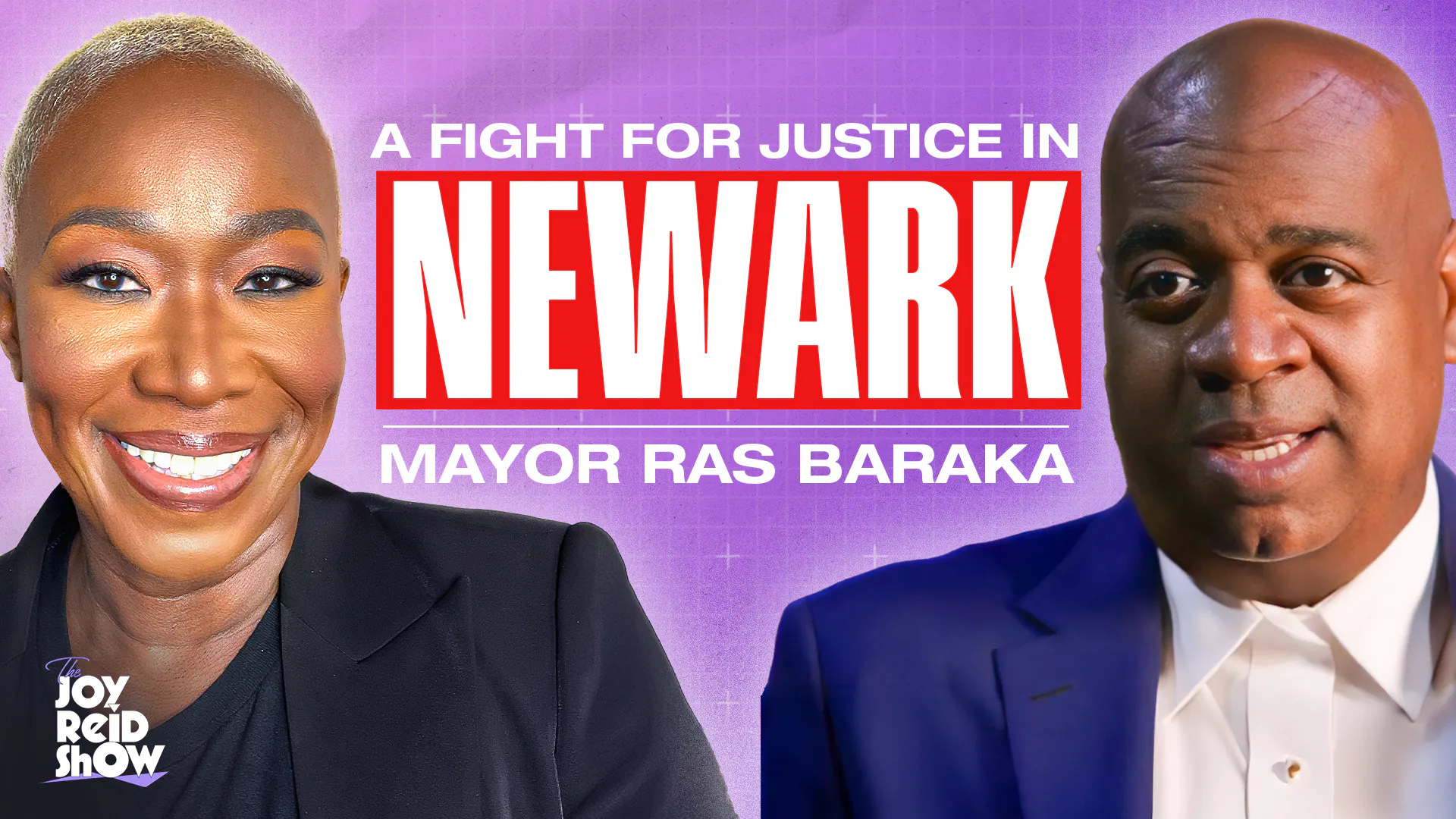
The Joy Reid Show
The Joy Reid Show Bonus Episode: Mayor Ras Baraka: A Fight for Justice in Newark, New Jersey
00:13:50
Loading summary
Transcript38 lines
- [00:01]
LifeLock Ad
This episode is brought to you by LifeLock. Between two factor authentication, strong passwords, and a VPN, you try to be in control of how your info is protected. But many other places also have it, and they might not be as careful. That's why LifeLock monitors hundreds of millions of data points a second for threats. If your identity is stolen, they'll fix it, guaranteed, or your money back. Save up to 40% your first year.
- [00:26]
Unknown Speaker
Verify.
- [00:26]
LifeLock Ad
Visit lifelock.com podcast for 40% off. Terms apply.
- [00:30]
Joy Reid
Welcome to this special preview of the Joy Reid Show. I recently sat down with Democratic mayor of Newark, New Jersey, and candidate for governor Ross Baraka about his recent arrest in a case that's since been dropped regarding his attempt to perform oversight over a private prison in his city of Newark, New Jersey. I also talked to him about major issues like what he would want to do as governor and also the rule of law as interpreted by the Trump administration. Take a look.
- [01:01]
Ross Baraka
I didn't know that this morning when I woke up that I'll be in this detention facility here, that I would end up incarcerated for something that I believe is my democratic right to show up and speak out against what I think was happening there. A violation of city and state laws and a lack of transparency.
- [01:27]
Joy Reid
Mayor Baraka, thank you so much for taking the time.
- [01:30]
Ross Baraka
Thank you for having me.
- [01:30]
Joy Reid
I want to start by talking about where we are right now. You were just speaking at the State of the People Power tour rally. Why did you feel it was important to be here, given all that you have going on?
- [01:39]
Ross Baraka
Well, one is in Newark, and I needed to be here and represent the city, but also because I think that it's important, especially now in this period, to have what's going on, to have a kind of organizing mechanism that's going around the country trying to rally folks in our community up so they can see what's happening and be a part of this moment.
- [02:00]
Joy Reid
Let's talk about what's happening. Delaney hall used to be a treatment facility. It was a place that was trying.
- [02:05]
Ross Baraka
To help people, drug treatment and for people coming home from incarceration. So it was a halfway house as well.
- [02:13]
Joy Reid
And so do you know the condition of the people that are being held there? We're assuming these are undocumented migrants, or do we even know?
- [02:21]
Ross Baraka
Well, that's what they say. Only thing we know is what they tell us. They're not transparent at all. They're not giving us any information at all. And that's part of the problem. Even with the certificate of occupancy, you have to declare, you know, what's happening in here, who's in here, who's gonna be in here. If it's children, if it's women, if it's families, if it's men. You have to say all of that, right?
- [02:42]
Joy Reid
You don't have the names of the people who are there. You don't know.
- [02:45]
Ross Baraka
We have no idea who's in that property.
- [02:47]
Joy Reid
So let's talk about this, because there have been stories claiming that you were outside of that facility, protesting. That you've been protesting outside the facility. Is that true?
- [02:55]
Ross Baraka
I never went there to protest. Every time I go there, I go every morning at 7 o' clock in the morning. I usually leave around 7:30, 7:45, because I know they're going to deny us entry. The objective here is to get them to deny us entry so we can, you know, kind of certify that, put it on the gate. So every time we go to court, we have a pattern of them denying entry to our folks. And we need people to witness that. And plus, our people don't want to go down there alone because they're afraid, right? And so I feel like we're going to send them there. We need to go with them. I told the business administrator we need to be with them. And I have to tell them, look, if they don't let you in, don't go. I don't want you to do anything to put your license in jeopardy. I don't want you to go to jail. If anybody gets in trouble, it'll be me. You're down here at the behest of the city. There are protesters down there. They've been down there every day and they got a right to do that. I mean, one day they asked me to speak, I got up and spoke to them, and I have a right to do that. But every day I go there for that and I leave. There's not one day that I went down there to protest. The day that I got arrested, I went down there to support the Congress people. You know, they invited me to a press event that they were having after they were supposed to do the tour. That never happened, but it was ice. Officials and soldiers and police officers with masks, they were all out there. Nobody said anything to me. Nobody talked to me, nobody asked me anything. They didn't say, leave, get out, beat it. They stood there. I stood there, and the guy who let me in stood there until an hour and a half later when the guy from Homeland Security came. Special agent in charge. Then he got into it with Me. Then the congress people came and he started tension off of me and started talking to them, yelling and screaming. Then, you know, he started threatening us. And the Congress, you know, said, let's go, we're leaving. I said, I'm leaving. He told me to get out. I left. You can see if you see the video. I walk out, I leave. He say, get out. I leave. I'm on the other side of the fence. Then one of the congressmen, congressman in there runs to the gate, say, they coming to lock you up. And you can hear me say why? I'm on the other side of the fence. They can't lock me up. So if this was like planned, I would have said, great, let me go and get. I said, why? They can't arrest me. I'm not on their property anymore. What are you talking about? And I stood there and then I saw you see him coming, right the, the, the Newark in me. I would have took off and gave chase, but at the end of the day, I just stood there because I couldn't believe it, honestly. I wanted to see what they really was going to do. And they did it. They went all the way.
- [05:49]
Joy Reid
And you're the only person who was.
- [05:51]
Ross Baraka
Arrested, the only one.
- [06:14]
Joy Reid
Wrong with you. She hasn't put your hands on me. What do you think that that signals to the country that, you know, I think that people have started to almost, in some ways, I hope not, become numb to seeing immigrants grabbed off the streets by men who did not have badges or uniforms being thrown into vans and taken away. This is starting to happen on a regular basis.
- [06:35]
Ross Baraka
Yeah.
- [06:36]
Joy Reid
And people are now seeing that continually with people who they know are immigrants. This is now an American mayor of the largest city in New Jersey, the son of a very famous poet, Ameri Baraka. Is your dad a well known figure and three members of Congress, all Americans. What does that signal to you?
- [06:57]
Ross Baraka
Well, authoritarianism. They're trying to intimidate people, bully you, and they're claiming that other people are grandstanding. This is the ultimate grandstanding what they're doing. They're trying to signal to the rest of the country that they're strong, they're powerful, they're in charge, and nobody can defy them. Signal their base that they're taking care of these Democrats and they're going to lock them up. If they do anything that they think is wrong or against their agenda, that they're going to do that, they don't care who they are, just put the fear in people. And hopefully people become paralyzed by this fear. Stop, stop, ma' am. Stop, stop, stop, stop.
- [07:55]
Joy Reid
And what do you expect to happen?
- [07:57]
Ross Baraka
Well, I mean, at this point, I don't really know. I know we have to go to court, and right now they're going to play it out. They're probably trying to use it as leverage to get or do whatever they want to, whatever their objective is. In the end, if it's to keep me quiet or whatever it is, they're going to try to use that. They're wrong. We're right. And Paul Robeson said, the power in our demands is that what we ask for is correct. So at the end of the day, we didn't do anything wrong. I didn't do anything wrong, and I'm not going to acquiesce and make these people believe I did something wrong.
- [08:31]
Joy Reid
You're running for governor. You're in a Democratic primary. The primary is June 10th. You're the last I checked, you were running third in the polls. Mikey Sherrill is also running. The mayor of Jersey City is also in the race. Do you think that what happened to you will change people's conceptions in terms of what kind of a governor this state needs?
- [08:52]
Ross Baraka
I think people in the state of New Jersey, especially Democrats and a few independents, wanted that anyway. I mean, you could see people's commercials changing. When I first started running, I was automatically talking about from the beginning that we need to push back against what's happening in this country. Then Trump just got worse and worse and worse. And so that elevated what I was saying. And so now everybody else is talking about how they gonna push back against Donald Trump. So it changed. The talking point became a wedge issue about what he's doing. Taking people's Medicaid, closing veterans offices, all of this stuff scared the bejesus out of people. We're gonna shut down the Department of Education. People are afraid, you know, on both sides of the aisle, by the way. And so this changed, and people began talking about that more and more and more. And honestly, I think people want leadership now more than ever. And people are pretending to be progressive.
- [09:44]
Unknown Speaker
We are facing the most corrupt president this nation has ever had. He's attacking people. He's attacking Medicaid. He's attacking the Department of Education. And what's worse than all this is that he seems to be doing a lot of this where cruelty is the point. This is not a federal government you can work with.
- [10:03]
Ross Baraka
We're not fighting hard enough to get these dollars back. And whatever dollars are there, we should get more of them to New Jersey.
- [10:09]
LifeLock Ad
For our taxpayers to help our families.
- [10:11]
Ross Baraka
I'm trying to figure out why they have to wait to become the governor to get more money back from the government, because that's their job as Congress people.
- [10:18]
Joy Reid
If you were the governor, if you became governor, what would be the difference in the way that you would deal with the administration and, you know, the way maybe your opponents would?
- [10:28]
Ross Baraka
I mean, in terms of immigration, we need to stand in front of and pass the Immigrant Trust act here in New Jersey that codifies our police departments not working with ICE to do the things that they're doing, making sure immigrants have access to resources in the state of New Jersey, giving them access to lawyers, funding community based organizations so that they can be be represented. Especially people with green cards and student visas are being attacked because of what they believe and think. And professors and we need to unite with other states. I think that because people are doing an individual thing, Democrats are doing that you see a lot of people are beginning to waffle, right? So I think that if Gavin Newsom and Westmore and Pritchett and all these other people got together, Pritzker, excuse me. And all these other people, Maine, all these other people got together and formed the kind of united front, right, putting our ags together to push back, not just individual cases, but collective ones, sharing resources to push back against Donald Trump, that we had a collective agenda and not an individual one. I think we would be further along because people feel like they're out here on their own. You start to see Gretchen Whitmer, you start to see Gavin Newsom a little bit, peeling back, you know, trying to talk about how you're going to work with Trump. Even in a debate last night, they say to me, so how can people trust that you won't interfere with federal officers? And, you know, as the governor, would this be the right way to behave? At first, I didn't interfere with federal officers. That's number one. But number two, yes, I think it is the right way to behave. We're in a moral moment right now in this country. And history is going to judge people's behavior and their actions and their words during this time. Just like we judge everybody doing Jim Crow era, we judged everybody doing slavery or we judged everybody doing the Holocaust. America was being judged when people were marching and having rallies in New York City during the rise of Hitler. Like people judged that. They're going to judge what you're saying. Your silence is going to be judged in this moment. Because this is a chaotic moment, not just for the country, but for the world. Right? And so I think now you need to raise your voice more than ever.
- [12:36]
Joy Reid
Thank you for watching this special preview of the Joy Reid Show. Be sure to subscribe to this YouTube chann and stay tuned for the official debut of the show coming up in early June. Subscribe and share. Thank you all very much.
- [12:50]
Unknown Speaker
Hey, that's your free speech and blah, blah, blah. Because originally, when I lost the White House Correspondence, talk a little bit about.
- [12:57]
Joy Reid
How did they tell you? Did you get an email? Like, did. What happened? How did you find out you were no longer doing it?
- [13:02]
Unknown Speaker
My reps were like, you acted wild on a podcast and you lost White House Correspondence Center.
- [13:07]
Joy Reid
I was like, yeah, man. What did you say on the podcast?