
Podcast
The Kākā by Bernard Hickey
Hosted by Bernard Hickey · EN
102episodes
Episodes
Newest firstAll episodes
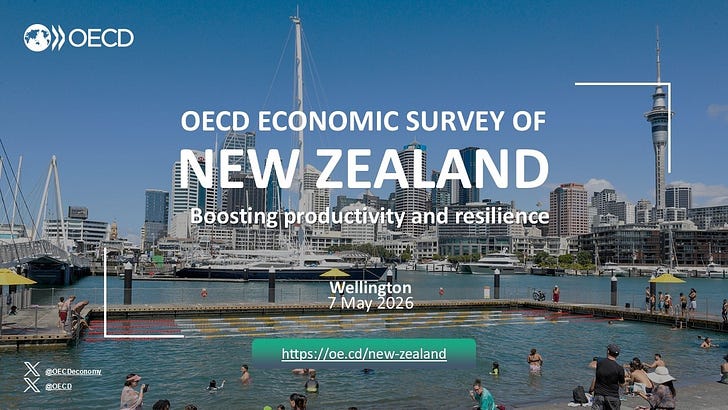
An OECD smorgasbord of reform ideas
May 700:17:39Tap to summarizeHere’s my daily Chorus in video, podcast and email form for both paying and non-paying subscribers, including my selection of the six key news items in Aotearoa’s political economy over the last day or so around housing, climate and poverty: * The OECD called on New Zealand to reform its overpriced electricity market and undersized stock market in its annual survey published yesterday, along with some ways to make NZ Superannuation more affordable in the long run. (See more detail below and in the video above)* The Climate Commission published its second National Climate Change Risk Assessment Report yesterday, pointing out: 97% of government spend is on responding to natural hazards and only 3% on building resilience, while more than half a million buildings were already exposed to inland flooding, with at least $235 billion at risk; and, damaging storm events now happen weekly vs monthly 15 years ago.* The Opportunities Party (TOP) this morning released details of its election policy for a $19,400 tax-free Universal Basic Income and a tax-free Kiwisaver 2.0 scheme phasing in contributions of 6% from employees and 6% from employers.* Oil prices fell 3% overnight on hopes the US and Iran might agree to begin peace talks after opening the Strait of Hormuz, but the details are frustratingly opaque and yet to be confirmed in a way to give any fuel price relief any time soon.* Protest marches calling for lower fuel taxes are planned in 43 towns for next Saturday. They’re being organized and amplified by through social media linked to anti-vaxx and anti-mandate protest groups, but say they don’t want to unleash Irish-style violent protests.* Police have contacted a New Zealand woman over a Facebook post that suggested the India Free Trade Agreement would begin a “mass immigration invasion” after a complaints about social cohesion. Police Minister Mark Mitchell said Police should not have contacted her, Henry Cooke reports for The Post-$.An Early Bird version of this was sent to paying subscribers earlier today with my fuller Pick’ n Mix lists of links and detail. Subscribe as a paying subscriber for the fuller and earlier version and to get access to the Substack Live version of the video above. The presentation used in the video is attached at the end of this email.The OECD lays out a smorgasbord of reform ideasThe big news yesterday for those looking for fresh ideas for economic and political reform was the annual OECD survey. The focus this year was on pensions and the electricity market, and also on capital raising by companies and the NZX, including plenty of interesting detail and charts.The OECD has come out bluntly and said the gentailor payout ratios are too high and electricity prices in New Zealand are too high. The OECD is suggesting some interesting ways on how to fix this, in particular a so-called firming market to try to break the connection between volatile international gas prices and our domestic electricity prices. This idea of a ‘firming’ market is where people are able to invest in non-fossil fuel electricity, which can be traded and in effect help replace some of the gas, which is helping to drive prices at the moment.Cheaper ways for SMEs to raise moneyThe OECD has also spent quite a bit of time looking at the capital raising and ability of small to medium businesses in New Zealand to borrow money or to get equity investment to grow. We have a relatively low amount of growth among small to medium businesses and not much capital raising from our stock market, which it turns out the OECD says is very expensive and small relative to GDP.One of the issues here is that SMEs find it difficult to get real loans in their own right. And that’s because our banks are much more interested in lending to people against their homes. And if they are lending to small business, typically it’s actually against the business owner’s home. And so what we’re seeing here is that loan rejection rates are quite high in New Zealand relative to other countries, according to the OECD. And it’s proposing that people in KiwiSaver funds and KiwiSaver funds can put money into a type of small business market using sort fund investment type systems, which is sort of interesting. The OECD idea has come up at the same time as the Reserve Bank has taken a look at profit margins charged by banks for lending to small businesses, which are also significantly higher than other countries and notably higher than in Australia. The other area where the OECD has come up with some new ideas is around our New Zealand Superannuation system.They proposed changing the way we tax our savings. At the moment, before you put money into a KiwiSaver account, it is taxed. And then while it’s in the KiwiSaver account, the earnings from that are taxed. And it’s only not taxed when you pull the money out. Now in other countries, that’s not how it works. You get a tax break going in, you’re not charged tax on earnings that you put into some sort of pension fund. And often while it’s in the fund, it doesn’t get taxed either.And that means by the end of it, you’ve got a much bigger chunk of money. And that’s when the returns or the withdrawals get taxed. The OECD worked out you’d actually get a lot more funds in these pension funds if you didn’t tax it on the way in and while it was in.My Top Six Pick ‘n Mix* Scoop: Cecile Maier for BusinessDesk-$: Drury-linked startups speak on harassment allegations* Scoop: WSJ-$ (gift): Saudi Arabia, Kuwait Lift Restrictions on U.S. Military Access to Bases, Airspace* Interview for 1News: 1News: Jacinda Ardern opens up on Sydney life - ‘taking it as it comes.’ ‘The former PM joked she had considered putting “washed-up politician” on flight arrival cards into Australia.* Deep-dive by Lauren Crimp for RNZ: David vs the Media: Has Seymour gone too far?* Op-Ed by Waikato Uni’s Tahu Kukutai, John Bryant, and Polly Atatoa Carr for The Conversation: NZ is overdue for a population strategy – but there is only so much governments can do* Interview with Quilae Wong by Alexia Russell for RNZ/Newsroom’s The Detail: The party that would be everyone’s coalition friendCartoon du JourTimeline-Cleansing Nature PicCheersBernard This is a public episode. If you'd like to discuss this with other subscribers or get access to bonus episodes, visit thekaka.substack.com/subscribe
Transcribe →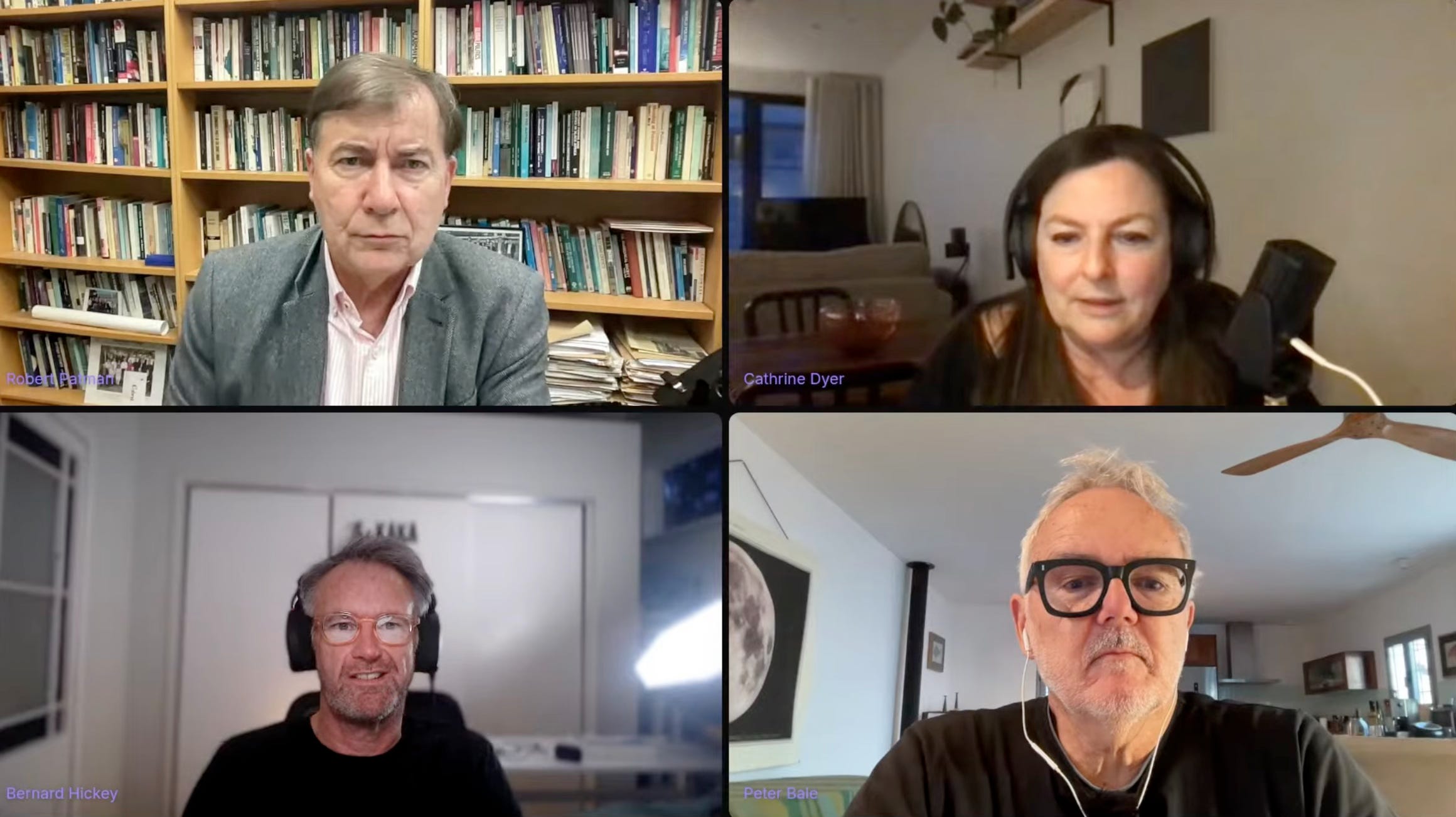
The Weekly Hoon: The fuel & climate crises, plus deliberative democracy
May 700:58:42Tap to summarizeThe podcast above of the weekly ‘Hoon’ webinar for paying subscribers on Thursday night featured co-hosts Bernard Hickey & Peter Bale talking with regular guests Cathrine Dyer from Wellington and Robert Patman in Dunedin about geopolitics, the economy, climate change and politics.This edition also includes a discussion with special guest Iain Walker, who is an expert in deliberative democracy and Executive Director of the newDemocracy Foundation (nDF) in Australia. He is visiting Wellington, Queenstown and Auckland next week for public meetings on deliberative democracy. Here’s the details.This week:* Bernard and Peter began with a chat about the global situation and how the Reserve Bank and the Government were sleepwalking into tightening fiscal and monetary policy into the face of a global supply shock.* Bernard, Peter and Cathrine then talked about yesterday’s report from the Climate Commission about priorities for climate action.* Then Robert talked about the latest in the Middle East, China and New Zealand’s food-for-fuel deal with Singapore.* Then Bernard and Peter finished with a discussion with Iain about deliberative democracy.The Hoon’s podcast version above was recorded on Thursday night during a live webinar for over 200 paying subscribers and was produced and edited by Simon Josey. The Hoon won the silver award for best current affairs podcast in last year’s New Zealand Podcast awards. (This is a sampler for all free subscribers and anyone else who stumbles on it. Thanks to the support of paying subscribers here, we’re able to spread my public interest journalism here about housing affordability, climate change and poverty reduction other public venues. Join the community supporting and contributing to this work with your ideas, feedback and comments, and by subscribing in full. Remember, all students and teachers who sign up for the free version with their .ac.nz and .school.nz email accounts are automatically upgraded to the paid version for free. Ngā mihi nui.Bernard This is a public episode. If you'd like to discuss this with other subscribers or get access to bonus episodes, visit thekaka.substack.com/subscribe
Transcribe →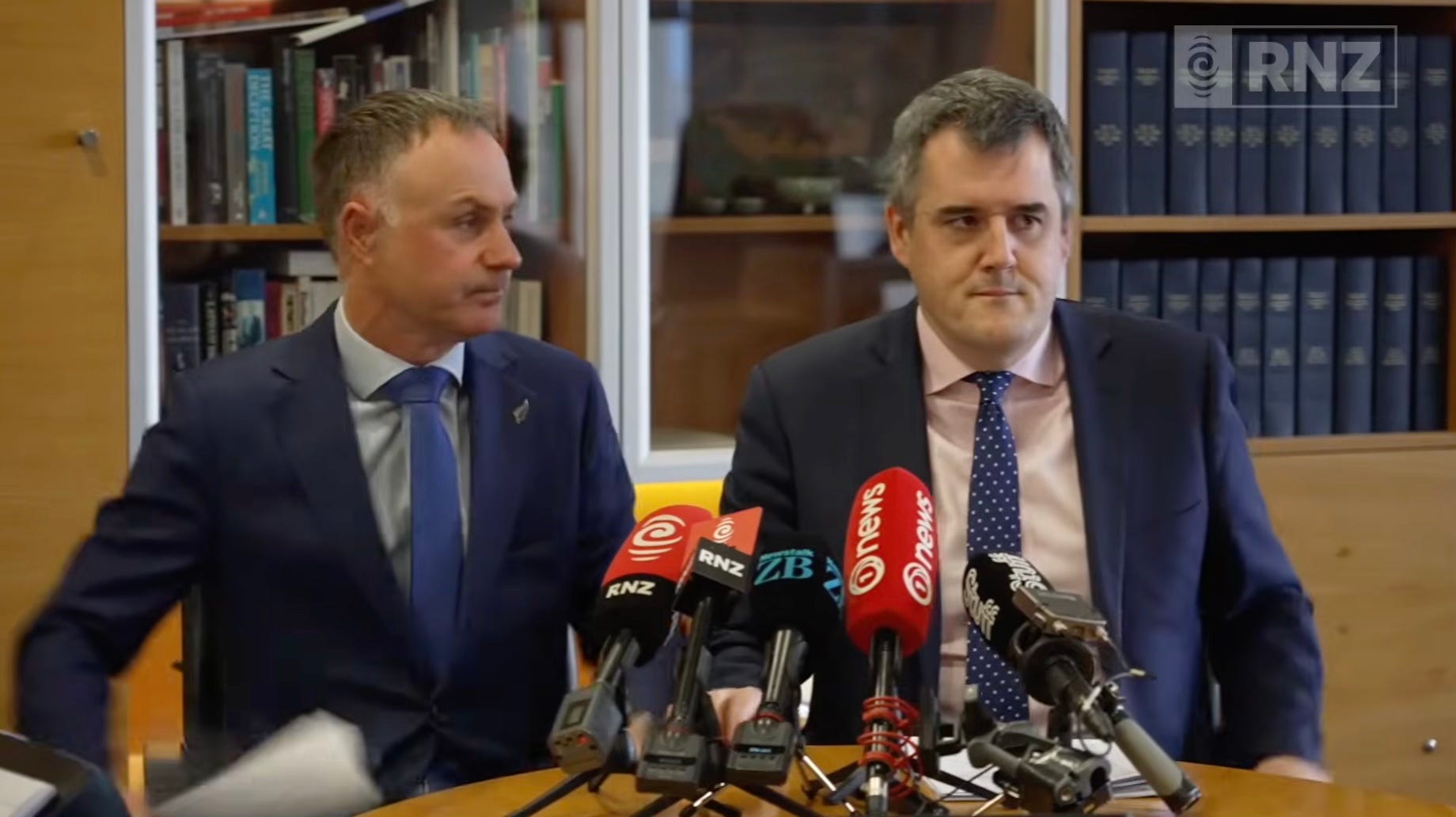
The hunt for magical merger efficiencies goes on
May 500:27:37Tap to summarizeHere’s the six things that stood out to me in Aotearoa’s political economy in the last day around housing, climate and poverty:* Chris Bishop has dumped his plan to dismantle regional councils and replace them with mayoral committees, instead telling councils to present their amalgamation plans to the Government within 90 days or ‘we will do it for you.’ * The ultimatum is the latest in a multi-decade series of Government pleadings and orders to councils under both Labour and National to amalgamate to find synergies and make it easier to find private capital for infrastructure. It’s driven by their bipartisan and doctrinaire belief that central Government should squeeze itself under 30% of GDP. To do that, it always needs to get someone else to pay for the infrastructure to cope with the migration-led population growth the Government enables and benefits from. Meanwhile, councils get none of the GST or PAYE from population growth, but own 35% of infrastructure, and get 11% of taxes to fund it.* Unions Wellington will present an in-sourcing proposal to the Wellington City Council tonight, estimating the Council could save $65 million by bringing legal and engineering work back in-house.* The Investigation of the Day is from Chris Knox and Ben Leahy at NZ Herald-$ documenting how Kainga Ora has sold 777 state homes for $330 million since July 2025, including 34 Auckland homes sold for 13% less than their 2024 Council Valuations (CVs).* Business groups and unions have written a joint letter to Employment Relations Minister Brooke van Velden calling for changes to Health and Safety law changes that exempt small businesses and loosen laws written after the Pike River disaster.* Deep-dive of the day: FTAlphaville’s Robin Wigglesworth wrote overnight global oil analysts were increasingly worried about a growing risk of a ‘non-linear spike’ in oil prices as oil stocks near rock bottom.The presentation used in the video above and the video above are available to paying subscribers, with the PDF of the presentation and more details in text and chart form below the paywall fold. Usually this is point where the article goes behind the paywall. But I’ve decided to open this one up immediately to all as a taster to see what you get. Subscribe as a paying subscriber if you want to support my work doing this. An eternal hunt for magical merger gains & private capitalThe magical thinking goes on and on. It’s about time someone called b******t on it because it’s not working. It never worked. It won’t work. But it goes on because the eternal hunt for the magic solution to infrastructure funding that doesn’t require ratepayers or taxpayers to pay allows everyone to believe in the magic, without taking the tough decisions. Denial, delay and deflection are essential tools for modern politicians.For at least 20 years Governments of both the Labour and National varieties have been on a quest to squeeze the size of central Government below 30% of GDP, while also trying to get someone else to pay to build and maintain the infrastructure needed to cope with the migrant-led population growth enabled by their central Governments, which collected all the GST and PAYE from that growth.The problem is councils own 35% of the infrastructure and get just 11% of all taxes, and none of the GST and PAYE. So the incentives to unleash population growth are horribly skewed, leading to population growth without the infrastructure and constant fights between councils and the Government over who will and should pay.Government doesn’t want to pay because that would imply higher taxes. Councils don’t want to pay because that implies higher rates. Government loves population growth because it buys easy and fast GDP growth without the immediate need for investment funded by either (or both) taxes or debt. So we end up with a constant fight between councils and Government, with councils calling for shares of GST and capital grants from Government, and the Government telling the councils they need to spend less on ‘nice to haves’ and bring in private capital to fund the infrastructure.Both Labour and National have tried to rewrite the laws to make it easier for both councils and the Government to bring in private capital to pay for infrastructure. Labour tried in 2020 with the Infrastructure Funding and Financing (IFF) Act, which was supposed to unleash a welter of council bond issues from special purpose vehicles to private investors, which would be funded by levies on homeowners in new developments. It was modelled on the Milldale development on the North Shore.But just two projects used the IFF in five years because it was more expensive than simply issuing council or Government bonds and it turns out bond investors didn’t want fiddly and small scale bonds linked to specific projects. It also didn’t take into account that densification plans actually needed water and transport network-wide investments, rather than greenfield investment, which the IFF was designed for.Bishop is now trying to amend the IFF to make it easier to do bigger and wider deals that include both NZTA and KiwiRail, and that incorporate changes to development levies that are also being proposed, which are also designed to front load and offload the big capital costs of infrastructure to the new residents of cities and new home owners. That’s different from the 1930s to 1990s when existing taxpayers and ratepayers fronted up as a group to pay upfront so that future residents would get the benefits. Then along came the theory that existing residents shouldn’t pay for new ones (but should collect the benefits).Abracadabra all over again. And again. And again.It’s a dumb and failed idea that simply led to population growth without enough well-maintained infrastructure, and allowed both politicians and voters to pretend they could have it all.Aside from the IFF reform and the development levy reform, both Labour and National Governments have believed the magic solution required both a new Resource Management Act and bigger councils able to do bigger projects with bigger bond issues that fund managers might actually bother to look at and analyse. The theory was that (somehow) merged councils would be more efficient too.The model here is the ‘Super City’ that slammed together the Auckland Councils. To be fair, it has eventually led to some more public transport projects and the Auckland Unitary Plan, but I have yet to see proof it actually reduced costs per extra household.Auckland is a special case too. It does have the scale for a single big Council. Canterbury and Wellington might, but even then the gains are small. Labour tried to solve the water infrastructure part of the issue with Three Waters, which National, ACT and NZ First picked off with a campaign targeted at the co-governance aspect of it. National has now co-opted Three Waters in its Local Water Done Well plan, shorn of co-Governance and many of the scale benefits. Both were designed to smuggle user pays for water across most councils who had yet to adopt the Auckland/Watercare model of using meters and volumetric charging. To create all these synergies and ‘big deals,’ the Government needs more amalgamations. The trouble is local voters don’t want them, and neither do local politicians. So we now have another attempt to force them through, despite National saying in the last election campaign they would not do that and were all in favour of ‘localism.’‘I didn’t need a mandate’ Bishop acknowledged that yesterday, saying:“We didn’t campaign on local government reform. That doesn’t mean the Government can’t do it.” Bishop in the news conference below.Give up already on the 30%. There’s good reasons why it has to rise.The guts of all this is the Government is still hunting for the magical solution when bond investors and ratings agencies have been saying forever that all they want are simple Government and council bonds they can easily analyse and rely on. They are cheaper and easier to get, but require both central and local Government to accept that the size of Government has to rise above 30% of GDP in the long run. There’s good reasons for that change in the structure of the economy and the role of Government, including:* an ageing population inevitably costs Government a bigger share of GDP to look after, if it keeps the current promises of NZ Superannuation and publicly-funded healthcare;* healthcare costs keep rising because new drugs and technologies keep getting invented which are good, and the obesity and mental healthcare crises are increasing costs in the long run;* climate change is lifting the costs of transport and water infrastructure; and,* a population growing at 1.5-2.0%, as New Zealand has on average for the last 25 years, cannot grow sustainably without a bigger commitment to publicly-funded infrastructure, which is the cheapest, simplest and fastest kind.Briefly in the news this morningIn Aotearoa’s political economyThe Government told councils to propose amalgamations within 90 days or they would do it for them; and, ANZ reported spending through its cards in April fell 2.4% from March sales increased fuel spending forced consumers to cut discretionary spendin...
Transcribe →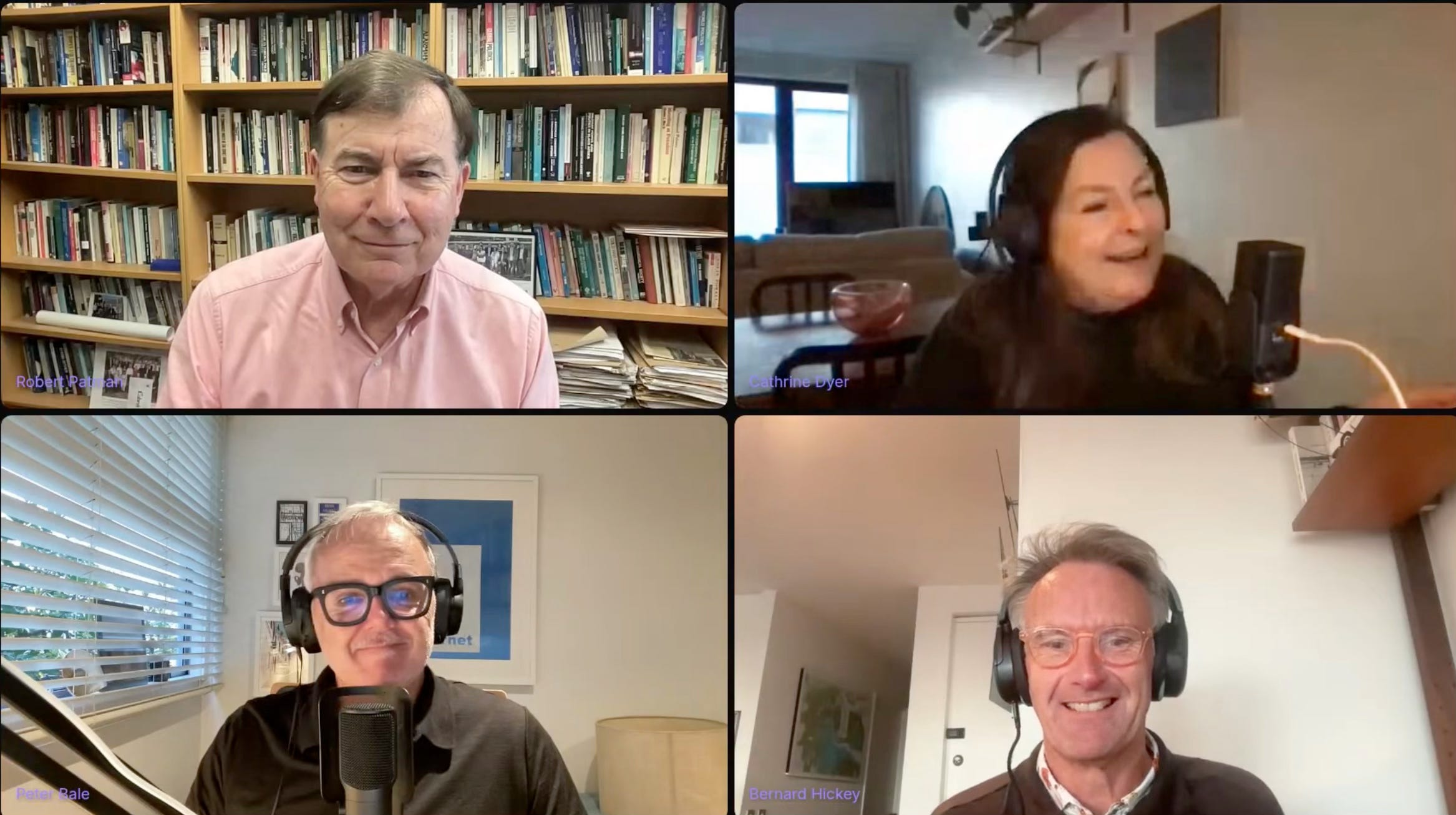
The Weekly Hoon: The Middle East fuel crisis & more
Apr 3000:55:54Tap to summarizeThe podcast above of the weekly ‘Hoon’ webinar for paying subscribers on Thursday night featured co-hosts Bernard Hickey & Peter Bale in Auckland talking with regular guests Cathrine Dyer from Wellington and Robert Patman in Dunedin about geopolitics, the economy, climate change and politics.This edition also includes a discussion with special guest Paul Spoonley about his report this week with Peter Gluckman and Georgia Lala for Koi Tū (Centre for Informed Futures) titled: People, Place & Prosperity - The case for a population strategy.This week:* Bernard and Peter began with a chat about the conflict in the Middle East and the fuel crisis, along with Christopher Luxon’s clash this week with Winston Peters over Luxon’s initial plan to express New Zealand’s support for the US attack on Iran.* Bernard, Peter and Cathrine then talked about this week’s warning from Earth Sciences NZ about a formidable El Niño later this year and this report showing Europe’s climate warming twice as fast as the rest of the world.* Then Bernard finished with a discussion with Paul about population strategy.The Hoon’s podcast version above was recorded on Thursday night during a live webinar for over 200 paying subscribers and was produced and edited by Simon Josey. The Hoon won the silver award for best current affairs podcast in last year’s New Zealand Podcast awards. (This is a sampler for all free subscribers and anyone else who stumbles on it. Thanks to the support of paying subscribers here, we’re able to spread my public interest journalism here about housing affordability, climate change and poverty reduction other public venues. Join the community supporting and contributing to this work with your ideas, feedback and comments, and by subscribing in full. Remember, all students and teachers who sign up for the free version with their .ac.nz and .school.nz email accounts are automatically upgraded to the paid version for free. Ngā mihi nui.Bernard This is a public episode. If you'd like to discuss this with other subscribers or get access to bonus episodes, visit thekaka.substack.com/subscribe
Transcribe →
Willis still believes a rapid oil price fall is likely
Apr 2400:23:38Tap to summarizeIn the news this morning from Aotearoa’s political economy around housing, climate and poverty:* Nicola Willis is confident oil prices will drop soon and save the economic recovery the Government has relied on to get re-elected, even though experts globally are increasingly concerned the Strait of Hormuz will stay closed for many more months and cause a global recession.* Productivity statistics published yesterday showed New Zealand’s labour productivity collapsed to barely a tenth of its long-run average in the four years after Covid. One reason is research and development investment remaining at half the OECD average, thanks to most businesses and households directing their savings instead to leveraged and still tax-free residential property worth $1.6 trillion.Paying subscribers joined me for the recording of my daily Chorus above earlier today. I’ve opened all of this post up for all paying and non subscribers today as a sampler.Willis still sees oil prices down soon. Oil experts don’t.Finance Nicola Willis said yesterday she believed advice from Treasury that New Zealand’s economic recovery has only been delayed by the fuel crisis, rather than derailed. She said a rapid fall in the oil price was still the most likely scenario, rather than the worst-case scenario put forward by Treasury of an extended period of oil being US$180 a barrel or higher, which it forecast a month ago would lead to 0.8% GDP growth this year and 7.4% inflation. That confidence is despite the ‘wholesale’ price of diesel at Singapore’s refineries being US$193 a barrel yesterday and oil industry experts expecting the Strait of Hormuz to be closed for months, with many more months of constrained supply after that. The Economist-$ reported last night that global oil markets were on the ‘verge of disaster,’ the FT-$ reported oil industry executives warning this week of an unprecedented hit to the global economy. This interview on Bloomberg TV with industry analyst Paul Sankey via Youtube captures the mood of the sector this week.The US Navy also warned Congress overnight that it would take six months to clear mines from the Strait of Hormuz. Donald Trump has pledged to keep blockading the Strait until Iran agrees to give up its nuclear material. Iran doesn’t want to give up its nuclear ambitions, seeing what happened to Libya when it gave up its ambitions, and how North Korea is now untouched because it does have nuclear weapons. It has also discovered how much power it can wield over the United States and the rest of the world simply by throwing a few mines into a small patch of sea from a few speedboats. The experts and the wisdom of the crowds sees months-long closurePrediction markets now see only a 60% chance of the Strait being open by the end of June, down from a 92% chance seen on April 18 immediately after a now-indefinitely-extended ceasefire was called. Most US oil and gas executives don’t expect the Strait to be opened until August at the soonest, with more than 30% expecting to remain closed beyond November, when New Zealand’s General Elections are scheduled.Our productivity disaster in one table and a chartMy Picks n’ MixesTop Six* Scoop: Henry Cooke for The Post-$: Government considered $350 payment to everyone making under $100k* Reportage: RNZ: Residents and businesses count cost of Wellington floods* Deep-dive: WSJ-$ (gift): Air War in Iran Gives Way to Crippling Stalemate* Feature: Nancy Keates for WSJ-$ (gift): Burnt-Out Doctors Leave U.S. for Timaru* Analysis: Te Aniwa Hurihanganui for 1News: Govt risks another colossal hīkoi* Op-Ed of the day: Sean Whittaker for ODT: Trust endangered by donation rulesScoops & Investigations elsewhere* Marc Daalder for Newsroom Pro-$: Ministers knew one thing on methane target rollback, the public another* Christopher Pugsley for The Listener-$: Cost-cutting threatens invaluable guide* Pheobe Utteridge for Stuff: Inside the mouldy lunch investigationPolitics, Geopolitics, Economy & Business* Deep-dive by Jake Kenny for Stuff: Bernard Whimp used investor funds himself* NZ Herald Video: How algorithms are quietly rewriting the stateHousing, Transport, Infrastructure & Councils* Azaria Howell: Goldsmith backs move-on orders despite cost warnings* Jonathan Milne for Newsroom: Bishop orders cost-benefit review of RONS* NZ Herald Video: NZ house sales keep falling as first-home buyers drive demand* RNZ Morning Report: ‘$49 billion over next 10 years’: The big bill to fix our pipes* ODT: Otago can handle the tourism boom, but only if we build smarterPoverty, Health, Education, Incomes, Living Costs, Justice & Crime* Damien Venuto for Stuff: The Kiwi dream of ‘work hard, live well’ is dying* NZ Herald: Massage business fined $210k for ‘egregious’ exploitation of workersClimate & Environment* Nick James for The Post-$: Council cash unlikely if buyouts needed* Peter de Graaf for RNZ: Housing planned for flood zone ‘beyond belief’, locals sayGood news & Solutions* Malisha Kumar for Waikato Herald: Job boost: $100m Waikato steel plant* Leonie Sheehan for Gisborne Herald: New bowel screening project comingCartoon of the day: To India, driver!Ka kite ano, Bernard This is a public episode. If you'd like to discuss this with other subscribers or get access to bonus episodes, visit thekaka.substack.com/subscribe
Transcribe →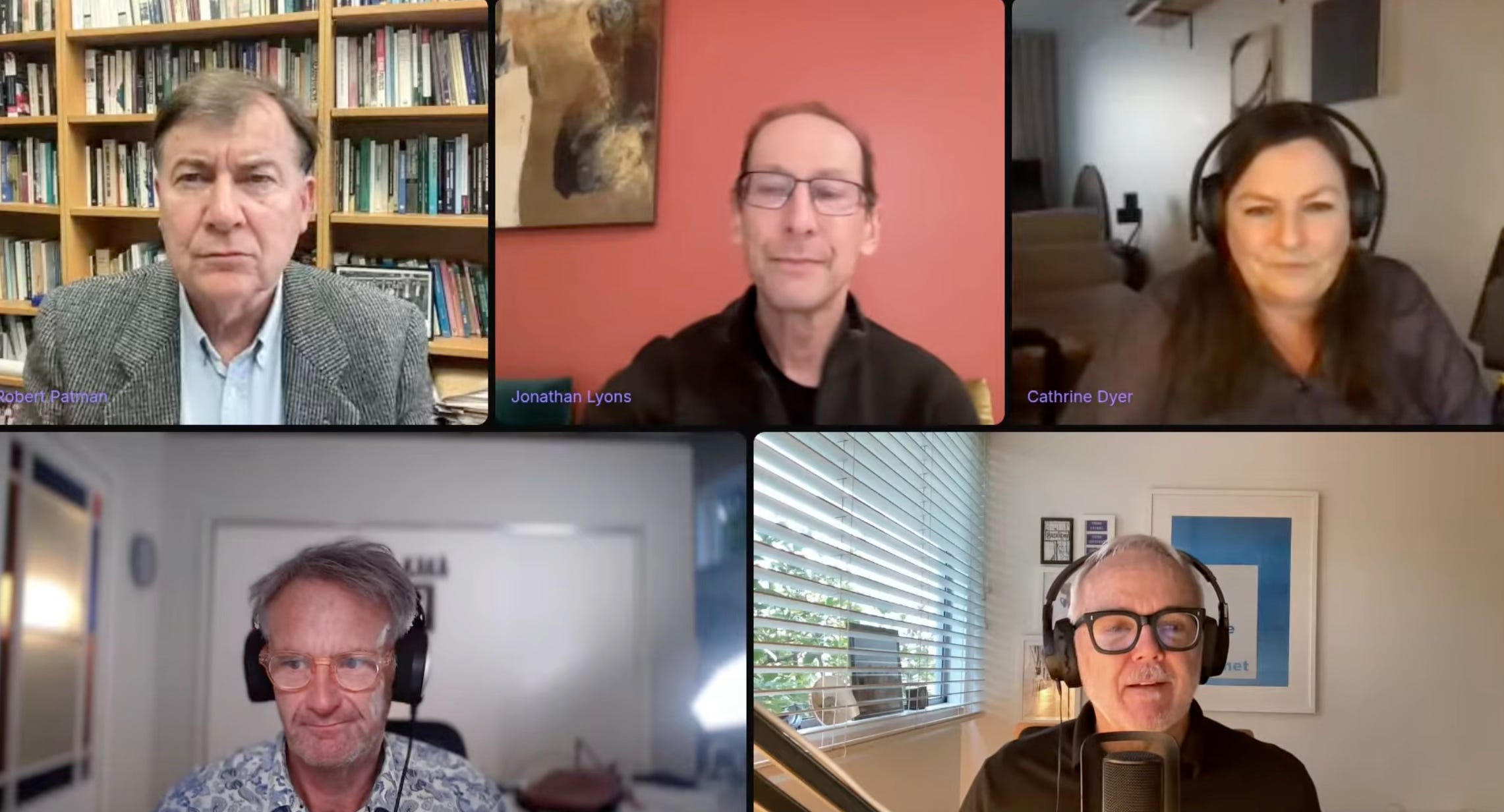
The Weekly Hoon: The Middle East fuel crisis & more
Apr 2300:59:42Tap to summarizeThe podcast above of the weekly ‘Hoon’ webinar for paying subscribers on Thursday night featured co-hosts Bernard Hickey & Peter Bale in Auckland talking with regular guests Cathrine Dyer from Wellington and Robert Patman in Dunedin about geopolitics, the economy, climate change and politics.This edition also includes discussions with special guests Jonathan Lyons, PhD from Vancouver and Shamubeel Eaqub in Auckland on Iran and social cohesion in New Zealand, respectively.This week:* Bernard and Peter began with a chat about the conflict in the Middle East and the fuel crisis, along with Christopher Luxon’s leadership vote in the National Caucus and the ensuing clash with Winston Peters. * Bernard mentioned in passing a podcast series he recently listened to on the Suez crisis and compared New Zealand’s current fuel crisis to the 1973 fuel crisis. Peter referred to a Guardian article about Donald Trump’s voter fraud claims this week. He also referred to a podcast on Israel and a collapse in US voter support for Israel mentioned in an Ed Luce article in the FT. Bernard mentioned a WSJ-$ article on the drama in Trump’s White House.* Bernard, Peter and Cathrine then talked about this week’s report from The Macdiarmid Institute on CleanTech. There’s more commentary on that from the Science Media Centre. Cathrine mentioned the ideas of Joseph Tainter, who wrote a book called The Collapse of Complex Societies.* Bernard, Peter, Robert and Jonathan talked about events in the Middle East, including the history of the Islamic Revolutionary Guard Corps (IRGC) and Jonathan’s substack post about how the assassination Iran’s Supreme Leader Ali Khamanei also killed off his religious edict against nuclear weapons.* Bernard, Peter and Shamubeel talked about yesterday’s second annual Social Cohesion in New Zealand report from the Helen Clark Foundation.The Hoon’s podcast version above was recorded on Thursday night during a live webinar for over 200 paying subscribers and was produced and edited by Simon Josey. The Hoon won the silver award for best current affairs podcast in last year’s New Zealand Podcast awards. (This is a sampler for all free subscribers and anyone else who stumbles on it. Thanks to the support of paying subscribers here, we’re able to spread my public interest journalism here about housing affordability, climate change and poverty reduction other public venues. Join the community supporting and contributing to this work with your ideas, feedback and comments, and by subscribing in full. Remember, all students and teachers who sign up for the free version with their .ac.nz and .school.nz email accounts are automatically upgraded to the paid version for free. Also, here’s a couple of special offers: $3/month or $30/year for under 30s & $6.50/month or $65/year for over 65s who rent.)Ngā mihi nui.Bernard This is a public episode. If you'd like to discuss this with other subscribers or get access to bonus episodes, visit thekaka.substack.com/subscribe
Transcribe →
Tuesday's Chorus Live with Bernard Hickey
Apr 2100:24:27Tap to summarizeThis is a public episode. If you'd like to discuss this with other subscribers or get access to bonus episodes, visit thekaka.substack.com/subscribe
Transcribe →
Saturday Soliloquies Live with Bernard Hickey
Apr 1800:11:58Tap to summarizeThis is a public episode. If you'd like to discuss this with other subscribers or get access to bonus episodes, visit thekaka.substack.com/subscribe
Transcribe →
Friday's Chorus Live with Bernard Hickey
Apr 1700:13:16Tap to summarizeThank you Trinity, Max Du Frene, and many others for tuning into my live video! Join me for my next live video in the app. This is a public episode. If you'd like to discuss this with other subscribers or get access to bonus episodes, visit thekaka.substack.com/subscribe
Transcribe →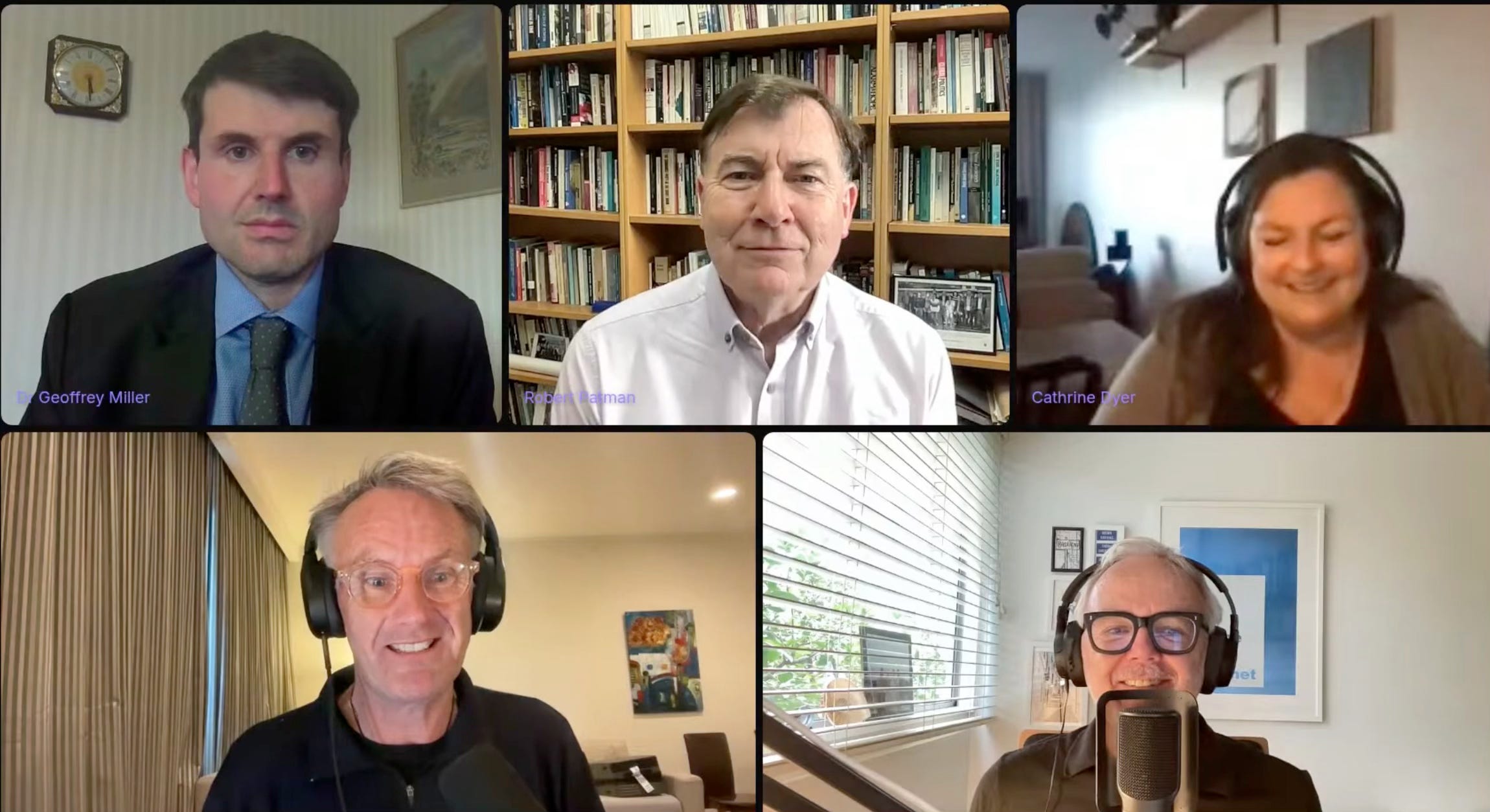
The Weekly Hoon: The Middle East fuel crisis & more
Apr 1600:59:27Tap to summarizeThe podcast above of the weekly ‘Hoon’ webinar for paying subscribers on Thursday night featured co-hosts Bernard Hickey & Peter Bale talking with regular guest Cathrine Dyer about geopolitics, the economy, climate change and politics.This edition also includes discussions with with special guest Geoffrey Miller, a strategic analyst with a PHD in New Zealand’s relations with the Middle East.This week:* Bernard and Peter began with a chat about the conflict in the Middle East and the fuel crisis. They also talked about Bernard being in Wellington for the Kia Tika, Kia Pono—For A Just Society conference organised by Vic Uni’s Stout Research Centre for New Zealand Studies.* Bernard, Peter and Cathrine then talked about research via James Hansen about a Super Duper El Niño, and research on an increased risk the AMOC will collapse early.* Bernard, Peter, Robert and Geoffrey talked about events in the Middle East.The Hoon’s podcast version above was recorded on Thursday night during a live webinar for over 200 paying subscribers and was produced and edited by Simon Josey. The Hoon won the silver award for best current affairs podcast in last year’s New Zealand Podcast awards. (This is a sampler for all free subscribers and anyone else who stumbles on it. Thanks to the support of paying subscribers here, we’re able to spread my public interest journalism here about housing affordability, climate change and poverty reduction other public venues. Join the community supporting and contributing to this work with your ideas, feedback and comments, and by subscribing in full. Remember, all students and teachers who sign up for the free version with their .ac.nz and .school.nz email accounts are automatically upgraded to the paid version for free. Also, here’s a couple of special offers: $3/month or $30/year for under 30s & $6.50/month or $65/year for over 65s who rent.)Ngā mihi nui.Bernard This is a public episode. If you'd like to discuss this with other subscribers or get access to bonus episodes, visit thekaka.substack.com/subscribe
Transcribe →