
Podcast
The Kākā by Bernard Hickey
Hosted by Bernard Hickey · EN
102episodes
Episodes
Newest firstAll episodes

RBNZ’s Paul Conway on NZ’s inflation and productivity performance
Mar 2400:17:19Tap to summarizeThank you Korimako Song, Gaye Sutton Woodcock, Bryce Adams, Noeline moon, Tony Chamberlain, and many others for tuning into my live video! Join me for my next live video in the app. This is a public episode. If you'd like to discuss this with other subscribers or get access to bonus episodes, visit thekaka.substack.com/subscribe
Transcribe →
RBNZ Governor Anna Breman
Mar 2300:29:59Tap to summarizeThis is a public episode. If you'd like to discuss this with other subscribers or get access to bonus episodes, visit thekaka.substack.com/subscribe
Transcribe →
The Weekly Hoon: The Middle East fuel crisis & how NZ is handling it
Mar 1900:54:55Tap to summarizeThe podcast above of the weekly ‘Hoon’ webinar for paying subscribers on Thursday night featured co-hosts Bernard Hickey & Peter Bale talking with regular guest Cathrine Dyer about geopolitics, the economy, climate change and politics here, along with special guest Dileepa Fonseka , who is a columnist and reporter for BusinessDesk-$.This week:* Bernard and Peter began with a chat about the Iran war, the fuel crisis and Winston Peters’ move to block a ‘globalist’ WHO measure.* Bernard and Peter then spoke with Cathrine about increased demand for EVs and whether the fuel crisis represented a tipping point for climate action.* Then Bernard, Peter and Dileepa talked about the fuel crisis.The Hoon’s podcast version above was recorded on Thursday night during a live webinar for over 200 paying subscribers and was produced and edited by Simon Josey. The Hoon won the silver award for best current affairs podcast in last year’s New Zealand Podcast awards. (This is a sampler for all free subscribers and anyone else who stumbles on it. Thanks to the support of paying subscribers here, we’re able to spread my public interest journalism here about housing affordability, climate change and poverty reduction other public venues. Join the community supporting and contributing to this work with your ideas, feedback and comments, and by subscribing in full. Remember, all students and teachers who sign up for the free version with their .ac.nz and .school.nz email accounts are automatically upgraded to the paid version for free. Also, here’s a couple of special offers: $3/month or $30/year for under 30s & $6.50/month or $65/year for over 65s who rent.)Ngā mihi nui.Bernard This is a public episode. If you'd like to discuss this with other subscribers or get access to bonus episodes, visit thekaka.substack.com/subscribe
Transcribe →
Live with Bernard Hickey & Dr Bex on disability funding
Mar 1800:23:42Tap to summarizeThis is a public episode. If you'd like to discuss this with other subscribers or get access to bonus episodes, visit thekaka.substack.com/subscribe
Transcribe →
Live with Bernard Hickey
Mar 1800:13:13Tap to summarizeThis is a public episode. If you'd like to discuss this with other subscribers or get access to bonus episodes, visit thekaka.substack.com/subscribe
Transcribe →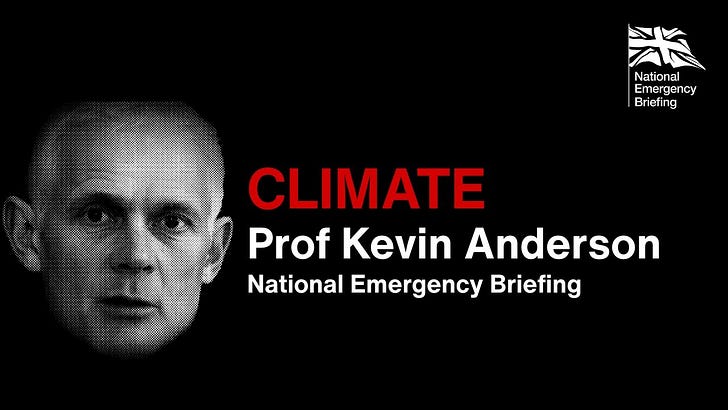
A Hoon on The Reality of Everything Symposium, interconnected crises & Climate Change
Mar 1800:32:51Tap to summarizeLast week I hosted a ‘Hoon’ on Substack Live previewing The Reality of Everything symposium to be held at Victoria University of Wellington on June 26, which will examine the interconnected crises of climate change, energy, water & food constraints, economic instability & public health.I was joined by regular Hoon guest Cathrine Dyer, conference speaker and Vic Uni Professor of Climate Change James Renwick and climate scientist Andy Reisinger, speaking independently and not in his role as a Climate Change Commissioner.We started by talking about the need for the Symposium and referring to the National Emergency Briefing held in the UK last year, including an address by Zennström Professor of Climate and Energy at Uppsala University and Chair of Energy and Climate Change at the University of Manchester, Professor Kevin Anderson. The video of his address is below via Youtube.We talked about the intersection of climate change with other crises, the realities of climate science, the urgency of action, and the systemic changes needed to address the climate crisis.Here’s Catherine’s substack post announcing the conference.And a follow-up post with the latest details.Here’s the chapters in the video above:00:00 Introduction to Climate Change and the Reality of Everything Conference01:25 Overview of the Reality of Everything Conference02:17 Insights from the UK National Emergency Briefing04:49 The Current State of Global Warming07:31 The Impacts of Climate Change and Tipping Points10:58 Radical Transformations Required for a Sustainable Future14:12 The Reality of Climate Change and Public Awareness16:57 The Necessity of Rapid Change19:33 The Consequences of Inaction22:18 Engaging Politicians and the Public24:44 The Role of Corporations and Governance27:15 Exploring Solutions at the ConferenceThank you Susan St John, Mike Joy, Paul Singh, Melanie, Brian Rathbone, and many others for tuning into my live video! Join me for my next live video in the app. This is a public episode. If you'd like to discuss this with other subscribers or get access to bonus episodes, visit thekaka.substack.com/subscribe
Transcribe →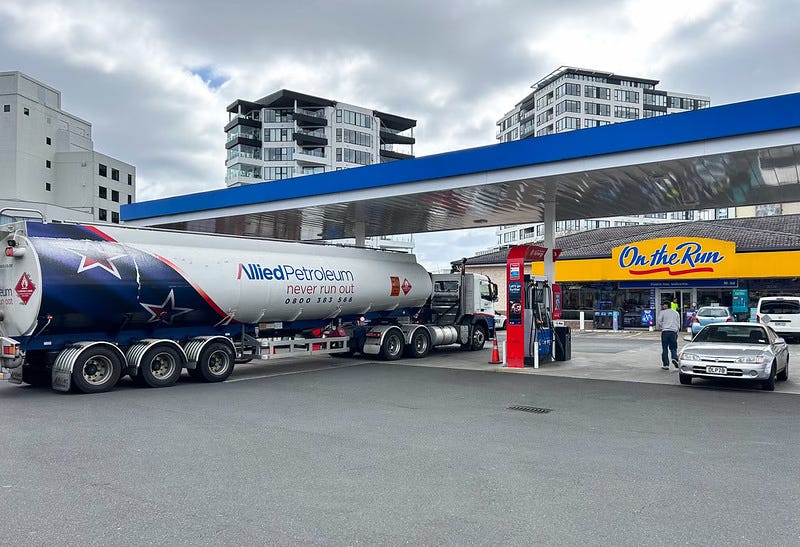
Govt prefers households take the pain instead
Mar 1600:14:10Tap to summarizeBriefly in the news in Aotearoa’s political economy around housing, climate and poverty Tuesday, March 17:* Finance Minister Nicola Willis has spelled out the terms of any Government help for households dealing with the fuel cost shock from the war in Iran, saying any help would have to be ‘timely, targeted and temporary,’ and could not worsen the Government’s Budget position.* She said the Government did not want to cut fuel taxes or suspend future fuel tax increases because drivers who didn’t need the help would also get the help, and it would increase Government borrowing.* Willis also rubbished suggestions of a new ‘cost of living’ payment for all and was reluctant to endorse suggestions for using Working for Families for payments.* In effect, the Government has decided households should use their own resources to deal with this economic ‘rainy day,’ rather than the Government.* That’s despite the Government’s debt being a third to a quarter that of households, relative to incomes, and its net interest costs being less than a fifth that of households.* Elsewhere, the pain for households is set to mount if banks choose to pass on the 60 basis points of rate hikes that wholesale markets now see later this year. Paying subscribers can see more below the paywall fold & hear more in the podcast above.Govt prefers households take the pain insteadIf this isn’t a rainy day, I’d like to know what is.Both Labour and National Governments have argued in the last 30 years against Government spending or higher taxes now on the grounds it was more important to have a big enough ‘buffer’ of low debt to deal with a ‘rainy day,’ such as a natural disaster or financial crisis.The argument being the Government would be in a better position than households to deal with a shock ‘out of the blue’ to incomes or infrastructure. This was why in 2008/09 the-then National Government ran big deficits to support the economy and avoided 1991-style austerity measures during the Global Financial Crisis. It’s why the previous Labour Government repeatedly provided across-the-board financial support to households and businesses in the form of wage subsidies, ‘cost of living’ payments and fuel tax cuts during Covid and the Ukraine war fuel price inflation.So it’s fair to ask whether the 30-50% shock of higher fuel prices now rumbling through the economy should count as another one of these ‘rainy days’. Nicola Willis indicated yesterday she thought this fuel crisis didn’t qualify as a rainy day yet, and even if it was, then the Government couldn’t afford to help much and households were best placed to absorb the shock.The trouble with that analysis is that the Government’s gross debt of around 40-50% of GDP is less than a third of household debt/GDP of around 150%, and the Government’s net interest costs at less than 2% of its revenues are a fifth that of households, who are currently paying 10% of their disposable income in interest costs.“I simply don’t accept the idea that giving subsidies to millionaires in Remuera would help those afflicted by high petrol prices.” Nicola WillisCharts of the day: ‘You absorb the shock. Not us.’Govt debt/GDP less than a third that of households……which means Govt interest costs are less than a fifth of households…Cartoon: ‘My mess is your mess now’Timeline cleansing nature picKa kite ano, Bernard This is a public episode. If you'd like to discuss this with other subscribers or get access to bonus episodes, visit thekaka.substack.com/subscribe
Transcribe →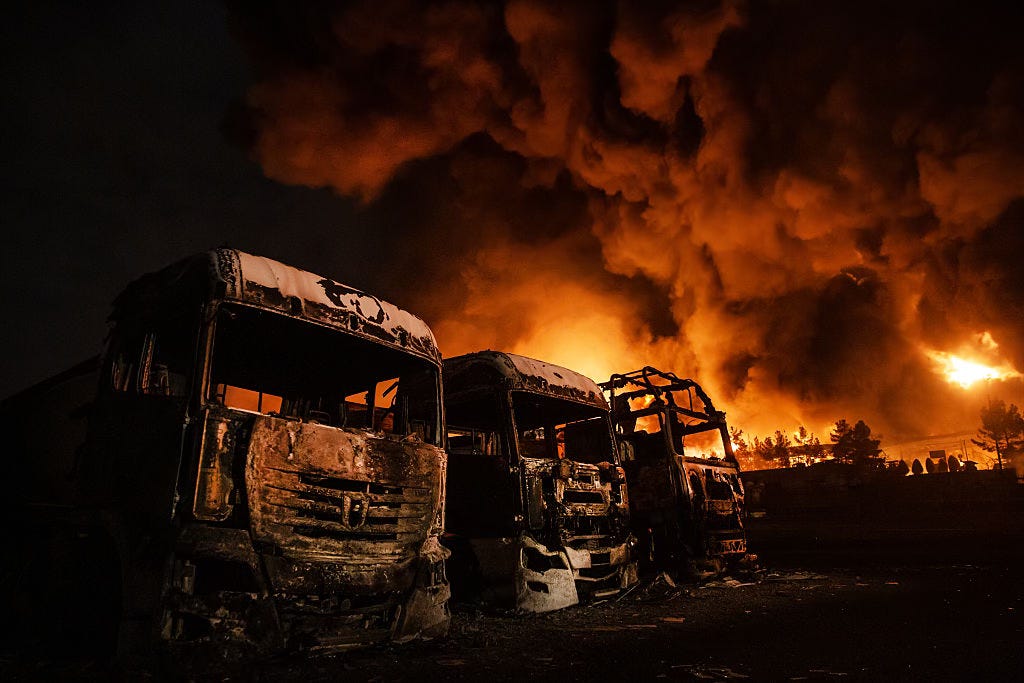
NZ faces a 1970s-style energy shock
Mar 1500:08:42Tap to summarizeBriefly in the news in Aotearoa’s political economy around housing, climate and poverty on Monday, March 16:* New Zealand’s political economy faces its biggest energy shock since the 1973 Yom Kippur war, which preceded an inflation and growth upheaval that unseated the-then Labour Government after one term, and led to a decade of stagnation.* Iran’s moves to block the Strait of Hormuz effectively just defeated the United States and Donald Trump, who cannot reopen the Strait quickly.* Without re-opening within a week or two, the Asian refineries that rely on oil going through the Strait of Hormuz will have to drastically cut production of diesel, petrol and jet fuel. Physical prices of jet fuel are now over US$200/barrel.* The conflict escalated last night with US strikes ‘totally demolishing’ Iran’s key Kharg Island terminal, Donald Trump said overnight, as he asked for other nations to help the US Navy reopen the strait.* To emphasise the success of Iran’s asymmetric warfare, its drone strikes shut the UAE’s main oil export terminal with a loss of 1 million barrels per day.* In my view, New Zealand should launch a war-styled decarbonisation on our economy, starting with rapid and massive importation of electric cars, trucks and buses, along with shiploads of solar panels and batteries from China to install over any roof facing north. Paying subscribers can see more below the paywall fold & hear more in the podcast above.Iran just beat the US. NZ now faces a 1970s-style shock We haven’t seen anything like this since the early 1970s. Most New Zealanders alive today have never experienced anything like it, and simply can’t imagine what it means, even though the signs of an economic shock are obvious and blaring of a clear and present danger to the New Zealand economy, including:* Singapore diesel futures prices are now over US$170/barrel, implying a doubling of wholesale diesel costs and a 75% rise in the cost of the fuel that runs the economy;* Jetfuel costs are already over US$200/barrel, implying a trebling of fuel costs for our domestic airlines and the international airlines that carry the source of our second largest export earners;* US and Israeli strikes on Iran’s military infrastructure are now escalating to its oil terminals and refineries, including the ‘total demolition’ of the Kharg Island export terminal for 90% of Iran’s oil;* Iran’s retaliation against Gulf states hosting US bases and its closure of the Strait of Hormuz has shut down production and export of 20% of the world’s crude oil and 30% of its LNG;* The United States cannot quickly and safely re-open the Strait because Iran’s ‘asymmetric’ rocket, missile, drone, artillery and mine forces are deadly in the close proximities of the Strait;* The closure and/or destruction of oil fields, refineries, terminals, tanks and pipelines in Saudi Arabia, the Gulf states, Iran and Iraq will take months to restart and/or repair to previous capacity, even if hostilities stopped immediately; and,* New Zealand depends on importing refined fuels from Asian refineries, which rely on the Middle East for over 60% of their crude oil feedstocks and will this week receive the last of the shipments that got through the Strait before the war started.‘Not much to see here. Move along now’However, New Zealand’s economic and political decision-makers, including Finance Minister Nicola Willis, Assistant Energy Minister Shane Jones and Foreign Minister Winston Peters have cautioned against ‘panic’ and downplayed the need for immediate action to preserve or ration the 50 days of fuel stocks either here or in the nine ships on their way here over the next 14 days. “We don’t need to ration it, because we know we have enough in the country for at least 50 days of provision at normal levels.” Nicola Willis in the Q+A interview with Jack Tame (below) yesterday.This is a bigger shock to supplies than anyone has ever seenThose born after the oil shocks of the 1970s and 1980s may not be aware of just how large the current disruptions are. This one is far bigger.New Zealand has already moved to level one of its four-level National Fuel Plan and is currently on track to move up the levels through April and into May, given the last scheduled fuel delivery is on March 30.Here’s the last ship scheduled to arrive at Mount Maunganui on March 30Charts of the day: Our exposure to the closed StraitSingapore and Korea are more than 65% reliant on Middle East oil……and over 75% of NZ’s fuel is imported from Singapore & Korea……so petrol is already over NZ$3/l & diesel is headed to NZ$3/l……especially with refined diesel prices already at US$170/barrel……and there’s a correlation between diesel inflation & NZ CPI inflation.Cartoon: Charlize Theron?Timeline cleansing nature picKa kite ano, Bernard This is a public episode. If you'd like to discuss this with other subscribers or get access to bonus episodes, visit thekaka.substack.com/subscribe
Transcribe →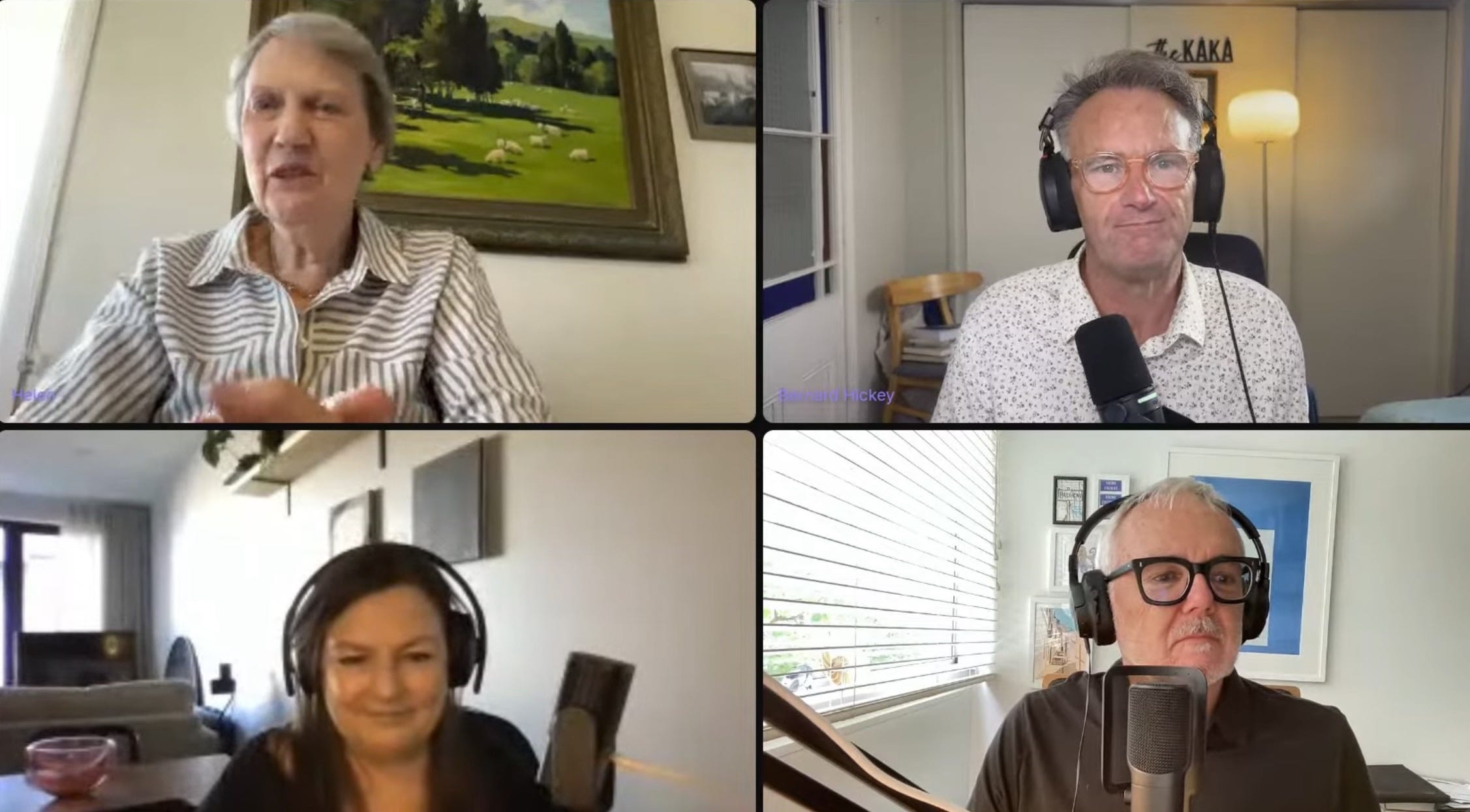
The Weekly Hoon: Middle East fuel crisis; accelerating climate warming & NZ's health system problems
Mar 1200:58:35Tap to summarizeThe podcast above of the weekly ‘Hoon’ webinar for paying subscribers on Thursday night featured co-hosts Bernard Hickey & Peter Bale talking with regular guests Cathrine Dyer and Robert Patman about geopolitics, the economy, climate change and politics here, along with special guest Helen Clark.This week:* Bernard and Peter began with a chat about the Iran war, New Zealand’s looming fuel supply issues and Marsden Point.* Bernard then spoke with Cathrine about new research confirming an acceleration of climate change, about research showing a rise in carbon dioxide in bloodstreams, and the links between the Middle East conflicts and climate change.* Then Bernard, Peter, Robert and Helen talked about the current mess in the Middle East, New Zealand’s weak response, our health system and an upcoming play about Helen Clark called ‘Helen Clark in Six Outfits’The Hoon’s podcast version above was recorded on Thursday night during a live webinar for over 200 paying subscribers and was produced and edited by Simon Josey. The Hoon won the silver award for best current affairs podcast in last year’s New Zealand Podcast awards. (This is a sampler for all free subscribers and anyone else who stumbles on it. Thanks to the support of paying subscribers here, we’re able to spread my public interest journalism here about housing affordability, climate change and poverty reduction other public venues. Join the community supporting and contributing to this work with your ideas, feedback and comments, and by subscribing in full. Remember, all students and teachers who sign up for the free version with their .ac.nz and .school.nz email accounts are automatically upgraded to the paid version for free. Also, here’s a couple of special offers: $3/month or $30/year for under 30s & $6.50/month or $65/year for over 65s who rent.)Ngā mihi nui.Bernard This is a public episode. If you'd like to discuss this with other subscribers or get access to bonus episodes, visit thekaka.substack.com/subscribe
Transcribe →
A Mini-Hoon with Chloe Swarbrick about fossil fuels, housing and fiscal strategy
Mar 1200:23:11Tap to summarizeI spoke with Green Co-Leader Chloe Swarbrick last night in a Substack Live Video for over 150 subscribers about the urgent need to decarbonise & provide housing, along with challenging the bipartisan assumptions about the size of Government and Government debt to GDP — the ‘30-30’ rule. We also talked about migration policy and population growth.The full interview is above for all.Chapters00:00 Introduction and Context Setting07:22 Fuel Crisis and Government Response10:43 Housing Crisis and Emergency Solutions13:20 Economic Policy and the 30-30 Rule19:19 Debt Management and Economic Stability24:15 Electrifying the Economy and Climate Change27:28 Population Growth and Migration PolicyCheersBernard This is a public episode. If you'd like to discuss this with other subscribers or get access to bonus episodes, visit thekaka.substack.com/subscribe
Transcribe →