Podcast
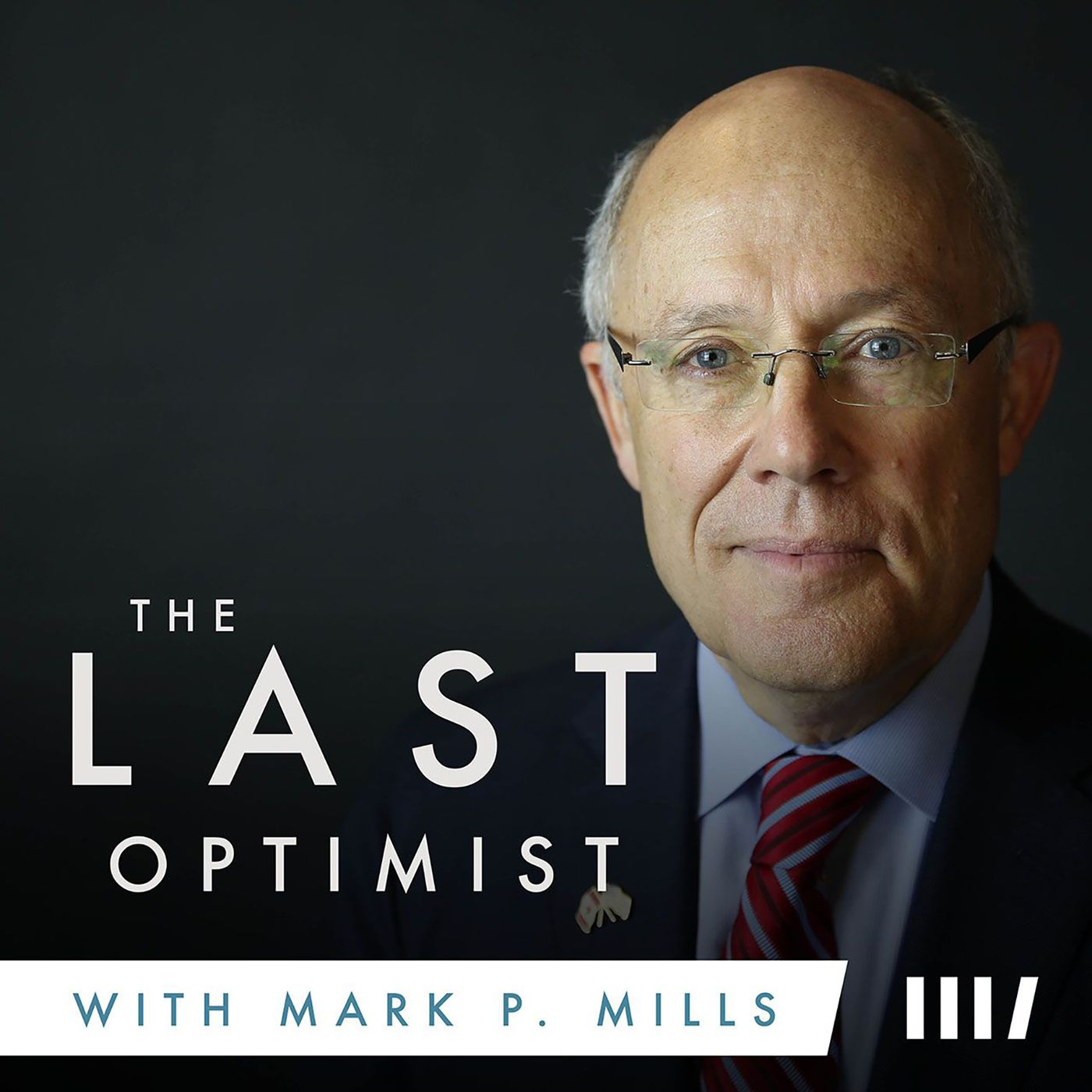
The Last Optimist
Hosted by The Manhattan Institute · EN
The Last Optimist is hosted by Mark P. Mills—author, businessman, physicist, contributing editor to the City Journal, and distinguished senior fellow at the Texas Public Policy Foundation—and features discussions about inventing our future. Mark's latest book is “The Cloud Revolution: How The Convergence of Emerging Technologies Will Unleash the Next Economic Boom and a Roaring 2020s.
10episodes
Episodes
Newest firstAll episodes
Information About Energy is More Critical Than Ever: Time to Reboot the IEA
Jan 17, 202400:36:36Tap to summarizeThe International Energy Agency (IEA) is 50 years old this year, created because of the 1973/4 “oil shock” that triggered a global recession. Today’s energy markets and geopolitics are just as vulnerable to similar disruptions, but the IEA has since shifted its mission to advocate for abandoning hydrocarbons, erasing its ability to serve as a credible, unbiased source of the kind of energy information vital for risk analysis and planning. It’s time to reform the IEA.
Transcribe →The Imminent Prospect of a Very Bad Idea: A Carbon Tax
Jan 8, 202400:33:39Tap to summarizeAt the end of 2023, Congress had four different pieces of proposed legislation directed at creating a carbon tax; three had bipartisan support. Thus, bookmakers see a rising prospect for some form of carbon tax. We return to unbundling why that’s such a bad idea, and the flaws in claiming that it would unleash “market forces” to create alternatives. For a summary of the state of the bad idea see The Carbon Tax Cliff, City Journal, Mark P. Mills, January 3, 2024.
Transcribe →Chemicals, Climate, Carbon, and a Cri de Coeur for Rational Dialogue
Dec 4, 202300:48:21Tap to summarizeJoining this episode, Peter Huntsman - CEO of a multi-billion-dollar US-based multinational with operations in 30 countries - for a far ranging-conversation about the role and nature of chemicals (used in everything from batteries to Boeings), workplace culture, regulations, energy issues, and the challenges of global competition. Biography of Peter Huntsman, Chairman, CEO, Huntsman CorporationThe Wall Street Journal interview with Peter Huntsman.
Transcribe →Will Climate Policies Throttle the A.I. Era?
Nov 20, 202300:42:43Tap to summarizeWe revisit, with new research, the astonishing energy appetite of artificial intelligence (A.I.), a reality completely absent from the just-released 18,000 word Executive Order on A.I. Yet the Administration's “whole-of-government” pursuit of climate policies is seen everywhere else. Meanwhile, fueling A.I. will propel the world beyond today’s zettabyte of digital traffic into the yottabyte era. Links:A coalition of digital and cloud experts comes together at the newly announced Yotta organization.The White House Executive Order on Artificial Intelligence.
Transcribe →Hybrid-electric Cars: Faster, Cheaper, Better and Fairer Way to Cut Oil Use
Nov 3, 202300:32:46Tap to summarizeIf one feels compelled, and by that, I mean if Congress and state policymakers feel compelled to subsidize ways to reduce the amount of oil used by vehicles on the roads, the facts point to hybrids making far more sense. Sales figures in recent months suggest that consumers think so too.Related to this episode’s topic, to watch or listen to the October 2023 “great debate” over EVs between Mark Mills and Rosario Fortugno, click here for that SOHO Forum Debate recording.
Transcribe →Artificial Intelligence and its Energy Appetite
Sep 26, 202300:42:06Tap to summarizeThe invention of useful artificial intelligence (AI), epitomized by the hype over ChatGPT, is the latest example of a basic truth about technology: There have always been many more inventions that use energy than those that can produce it. Only a few inventions over history are as energy-hungry as AI; it ranks up there with the invention of the automobile and aircraft.
Transcribe →EVs and the Simplicity Trope
Sep 11, 202300:34:41Tap to summarizeAt the core of the belief that EVs inevitably displace conventional cars is the claim that EVs are, inherently, just simpler machines. That means, we’re told, fewer jobs—hence the ostensible reason for the UAW’s anxiety. But the simplicity claim is a canard. EVs entail a complexity swap, not a simplification.Electric Vehicles for Everyone? The Impossible Dream, Manhattan Institute Policy Paper, July 2023.
Transcribe →Harold Hamm, Icon of the Oilfields
Aug 14, 202300:41:50Tap to summarizeWe talk with Harold Hamm, founder and former CEO, now Exec Chairman of Continental Resources.Hamm, one of the key pioneers of the American shale revolution, has written a book about his life’s journey and the critical role of the U.S. oil and gas industry.Game Changer: Our Fifty-Year Mission to Secure America's Energy Independence, Harold Hamm, Forefront Books, 2023.
Transcribe →The Impossible Dream of EVs for Everyone: Part 4 of 4 Inconvenient Geopolitics
Aug 8, 202300:48:41Tap to summarizeThe refrain, the claim, from EV and green-tech advocates is that EVs and the massive alternative energy subsidies will free us from “our geopolitical adversaries” and the “manipulation of the price of oil.” Instead, supply chain realities show just how profoundly misguided those claims are.Electric Vehicles for Everyone? The Impossible Dream, Manhattan Institute Policy Paper, July 2023.
Transcribe →The Impossible Dream of EVs for Everyone: Part 3 No Salvation from Magic Battery Tech
Aug 1, 202300:43:29Tap to summarizeThe ubiquitous clickbait headline about some new battery innovation that “changes everything” is just that; clickbait. The underlying realities of energy physics and electrical engineering determine the usefully foreseeable future and it’s not one with EVs cheaper, better and universal.Electric Vehicles for Everyone? The Impossible Dream, Manhattan Institute Policy Paper, July 2023.
Transcribe →