← The Leadership Dance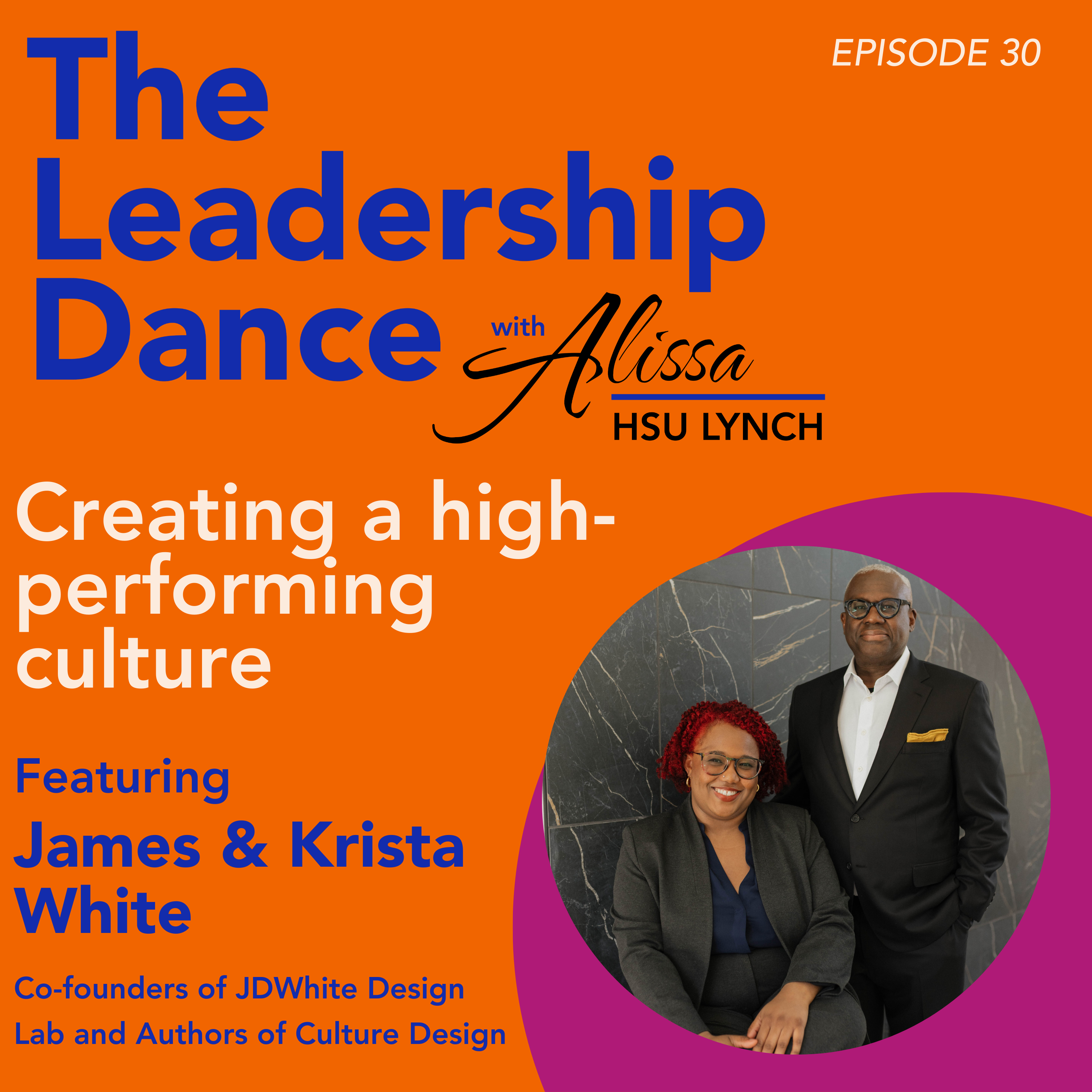
Loading summary
Transcript160 lines
- [00:01]
James D. White
So I do averagely about 300 push ups a day and I don't miss many days during the year. And I've done a hundred thousand push ups every year since 2017. So I crossed the 1 million push up mark in April of this year.
- [00:17]
Alisa Sue Lynch
Wow.
- [00:17]
Interviewer/Host
Congratulations.
- [00:19]
Alisa Sue Lynch
And what started this, Richard?
- [00:21]
James D. White
Just really trying to get healthier and I count things is kind of one of my rituals. And I figured out I could do a lot of push ups and it would make me healthier. So there you have it.
- [00:33]
Interviewer/Host
Does every year does your goal go up?
- [00:35]
James D. White
I'm just trying to get to 100,000 pushups each year. I peaked at 163,000 pushups in one year. And we've, I mean, we just try to get to 100,000.
- [00:45]
Interviewer/Host
I think that's enough.
- [00:46]
Krista White
Keep it modest.
- [00:49]
Alisa Sue Lynch
Hello and welcome to the Leadership Dance Podcast where we explore the art of leadership with trailblazers in business and the arts. If you enjoy the show, please subscribe, share, share and give it a five star review. And if you're listening to this episode, also check out our YouTube channel, Heladership Dance. I'm your host, Alisa sue lynch, and today I'm thrilled to be in the studio with father and daughter James D. White and Krista White. Welcome. James is a seasoned operating executive with more than 30 years of leadership experience across consumer products, retail and restaurants, and two decades serving on corporate boards. He's known for his People first inclusive approach to building high performing cultures. Krista is a writer and founder with an MFA in fiction and the creator of Kiki for the Future. She brings a fresh millennial and storytelling lens to how organizations can be a force for good. Together, they've teamed up to write two books, including their latest, Culture how to Build a High Performing Resilient Organization with Purpose. I'm so glad to have you guys here.
- [02:03]
James D. White
Thanks for having us.
- [02:04]
Krista White
Thanks for having us, Elisa.
- [02:07]
Alisa Sue Lynch
So I want to start by congratulating you on the launch of your new book, Culture Design. This is the second book you've written.
- [02:14]
Interviewer/Host
Together as a father and daughter.
- [02:16]
Alisa Sue Lynch
Before we get into the book itself, can you start by talking about how.
- [02:20]
Interviewer/Host
And why you decided to work together.
- [02:23]
Alisa Sue Lynch
And what has that been like?
- [02:24]
Krista White
Christa, several years ago, this is now, before the pandemic, dad had brought me on to be part of a project he was working on with doing just this culture design for a company. And we at some point in our work together doing consulting and you know, at the time we weren't necessarily calling it Culture Design with quite the same words, but we were doing what we talk about in the book. We kind of looked at each other, and we thought that there was something here that we were really passionate about and making companies better. And I'm a writer by trade, so I have been really excited to take on this challenge of distilling, really, decades of knowledge, operational knowledge, board knowledge, all this rich experience that dad has into a narrative form that can reach so many more people than we would be able to reach through our consulting practice.
- [03:31]
Alisa Sue Lynch
So it must be really special to.
- [03:33]
Interviewer/Host
Work with your daughter. James, was it your idea or Chris's idea to actually write a book together?
- [03:39]
James D. White
Well, I think we just, you know, almost serendipitously, you know, came to that conclusion. We. Krista is a great writer and a fantastic researcher. So we started out on this project with one of the companies that I sat on the board of, and we found a mutual passion around building more inclusive company cultures. And we looked at each other at a point and said, there really isn't a voice of an operating executive. There's lots of discussion with folks that are academics or hr, but I'm actually somebody who's run the company and understands the levers of really creating better companies. And that led us to the two books. And there's been no more special work than I've done than working with my daughter.
- [04:26]
Alisa Sue Lynch
So have there been any disagreements along the way?
- [04:29]
Interviewer/Host
Father, daughter, who gets to make the final decision?
- [04:35]
Krista White
Well, we, of course, have disagreements of whether it's its format or how to say something or what examples to use. We really, though, always come to the work from the same place of wanting to make companies better, help people live better lives. So I think one of the things we've been able to do is if there's something that is maybe not completely aligned, is really listen to each other's perspectives, and we're usually able to come to a place that works for both of us. So it's not so much a final. A final say, but there are things where one of us will be like, I trust you to make the call. Like, we gotta get. We have a said line.
- [05:24]
Alisa Sue Lynch
So applying the principles from your book.
- [05:27]
Interviewer/Host
To working together, what I'm hearing is that.
- [05:29]
James D. White
Absolutely, absolutely, we listen with heart.
- [05:31]
Interviewer/Host
I like that. I like that. And, James, you talked about, you bring an operator's perspective. Christa, you bring the writer's perspective, but also a millennial perspective. Can you talk about, like, how those different viewpoints made it into the book?
- [05:48]
Krista White
One of the ways that I think is a great example of how our two perspectives make it into the book are we have these pullouts throughout. So people often have these little like notes that they're like, oh, I'm pointing to this thing. The way we did it was in each of our voices, in an I voice. So I have mine that are from Chris's notes app and dad has his from dad's notepad. So if you're ever watching him in a meeting or any sort of situation where he's taking notes, he's taking notes on a paper note pattern. I do that sometimes, but I have like literally a thousand notes in my notes app. So that was one way that described how we both are very fastidious and writerly and thoughtful, but in our own ways.
- [06:36]
Interviewer/Host
He's old school.
- [06:38]
James D. White
Old school, absolutely.
- [06:39]
Krista White
We love it.
- [06:40]
Interviewer/Host
And I have been in meetings with him.
- [06:42]
Alisa Sue Lynch
But I also write, I like to.
- [06:44]
Interviewer/Host
Hand write notes because I feel like it helps me remember things more than where I'm typing. Cause I can type very fast though.
- [06:52]
James D. White
It actually connects it to my brain.
- [06:53]
Alisa Sue Lynch
Yes.
- [06:54]
Interviewer/Host
I think because I'm a visual learner.
- [06:56]
James D. White
And so am I.
- [06:57]
Interviewer/Host
Okay, yeah, interesting.
- [06:59]
Alisa Sue Lynch
So in the book you talk about.
- [07:00]
Interviewer/Host
Building workplaces that are inclusive and resilient.
- [07:04]
Alisa Sue Lynch
Can you describe what that culture looks like and are there examples of companies.
- [07:10]
Interviewer/Host
That you think are doing it?
- [07:11]
James D. White
Well, I think the way we would, you know, kind of start the answer to that question is the reason we wrote this book and we talk about being intentional about culture. Our thesis of the book is every company has a culture and you have culture by design or default. And we really tackled the book from three pillars. One is knowing what matters. The second pillar is doing what matters. And then for me, as a business person, anything that matters, you measure it. So there are many, many illustrative examples that we have in the, in the book. And I'll make really a, a couple different points to really underscore how we think about culture. If I think about one of the executives that we interviewed, Tony Wells, who's a multi time cmo, he's a board member, he describes culture as being the software that companies run on. And Tony's background, he's a multiple time cmo, he's a Naval Academy alum. But we thought that was a fitting way to describe how you might think about culture. Danny Meyer, the famous restaurateur shake Shack fame, describes culture as being all the things that we say we stand for, minus the things that you allow inside a company.
- [08:29]
Interviewer/Host
What do you mean by the things that you allow?
- [08:31]
James D. White
So it's the, it's the difference between what you say and what you actually do inside a company. Culture is really a living, breathing thing in the way we think about it. And it's more what you do than what you say or what sits on a placard or a card is how the company actually works.
- [08:49]
Interviewer/Host
Okay, that makes sense. And conversely, what are some culture red flags? When you walk into an organization and you know, oh, there's some work that needs to be done here.
- [09:01]
James D. White
I think when we know, think about some of the outpoints of culture is when there is a huge gap between what people say and what they actually do inside a company is one of those red flags. The other couple of examples that I'd give is the culture has to literally live in the frontline workforce for it to really be real. And I'll give an example of what good looks like. And then the, the other places where we think their gaps is anything different than that in the, in, in the workplace. I sit on the board of a supermarket chain, Snook Supermarkets and this is a recent example. They just made up the most significant acquisition in the company's history and they acquired a, a retailer in Wisconsin. And I happened to be there a week ago. And one of the things that the CEO does to reinforce culture is he took the entire board to Wisconsin so we could meet the workforce and really get to feel and experience that culture. And one of the things I was struck by at festival, they're focused on building relationships with their customers. They have these 27 principles that they call their boomerang principles. And one of the manifestations of that at 9:35 or 9:40 every day in all 42 or their stores, they have a 10 minute huddle that's focused on the day ahead culture. There's some gratitude and recognition and for me is the, that was the most visible example. This is a fantastic culture, you know, kind of living culture.
- [10:38]
Interviewer/Host
Do you have any examples Krista, of like cultures gone wrong?
- [10:42]
Krista White
Well, to use that example, the converse of a company where everyone is aligned. One of the things that is so common throughout many different organizations, corporations, especially folks that have manufacturing arm or retail stores, restaurants, is that they don't have mechanisms for cascading culture and reinforcing culture in those front lines. And those people are the people who make up the majority of the organization. So there's this disconnect between corporate HQ and the people who are interacting with customers. I think that daily 10 minute huddle is a great example of something that people can and should implement. You might not be able to have the same kinds of cultural rituals. If someone is like, yeah, I got to get back on the line, or Yeah, I have 40 customers, it's rush hour, you know, so just being really thoughtful and engaging your mid level managers in creating those rituals is crucially important to making your culture come to life.
- [11:55]
Alisa Sue Lynch
So you talk about rituals and that's.
- [11:57]
Interviewer/Host
A great example that you just gave about the 10 minute huddles. Where do those come from? Do those come from the frontline workers or is it top down or combination? I mean, how do, how do you find those types of cultural indicators that actually stick?
- [12:13]
James D. White
Yes, I'd make a couple of points. Like how we start our work with any of our clients is we do what we describe as almost an archeological dig where we want to look for the artifacts of how the culture lives in this moment. You know, so what are the rituals, what are the meetings? How do celebrations happen in the company? And just how does the company actually work day to day? So we literally document the way the company works today and then we cast that versus what the ambition is. Because typically when we're called in, there is some out point culturally or there is some broader future ambition. So we have the leaders to describe, as clear as they can, the future state that they desire. And then we map what needs to be true across a set of meetings, rituals, celebrations, you know, how that maps into how the company works moving forward. And we describe that as the doing of the doing kind of the doing. What matters is the really important part. How do you operationalize culture? That festival example of the huddles is just one example. And there are many of those and you adapt them to the, to the particular company and they live differently in each company, depending on the industry.
- [13:38]
Interviewer/Host
Okay, so James, I want to talk about Jamba. You were chairman and CEO of Jamba during their turnaround.
- [13:46]
Alisa Sue Lynch
Was there a moment during that turnaround.
- [13:48]
Interviewer/Host
When you realized, oh, this is about culture, not about strategy or operations that was going to make or break the company?
- [13:57]
James D. White
It was as I was going through the interview process.
- [13:59]
Krista White
Oh, wow.
- [13:59]
James D. White
And you know, from day one. So one of the exercises that I always do when I'm coming in to lead an organization is I want to be able to listen. And we talk about it in the book is Listening with Heart. And it's just a simple process that we apply both to our clients. And I applied at Jamba, where I secure, start, stop and continue. You know, so what should the company start doing, what should be stopped and what are the things that are really working that should be continued? And now with our clients we've added a bonus question is what advice do you have for the CEO? And just grabbing that raw data in an anonymous way is one of the ways to look for the themes. And it gives you pretty clear signals of where to start the change effort as it relates to culture. But we started literally the first day in the support center at Jamba gathering that information, and then we also went out to consumers. So we did some work to listen to consumers. We got feedback from the board, feedback from our suppliers, and then feedback from investors. And we took about 90 days to really formulate a turnaround and transformation plan for the company that we described as the Blinn plan, pun intended.
- [15:20]
Alisa Sue Lynch
And what were some of those cultural.
- [15:22]
Interviewer/Host
Drivers that you identified that you had to build?
- [15:25]
James D. White
We knew we needed to be more performance and execution oriented. And one of the things that we knew we needed to protect is Java was this fun, energetic culture in our stores. And that's what the customers absolutely love. So we needed to make sure that was untouched and we just needed many more feedback mechanisms so we could continue to improve how we delivered for our guests.
- [15:50]
Alisa Sue Lynch
Yeah, I love that you talked about.
- [15:52]
Interviewer/Host
Consumers and taking that external lens, focusing on customers, because that's ultimately they're going to make or break you.
- [16:00]
Alisa Sue Lynch
So, Krista, a recent survey from Deloitte says that by 2030, millennials and Gen.
- [16:05]
Interviewer/Host
Z will make up 75% of the global workforce. That's a big percentage.
- [16:10]
Alisa Sue Lynch
What do you think this next generation is looking for in workplace culture that.
- [16:14]
Interviewer/Host
Older leaders may not fully grasp yet?
- [16:18]
Krista White
I think that we as millennials and Gen Z and beyond have and will have come into a workforce and an economic environment that is very different than that. If our parents and people that came before us, we, I'll speak for Millennials, I think, have come into a workforce over the past 10, 15 years. Many of us older millennials came into a workforce literally during the worst economic turndown of the past 50 years. We are, although of course, very motivated by, by pay and compensation. We have a higher tendency to be loyal not to who pays us most, but who has the most value for us. Who can offer work life balance, who can offer hybrid opportunities, work from home opportunities, opportunities that work better for us, that meet us where we're at, that take us as full humans. I know we've seen all the headlines about women leaving the workforce and it's not just for fun. It's the rising costs of childcare, it's gender based hostility and sexism. Millennials and even Gen Z are starting to start Families have kids as approximately 50% of the workforce, and they're saying that millennials are going to be basically the parents of the next baby boomer generation because there's so many of us. That's going to have a huge impact on what we are going to be expecting from employers in terms of benefits and flexible workplaces. It's not going to be enough to say we're going to pay you the most.
- [18:14]
Interviewer/Host
Right, Right.
- [18:16]
Alisa Sue Lynch
So I'm going to take a little.
- [18:17]
Interviewer/Host
Break and do a quick fire round of questions. I didn't prepare you for this, so.
- [18:23]
Alisa Sue Lynch
This is just for fun and just.
- [18:25]
Interviewer/Host
Say whatever comes to mind.
- [18:27]
Alisa Sue Lynch
So, James, in one word, how would.
- [18:29]
Interviewer/Host
You describe your leadership style?
- [18:32]
James D. White
I view myself as a servant leader. I mean, I've worked to really unlock the full potential of the organization and every individual that I work with. And I've always been a proponent of developmental intervention. So for me, I'm working to make sure every single individual that I work with can realize their full potential. And I often think about the leaders that can unlock the discretionary effort of the members of their team. They build the strongest cultures and the strongest companies.
- [19:07]
Interviewer/Host
And we're going to talk about the Honest Company board, which we serve on together. And I attest to the fact that you do that.
- [19:14]
Alisa Sue Lynch
Krista, how about you?
- [19:15]
Interviewer/Host
What's your leadership style?
- [19:18]
Krista White
First thing that came to mind is joyful. It's so important to me that whether I'm working with one freelancer or a team of writers, when I was editing a literary magazine at my grad school, I want people to have fun. I want people to feel like they can be themselves on any kind of team that I'm leading.
- [19:43]
Alisa Sue Lynch
Okay, Krista, what's one ritual or habit.
- [19:46]
Interviewer/Host
You can't start or end your day without?
- [19:49]
Krista White
Ooh. If it's going to be a good day, needs to have some journaling in there, preferably like, first thing in the morning.
- [19:59]
Alisa Sue Lynch
James?
- [20:00]
James D. White
I do pushups. I do a lot of pushups.
- [20:02]
Interviewer/Host
Oh, yes. Okay, I heard about this. Tell us about how many pushups you actually do.
- [20:07]
James D. White
So I do averagely about 300 push ups a day, and I don't miss many days during the year. And I've done 100,000 push ups every year since 2017. So I crossed the 1 million push up mark in April of this year.
- [20:22]
Alisa Sue Lynch
Wow.
- [20:23]
Interviewer/Host
Congratulations.
- [20:24]
Alisa Sue Lynch
And what started this, Richard?
- [20:26]
James D. White
Just really trying to get healthier and I count things is kind of one of my rituals. And. And I figured out I could do a lot of pushups and it would make me Healthier. So there you have it.
- [20:38]
Interviewer/Host
But, you know, you plateau when you do one thing over and over again. So does every year, does your goal go up?
- [20:45]
James D. White
No, I've moderated back to where I'm just trying to get to 100,000 push ups each year. I peaked at 163,000 pushups in one year. And we've. I mean, we just try to get to 100,000.
- [20:57]
Interviewer/Host
I think that's enough.
- [20:59]
Krista White
Keep it modest.
- [21:01]
Alisa Sue Lynch
Okay. Christa, what's your favorite song to dance.
- [21:04]
Interviewer/Host
To or type of music?
- [21:05]
Krista White
Oh, my gosh, we're gonna be here all day. Favorite type of music to dance to is probably early 2000, early to mid 2000s hip hop and pop.
- [21:20]
Interviewer/Host
Okay, I like that.
- [21:22]
James D. White
And for me, I'm a huge jazz fan. My favorite artist right now is Gregory Porter.
- [21:28]
Alisa Sue Lynch
Okay, who's the better dancer, dad or daughter?
- [21:32]
Interviewer/Host
James, you first.
- [21:35]
James D. White
Let's call it a tie.
- [21:37]
Alisa Sue Lynch
Do you agree with that, Krista?
- [21:39]
Krista White
Yeah, I mean, we. We haven't. Haven't gone out dancing in a while, but we'll have to.
- [21:43]
James D. White
We'll have to do that maybe after this.
- [21:46]
Krista White
Let us know some good spots.
- [21:48]
Alisa Sue Lynch
All right, Maybe I can be the judge. All right, Krista, finish this sentence. My dad always says.
- [21:57]
Krista White
Mm. Oh, it's like, I believe in you. I'm proud of you.
- [22:04]
Alisa Sue Lynch
James, finish this one. My daughter always reminds me to smile and have fun.
- [22:10]
Interviewer/Host
You are great. You're such a great family.
- [22:13]
Krista White
Thank you.
- [22:15]
Alisa Sue Lynch
Okay, so back to the serious questions.
- [22:18]
Interviewer/Host
Peter Drucker once said, culture eats strategy for lunch.
- [22:23]
Alisa Sue Lynch
But does culture come first or does strategy come first?
- [22:26]
Interviewer/Host
I think there's still some debate around this.
- [22:28]
James D. White
Well, I think they're kind of equal parts, but you can't execute strategy without having culture. So I'd actually argue that having the foundation of culture, going back to this quote from Tony Wells, that literally, culture is the software that the company runs on. And then you apply the strategy. And I think the better the culture, the easier it is to really deliver the strategy that makes sense.
- [22:57]
Interviewer/Host
Do you have a perspective?
- [22:59]
Krista White
Yeah, I'd just add to that. It is certainly possible to execute without a meticulous focus on culture. You can push your teams to execute, execute, execute, get it keyed, it done. We're always in high alert mode. But that's not how you're going to sustain an organization. It's not how you're going to retain the best people. And back to my mission of seeing if we can all have a little bit of fun at work whenever possible. That's not going to happen either. And it also goes back to that discretionary effort. I mean, there's a certain amount of discretionary effort you can get in a fear based culture, but you're going to get so much more in a culture that is collaborative, high performing and is focused on getting the best out of everyone.
- [23:49]
Alisa Sue Lynch
So you mentioned this earlier, Christa, about middle managers. And one of my favorite ideas in the book is that middle managers are.
- [23:56]
Interviewer/Host
The hinge of culture.
- [23:59]
Alisa Sue Lynch
So can you talk about what do you mean by that and why are middle managers so critical?
- [24:04]
Interviewer/Host
How can leaders ensure that managers don't become culture blockers?
- [24:09]
Krista White
We've thought about this a lot and it depends on the size of the company, of course, but we estimate that most larger corporations, there's probably about like 150, 100 people who touch the majority of people throughout the organization. So often these folks are getting neglected, they're getting cut, they're getting caught in the fires of layoffs and then the people who remain are even more squeezed. One of the things that we've been thinking about is how important it is for middle managers to be able to do just that, manage to have the opportunity and the empowerment to be people leaders. What decisions are important to be made by those folks and do they have the resources to do so with their knowledge and expertise? I think that is something that's going to really vary but is great to be done in collaboration with those people who have such an important role in cascading this culture. It goes back to that what I was mentioning earlier about the frontline workers, these entry level folks, the people who are interacting with the customers who are making the products, the culture is not going to cascade to them. If you don't have the buy in of middle management.
- [25:36]
James D. White
It's such a critical role. In both of the books we talk about, the really big unlock to culture is the middle management of the organization. And it's the leadership's responsibility to invest in training and education and making sure the incentive system is structured for the middle management of the organization to take care of the people that are going to take care of the customers who build the products in the organization.
- [26:05]
Interviewer/Host
And you're developing them as your future leaders. Absolutely, yeah.
- [26:10]
Alisa Sue Lynch
So James, you and I are both.
- [26:11]
Interviewer/Host
On the board of the Honest Company. You're the board chair and you have.
- [26:16]
Alisa Sue Lynch
Served on boards for 20 years.
- [26:17]
Interviewer/Host
So you have extensive experience.
- [26:20]
Alisa Sue Lynch
Are there differences in how you approach.
- [26:22]
Interviewer/Host
Building an inclusive, productive culture on a board versus a company culture?
- [26:29]
James D. White
I don't know if there are differences, but I'd make a couple of Points. I think from a board perspective, you want a collegial board. You want to create space for all the talent. So if I think about the Honest company board, we try to create space for all the talent that sits on this fantastic board to be able to add value to the management team. There are critical ways that we work together to make decisions. We are starting to build processes. One of the things you and I are going to do together this week is we're going to look at the annual assessment that we provided on ourselves as a board, and then we're going to action plan what we do to get better, both individually and collectively. The other thing that I say is really critical from a board perspective is that we're aligned with the CEO and the management team. The question I often get is, can the board culture be different than the culture inside the company? And I'd argue that they can't. They should be one and the same. And I'll give some illustrative examples kind of other places where I've watched really fantastic boards and CEOs make sure that there is an. That there is a good alignment. So I sit on the board of Cava as well. And one of the things that we do as board members each year is we work in a Cava restaurant. So the folks in your audience might at some point in a given year, see me washing dishes in the back of a Cava restaurant. But that's a really live way for the board and the management team to stay aligned so that the issues that the board experiences aren't just kind of academic or conceptual in the boardroom? You know, here at Honest, we're out in retail stores together. We spend time with the management team. All those things add up to, you know, getting to cultures that are productive and really helpful to the companies.
- [28:27]
Alisa Sue Lynch
Can you each talk about one of your best or worst culture experiences, either as an employee or a leader or board member? What was it and what did you learn from it?
- [28:39]
Krista White
Not to toot my own horn, but I. One of my most, my recent and most, I think, relevant examples of building culture is that literary magazine I mentioned. I was the co managing editor at the Sarah Lawrence literary magazine, and they're actually accepting submissions right now, so. But I learned so much about leadership and the ways that folks can be empowered to make those own decisions. I mean, I think a lot of people who enjoy leading can tend to have a tendency to micromanage. But the power of that, it's a small organization, is probably 30, 30 of us, but which is actually pretty large for a student publication, but being able to in the hiring process determine which editors, which folks were going to work well together on their genre teams, which folks were going to do better in a support role, who had creative vision that would work cohesively with other creative visions and who would take an idea and run with it was a really beautiful thing to see how proactive people are when they're passionate about something and making something beautiful. I think one of the things that made a difference when we were having our. We had these monthly meetings was acknowledging that while we are, it's a professional organization, it's a, it's a magazine, it's for. At a educational institution, we have to acknowledge that we're all humans. So there were some things that happened in the news throughout the year when I was the co managing editor and I was like, well, I can't just, we can't just ignore it. So me and my man, co managing editor, made sure we took time out to just check in with people, see how they were doing. And then that kind of addressing that elephant in the room, so to speak, allowed us to then exhale and get back to the work and make a really beautiful magazine.
- [30:59]
Interviewer/Host
Yeah, that's such a great and important example that we are humans and we have emotions and it's really important to acknowledge that, especially when there's so much happening in the world that can be upsetting to us. So thank you for bringing up that example. How about you, James?
- [31:16]
James D. White
Well, maybe I'll share an example from, from the boardroom that we actually cover in the, in the book. And it's Bay Club and we, we talk about this idea of the, the best leaders, the best cultures they iterate. So Bay Club, the CEO is Matthew Stevens and they hadn't touched their values and culture and mission for well over a decade. And four or five years ago they really invested, took six months to really think about all the things that they say they stand for and documented those and then they refreshed them moving forward to represent what they wanted to become moving forward. And the thing that they've done for 13 years is they do this annual kind of summit. But what they've built into the summit more recently is a renewal of culture and values where they bring their top three or four hundred leaders together to honor the past. So they, I mean, and the company's also been very acquisitive. So I was with this group about a month ago and they had founders from some of the companies they had acquired. You know, so they don't lose the wisdom of the companies that were founded that now make up this fantastic, fast growing lifestyle fitness company. So they honor the past, but then they look to the future and really bring everybody along and they have at least an annual renewal kind of refreshment of culture. And the CEO is a 40 year veteran in this fitness industry and he started on the front line and he never forgets what it feels like to work on the front line in this industry. And he's made it his business to help professionalize the industry. So one of the other unique things is he invites competitors around the industry to kind of witness what we're doing at this annual kind of summit, which is unique for any of the businesses that I've ever worked around, where you'd have competitors or potential competitors sitting in the room to just watch the good works that are happening at Bay Club.
- [33:20]
Interviewer/Host
Yeah, well, that's really inclusive. So emerging technology is everywhere and you cannot get away from AI. How does culture relate to AI and adopting new technologies?
- [33:37]
James D. White
I think the main thing, and we didn't think about this going, we always know that technology has an impact, but the accelerated adoption of AI across all these major companies, which is being attributed to some of the layoffs that we're seeing, what we think people miss is they exclude the people, you know from this technology transition that we see. And what we believe is being missed is you need to actually focus on the humans first, reskilling and upskilling the work and the capacity created by AI. And we're fans of the technology, but you've got to actually define how to leverage the, the freed up capacity as you take some of the more mundane tasks. So you've got to actually redefine the work. The culture is going to obviously shift as you're rethinking jobs and roles. And then there's the upskilling and reskilling of the workforce. But we think this is one of the biggest missings of this big transition and AI movement.
- [34:45]
Alisa Sue Lynch
And Krista, for you, being from a younger generation, you've grown up with technology.
- [34:50]
Interviewer/Host
How has that influenced culture in your mind? Or what can companies be doing better to support Millennials and Gen Z?
- [34:59]
Krista White
I think one thing that we have seen in the past 10, 20 years is that while technology, whether it's social media, AI, different types of automation, has an incredible power to bring in different types of people to increase accessibility tenfold. It also can be manipulated and it can be used in ways that are not as thoughtful at the corporate level. I think that it's what dad is saying it's thinking about the people first. How does this technology help the people do their best work and live their best better lives? You know, I don't know which one we're on, fourth or fifth industrial revolution, but every time there have been growing pains, whether it's the assembly line or just mechanization in general. I think that I'm hopeful that although we've had some stumbles with the implementation of AI, that there's so much good in humanity and so many wonderful creative problem solvers and artists and doers that we will be able to course correct and use this technology for good.
- [36:25]
Interviewer/Host
Yeah.
- [36:25]
James D. White
And maybe the final point is AI can't have empathy. And one of the critical capabilities that we believe that leaders and companies must have is empathy. As we're, we believe everything starts and empathy is something only the humans can do.
- [36:43]
Alisa Sue Lynch
Okay, so our last question. What advice would you each give about.
- [36:49]
Interviewer/Host
Navigating your career while staying true to yourself?
- [36:53]
Krista White
One thing I would say is to pick and choose your battles. People who are very passionate about a lot of things might tend to get bogged down by, okay, well this has to be right and this, the company I work for has to do this, this and this. I think boiling down. What are your values? What is most important to you? What do you need to do to get that done? What are your hard lines? It's going to help you a lot more than sort of saying everything has to be perfect and I have to be perfect.
- [37:30]
Interviewer/Host
Great advice.
- [37:32]
James D. White
And for me there, there are two things kind of looking back on a relatively long career. The first one is the investment in being curious and being a constant learner. What I learned early on is the investment in building capabilities and staying curious creates opportunities and opens up potential. And then the, the second is just, you know, working on your overall well being. That's something I wish I would have learned more about early on. Where you invest in both your mental and physical health as a priority, that's something that's, that's one of the things that we often all miss kind of across a career. But that would be the advice that if I was going back to my younger self 40 years ago, I would, that would be really the investment in being curious and learning. Didn't have to learn that lesson. That came pretty naturally from my parents. But the other lesson would be what a priority your physical health should be.
- [38:38]
Interviewer/Host
Yes. So you would be at 3 million push ups by now then?
- [38:42]
James D. White
Well, maybe.
- [38:46]
Alisa Sue Lynch
Krista and James, thank you so much for joining me. It's been a pleasure to speak with you.
- [38:51]
Interviewer/Host
And congratulations again on your book, Culture.
- [38:54]
Alisa Sue Lynch
Design, available on Amazon or wherever you get your books.
- [38:57]
James D. White
Thank you. We're just grateful for sharing this moment with you. Just what a fantastic program.
- [39:03]
Krista White
Thanks so much for having us today.
- [39:05]
Interviewer/Host
Yes, thank you.
- [39:06]
Alisa Sue Lynch
Like follow and Share the Leadership Dance, where we explore how to choreograph the career of your dreams and chat with visionary leaders in business and the arts. Until next time, keep dancing.