← The Leadership Dance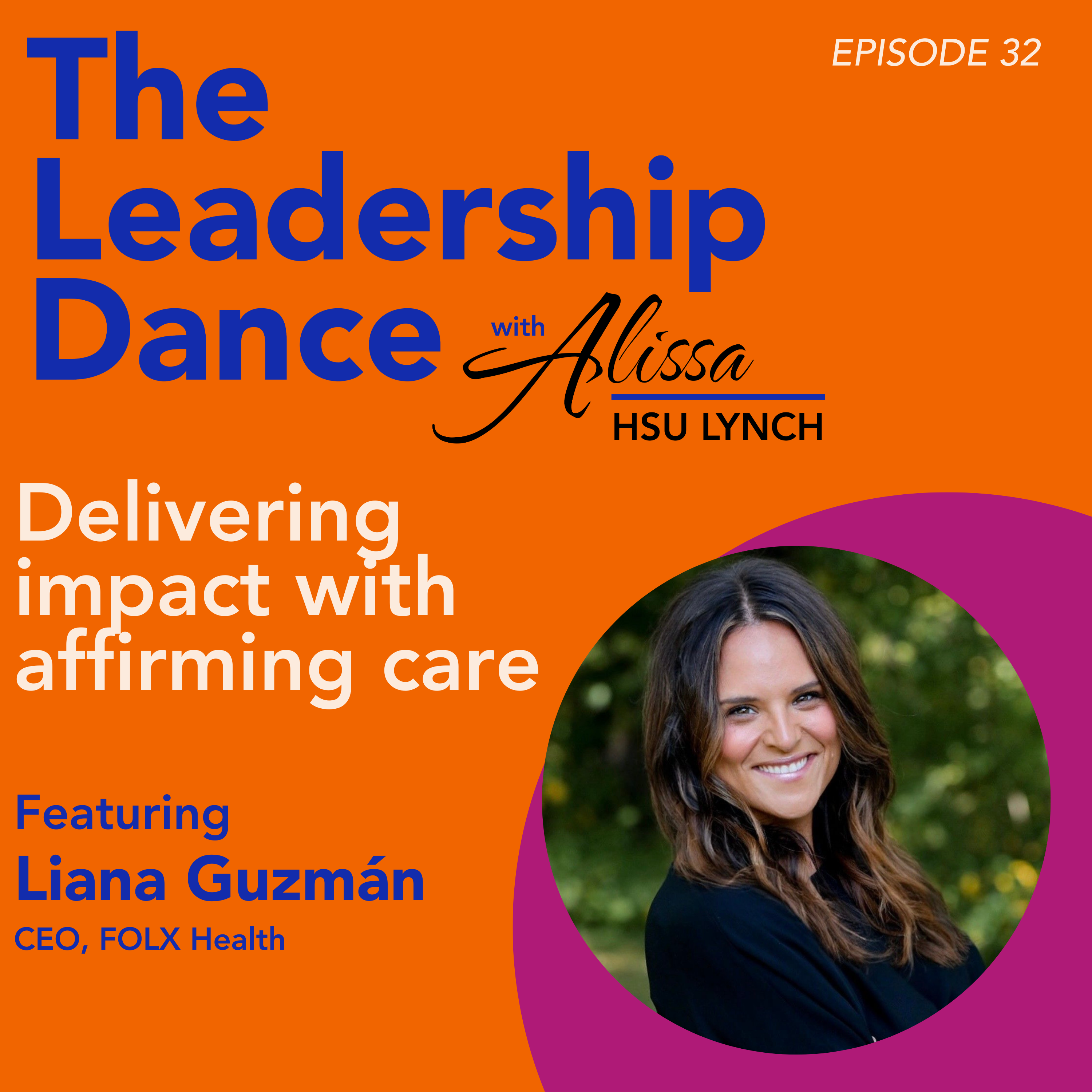
Loading summary
Transcript58 lines
- [00:01]
A
Double down on the work. Maybe you're being less public about your support of LGBTQIA care, but then privately you're bringing companies like Folks in as a benefit. Because what that signals to your team is we have to play a certain game right now, but we want to be crystal clear that we still care about you and we're putting our money where our mouth is and we're actually delivering the care that you need. Make sure that you reward people internally for behaviors that support equity and inclusion, even if you're not calling them that. That right not letting this moment be the excuse for you to pull away.
- [00:37]
B
Hi and welcome back to the Leadership Dance, where we explore the art of leadership with trailblazers in business and the arts. If you enjoy the show, please subscribe, share and leave a five star rating. And if you're listening to this episode right now, also check out our YouTube channel, heladershipdance. I'm your host, Elisa sue lynch, and I'm excited to be speaking today with Liana Guzman. Liana is the CEO of Folks Health, a digital healthcare provider delivering affirming care to the LGBTQIA community nationwide. With nearly 20 years of experience leading disruptive companies in regulated industries, she has helped modernize legacy systems and set new standards for innovation and impact across healthcare, fintech, and education. Named to Fast Company's Queer 50 and a Henry Crown Fellow, she also serves on the boards of GLAAD and the Elizabeth Park Conservancy. Born in Puerto Rico, she's a proud mom, wife, and advocate for equity and systems change. Thank you so much for joining me today, Liana.
- [01:49]
A
I'm so happy to be here with you, Elisa. Thanks for having me.
- [01:53]
B
So tell me what your childhood was like growing up in Puerto Rico, and how did your cultural background and upbringing influence how you approached your career?
- [02:02]
A
Thanks for that question. I feel like people usually dive right into 21 pass plus, and I think so much of who I am today is really informed by those early years. So my parents, as a quick aside, met on a cruise ship. So my mom had never left the US and she graduated high school and decided she was going to go on a trip and went by herself. And my dad was also going to go on a trip by himself. He lived in Puerto Rico, so it was like a quick weekend away for him. My dad asked somebody to dance and she said no. So then he asked my mom to dance. And thus began this lovely relationship. They are divorced, but still incredibly close and good friends. And so you had these two people who came from really different Backgrounds and lives. So my mom was born and raised in Connecticut. My dad was born and raised in Puerto Rico, but had gotten his graduate degree in Pennsylvania. So I don't think of myself as having grown up in one place or the other. I really grew up in both. My parents were married until I was 11. And so until then, we did the school year in Puerto Rico. We lived in a two family house with my grandparents downstairs. And we would do summers and the holidays in Connecticut with my grandparents here, my maternal grandparents. And then when they got divorced, we sort of swapped that and we did the school years in Connecticut and the summers in Puerto Rico. And I would say the way that it has influenced me is in a number of ways. I think at its best, I think I just have a richer experience and background. The first time I went back to Puerto Rico with my wife, she said, it is so interesting to watch you here because it is when you are most yourself. Growing up on that island is sort of at the core of who I am. I think there is a joy in Puerto Rico. You go out on Friday nights and it's families everywhere and the kids are out late and everyone's dancing salsa. And it is just an environment that is built around the idea of family and connection and joy. Whereas Connecticut, I think, can be a little more serious. And I think for me, there was some context switching that happened when we moved to Connecticut. I found that I started to behave a little bit differently. And I think that context switching in some ways is related to my ability to read a room and understand where people are in any given moment. And so I would say that that is deeply meaningful. As I think about my career since then, I think my ability to do that has probably been the most helpful thing to me as a professional.
- [04:18]
B
How would you describe yourself in Puerto Rico? Maybe, like when you were growing up versus when you were in Connecticut?
- [04:25]
A
You know, I think there was probably. And it's hard to separate these things, Elisa, like, how much of it is Puerto Rico versus Connecticut, Married parents versus divorced parents. My family had more financial means when they were married, less after the divorce. And so I can't quite unpack what to attribute it to. But I think I probably built a tremendous amount of confidence when I was younger. My mom was incredibly focused on pushing us into independence, and so she created the space for us to pursue independence when we felt comfortable. And I think in Puerto Rico, because it is a culture where kids are everywhere and there isn't this expectation that kids shouldn't be in a restaurant or shouldn't be in a certain place, you start to build this sort of self awareness and self confidence that I think has carried me through. I will say I think I lost some of that when I moved to Connecticut, but again, I moved at 11. I think that is the age at which, you know, middle school, you kind of go into doubting yourself. But I think that foundation allowed me to kind of come out of those teen years and come back to a place where I believed in my ability to do what I set out to.
- [05:27]
B
Do growing up in Puerto Rico and living in the United States. Do you identify more as being Puerto Rican or as American?
- [05:35]
A
Oh, such a good question. So I have this friend and one of the jokes he makes with me all the time is that Puerto Ricans are not Americans, right? And it's this weird dynamic because objectively we are right. And the reason he jokes with me about it is I sort of live these two sides where I. I get frustrated sometimes when people talk about leaving the country, when they talk about Puerto Rico, because to me, it just feels like there's a lack of understanding that we are Americans. And so we are this island that can be used by the American government, but oftentimes people don't take ownership in the US around it. And yet, as a Puerto Rican, I also feel really strongly that I have an identity that is separate from sort of the identity of being an American. Right? We have a US Passport. We are. We are Americans, and yet culturally we are not. We speak a different language, we take on different music, and kind of, where. Where do those lines blur and where do they separate and where do they come together? It's an interesting thing. And so I guess what I would say to you is I think to be Puerto Rican is to be American, but I feel innately more Puerto Rican than American.
- [06:42]
B
So you've had an impressive career spanning marketing, fintech, and now healthcare. What thread connects those chapters for you and how did they prepare you to lead Folks Health?
- [06:54]
A
I have an incredibly nonlinear career path. I often tell people I've never held the same title twice, and I've never worked in the same industry twice. What all of the career stops have in common is that first and foremost, there was a mission alignment. The depth of that mission alignment has shifted. Right. I would argue that I've never felt so deeply aligned to a mission as I do today at Folks. But across all of the opportunities that I've taken on, there has been a real belief that what I was doing was making the world a better place. And then the second Piece of it was I've worked exclusively for disruptive companies in deeply entrenched spaces. So I really love the challenge of taking a space like finance or education or healthcare that is both so central to each and every one of us, but also because it is so central, it is often deeply bureaucratic, deeply entrenched, very difficult to modernize. And I've always been attracted to the idea of how do you sort of take a first principles approach to these deeply important sectors? So that is the through line for everything that I've done. I graduated from college thinking I was going to be a lawyer. I was a paralegal for a year because I wanted to live in New York City and thankfully realized in the process of that that what I thought was true about the legal profession, which in my mind was this place where you could really kind of build a future. Right. And you could create, you could take these really nuanced problems and build novel solutions. And I realized pretty quickly that it's actually quite the opposite. It's a very retrospective field. Right. So you're always looking back and trying to fit past precedent into the existing challenge. And what I realized was that marketing actually offered an opportunity to do more of what I thought I could do through law. And so I spent the bulk of my career in the marketing space. But I would say what I love about marketing is, has really informed how I've operated as a chief operating officer and a chief marketing and revenue officer and a chief executive officer. And that is really putting the end user first. I think if you're good at marketing, what you do is focus on not how do we sell this widget, how do we fix something for someone, how do we make someone's life better? That was the way that I approached marketing, and I think it has really helped me as I've sort of developed myself into these other titles and roles as well.
- [09:07]
B
So you touched on a couple things I want to follow up on. First is, you talked about first principle approach. Can you talk more about that? What does that mean? What does that look like?
- [09:16]
A
When I joined Folks, I was brought on as CEO. I'm not the founder and I had no healthcare experience. And I think it's a really good example of that First Principal's mindset that our chairperson wanted to bring on. Right. So she wanted somebody who she felt had the ability to deliver on the promise of Folks, but wasn't bogged down by the history of healthcare. And so a lot of the work that I did when I stepped in was, yes, getting up to speed on healthcare, but also, you know, thinking about which parts of healthcare are the way they are because they need to be and which parts of healthcare are the way they are because they've always been. And for me, a first principles approach is looking at those two things constantly and really pushing yourself around those things that are the way they are because they need to be constantly questioning, is that true? And then when you realize that maybe it's not and that it's just because it's always been that way, really forcing yourself to take a step back and think, if you were building this all over again from a new place, what would that look like? How would you do it? And that's what I think of when I think of first principles. And you know, for our team, it's been really interesting because part of what made me comfortable about taking a job in healthcare was that I felt like I had some pattern recognition from other deeply entrenched places, but also that I was surrounded by an executive team that was deeply entrenched in healthcare. And I think what's been really fun about us working together is I ask a lot of why? Why do we do that? I'll ask why and then I'll ask why again, and then I'll ask why again. And by the time we get to the third why, the team sort of stops and says, oh, yeah, you're right, I don't think it needs to be that way. But equally, I'll ask why and they'll explain why. And suddenly it'll be very clear to me that of course, as an outsider, maybe it doesn't make total sense on paper, but when you start to dig into the understanding of why it does, that push and pull, I think has been really helpful for us as an organization.
- [11:11]
B
Tell people, what is your mission at Folks Health and what are you offering?
- [11:15]
A
We think that we're building the future of health care writ large. And so for us, that's a three pronged future. We think it is full person. So we're going to look back in 20 years and think it was crazy that we used to separate mind from body in our health care journey. And that really when we bring those things together, that's when you can drive better outcomes. We think it's patient centric. When you look at the health care experience as it exists today, for most of us, it is anything but patient centric. Right? You go to a doctor's office, you wait for hours, like you have to pay a cancellation fee if you're 15 minutes late. But how often do you see the doctor within 15 minutes of your appointment time? Right. Very rarely. And so or every time you walk in, you have to go through your history again, which makes it clear that they've not retained who you are and they're not treating you as the center of the work that they're going to do with you. And so we think that that really needs to change. We think the magic happens when a clinician brings their clinical expertise, but they put that on the same plane as the expertise of a patient in being in their body. Right. And it's when those two things come together that the magic happens. And the third piece for us is community. We believe firmly that our community is almost, if not as, or more important to our health as anything else. We see studies that show that people who have deep networks of friends live longer. You can navigate bad diagnoses with better outcomes if you're surrounded by a community of people who can support you through that. And so that's the three pronged approach. We happen to be building that three pronged approach for the LGBTQIA community. And that is a community that has been historically underserved by the incumbent model, where as a result, people often experience discrimination or violence in healthcare settings, and then the outcome of that is that they avoid seeking health care. And so you end up with a population that is large and growing. We are 10% of the adult population, 25% of Gen Z that does not see itself anywhere in healthcare and ends up with worse outcomes and more costly outcomes because of the incumbent system as it exists today.
- [13:15]
B
You're really talking about building inclusive healthcare, and that is both deeply personal and I'm sure, incredibly complex. What have been some of the challenges that you faced as CEO and how have they shaped you as a leader?
- [13:31]
A
We started as a direct to consumer cash pay business and we offer primary care services, talk therapy, and then a community platform. About two years ago, we started accepting insurance. And one of our core values is accessibility. And it is true that if you are an American, 90% of U.S. access healthcare through our employer sponsored insurance plans. If access is really a value, accepting insurance felt important. Having those meetings with payers and explaining to them why this mattered was deeply challenging. And it is challenging one, because it is just hard to navigate the incumbent system, especially if you are new and different and you're asking them to have to think creatively about where to plug you in. But I would say the even more challenging piece of it was the majority of our team is queer and it is really hard to sit across the desk from someone who is saying, we don't need you. We're doing great without you. I'll give you an example. There's one huge national plan, and we were talking to an employer who uses them a couple weeks ago, and we did a search on the call with them. We said, sure, they told you that they have inclusive care. Great, let's do it together. And you go online and you search. And I did San Francisco, because I think if you're going to find queer, accessible care, San Francisco feels like as good a place as any. Right? And within 30 miles of San Francisco, you could access 3,500 providers, something like that, or around 3,000 of those 66, I believe it was, were LGBTQIA supportive. And that's important because that means that only that 60 or so are supportive. But supportive does not mean expert. It just means that they're willing to care for this community. Right? So how depressing as an experience to go in and know that that means those other 3,000 are not supportive. That's really devastating when you're thinking about trying to access care. And so to sit across from this, you know, to a health plan like this, who says, we don't need you, we have inclusive care. And to know that that's what the statistics are, that's really challenging. So I would say that's one piece of it. The other really big piece, which is both, to me, the greatest gift of my job and part of what makes it challenging is we have a primarily queer team. And I think when you look at the political environment in this moment, it means that a lot of people on our team are feeling frightened or nervous, are feeling really taxed by all of the news out there that is aimed at our community in negative ways. Building resilience with the team, such that you honor the feelings and you create space for people to be able to navigate that moment while also holding intention. The truth that our ability to deliver means that, you know, 25,000 people don't have to face a reality where they can't get the access to care that they need. Navigating the idea of productivity with heart.
- [16:22]
B
And how can people find you?
- [16:24]
A
Or folks health or folks health.com so it's f o l x health.com so.
- [16:30]
B
It is covered, but not by all.
- [16:32]
A
Plants yet, not by all plans, but most. We've got pretty significant coverage. And then if we don't have coverage within your provider, you can still be a Cash Pay member.
- [16:40]
B
So is there a story of a member or community impact that stayed with you, one that reminds you why this work is so important.
- [16:48]
A
I love this question. I would say the thing that is so deeply energizing about this work is the regularity with which we hear these stories. So I'll give you a couple, just really quick ones. We had a member who was transitioning and went to their first wedding wearing a dress. And this is before we accepted insurance. So cash pay, you have to pay out of pocket to see your provider. And they made an appointment and paid out of pocket because their provider was the one person in the whole world that they wanted to celebrate that milestone with. And I think that speaks to the connection that we build with our members. I think when you think of digital health, you think of really what a lot of people are talking about is digital urgent care. I just want to get connected to someone easily to get me to an end point. And our members, that's not the case. This is sort of like that old school primary care relationship where they become a really trusted partner. We had a mother whose child was transitioning and they had a history of breast cancer in their family, and they reached out because they had tried every path they could think of and they had means to understand what the risk was if their daughter was gonna be on estrogen for the rest of her life. And there was a history of breast cancer and they could not find a doctor who had that expertise. And so they were able to get that answer. And they said it felt like we had given them sort of life because most, if not all parents, their most important thing is their children. And it can feel so deeply lonely and hard, like you feel very lost when your child needs something and you. You don't know how to get them the answer. So that's another example. And then the last example I'll give you is I got this amazing email maybe a month ago and I actually wrote about it in my substack. This person wrote this page and a half email about how they had worked in healthcare their entire life and they just had no idea that healthcare could be like this. That it could feel like the provider really cares about you and takes the time to understand you and doesn't judge you and you feel not just safe, but seen. We do these Monday member moments and every week we sort of flag some of these because they really are the reason we do what we do.
- [18:54]
B
Those are amazing stories. Thank you. Okay, it's time for our rapid fire round of questions. Just say the first thing that comes to mind. Where is your favorite place to vacation?
- [19:04]
A
The Caribbean.
- [19:06]
B
Name Someone you admire?
- [19:08]
A
My dad. Right now, he's going through pancreatic cancer. I just so admire the strength and grace with which he has approached it. Like, I think it has been just this new layer of love and admiration. And I think it's probably deeper than any admiration I feel for any.
- [19:21]
B
Yes. Okay. What's one ritual you can't live without?
- [19:25]
A
I don't know if this is a ritual, but one thing that I'm embarrassed by is I have to have a diet Coke every day. I don't drink coffee, and I did not drink soda until the pandemic hit. And it is a vice that I have not been able to break. And then I would say the other ritual that. That is deeply important to us is every night when we sit down for family dinner, we do best horse and appreciation. So we go around the table and we talk about the best part of our day, the worst or hardest part of our day, and then something that we're grateful for or appreciative of. And I think that's a really important opportunity to celebrate what's working, to honor and create space for what's not and call people in to help you. And then to know that despite either of those things, there's always room for gratitude.
- [20:06]
B
What's one word your friends would use to describe you?
- [20:09]
A
Loud. I think they would also say I'm fun. I tend to be the one when we're out with friends who's like, let's go dancing or let's have another drink. Although I guess the thing I would hope that they would say, and I think they would, is also just deeply there. And this is true of them as well. I think I've got this incredible network of best friends that I've known for 30 plus years, and we are just there for each other no matter what.
- [20:33]
B
Okay, last one. What's your favorite song to dance to or type of music?
- [20:38]
A
Okay, I know I'm supposed to give you one word. I can't. If you saw my Spotify, it ranges from Broadway show tunes to Chapel, Ron and Ariana Grande. I'm a big Swiftie. There's a lot of Taylor Swift on there. I like country music. Bad Bunny has been on repeat in our house. I love 90s, like, lesbian jams. I love Bruce Springsteen, Bob Dylan. I mean, I just. I have an incredibly varied music taste. And so there's not like one thing that I would point to. I would say right now, Baile nolvidable by Bad Bunny has been the, like, the dance music song right now. And we want to get. We want to get our booties shaken in this house. That's what goes on.
- [21:19]
B
I love it. You're a music lover for sure.
- [21:21]
A
I am. I do. I can't. I cannot play it to save my life, but I do love it. And I've got these two little kids and my oldest one is 10 and is obsessed with AC DC, went to the concert last year, knows how to play thunderstruck. And for those about to rock on the piano. And then I have this 7 year old who is a total Swiftie and Ariana Grande fan. And so we've sort of got like two sides of the coin. It's really fun.
- [21:43]
B
Acdc. I'm sure one of these Halloweens that's been a costume, maybe.
- [21:47]
A
I know we should do that. It has not occurred to us. Elise, I love this. I'm bringing it to the table.
- [21:53]
B
Yes. Next year.
- [21:54]
A
Yeah.
- [21:55]
B
Okay. So you have built a team around a powerful mission. What have you learned about leading with empathy while still driving performance and growth?
- [22:05]
A
I think for me, we too often think. I think if you really do build a mission driven company, those things are one and the same. If we fail as a business, 25,000 people lose access to the care that they've become dependent on. We have to show up for them. And I think the question for me is, you know, I want to be empathic to the team, but I also have to recognize that my empathy has to extend to our members as well. So I think they're one and the same. I also think sometimes people confuse empathy for easy. You can have difficult conversations that are deeply empathic. And for me, you know, one of our other core values is transparency. It is a commitment that I make to my team that I will not shy away from difficult conversations, that I will be really forthcoming so that they don't feel surprised. If there's bad news, then nobody is shocked by it. So I think those things are all very deeply interrelated and I think that they require discipline. It's a practice, not sort of a box to check. And so it's about the small decisions you make constantly that support your organization being empathic. And some of it is making sure that you have good leave policies and those can take a hit to productivity. But ultimately people are people first. That's the balance we're always trying to strike.
- [23:23]
B
You sound like a great boss.
- [23:25]
A
Thank you. I hope so.
- [23:27]
B
What guidance would you offer to leaders who believe deeply in diversity and inclusion but are feeling pressured to dial down the rhetoric? How can they Change the words, not the work.
- [23:39]
A
I actually was just on a panel on this very topic. I'll start by saying that I think for those companies who really own the words and the work, it may feel difficult in this moment, but I think there are dividends that will be paid to them because this is a moment and it will not last. And I think particularly when you look at the purchasing behavior of the younger generation, the way that they think about employment and where they want to work and how they want to work, they are going to reward those companies that stood in the truth of being diverse and equitable and inclusive and didn't shy away from that. Right. That being said, I recognize there are just realities to business. And so for some organizations, that's a long term play and they just don't have the short term capability to take it on. And what I would say is just make sure you really are just changing the words and not the work and in fact, double down on the work. As an example, maybe you're being less public about your support of LGBTQIA care, but then privately you're bringing companies like folks in as a benefit. Because what that signals to your team is we have to play a certain game right now, but we want to be crystal clear that we still care about you and we're putting our money where our mouth is and we're actually delivering the care that you need. And I think the good news with something like that is it is not only doing good in the world. You can do well from a business perspective. Right. We can help you bring health care costs down, etc. Etc. I'm using sort of folks as an example just because I live it every day, but I think there are so many other ways to do that, like make sure your ERG budget doesn't get cut, make sure that you reward people internally for behaviors that support equity and inclusion, even if you're not calling them that right. There are ways to do it. I just think you have to be really purposeful around not letting this moment be the excuse for you to pull away.
- [25:31]
B
Well, I think for some companies, they wanted that excuse or they welcomed that excuse, but then it wasn't real in the first place.
- [25:38]
A
Absolutely. I think that's exactly right.
- [25:40]
B
So as a CEO, you, I'm sure, faced a lot of pressure. When you face moments of doubt or exhaustion, what helps you stay grounded and keep going?
- [25:51]
A
You know, I always say my North Star is my two kids. And when I take my final breaths, there are two things I will care more about than anything. Else and they are, did I raise good people and do I have a good relationship with them? You know, when I took this job as CEO, I'd actually been offered a couple of other president or CEO roles that I turned down because I think being a CEO is intention with that North Star. Right. Like I'll be gone for half of January traveling for work. I'll be gone in a week and a half, right. In the midst of the holidays for a couple days traveling for work. And so for me, the only way that I was willing to do it was for a company like folks where I feel so deeply connected to the mission and I feel it actually makes me a better mom and is creating a better world for them. And so it feels like it's all interconnected and so I feel okay about some of those trade offs. But it's them and they're so interesting. You know, I love that they are their own people.
- [26:42]
B
Right.
- [26:43]
A
Like, I'm not particularly an AC DC fan and I have so much fun. I don't particularly care about Greek mythology. Right. And my 10 year old's passion for these things and the way he can bring an entirely new perspective to my world. I think just in a lot of ways just, just really allows you to realize that it's like none of it is all that big and all of it is so big and sitting in the middle of that sort of allows you to really be present and, and separate. Like what can you do versus what can't you do and, and where do you focus?
- [27:14]
B
Yeah, my kids are a bit older than yours. They're in their 20s. But I learn so much from them and I appreciate just getting that different perspective and being challenged sometimes. I think at a certain point you shift from kind of teaching your kids to then learning from them and it can be uncomfortable at times, but I think it's great because it makes me question some of my own choices and whether I'm just defaulting to something that I already know or thinking about it differently.
- [27:42]
A
Totally. And I'm already, I mean my kids are little, but I'm already seeing that with them, which is really fun.
- [27:46]
B
So, last question. What advice would you give to your younger self about navigating your career while staying true to yourself?
- [27:54]
A
I think the advice that I would give is maybe not advice, but just the validation that it's all going to be okay. I was constantly thinking about what is the next move and is it the right move and sort of creating milestones and goal posts that were in a lot of ways written by society. And when I look back on my career, it's not the path that I would have expected for myself. And yet it has been deeply rewarding and enriching in so many ways. I think just trust the process, right? Like, I think my gut had always led me to where I should go next and some of my decisions. Like, I remember when I was leaving Blockchain and Blockchain was super hot and I remember people saying, are you crazy? I was actually interviewing for Skillshare and one of the board members said, no, what's wrong with you? Nobody leaves blockchain.com and I was like, it's just, it does not right for me right now. And I think trusting that gut led me to be where I needed to be. I wish I had felt more comfortable in that path earlier.
- [28:53]
B
So, Liana, thank you so much for the wonderful work you're doing with Folks Health and for sharing your leadership dance with listeners. I'm so glad you joined me today.
- [29:01]
A
Thank you so much, Elise. I really enjoyed the conversation.
- [29:04]
B
Like Follow and Share the Leadership Dance, where we explore how to choreograph the career of your dreams and chat with visionary leaders who are breaking barriers in the arts and business worlds. Until next time, keep dancing.