Loading summary
Transcript55 lines
- [00:01]
A
People are looking to get offline in a unique way. I think that for better or worse, non political people are just fed up with being fed anything as truth. Right. I think it will be a lot less social media that you're going to see some really good long form journalism. I think people want a richer, deeper experience where they can find it. I think that's what's beautiful about Substack, right? We're getting to read and really feel like we're in the minds of some really genius creative people. And so I think it's going to be really great year for artists. I think we need artists to really do their thing and to inspire us again. I think no matter again, this is not about politics. I think the general sentiment of most people I talk to is blah if not worse. And so I think the people that rise to the occasion to do something that almost transcends a political way of thinking and really connects us with our deeper human values, I think we're all really aching for that. And so I think it can be a really exciting year for art to really inspire us.
- [01:04]
B
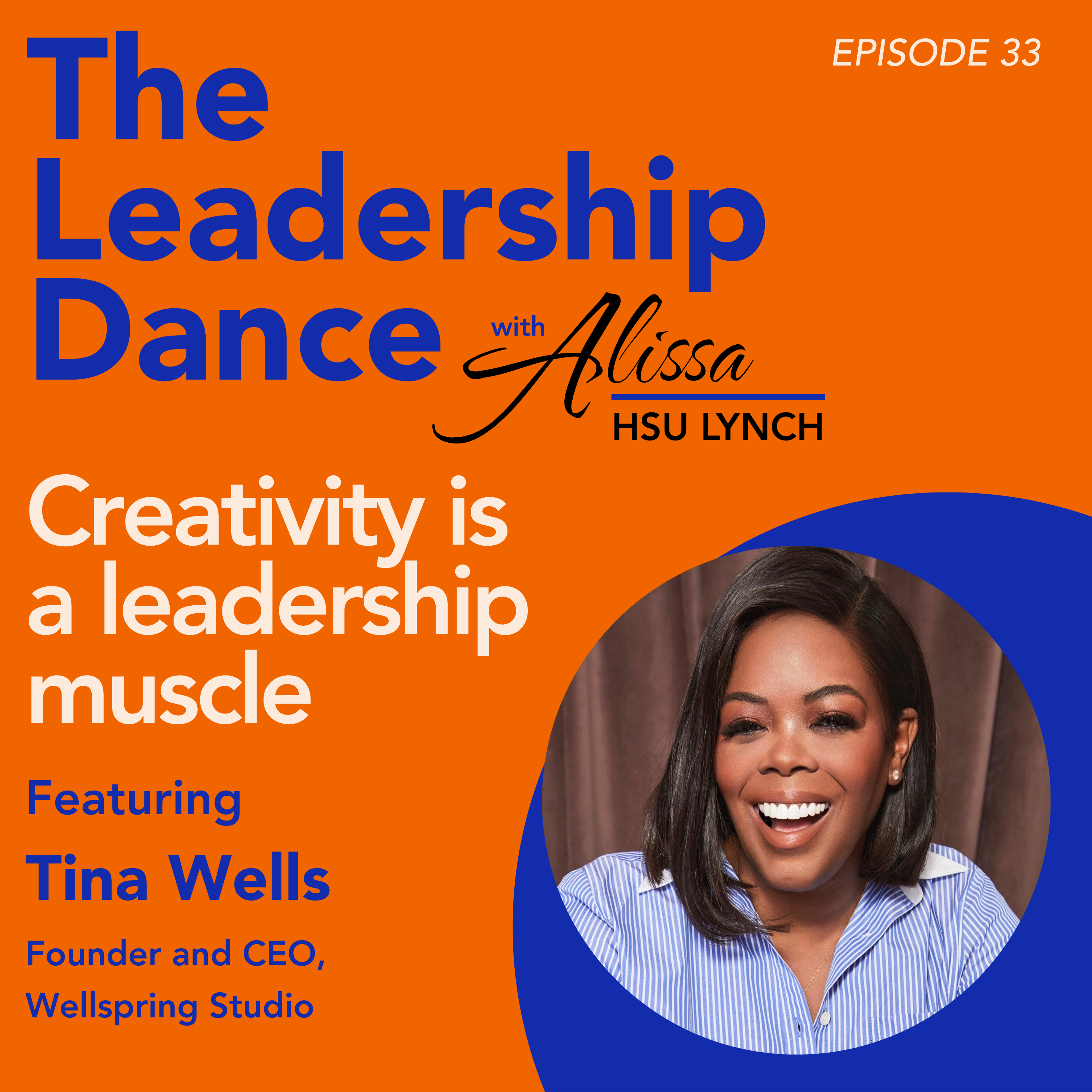
So you heard it here first. Tina Wells telling us what's next. Hi and welcome back to the Leadership Dance where we explore the art of leadership with trailblazers in business and the arts. If you enjoy the show, please subscribe, share and subscribe and leave a five star review. And if you're listening to this episode right now, also check out the video on our YouTube channel, he Leadership Dance. I'm your host, Elisa sue lynch, and I can't wait for today's conversation with the amazing Tina Wells. Tina is a renowned thought leader in retail and marketing and the founder and CEO of Wellspring Studio, dedicated to empowering underrepresented founders. Before launching Wellspring, she spent five years developing and introducing brands exclusively at Target. She's also the author of more than 20 books, including the Elevation Approach and popular series for young readers like the Z Files and Mackenzie Blue. In this episode we talk about what makes Gen Z tick, navigating, reinvention, and how to design a life of ease, joy and flow. It's so good to have you here, Tina.
- [02:17]
A
Oh, Elisa, thank you for having me.
- [02:20]
B
So, Tina, tell us about your childhood and how your upbringing influenced your career.
- [02:26]
A
So I grew up in suburban New Jersey, so I consider myself at the time I was a very American teenager. I'm the oldest of six children, grew up with my parents, a very suburban environment. Like I said, I read teen magazine. I liked every teen movie. And when I was 15, I got the coolest break ever. I consider it the coolest gig ever. I became a writer for this newspaper for girls called the New Girl Times. And at that time, my dream was really to be a magazine editor. And I never could have guessed that this job being a product review editor would take me into marketing and into, you know, the career I've had for 30 years. But at the beginning, I was, you know, a typical American teenager in 1995 who was into all things pop culture.
- [03:13]
B
How many siblings did you have?
- [03:15]
A
I have five siblings, so I have two brothers, all younger. Two brothers, three sisters.
- [03:20]
B
So you talked about getting this first job writing at 15, but at age 16, you also founded your first company, Buzz Marketing, and you then went on to become a leading voice on Gen Z and millennial consumers. Talk to us about, why did you start Buzz Marketing? And how has your approach to market research evolved since that time?
- [03:42]
A
I was an accidental entrepreneur. I think in 1996. We didn't even have the language as a teenager to talk about entrepreneurship. But as I said, I was a product review editor, and I would always send my columns back to the companies that gave me product to review, and I'd always get the same response. If I keep sending you more product, will you keep telling me what you think? And it actually just became too much for me. So I brought on some friends and said, guys, guys, take a survey. I will do a report out of what we think. And that became really popular. And I literally say I had clients, but I used clients and quotes because no one was paying me. I didn't know yet you could make money doing this. And it wasn't until my freshman year of college. I had done a report with some friends, and a woman called me, and she said, I need to tell you something really important. I just paid $25,000 for market research. What you and your friends told me was 10 times better. Of course, you know, most of our founder stories, we have these moments and we call them luck, but it's really opportunity meeting, preparation, right? And I was a freshman at Hood College in Frederick, Maryland. I was taking an Intro to Business class with the head of the department, and I went to see her during our office hours and said, hey, I just got this call. I've been doing this thing. What do you think? And she said, you know what? I think you have a business, and why don't you take an independent study with me next semester? Like, let's see what we can do. And I will tell you that semester, the second semester of freshman year, is probably the hardest 13 weeks of my life that I've ever worked on any business. And she really helped me navigate. This was right around the first dot com bubble. My professor, Dr. Jost, was adamant that I not create a dot com business. And she had the great foresight to say, I think this is going to dot bomb build a really solid business. And I happen to be at the right place at the right time. I mean, I'm sure you know what happened in culture around 1999-2000. This is where we're having NSync, Backstreet Boys, a Teen Explosion, Teen People, Teen Vogue. And so I was really very fortunate to be at the right time, at the right space, in the right place.
- [05:47]
B
It sounds like maybe you started with really understanding teenagers. How did that focus evolve over time?
- [05:54]
A
First, I started out with, like I said, I had a group of 10 friends that those friends grew to about 25 people. And I remember this will give you an idea of kind of how limited we were with technology back then. I remember, you know, a friend saying, I have a cousin in Texas and she would love to be part of this. And I remember saying, but how would I communicate with someone in Texas? It wasn't as connected as we are now. And as the connectivity changed in. In 2000, I was very lucky to be featured in then Cosmo Girl magazine with this cool job alert to be a buzz spotter. That's what I coined the term I coined for my trendspotters. And that network of, I think at the point, that point was up to maybe a hundred, very organic. Grew to about 9,000 overnight. We had 30,000 applications from teenagers all over the world. Was shutting down the phone lines at Cosmo. I had editors calling me saying, you have to make decisions quickly. And we were doing everything we could to kind of get through these applications. And so once I had this panel, I said, well, what do I want to do with all of these interesting people? And to me, the natural thing to do was to start doing research. I felt like we had typical research on teenagers at that point, but nothing that was interesting. And so the research I was doing, I was asking about sex, just talking about drugs. The biggest issue of that time was illegal downloading of music. And I had done a study where I interviewed 500 teenagers and found that 99% of them had illegally downloaded in the last 30 days and had no intention to stop, which was not what the industry was saying. The industry at that time was saying, this isn't an issue. Only 17% of the population are involved. I remember presenting at a really big music conference. Nobody was really intrigued by what I said, except for one woman who was the head of research for Sony Music. And so they became one of my first clients. And from there, you asked, how did I get into Millennials? Were the short answers. Those teenagers grew up and they became Millennial. And I remember thinking, I've been studying them for four or five years. I have all this research, maybe I should expand to 24. And I was 24 at the time. So the company kind of grew as I was aging up and had this data. And then I was literally positioned to be one of very few people who understood this new power generation that was emerging.
- [08:11]
B
You know, Millennials, that's an amazing story. And it makes me think about when I was at Johnson and Johnson. We actually used buzz marketing. So so I had worked on Aveeno, and then later I worked on Clean and Clear, which is a global teen skincare brand. And I didn't know you at the time, but we used your services. But it makes me think that when I worked at Johnson and Johnson, it also mimicked what was happening in my real life. So when I first joined jj, I had little babies. I worked on Johnson's baby, then I worked on Aveeno and Clean and Clear when I had teenagers, and then got into anti aging as I've gotten older. Not there anymore, but it really helps when you are also the consumer.
- [08:50]
A
Yeah. And I didn't realize that really when I started. My original tagline was buy teens for teens. I just felt in the mid-90s that we were becoming a sought after demographic and we didn't have our own voice. And if I think about a through line throughout my career, it has always been that I'm on the side of the consumer and I'm on the side of the consumer having a voice. And I always felt like the job, my job as a marketer was to understand what consumers want and to deliver that. And I think I really changed a lot in the industry because I was saying, I don't know that I think that's true. I think there are really cool people that I need to connect with and I need to understand how they see things and then translate that for corporate clients like J and J, like P and G. And that was really what was so fun for me at that time in my career was that I got to be kind of in the street with other teenagers interpreting our culture for corporations. And I still got to do that. Even a couple years ago when I was working with Target. And building brands there. It felt the same that I was really listening to consumers, giving them a voice, and then really fortunate to build product that really could serve them.
- [09:58]
B
You are still an expert on Gen Z and maybe even Gen Alpha now. Do you think business leaders understand Gen Z or this next generation and their expectations?
- [10:09]
A
It would be a mistake to see them as an extension of Millennials, I think. Millennials, that generation is really a once in a lifetime generation. And what I mean by that is the perfect storm of what really made that generation, right? The 2008 market crash, right? So imagine this generation is leaving college and the, the path that has worked for many generations before was no longer there for them, right? So that job, that first job, that leads to stability, that leads to marriage, that leads to buying a home, all those things didn't exist. And what did this generation do? They were very anti establishment, right? This was a generation that said, the government is not working on my behalf. I need to then create. And we got some of the greatest creations of our time out of this generation. I'm talking Uber, Airbnb, Warby Parker. And we saw massive disruption to the way we had done business, right? From booking a car to a taxi to how you book a hotel, everything, right? And so this is enormous amount of change. Then when you Pivot to Gen Z1, they're the most diverse generation in the history of our country, right? They're the most financially savvy generation in the history of this country. And so you put those two things together, they took a different approach. They actually, as a generation believe that the government needs to work for them or. Right. And you're seeing a lot of younger people say, no, no, we're not anti establishment. This whole thing needs to work for us, right? So you see someone like Zoran Mamdani really being driven by that generation and the idea that we're not going to circumvent the government and build cool companies and build cool stuff. We're going to take these systems, we're going to disrupt them, and then we're going to make these larger systems work for us. And then I think they value different things. I think they have watched what happens when you prioritize, maybe stuff in a way, right? They're rethinking what do I want my life to feel like. I like to watch a lot of TikTok and I was watching the funniest video of a woman who is like a career coach and she said, someone literally asked me a question if they should take $120,000 to work remotely or $240,000 to go into the office. And she made the joke like, of course this was a Gen Z person. Anybody else would take the money and go to the office, but they really, we're evaluating is this the right fit for my life. And so I think with Gen Z, it's been a lot of interpretation, real time. They have so many metrics, so much information that they're able to process, but it really comes back to quality of life and what makes the best quality of life. And I also think as a generation, they are the most digitally native when it comes to understanding technology and how to make money from it. You think about companies like, like to know it that have minted over 200 female millionaires. Right. Just from the use of technology and understanding it. And I feel like with Millennials it was a mass adoption of it, right. Of bringing it into their life, incorporating it into every day. But I think with Gen Z it was a refining of that. Right. And really understanding how and where it fits in their life and how to take most advantage of it.
- [13:13]
B
Fascinating. You know, I was mentoring a younger leader and she's in between jobs and she's applying for jobs and having a hard time because she said she just wants to be 100% remote. That's a non negotiable. And it was difficult for me to kind of understand that mindset and figure out how to advise her. How would you think about that? If someone wants to just be remote, what should companies do?
- [13:37]
A
I think the return to office needs a rebrand for me even. I remember opening my first office when I was 22 years old. There's so many magical moments that happen through community, whether it's meeting someone, meeting friends. There was just this beautiful aspect of community. And I think for younger generations, they've taken away all the bad things that can happen. And I don't think we've really talked enough about the good. Right. So it's this idea that if you're in the office, it is a toxic environment and you don't want to be in a toxic environment. So you therefore you don't want to be in the office versus saying what do we want this office to feel like? Right. I, I am now old enough to remember when offices became the coolest places. Right. Where you had unbelievable snack bars and services and they like there was just such a community built around the office as happens quite often in culture. Right. We completely swing the opposite direction. And it's not too often returning to the office is about the Company. And I think the true benefit is for the individual, it's for the community. That can come from that. And being with like minded people and what happens, you know, you know, there's so many brilliant minds and that energy of sitting in an all day session or ideating together, it's great to come up with an idea on your own, but there's nothing like being with a group of people where you all are specialists in different things and you collectively bring your talent together to solve a problem. And so I just think we need to think about the positives. I think there have been so, so much attention on negatives and not enough about the positive of being together.
- [15:08]
B
Yeah, a hundred percent agree. And that community, the friendships, the brainstorming, the innovative creative mindset that kind of happens naturally when you're around other people is definitely a benefit. And I also see why working from home, at least some of the time, there's also a benefit to that. So you once said that closing your business was the hardest yet best decision you ever made. Tell us more about that. Why was it the best decision?
- [15:36]
A
Well, I knew this is back in 2019. I knew that the agency business had to substantially change. So I knew that that was an inevitability that how agencies were servicing brand clients was going to be overhauled. And I really started to think about, well, what did I love the most? And I had been very fortunate to work on a lot of really cool influencer campaigns. So I got to build the Dell Inspire 100, the Labo 100, and most notably Oprah's Super Soul 100. I loved the content element of my business. I loved the community element and I loved the commerce. And I really had ideas around how all three needed to work together. And so in my mind it was I can either build a power agency of the future or I can really focus on content. And at this time, I had already written my Mackenzie Blue series and I felt like, wow, the series did so well, sold hundreds of thousands of books. But I didn't get to focus on it because I was running an agency. And right around that time I had sold the audio rights to Audible. And so Mackenzie Flu was like coming back again. And I thought if I could do anything I wanted to do, what would it be? And it was content, right? And this was 2019. Content hadn't yet exploded. And it was a really good decision for me. It led me to the partnership with Target, it led me to doing 14 books in three years across three new series, plus Elevation Approach and then developing product and so I feel like I got to explore the other side, where as a CPG marketer, we get the product after the fact. It's normally the innovation team, they build the product, they bring you the product, and then you bring that product to consumers. So it was a really unique opportunity for me to actually see what my clients go through, to go through all that R and D on my end, to see what it's like to have my own product on shelves, to deal with those weekly sales. Inevitably, I realize I like to be on the marketing side, but I really appreciated the education of how the sausage gets made. Right. I understand every part of the process, from supply chain to shipping, all of it. And so I love product design, I love product development, I love creative development. But I realize I'm a marketer through and through, not someone that wants to run an agency.
- [17:51]
B
So you are clearly creative, a brilliant marketer. What is your secret to creativity? Do you ever get writer's block? I mean, you've written so many books. How do you stay creative in that creative mindset?
- [18:03]
A
Creativity is a muscle, and I think, like any muscle, you have to have a training regimen for that. And so I often think about what fills my cup creatively, and it is a toolkit. So, like, my friends are really important to me, and also people who have very different perspectives than I do. It has always been really important to me to have those people who are, I don't want to say provocative, but think differently. Right. You know, as marketers, we can get caught up in, like, a big idea and think that that's the way everyone sees the world, and that is like a recipe for disaster. So I wouldn't say contrarian, but I always want independent thinkers. So I think it's really important. If there is a writer or someone who rubs me the wrong way, I kind of lean in a little bit, because then I ask myself, what is this getting at? And I need to understand. Travel, for me, is huge. The experience of travel, I think, one, you're on a plane, you can't be on your phone, really. You can't be making phone calls. And so I think as a marketer, just observing culture is really important. I think so often we think about how we can have some sort of effect on culture, but sometimes you just need to observe it. What are people doing? You know, airports are great places to watch and observe. What do people do when they don't think anyone's looking at them? And there's so many trends I saw birthed in the airports that I would report on that piece is really important. And then I would say, I always look at curiosity as a cure for stagnation. And so if I ever feel stagnant or that I don't have an idea, then it's, well, what am I curious about? I always have a hobby or an interest or something that has absolutely nothing to do with anything I do. It's just something where I'm like, I need to learn a new thing. I need to learn how to do a new thing. Because I think, again, curiosity is a muscle and I think we have to stay curious. I don't think you get curious. It's a constant state for me where it's like, oh, I want to know more about this. Why? What is this? This is so interesting. And I think that's ultimately a marketing skill, right? Where we want to know, we want to connect so that we can create the communication or the link that gets a consumer to understand a product or a message. But it really, to me is about curiosity.
- [20:13]
B
I love the idea that curiosity and creativity is a muscle that anyone can build. What do you think about also using structure to unlock creativity? Because I think sometimes you can't just go out there and be all creative. Like, you still need structure to guide you. How do you think about that?
- [20:31]
A
I think it's always important to understand, especially in the practice of marketing. Marketing is an art and science and I think it's so important that if you are too artsy or too scientific, you miss it. Right. So it's a constant tension between those two things. I think that for me, data has always been so important to my practice because I need to understand how big is a total addressable market and then also what's my target market and operate between those two parameters. Right. I want to know how big the opportunity is for my client and how they can build. But I also need to know where we're starting. And so I think you can't have a starting point if you don't have data. And if that data doesn't ground you into a positioning and then from there that data is also amazing because it allows you to see where the growth opportunity is. And so we've seen a lot of money spent in marketing on really creative campaigns that at the end of the day you say, well, who was the target audience for that? We can kind of tell when the data part is missing. And then you also see some things that feel very data driven. And you can see where the human touch of it and the imagination or that human connection is also Missing, Right. That's why tools like AI don't scare me, because I think it's a great tool, but I don't think it'll ever do the completely human job of connection. Right. I think there could be some authenticitude there, but it's not actually authenticity. As marketers, we know the difference between the two. And so I think data is really important. I think creativity is really important. But it's that perfect mix, right? You always make sure you're not over indexing in either.
- [22:08]
B
In addition to Mackenzie Blue, you've also written beloved series like the Z Files, Honest June and the Stitch Clique that inspire young girls to find their voices and be true to themselves. Why did you decide to write these stories? And are there lessons that grownups can learn from these books too?
- [22:26]
A
My journey into middle grade started, of course, through marketing. I was working with P and G many, many years ago on this new emerging consumer called a tween. And you remember, for some of you, you may not remember a time when tweens didn't exist, but at this time, there were kids and there were teenagers. And this new emerging consumer, we used to call them a four legged consumer because in our minds as marketers, they were always still attached to the parent. Right? So the idea that a child would go into the grocery store and have opinion on what got put in the shopping cart at one time was revolutionary. This was changing the game in marketing. And then when tweens emerged, it was, oh my goodness, there's this very cool kid, 7 to 12, right? Not quite a teenager, not quite a kid anymore, who is interesting. They're starting to get exposed to technology. How do we talk to them? And as I started doing focus groups and research, I realized, wow, this is a really cool kid. I really love this tween girl. I think she's funny, I think she's interesting. You know how I got into writing a very traditional entrepreneur issue. I was doing a focus group. There was a break. A mom came up to me and said, you seem to know about things like this. My daughter's 10, she's reading gossip Girl. What should I do? And immediately it was, I wonder if that's a problem I could solve. How could I do this? But hearing that from a mom, I thought, well, I could write something super cool and the girl could be really good and it could be age appropriate. And so I saw it almost like a business challenge and fell in love with middle grade writing. I. I always say, I'm not a YA writer. I'm very squarely a middle grade writer because there are very specific sets of issues that come into middle grade writing that I feel I relate to and I know how to write for that reader. And so all of my series will have similar themes, whether it's definitely middle school, Right. So first time kids are entering middle school a little more independent. Also for girls at that age, things that are happening to their bodies first, exploration of relationships. And so it's just an area where I always have felt I want parents to be very comfortable with the material I write, and I want them to feel comfortable leaving their child to read my books independently. And of course, I write strong female characters, funny female characters. I think I grew up at a time where we had girls like Laura Winslow and Blossom, Punky Brewster. These were very cool girls, right. They, like, dressed weird. And so for me, as a teenager in the 90s, I didn't even know I was weird. We didn't. We thought we were normal. Right. Like Angela Chase, you know, there are all these cool girls where, yeah. Now looking back, I'm like, we were a little geeky, but we didn't feel that way because what was reinforced to us in culture was just, be yourself, be different. And I think for me, watching girls grow up in the late 2000s, it seemed to become a lot more polished. This need for perfection that I definitely didn't grow up with. And I didn't grow up on social media, right. So we could have a bad hair day, we could look awkward, we could do awkward things, and it was fine. And so I think I wanted to create characters where it felt like they were real girls having real experiences, making mistakes and figuring their lives out.
- [25:48]
B
So out of your series for our listeners, do you have a favorite series or where should people start?
- [25:54]
A
There's just something so special about Honest June. And for those of you who aren't familiar, Honest June is the story of a girl starting middle school and she can't tell a lie. She meets this very Tracee Ellis Roth, like, fairy godmother character, and she goes into a fun house one day and gets blessed with the ability to not tell a white lie. And so it becomes this really interesting series about how she survives middle school not being able to tell even the smallest little lie. June gets herself into a ton of trouble, but it's really funny and it's my only series that has a little bit of fantasy in it. And so that was a stretch for me as a writer to be in that space. And I think I'll always love Z. Z is the first character I've written about. So Mackenzie Blue was based on Z and then the Z Files with Z when. So she grew up in Southern California, and in the Z Files, her family moves to London. She ends up in a boarding school on the Cotswolds. I grew up loving this show on Nickelodeon called 15 Ryan Reynolds, first show about kids at a boarding school. And again, there's just something when you are in this middle grade age about this fantasy of going to boarding school. And so I love that element of Z, I think with the stitch click. I love the idea of five girls who are so different meeting at a fashion class and, you know, they're brought together by just something that they have in common. So I love that idea. But I would say of all of the books, June was the most fun to write because, again, it was structured in such a different way because we had to bring in these fantasy elements.
- [27:27]
B
Do you find that parents also read the books that their kids are reading?
- [27:31]
A
Absolutely. I have a lot of parents who write me who say, my daughter read this book or my son read this book in a day they don't normally read. And so I've heard from a lot of librarians that my books have been great for at risk readers. That is an audience I strive to reach. I want every child to know they can read. I think a lot of times in school we're presented with certain material, right? And I had to read all those books. But I remember in the summertime my dad would take me to the library, all six of us to the library, and I would check out five or six books, whatever the max was, and we'd come back the next week. And my summers, I spent them reading Sweet Valley High, Sweet Valley Twins, Goosebumps, Fear street was not like educational material, but it was fun. And I read a book a day. And so I think for me to now be writing the books that young readers are reading in a day feels awesome. Feels very, you know, like a completed circle, you know, but that's who I write for. I write for the kids who maybe wouldn't otherwise pick up a book. Pop culture is something I love. And so I think infusing pop culture and finding a way to make it relatable for the time yet something kids can read 10 years later has always been the challenge. But it's a really fun challenge.
- [28:47]
B
Are you working on something right now? Are you writing a series?
- [28:50]
A
I am not. And I just thought it's time to start writing something new. I always. My writing process is very different. I know some Writers like my writing partner, Stephanie Smith. She will do a few thousand words a day. That's her practice, right? So I feel like she's much more the artist way. I am more of, like, I could spend months, even years thinking through an idea, who the characters are, what they wear, building Pinterest boards, building the whole world. And then when I sit down to write the synopsis and write the outline or write whatever piece, it's all there, right? So it could have been months of me thinking about it. Haven't put one word on a page besides, like a Pinterest board. But then I'll sit down and write the whole thing. So I have a very different process. But I feel like, especially coming from the world of research, I could be spending years researching something. Right. There are ideas I started writing years ago that I might return to, you know, next year to say, oh, this is the idea that makes sense. A lot of my writing is what is happening in culture right now. And not even right now. It's trying to meet the moment. Because, you know, middle grade takes a long time. It takes about 18 months from the time you sell a project for it to get to market. I'm thinking about what is going to be a major cultural moment two years from now. That's what I've gotta be permeating on. So for me, it's sitting there and saying, okay, if I start top of 26, what is going to be our moment in 28? And then what do I want to write for that's going to kind of be a part of the zeitgeist in 28?
- [30:16]
B
Fascinating. We're going to take a quick break for a round of rapid fire questions. So just respond with whatever comes to mind. What's a brand you think really gets? Gen Z?
- [30:27]
A
Sephora.
- [30:29]
B
What's one word your friends would use to describe you?
- [30:32]
A
Funny.
- [30:33]
B
Favorite place to find inspiration?
- [30:36]
A
The airport.
- [30:37]
B
And what's your leadership superpower?
- [30:40]
A
Emotional intelligence.
- [30:42]
B
And then, because this is the leadership dance, what's your favorite song or type of music to dance to?
- [30:47]
A
Okay, this is going to sound really, really weird, but yacht rock.
- [30:52]
B
Okay, now you have to explain a little bit about that one.
- [30:54]
A
Because I'm a child of the 80s and 90s, it just feels soothing. When you grew up in the 80s, you know, we used to have these, like, yacht rock, like infomercials that would come on. So it just feels very soothing. It immediately brings me back to my childhood in some very, like, nice, easy way. Awesome.
- [31:12]
B
Thank you. So you have been a strong advocate for women Building businesses and, and defining success on their own terms. What challenges do you still see women facing today and how can leaders help remove those barriers?
- [31:27]
A
I think it's interesting that we are prioritizing a conversation around family, family planning, family values, yet we're not prioritizing a conversation around the support that women need to be both. And I have a client who has a great book coming soon where she's really exploring this concept. So I spent quite a bit of time this year really understanding this idea. But I think what I hope we see in the future is really real tools, real resources. And actually again, it's, I think about listening to the consumer here. It's we need to listen to women and say, what do you need? How do we support? Right. And what does that look like? And also look at some societies where women feel very supported. Link to Alexis Ohanian and his work around paternity leave. Right. And the research he did looking at some other countries where they prioritize paternity leave. And so then it prioritizes, you know, the father's involvement in a different way. And so I just think we have outcomes that we want, yet we're not taking the time to say what do we collectively need to do to make the situation better for everyone? And what does that look like? I think you're going to see even more women starting businesses wanting that, a bit of that flexibility. And I also think it is because of motherhood. Right? It's because of what they realize they've accomplished, right. What their bodies have done that there's. I see a lot of female founders who are mothers is energy. They know deep down that they have created, that they are creative. They have given birth to this amazing person. Right. It's an amazing act of creativity. And it's after that experience how they see creativity, how they see bringing something to life, just seems to 10x, you know, in this beautiful way. But what doesn't seem to 10x is how we support them in the future. Businesses founders who take on this idea of what support actually looks like, I think those are the next billion dollar companies, really. I think there's going to be a huge opportunity for businesses who take on this entire issue of what does it mean to be a support system and what does it mean to support the entire family? I think all of us who are part of the sandwich generation. That's something I experienced. Right. Where you were participating. You know, I'm an aunt, so I get to participate a different way with my younger niece and nephews. But then also the sandwich generation of supporting parents as they age. I think that's another industry that is ripe for innovation, is how do we support the 60 million adults who are in the sandwich generation who are actively raising children and supporting aging parents?
- [34:07]
B
Yeah, I think there's been a lot of focus on the aging population and the support they need. But you bring up an excellent point around that. The support, the people who are actually doing the caregiving. Your career spans research, branding, publishing, product development, and lifestyle design. What gave you the confidence to pivot across such different industries?
- [34:29]
A
I think it was the ignorance. You know, as a teen entrepreneur, I always say, if I had even attempted to start Buzz marketing group, even 10 years later, I would have said, absolutely not. I'm getting a job, I'm going to law school, and I'm going to do the safe thing. Because I was an accidental founder so young. That initial five years of all those bumps and bruises. I hadn't even graduated college by the time I had that, right. So I exited college as a pretty savvy founder, really big clients, and I was kind of off to the races. And then by 25, had my cover story with Oprah's magazine, which back in 2005, probably wasn't a piece of press that could be better for my career at the time. But I didn't really know, right? Like, I wasn't the founder that knew everything. I mean, there is a piece of me. I'm always doing research, right? So there's something I'm genuinely curious about. But everything was accidental and everything was gut instinct. And me saying, do I think there's an opportunity here, right? So when I first was approached to write a book, and I will tell you, I often say no. First I said, I don't have time for that. And then the second time it showed up was when I take that pause and say, okay, this is being brought to me a second time. The same way my books came around again. The first time I had done it, it was great. The second time, with the audio, it said, I have another opportunity. I need to look at this a different way. I think the same. For developing product, my first instinct was, I can't do that. You know, and then I took a step back and said, well, why can't I? What's challenging? And it was this idea that I had to learn something totally new. And I thought, well, that's fear. And at this stage in life, I don't want to lose that part of me that is going to do something. I don't know how to Do. In fact, it's going to teach me to become comfortable with being uncomfortable. And that two years of building my product, I was incredibly uncomfortable because I didn't know what I was doing. But I brought that level of curiosity to say I'm going to learn everything I need to know. I'm going to interview my friends, talk to people, understand the white space. And that's how I approach every element of my career. Okay. If someone's asking this of me, they see something in me that I don't see. What's giving me pause? What is it that I'm uncomfortable with? Right. So I want to get comfortable with the things I'm uncomfortable with. And then the third piece is really in assessing the landscape of the what's the space? I see where I could be additive. And if I see those things like that's naturally how I get into something new. So it's not always a falling into it. It's like, oh, that's interesting. Assess the landscape. What's my white space? Okay, I found Elaine. Same with middle grade, right. It's like, well, I'd like to write Good girl that parents are comfortable with. That's really cool. Okay, I have Elaine now. So it takes me a minute sometimes to figure out what my unique angle or unique value proposition would be. And if I can find that, then that ends up being something I'm interested in pursuing.
- [37:20]
B
So what's next for you? What are you excited about?
- [37:22]
A
This is something very different for me. I'm really interested in editorial, which is really funny because I told you at 15 I wanted to be an editor. And I think that there's a unique opportunity next year, specifically where people are really looking. I'm calling it, you know, whether it's an analog life, a log life, people are looking to get offline in a unique way. Whether that's returning to magazines or long form content. I think content is absolutely going to be queen next year. But I think it's going to be different. I think you're going to see entertainment edutainment as I call it. I want to play in that space. I think that for better or worse, non political people are just fed up with being fed anything as truth. Right. I think it doesn't even matter. And that's what I love about being a trend spotter or being in that it's not a political thing. You, you really try to understand the moment. And it's not about if you're a Democrat or Republican. I look at consumers, right? That's why I talk about them as consumers and don't try to politicize across the border saying there has to be more than anyone deciding what I get to consume, right? And it reminds me of what it was like to be a teenager in the 90s. I could read Sassy if I wanted to be a sassy girl and all the cool girls we had that. If I wanted to be really chic at school, I could have Teen Vogue, you know, if I wanted to know everything about celebrities, I had teen people, right? So I was able to show up as a teenager in all these different spaces and I think we want that again. I think we want these creative spaces. So I think, you know, a lot of times as marketers, we're good at branding things and calling this dead and that dead. And I'm sure you remember a time where we thought TV was dead, right? And I would argue TV got reinvented and it has never been more interesting, right? There was a time where I'm dating myself now, but you'll understand movie stars did not do tv. Movie stars would not dare. And now it's like movie stars making really exciting tv. And so I think next year is going to be about content. I think it will be a lot less social media. I think social media is due for a correction. And that makes sense, right? It is maturing, I think maturing properties, maturing businesses need correction. We saw it with D2C a few years ago, right? D2C companies became 10 years old. What do we notice? The bad ones went away, the mature ones grew into mature businesses. And so I think we're going to see that with social media. But it's also going to open up, I think a return and I think a yearning for really what I call like analog experiences. So take from that what you will, whatever you consider an analog experience experience. But I think you're going to see some really good long form journalism next year. I think people want a richer, deeper experience where they can find it. I think that's what's beautiful about Substack, right? We're getting to read and really feel like we're in the minds of some really genius creative people. And so I think it's going to be really great year for artists. I think we need artists to really do their thing and to inspire us again. I think no matter again, this is not about politics. I think the general sentiment of most people I talk to is blah, if not worse. And so I think the people that rise to the occasion to do something that almost transcends a political way of thinking and really connects us with our deeper human values. I think we're all really aching for that. And so I think it can be a really exciting year for art to really inspire us.
- [40:51]
B
Amazing. Wow. So you heard it here first. Tina Wells telling us what's next. Thank you for sharing that last question. What advice would you give to your younger self or to other entrepreneurs or intrapreneurs about navigating your career while staying true to yourself?
- [41:08]
A
I wish I hadn't taken myself so seriously at a young age, took my business very seriously, took everything very seriously. And I wish I had just breathed a little bit more. I think more nights out with friends. I think I was so focused on grinding and that's what I actually think Gen Z gets right. The they get the balance right. I had to burn out at 27 and then write a book on what work life harmony really meant. And I think that generation probably is the last generation to need my book because they get it, they just see it and they know that they need to prioritize the life part. Right. That work is important, but the life part of work life harmony is really important. And so I think I would have told my younger self, prioritize having a life, being a really interesting person, pursuing interests just because you're interested. Right. It's not about networking and I did that, but it wasn't always intentional. Right. When I met some of my best friends joining an art community at the Philadelphia Museum of Art that had nothing to do with work. But I wish I had done more of that stuff and just said I'm just interested in this because you do meet the people you're meant to meet when you kind of pursue your own passions. And so I think I wish I were a little more intentional about that.
- [42:19]
B
Amazing advice, Tina. Thank you for sharing your leadership dance with listeners and it's been so fun to chat with you.
- [42:26]
A
Thank you so much, Elisa. This is great.
- [42:29]
B
Like Follow and Share the Leadership Dance where we explore how to choreograph the career of your dreams and chat with visionary leaders who are breaking barriers in the arts and business worlds. Until next time, keep dancing.
- [42:46]
C
Everyone deserves to be connected. That's why T Mobile and US Cellular are joining forces. Switch to T Mobile and save up to 20% versus Verizon by getting built in benefits they leave out. Check the math@t mobile.com switch and now T mobile is in US cellular stores. Savings versus Comparable Verizon plans plus the cost of optional benefits, plan features and taxes and fees vary. Savings with three plus lines include third line free via monthly bill credits. Credit stop if you cancel any lines. Qualifying credit required.