← The Leadership Dance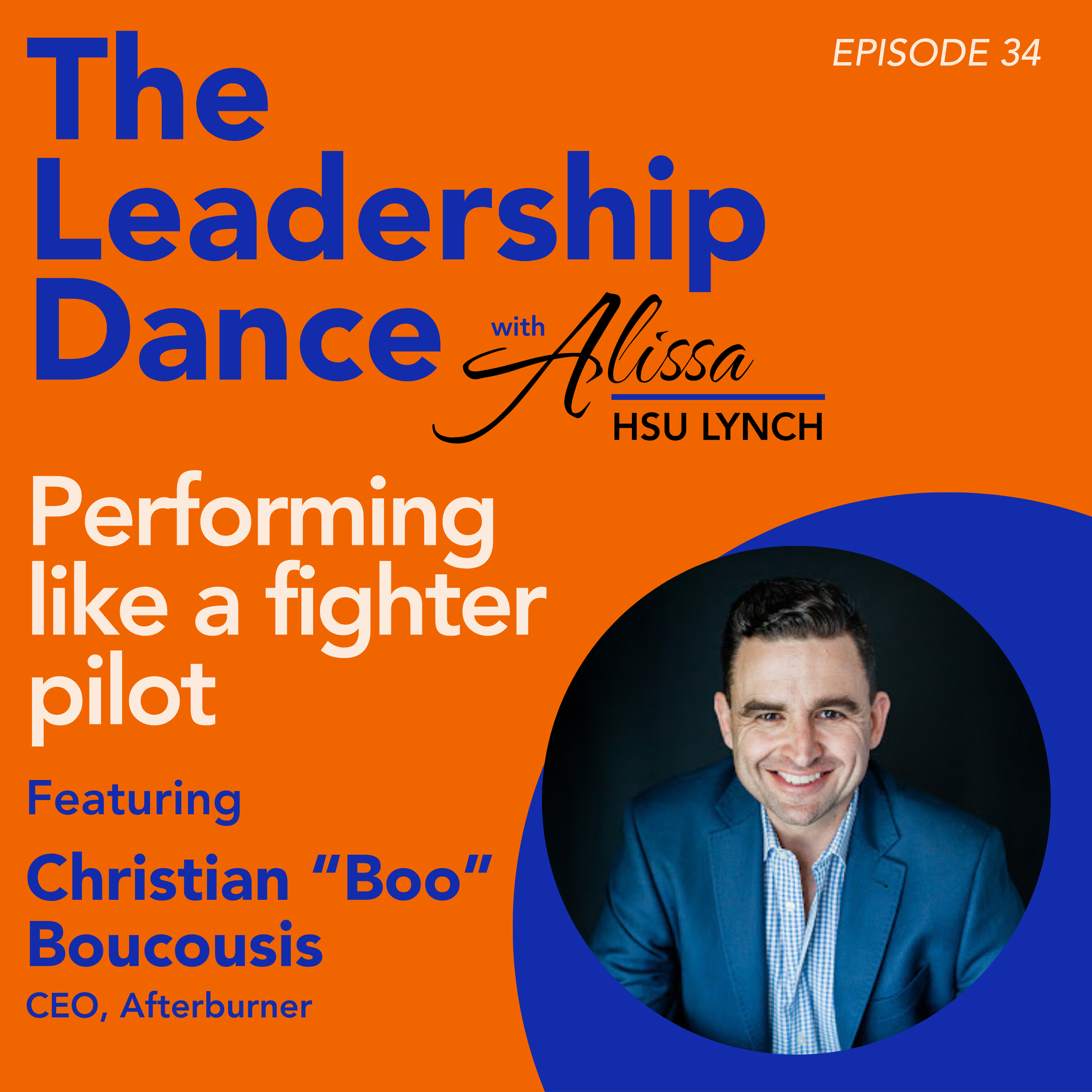
Loading summary
Transcript49 lines
- [00:00]
Alisa Sue Lynch
The new Wegovy pill is now available through weight watchers. Powerful GLP1 results in a simple pill at the lowest price available. And with Weight Watchers you can get doctor support and personalized nutrition programs. See if you qualify@weightwatchers.com ad not reviewed.
- [00:14]
Instacart Advertiser
Or approved by Novo Nordisk.
- [00:16]
Christian Boo Bokousis
We're basically living fight flight or freeze all the time Email Message Everything is a surprise. I'm at this heightened sense of sensitivity, not awareness because you're not aware of anything. You're just reacting. And then, you know, we get anxious and then we get depressed and we lose meaning because no one, no one's actually explaining the meaning of anything. It's just a whole bunch of words and stuff that you need to do. So we're seeing it in burnout rates, in the leadership layers. We're seeing this awareness of lifestyle and work life balance in Covid that now is being replaced back into just six days a week, 12 hours a day. So somewhere in there we just need to start realizing that the jet is flying the people. Technology is driving everybody. We're not using it to drive our own human agenda. And that requires a shift from a person that does a lot of things into a person that's achievement focused. And that's the shift between a fixed mindset, which is I do what I do and I know what I know, into growth mindset, which is I need to change and be different, to be what I need to be tomorrow to get the results we need tomorrow.
- [01:18]
Alisa Sue Lynch
Hello and welcome back to the Leadership Dance where we explore the art of leadership with trailblazers in business and the arts. If you enjoy this show, please subscribe, share and leave a five star rating and if you're listening to this episode right now, also check out our YouTube channel at the Leadership Dance. I'm your host Alisa sue lynch and I'm thrilled to be joined by Christian Boo Bokousis. Boo is a former fighter pilot turned CEO of Afterburner and a globally recognized authority on leadership performance and human behavior. Selected for pilot training in the Royal Australian Air force at age 18 and among fewer than 400 fighter pilots trained in a four decade span, he spent over a decade leading high stakes missions where margin for error was minimal. After a medical discharge due to an autoimmune condition, Boo pivoted from military to business, founding multiple ventures before dedicating himself to translating fighter pilot execution habits into corporate performance. Today, he helps leaders adopt his flawless leadership mindset, enabling clarity, alignment and speed of execution in complex environments. Welcome to the show Abu Elisa, thank.
- [02:35]
Christian Boo Bokousis
You so much for having me. I'm super excited.
- [02:38]
Alisa Sue Lynch
So I feel like we have somewhat similarly unconventional career journeys, with you pivoting from being a fighter pilot to, to becoming an entrepreneur and me starting as a professional dancer before going into business. Can you take us back to the beginning? What first drew you to flying and how did that experience ultimately lead you to the work you're doing today?
- [02:59]
Christian Boo Bokousis
A lot of similarities between dance and fighter pilots. We have the same operating rhythm. We have to nail the mark. But for me, as much as I'm all about intention today, I wish the, the start of my career was intention, but it wasn't. It was belief fueled because I first connected with this whole idea of being a fighter pilot when I was five years of age, when my dad took me to an air show in Australia on a beautiful summer's day, as we did back in those days in the late 70s, getting sunburned, watching these incredible airplanes. The pilots in the cockpit, the, the helmets, the, the patches, the flight suits, the airplanes, the noise, the jet fuel, the whole thing was just overwhelming sensory overload for a little boy. And towards the end of the airshow, this airplane flew over the top and I got hit by this shuttle. I look up, see an airplane and it wasn't making any noise and I'm like, well, it's a fighter jet. Should be. Before I could finish the thought, you know, this thunder of an airplane flying mere feet above me kind of had me bursting into tears and crying and laughing all at the same time. Very conflicted, emotional young man. But in that moment, something happened. And I was just always going to be a fighter pilot from that point on. And it took me 17 years before I actually flew a jet solo for the very first time. Which is, you know, about how long it takes to achieve a life dream, I think. But to me, that was, that was really it. And I'm so blessed to have been connected with that purpose so young because it mitigated an inordinate amount of personal weaknesses throughout that process and empowered me through to be able to be a fighter pilot.
- [04:34]
Alisa Sue Lynch
So what was the training like to talk to us about that?
- [04:37]
Christian Boo Bokousis
Crazy, intense. It's not training, it's like it's a reprogramming of a human being is what it really is. And it's about a two year process. What's unique about the military, we actually start with leadership. Job priority is officer first, pilot second, which is almost the opposite of business, which is all about the skill set. And then with the application of the skill Set and then kind of an accident happens and you end up being, being in charge. So for me, the hardest part of the, of the program was the three months of officer training at the start. For me, I was a 19 year old by the time I finished through the selection process and you know, it was very eye opening having that sort of accountability foisted upon you. Everything in the leadership model for the Air Force is all about achieving results. It's not about sensitivity, it's not about people leadership. It's like here's an objective, go get it. With a small team, it's intense. I mean it's 400 missions from the first mission that you fly till the last mission. And every one of those is incrementally more challenging both cognitively and physically.
- [05:39]
Alisa Sue Lynch
How do you describe the fighter pilot mindset and how does that apply to leadership?
- [05:45]
Christian Boo Bokousis
You develop confidence, you start to truly understand the power of preparation and the power of peace and calm to be able to perform in an incredibly fast, overwhelming environment. It's just this constant, you know, reprogramming of a human being to not be reactive. Because if you're reactive as a fighter pilot, it's too late. Constantly have this conversation which is, now that I've made that decision, what's the next thing I can anticipate? What is the consequence of that decision? And I don't mean the business world of decision making quarter by quarter, I mean the fighter pilot world second by second. And I think when you pop out of that environment and then into business, there's a few things that I really feel like I'm lucky to have learned. The first is to be growth minded, like every single thing can be improved, you can always do something better the next day or differently. And that the status quo is not a safe place to be because the world is going to move around you really quickly. So that was a good thing. Second is to value time in seconds, minutes and hours instead of days, weeks and months because it unlocks all of this extra opportunity on a daily basis to be successful and achieve these small wins. And finally, probably humility and just understanding that your self preservation programming as a human being which drives most of us is not a performance framework. And particularly in the world of fighter pilots, there is zero probability of success without a high performing team around you and a very purpose driven team. So those three things for me, you know, always understanding that you're in service to everyone around you, like that's your job as a leader, like you're the, you're the one that fills in the blanks and fills in the gaps and also the patience, which I don't have because I have adhd, so I'm very impatient, but the patience to let other people make the mistakes. Because we train fighter pilots continually. You know, it's a, it's a two, two to two and a half year cycle. The squadron gets new people every six months. So you can't afford not to have a system that grows people very rapidly. And I think that's a great environment to be in. You see businesses that are orientated that way. I think growth is something that we have great intentions about, but I also think people don't quite understand how to do growth. It's not just reading a book, it's not just having positive intention. It's being really clear and granular around what success looks like this year, this quarter, this month, this week, this day. And that to me is I think, some of the really fundamental value that you bring from the fighter pilot world into the, what we would just call the real world back in the day.
- [08:23]
Alisa Sue Lynch
Yeah, those are amazing learnings and definitely a lot of parallels to dance. But I want to probe a little bit more on your journey to becoming a fighter pilot. Did you ever face a moment when you said, maybe this isn't for me, or, you know, face some challenges that made you second guess your decision of pursuing this dream?
- [08:44]
Christian Boo Bokousis
Never. There was a lot of struggles and I, I wasn't at the standard I needed to be at, So I repeated 12th grade. I wasn't at the academic standard. I was a small, you know, skinny kid at school and I needed to have the athletic credentials as well. You have to, you have to have the, you know, hand, eye, dexterity. Everything was extra work. I rode in the first eight of my school, but every winter I was the only one training while everyone else just trained. In the summer I played first six volleyball. I was on the track team. But the desire to be a fighter pilot and not accepting that it wasn't going to happen was the driver to do the extras. And I think there's that well known perspective that success is being really good at the things you actually don't want to do, not being good at the things you're good at. And that's been my whole life. Like every day for me is a grind. Every day, every day is extras. Just not doing the extras means I'm not going to grow and I'm not going to stay relevant. I need to grow at the speed at which the environment, the world around me is growing, which obviously now with AI and this whole parallel form of consciousness that's on its way, you've got to be quick, right? And you've got to constantly say, we have a saying as fighter pilots, don't let the jet fly you. You have to fly the jet. And it's really easy to get behind and it's really easy to get reactive. And in life we accept that as that's life. But in the cockpit we say that's not acceptable. I have to stop thinking, get back ahead of what's going on here.
- [10:15]
Alisa Sue Lynch
So, boo, how did you figure out what you wanted to do next? Because you transitioned from being a fighter pilot to then becoming an entrepreneur and starting different ventures. What was that period like for you? How did you determine what you wanted to do after you already achieved your dream?
- [10:30]
Christian Boo Bokousis
Well, first of all, it's coming to terms with it being over. That takes a little bit of time. But secondly, how I dealt with it was the way I was trying to deal with it, which is, well, this is just another problem. Every problem is solvable. The only variable is the time to solve it. So I kind of had a little bit of Runway before I left the Air Force. I knew I didn't want to be any other type of pilot apart from a fighter pilot. I didn't just want to fly, I wanted to operate an airplane. You know, all the old fashioned knights of the air and protecting people and, you know, I loved all that stuff. So the only thing I could think of that was kind of like being a fighter pilot is being an entrepreneur. A couple of things. It's when you're doing something new, you've got to find the minimum barriers to entry. I lived in Australia. I just come back from the United Kingdom. I lived over there for four years as a fighter pilot as well. I knew that if I tried to start a business in Australia, it'd be really hard because there's a lot of other people in the market. It's very competitive. They've got a lot more experience and relationships than I do. So the only place I could think of and my best friend and I were throwing this around together. And when we founded the company together, we decided just it was either Afghanistan or Iraq. I mean, no barriers to entry. We knew that both places needed to be rebuilt. So we decided we wanted to be the most moral and uncorrupt service provider in those parts of the world. And that was the core value of our company called CTG Global. We won our first contract and we did a good job. We were always took accountability if it didn't work. And the people we hired were credible and we had systems in place to manage corruption. And we just grew that business really, really quickly. And then I'd learned business and I understood business better. You know, one of the biggest challenges leaving the world of fighter pilots, going into the business world, is in the world of fighter pilots, if someone says they're going to do something, it gets done. There's no variable. So you're coming into business and everyone's like, we're going to do this contract with you guys and this and this opportunity. We were like, wow, this business is so easy. And then, you know, a year later you're like, damn, does anyone actually say anything and make it come real?
- [12:28]
Alisa Sue Lynch
Oh, so true.
- [12:30]
Christian Boo Bokousis
That was a massive learning curve and we learned how to deal with that a bit better. So you're asking better questions and managing expectation, asking questions about budget time. And we started to understand how that world works a little bit more.
- [12:43]
Alisa Sue Lynch
What was the service you were providing?
- [12:45]
Christian Boo Bokousis
Humanitarian projects. So the UN would raise money through the various, you know, international donor, like USAID back when it used to do that sort of thing. The same with the European aid organizations. They'd give the money to the United nations to then go and build schools and clinics and roads and run education programs. And then we would subcontract to the UN and deliver it for them. Because a lot of the work there was quite dangerous. And we also built a system to make it less dangerous. And they're like, look, well, it's just risk shift. We'll put the risk onto you guys that you lose someone, not us. And then we just, you know, grew on the back of that. So, gosh, we did all sorts of things. We had KPMG and Deloitte consultants writing legislation for hammered Karzai. We had people running camps and cooking dinners and other folks that were carpenters and building schools. So basically the handyman of that part of the world. So if you needed something done, we'd find the people and do it for you.
- [13:44]
Alisa Sue Lynch
Sounds like amazing and truly impactful work. That's awesome.
- [13:48]
Christian Boo Bokousis
It was amazing. It was a crazy time. Yeah. You're operating in a world where there's no law. Like, literally the books aren't even written, there is no legislation. It's like this raw supply and demand, like this real need, which I actually found quite difficult to assimilate back after I sold the business in Australia, where people are worrying about what color furniture they want to buy in their house. And you're in Afghanistan and they don't even have any furniture in their house. What's really interesting is that didn't matter, they were still happy. People would still sit down and celebrate and dance and kids were smiling on the streets. Was fascinating for me to really appreciate how happy you can be without anything. And I'll be honest with you, nearly 20 years since then, 15 to 20 years since then, it's. I've always still had trouble with that gratitude and people just being entitled and not understanding that you've got it good now we've just got so much choice and abundance that you can never be satiated. And there's a life lesson there which is going to be happy with what you have. Enjoy the opportunity to get a gift. Don't impulsively buy everything.
- [14:50]
Alisa Sue Lynch
You need life lessons for sure. So I want to focus a little bit more on the fighter pilot mindset and what you're teaching leaders to do today. So in the cockpit you have milliseconds to choose the next move. How do you teach leaders to make decisive calls when they don't feel ready or when they fear getting it wrong?
- [15:11]
Christian Boo Bokousis
Decision making is a funny thing. I talk a lot about this decision making loop, like what actually powers a human decision? And there's seven steps in the process. The first step is perception. The way in which you approach a decision is based on your perception of the world. It's certainly not a peer reviewed, independent sense of reality, which means it's all founded in your biases, beliefs and that manifest as behaviors. The second part of the process of making a decision is processing that feeling and that perception and finding the data to support that. And if you look at the world today, I mean there's people making decisions and commitments and doing stuff that defies logic, right? So I think we're seeing that at a massive scale geopolitically. The third step is the projection part. And this is what people are most nervous about, particularly leaders, because you're making decisions that have an effect in the future and it doesn't exist. So it's kind of scary. The average decision that we make is not very good. It's not based in logic, it's not grounded in reality, and it comes from a place of what you know, not what you could know or what you could be. Then we make the fourth step is actually making the decision, or more often than not in business, deferring it or putting a committee together to share the risk of that decision. And then actions happen, things happen as a result, and then you get results. But statistically, more often Than not, you don't get the results you want. And then the last step in the decision making process, step seven is the impact. And when we talk about impact in decision making, what we talk about is the emotional byproduct of your decisions. That's twofold. The emotional byproduct for yourself as well as the emotional byproduct of the people that were subject to the decision that you made. Now what happens with that and why it's a loop is because the impact of that decision now shapes your perceptions moving forward. So if you tried something and it didn't work, statistically you're less likely to try it again. People go, you know, I live in Park City, I'm in the mountains. People go skiing once, it's hard, they can't do it. So then they make the decision not to do it again because it's too hard. But really the impact should be, it's a little bit hard at the moment, it won't be later. So what fighter pilots do, so we can't afford to have that, right? We, we have to fine tune our perceptions. Because who I am today is not the fighter pilot I need to be. Particularly when I was 19 years of age, I was, I was a, I was an idiot. So I needed to, I needed to turn into a fighter pilot, right? If the system can't help me build confidence every day, even when I make mistakes and do things wrong, I'm not going to survive very long, right? I'm going to, I'm going to fall into a downward spiral. That's a decision making loop that's broken. So what they did is they introduced this eight step and this was back in the 60s and it's called debriefing. And what happens there is you effectively intentionally reflect on the impact of the decision and you say, well, is what I set out to achieve what happened? So is what I perceived, processed and projected what actually happened? If not, why not? And what's one thing I'll do differently tomorrow? Just the mere fact you do something different tomorrow is growth. It can't be anything other than growth. If you look at it in dance or sports, it's practice. My jump shots, I shot 7 of 20, right? What's my action tomorrow? Spend an hour in those worlds. It's easy because the results are so binary. In business, it's way more vague. Because we don't measure performance in business the same way we measure it in dance. One arm in a chorus line, boom is out by two inches. That's it. It's ruined. So part of the fighter pilot mindset is to say, look, you've got to know what good choreography looks like and then you've got to measure yourself against it. But in business, we, we mostly operate on intention. We don't define the destinations, we don't define what good looks like. So I can see it and I can know when I'm there and when I'm not. And we call that missionization. So basically, if you have to achieve something, just turn that into a mission. And then when you have a mission, you follow the four steps that we have, which is, which is called flawless execution, which is have a mission. So plan it. So sit down with the people that you need to do it with. And we say plan small plan often, then red team it, which means make sure someone outside the room, you're bouncing the plan off to help you with those biases, beliefs that those first three steps of the decision, then brief it. When we say brief, it's don't tell everyone what the plan is. It's make sure they understand it, ask questions, then you execute it. Which means, right, no distractions, no email, no phone. I'm going to focus for the next 60 to 90 minutes until I achieve the mission. And then at the end of that 60 to 90 minutes, I either have or I have not achieved it. Which gives me the opportunity to debrief and say, oh, what was the problem? Was it, was the mission too ambitious? Did we not have the training? Did we not have the tools? What did we not think about, let's do it again tomorrow, but do it better.
- [19:52]
Alisa Sue Lynch
It sounds really effective. Is there a way that people can learn more about this? I know you've written a book and maybe have another one on the way, or is it bringing you in to do a talk or do a workshop?
- [20:03]
Christian Boo Bokousis
All of the above. This is our 30th anniversary of Afterburner. This is a bit of a turnaround business and I've got about 24 fighter pilots that can come out and work with companies, some organizations. We do everything. We build their strategy, we coach all their leaders one on one. We coach their teams, we show them how to do 15 minute meetings. We literally reprogram the entire organization. Oh yeah, read a book. The Afterburner Advantage are published in 2025. Flawless leadership is released in a few months, which takes the kind of methodology into the leadership game. Afterburner.com or callmeboo.com if you go there, you'll figure out whether it's something that strikes a chord with You.
- [20:44]
Alisa Sue Lynch
So another thing that you have talked about is friction. And I think you've said that friction is the hidden enemy of performance. What are some of the most common sources of frictions that you've observed inside organizations, and how can leaders remove that friction?
- [20:59]
Christian Boo Bokousis
The biggest cause of friction is the people. Just complete misalignment around where we're going, what we're doing, the conversations that we have, the meetings that we have. We live in a world of existence, not awareness. So when you exist, you basically wait for something to happen. When you're aware, you see something that could be an opportunity or you see something about to happen. So when we talk about friction, what's missing? When you have friction in an organization is a really simple way to work together, like that plan, brief, execute, debrief. So the first step to reduce friction is to come together and agree what good looks like. Start at the end of the year, build it out to a quarter, drill it down into a month, figure out what it looks like in a week, and then define at every individual layer. I call it build your achieve list, not your to do list. What you need to achieve each day. That doesn't happen. I've never seen it. And we had afterburn, haven't seen it in 30 years. That's never, ever happened. We just call that strategic alignment or just same way, same day. Everyone's kind of heading in the same direct. Doesn't have to be perfect, but generally speaking, we're climbing up that mountain. You get the shoes, you get the backpack, you get the sleeping bags. Let's go. The other element that adds friction is this whole idea of artificial harmony rather than radical truth where we spend too much time being nice and compromising and really compromising on important things to keep the peace, rather than having the courage in the process to have a more critical conversation. That's the great thing about planning and debriefing. You have those conversations before the results happen or after the results happen. It's not in the heat of the moment. When you're in the heat of the moment, you, you know, we all suffer from this amygdala hijack where the brain just kind of triggers into fight, flight, or freeze. And that has a very low threshold in today's world because there's not. Not a lot of reasons to really be upset. You're not going to get eaten by a tiger. You're not going to suffer from starvation. But it gets triggered if someone accidentally takes your yogurt out of the fridge and eats it at work. Right? I Call it leading the now. So when you're in the moment, you're typically governed by your more primary instincts. The discipline of planning and debriefing is the release valve where you can take a breath and say, look, I'm not busy. I'm not all lost in the task positive part of my brain, which is the zero emotion space. I can start to access the more complex structures of the brain, the default mode network, and it's there where you can solve problems. And again, another fighter pilot saying is it's much easier to solve a problem at 1g on the ground than it is to solve it at 7g in the air. So just let it happen. Do the execution. Don't interrupt, don't distract, don't add your perspective just because you feel like you need to have an opinion. You know, leaders often feel like they need to be busy and involved when it's the complete opposite is true. Step back. Those elements are what add friction, lack of clarity, the inability to have critical conversations and over compromising. And task saturation is the next one just doing too much, saying yes to everything and saying no to very little. And then what happens is the only way we can prioritize when we're doing too much is whenever we get in trouble or whenever someone starts yelling or whenever we feel stress. And in the digital world, which is much faster than it ever was before, it's far more overwhelming. I mean, we consume more data in a day than our grandparents consumed in their entire lifetime. And then we're battling for attention. Everyone's so busy and so distracted that people aren't listening and they're not paying attention and we're doing a lot of do overs. And if you look at the statistics around brand awareness, 20 years ago you would be brand aware after four to seven exposures of a brand. Now it's in the 20 to 25. So pull out brand putting human being. You want to be a memorable human being, You've got to do 25 things before someone's even going to remember who you are and what you stand for.
- [24:46]
Alisa Sue Lynch
Well, a lot of the friction that you've mentioned in organization sounds very familiar to me. I worked at large corporations like Johnson and Johnson and then went to Google. But I think what it also refers to is the culture of the organization because a lot of those behaviors become very embedded and commonplace in certain organizations. And the whole being nice thing and not telling the truth necessarily, it just becomes a way that you're trained almost within an organization to perform. But I like how you Talk about breaking away from those.
- [25:19]
Christian Boo Bokousis
You are seeing the byproduct of avoiding that. At the moment you're seeing economies that aren't performing. You're seeing organizations trying to balance so many expectations. And even Google's interesting. They're one of our clients. And having some of the leaders at Google say, gosh, it's really changed here. We actually have to deliver results now and people are losing their job. The googly googly culture is starting to be transitioned out to actually results driven culture. And we see that a lot at afterburner and particularly in the sales system. Like a lot of sales teams are really underperforming. Like scaled sales teams is just not hitting the numbers. There's not enough resilience. I think as human beings we kind of only tend to learn once something really bad happens. And with this digital wave, we're still in the insidious phase. People aren't really aware of the damage that it's doing. What it's doing to our brains, it's slowly reducing the critical structures of the brains. Like the neural activity in the problem solving centers of the brain is gradually eroding and the reactive primal senses like the amygdala are growing. We're basically living fight flight or freeze all the time. Email message, Everything is a surprise. So I'm at this heightened sense of sensitivity, not awareness because you're not aware of anything. You're just reacting. And then, you know, we get anxious and then we get depressed and we lose meaning because no one, no one's actually explaining the meaning of anything. It's just a whole bunch of words and stuff that you need to do. So we're seeing it in burnout rates, in the leadership layers. We're seeing this awareness of lifestyle and work life balancing Covid that now is being replaced back into just six days a week, 12 hours a day. So somewhere in there we just need to start realizing that the jet is flying. The people, technology is driving everybody. We're not using it to drive our own human agenda. And that requires a shift from a person that does a lot of things into a person that's achievement focused. And that's the shift between a fixed mindset, which is I do what I do and I know what I know into growth mindset, which is I need to change and be different to be what I need to be tomorrow to get the results we need tomorrow.
- [27:28]
Alisa Sue Lynch
Absolutely. So boo. I want to shift to our rapid fire round of questions. So just say what comes top of mind? What's something you miss from Your fighter.
- [27:38]
Christian Boo Bokousis
Pilot days, the people just being around a culture of people that do what they say and say what they do.
- [27:45]
Alisa Sue Lynch
What's a ritual you can't live without?
- [27:48]
Christian Boo Bokousis
My morning coffee. Ever since the age of 19, it's a bit like cleaning your teeth. I think it's comfortable, it's time to think. So just have a coffee. And for me it's don't be busy, just sit and drink the coffee. Like I'm a big believer in triggers, right? You're aware of something, then you have to tell yourself I control this situation. Something happens I don't like, I can either trigger off down the emotional way or trigger a step back from the situation because I do all my prep for the day, the night before. So that for me the ritual is the, is the coffee that says to me it's game on time.
- [28:24]
Alisa Sue Lynch
What's one word your friends or family would use to describe you?
- [28:29]
Christian Boo Bokousis
Busy and generous. A lot of that is the byproduct of the environment that I was in. Am I generous by nature or am I generous as a result of being in a world that is that in the fighter pilot world where you're always generous with your time and knowledge. When you start that at 19 years of age you're still very malleable as a human being? Yeah, busy and generous. Probably two counterproductive traits.
- [28:53]
Alisa Sue Lynch
What do you tell yourself before big moments like before you go on stage to speak?
- [28:59]
Christian Boo Bokousis
I don't have big moments, I don't believe in them. Every moment is just a moment and if it's a big moment, you're under prepared. A big moment is the sum total of many small moments. So for me getting on stage, I've been through the sales process, I've done the pre call, I've done my research, I know exactly what it is that I know that is helpful and I just get up there and tell them. I remember this moment when I got my wings like before. You're a fighter pilot, you're a qualified pilot. It's what all pilots do in the air force. And I got my wings and I'm like oh, that's it. It was just the same as all the other 220 something missions. And then I just realized that's kind of it, that's life. Like that's, that's what it's going to be like as a fighter pilot. I was skiing yesterday on the mountain and I've skied for over nearly 40 years and I caught an edge and I nearly fell over and I was like, you know Isn't it great that you can do something like skiing and, and you can just still make a mistake and you can still learn and like dance? You never master it. It's just this constant journey and if you're not careful, it'll chew you up. And that's why flawless is not perfect. You can try to get to perfect, but don't stress about big perfect, because it ain't going to happen. And for leaders, this is really important is don't use big moments to motivate people. Use small moments to engage people and give them ownership. Let them win more often, not just one big one every now and again.
- [30:23]
Alisa Sue Lynch
I love that. Okay, last rapid fire question. What's your favorite song to dance to or type of music?
- [30:30]
Christian Boo Bokousis
Oh, I don't really dance anymore, but I am with my partner. We're trying and failing to get down to our local saloon here in Park City and do our line dancing.
- [30:41]
Alisa Sue Lynch
You've talked about the importance of leaders being the calmest person in the room. Why is that so important? And are there any specific habits or mindsets that allow someone to stay calm when everything around them is chaotic?
- [30:55]
Christian Boo Bokousis
We as humans crave stability and certainty. When leaders who are busy leaders get too involved, it increases uncertainty and instability. Whereas if a leader is calm and curious and can keep everyone navigating the same way, think of it like a, you know, I've got a four year old, so I have to constantly stop myself from doing the shoelaces, for example, because if I keep doing his shoelaces, he's going to think he can't do it. And the same thing in business. If a leader keeps doing everyone's work. And often what happens is a leader is very competent in what they do and then they're in charge of 10 people and all of a sudden they're doing 10 times as much work because they're trying to do everyone's job. Calmness, for me, I like to reframe it more as thoughtfulness. If you're calm, you don't get that amygdala hijack. You're not, you're not having your consciousness stolen away on low energy thought. We only have so much cognitive bandwidth, right? There's only so many thoughts per second you can put through your head. So if you're calm, they're just higher quality thoughts. You have more perspective and awareness when you're not involved. So the optics of calm is important where everyone can say, wow, it feels chaotic, but the boss is still comfortable, so we must be going the same way. But Also, it allows you to see and coach and mentor and grow rather than get involved. Because once you're busy, I challenge anyone to write down a story and sing a song at the same time. You can't. Your brain has a. Is a one track system so busy leaders that aren't calm, the track is. Is focused on the wrong stuff. Whereas calm, you're kind of a little bit more open and you can exercise that kind of perception a lot better.
- [32:36]
Alisa Sue Lynch
Is there a behavior that someone can focus on to learn how to be calm in those situations?
- [32:43]
Christian Boo Bokousis
Yeah, I think it's really important to just ask this question. What are we trying to achieve here? We get so caught in the work that sometimes we forget why we're doing it. And it might be that someone said, I'm going to do it this way. And then in the moment they do it another way. And it's like, why are you doing it that way? But the other way might be fine if you're still headed in the same direction. So leaders that aren't calm are always in the weeds looking at the work. Right. And that is a trigger. Again, go back to those trigger moments. Make a phone call, do something human. Connect with one of your team, send them a text, hey, you're free. I want to say hi for five minutes and just get away from the technology and the doing. And then when you come back to it, you're in a much better frame of mind and you knock it out apart quickly. So. And even get a coach, like just. I've had coaches my whole life. Just get someone that is open to your blind spots and then thirdly, let your team coach you. So for me, you know, I know as a leader that I overload my team because I'm an entrepreneur and I want to go fast and I want to grow businesses, which leaves people behind. So it's like, hey, guys, look, I'm just going to keep pushing work down. But you just raise a, raise your hand. If I'm turning the ideas factory on and it's running too hot, just tell me the ideas factory is running too hot, I won't push back. I'll put my hand up and I'll go, great, because that's my blind spot. So I think if you allow your team to hold you accountable to the less calm. Hey, guys, I have this tendency to jump in. If I'm jumping in, just let me know. Then you'll learn and people will help you kind of trigger that moment. And then you've got to take the next step is, oh, if Someone triggers me and says I'm jumping in. The next question I ask is, hey, what are we trying to achieve? Where are we going with this? That's your job as a lead. Your job is the future. Let the people do the now on your team.
- [34:27]
Alisa Sue Lynch
Yeah, that's great. I'm also hearing you talk a lot about self awareness so you're very self aware on what your blind spots are and so you can allow and give your team permission to call you on that. That's great. So, last question. What advice would you give to your younger self about navigating your career while staying true to yourself?
- [34:47]
Christian Boo Bokousis
I used to say enjoy it more, enjoy the journey. But at the same time, I may not have had the journey if I spent too much time enjoying it. I just think everything that went wrong, every disaster was just such a great was such great learning and perspective. I'm a lucky human. I have a wonderful life, a wonderful family, a wonderful job. It's been a good run.
- [35:08]
Alisa Sue Lynch
So boo. It's been a blast to get to know you and to learn about your leadership dance. Thank you so much for joining the podcast.
- [35:15]
Christian Boo Bokousis
Thanks Elisa. I really appreciate it.
- [35:18]
Alisa Sue Lynch
Like follow and Share the Leadership Dance, where we explore how to choreograph the career of your dreams and chat with visionary leaders who are breaking barriers in the arts and business worlds. Until next time, keep dancing.
- [35:34]
Instacart Advertiser
We've all been there. The unexpected hosting panic. Like when the big Game party finally makes it out of the group chat. But you volunteered to host host the Big Game and suddenly you need snacks, drinks, dips, cups, and all the other game day essentials no one else planned for. With Instacart, you can get all those groceries delivered in as fast as 30 minutes. No extra errands for you. One quick order for everyone. That way everything shows up right on time, making hosting easy and making it look like you had it planned all along. Download the Instacart app and get game day deals.