← The Lindsey Anderson Show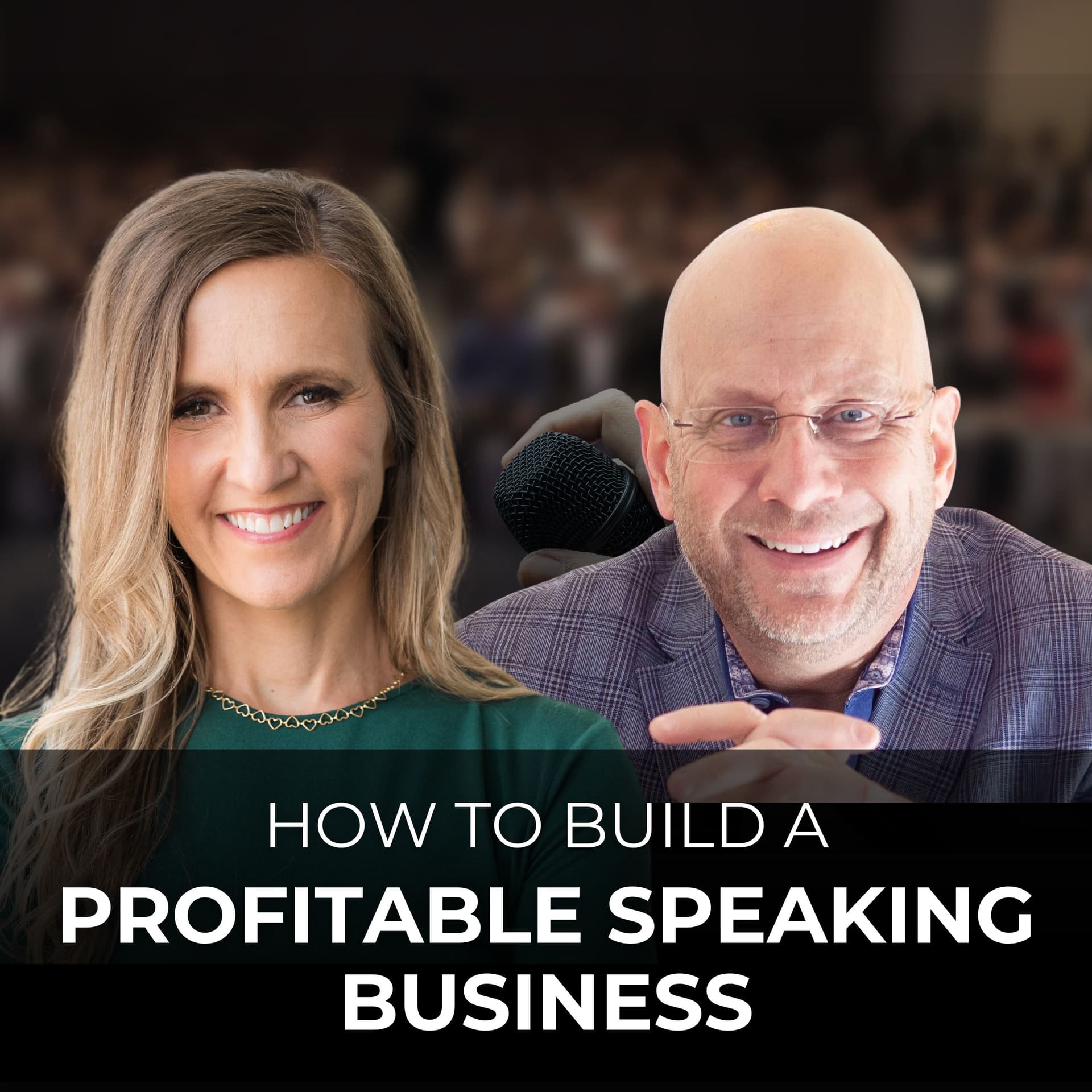
Loading summary
Transcript29 lines
- [00:03]
Lindsay Anderson
Are you ready for next level growth in your business? Welcome to the Lindsay Anderson show where we pull back the curtain on the exact strategies, tools and mindsets that build million dollar empires. If you're hungry for more time, more freedom, and a whole lot more impact, you've come to the right place. Buckle up because we're about to ignite your business journey. Now here's Linds.
- [00:33]
Hey, everybody. Welcome to this episode of the Lindsay Anderson Show. I am so excited for today's guest, Mr. Darren Lacroix. He is an internationally recognized speaker and coach who passionately shares the technique that has helped him outshine 25,000 contestants from 14 countries to become the world champion of public speaking. He is the author of two books, Laugh and Get Rich and the Speaker's Edge, and holds the unique distinction of, of being the only speaker in the world who is accredited, certified speaking professional and a world champion of public speaking. I'm so excited to bring him on today. Welcome to the show, Darren.
- [01:14]
Darren Lacroix
Hey, thanks. Thrilled to be here.
- [01:15]
Lindsay Anderson
So tell me a little bit. If you were to say something that you are known for, what would that be? What are you known for, Darren?
- [01:23]
Darren Lacroix
Known for stage time. Stage time. Stage time. My mentors, I started out as a wannabe comedian and my mentors, my comedy mentors at the time said any day that you don't get on stage is a day that you don't grow interesting. And as a comedian, new and afraid to go on stage because you have no confidence, you have no routine, you're not funny. None of the above. Writing is important. However, any day you don't get on stage is a day that you don't grow. And I think whatever it is you want to master, there's that one habit that makes the biggest difference. And it's usually that thing you don't want to do, but it's the one thing that if you have an ego, you don't want to do it either because you're going to be horrible at it early on. But thank God, I had just had a business failure, so I had no ego. I was at the lowest point in my life. I'm like, what do I got to lose? I know that I'm not funny. I'm asking people who are like, shut up and be coachable. So I used to picture this is back in Boston in the 90s, I wanted to go on stage, but at the beginning, you're kind of limited to open mic nights, meaning the open nights that they allow people who are horrible to go up on stage and they want you to bring your friends so your friends buy drinks so they make money and they don't care how bad it goes because it's an open mic night. Well, there's 100 wannabe comedians in Boston. There's only three open mic nights. How do you get on stage? So I used to drive two and a half hours to Portland, Maine to go on stage for five minutes for free and drive home and go to my day job the next morning. My high school buddy used to tell me I was stupid from his perspective. I was, he's like, why don't you get a job at a gas station? But my mentors were inspired that I was willing to do the work. So they wanted to help me because here's a guy with no talent, no courage, but willing to do the work. And I think any mentor is going to want to encourage that underdog, that person who's willing to look bad to get good. Longer answer, but there you go.
- [03:35]
Lindsay Anderson
Yeah, I think that's really interesting. The point you bring up about what is ever behind the biggest resistance in your life actually will bring you the most like abundance. However, you're like painting that out in your mind. Do you see that applying to other areas of your life as well as your time on stage?
- [03:51]
Darren Lacroix
Oh, absolutely. I just don't have the motivation in other areas of my life to make the change. But it's a decision you decide. It's Now I have a keynote that I do here in Vegas called All in One Decision changes everything. So quick backstory. I had no business being on stage, but I was listening to this motivational tape. Cause my buddy saw that I was depressed and I'm driving down the road, what am I going to do with my life after my business failure? And the question was, what would you dare to dream if you knew you wouldn't fail? If I wouldn't fail. And I went back to my 8 year old dreamer because everyone told me, you're not funny, stay away, pick another lane. But that 8 year old kid had this desire because I saw my cousin and my brother make my family laugh at holiday functions. And they could bring joy to people by what they said and how they said it. I wanted that. I aspired to that. So I went back to that eight year old dreamer and I said, okay, I'm at a point in my life listening to these motivational tapes. I got to do it once. So at that point, Lindsey, it wasn't a dream. That point. It was like, I can't live my life with the regret of wondering what if. So listen, these tapes, they said, go to people the best. They think differently. So when I told my friends and family, they told me I was crazy, I was stupid. That's not for you. But they had never been a comedian, so they don't know what's important. Now it's logical to think, you're not Jerry Seinfeld, you're not Chris Rock, you're not Kevin Hart. No, I'm not. But that wasn't the question. The question was, what would you dare to dream if you knew you wouldn't fail? So I forced myself to go to a comedy club. Quiet, shy introvert. Never been in a club before. And at the end of the show, I walked up to the headliner and I said, hi, my name is Darren. I want to try this. What do I need to do? And he asked me a question. He goes, are you funny? I said, no. He said, good. I'm like, good? What do you mean, good? Because he was very aware that I was being honest and transparent. A lot of people probably come to him and say, oh, yeah, I'm funny. He said, okay, look, class clowns, people like my brother and cousin. Like, when you're around friends and family, yeah, that's one skill set. But he said, if you took that person out of that environment and gave them a microphone and put them in front of a hundred strangers, they couldn't make them laugh. He said, that's a different skill set, but that skill set can be learned. He handed me an ounce of hope and he said, two things. Number one, go get the book. I'm like, there's a book about stand up comedy. Of course there's books about everything. But I wasn't thinking that. He said, number two, you need to go to open mic nights and watch other people just starting out. Well, duh. Don't compare yourself. Like whatever that dream is, don't compare yourself to people at the top. Compare yourself to where you were yesterday, to people who are just starting out. Because two days later, I went to the open mic night to check it out. And being the quiet, shy introvert, I walked in, the sticky floor, the stale beer. I thought, whoa, this is where the cool kids hang out. And I watch people go up for their first time. And Lindsay, they sucked. And I thought I could do that. It actually inspired me. I'm like, I only got to go embarrass myself. I've been through high school dating. This is nothing. These are strangers. I don't even like these people. Anyway, fast forward. I went two months Every Sunday night. And then it was my night. It was April 26, 1992. I can probably fish out a clip if you want to see it. I was so nervous. I told my friends, I said, you make sure I go up there tonight. I'm never doing this again. Because I went through the book and the exercises and I was freaking out. I wasn't sleeping for two weeks, and I just said, I'm never doing this again. Make sure I go up whether I cry or scream or whine or anything. I was a mommy's boy. I never did anything like this. So I had my friend's wife bring a video camera and she videotaped it just for proof. I did it once, and so I was shaking. I was nervous. You can see it on the video. And I had one joke, Lindsay, and I'll wrap it up in a second. I have one joke. And I was so nervous that what I was saying and what my body was doing was not in sync. So I said the was talking about a rocket launch in my hometown. That's where modern rocketry started was in Auburn, Massachusetts, and by a man named Robert Goddard. So I was making light of. A lot of New England towns have their claim to fame. The Boston Tea Party started here. George Washington slept here. My town it the launch of the rocket. So I was making light of that and New England towns that brag about it. And I said, the rocket took off and it went vertically, but I did horizontal with my arm because I was so nervous. And I just realized in that moment what I did, and I just reacted and I said, ah, shoot. That's not the word I used that night, but I said, ah, shoot. And all of a sudden everybody laughed, Laughing. Well, that Lindsay, that was the only laugh I got that night. As I walked off stage, one of the other comics put his arm around my shoulder and he said, don't worry, man, it's just your first time. I remember, don't worry, it's my first time. Did you see what I did? I got a laugh. We got a laugh. In that five minutes of time, only one thing that worked. But if I got rid of everything that didn't work and reproduce the one thing that did, I could do this. And that's when I made my all in decision. I'm like, George Burns is 100 years old doing stand up. I. I'm 23. I got time. I didn't care how long it took, but I made that decision. I got every mentor I could read every book that I could, but I was Willing to look bad to get good. And I think that's where a lot of people let their ego get in the way.
- [09:45]
Lindsay Anderson
Couldn't agree more, Darren. Wow, great story there. Tell me. So the comedy. You're in comedy at 23, but now, as you told us at the top of the hour, you've beat out 25,000 people for, like, world's best public speaker.
- [10:00]
Darren Lacroix
I did that. Habit of stage time. Really? My license plate. I live in Las Vegas. My license plate says stage time. I never want to forget the habit and what it did for me. Habits make us and break us. It's not that occasional thing. It's that consistent thing that you do. So the problem, like I said, is it's really hard to get stage time when you have no talent. So I was sitting at my desk, and at that time, I had a day job at Bose Corporation, the stereo speaker company. And this newsletter came across my desk about this thing called Toastmasters. I'm like, what's that? I start reading about him, like, hey, wait a minute, here's a place I could get stage time during the day. Comedy clubs are only open at night, Lindsay. I could fail twice a day. And so it's good to have your own sound effects and shipbuilders. I walked into my very first Toastmasters club having no idea what it was, not knowing what a speaker was, and never given a presentation before in my life. And so I walked in and there was like 12 people there. But it was very different from the comedy clubs. These people are warm, encouraging, and sober. I immediately saw the value. And I joined four Toastmaster clubs because I wanted to quadruple my failure rate.
- [11:19]
Lindsay Anderson
And your stage time. Okay, so does the comedy play into how you tell great stories on stage?
- [11:26]
Darren Lacroix
Yeah, two things on that. One, I wasn't a storyteller. I wasn't a speaker. But when I found out what speaking was, and I'm like, wait a minute, they're going to pay me 10 times as much and I don't have to be funny and I can deliver a message. What? Let me find out more about that. And so when I found speaking, I did both for many years, from like 92 to 90. In 98, I let go because I realized being in a comedy club six or seven nights a week didn't resonate with my soul. It was being around. Look, if you're in the late night business, cool. For me, it drained me because I was around drunks and raunchy jokes and language and stuff like that. And it just didn't work for me. So I let it go. But I found speaking is my thing. And then in 2001, number two, I realized I didn't really know how to tell a story. I thought I did. And one of my mentors had said, darren, stop trying to find that story that launches your speaking career. And instead take the stories you already have and make them so good, someone will pay to hear them.
- [12:32]
Lindsay Anderson
Okay, can you give us a couple of tips about how to tell a good story?
- [12:38]
Darren Lacroix
Yeah, absolutely. And I see this over and over again. So whether you're trying to deliver an interesting presentation, whether you're pitching your business, what we need is the I'll have what she's having. Harry met Sally principal. I see that missing a lot. And so what I mean by this is, at the beginning of the story, just like at the beginning of any movie, we see a day in the life, what was this person like, and what were you like? And what we say is, what's one visual and what's one emotional aspect of who you were? Then, okay, and then you go through this journey or something happens, the challenge happens. And then, oh, it gets worse, even worse. And then you hit a breaking point. And that's when the revelation. That's when the. Aha. That's when the mentor comes in and gives you the wisdom. And then, bam. Once you have that wisdom, you're never the same again. Now, we need to know the transformation of the character. How did the character change? What is the emotion now? So maybe at the beginning of the story, they were scared. At the end of the story, they were confident. Maybe they were losing customers. At the end, they couldn't. They had to hire more people. We. The purpose of story for us as educators is to deliver the message in a way that the brain is programmed to receive it, which is story.
- [14:10]
Lindsay Anderson
Okay, so do you. Can you walk us through a Jack and Jill example? Real, real easy. Hey, they started here, they ended here. And here's a couple of examples on those three points along the way.
- [14:21]
Darren Lacroix
Yeah, so there's the. The biggest Aha. That I got about telling stories was two of them. One is I was telling my stories in past tense. So when I joined the contest in 2001, I joined it to work on the stories I was already telling from my professional career. I didn't even know the contest went to the world championship level. And once I got a coach, which I had never had a coach before 2001, Mark Brown, my coach said, darren, you're telling us stories in the past tense. You need to Let the listener come to the present tense. Instead of narrating, you need to use dialogue. I was like, what? So when I handed him the first version of my speech, I had a story that went like this. And this is a mini story, so we'll dissect it like you asked. Okay, so originally, this is the boring one. I said. So I told my parents I wanted to be a comedian. And they were speechless. They didn't know what to say. Boring. It's a fact. It happened. But Mark said, we need to be there in the scene with you, the listener. So it turned into. So my parents, who had stretched their budget to help me through college. But I had my new dream. I walked home, I walked in the door, I said, mom, Dad, I want to be a comedian. I was met by silence. So Juan is telling us about the story to. The better version is using dialog. So three characters. Mom, dad, and Darren. Three characters. Two of them never talk. But the true story happens when there is a shift of emotion. When I go from excited to deflated, that's when the story happens.
- [16:08]
Lindsay Anderson
Tell me. So as you help and coach others to tell good stories, what are some common obstacles that you've noticed that people have when they're trying to tell their stories?
- [16:17]
Darren Lacroix
The biggest one is they don't follow a proven structure. And that's one of the things that we teach. Meaning A Day in the Life. A Hollywood script, if you. They're usually about 120 pages. The first 10 pages is about A Day in the Life. The last 10 pages is where they are now. The transformation. So getting clear on what's the story? What's the message? So I'll give you another quick example to solidify this. When I tell a story about meeting my coach for the first time. I had worked on my speech. I drove two and a half hours, and if you were standing there in the meeting room, you would have seen Mark Brown, my coach. He stands about 6 foot 2, has a heart of gold. He's a native of Jamaica. He's got this beautiful booming laugh like the guy from the 7up commercial. That was my coach. If you saw me, you would have seen me hand Mark the greatest speech in the history of Toastmasters. I swear, it was so good, you could hear quiet fires of Angel. After I handed him the speech, Mark took the speech. We have some work to do. I did everything he told me to do. I wrote the greatest speech that I could write from the level I was at. But you don't know what you don't know. And I realized after that experience that if you're not coachable, there is no cure. If you're not coachable, there is no cure. So that's like the Aesop's fable. What's the moral of the story? So Mark Brown, who is my coach, and I, we work with CEOs, and we're working with a couple right now who have some powerful stories of abuse, of getting out of a cult. How do you tell that story in eight minutes? So the first thing we do is, what's the message that you want to leave on the heart of the audience? So in that little mini story, it was, if you're not coachable, there is no cure. My ego was in the way in 2001. So you get clear on the message, and then we have to structure the story to deliver that message. And most importantly, we need to see a transformation of the character. So I started off all excited, ego driven, handed it to him, and then at the end, I was mad at him. But I needed the realization that my ego was in the way.
- [18:33]
Lindsay Anderson
I love that storytelling. It's so important to make sales. It's so important to build a business. What are some favorite resources you have around learning these methodologies?
- [18:42]
Darren Lacroix
It is simple, but it's not easy. I. If you go to beasponge.com my top 10 speaking mistakes, you get that for free. There's no charge. Mark and I do a podcast called Unforgettable Presentations. That's a resource. Again, no charge on that. It's on YouTube, on Apple, on all the different podcast platforms. But really, you've got to be a student of story. You got to commit. You got to decide, this is something that I'm going to learn. Because you can't just. I love that you're having me here, but what I just told you might give you some insights that, ooh, there is more I could learn. But you got to come to a workshop, take a class. It doesn't have to be me. There's so many courses and programs out there. But you got to commit to being a great storyteller because our brains, for the listeners, they're trained to love stories, but we have to put it in the format that hooks them and brings them in. And that's why the conflict in the story happens. The conflict is the hook that gets us to want to know what happened. How'd you get out of that? Now I'm compelled. I want to hear more. So if you're pitching your business, like, now, oh, I can relate. I had what that character or client had. I had that same problem. So it's relatable to the then. We call it the then to now story model, the one we teach, but we desire the now where the character is now. The transformation. I want the same transformation that they had. So find a course, find a book, be a sponge and be willing to make some mistakes, but get some feedback.
- [20:24]
Lindsay Anderson
And some stage time, huh? Get some stage time.
- [20:26]
Darren Lacroix
Exactly. You want to master anything, you need a process to follow. You need to be willing to put in the effort, and you need to get feedback from somebody who's qualified to give that to you.
- [20:38]
Lindsay Anderson
I love that. I love that. Tell me, you've done so many things. You've told us a lot of stories about you. What is one thing you wish you would have known before you got started.
- [20:46]
Darren Lacroix
To get coaching sooner? Yeah, I waited nine years because, again, I thought I knew I was cheap. My buddy Ed Tate says you can't cheap your way to the top. I wish I knew that sooner because it would have saved me a lot of time. So, yeah, nine years to wait to get a coach because everybody has their own challenges. It's like Swiss cheese. We all have our little gaps that we have, our little insecurities that we bring from our childhood or our youth. But a good coach now, and not every coach is same. Mark Brown is really good at digging stories out of people's lives and wordsmithing. That's not my strength. My strength is the use of the stage, the delivery, the characters, the. Oh, one more tip is reactions, tell the story. Reactions, tell the story. A lot of presenters, they might tell us a story, but we don't see the reaction like, mom, dad, I want to be a comedian. When I, my face dropped. That's the compelling part. That's the emotional connection.
- [21:46]
Lindsay Anderson
That's right. Darren, it has been such a pleasure having you on the show today. Before I let you go, I'm going to turn the time over to you. Let the audience know where to find you and anything else you want them to know.
- [21:56]
Darren Lacroix
Hey, thanks for having me. Look, I am living proof you can learn anything, whether it's you want to be funny, you want to be a better storyteller. Whatever you choose, just. It's a decision. You have to be willing to put in the effort or transformation doesn't happen. You can't transform your life by dipping your toe in the water. I love passing on stage time. Stage time, stage time. Because that's what helped me. But what's your message that you want to bring to the world. So I have an online university called Stagetime University. We teach the skill of speaking or the business of speaking. And there's some free programs right on the page. Just if you click on the business one that'll take you to the business program. 59 minutes. It's free. Check it out. If you want to learn more from us, let us know.
- [22:43]
Lindsay Anderson
Darren, thanks for being a guest on the show.
- [22:45]
Darren Lacroix
Thanks, Lindsay.
- [22:48]
Lindsay Anderson
There you have it, folks. Another really awesome episode of the Lindsay Anderson Show. Thank you so much for joining me today. Now, if you're looking for how to generate high quality leads with social media, you're posting content. People aren't coming, you're not getting any of those sales and creating those quality relationships on social media. Make sure that you run and don't walk to my upcoming workshop and I will show you my simple four step system that I call the social media sales machine. During this workshop, I'll walk you through these four steps on how to generate high quality clients all through social media. All you need to do is head over to lindsay.comworkshop and get signed up and I'll show you how to do just that. Thank you so much for joining me on this episode of the Lindsay Anderson Show. Cheers to you and your success.
- [23:40]
That's a wrap for today's episode of the Lindsay Anderson Show. If you loved this episode, don't forget to subscribe, leave a review and share how you're leveling up your business. Want more? Connect with Lindsay Anderson and get the tools you need to crush your goals@lindsaya.com until next time, keep pushing, keep growing and turn those business dreams into reality.