Loading summary
Transcript35 lines
- [00:00]
Lindsay Anderson
Let's be honest, making money and keeping money are two very different skills. If you've ever looked at your bank account and thought, wait a second, where did all of that money I just made go? Well, you're gonna love today's conversation. Today I'm bringing in Mr. Chris Miles. He's a straight talking cash flow expert who's here to help us rethink the way we build wealth outside of just top sales. And by the way, this episode is brought to you by the BAM Agency. We help entrepreneurs turn social media into a real sales machine. Done for you. Strategy, content and results. If you're serious about leads and revenue, not just likes, head over to lindsay a.com apply. All right, let's get into this interview.
- [00:50]
Chris Miles
Are you ready for next level growth in your business? Welcome to the Lindsay Anderson show where we pull back the curtain on the exact strategies, tools and mindsets that build million dollar empires. If you're hungry for more time, more freedom, and a whole lot more impact, you've come to the right place. Buckle up because we're about to ignite your business journey. Now here's Lindsay Foreign.
- [01:23]
Lindsay Anderson
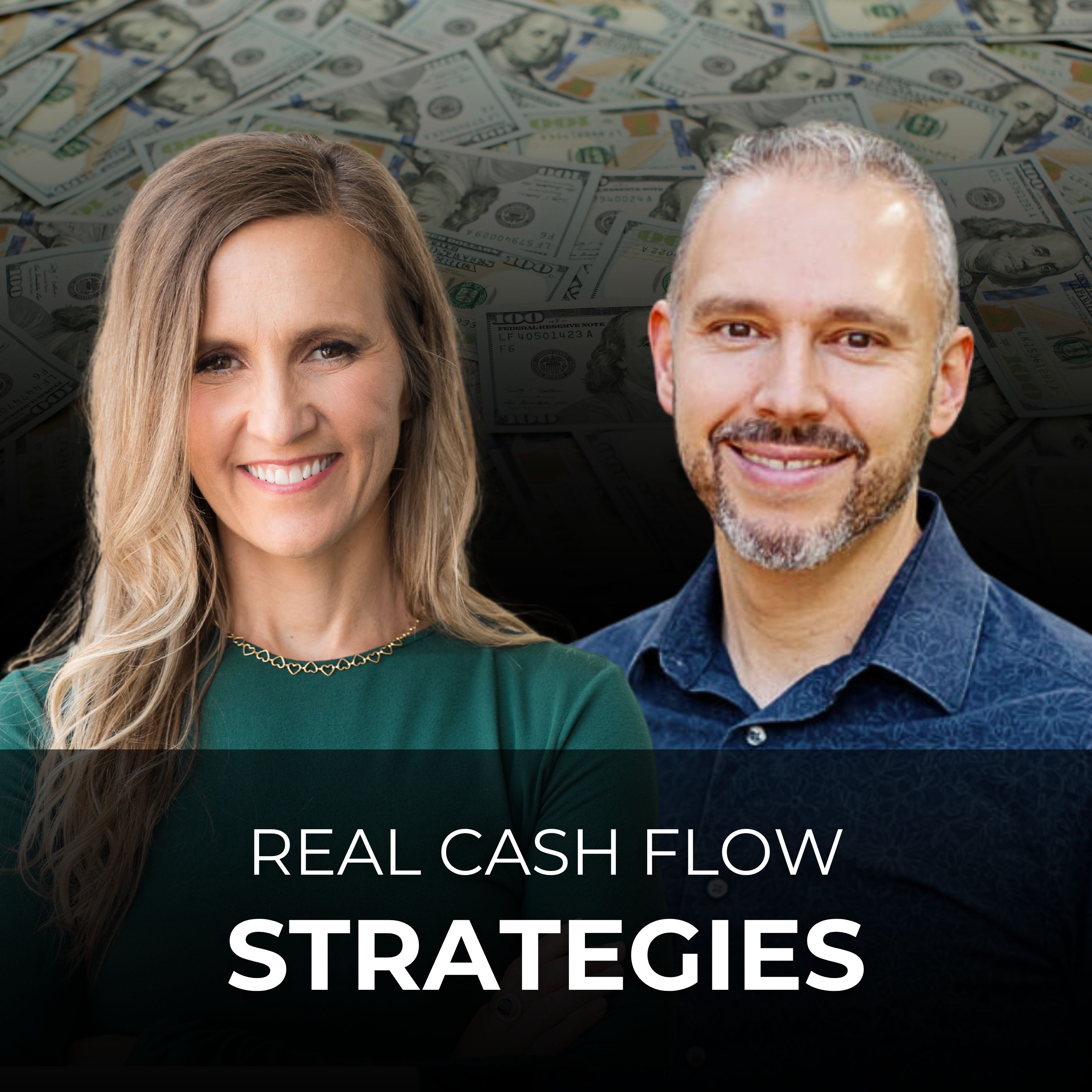
This episode is brought to you by the BAM Agency. Done for you, social media that actually drives results. Not just likes, but high ticket sales. If you're ready to turn your content into a client generating machine, grab a free strategy session. Call by heading over to Lindsaya.com/Apply today. I am so excited to welcome Mr. Chris Miles. He is the cash flow expert and founder of Money Ripples, helping entrepreneurs and professionals create passive income and financial freedom. As a former financial advisor turned anti financial advisor, he specializes in strategies to build wealth without relying on traditional retirement plans. Now today, Chris is here to help us solve the problem of why so many business owners make great money but still struggle with cash flow, financial security and true wealth building and how to fix that all in the next 20 minutes. Chris, thanks for showing up today. So glad to have you on the podcast.
- [02:29]
Chris Miles
Absolutely. Yeah. Challenge accepted.
- [02:31]
Lindsay Anderson
Yeah. Yeah, I bet it. I bet you're up for the challenge. Tell me, Chris, tell us a little bit about your background and how you became the cash flow expert.
- [02:38]
Chris Miles
Yeah, not like the way you expect, which is probably like most of us, right? You go on one path and it takes you to a different route. My original intention when I went to college because I was the first one in my family to actually go to college because that's what my dad said, you know, go get good grades, get a good job, then you're going to be fine. Right. Well, as I went to college, I realized, you know what, after seeing like different professors, the ones that I liked the most were already like business owners. They were consultants before they came. They were in the private sector before they went and taught college. They weren't like lifelong career professors. And so I realized, I said, you know what, Even though I'm a sociology major, I think I want to go more. Rather than marriage, family therapy, which I realized that kind of seemed crazy, I decided instead to go into business. So I wanted to be a business consultant. But I figured if I'm going to do that, shouldn't have real life business experience. So I actually took a sabbatical from college right before I got my bachelor's. I said, let's just take a year off, start some business, get some experience under my belt, and then go back and get my mba. I did that. And the first business that came up was being a financial advisor, not knowing they took everybody off the street as long as they could pass a test with 70% and not be a criminal. So I decided to do that. I'll tell you, I only did it because I thought, worst case scenario, I walk away knowing how to invest and make money for myself. Best case, maybe I can even help my dad. Because my dad was like, the work hard, you got to do everything you got to do. But he was like the penny pinching saver, the guy that said, I think my job will literally kill me. I don't think I'll have any hope. So I thought, maybe I can give him some financial freedom in his life so maybe he can enjoy the last of his years, at least enjoying enjoying his life rather than just working himself to death. Well, anyways, I did that for four years and then I sat down with my dad. My dad said, let's have you meet with me and be my financial advisor. Well, as I sat down with him, I looked at his numbers and this guy was debt free. Paid off his house and everything, his stuff, money, his 401k, got the little match like every good boy should. And then as we look at it, I said, dad, here's the deal. You're 61 years old. If you want to retire today, you're gonna have to die in about five or six years because that's when you're gonna run out of money.
- [04:32]
Lindsay Anderson
That's okay.
- [04:33]
Chris Miles
What do I do? I know it's rough, right? I mean, I was being pretty blunt with him. He's a blunt guy. I always compared him to Fred Flintstone growing up because he looked like Fred Flintstone. And acted like him. He's very hot tempered and he's like, well, what do I do? I said, I don't know. You've done everything right from what I teach as a financial advisor. And that's how I realized I think I'm just a salesman in a suit. I really don't know anything about money, about really building wealth and creating financial freedom. I know how to teach about retirement and sell products, quote unquote, but not actually how to do it. And it wasn't just me, it was every other financial advisor that I knew. They were all in the same boat. They're all just as broke as their clients. Because if their clients try to retire, they're always worried about running out of money too soon. And so I realized I like to look for evidence. I like to see that things work. And so I ended up looking around, I found real estate investors and they were financially free. And I said, I'm going to do what they do. And so I left. Being a financial advisor, vowed never teach money again. Went to real estate. When I was 28 years old, I was able to retire. I was actually, I was able to retire at 28 years old. Did that for a while. They came out of that to start a new business right before the recession hit, which was awesome in a very bad, awesome, not awesome way. And by the way, our target market were real estate investors. Right in 2007, 2008. So business was suffering, my own real estate was suffering. I went from millionaire to upside down millionaire. I eventually had to dig out of that million dollar debt hole and was able to retire the second time where I had enough passive income coming in to pay for all my expenses by the time I was 39 and back in 2016. And so that's what I've been teaching ever since is how do you break free of that? Like, especially if you're a business owner, how do you break free of like always being that, you know, even if you make good money and have a good lifestyle, everybody on the outside thinks everything's great. In the back of your mind you're like, yeah, but I have to keep hustling. I gotta keep slaving away. I gotta keep doing this. I'm trying to build systems and people in place and processes and everything else. But truly I'm still not free. I'm still stuck here. This is almost like a really nice paying job that I built for myself. And so that's what we're trying to break people free of that.
- [06:29]
Lindsay Anderson
Yeah. So what's the biggest money mistake that you see small business owners make, you.
- [06:34]
Chris Miles
Know, I think the biggest one is they believe. Well, here's where they're right. Business owners are right because they believe that their business is the number one investment. And that's true. Your business should be the number one investment. The only problem is it becomes the only investment that you have in your life. Right. If that doesn't, you put all your chips in, you're all in with that, and then you try to do that and then it just. You know, the thing is, again, you're stuck. You're still in a rat race. You're still stuck having to hustle and make money. If you walk away unless you got everybody doing the work for you, you still can't really truly walk away from that business. And you might think about exiting that business and selling it for nice multiples or whatever, but that most of the time doesn't ever happen. So that's one of the biggest mistakes. And then even if they do try to do something outside of it, they go get some crappy financial advisor that's less rich than they are. Or if they do have more money, it's not because they're good investors, but because they're good salespeople.
- [07:24]
Lindsay Anderson
Right.
- [07:24]
Chris Miles
And, and then what happens is it's like blind leading the blind. They're telling you to throw your money, gamble it in stock market, investing in everybody else's company but your own. Right. And that to me is kind of criminal. Not to mention, financial advisors get paid even if you don't make money. You know, they're always getting paid off the fees, whether you make money in that or lose money in it. So for that reason, that's one of the things I think is a big mistake, is that either one, you're all into your business and you create your own rat race there. And or two, even if you do have other money, you go trust it with some financial salesperson that really isn't in a place to create wealth like you want to be in yourself.
- [07:57]
Lindsay Anderson
Yeah. Yeah. Well, let's talk a little bit about cash flow. So cash flow is definitely a nemesis for many business owner. Why do so many of them get stuck with cash flow?
- [08:08]
Chris Miles
Yeah, the big thing is we're always focusing on top line revenue. Right. It's like, how do we just get more sales? Get more sales. If I just get more sales, I solve all problems. Right. I remember the first business I was in as a financial advisor, they would use ASAP as an acronym saying Activity Solves all problems, which Isn't that the biggest load of crap when you really think about it from a real business owner perspective? Because just because you're busy doesn't mean you're solving any problems. Right. And same thing with money is a lot of times the business owners are just focusing on that top line revenue. But the real freedom comes from profit. And if you start focusing on profit first, kind of like you know Mike Michalowicz's book Profit first. Right. He focus there and then you build your expenses around that. Find ways to pay yourself. Trust me, your spouse will thank you if you do. But if you really focus on not just trying to reinvest every dollar in your business and instead how do I have more profit? Right. Uh, by the way, if you say I reinvest all my profits in business, then you're not profitable. Yeah, you're. That's literally against the definition of profit. Profit is money that does come home or even if it just sits in a savings account, you don't spend it still it's there. So if you always reinvest profits, you're not profitable. You're perpetually in a rat race. The first thing you gotta do is focus on profits. Stop focusing on the top line revenue. Now I still think you should get top line revenue and focus on that too. But not if it means of the expense of not having any profit. Because otherwise you're going to be stuck forever.
- [09:30]
Lindsay Anderson
Yeah. You got to know what the important, the real important number is there. I like that. If your content isn't generating sales, it's broken at the BAM agency, we fix it. We build intentional systems that bring in consistent leads, convert dms and grow the your business. All without the overwhelm. Want to see how it would work for you and your business? Book your free strategy session now by heading over to Lindsay a.com apply now. You talk a lot about creating passive income. What are the best ways for business owners to start generating cash flow beyond their business?
- [10:12]
Chris Miles
Yeah. So when you do have that profit, capture it. Right. I teach this, and this applies to business just as much as it does to your personal finances is get lean, get liquid and get out. Get lean means obviously you're a wise steward of your money. It doesn't mean you live cheap. Don't live on rice and beans like some of those stupid pundits will tell you to do. Right. You know who I'm talking about. Won't mention Dave Ramsey's name. Oh crap. I just did. But you know they always tell you live on rice and beans. Be Cheap, no debt, all that kind of stuff. And a business owner we know like, hey, we can use debt, we know how to use it and make more money with it, right? We know how to do that kind of stuff. But again, still need to be a wise steward. Don't just blow money, right? You know, I mean, if you've got money, a lot of money to blow the shirt, enjoy it. But make sure every dollar has a job, you know, and that applies in business too. So get lean, make sure you're tracking your money. Track it at home. Even if you're using things like Rocket money or Monarch Money tools to do that in your business, obviously have QuickBooks or you can use Xero or something similar to that. Always track your money. I like to, in my business, I actually like to track my money weekly, which is awesome because come tax time, you know how every business owner is. Oh, I hate tax time. I'm going to spend my whole day locked up in an office to this stuff. No, you don't. If you do it weekly, I literally, like on January 1st, I spend a couple minutes, update my numbers and boom, I'm done. I can send it to my CPA and then put it out of my mind and go make more money. So I do that kind of stuff. So make sure you track your money. Being wise steward, get liquid means you actually have the money in your hands. The biggest mistake most financial people will tell you is they'll say, take that money and then lock it away into prison. And usually Their answer is 401ks, IRAs, your home equity, pay off your house, all that kind of stuff. And I'll tell you one of the things that hurt me the most in the last recession because people say, oh, you suck, Chris, you went broke. I'm like, I did and I made a lot of mistakes. One, I cut off multiple streams of income, which we'll get into the next with get out. But two is liquidity wise. One, I had lines of credit, so I figured I was okay. And two, I figured I would just throw my money in my house equity because I was a mortgage broker as well at that time. I could always just do a cash out refinance. I can just pull the equity out like I'd always done before. But during the recession, they said, listen, you're a business owner, we hate you. So banks, as a bank, we will not give you any money. And even if it's your own home equity, I watched that equity disappear as the price of my house because I had a little mini McMansion price of the house started to depreciate. All of a sudden the equity is disappearing. The banks wouldn't accept any offers for people to buy my house for less than what I owed because they were owned by Lehman Brothers. They rejected everything until I finally foreclosed on that house for about 300,000 less than I owed on it. And that's the thing is I was locking my money in prison. But if I would have had that money in cash, in savings or something like that, I would have been so much healthier. This is true in business too. 2020 was a great test. It was a warning shot for us where 60 days or so we were. If you were a non essential business, you weren't making money.
- [12:57]
Lindsay Anderson
That's right.
- [12:57]
Chris Miles
I mean what a great way to test your stress. That stress test in your business, say do I have at least two months of expenses I can do without having to go and fire my entire team to, to stay alive. Right. You know, that kind of stuff and then get it out. And that goes into your question. There is now I have that money liquid and it's available. People always ask, well now what? What do I do with it? Well, that's where I get into passive investments. Things that again, I don't have to put a lot of time and attention towards. Because the truth is this, there's a lot of people teaching about passive income and it's been kind of, you know, I don't want to swear or anything, but it's been kind of jeopardized to use a different ized word. But it's been, it's been overused. Right, right. It's like everybody talks about passive income. Then it's oh yeah, go start this Amazon online business or hey, go start this. Even if it's real estate, they'll say go start this real estate business doing wholesaling or flipping. You're like, I basically have to start a brand new business, take time, attention from away from my cash cow, which is my current business, to go do your business. Your idea. Screw that. You know, like instead I would rather have something where I could be hands off and let them take my money and they make money with it. We partner on those deals. And so when I invest in real estate, for example, I go like, if I go buy a property, I'm not buying a property in my backyard. I go find a turnkey real estate company, I look at their properties that could be anywhere across the country where they might be cash flowing better than where I am here in the western half of the United States. I can have somebody else manage the property for me. I just collect the checks, I buy it and I collect the checks. I can lend my money to real estate investors just like someone lends money to a business owner, right? I can lend money to them at a contractual 10, 11, 12, 15% a year and get paid on that, get paid income off that money. I can go partner into buying apartment buildings and buying self storage units. I can go into oil and gas and make money there. I can go make money in raw land. I have a business partnership, we put about half million into. I'm cash flowing over 13,000amonth and just from the raw land, 100% hands off. And that's where when I say I was able to retire twice, that's what I did. I was able to take my money, get it to work for me. So now I have to work for it. Now I work in my business because I want to, not because I have to.
- [14:57]
Lindsay Anderson
Yeah, that's some really fantastic advice. So let's circle back to, hey, be looking at your books, be looking at your numbers all of the time now. I think a lot. Well, what have you ran into? Why aren't business owners willing to do that? When we're here to make money and to not put the intention and the focus on that, why are they not doing that?
- [15:16]
Chris Miles
Well, because offense is always sexier than defense, right? Let's be honest. Everybody talks about Tom Brady, how he's like the goat, arguably. But let's think about it like Tom Brady would not be Tom Brady if he didn't have a very strong, solid offensive line. And you got to have both. You got to have a good offensive defense. I think it was Bear Bryant, famous coach, that said that offense sells tickets, but defense wins championships. And if a business sort of realized that and realized that it doesn't have to be tough, like you don't have to be this math wizard you have to do. I think these business owners are great at being business owners because they're really good at generating income. They're rainmakers, right? And that's what they should be. They should be driving that revenue. But we also got to make sure we're managing our money. Because whatever you ignore will leave you. The law of attention says whatever you pay attention to and measure will grow and improve. Well, whatever you ignore will decay. If I ignore my teeth, they're going to fall out, right? I'm going to lose them. If I ignore my spouse, I'm gonna lose them. I ignore my kids, I'll probably lose a bunch of kids too. I got eight of them, so trust me, I could lose.
- [16:14]
Lindsay Anderson
You've lost one or two.
- [16:15]
Chris Miles
I probably lost one or two, didn't even know it. You stop paying attention to something and you will lose it. And money is no different. That's a true principle. If it works in the health field, it's going to work in money too. Make sure you're paying attention and like I said, tracking the money if you stay on top of it, even on a weekly basis. I spend a few minutes in QuickBooks every Sunday, like I go and I catch up on my numbers and make sure that things are good. I did also hire a fractional CFO to help me with that, to give me more of an outside perspective. So if you feel like, okay, no, I really need to focus more on driving revenue. I've got profits, I could hire somebody. We'll get somebody to help you manage it. But still, you get your dashboard, you get your little stats that you need to see to say, how are we doing? Are we profitable? Do we need to do this or that? You could always have your integrator. If you're the visionary, you have an integrator. Have the integrator help you with that too. Of how do we organize this? How do we make sure we stay profitable? How do we make sure we increase those profits? Because that is the thing that's going to buy you more freedom, especially away from the business to the point where you do get to the place where now you're literally in your business because you want to be there. And it's all gravy with any money you make out of that business.
- [17:16]
Lindsay Anderson
I love it. I love it. So if somebody is stuck in this business cycle of make money, spend money cycle, what's our very first step for getting ahead?
- [17:24]
Chris Miles
Very first step, like I said, one is track it, right? To make sure you're starting to build some reserves in your business. Right now, they estimate only about 70. Like only about 22% of people have at least 2 months reserves. Build that up. If you're not. If you're just now at the point you're profitable and. But you don't have those reserves. Focus there like folks. And by the way, I'll do this. Here's a bonus for you too. Even if there's a situation where I'm like, okay, well, I've got some like, you know, debts, leases, whatever it might be that's in your business, depending on your type of business, I would much rather have the cash than pay off that debt. One big mistake. I see with some business owners especially, they're like that saver brain. They've been brainwashed of the saver mentality. The problem is they're saying, well, get rid of that debt. Get rid of that debt. And I'm not saying you don't pay it off, right? I'm not saying that at all. But don't aggressively pay off that credit card or anything else if it means you lose all your cash. Because I have seen too many times when banks say, hey, thanks for paying off that credit card. Now we're shutting it down. And what you thought was your emergency fund wasn't your emergency fund. So credit card, even bank lines of credit, and trust me, I've got all those too. They don't count. They're good. But make sure you have actual available cash in your business right now. And then as you're profitable, using those profits to then start to pay down some of those things to improve your cash flow in your business.
- [18:39]
Lindsay Anderson
I'm hearing cash, I'm hearing cash from you all day long.
- [18:42]
Chris Miles
Cash, Cash. That's the number one reason why that businesses fail, right? They lack capital. And it's not because again, it's not because they can't make money. It's because they don't have the capital. Especially when unexpected things happen, whether for good reasons or bad reasons, all of a sudden, sell every inventory. You got to get more inventory. You need more cash and you're hustling for credit. And by the way, banks never give you credit when you need it, only when you want it, right? So the best time to apply for credit cards, best time apply for bank lines of credit, when you have those banking relationships is when you don't need the money, you're profitable, you look healthy, you don't even need the cash. That's the time to get it, open them up. And then of course, that time comes, you need it, it's there.
- [19:19]
Lindsay Anderson
Love it. Love it. Okay, final question here, Chris. I have to ask about it. It's changing the game in every industry. How do you see AI impacting money management, investing and wealth building strategies?
- [19:30]
Chris Miles
Good question. I'll tell you this, I'm probably one of the least tech savvy guys you should be asking about, but I am impressed by it and I love what it can do. I think the biggest thing is really like using AI and there's things already out there that do help you with this, where you can actually analyze the numbers, right? See trends in your finances. Now this means you still have to track your money, right. Using your QuickBooks, wherever it might be. And there are different programs you can connect in with QuickBooks, CFO type programs that can say, hey, these last 12 months or this last few weeks or these last three months that's trailing, you know, whatever, right. They're like, we're seeing this kind of trend. I mean, use that to your advantage. That's one thing that's amazing about AI is that we're finding some of the menial tasks that we've always hired people to do can be done and can be analyzed. All those calculations and those formulas and everything, especially hate numbers. AI can definitely create some things for you that way to make it easier. Right. Make that kind of tracking better so then you can figure out what's best for your company and again, drive it forward.
- [20:25]
Lindsay Anderson
I love that. I love that. Well, Chris, what great information you left us with today. I'm going to turn the time over to you, let everybody know how to find you and anything else you want us to know.
- [20:33]
Chris Miles
Yeah, the best thing to do is just look up Money Ripples. Money Ripples dot com. If you're ever like wondering, you're like, hey, I'm profitable, I got cash. I think financial advisors suck too, but what do I do with it? There's actually a passive income calculator on our website you can use. It will tell you how much passive income you could create in the next 12 months with your situation. That's a cool little free tool you can play with. Speaking of automations and AI, you could try that out. I have my own podcast called Money Ripples Podcast that you're welcome to follow on YouTube.
- [20:59]
Lindsay Anderson
I love it. Thanks, Chris, for being a guest on the show. Appreciate you.
- [21:02]
Chris Miles
Yeah, same here. Thank you.
- [21:06]
Lindsay Anderson
Whoa. What an amazing masterclass right there. Chris didn't just drop tips today. He gave us a whole new way to look at profit, cash flow and and what freedom really means as an entrepreneur and business owner. If you're ready to make money, but actually keep it and grow it, start by getting your content and strategy dialed in. That's what we do here at the BAM Agency. Done for you. Systems that turn content into clients. You can apply now for a free strategy session with me by heading over to Lindsay A dot com apply. Let's build your social media sales machine. Thank you so much for listening to this episode of the Lindsay Anderson Show. If you enjoyed this podcast, please subscribe. Leave us a review. It's how we can keep bringing you straightforward content on how to generate more time, more money, more freedom, and more impact for your business. Cheers to you and your success. Until next time, I'm Lindsay Anderson.
- [22:08]
Chris Miles
That's a wrap for today's episode of the Lindsay Anderson Show. If you love this episode, don't forget to subscribe, leave a review, and share how you're leveling up your business. Want more? Connect with Lindsay Anderson and get the tools you need to crush your goals@lindsaya.com until next time, keep pushing, keep growing, and turn those business dreams into reality.
- [22:38]
Lindsay Anderson
Thank you for tuning in. If you got value from this episode, share it with a friend and share and hit subscribe. And if you're ready to stop posting and praying and actually generate revenue, let's talk. Book your free strategy session by going to Lindsaya.com apply.