Loading summary
Transcript61 lines
- [00:03]
Lindsay Anderson
Are you ready for next level growth in your business? Welcome to the Lindsay Anderson show where we pull back the curtain on the exact strategies, tools and mindsets that build million dollar empires. If you're hungry for more time, more freedom and a whole lot more impact, you've come to the right place. Buckle up because we're about to ignite your business journey. Now here's Lindsay.
- [00:34]
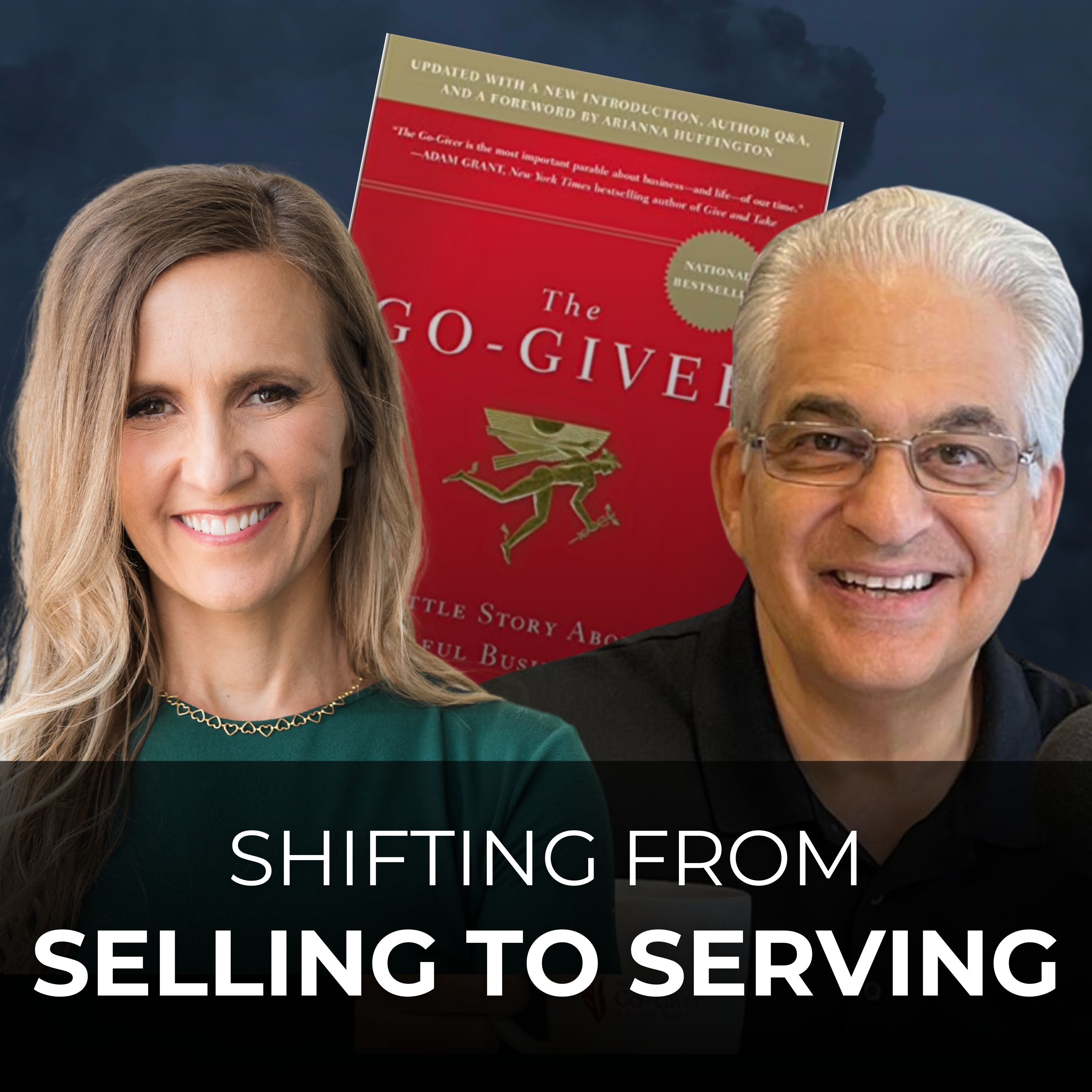
Hey everybody. Welcome to the Lindsay Anderson Show. I'm so excited. For today's interview, we have a very special guest, Mr. Bob Berg. He is a co author of the international bestseller the Go Giver, a book that has sold over a million copies and has been translated into more than 30 languages. His groundbreaking work teaches us that true success comes from giving value to others. Not just in business, but in every aspect of life. Today, Bob will share his insights on how adopting a Go Giver mindset can transform your business, your relationships and your life. You do not want to miss this conversation, so let's dive IN and welcome Mr. Bob Berg to the show. Welcome to the show, Bob.
- [01:16]
Bob Berg
Wow, what a nice introduction, Lindsay. Thank you.
- [01:18]
Lindsay Anderson
I'm so glad you're here. I read your book. I think it's really fantastic. If you were to summarize your, your book in just a few sentences, how would you summarize it? For those who have not had the pleasure of reading your book, I would.
- [01:29]
Bob Berg
Just say that the. The basic premise is that shifting your focus, and I think that's really where it all begins. Shifting your focus from getting to giving. And when we say giving in this context, we simply mean constantly and consistently providing immense value to others. Understanding that doing so is not only a more fulfilling way of conducting business, it's the most financially profitable way as well. And not, not for any kind of way out there.
- [01:57]
Lindsay Anderson
Woo.
- [01:58]
Bob Berg
Magical, mystical reasons. Oh, just give and things will get. No, not at all. It's actually much more practical than that. That person who can take your focus off yourself and instead place it on serving others. Discovering their needs, their wants, their desires. Helping them to solve and overcome their problems and challenges. Helping move them closer to happiness. People feel good about you. They feel great about you. They want to get to know you. They like you. They trust you. They want to be in relationship with you, they want to do business with you and they want to tell the world about you. They want to be your personal walking ambassador. And it's just told in the form of a parable with the magnificent author John David Mann. It was just a fun project to work on.
- [02:46]
Lindsay Anderson
Very cool. So in terms of Showing up because this is basic sales. Like you always got to be focused on your client or on your prospect and their problems and it's all about them. But we live in a world and we're human beings and the whole world revolves around us. And so how do we get out of only thinking about us and our needs and our business needs and actually focusing on the person on the other side.
- [03:10]
Bob Berg
So it's understanding first, Lindsay, that it is human nature to be self centered and self focused. However, being self focused is not an effective way of selling. So once someone understands that. For example, when I used to be on the road, speaking of the first things I would do when addressing an audience full of salespeople is I'd begin by saying nobody is going to buy from you because you have a quota to meet. Right. Nobody's going to buy from you because you have a sales goal to meet. Nobody's going to buy from you because you need the money. And nobody's going to buy from you just because you're a really nice person.
- [03:52]
Lindsay Anderson
That's right.
- [03:52]
Bob Berg
They're going to buy from you because they believe that they will be better off by doing so than by not doing so. And that's the only reason that we would legitimately expect anyone to do business with us. With you, with me, with, with anyone. So the most self interested thing that a sales professional can do is to suspend their self interest.
- [04:15]
Lindsay Anderson
That's right.
- [04:16]
Bob Berg
And make it about totally focusing on that other person. Because to the degree that you're able to communicate that what you have is of such high value to them that it's worth the price they're paying, that's the degree the sale is going to take place.
- [04:30]
Lindsay Anderson
I love that. Bob, was there a time in your life that you've had a really long and successful career? Was there a time that actually made the go that you turn into a go giver versus the other way around? Is there a particular.
- [04:42]
Bob Berg
I was very fortunate to be brought up by two wonderful parents who I, I think embodied this. And so I got to live this. I got to, to see it all the time. And it's same with John David Mann. His parents were very similar in that way. You grow up different things and different people doing things in certain ways. And sometimes things that don't seem right happen and other times seeing things work out exactly as it seems they should. And there's all these differentiation differentials but you begin to see patterns over time. And what I saw in the business world is that those people who were sustainably Successful financially and also in terms of healthy relationships, healthy self esteem. These were the people who tended to really place their focus on making other people's lives better. Not in a self sacrificial way, but in a way that really lifted everyone. And, and I do recall though that after I'd been in sales for a couple of years and after a slow start because I knew nothing about selling, I was able to find some great books and this is about 40 years ago, and that those weren't always easy to find back then you didn't know about them unless you knew and I didn't. And I was able to find some good books and then make a study of sales. And fairly quickly my sales began to go really well. A couple of years later I was working for another company selling a high ticket item and I started out in a slump and was having trouble getting out of the slump. And I really did. A young salesperson's mistake. I put the focus on getting out of the slump instead of the focus being on helping customers, which would have gotten me out of the slump. There was a gentleman at the company or I was working, he was an older guy, I didn't know him very well. Nice guy. He wasn't in the sales department. I think he was an engineer and he was one of these people we've all come across. He didn't say much, but whenever he did it was typically something profound.
- [06:37]
Lindsay Anderson
Yeah.
- [06:38]
Bob Berg
And I, I think he saw me as sort of Joe and the go giver who I would write about 25 years later with John David Man. He saw me as that young, up and coming, ambitious, aggressive, good guy whose focus was in the wrong place. And he said to me, Berg, he was a last name kind of guy. He, he said, bert, can I give you some advice? And I said, yeah, please do, I need it. And he said, if you want to make a lot of money in sales, don't have making money as your target is serving others. Now when you hit the target, he continued, you'll get a reward and that reward will come in the form of money. And you can do with that money whatever you choose. But never forget, he said, the money is simply the reward for hitting the target. It isn't the target. Your target is serving others. And Lindsey, what that said to me really at that moment was that great salesmanship is never about the salesperson. Great salesmanship is never about the product or service as important as those are. Really great salesmanship is about the other person. It's about that person whose life you're Trying to add value to. And perhaps even more accurately, it's about another person's life being better just because you are part of it. If we approach sales from that foundational Premise, we're always nine steps ahead of the game in a 10 step game.
- [08:13]
Lindsay Anderson
So it's really all about intent. If your intent is to meet a sales quota, things are going to be hitting you that way. If your intent is to help customers, you're going to have success.
- [08:21]
Bob Berg
I love this.
- [08:23]
Lindsay Anderson
I listen, I gotta know this, Bob. So 40 years ago you're at the library looking for the book. What are these books that you read 40 years ago that transformed you from. In a sales sense?
- [08:34]
Bob Berg
Yeah. So I went to the bookstore looking for something, not for something in sales, because remember, I didn't even know there was such a thing. I figured somewhere in this big bookstore and I don't even remember the name of it, I'm looking around for just something about business that was going to help me to know the. And there was a sales section and I thought, what? There's actually a section on how to sell? Because remember when I first started, not only did I know nothing about sales, Lindsay, the company I was working for, didn't either. The sales training consisted of this. Go out and sell.
- [09:08]
Lindsay Anderson
Go meet your quota.
- [09:09]
Bob Berg
I don't even think they knew even that. I don't think they were that advanced. So I see sales and I see two books. One is by Tom Hopkins, how to Master the Art of Selling. And the other is by Zig Ziglar, two of the icons in the sales space. And I got those books, I took them home. I did not read them, I devoured them. I would just go through those things every night till the wee hours of the morning, highlighting, taking notes, practicing, drilling, rehearsing, just immersed myself. And the interesting thing was it really wasn't three weeks later till my sales began to improve what it was that I had a methodology now, right? Yeah, you could say I had a system to follow. And to this day I personally, and I'm always defining terms so probably obnoxiously, but I define a system as the process of predictably achieving a goal based on a logical and specific set of how to principles. The key being predictability. Right. Because of its. If it's been proven that by doing A you'll get the desired result of B, then you know that all you need to do is A and continue to do A and continue to do A and you'll eventually get the desired results of B. So once you have that, you can feel a lot more confident in the work you're doing.
- [10:36]
Lindsay Anderson
I love that and I love the thoughts of having a sales system and how important that is because I've seen it and I'm sure you have as well, which is people think that like being a good salesperson is like how you're born and it's all about like rapport and really just like being able to appeal to people. But there is another level of adopting a skill set and adopting a system that can take that natural rapport that you have and really just take it to the next level.
- [11:00]
Bob Berg
I think people assume that somebody who is extroverted necessarily makes the best salesperson and it's just not necessarily true at all. I think introverts have an advantage in a sense because they're less likely to want to talk about themselves. They derive more energy by placing their focus on others and letting the other person talk about themselves. Which allows you not only to create a wonderful rapport, but to learn about that other person as opposed to the extrovert who's just talking and talking. So a little counterintuitive unless you're really begin to understand human nature.
- [11:34]
Lindsay Anderson
That's right, that's right. So in terms of go giving and your financial goals, I hope I was have some clarity here, Bob. A lot of people struggle with over delivering where they're bending over backwards for their clients and they end up like in the hole because they're just like giving too much. Can you make a distinction there?
- [11:51]
Bob Berg
Oh yeah, very much. And that is that there is nothing about being a go giver that is congruent with being a doormat or a martyr or self sacrificial in any way. Of course that's what we want to do. But that in no way should be a sacrifice in any way. That should no way be harmful to us. Anything that we do should always be uplifting for both parties, for them and for us.
- [12:23]
Lindsay Anderson
I love that. I would like to talk just a little bit now about influence because you talk a lot about influence. Is there a common misconception that people have about influence that you could clear up for us?
- [12:34]
Bob Berg
Yeah, I would say. And let me begin first by just giving again my definition of influence.
- [12:40]
Lindsay Anderson
Great, great.
- [12:42]
Bob Berg
So basically on a very basic level, influence is simply the ability to move a person or persons to a desired action, usually within the context of a specific goal. That is by definition influence. Now it's not necessarily its essence. The essence of influence, pull as opposed to push. We've all heard the saying, how far can you Push a rope. And we know the answer is not very fast or, or very effectively. Which is why great influencers don't push. They don't push themselves, they don't push their will, they don't push their ideas on others. Right? You never hear people say, wow, that Tom or that Mary, she is so influential, she has a lot of pull with people. That's what influence at its best is. It's an attraction. Great influencers attract people first to themselves and only then to their ideas. And again, they do this through pull. Now this pull manifests itself through intent. Where is your intent? Your intent is to make life better for that other person. It's being internally motivated, but outwardly focused. So the great influencer is asking themselves questions such as, how does what I want this other person to do align with their goals, with their needs, with their wants, with their values? How does it help them solve a problem?
- [14:04]
Lindsay Anderson
How do.
- [14:04]
Bob Berg
Right? And when we ask ourselves these questions thoughtfully and intelligently, genuinely, not as a way to manipulate another human being into doing our will, but as a way of again building everyone in the process. Now we've come so a lot closer to earning that person's commitment. Now this goes back to a misunderstanding about influence. Isn't that manipulation? Again, it depends on intent. A manipulator. It's all about themselves. Okay. Dr. Paul W. Sweats in a great book he wrote decades ago, the Art of Talking so that people will listen, although it's much more about listening than talking was a wonderful book. And he said manipulation aims at control, not cooperation. It does not consider the good of the other party. It results in a win lose situation. On the other hand, always seeks to enhance the self esteem of the individual. It, it's always about treating people as responsible individuals. It's always about making sure that other person benefits and feels good about the situation. So when people say influence is not manipulation. No, manipulation is manipulation. But when you influence through persuasion, that's respecting the other person, their needs, wants, desires, their ability to be self determining. It's ultimately up to them. But you are presenting your case in such a way that you help them to see why it is in their best interest.
- [15:38]
Lindsay Anderson
Can you share your thoughts around this? So when it comes to influencing people and being this kind of go giver that you're talking about, how much of that is how you view yourself versus how other people are treating you?
- [15:52]
Bob Berg
I think respect always begins from within. Right? It's a respect from others I think is really more of a reflection of how you feel about yourself. It's difficult for other people to respect you when you don't respect yourself. Working on ourselves, our strengths, our weaknesses, I think that's such an important part of life and that's where everything else begins.
- [16:15]
Lindsay Anderson
I like that. I like that. Now you talk about this concept of giving without expectation. So that can feel a little counterintuitive to some people. How do you help people trust to give without expectation and just trust that the return will be there.
- [16:31]
Bob Berg
So interesting people credit me with saying give without expectation. I actually don't say that. I don't say that term. What I, what I usually say is give without attachment.
- [16:45]
Lindsay Anderson
Attachment, yeah.
- [16:47]
Bob Berg
And that to me is what I think people mean when they say give without expectation is don't have an agenda. I think what they mean is don't be attached to the outcome. I want people to expect good things. I want you to know that if you're providing wonderful value to the marketplace, if you're always looking to see how you can help and please and make life better for another person, I want you to expect good things to come back. I just don't want you to be attached to them having to come back. Because when we're attached now, we are emotionally locked in to a certain result.
- [17:28]
Lindsay Anderson
Yeah. And there's also like a time frame on that. Right. Like you never know when these things are gonna.
- [17:33]
Bob Berg
Exactly. And attachment always equals misery. The Buddhists told us that a long time ago and I think most religious traditions have something along those ways. So now let's look at how can you really have faith that things are going to happen like that if you're a go giver? And see, to me it takes more faith to think that good things are going to happen when you're focused only on yourself because again, people aren't buying from you, doing business with you, referring business to you, saying great things about you when you're self focused. And so to me it takes much more faith to think that you can be successful that way than if you're providing value to the marketplace. That, to me, that takes no faith to, to realize it's going to happen. And it doesn't happen faster because again, you're creating these great waves.
- [18:25]
Lindsay Anderson
I love that. Now I'm not going to let you off the hook on this because I want your definition of faith, Bob, since you used that several times in this last answer of yours.
- [18:34]
Bob Berg
Faith is, is basically the belief that an event is going to occur even though it hasn't. And I know there's other definitions of faith, of course, and and they all serve a wonderful purpose. But minus faith is a belief that an event that has not yet happened is going to happen.
- [18:51]
Lindsay Anderson
I love that.
- [18:51]
Bob Berg
And that. Yeah. And that's why I would say it takes more faith to think that you're going to have a sale.
- [18:57]
Lindsay Anderson
So we have a lot of people who are in the traditional sales mindset. Obviously there's, this is the way that it goes. What would your advice be? Do you have a couple of tips for those individuals who are in a traditional sales mindset and to shift over to the go getter go giver model.
- [19:13]
Bob Berg
So let's run through maybe an example.
- [19:15]
Lindsay Anderson
Great.
- [19:16]
Bob Berg
So let's say that you are the prospective customer or client and I'm the salesperson. I need the money. This go giver stuff is great. After I don't need the money anymore. But this focusing on other stuff is right now I need the money. So that's what I'm going to focus on. You're my prospect and we're sitting down to have a sales conversation. I'm asking you some questions because I've been trained to do. I'm asking you the questions. I'm not really listening to understand Lindsay and Lindsay's needs. I'm really listening just so I can sharp angle you into a close later on right when you have an objection. I'm a little bit defensive now. I'm not coming across that way. But there's still that you can see that the energy of that. Exactly. Because this your objection standing in the way of my commission. And I'm closing early and I'm closing often. And by the time we're through with our sales conversation, I'd ask the question based on what we just mentioned, are you more likely or less likely to have the trust in me to want to buy from me? And the chances are probably not so much. Okay, now let's take the same situation. I need the money and whatever. But what I'm going to do is I'm not going to deny my self interest because I'm not a big believer in denying truths. And the truth is as human beings we are self interested creatures. It's how our cave person ancestors survived and passed along their genes to the ensuing generation. So we have that inside us. We don't have to deny it. But what we can do is we can place it to the side. We can suspend our self interest and decide we're going to focus totally and absolutely on the customer. Okay, so I'm going to now ask you questions. But I'm listening because now, my goal is to really get what you need, want and desire. I need to know what problems you're having that I could possibly help you with through my product or service. But that comes later. And even when you give me the answers, I'm not going to assume that I know exactly what you mean because I realize that we come from different worlds, different belief systems, we interpret things, we define things different ways, even unconsciously. So I'm going to ask. I'm going to tactfully and respectfully ask you to clarify when I'm not certain and only after I'm positive that I understand your needs, wants, desires, goals, so forth, am I going to then connect the benefit of my product or service with those needs, wants and desires. Now, when you have an objection, I'm going to welcome that objection. I'm going to assure you it's a great question to bring up because you need to feel comfortable with this if we're going to be able to advance. But I'm not going to just give you the standard response to an objection because I don't even know that's the actual objection you have. That may just be the manifestation of the actual objection. You don't know the process like I know the process because I'm in the business. And so I know that sometimes people will ask a question about something because they don't know what else to ask, but they're feeling like there's something, they're just not right. So what we're going to do is instead of my trying to overcome your objection, we're going to work together and get to the actual root or heart of the objection. And then together in partnership, we're going to walk through it in order to advance the sale. By the time I ask you to take action, okay, I'm simply asking you to act upon something that you've already told me that you want to do. But mainly, you know, you can sense that I have your well being at heart. Now my question would be are you more likely or less likely to want to buy from me? And the chances are probably more more likely. And so I would explain it like that to the person who doesn't quite get why doing it the old salesy way of being focused on you and trying to just sharp angle into the clothes and using all the why it's so counterproductive. Whereas truly putting that other person's interest first is actually the best way to have that sale happen.
- [23:43]
Lindsay Anderson
And I think it really comes down to intent. Okay, I'm going to go into this call and I'm going to suspend my own self interests in the interest of my client and really center in on that and then act accordingly. I love that.
- [23:54]
Bob Berg
Absolutely.
- [23:55]
Lindsay Anderson
All right, Bob, you've been teaching these principles for so many years. We're in a different time now. With AI and the Internet. How do these principles apply into the future?
- [24:04]
Bob Berg
I think principles withstand the test of time, which is why they're principles now. I think strategies, certainly, and different techniques, tactics, whatever you want to use, they can change because we have more things to use. For 35 years, since my first book, Endless Referrals, my kind of calling card in a sense has been the saying, all things being equal, people will do business with and refer business to those people they know and trust. But the saying isn't that all things being equal, people will do business with and refer business to those computers they know like and trust. It's always the human technology. And hey, it's great. Technology should always be used as a means to an end, never the end itself. It's a means to an end and that end is the human connection. When you can use technology, AI for that reason, it's always fantastic. I think it really comes down to that. We talk about B2B business to business and B2C business and consumer. It's always H to H, human to human, always has been, is now, always will be. It's just the technology, if used correctly, can make it easier to do that.
- [25:21]
Lindsay Anderson
I love ending here with our interview on H2H. I love it. Bob, before I let you go, I'm going to turn the time over to you to let everybody know where to find you and anything else you want us to know.
- [25:32]
Bob Berg
People are welcome to visit Burg and that's B u r g dot com. While they're there, they can subscribe to my daily impact email. I send it Monday through Friday. They can check out the Go Giver Academy, which is the Go Giver success vault. And really there's just a whole lot of whole lot of fun things. So just explore berg.com if you'd like and look forward to seeing you there.
- [25:54]
Lindsay Anderson
Thanks for being on the show, Bob. I appreciate you.
- [25:56]
Bob Berg
Oh, thank you, Lindsay. I appreciate you.
- [26:00]
Lindsay Anderson
There you have it, folks. Another really powerful interview here on the Lindsay Anderson Show. A big thank you to Bob Berg for being on the show today. Thank you so much for listening to this episode of the Lindsay Anderson Show. Cheers to you and your success.
- [26:17]
That's a wrap for today's episode of the Lindsay Anderson Show. If you love this episode. Don't forget to subscribe. Leave a review and share how you're leveling up your business.
- [26:29]
Bob Berg
Want more?
- [26:30]
Lindsay Anderson
Connect with Lindsay Anderson and get the tools you need to crush your goals at lindsaya. Com. Until next time, keep pushing, keep growing, and turn those business dreams into reality.