Loading summary
Transcript111 lines
- [00:03]
Lindsay Anderson
Are you ready for next level growth in your business? Welcome to the Lindsay Anderson show where we pull back the curtain on the exact strategies, tools and mindsets that build million dollar empires. If you're hungry for more time, more freedom, and a whole lot more impact, you've come to the right place. Buckle up because we're about to ignite your business journey. Now here's Lindsay.
- [00:34]
Host
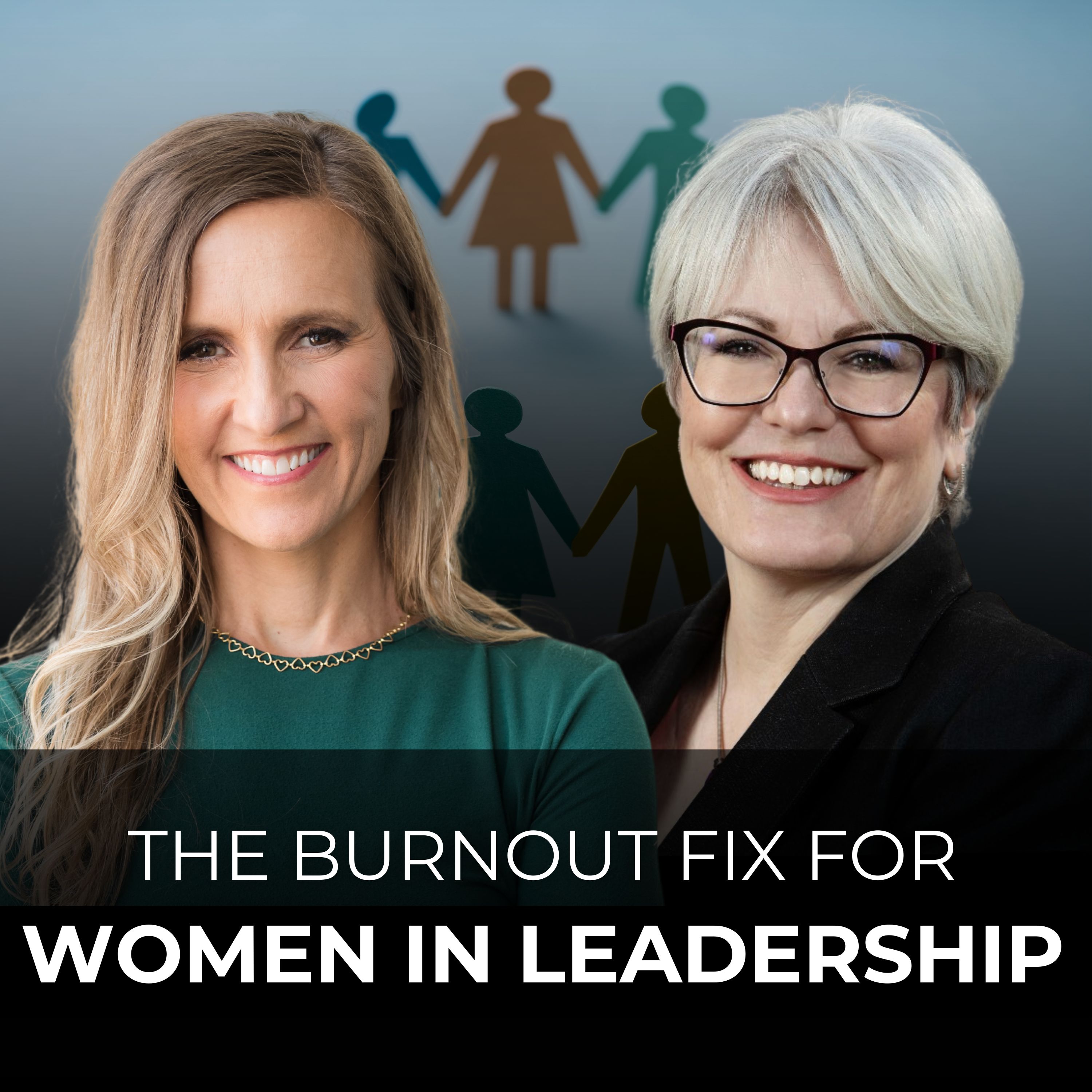
Hey everybody. Welcome to the Lindsay Anderson Show. I'm so excited for today's guest, Ms. Juliet Peters. She is a powerhouse leader who has made her mark in boardrooms and courtrooms, taking on challenges with strength and determination. After years of navigating societal expectations and the pressures of high stakes environments, she realized the cost of burnout and and disconnection from her true self. This sparked a transformative journey of reinvention and self discovery. Now Juliet is passionate about helping women lead authentically embrace their inner strength and redefine what it means to be a leader. Welcome to the show, Juliet. Glad to have you on.
- [01:12]
Juliet Peters
I am so glad to be here. I'm super excited to be able to talk about something that I really feel. I don't know if you feel that way too, but as a woman in the leadership space space, I do feel this un undercurrent of women kind of stepping into their ability to lead and doing so in a way that is authentic to them, not sort of the way we've had to show up for the last 20 years or so because of societal expectations.
- [01:43]
Host
Yeah. Do you mind getting a little, let's get into the dirt a little on that, Juliet. Okay. Can you be a little more specific about that? What do you mean? Like, give me an example, a before.
- [01:51]
Juliet Peters
And so I'll speak from my own personal exam as a, you know, prior to being a lawyer that's professionally, I'm a lawyer, I run, I was in the media. And so I've always been in very heavily male dominated professions. And when I first became a lawyer and because I've always been all about women's leadership, Right. I end up serving on committees and recruiting and really trying to get these what I'll call very old organizations to step up and make women and people of color be coexistent the way they exist in society.
- [02:35]
Co-Host
Right.
- [02:35]
Juliet Peters
And so I feel like we've been pushing, pushing, pushing for probably three decades, right. To have a seat at the table.
- [02:44]
Co-Host
Right.
- [02:45]
Juliet Peters
Always about having a seat at the table. And recently it's kind of dawned on me that maybe that's not the right approach, that maybe the right pro approach is to Build another table.
- [02:56]
Co-Host
Right.
- [02:57]
Juliet Peters
And invite people to sit at that table. Instead of trying to get these really sort of old line businesses to kind of step, allow people who are outside the norm to be, you know, to appear and sit at the table. I just think we're fighting a losing battle and have been for a while.
- [03:20]
Co-Host
Right.
- [03:21]
Juliet Peters
And it doesn't appear that we're moving forward from that. It appears we're either stagnant or in some cases, moving backwards. So the number of women, women leaders at law firms, for example, has stayed sub 10% for the entire time I've been a lawyer. We're just not making headway, doing it the other way and getting people to notice us. I think we have to begin to lead from a place of, hey, this is how I'm approaching this problem. Do you want to join me in doing this? Instead of begging to be noticed and to move through those traditional line businesses, moving up through the ranks, maybe that's just not the way to do it. Truthfully, I see more and more women opening their own businesses, and that, I think, is the key.
- [04:09]
Host
I like that. That sounds like a true leader. Step up, step out. And like, who cares what anyone else is thinking or doing? I'm doing this thing and you can come with me if you want. I love that. Julia, was there a pivotal moment in your life that made you realize this?
- [04:23]
Juliet Peters
I think that I've done a lot of reflection. Probably post pandemic. It's probably a result of all of the societal sort of upheavals that we saw post pandemic. It's certainly some of the, you know, court decisions that have occurred, just some of the bigger issues that we've seen in American society. And frankly, you see that mirrored all over the world.
- [04:53]
Co-Host
Right.
- [04:53]
Juliet Peters
That got me to kind of step back and think to myself, you know, listen, I was the good person who played the role that I was assigned. And that role was, if you want to make it in a heavily male atmosphere, you swing with the guys, you hang with the dudes, you don't complain, you don't. You sort of put your own personality and you take on this Persona that really we've been assigned.
- [05:27]
Co-Host
Right.
- [05:28]
Juliet Peters
And I really was upset at myself because when I saw other women and I saw that we had made progress like I thought we had, and we were actually backsliding, it upset me because I thought, you know what? I did the wrong thing. I have always stood up for others when I've seen it occur in front of my eyes. But for myself, I didn't do that. I did not do that. I was the good doobie and that was the wrong doobie. I really think that dawned on me that was not the right way to advance. And when I say advance, it's not about sort of giving women and people of color. It's not necessarily of giving them something they haven't earned. This is about we as a society do better with all of our outcomes. I don't care what it is. I don't care if it's, you're a financial advisor. I don't care if it's teaching. We do better when we take what's best about the diversity of perspective and allow people to lead from their authentic self, period. And the more we try to shoehorn people into what they should act like, who made those rules? Who really made those rules? And when you start to think about that, you go, wow, I don't even know who made those rules, but I accepted them without question. And I think it's time we start questioning things a lot. We start questioning assumptions, we start questioning some of the narratives that we hear day to day. Why have we decided we need to play in this lane when we feel we're better suited over here?
- [07:18]
Co-Host
Right?
- [07:19]
Juliet Peters
So I think that's kind of what that inflection point for me was, was kind of, it was kind of cumulative, to be honest. And I think that I did not appreciate how much the cost of my silence, what the damage was. And I think sometimes you have to reflect and go, wow, I wish I had addressed some of the issues I faced.
- [07:49]
Host
Yeah. But to your point, right, when we talk about who made these rules, you know, it's, it was like society. And then you see it in marketing, in there, the microhabits. And your mom acted that way, so you did. So how would you ever know, right? How would you know? Because you're just like, you know, 90 of we do every day is pre programmed stuff for us anyway. So what is a tip? You know, like it can be scary standing up and acting different than you ever have, or that your mom did or the women in your life did. So like, how do give us what happens in your head when you're like, oh, here's one of those situations where I would have usually pulled back and it's my time to shine.
- [08:29]
Juliet Peters
So what I've learned to do more so as the years have gone by is I use humor a lot. And the other thing that's super powerful and God knows I did not use this because I am a talker, right? But silence is really Powerful.
- [08:46]
Host
I think so too.
- [08:48]
Juliet Peters
It really is. Sometimes when you just, you know, sometimes somebody will say something and I don't say anything. I just look at them. Not with a. I just kind of.
- [08:58]
Host
Stopped where you may have.
- [09:01]
Juliet Peters
Where in the past I may have soothed, cajoled, you know, and it deflected onto myself.
- [09:10]
Co-Host
Right.
- [09:10]
Juliet Peters
I think that I'm increasingly using a stop, a pause.
- [09:17]
Co-Host
Right.
- [09:18]
Juliet Peters
In communication. I'm also using questions more so. Really? That's interesting. Explain that to me or unpack that for me. What exactly are you saying there? Or. Huh, that's interesting. Why do you say that? In the past, I probably would have had two modes. Either, you know, try to fix it by doing this myriad of things, or if it was really egregious, I would confront it angrily.
- [09:46]
Co-Host
Right.
- [09:47]
Juliet Peters
And that's usually not reserved for myself. That would be when I would observed someone else being subjected to that. And to be frank, I would probably still react in anger if I saw someone making an assumption about someone else and it was in front of my eyes.
- [10:06]
Co-Host
Right.
- [10:06]
Juliet Peters
I don't want to give the impression because this wasn't what I did where I just accepted things that were done to others. No. I've always been the one to stand up and say, hey, what was that about? Or you know, I can remember we had a. At the first firm I worked at, we had a very well known, let's just say was somebody who had a reputation for being at several firms and leaving because of harassment allegations.
- [10:33]
Co-Host
Right.
- [10:34]
Juliet Peters
Well known in the city.
- [10:35]
Co-Host
Right.
- [10:36]
Juliet Peters
And somehow he ended up at my firm and I was a younger associate and I got on the elevator and he brazenly in front of me, reached into a secretary's blouse, Right. To push in her bra strap.
- [10:55]
Co-Host
Right.
- [10:56]
Juliet Peters
And I said, what are you doing?
- [10:59]
Host
How did that go?
- [11:01]
Juliet Peters
Not well. And there's a whole other story that to somebody else who also reported him later on, which was much more retaliatory than what happened to me. I kind of had that demeanor where people don't too much. So I said, what are you doing? And I got off the elevator, hit the button, got off the elevator, went right into the HR office and reported him. Because he had this reputation and had been at several firms in town, I figured the firm needed my help in continuing to build his reputation in the city as someone who should not be at a law firm, particularly be insulated from. From saf. And you know, later there was a fairly large incident after I left with a. With an associate. So yeah, I mean, you know, and when you've been in the, when you've been in the business world for a long time. I mean, I got a thousand stories like that.
- [11:53]
Co-Host
Right.
- [11:53]
Juliet Peters
But I think the reality is I've always had that protection mechanism when it comes to others, but I just could never see that as a road for myself.
- [12:07]
Co-Host
Right.
- [12:08]
Juliet Peters
I was a more of a peacemaker. And, you know, that's, that is probably, was probably not the right route to take.
- [12:17]
Host
That makes sense. Tell me. We talk about women in leadership and how women don't make up a huge percentage of a lot of these different industries that we talk about. If you had to pick one feature of a woman, like something that women can bring to this space, what do you think the, the, the biggest benefit that we can bring as women to these kind of industries?
- [12:36]
Juliet Peters
I think women have a really interesting package of skills. And I think in most industries, not just heavily male dominated ones, women make excellent workers and they excellent managers if given the opportunity because they have this package of skill set that is, you know, technical expertise and excellence.
- [13:01]
Co-Host
Right.
- [13:02]
Juliet Peters
We all start with that as a premise.
- [13:06]
Co-Host
Right.
- [13:06]
Juliet Peters
No one's suggesting that because women have a different set of soft skills, they should be given a break necessarily on the hard skills that it takes to do a job.
- [13:17]
Co-Host
Right.
- [13:17]
Juliet Peters
So that being an equal playing field, which it is.
- [13:20]
Co-Host
Right.
- [13:21]
Juliet Peters
Then I think the soft skills are what really matters in today's marketplace. It's that being able to lead in a more collaborative fashion. Now, am I saying that every woman does that?
- [13:32]
Host
No, of course not. We're talking broad strokes here for everybody.
- [13:36]
Co-Host
Right.
- [13:36]
Juliet Peters
And I think women have shied away from having those be on full display. And frankly, that really sets apart in today's environment, women from other leadership, because they do have a much better sense of people and team and collaboration. Until AI replaces all of us on the technical side, those soft skills are still in demand. And I hear all the time multitasking has gotten a bad rap because the science behind multitasking is not great scientifically. The whole idea of multitasking is kind of fraudulent. Having said that, I would say that women are encouraging incredible jugglers. Oh, wow. I don't want to use the multitask term. It's about effectively juggling balls in a manner in which some of the other population doesn't do so. It's the ability to juggle and reprioritize.
- [14:40]
Co-Host
Right.
- [14:41]
Juliet Peters
Based on what the needs of people, the, you know, the business deadlines. Because women do that juggling every day in all other aspects of their life. I think that ability to juggle is something that is really beneficial to businesses.
- [15:02]
Host
Right. I love that.
- [15:04]
Juliet Peters
Yeah.
- [15:04]
Host
So let's pivot here. Speaking of pivots, let's talk about burnout. That seems to be something that you're extremely passionate about. Why are you so passionate about burnout?
- [15:11]
Juliet Peters
So I'm passionate about burnout because I've experienced it, and I think men experience burnout too. That's not a gender specific.
- [15:20]
Co-Host
Right.
- [15:21]
Juliet Peters
But for women, it's a lot more. There are a lot more places to go with burnout. Meaning because women still are the primary caretakers of families, we still carry the mental load. We laugh about it in my house all the time. But I'll give my husband something to do and he'll have 15 different questions to ask me before he actually does the task. So now we just have a shorthand where. Where if he asked me a question and it's a question he could answer himself, I say, man, I know you're thinking for yourself on your job, so start applying that in other areas of your life.
- [16:00]
Co-Host
Right.
- [16:01]
Host
So.
- [16:02]
Juliet Peters
But I think that, that women have that. And I also was listening to a fascinating study which was about women and what they do to sort of, for lack of a better term, sort of sacrifice self. This, the amount of self sacrifice that a lot of women will make and is not, does not do them a favor in terms of the. The ability to accelerate burnout.
- [16:28]
Co-Host
Right.
- [16:29]
Juliet Peters
So if you are not meeting your own needs on a regular basis and you are meeting everyone else's to the detriment of yourself, that is a recipe for burnout.
- [16:40]
Co-Host
Right.
- [16:40]
Juliet Peters
And what happened to me and what I've seen happen to a lot of people that I know is you'll run right up to the brink and never notice what's happening.
- [16:49]
Co-Host
Right.
- [16:50]
Host
Then what happens? Paint it out for me. What does burnout look like?
- [16:52]
Juliet Peters
So burnout looks like resentment is a. A first. Good tip on how do you know if you're burned out?
- [17:00]
Co-Host
If.
- [17:01]
Juliet Peters
If normal tasks make you feel really angry, that's a sign of burnout, right? If you are. If you don't notice months going by, like if you're just on a treadmill where you're totally not really. Your life is running you. You're not running your life and you feel that way, that's a burnout sign.
- [17:22]
Co-Host
Right?
- [17:23]
Juliet Peters
If you are meeting everyone else's needs and never meeting your own, you're canceling with friends. You're. You're not exercising or meditating or whatever it is that you find in your day that gives you peace, that's a burnout sign, right? If you feel anxious or depressed, don't want to go to things lost your interest, that's a burnout sign, right? If you're procrastinating a ton on your work, that's a burnout sign, right? So there are all these warning signs, but a lot of times you don't necessarily see them because you're so in the doing that you're not in the noticing. And I think that stepping out of yourself and noticing and look, if it was easy to do the balance thing, we wouldn't be having this conversation, right? It is incredibly difficult to do, more difficult to do. When you're raising kids, trying to have a career and keep your marriage together, that is all very, very hard. And you're doing. A lot of times the ticker in your head just constantly goes. You're not sleeping. You can't shut it off. Those are all terrible signs of burnout. And for me, you know, I literally hit the wall. Like, I had what I would consider to be sort of a mini nervous breakdown, where for two weeks I was having panic attacks. I couldn't get out of the house. Just not me. And, you know, women have a lot of physical challenges that they're dealing with with hormones. A lot of women don't. We don't talk about things like perimenopause, menopause, what those things feel like in your body. A lot of people will say, hey, I feel like an alien has landed in my body. That. That's actually a really good description because all of a sudden, everything that you've normally done and the pace you've normally gone at, it's all bad for some reason.
- [19:24]
Co-Host
Right.
- [19:25]
Juliet Peters
Those are all kind of places where you really can hit a bottom. I had a lot of family issues happening, a lot of cancer, dealing with older, aging parents and children. That all was a recipe for me literally having a breakdown at a Christmas. Luckily, it was during Christmas where my family really bore the brunt of the impact. But it was scary. That's a scary thing. Nobody wants to get to that point.
- [19:50]
Host
Right.
- [19:51]
Juliet Peters
That point.
- [19:52]
Host
So what are. So we start noticing these signs. What's your recommendation on a next step? What's one thing we need to do when we start noticing this?
- [19:59]
Juliet Peters
Stop. First of all, stop. Okay. And notice.
- [20:04]
Co-Host
Right.
- [20:05]
Juliet Peters
And. And. And try to, you know, if you can. If you're in a mental place where you can, you know, figure out what you can stop doing for the next three weeks.
- [20:18]
Co-Host
Right.
- [20:19]
Juliet Peters
What can I stop doing for the next three weeks? Call a Therapist right now. Wait times on therapy are, can be long depending on what area in the country you're in. That's why I always believe you should have a therapist in your back pocket that you pull out when you need to. There is something really phenomenal about having an objective listener. It's great to have friends and family. God knows mine have listened to, you know, a lot over the years. But really objective help is really important. Don't be afraid to take medication in the interim either. While you get on your feet, don't try to out right. So notice the signs and, and try to really do what you can within where you're, what you're working with, right?
- [21:06]
Host
What is something that the audience can do daily. Juliet to prevent burnout.
- [21:12]
Juliet Peters
So I think you have to find for yourself what works for you. For what works for me is I'm not a huge journaler. Some people find real, real help in journaling daily, right? That's never really been my thing. I love to write, but I'm not a big journaler. But I do, I would say that for some people, journaling is amazing, right. For me, meditation and yoga have been really life altering. Even just breathing. So whenever I get a panic, you know, where I feel things starting to rise, I literally do because it's easy. Four, seven, eight breathing, which is in for four, hold for seven, out for eight.
- [21:54]
Co-Host
Right.
- [21:55]
Juliet Peters
If that seems too complicated, 4444, right? In for four, hold for four, out for four, hold for four before you breathe in again.
- [22:02]
Co-Host
Right?
- [22:03]
Juliet Peters
But if you do that even during the day, every hour, you will notice a market shift in how you're dealing with things. You know, some people really like to do binaural beats where they listen to headphones with different frequencies. For some people, sound healing is really great. Some people enjoy reiki. I mean there's a million things you can do. It's about finding what works for you. And also hear a lot of people talk about gratitude. For me, gratitude is complicated because I am a very grateful person. But I always find having to write down in my gratitude my five minute gratitude journal, you know, things I'm grateful for.
- [22:48]
Co-Host
I.
- [22:48]
Juliet Peters
It's never been very, it's never really become a great habit for me. But for other people it works, right? For me, I actually am going to try in 2025 instead of doing gratitude, I'm gonna do every night, I'm going to give myself write down three to five things that I noticed moments of joy during the day.
- [23:12]
Host
Very nice. Very nice.
- [23:14]
Juliet Peters
Yeah. If you have Moments of joy, they build on one another and also in the world we live in right now with the feeling of time, the way it is so speedy and just all the craziness all around every day. 15 things a day, right? You can't even keep track of those. What I call micro moments of joy are super important. I agree.
- [23:36]
Host
Well, Julia, it has been a real pleasure interviewing you today. Before I let you go, I'm going to turn the time over to you. Please let us know how to find you and anything else you want the audience to know.
- [23:47]
Juliet Peters
Well, thank you very much for asking. I really only have one website. It's www.frameworklegal.com. it's my during the day business, which is I help people buy and sell businesses. I'm super passionate about helping women build that seat at an adjacent table, build their own table, if you will. And so I spend a lot of time with women entrepreneurs. It's something that I really love to do. Look for a podcast coming in 2025. I really think it will be great to give voice to women who are doing amazing things all over the world, really, but they're not necessarily getting the publicity for it. And I think that's important because I think that will let us see it. Turns the tide a little bit on what might be feeling negative.
- [24:39]
Co-Host
Right?
- [24:40]
Juliet Peters
Which is, hey, there are people doing amazing work everywhere. Here they are. Go do your own amazing thing.
- [24:48]
Co-Host
Right.
- [24:48]
Host
Well, Juliet, thank you so much for being a guest on the show.
- [24:51]
Juliet Peters
Thank you.
- [24:54]
Host
There you have it folks. Another awesome episode of the Lindsay Anderson show. Now don't forget, if you are looking to generate more high quality clients from social media and make social media a more streamlined process. Make sure you join me at my upcoming workshop by going to Lindsay a.com workshop. I'll walk you through my simple four step process on how to show up on social media and attract those high quality clients. All you need to do is head over to Lindsay a.com/workshop. Thank you so much for joining me for this episode. Cheers to you and your success.
- [25:34]
Lindsay Anderson
That's a wrap for today's episode of the Lindsay Anderson. If you loved this episode, don't forget to subscribe, leave a review and share how you're leveling up your business. Want more? Connect with Lindsay Anderson and get the tools you need to crush your goals@lindsaya.com until next time, keep pushing, keep growing and turn those business dreams into reality.