← The Lindsey Anderson Show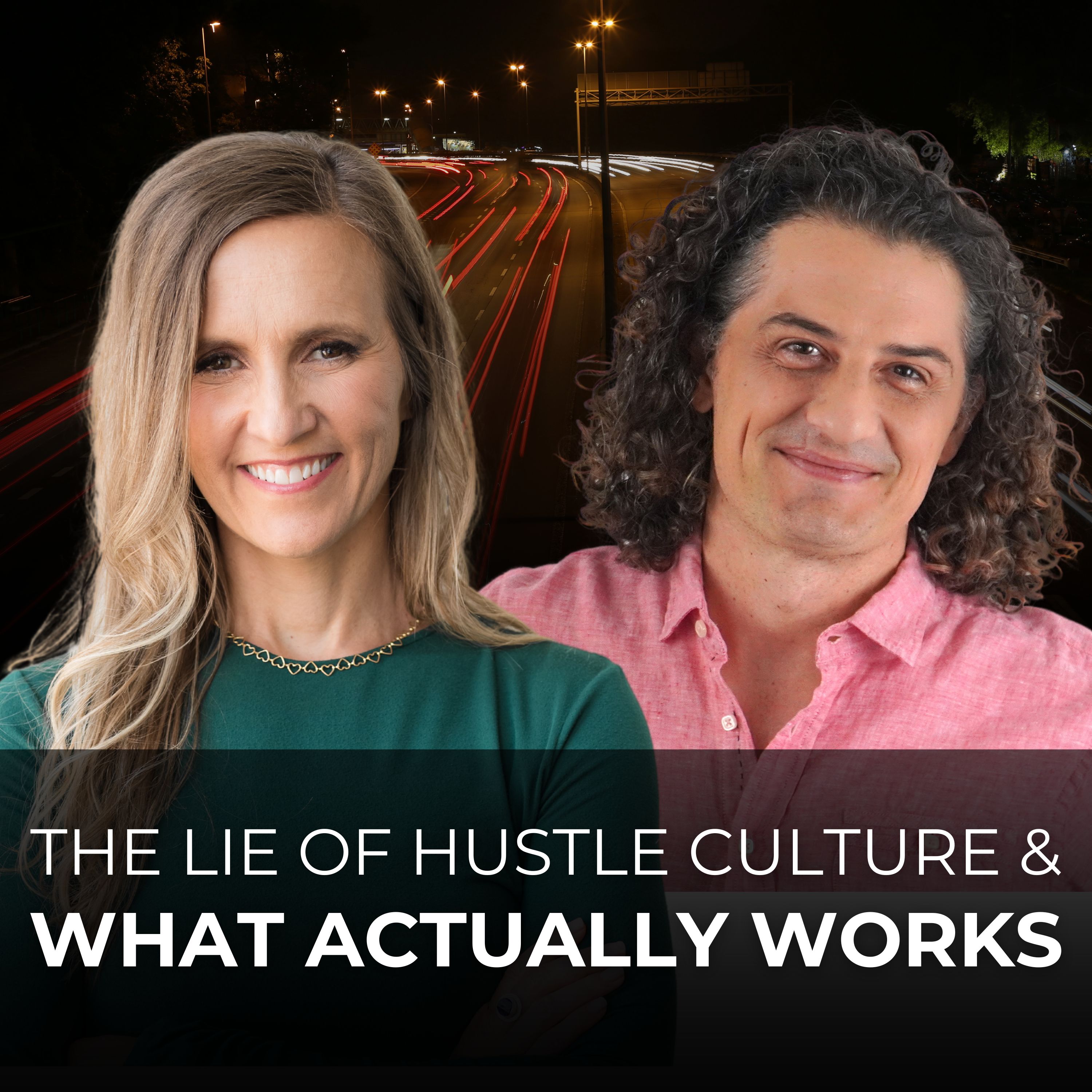
The Lindsey Anderson Show
The Lie of Hustle Culture—and What Actually Works with Demir Bentley
00:22:43
Loading summary
Transcript48 lines
- [00:03]
Lindsay Anderson
Are you ready for next level growth in your business? Welcome to the Lindsay Anderson show where we pull back the curtain on the exact strategies, tools and mindsets that build million dollar empires. If you're hungry for more time, more freedom, and a whole lot more impact, you've come to the right place. Buckle up because we're about to ignite your business journey. Now here's Lindsay.
- [00:34]
Demir Bentley
Hey, everybody. Welcome to this episode of the Lindsay Anderson Show. I'm so excited for today's guest, Mr. Demir Bentley. His specialty is helping entrepreneurs and business owners like you avoid burnout and soar to the highest level of productivity and win your week. He is an executive productivity coach on a Wall Street Journal bestselling author and co founder of the Life Hack Method. He's helped thousands of professionals work less and get more done. Let's dive in. Demir, tell us a little bit about yourself and why you're the guy we need to talk to about winning our week.
- [01:13]
Yeah. So I was your quintessential insecure overachiever on Wall street, and my wife was the quintessential insecure overachiever in corporate. She worked for Kraft Foods for a little tiny company you may not have heard of called Craft Foods and the Oscar Mayer brand. So for those of you in the United States.
- [01:30]
I have kids. I know what Kraft Foods is. Yeah, yeah.
- [01:34]
Oscar Meyer, Craft Foods. And you know, our thing was that we were completely bought into the hustle culture mindset, outwork the competition. When they're sleeping, you're working. And I believed in that like a religion. I just knew, not suspected, not hoped 100% in my heart of hearts knew that it was gonna pay off and that I was going to, I don't know what I thought, like, be a big guy, a big shot, get a seat at the big kids table. And everything I wanted was driven by ego. I wanted the money, I wanted the fame. I wanted all of that stuff. And I knew that working harder than anybody else was absolutely gonna get me there. But it didn't. Instead, I ended up having a massive stress related health injury that completely derailed my career. And I sort of like a person falling out of a religion. Almost like lost faith and just like it happens when you lose religion. I felt like a fool. I felt completely like I had not only lost a game that I was playing, but I had almost lost a belief system. If I'm not supposed to win this way, I don't know how I'm supposed to win. It really was that profound for me because I had Aligned my entire identity and my entire life effort, my life force was aligned around. I'm going to do this and it's going to work. And you just watch me. I'm going to blow through every single obstacle. And then I landed flat on my back. I mean, literally flat on my back. Because I went to the hospital, had three surgeries. They diagnosed it as something called early salary man sudden death syndrome, which is mostly prevalent in Asia, where people actually kill themselves by. By working too many hours. I was working like 80, 90 hours a week, which was something I was so proud of. I give myself the busy badge all the time. I am busier than you if you talk to me when I lived in New York. Demir, how you doing? Oh, so busy, man. Oh, busy, busy. I'm so busy. I would complain, but really it was bragging. I'm so busy. I'm just doing so much. So that was just sort of the end of that old life. And in that moment, if you taking a snapshot of me, I was completely lost. I really didn't know if I wasn't going to do finance and live in New York and be a big shot. You know, who am I? What do I do? How do I organize my life? How do I organize my effort? Because I was one of those people who believed that life existed on one linear spectrum. You could either be miserable and successful or you could be poor and happy. And the more that you inch towards being successful, you are incrementally compromising on your happiness. And the more that you inch towards happiness, you are compromising on success. Like I believed in that like a religion. I did not have a conception like I do now that you could be both successful and have an amazing lifestyle and be happy. There was no Y axis on my graph. It was only an X axis.
- [04:20]
Now tell me, why is that? What is the root of that? That is, you know, hustle culture described very clearly, obviously to an extreme here. But why is that? What's the root cause here?
- [04:30]
Well, you're asking me to psychoanalyze our entire culture, but that it comes from the Protestant work ethic that's baked deep into our culture. Even if you're not Protestant. It's there this idea that God loves people who work harder. The reward for hard work is more hard work, that hard work is its own reward. This idea that's really baked in. And then of course you see like sort of modern bubblings of it. You've got the Gary Vaynerchuk, no offense to him, he's got great Content. But you've got these people who are out there saying the quiet part out loud. You shouldn't be sleeping, you shouldn't be taking weekends, you shouldn't be enjoying your life. Some people even saying you shouldn't be having kids. You shouldn't be doing these things like building friendships. You should be out there outworking the competition. And then people subscribe to it like I did, and then they hate their life, they're miserable. They don't have sustainability in their life, they don't make it. And then they just burn out and say, oh my God, I've sort of ascribe to this false religion and where do I go from here?
- [05:26]
Yeah. What would you say is the biggest misconception around burnout and this hustle culture that we're talking about.
- [05:33]
There's not a misconception as much as it just has so much appeal on the COVID The COVID of the book just feels so self evidently right. Yeah. Work harder than other people, put more time in than other people, you will be more successful than. I mean, just feels so self evidently right that it's. The misconception is I think, a failure for people to knock on it a little bit, hit it a little bit and see if maybe some of it doesn't actually gel with reality. So let me give you an example. On one hand, you'll say, outwork the competition and you'll be more successful than them. Okay. Seems right. Now let me ask you, can you keep that up for 5 years? Can you keep that up for 10 years? Can you keep it up for 20 years? Can you keep it up For 30 years? A lot of people say, well, no, I don't think I could do that. Okay, well, do you not want to have kids? Do you think on your deathbed when you look back, you're going to say, thank God I made partner at my law firm? Or were you more likely say, thank God I that extra child. What are the things that will really value you across a longer timeline? So yes, standing here, looking through that small peephole into the future, it can feel like I just need to do more work. But when we take a different lens, when we move out further, we realize that actually having a sustainable lifestyle that you love is actually part of your success. Because if you love what you're doing, you'll keep it up for 10, 20, 30, 40 years. So I like to say that the hours that I lose on a weekly basis, I more than make up for the fact that I'm not burning out 10, 20, 30 years. I cannot tell you how many clients I have that are at the peak of their powers in their career. They are as good as they're ever going to get. They've got so much career capital built up, but because they went too hard in the mat for 20 years, they hate their work. They hate everything about it. And they're quitting. After 20 years in a career, they're quitting. This should be the time that they're about to go 20 more years and really capitalize on that first 10,000 hours that they put in. But now they're quitting because they didn't build sustainability into it. So what's better, to work 10 extra hours a week or to hold off on that 10 extra hours a week and get 10 more years at the end of your career because you've built sustainability and quality of life into that career?
- [07:41]
I love that. I love that. So let's talk about the solution. Here are small business owners. We're working. We're thinking that equals paychecks. We are working because we have anxiety and it makes us feel better. We are working for a better tomorrow that never seems to come. What is the solution to win our week?
- [07:59]
Yeah, the lowest hanging fruit is what I actually did as a part two of that story in New York. I got a diagnosis from my doctor. He said, listen, you're overworking. Here's your medicine. You need to go into work next week and work less than 40 hours. Now, to tell somebody who's working 90 hours a week starting Monday, you need to start working 40 hours a week just feels the same. Okay, grow wings and fly to Narnia. I mean, it's more realistic that I would fly away to Narnia than I would work 40 hours a week and get all of that done when it previously used to take me 80, 90 hours. So the first thing that I went and did is I sort of got a little bit angry. And I think anger can be good. A little bit. Sort of that. That. Screw this mentality like, this is outrageous. I went home, and for the first time in my life, I actually did what I call my first planning session. My first real planning session. Now, you might say, oh, you've never planned your week before? No, I did it. But like most people, I would do only part of it. Like a baseball player running the bases. I would only touch the bases that I really like to touch. I didn't want to touch the bases that I really don't want to touch. So I would do an incomplete planning where I'd Leave major aspects off. I wouldn't round the base and finally calendarize it and have a really realistic plan for the week. For the first time, I took everything that I wanted to get done and I actually calendarized it into my calendar to see if it was actually realistic. I created a full plan for the week, and that week I got my work done in 40.2 hours. It was literally like right over the edge of 40. And everything that really, truly needed to get done got done in that week. So a big thing that we have our clients do, the first step that we take people through is to check into their planning and say, are you actually touching all the bases when you're rounding the bases on your planning? And like I said, many people don't, because as humans, we tend to have biases, sort of sweet spots. Some of us really love the calendar. Some of us want to avoid it like the plague. Some of us really love to do list optimization or reviewing our to do list. I'm a person who has a lot of resistance to looking in asana or to do lists. Some of us, at the end, really love putting it together and making a time block for each thing. Some of us would rather peel our own skin off rather than do that. And so what we do in the six step winning the week method is we actually walk you through in 30 minutes or less, every single base that you need to round and touch off so that at the end of it, you know that this is actually a solid plan for the week.
- [10:27]
What are the bases? Can you outline the base for me? Is there really four things here that we're talking about?
- [10:30]
Yeah.
- [10:31]
Okay, what are they?
- [10:32]
So the first, I call it step zero because I like to infuriate people. But like, step.
- [10:36]
I can tell. I can tell with all your calendaring.
- [10:39]
So step zero is removing the resistance. The reason I call it step zero is you really only have to do it once and you never have to do it again. Removing the resistance is asking yourself, am I setting up an environment for my planning that I actually look forward to? Because, let's be honest, planning is like taking a slap in the face today instead of a punch in the mouth on Thursday. It's never going to be like this great thing. If you do it on Friday, it's going to be better if you let life come to you, open your door and drop a grenade on you, it's going to feel like a punch in the mouth. So because of that, you want to create a planning environment. That's sort of awesome. That's Sort of soothing. So Carrie and I like to go out to a cafe together. It's almost like a little date for us. We'll go out to the cafe, we'll plan our week together because we own a business and run a life with three kids together. So we'll do the whole thing, and then we'll take two hours after that to just enjoy each other's company. Because we found pro tip that one of the things that keeps you from relaxing with your spouse or partner is all of the things that are swirling around that haven't gotten ticked off. All of the, oh, are you going to take the kid to this? And who's going to do this and who's going to do that? So when we've actually taken 30 minutes to an hour to touch off on all of that, I actually get to get my wife back. I get to get this awesome, beautiful, amazing personality, because she's not stressing in the back of her mind that something hasn't been dealt with. So that's step zero. Create an environment for your planning that's actually really juicy, that's really sexy. That's something that you look forward to, you know, affordable, but something that you really look forward to. Because when you look forward to your planning, you're more likely to do it. And when you do it, it becomes a habit. Because planning isn't something you can do once and have done with. It is something like the gym. You need to show up every single week and do it again, and is the accumulation of all of those reps that get you that amazing result. So that's steps, okay? Remove the resistance. Do it once you've done it, you'll never have to do it again.
- [12:28]
Okay. Okay, I like that.
- [12:30]
Okay, now that. That gets us to step one. So assuming that's done, the first thing that we do with clients is we like to learn a lesson. One of the things that we've been doing with our clients recently is every time they do step one, they'll look back on their week and they'll learn a lesson their week. We have a question that we call the Groundhog Day question, which is, if you got stuck in a time loop last week and you lived that week a thousand, a hundred thousand times, what would you end up doing to make it the perfect version of that week that will give you a clue to understand. Okay, if I didn't do that, then maybe there's some lessons that I can learn here. Maybe there are some things that could have been optimized. Maybe there are some Things I shouldn't have done. Just grab one. That's your lesson for the week. We're having clients write it down on a card and put it in a stack so that at the end of the year they've got 52 hard fought lessons for things that they can and should do differently to improve their productivity and get better results in the week.
- [13:22]
I love it. That's a very. I don't know if you're a big fan of stoicism. There's a very stoic way to go about it and like slowing down all of these automatic responses and letting your life take you, but you get to control this ship and looking back and like coming out of those pre programmed responses very powerful. Okay, I'm dying. What is the next step? I would call it step three, but I think it's step two. So what is it?
- [13:45]
Step two. Okay. Okay.
- [13:46]
You are infuriating.
- [13:47]
I know, I know. Step two is choose a leveraged priority for the week. In a world where we can't get everything done, you will end the week with a whole host of things you swore you would get done and yet they aren't done. The only alternative to working more is to operate with more leverage. What is leverage? Just as a quick definition, leverage is doing something in such a way as you maximize the downstream impact that it has on everything else. So a good way to think about it is, I need to respond to this email. A leveraged way to respond would be, I've been responding to this email 15 times a week. I'm going to create an email template and save it with my other email templates so that when I get this question in the future, it's so much faster to respond to this. So I leveraged that email response. But you can also leverage your priorities. A leverage priority is when you say, I'm not just going to do the thing that feels like it's waving a flag and screaming at me. I'm gonna stop. I'm gonna get calm. I'm gonna step away and say, what is the thing that I can get done that makes the doing of all other things in the future maximally effortless and easy?
- [14:53]
I love that. I always call that doing future Lindsay a big favor. Like she needs a favor done. I'm gonna do it for her today. I love that. Okay, we're rounding the bases here. What's next?
- [15:04]
Yeah, number three, interrogate your calendar. So I like to think about your calendar. If you've ever watched those like Chromebooks, crime shows or the legal shows on tv. And you've got that witness that doesn't really want to tell you the truth, but that genius lawyer gets in there and really sweats them, really asks them from all different sides, and they finally get the truth from them. Your calendar's a bit like that. Your calendar has all of these landmines hidden in it. And if you don't get in there and sweat your calendar, if you don't interrogate your calendar, you're not going to find those. But if you don't find it, then you're going to step on that landmine and it's going to blow up in your face. For example, it could be you told your daughter that you were going to drive her and all of her friends to a volleyball game. You didn't put it on your calendar or you didn't put enough time before it on your calendar to actually get there. Now all of a sudden, last minute, it blows up. You're in a fight with your spouse, who's going to take her if you just sweat your calendar. If you interrogated your calendar, you would find that. So what we like to do with our clients in this step is go through your calendar and really interrogate it and find all of those things that should be on your calendar but aren't, and let's get them on your calendar and let's make sure that there's the proper allocation of time for that thing. If it's a dentist appointment, there should be a 30 minute or hour long block before it to get to the dentist office.
- [16:18]
I love that. I love that. I love that step. Interrogate it. Don't be lazy. Pay attention. Now, is that the final step or do we have one more to make it a home run here?
- [16:27]
Demir, we got three more. We have three more.
- [16:29]
Oh, it's not real baseball. This is Demir baseball. Okay. This is calendaring baseball.
- [16:33]
Yeah, this is Demir baseball.
- [16:34]
All right, what's next?
- [16:34]
Yeah, it's only. The next step is triaging your task list. So a good way to think about this is if you interrogate your calendar like we did in the last step, that's your time supply. That's your supply of time. Well, now we're looking at your time demands. When you're looking at your to do list, you're not just looking at to do list. You're looking at all of the demands on your time that you would like to do and other people would like you to use your time on. So we're going to do the same thing we did in the last Step. Except now we're going to do it with your task list and you're really bringing the principle of triage to bear. What is triage? In the Napoleonic wars, when there were scenarios of mass casualties, I'm talking about hundreds and hundreds of injured soldiers coming in at the same time. You couldn't treat them all, so they divided them in three categories. Who are the soldiers who will most likely live even if I don't treat them? What are the soldiers that will most likely die even if I don't treat them, or even if I do treat them? And what are the soldiers where I can have the greatest impact in changing the difference in whether they live or die? That's the principle of triage. And we're applying that same principle to our to do list. Right. What's the stuff that even if I focus on it is probably not going to happen this week or it's not going to come out in the right way. What is the stuff that can wait, right? It can sit for a while, it can marinate for another week. And what is the stuff that absolutely has optimal impact this week where it's both urgent and leverage at the same time? And so what we're doing is we're going ahead and we're triaging that task list, pushing things in the next week, deprioritizing, reprioritizing, so that we actually have a to do list that we can trust and that we can look at that's ordered in terms of priority.
- [18:03]
I love this. I love how much, you know, planning is just gonna, with you, executing on a well thought out plan is gonna make everything in your life go so much better. So putting in this kind of effort upfront will always pay off in terms of your goals, in terms of what you're trying to do, and your peace and harmony. So what's the next step? Last one, last one.
- [18:24]
We are going to allocate out all of our time demands to our time savings supply. Now, this is where people really choke in their own mouth.
- [18:32]
I know I did.
- [18:33]
Oh, my God, I used to.
- [18:34]
I know I did. Okay, listen.
- [18:37]
This is like a marketplace at the end of the day. I like to think of time like time, like truffles. The, the global demand for rare truffles always outstrips supply. There is never enough truffles in the world for all of the demand. And so there is a careful system for allocating exactly the right truffle to the right person, making sure there's no spoilage, there's no wastage, and just like Truffles, there's only 168 hours in your week. If you don't use it, it spoils and goes bad and you can't roll it over to the next week. You need to look at your time supply and your time demands and you need to match them up in the optimal way. And what that means is that when I look at your calendar, I should be seeing at least all of your workday, if not your workday and your personal time. There should be a bracket in every single 30 to 60 minute increment. That's how I plan my week. Now, if you can't handle that, then anything more than you're doing today is better than what you were doing yesterday. I'll take incremental wins, but ultimately we are doing what we call calendarizing our to do list. If you say you're going to get something done, you are making an allocation of time in which that thing will get done.
- [19:39]
I love it. I love how serious you are about this. Because we go around and we say time is our greatest asset, you can never get it back, no one can pay for it. All these sort of things. And here you are saying, hey, it is our most valuable resource. Take it seriously. And when you do, you can really have a sustainable lifestyle and achieve all of your goals like you did. I was working 80 hours almost in the hospital to 40.2 I think is what you said. And I think it's possible for everyone with just not wasting all of that time. Wasting time. Fair enough.
- [20:13]
Yeah. You'd be surprised how many of my clients will swear up, down, left, right, it just can't fit. It won't fit. But they're not rounding these bases, they're not touching every single base. And especially at that home plate, they're not touching on that home plate. And calendarizing their to do list and their time supply and the time demand together when you do that, you are stunned at how much you actually can fit.
- [20:36]
Yeah. And just having real intent around your time and what gets to take that. Such a valuable resource. I love your methodology. I love how serious you are. So you've been so many places like you were on Wall street and now you run this really successful company and you help so many people. If you could rewind back to when you first started all of this, what is one piece of advice you wish you would have had back then when.
- [21:00]
You first started, oh my Lord, I wouldn't have listened is the first thing. No matter what I said, I just cocky and thought I could do it my own way. But I would say if I was going to listen, I would absolutely say that you're there's a Y axis. You're living on an X axis where you only believing that you can either be successful or happy and that they are completely opposed to each other, that the more successful you are, the less happy you are, the more happy you are, the less successful. I would just try to get myself to realize that there is a Y axis, that you can be both successful and happy. And that's the essence of what we teach at the Life Hack Method.
- [21:40]
I love it. Tamir. Okay, before I let you go, I'm going to turn the time over to you, tell everybody how to find out more about you and anything else you want the listeners to know.
- [21:48]
Yeah, so we have a book called Winning the Week, which is a Wall Street Journal bestseller. You can check that out if you're a book person. Of course. I also read the audiobook, but if you want a short visual tight training on that, we also on our website, lifehackmethod.com have a free training where we walk you through all of these different steps and we teach you how to win the week yourself.
- [22:07]
I love it. Demir, thank you so much for your time. Really appreciate you being on today.
- [22:11]
Thank you.
- [22:15]
Lindsay Anderson
That's a wrap for today's episode of the Lindsay Anderson Show. If you loved this episode, don't forget to subscribe, leave a review and share how you're leveling up your business.
- [22:27]
Demir Bentley
Want more?
- [22:28]
Lindsay Anderson
Connect with Lindsay Anderson and get the tools you need to crush your goals@lindsaya.com until next time, keep pushing, keep growing and turn those business dreams into reality.