← The Lindsey Anderson Show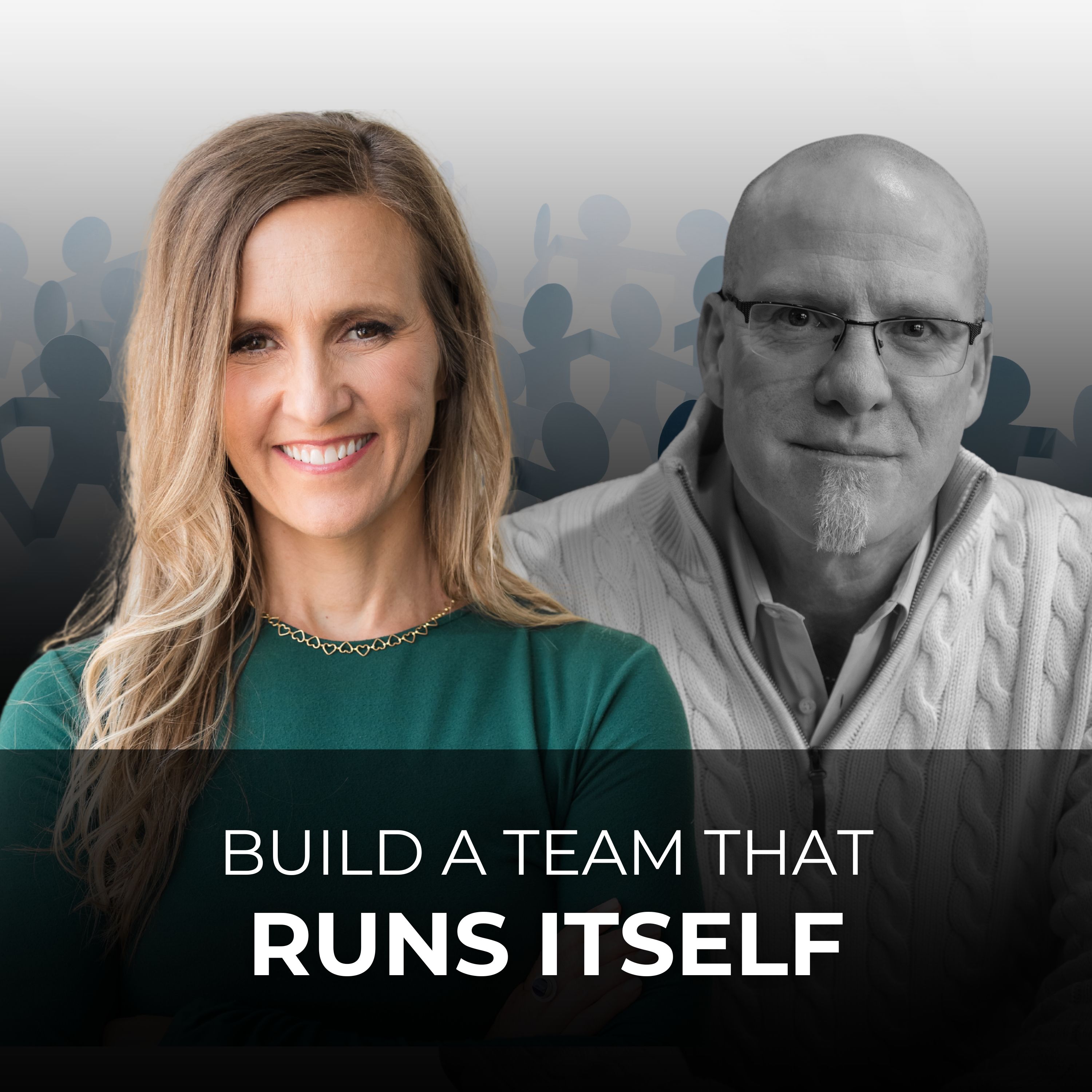
The Lindsey Anderson Show
The TRACK Method: Build a Team That Runs Itself with Dr. James Chitwood
00:18:47
Loading summary
Transcript33 lines
- [00:00]
Lindsay Anderson
Welcome to this episode of the Lindsay Anderson Show. So happy to have you here. Today we're talking about building accountability systems for your team members. It is very frequent that many people think that leadership alone will fix business. That if you inspire and motivate, that will be enough to keep and build a really successful team. But the truth is if you don't have systems to support your growth, your business will always feel like it's running on fumes. And that's exactly why I'm bringing ON Today's guest, Dr. James Chitwood. But before we hop into that interview, make sure that you hop over to my calendar. If you are serious about turning your social media into a sales machine, let's talk. Apply for a free social media strategy by heading over to Lindsay a.com/apply. You and I will sit, we'll talk about your social media strategy and how to turn your social media into a sales machine. All you need to do is head over to Lindsaya.com apply.
- [01:10]
Are you ready for next level growth in your business? Welcome to the Lindsay Anderson show where we pull back the curtain on the exact strategies, tools and mindsets that that build million dollar empires. If you're hungry for more time, more freedom and a whole lot more impact, you've come to the right place. Buckle up because we're about to ignite your business journey. Now here's Lindsay.
- [01:43]
This episode is brought to you by the BAM Agency. Done for you. Social media that actually drives results, not just likes, but high ticket sales. If you're ready to turn your content into a client generating machine, grab a free strategy session call by heading over to Lindsaya.com apply today. My guest is Dr. James Chitwood, an army infantry veteran, former university president and now a sought after author and consultant with over 20 years of experience. He helps organizations treat employees as assets and drive true performance through structured, structured systems. His book leadership is not Enough breaks down why leadership alone won't fix organizational performance issues. Today he's here to talk to us about the problem of organizational performance. Welcome to the show, Dr. James.
- [02:40]
Dr. James Chitwood
Pleasure to be here, Lindsay. Thank you very much.
- [02:42]
Lindsay Anderson
So how did you get involved? How do you become an expert at organizational performance?
- [02:48]
Dr. James Chitwood
20 years experience and a doctorate in leadership is a start, really. Just being in the trenches, right? Fighting the good fight, I'd say is probably the best experience anybody can have. There's lots of educated people who I wouldn't say necessarily are the best of things. It takes experience plus education in my opinion.
- [03:04]
Lindsay Anderson
So when an organization is not performing well, what Are the major ways that someone would know that their organization is not performing well?
- [03:11]
Dr. James Chitwood
Yeah, I mean, the most obvious is turnover. Right. That's your easiest metric to look at. It's one that your finance department had better be quantifying every year for you. And it's an interesting one. The cost of turnover rarely gets accounted for in the books. They look at, okay, we have to replace an employee. What is our turnover rate? But they're not looking at the true cost of that. What is that doing to the overall performance? How is it affecting everybody else? That's how you can start looking at engagement. Gallup's got some really great engagement surveys that can give you a good idea. If you've got a disengaged workforce. Gallup will say that companies are typically operating at 33% efficiency. Why is that? That's because you got a high turnover rate and you got a disengaged workforce. Those are your two basic fundamentals.
- [03:54]
Lindsay Anderson
So ultimately, where is a business headed if these things are not taken care of?
- [03:58]
Dr. James Chitwood
Well, they're going to do what most organizations continue to do, which is just kind of spin in place, not really get anywhere fast. They're going to have a high turnover rate. They're going to be continuing to replace employees. They're never going to have stability at the baseline. And it's really in that baseline of your organization, your people, Matt, you find the ability to perform over time. And that's really the key. If organizations are seeing a lot of up and down in their performance, if they're seeing one quarter great, next quarter down, they could never get that consistent uptick. Listen, when you're dealing with people, you're always going to have some ups and downs. We're just a messy race of organisms. Yet when you get a good team rocking together, the stability is created in growth. Over time can be stabilized.
- [04:42]
Lindsay Anderson
Okay, so what is the first step? I know you have a method called the track method for organizational performance. Can you tell us a little bit about this method and how it's going to help us solve this problem? Yeah.
- [04:51]
Dr. James Chitwood
So the organization or the model for organizational performance came to me in one of those aha moments when I decided to go consult. I had to have an original thought. I had to bring something new to the place. I wasn't just interested in using the tools that I use to assess organizations for my doctorate, such as organizational performance, leadership, and job satisfaction. That's what my doctor said to me. I would just be another MeToo player doing the same thing. I had to have an original Fun. When I looked back at the military and I looked back at some of my experience, I looked at what I did in organizations to turn them around and start up orgs. I've done both. My model came into play and what's interesting about it is I had a global HR leader say, you know, Jim, this really is a secret sauce. But it's such the basics. And that's so true. There's nothing rocket science about any one individual part of my model. It's the combination of them and looking at them as a single strategy that's the unique element. My model consists of training, recognition, accountability, and internal communication. Right. And so you take each of those, they all have their own chapter in my book. And there's how TOS in the very back of the book. My book's an operator's manual. It's not like your typical academic philosophical book. It's how to. The entire thing is to create a strategy that uses all four of those to engage and develop your workforce.
- [06:16]
Lindsay Anderson
Okay, can you just walk us through a couple of points on each of these?
- [06:19]
Dr. James Chitwood
Yeah. So how about I do it this way? Let's look at accountability, because accountability is critical, right? Every employee needs to have a metric. They're being measured against at least one every employee. I don't care who they are. You got to tie them to at least one quantifiable metric. So let's say most employees have multiple metrics and KPIs that they're aligned with. So let's just stick with accountability. So let's say you have an employee who is not performing. And through your one on one conversation with your direct supervisor, you recognize, your supervisor recognizes that the performance isn't there. So now what do you do? Well, in my model, you would bring training in to bring them up to speed who does the training. The critical piece to this, because I believe training departments are instructional designers. I don't believe they're there to train your employees. Employees, your supervisors and your peers are your trainers. Right. It's not somebody else who doesn't do the job. It's the people doing the job or the people leading the job. Right? And so if you find a coworker who's now providing that training to this first underemployee, you have done two things. Number one, you have recognized the excellence in that employee and you have given them intrinsic value by saying, I recognize your excellence and I would like you to train this other employee. That's an intrinsically valuable form of recognition for that person. Two, so I should have said three things. Two, when we give, we get. When we lift someone up, we feel good. You're suffering depression. Go work in a soup kitchen. Right. We know that when we give to others, we intrinsically feel good. What you're doing now is you're creating a social bond between these two employees because the trainer becomes invested in the success of the underperformer. So they're willing to help that person to create social bonds now, because now this other person is feeling that their employee is giving to them, and that creates strong social bonds. The social bonds is one of the most powerful elements in any organization's culture. It is an element of Maslow's hierarchy of needs that most organizations miss. And it's way at the bottom, which is crazy that most orgs don't even focus on true social bonding. You've got to create a social bond if you want to create a team. People quit bosses and stay for teams. That's a very old saying in the world of leadership. So what we've got here now is we have training, recognition, and accountability all being combined. How did that employee find out about the need for this in the first place? Well, that's through a structured one on one, which is part of your internal communication. Most managers are not trained to be managers. They're not trained to work with people right there like, hey, you're good at a job. Now go manage. And 85% of frontline managers receive no training on how to work with humans. So you've got to focus there first. That's part of your training. But in that is your internal communication, which taught the manager how to have the conversations with the employees in the first place. And so that is an example of how the intricacy and the interwoven elements of the track model come together.
- [09:20]
Lindsay Anderson
I had a client recently say to me, lindsay, I've never had leads come to me like this before. That's the difference between posting randomly and using a real strategy. At the BAM agency, we turn content into conversations and those conversations into clients. If you want a social media system that actually works, apply for a free social media strategy session called all by heading over to Lindsay a.com apply. Okay. Okay. And I love how you're really focused on social bonds. I'm curious, with your experience in the military, how much of that experience is part of what you teach now?
- [10:02]
Dr. James Chitwood
Yeah, it's huge. It's really huge. There's this old saying in the movie Band of Brothers. They show it so well. There's this place where the employees are Complaining. And the leaders just sit there listening to it. Just, yup, okay, go for it. In the infantry, at least. But in the military in general, there's this old saying, if your people are complaining, you got a problem. And the problem is you. Because there's always reasons to complain, especially in the military. Lots of reasons. Right. And so if your people don't have what we would now call psychological safety, if you don't have psychological safety where people are comfortable complaining to you, then you've created an environment that has no trust. Right? And so you need to create an environment of internal and open community, transparent communication so that people feel comfortable complaining to you as the boss. And what's so beautiful about the band of brothers is one of the complaining soldiers says, captain, why aren't you complaining? He goes, oh, I complain. I just complain, huh? Right. It was this beautiful model of if you're the leader, unfortunately, you know, you don't get to complain down. You put on a happy face. Your job is there to lift up your people. You want to complain, you complain up, don't complain down.
- [11:08]
Lindsay Anderson
That makes sense. Can you tell me a little bit about the common mistakes that business owners make when trying to put accountability into place?
- [11:15]
Dr. James Chitwood
You need to look at accountability one of two ways. It's either a carrot or a stick is the simplest way to look at it. Are you viewing accountability as a way to hold people accountable and hold them to their goals, or are you using accountability to identify opportunities of improvement within your people? Those are two drastically different cultural ways to look at the exact same situation and the exact same element of accountability. The reason I use the word element when I describe my model is that elements work together to create something better and stronger. That's what elements do. They form. I like the word element because at any one given moment, recognition's taking precedent, training's taking precedence, communication, accountability, whatever the case may be. And you have to be fluid with that. The same thing holds with accountability. If the organization looks at it as a way to identify areas to improve personnel because they value people as asset, that's drastically different than the Jack welch model of GE where we fire the bottom 10% every year simply because they're in the bottom 10%.
- [12:21]
Lindsay Anderson
Yeah. And that model doesn't work anymore. Right.
- [12:23]
Dr. James Chitwood
GE no longer exists. The world's greatest company is a shell of what it once was, and if anything, is a testament to why not to follow the Jack Welch model. That's it.
- [12:37]
Lindsay Anderson
Okay, so what would you say to a business owner who is super overwhelmed by creating all of these and doing the accountability and setting up these systems, what would you say to them?
- [12:46]
Dr. James Chitwood
Well, you've done it wrong if you're overwhelmed. Because the truth of the matter is if you've created the right system, you no longer need to be there. You know, that's the beauty of the track model. And if you go to the military, the military is designed in the sense that everybody knows what they're doing, everybody's accountable to each other, to the requirements of their job, to the overall mission, and they work as a unit. And if any one of them is taken out the next one, then chain of command just steps up and they just keep on going. That's what separates the American military from the autocratic militaries of communist and dictator type regimes is that only the leader knows what's going on. It's why when the Ukraine war started, the Ukrainians were able to give the Russians such a good run for their money right off the bat because they knew all you had to do is take out the tank commanders and those tank platoons wouldn't move. And it's exactly what we saw happen. American military doesn't operate that way. So look back on your organization. If you have to be there to make the decisions, you have failed. So what I would say is the very first thing you need to do is develop frontline manager training so that at the base level, at the first level of management, you know exactly how those people are talking to and holding their people accountable. See, Lindsey, here's the thing with culture, right? And I deal with culture and it's such a nebulous topic. And the truth of the matter is culture is whatever your organization wants it to be. The banking industry, the financial investment industry, culture is drastically different than some of the other cultures. And the people who enter it know it. They know it's a grind. They know they're entering 80 hours a week and they're okay because they're going to make a really lot of money at it and they don't care. That's different than other cultures, right? So culture is nebulous. What a manager and an owner has to do is decide what their culture needs to be. And how was that frontline manager holding their people accountable in relation to the culture that you want it to be?
- [14:33]
Lindsay Anderson
That makes a lot of sense. Let me ask this. We want to talk about AI. So AI is reshaping everything about business and culture and accountability. How do you see AI playing a role in everything we've talked about today?
- [14:46]
Dr. James Chitwood
Yeah, it's so two Things one, I'm not a big fan of the word AI Cause it's really just automation. We don't have it. There's nothing intelligent about what it does. It's a regurgitation tool if you look at it that way. All tools are designed to augment human performance. If an organization looks at it that way, this isn't to replace what your people do, it's to help them be better. Because what the computer still can't do is really, really problem solve and really think intuitively. Right. And so you need to teach your employees to use that like they would use any tool to enhance their performance, not replace what they do. What you're going to do, yes, you'll get standards, but you're going to get mediocre performance. It'll never excel because a computer is never going to overachieve. It's going to do exactly what you make it do. Humans can overachieve because they're driven by things that computers aren't. And those are our intrinsic values. And what's so great about us versus, you know, what's so great about a man with a pickaxe versus a steam shovel is that steam shovel is only going to do what it does. A man with a pickaxe can push a little harder if they have to. And the John Henry mythology is one of my favorites for that reason.
- [15:54]
Lindsay Anderson
Yeah, I love the visual imagery on that one. Thank you. So if you want to leave everybody with one takeaway from today, Dr. James, what would that be?
- [16:01]
Dr. James Chitwood
Train your frontline managers. I don't like the one thing question because in my mind everything is so complex. But train your frontline managers. Go there first, teach them how to manage, then teach your directors how to manage managers and your VPs how to manage directors and so on. So what you've got is a solid training program all the way through and your training team is doing nothing but designing the training. Your team is training itself.
- [16:26]
Lindsay Anderson
I love that. Thank you, Dr. James. Before I let you go, I'm going to turn the time over to you. Let us know how the audience can find you and anything else you want them to.
- [16:33]
Dr. James Chitwood
Lindsay, I appreciate it. Yeah, I am available. My website is Performanceculture Expert and you can find my book at leadershipisnotenough. Com. Of course, it's also on Amazon, so you can find it there as well. I like to say give and the world will follow. So lift someone up today and great things will come to you.
- [16:50]
Lindsay Anderson
Thank you for sharing your knowledge today, doctor.
- [16:52]
Dr. James Chitwood
Thank you, Lindsay. Pleasure.
- [16:55]
Lindsay Anderson
There you have it Folks, another awesome episode of the Lindsay Anderson Show. If today's conversation has you thinking about how to lead more effectively, create stronger systems and actually drive results, don't just listen, take action. Leadership is important, but it's not enough. Focus on those systems so that your business thrives. Now, if you're ready to stop guessing and turn your social media into a sales machine, let's make that happen. Apply for a free strategy session by heading to lindsay a.com apply and I'll help you create a social media plan that actually drives real results and real clients. If you got value from today's episode, subscribe, leave a review and share this with somebody who needs really helps us grow the podcast. Thank you so much for joining me for this episode of the Lindsay Anderson Show. Until next time, cheers to you and your success.
- [17:56]
That's a wrap for today's episode of the Lindsay Anderson Show. If you loved this episode, don't forget to subscribe, leave a review and share how you're leveling up your business. Business Want more? Connect with Lindsay Anderson and get the tools you need to crush your goals@lindsay a.com until next time, keep pushing, keep growing, and turn those business dreams into reality.
- [18:25]
Thank you for tuning in. If you got value from this episode, share it with a friend and hit subscribe. And if you're ready to stop posting and praying and actually generate revenue, let's talk. Book your free strategy session by going to Lindsaya.com apply.