← The Lindsey Anderson Show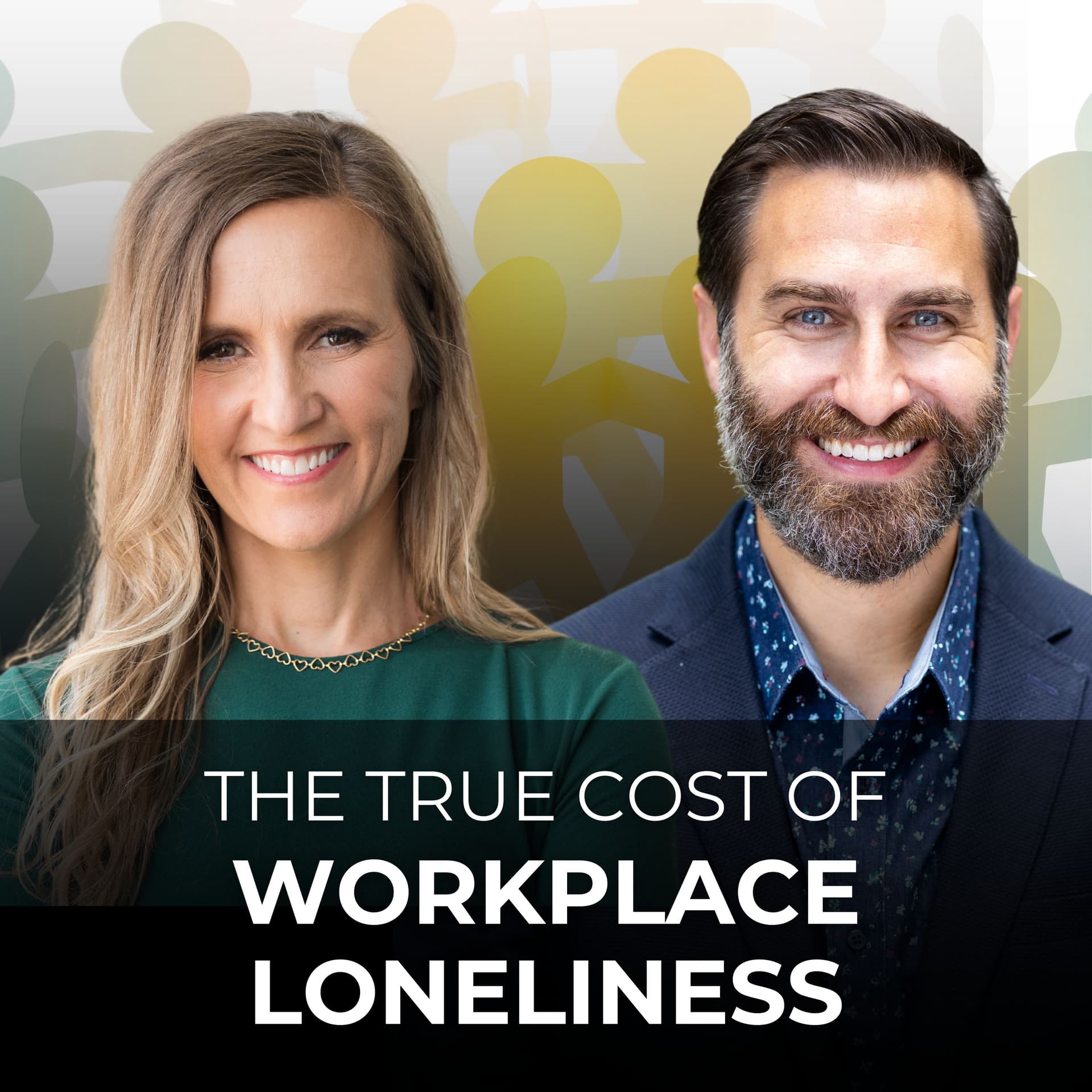
Loading summary
Transcript61 lines
- [00:03]
A
Are you ready for next level growth in your business? Welcome to the Lindsay Anderson show where we pull back the curtain on the exact strategies, tools and mindsets that build million dollar empires. If you're hungry for more time, more freedom, and a whole lot more impact, you've come to the right place. Buckle up because we're about to ignite your business journey. Now here's Lindsay.
- [00:33]
B
Hey, everybody. Welcome to this episode of the Lindsay Anderson Show. I am so excited for today's guest, Mr. Stephen Van Cohen. He is a Wall Street Journal bestselling author, internationally recognized leadership consultant and an executive coach. His latest book is called Connectable How Leaders Can Move Teams from Isolated to all in. For over a decade, Stephen has helped leading organizations like Home Depot, Salesforce, bank of America, and Zoom improve worker wellbeing, reduce employee disconnection and boost team belonging. Steven's top drink insights have been featured in cnbc, Forbes, Fox News, Fortune, Fast Company, and Inc. He's highly regarded. I'm so excited to meet him or to bring him on the show today. Welcome to the show, Stephen. So glad to have you on.
- [01:23]
C
It is my pleasure to be here. I'm excited.
- [01:26]
B
So, Stephen, when we first met up, we talked a lot about music and one of your loves is playing and you are ultra skilled at playing the guitar, is that correct?
- [01:35]
C
I think we're gonna find out because you asked me how good I was and then you asked if you'd be comfortable to play on the show, which is something I've never done on any kind of an interview before. So I guess we'll find out.
- [01:46]
B
Steven is going to play a little 15 second situation to show us how good he is at the guitar. We're gonna guess what song this is.
- [01:54]
C
So this is just an intro to a song. You know, this musician is. Can you guess who it is? I'll give you two clues if you can't get it right away. You ready?
- [02:03]
B
Okay, I'm ready.
- [02:37]
C
What's your guess?
- [02:39]
B
I don't have a guess, but that was really good.
- [02:41]
C
Steve, the musician who covers that song, that's a John Mayer song. That's really beautiful. So. So I'll. I'll give him all the credit for writing that link.
- [02:49]
B
I love it. A man of many talents, Steven. I appreciate you sharing that with us. That was really beautiful. Thank you so much for that.
- [02:54]
C
My pleasure.
- [02:55]
B
Now, in other news with Steven, what are you known for on the other side of your life?
- [03:00]
C
Yeah, I would say I'm most known for being a workplace loneliness expert, which seems like an incredibly random Thing to be known for. Two years ago, my partner Ryan and I wrote a Wall Street Journal bestselling book, the first ever written about the impact that loneliness has on on the workplace. And it just so happened to have come out in the peak of COVID so it got a lot of attention. And most of my work as of late has been focused on how do you create really meaningful relationships at work, how do you strengthen connections among a team and how do you create a connected culture among mostly a remote or hybrid workplace. So that's what I'm most known for professionally.
- [03:35]
B
I love that. Why loneliness? And this was something that came up a lot during the pandemic because everybody was lonely during the pandemic, not only just at work, but how is it that people are lonely at work, Steven if I'm surrounded by all of the people I work with?
- [03:49]
C
Yeah. The definition of loneliness is really interesting because loneliness is not defined by the absence of people. It's defined by the absence of connection. And we know that because we can be surrounded by lots of people. I could go to a subway in New York City and have access to hundreds of people and feel incredibly isolated and totally alone. Right. It's all about how those people make us feel while we're in their presence that allows for that sensation of the connection to take place or not. So at work, especially in person work environments, just being around people is not enough. And in fact, going into an office and being around people could actually exasperate loneliness. If I'm not happy with the quality of my connections that exist and it could even make me feel more lonely. There's a lot to unpack with the sensation of loneliness. I guess we'll start there.
- [04:37]
B
Was there a pivotal moment in your life that made you realize that like this connection, this loneliness thing is really the path you wanted to go down?
- [04:45]
C
Like a lot of things that happen in life, it was a happy accident. Right. So most of my work pre book has been really focused on the leadership development side, employee engagement, HR consulting, and I've done a lot of work in that space. And then my partner Ryan, he's a thought leader in the future of work and he spends a lot of time talking about generational Dynamics. So in 2019 he was writing this book on Gen Z and Pre pandemic. In 2019 he found this statistic that 79% of Gen Zers sometimes are always feel lonely. And it was the first time in history where the youngest generation was lonelier than the oldest generation. And he called me when he came across this statistic and he said, hey man, you're not going to believe this. What do we do? What are we going to recommend to our clients? Like how are we going to help our organizations that we work with understand that this is a lonely generation flooding into the workplace. And we started to build strategies and we started to talk a lot about how to help Gen Z be less lonely at work. And then the pandemic hit and then we had all this stuff on loneliness and connection and what to do and after client reiterated they want to talk about that topic and that turned into a book and the book did well and here we are. Definitely was not something that I set out and charted this path of. I'm going to be an expert on loneliness and I'm going to focus on workplace dynamics. It was a statistic that caught our attention that has blossomed into a whole consulting business. So yeah, that's the genesis of it.
- [06:09]
B
Interesting. So for leaders and those individuals leading organizations, when you have a loneliness situation at work, why do you care about this so much?
- [06:18]
C
First, I'll give some context. Like we think of loneliness as being almost as like depressing, antisocial, socially awkward person who just doesn't have any interest or any skill sets associated with creating connection and relationships that are meaningful in nature. That's not the case. Loneliness isn't this I'm in the corner crying cuz I don't have friends. Essentially when the quality of my connections and the relationships that I exist, the quota for what I need and the quality that I want, there's just a gap, right? Like I want this amount of connectedness, I want this feeling around my relationships and I'm just not getting it at work. And then I'm going to feel disconnected, a bit isolated, lonely, et cetera. We know that 72% of people say that they feel socially disconnected on a monthly basis. 55% say they feel socially disconnected every single week. Which is alarming. Right? To go to work and just feel like, man, I just don't. I don't feel as seen as I want to feel. I don't feel as connected. There's something going on with the dynamics of the people I collaborate with where I'm just not feeling all in with this group of individuals. We know socially disconnected team members are seven times more likely to be disengaged. And Gallup tells us that disengaged employees make 66% more mistakes. They're five times more likely to miss work due to stress illness. They're three times more likely to Underperform. So studies have been able to measure performance levels of highly connected and disconnected teams. And those who have strong connection levels perform 56% better than their counterparts who work in the same department. And your intent to quit increases by 313% when you go to work. Feeling like I'm just a number. Don't really fit in here, don't really like the people I work with. And there's a situation afoot. So the first 125 pages of my book laid out a really strong business case for why this matters to production, retention, engagement, performance, health, wellbeing, et cetera. Oh, this is something we should do because it feels right. There are real strong correlations between the quality of those connections and how teams and organizations perform. And there's a lot of data to back that up.
- [08:27]
B
That's really interesting because I would say typically, like you wouldn't think that at work it's like my main job as the leader to make sure that people don't feel lonely. The ramifications as you've just outlined here, make sense and they're huge.
- [08:40]
C
Yeah, we know 69% of employees say that their leaders are not doing a good enough job of creating opportunities for connection to take place at work. Is it a leader's job to set norms and create opportunities where people can connect and have the right kinds of exposures to one another, where we build trust and understanding and comfort and psychological safety and camaraderie and all of that stuff? Of course, extent of which they actually need to invest in doing that is where there's a massive chasm because we do not equate that part of the role of leadership to be that important. While in fact it is essential for any great team to be successful.
- [09:19]
B
That makes sense. And when you say invest, you're talking time, money, effort, intent, all of the above.
- [09:24]
C
Yeah. I think what happens in most cases is leaders assume I'm just going to do a five minute icebreaker once a week and we're good. I'm checking that box. They ask people how they're doing, maybe did two truths and a lie. We spend a couple of minutes and now we're good. Let's move on to the work things and let's get into work. Unfortunately, that's not enough. And what happens is we think we're solving the problem when in fact the problem's just growing exponentially worse. Tends to have to happen is team members have to have real dedicated time where we're just focused on the relationships. We're just focused on understanding one another. We're just focused on trying to have exposures that are fun and connective. And it doesn't need to be hours, it doesn't need to be over a huge cadence of time. Really strategically placed exercises have huge impacts as we think about that investment. So, yes, it does need to be a targeted investment and some time and some energy, but the investment pays huge dividends.
- [10:24]
B
I love that. Can you expound just a little bit on one of these strategies on how to make this connection? Well, what do one of these meetings look like?
- [10:31]
C
Yeah. One of the easiest ways to make people feel connected to one another is to make them feel like they matter. Indeed. And Oxford did this massive study came out last year where they looked at 20 million people on the Indeed website who are looking for new jobs. And those individuals were asked questions about their previous employer. There was a whole subset of questions about feelings of belonging. They wanted to figure out why, for these 20 million people who said they had strong feelings of belongingness with their previous employer, what was it they tried to unveil the hidden secrets. And they found it was only three things that needed to happen. One is the person need to feel like they mattered. Two, they needed to feel like their work mattered. And then three, they needed to have one close friend at work. So if we take some of that knowledge and research that was uncovered by Oxford, and indeed, we know there's a huge pulling of togetherness when I can make you feel good, when I can spotlight your significance, but I can make you feel valuable and identified and fully, fully seen. So one of the exercises that many of my clients do, and they do it either on a weekly, a monthly or a quarterly basis, just depending on what the team needs, is they do a weekly crush. And a crush is essentially is just this exercise where all of the team members get together and for five to 10 minutes, they just have an open floor where they crush one another. And they'll say, I want to crush Lindsay, because last week she was so helpful in helping me with XYZ Project. Or I want to crush Mark, because Mark went above and beyond with this client, and I'm so impressed with what he was able to do. And just giving, like, a dedicated time just to crush. It's not an icebreaker. People tend to open up and they recognize each other and they can make each other feel seen. And it's a very low bar of entry to do something like that. And the impact has been really powerful because now we're appreciating each other, we're Showing each other that we're paying attention to the work we're doing, we're recognizing one another and we're highlighting the skills that we each have. And when you can do that regularly, that just puts a little bit of gasoline on those connection sparks that tend to be present within a team. So that's one example of something a leader can do to make an impact from a connection standpoint.
- [12:41]
B
I love that it doesn't even take that long. Everybody's a winner on that. Thank you for sharing that. What obstacles? So as you go into these companies and you're trying to help them with this, what are some of the common obstacles that you've been met with and how do you overcome those?
- [12:54]
C
The biggest obstacle is there's this preconceived notion that for us to feel connected, we have to do something big. Like we have to do a big charity event or we have to have an all hands off site or having to do weekly happy hours. They, they think the mountain that needs to be climbed is massive. And I spent a lot of time refocusing the efforts on connection to be really work specific. One of the other components to creating highly connected teams is making sure that team members feel a sense of clarity. If I'm alone in the woods by myself and I don't know where to go, I don't know who to turn to, I'm not sure if I'm moving in the right direction, all of that wandering is super lonesome and I'll begin to feel more and more distant from the people that are around me. So one of the strategies that we know works really well is when leaders can make time to just have 10 minute, informal one on one check ins with their direct reports once a week for 10 minutes we just say like, how are you? What are you doing, what's working, what's not, how can I help? And just that casual, informal check in to make sure they're on the right track. They're getting the feedback, they're feeling seen, they're getting that dedicated one on one time with a leader man that's had huge impact. Marcus Buckingham did this big study when he was at Gallup and he found that the teams who do these 10 minute, informal one on one check ins with their leaders, they saw a 66% improvement in overall engagement and a 77% increase in retention. So there's something about. You don't need to go to a huge offsite. Can you dedicate just a little bit of time for those one on ones in order to make sure each person really knows where they're going and how they're doing. It's that kind of stuff that we need to rethink if we're going to solve this.
- [14:35]
B
I love that, that personal connection, this intentful conversation. 10 minutes with your direct reports to have these massive ripple effects. It seems absolutely worth it. Like people should absolutely be doing that. Can you expound a little bit? You mentioned some people are in the office, some people are on zoom. How does that affect this whole thing? How can we make connection with office people and virtual people? Can you expound on that?
- [14:59]
C
Yeah. One of the biggest misconceptions around connectedness and I guess loneliness is people tend to think that communication is connection. Like communication is not connection. Like when we're communicating and sharing information back and forth. The frontal lobe is the part of the brain that is able to respond to all of that input. When we feel that like sense of connectedness to someone, that happens in the insular cortex in the back part of our brain. When we are working in a virtual environment, we tend to be very tactical. Like we're going from meeting to meeting. Everything is very like regimented on a work sort of cadence. And we're doing a lot of communicating. We tend to not do a lot of connecting. Where I can deliver what are called pro social behaviors, like these behaviors where I could make you feel empathized with. When I can ask you a question to show I'm really curious about your opinion. When I can validate something you've said and make you feel like, man, I really understood where you're coming from. All of those kinds of behaviors are what allow us to go, ah, I feel something from this person. To create that in a digital environment requires a ton of intentionality. So we have investment and a little bit of time. Then we have intentionality where we have to make sure that we are actually creating the space where connection can occur. And that could come in the form of some of those exercises I mentioned earlier. Making sure that when we are in a meeting and talking to each other, we're really listening. We're really showing the other person that we understand their perspective. We're providing empathy when empathy is available. And we're just really extra mindful of some of those pro social behaviors. Because when we're in a virtual environment and cameras are off and we can't see one another and we're just rushing through our stuff, people tend to go unnoticed and people tend to go feeling unseen. And that over the course of an entire day, super lonesome So a lot of it is really rooted in how intentional am I about paying really close monitoring to all of these little dynamics within the team while we're operating. And can I be a little bit more prescriptive on how to make sure that I'm doing some of those kinds of behaviors?
- [17:05]
B
I love that camera's on. Definitely. So you can pick up on these things. Like that's going to create that sense of connection. Is that what you're saying as well?
- [17:12]
C
Yeah. It's also exhausting. Like, I understand to go from zoom to zoom and be on camera all day staring at that little. Like, it's not easy. Should you be on camera for certain parts of your day so you can really be aware of some of those human components? Absolutely. Like, it's pretty obvious. They know that the release of dopamine and serotonin, like when I have my brain release the connection cocktail, like the chemicals in my brain that make me feel closer to you. One of the elements that has to be met for that to be released is eye contact. Like, it's really hard for me to feel something from you if I can't see you. There's a sweet spot somewhere in between there that teams have to be extra thoughtful of as they're thinking about how to set up some of that. That norm within how they. They operate virtually.
- [17:59]
B
Yeah. So one key word that you've been using very frequently in this interview is the word feelings. You gotta create this feeling amongst your team members that feels a little squishy to some people there. Steven, what do you say to that?
- [18:13]
C
Yeah, I agree that there does have to be feeling. It doesn't need to be this mushy love fest where. Where we're just gonna sing Kumbayan, talk about how amazing everything is. Sometimes you can make somebody feel really seen by giving them the feedback they need. Sometimes you could make people feel really seems like you're not pulling your weight. I know you can be better. What can I do to help you be better? Sometimes you can make someone feel seen by. You know what? It seems like maybe you're in the weeds a little bit. Like, talk to me. What's going on? Give me an update so I can really make sure I can give you the feedback you need. It doesn't need to be warm and fuzzy, but it does need to be feeling elicited like you. You need to create an emotional response to make that person know like, you care.
- [18:55]
B
Like, you have to care.
- [18:56]
C
Basically have to care. If you do not care, they will know. They will know and people are going to not feel full. They're not going to be all in who wants to work for colleagues and a leader if they know that this is just merely transactional. This person doesn't really have my best interests and hearts. They don't care. There's self focusing on others focus. All of that is going to come through and it's going to have an impact for sure.
- [19:18]
B
For sure. Now you're a super connector. What's the definition of that? What is that?
- [19:23]
C
The super. A super connector is. And this is probably going to freak a lot of your audience members. In the last two weeks I've been on six flights, right? So I've had a bunch of travel that I've had to do. And on all six of those flights from when I sat down to when I got out of my chair and the longest flight I had was almost four hours, I talked to the person I was next to the entire flight and I got all six of those people's contact information and I followed up with all of them and they all responded and now they're in my Super Connector portfolio. Last year I was able to generate $300,000 of new business from people I met on airplane.
- [20:08]
B
You should write another book called that.
- [20:10]
C
Art Talking to strangers on Airplanes. But I do it because I know the science around connection and I know how important it is for us to feel connected, even if it's with someone we're maybe never going to see ever again. And I invest in it. So for me to call myself a super Connector is really about my willingness to do that versus just sitting down and putting in my noise canceling headphones and having my phone open. So when people sit down next to me like I've already shown them like I'm off limits, talk to me the walls up. I don't do that and I don't talk to everybody all the time. If you sit down and say hi to me and if we start to feel like this is actually going to be an enjoyable conversation, we'll go there. We're going all in.
- [20:53]
B
I love that. I also like to talk to people on airplanes as well. So that's fantastic. You have you mentioned this Rolodex? You didn't say Rolodex. Like this list of people that you have, like you have so many people. How do you nurture those relationships? What's the secret to turn I met a dude on an airplane to yeah, I followed up with him to make sure I connected on LinkedIn or something to hey, there's work.
- [21:13]
C
Yeah, I don't have a prescription to that.
- [21:17]
B
Okay.
- [21:18]
C
Sometimes you meet people and you're meeting them at the right time for the right reason. I'm like, I'm a huge believer in serendipity and I don't know why. Sometimes you sit down to someone and you just click. So I don't necessarily say, okay, I've met this person. They get a connection request within one day of me being home. I then follow up with two emails. I then give them a text. Like, there's nothing like that in my repertoire. It's more. So sometimes people just, it takes off and sometimes like people want to meet. Like one of the guys I met with on the flight, he lives close to me and he was talking a lot about some of the issues he was having with his team and I sent him an email and I said, hey, it was super good to meet you. And he said, hey, do you want to have coffee? I really like that conversation. I've been thinking about it and I want to talk a little bit more. So we're going to go meet and have coffee. And for that connection at that moment in time, it might blossom into something else. But for most of them, it's not like a nurturing. Tend to nurture the relationships in my life that matter. And I do a really good job of being extra aware of who I haven't talked to in a while and sometimes just calling them out of the blue, which I know is terrorizing for a lot of people.
- [22:26]
B
So you are scary.
- [22:27]
C
Today I have the pre. Are you free? Texts come in like a crazy person. But I do that often. And then my wife and I are both really good at prioritizing our social life. We're very active socially and every single weekend we're with friends doing something because we know it's restorative and it's important. That's more of how I keep some of the connections alive in my life.
- [22:50]
B
You love connection. So important, so important. What is something that the audience can do daily to have like more authentic connection in their lives?
- [22:58]
C
Yeah, a couple of things that just keep top of mind. The research shows that you can have what's called a restorative connection in less than 40 seconds. I have a three year old, she's very cute. And when I am in line at the grocery store holding my baby and someone says, oh my God, your daughter is just so beautiful, that makes me feel really good and it makes me feel really seen and I'm never going to see this person ever again. And we're probably not going to have more than a 30 second exchange, but that exchange is important. Like my business partner Ryan put this really great line in the book. He said, connections don't have to be lasting to be meaningful. That really resonated with me. So I guess the first thing is, are you being connectable? Are you putting in your noise canceling headphones or are you smiling at the person next to you? Are you saying something to somebody in line or are you just focused on checking out and getting out of there? And then the second thing is, are you dedicating time and call it a social regimen like on your calendar? Are you giving yourself some space to do some of the connection things within the. Or are you just going from meeting to meeting like a robot, unable to check in with yourself and with others? I think a lot of it is just, are you aware and are you getting what you want out of your relationships? And if you're not, what an awesome time to begin refocusing on some of that stuff.
- [24:15]
B
I love that. And it really just comes down to intent. Do you want to connect with people? Then you can, yeah.
- [24:20]
C
If anybody's interested in the importance of connection, Robert Waldinger, he's the gentleman who runs the Harvard study on adult development. Via his YouTube Robert Waldinger TEDx talk, he unpacks the largest study ever conducted on adult development. They looked at 2,000 people over 80 years and they scanned brains and they took medical records and they drew blood. And they wanted to figure out like, out of these 2,000 people, what is the defining, the quintessential, the number one correlation to a long, healthy and happy life. And it wasn't how much money you made, it wasn't what you did for work, it wasn't where you lived, it wasn't a lot of the things that we tend to think about for like health and longevity. The strongest correlation to health and longevity was the quality of the connections you have, hands down, bar none. And that has been replicated by a lot of other studies. So yeah, we grossly underestimate how important it is. And I hope people tend to rethink just how badly they need some of that from others.
- [25:26]
B
What do you see for the future of connection in the science of connection there, Steve?
- [25:30]
C
I'm fearful and I guess hopeful all at the same time. I'm fearful because even pre pandemic loneliness was just, it's been skyrocketing for 15 years. It's just been on an upward trajectory. And the fact that we have so many Young professionals and so many young adults really struggling with loneliness. It makes me really nervous. I did an event with 2,500 college seniors, and these were seniors from leading universities from around the country. We were talking about the importance of connection and building connection and lessening loneliness. I used the polling software and I asked these seniors, how often do you think your friends feel a sense of loneliness? And it was either hourly, daily, weekly, monthly, rarely, never. And almost 2,000 of those people participated in this poll, and 94% of them said hourly or daily. And it's just that worries me. I have two small kids. Like, it really worries me that the way in which we're now operating as human beings is just really creating epidemic levels of loneliness. So that's the worry part. The hopeful part is this is the first time really ever that a huge, massive spotlight has been shown on this problem. Vivek Murthy came out and declared an epidemic as it relates to loneliness. There's tons of articles now coming out about it and people are starting to talk a lot more in the context of work and why this matters. And I'm hopeful that with more awareness. Awareness is curative, right. We can hopefully start to see some progress and some movement. So that gives me hope. But where we go from here. I wish I was a fortune teller, but I don't really know that makes sense.
- [27:12]
B
Well, you're so accomplished, you've done so many things. What is one thing you wish you would have known before you got started?
- [27:19]
C
I wish I would have known that things would work out the way they did. When I graduated from college, I was super not where I wanted to be and I got these really crappy sales jobs and I was just really struggling and having a hard time. And I decided I had to go to grad school. Cause I wasn't going where I wanted to go. And I very randomly got a job working for the world's largest gold mining company. And like, I'm a dude from Chicago. I know nothing about mines. Don't let this beard fool you. Like, I'm not a minor, but I got this job and it took me to the middle of nowhere, Nevada. For three years. I lived in this really tiny town and it was awful and I hated it and I was super lonely. And I'm like, what am I doing? That opportunity allowed me to get into consulting. And that opportunity allowed me to find a bunch of clients because of the exposure I got. And that opportunity led me to Ryan, my partner with, which led me to the book, which led me to this amazing thing that I get to do now, which is what I would have never have thought that I would have ever done ever. So I wish I would have known earlier that things would work out cause there was a good period of time where I was really having a hard time and it's all come to fruition. So I guess that would be part of it.
- [28:27]
B
I love that. Thank you Steven. What a true pleasure. From the guitar solo to the connecting to everything that you shared today, let us know how to find you and anything else you want the audience to know.
- [28:38]
C
You can find me by going to LinkedIn. My name is Steven Van Cohen. I'm the only Steven Van Cohen on the planet because my wife and I combined our last names to create a new surname. Or you can go to cinc S Y N C L X Com to learn about the work we do and to see some of my thought leadership. And then the final thought to leave your audience with is to remember that we are nothing without our connections. So do your best to be as connectable as you can.
- [29:09]
B
I love that. Thank you Steven for being on the show.
- [29:11]
C
My pleasure.
- [29:14]
B
There you have it folks. A really amazing episode here of the Lindsay Anderson Show. A big thank you to Stephen Van Cohen for being on the show. Now, if you're looking to drive more high ticket sales with social media, make sure you're signed up for my upcoming workshop by going to Lindsay a.com workshop. We will show you how to generate those high ticket sales with social media. Thank you so much for tuning into the podcast and cheers to you and your success.
- [29:44]
A
That's a wrap for today's episode of the Lindsay Anderson Show. If you loved this episode, don't forget to subscribe, leave a review and share how you're leveling up your business. Want more? Connect with Lindsay Anderson and get the tools you need need to crush your goals@lindsaya.com until next time, keep pushing, keep growing and turn those business dreams into reality.